高工锂电

Search documents
钠电瞄准AIDC,机器人重塑产线:亿纬锂能给自己的新命题
高工锂电· 2025-12-29 10:52
摘要 亿纬钠能总部、金源机器人AI中心正式开工。 他 认为当前市场对研发和创新的重视程度显著提升,并以 GPU企业为例,指出 "同样的销售规 模,在AI相关领域可能对应更高的市值水平",强调这是一个更加看重技术和创造价值的时代。 身后的这片土地上,原本规划的是一座传统工厂,但经过长达三年的方案推演与自我推翻,最终落 地为 "亿纬钠能总部"和"金源机器人AI中心"。 其中 , 钠电板块规划总建筑面积约 9万平方米、年产能2GWh,覆盖从研发、中试到量产的全流 程 。 配套的金源机器人 AI中心建筑面积约5万平方米,面向机器人研发、试制、中试、总装和技能培 训。 这一调整不仅是物理空间的挪用,更是亿纬锂能战略逻辑的一次迁跃。 这家从 50万元起步、即将迈入"千亿销售俱乐部"的电池巨头,正试图通过布局钠离子电池与AI机 器人,完成从"电池制造商"向"全场景智能化方案供应商"的身份置换。 在锂电 业务重启高景气周期之际 ,亿纬锂能 进一步 试图通过掌控能源定义权与制造工具权来实 现二次跨越。 亿纬锂能正 不再满足于交付标准化的电池模组,而是试图输出一套涵盖能源方案与智能制造逻辑 的 "工业底座"。 钠电的战略底牌:能 ...



一周五起合作:固态电池量产攻坚指向核心装备
高工锂电· 2025-12-29 10:52
Core Insights - The article emphasizes the necessity of overcoming core equipment and common processes for the mass production of solid-state batteries, highlighting a trend of cross-industry collaborations focused on these challenges [3][4]. Group 1: Collaboration Trends - Recent collaborations in the solid-state battery sector have intensified, with at least five partnerships formed in the past week, all targeting the same core production challenges [3]. - Key partnerships include Tianyong Intelligent and Ruitian Technology, which plan to establish a joint venture focused on the development and production of core material equipment for solid-state batteries [4]. - Enli Power and Ion Energy have chosen to collaborate with intelligent equipment company Jinyinhe, indicating a systematic approach to building complete mass production capabilities from core processes to intelligent production lines [4]. Group 2: Specific Technological Innovations - Saike Power is collaborating with equipment manufacturer Ruisheng New Energy and Shanghai University of Technology to create a collaborative innovation model aimed at breakthroughs in online detection technology for vacuum drying of batteries [5]. - Weilan New Energy is working with Lema Precision Measurement to develop an online CT detection production line for solid-state batteries, addressing real-time detection of micron-level defects, which is crucial for battery safety and consistency [5]. Group 3: Differentiated Collaboration Strategies - The article notes that different technological routes (polymer vs. sulfide) exhibit distinct collaboration characteristics. For instance, Ion Energy's polymer-based solid-state battery route focuses on rapid engineering and production efficiency, while companies pursuing sulfide electrolyte routes are more focused on overcoming inherent production challenges [6][8]. - The anticipated timeline for small-scale deployment of all-solid-state batteries by 2027 suggests that current collaborative efforts will yield results in the next 1-2 years, significantly impacting the industrialization process and landscape of next-generation power batteries [8]. Group 4: Equipment Manufacturers' Ambitions - The partnership between Tianyong Intelligent and Ruitian Technology is particularly noteworthy as it transcends traditional battery manufacturer and equipment supplier frameworks, aiming to create a comprehensive intelligent production line solution for solid-state batteries [7]. - If successful, this "turnkey" model led by equipment manufacturers could significantly lower the mass production threshold for battery companies and alter the industry ecosystem [7].
鲶鱼来了,宁德时代能否搅动钠电规模化起量?
高工锂电· 2025-12-29 10:52
而宁德时代在今年正高速布局巧克力换电业务,官方称钠新动力电池将首发应用于巧克力换 电车型。 另一方面,商用车在今年实现了渗透率跃迁,成为第三波电动化的首要场景。而宁德时代钠 电池近期出现在了工信部的公告中,首发上车了江淮3款商用换电车型。 12月28日,宁德时代表示2026年将在换电、乘用车、商用车、储能等领域大规模应用钠电 池,有望形成"钠锂双星闪耀"的新趋势。 可以说,头部企业牵引钠电产业化、商业化航向,宁德时代是其中最大的航母。 在这个时间点高调官宣钠电规模化应用,与宁德时代钠新乘用车动力电池的量产时间基本一 致。 而动力市场几乎是现阶段撬动钠电规模化应用的最大场景。 一方面,国内乘用车电动化渗透率今年在个别月份已超6成,部分城市甚至已超7成,未来新 的增长空间何在? 有观点认为北方市场以及换电(包含乘用与商用)是关键增量领域。 为何说宁德时代是钠电行业最大的鲶鱼? 一是,宁德时代布局钠电产品较早,技术验证与商业验证周期更长 ,且商业化目标与当下的 钠电新势力形成了巨大的差异化。 同时还与容百科技签署了钠电正极材料大单,正加速建设 钠电供应体系。 宁德时代2025年发布的产品定位为车规级的启停电池与动力 ...

GGII:市场驱动下, 磷酸铁锂装机份额仍有上行空间
高工锂电· 2025-12-28 11:07
Core Viewpoint - The article discusses the recent developments in the sodium-ion battery industry, particularly focusing on Xinsen Carbon Industry's IPO and its role in the production of hard carbon materials, which are crucial for sodium-ion batteries [2]. Group 1: Company Overview - Xinsen Carbon Industry has submitted its IPO application, with its main business being the research, production, and sales of high-performance porous carbon materials [2]. - The company’s hard carbon products are designed to meet the performance standards of imported products from Japan, utilizing raw materials such as palm shells, bamboo, coconut shells, and fruit shells sourced from multiple bases in Fujian and Jiangxi [2]. Group 2: Market Position and Collaborations - Xinsen Carbon Industry has signed a strategic cooperation agreement with Zhongna Energy for the mass production of sodium-ion battery anode materials [2]. - As of June, Baise Ge has successfully launched a production line for hard carbon anode materials, with plans to scale up to a production capacity of 20,000 tons [3]. Group 3: Industry Trends and Capacity Expansion - By 2025, Baise Ge has secured nearly 100,000 tons of cooperation orders for sodium-ion hard carbon anode materials, including a significant order from Chaowei for over 30,000 tons [4]. - The sodium-ion anode material production capacity is projected to exceed several hundred thousand tons, with significant projects underway, such as a 50,000-ton capacity facility in Guangxi and a 130,000-ton facility in Sichuan [5]. Group 4: Technological Development - The article highlights the ongoing challenges in the industrialization of sodium-ion anode materials, particularly the need to overcome engineering difficulties, which are currently seen as a major technical bottleneck [2]. - The exploration of anode-less technology is noted, which is not in direct conflict with existing anode materials but rather complements them, indicating a parallel development path in sodium-ion battery technology [6].
产业化加速,钠电负极材料拟冲击第一股?
高工锂电· 2025-12-28 11:07
Core Viewpoint - The article discusses the recent developments in the sodium-ion battery industry, particularly focusing on Xinsen Carbon Industry's IPO and its role in producing hard carbon materials, which are crucial for sodium-ion batteries [2]. Group 1: Company Overview - Xinsen Carbon Industry has submitted its IPO application, with its main business being the research, production, and sales of high-performance porous carbon materials [2]. - The company’s hard carbon products are designed to meet the performance standards of imported products from Japan, utilizing raw materials such as palm shells, bamboo, coconut shells, and fruit shells sourced from multiple bases in Fujian and Jiangxi [2]. Group 2: Market Position and Collaborations - Hard carbon accounts for 97.5% of the total production in the sodium-ion battery sector, indicating its dominance as a negative electrode technology [2]. - Xinsen Carbon has signed a strategic cooperation agreement with Zhongna Energy for the mass production of sodium-ion battery negative materials [2]. Group 3: Industry Trends and Challenges - The sodium-ion battery industry is facing engineering challenges, particularly in the development of negative materials, which are considered a significant technical bottleneck [2]. - Current raw material sourcing for sodium-ion negative materials is heavily reliant on coconut shells, which is affected by overseas imports. The industry is exploring alternatives such as bamboo carbon and coal-based materials [2]. Group 4: Production Capacity and Developments - Domestic high-capacity hard carbon has reached a specific capacity of 300-330 mAh/g, nearing international levels, with production capacity rapidly increasing from thousands of tons to tens of thousands of tons [2]. - In March, the first phase of a project by Baisige to produce 20,000 tons of sodium-ion hard carbon negative materials commenced trial production [3]. Group 5: Future Prospects - By 2025, Baisige has secured nearly 100,000 tons of cooperation orders for sodium-ion hard carbon negative materials, including a significant order from Chaowei for over 30,000 tons [4]. - The production capacity planning for sodium-ion negative materials has exceeded several hundred thousand tons, with new projects being initiated, such as a 50,000-ton capacity facility in Guangxi [5]. Group 6: Technological Developments - The acceleration of sodium-ion negative material industrialization is not in conflict with the emerging anode-free technology, as both can complement each other in advancing sodium battery technology [6].
2025年国内锂电产业链投资超8200亿
高工锂电· 2025-12-27 07:41
Core Viewpoint - The lithium battery industry in China is experiencing significant growth, with total planned investments exceeding 820 billion yuan by 2025, marking a year-on-year increase of over 74% [2]. Investment Overview - A total of 282 investment projects across the entire lithium battery industry chain are expected by 2025, with over 80% of the investment focused on lithium batteries and key materials [2]. - The planned total investment for the year is projected to reach 348.5 billion yuan, reflecting a 92% year-on-year increase [3]. Lithium Battery Sector - Approximately 64 new lithium battery projects are planned in China for 2025, with a total planned capacity exceeding 1,100 GWh, representing a 105% year-on-year growth [2]. - Major companies such as CATL, EVE Energy, and others have announced new capacity expansion plans, indicating a positive industry expansion signal [4]. Lithium Battery Materials - The planned investment in lithium battery materials, including cathode materials, anode materials, electrolytes, separators, and copper foil, is expected to reach 308.5 billion yuan, a 127% increase year-on-year [4]. - The demand for high-density, long-cycle-life cathode materials is driving rapid capacity expansion, while the electrolyte sector is experiencing growth due to supply-demand adjustments and rising production costs [5]. Solid-State Battery Sector - About 60 new solid-state battery projects are planned for 2025, with a total planned capacity of 189 GWh and a total investment of approximately 67.7 billion yuan, which is a 9% decrease year-on-year [7]. - Despite the decrease in investment, capacity planning has increased by 23%, attributed to breakthroughs in key processes that lower equipment costs [8]. Sodium Battery Sector - The sodium battery sector is set to see 42 new projects with a planned capacity exceeding 290 GWh and total investment surpassing 100 billion yuan, with all three metrics showing significant year-on-year growth [11]. - Key drivers for the rapid development of sodium batteries include continuous technological breakthroughs, increased application penetration, and cost advantages due to the rising prices of lithium materials [11].
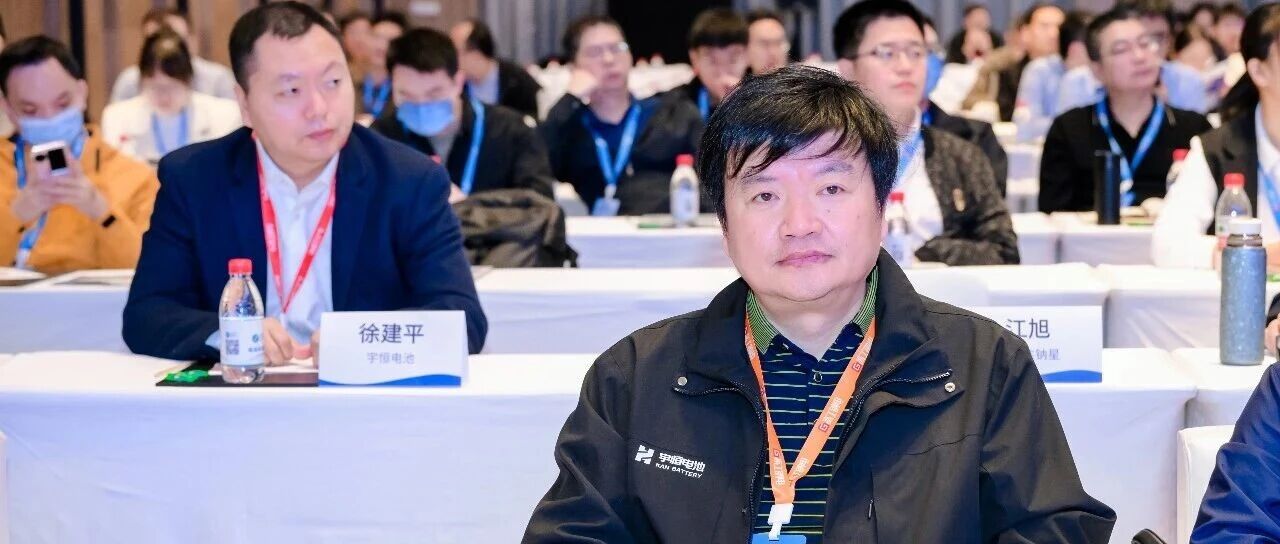
掌握钠电制造know-how,宇恒电池率先实现GWh产能
高工锂电· 2025-12-27 07:41
因此,钠电规模化量产紧迫感十足,关系着能否顺利乘上此轮行业上行周期列车。 而这份紧迫感,一方面体现在钠电目前缺乏庞大的供应链,钠电池产线投产不仅面临工程化难题,还面临着规模化降本难题。 另一方面体现在锂电巨头纷纷下场重塑钠电产业链,尤其是全域电动化机遇下,钠电池如何在差异化场景中拿下独立市场,如何在部分场景与锂电、铅 酸、固态等电池产品展开竞争。 然而,钠电池量产并非简单的锂电池产线"嫁接"与改造,其中无数的工程化难题还未形成一套标准化的" know-how "。 从锂电到钠电的产线转型绝非简单改造可实现。 锂电新周期正成为钠电产业化、商业化"破局"的重要窗口。 高工产研( GGII )数据显示,今年前三季度锂电出货量已达 1.2TWh 。锂电池出货突破 TWh ,意味着更多场景广泛开启电动化尝试,同时也为其 他电池技术路线铺垫了市场化导入的可能。 而目前,钠电池有望乘锂电上行周期之风,开启新篇章。然而,尽管全域电动化将给予钠电池充分导入的机会,但产能规模跟不上也只是竹篮打水。 一个基本前提在于,钠电产线早期确实摸着锂电产线过河,并以其为模板。因此,拥有 锂电池研发制造深厚底蕴的企业,恰恰是解决钠电产线工程化 ...
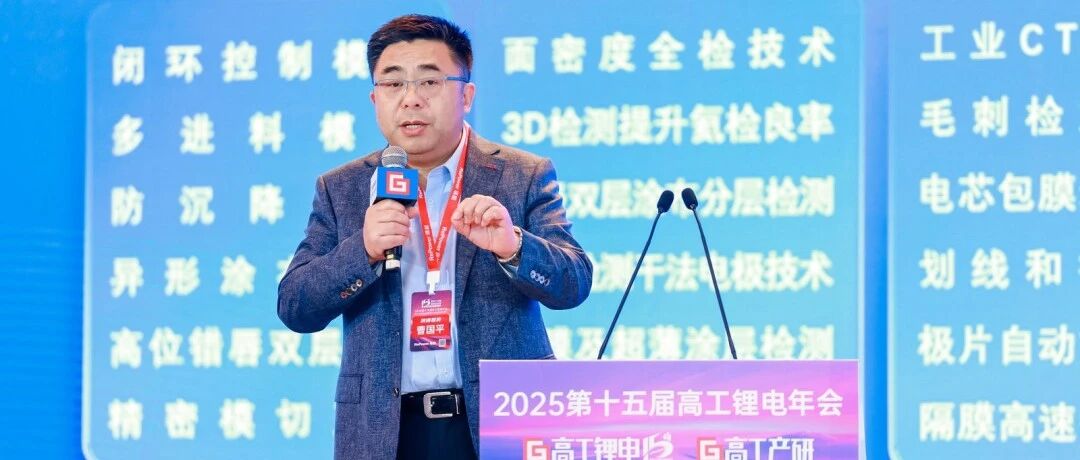
华视集团曹国平谈精密智造:从1%抽检到100%全检,电池制造重新定标
高工锂电· 2025-12-26 10:28
Core Viewpoint - Precision manufacturing and industrial testing are becoming the foundational infrastructure that defines the upper limits of product quality and the lower limits of cost in battery manufacturing [1][20]. Group 1: Manufacturing and Testing Innovations - The core of battery manufacturing is understanding the areal density of electrode materials, which is crucial for quality control [2][4]. - The industry has shifted from 1% sampling to 100% inspection of electrode materials, enabling comprehensive quality assurance [5][7]. - The implementation of full-width density inspection allows for real-time feedback and optimization of manufacturing processes, significantly reducing machine adjustment times and waste [9][10]. Group 2: Cost Reduction Strategies - By optimizing the N/P ratio from 1.15 to 1.10 through precise density measurements, significant cost savings of approximately 6.6 million yuan per production line annually can be achieved [10]. - The use of full inspection data allows for better capacity consistency management, moving the quality control process upstream in the manufacturing workflow [11][12]. Group 3: Advanced Detection Technologies - Industrial CT technology is being developed to address internal structural inspections, although its current application is limited due to time and cost constraints [13][14]. - Innovations in offline and online CT systems aim to enhance defect detection while reducing inspection times to as low as 4 seconds [15][16]. - The development of a semiconductor gas sensor for leak detection significantly lowers costs and improves efficiency compared to traditional methods [18]. Group 4: Market Positioning and Future Trends - The integration of precision manufacturing and industrial testing is becoming essential for maintaining competitive advantages in a diversifying battery technology landscape [20]. - Companies that excel in establishing robust quality and cost control infrastructures will be better positioned in the evolving market dynamics of safety, cost, and technological diversity [20].
多家磷酸铁锂头部企业集中停产检修
高工锂电· 2025-12-26 10:28
12月25日晚间, 湖南裕能、万润新能 两家企业同步发布减产检修公告,今日早间, 德方纳米 亦官宣启动年度设备检修。 三家磷酸铁锂企业集中于2025年末至2026年初启动停产检修,与12月以来业内酝酿的提价潮形成叠加,引发市场对行业供货节奏及价格走势的关 注。 此次企业 集中检修时间高度扎堆,三家检修周期均为一个月 ,公告标注核心原因均为 设备维护、保障生产稳定 。 湖南裕能公告显示,2025年以来公司产能利用率持续超100%,为维护设备正常运行、保障产品质量,计划自2026年1月1日起对部分生产线开展检 修,预计减少磷酸盐正极材料产量1.5—3.5万吨。 数据展示,湖南裕能2025年前三季度销量近80万吨,全年预计出货100万吨左右,其短期检修将直接影响行业供货节奏。 万润新能同步发布减产检修公告,因公司磷酸铁锂产线已超负荷运转,为确保生产线安全稳定高效运行,自2025年12月28日起对部分产线实施减产检 修,预计检修时长一个月,本次检修预计减少磷酸铁锂产量5000吨至2万吨。 证券代码:688275 证券简称:万润新能 公告编号:2025-047 湖北万润新能源科技股份有限公司 关于部分产线减产检修的公告 ...

六氟磷酸锂涨至17万元/吨,立中集团、多氟多回应业绩拐点
高工锂电· 2025-12-25 10:49
近期,电解液核心材料六氟磷酸锂价格强势反弹,从低位快速攀升,这一利好已直接传导至产业链 相关企业业绩, 立 中 集团、多 氟多 纷纷在互动平台披露经营向好态势。 数据显示,六氟磷酸锂价格自7月18日触底4.98万元/吨后快速反弹,目前已涨至 17万元/吨 , 涨幅显著。 这一走势终结了2023年以来的下行周期,此前该材料价格在2024年跌至5万元/吨的成本线附 近,而2022年一季度曾创下60万元/吨的天价。 本轮价格飙升源于 供给端刚性约束 与 需求端持续放量 的双重驱动。 供给侧方面,业内人士表示,六氟磷酸锂 扩产周期长达 18至24个 月 ,即便厂房建成,新产线投 产仍需10个月;加之其作为危险化学品,环评审批严格,且企业现有产能利用率不足50%便难以 获批新项目, 新产能落地通常需2.5至3年。 同时,新项目投资额高,叠加此前市场周期剧烈波动,企业扩产态度极为谨慎,今明两年难有大量 新增产能释放。 需求端则呈现多点爆发态势,为价格反弹提供强劲支撑。高工锂电董事长张小飞博士在2025高工 锂电年会上指出,2025年 动力 电 池 出货量首次突破 TWh大关 ,未来10年仍有近3倍增长空 间。 储能赛道增 ...