高工锂电

Search documents
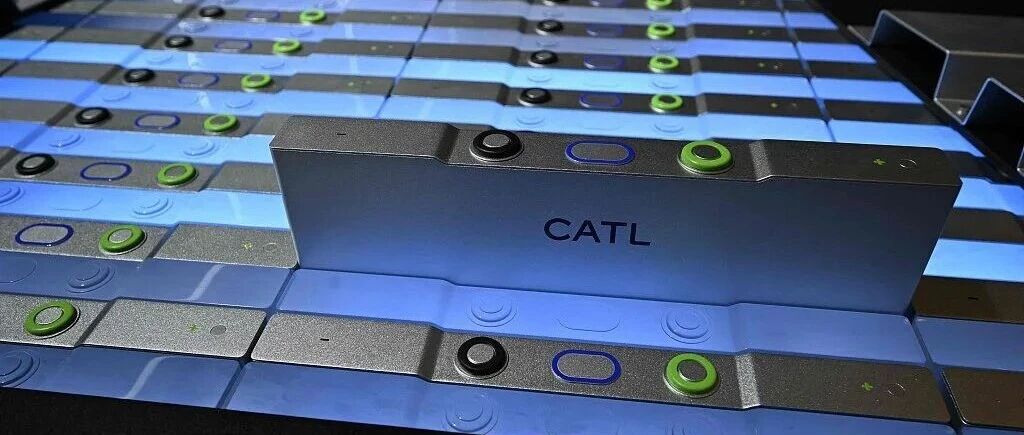
399批公告:四家电池配套零跑Lafa5,亿纬独供小鹏G7增程
高工锂电· 2025-09-15 10:58
Core Insights - The article highlights the accelerating trend of battery supplier diversification among automotive manufacturers in China, with multiple suppliers being utilized for new vehicle models [4][5][6]. Group 1: Battery Supplier Landscape - The latest vehicle declaration list from the Ministry of Industry and Information Technology includes 22 battery suppliers, indicating a shift towards a more diversified supply chain [4]. - CATL remains the leading supplier with 41 models, but faces increasing competition as several models now feature multiple battery suppliers [7][8]. - Other notable suppliers like EVE Energy, Zhongxin Innovation, and Honeycomb Energy are rapidly expanding their market presence by securing new orders from various automakers [5][6][7]. Group 2: Vehicle Manufacturer Strategies - Leap Motor's new model LAFA5 utilizes four different battery suppliers, showcasing a strategy to enhance supply chain flexibility [5]. - Geely's Zeekr X employs both self-produced and externally sourced batteries, reflecting a hybrid approach to battery sourcing [5]. - The shift in strategy is also evident as companies like Xiaopeng Motors and BAIC's Arcfox are now introducing range-extended electric vehicles to address consumer range anxiety, creating new opportunities for battery suppliers [6][9]. Group 3: Technological Developments - Lithium iron phosphate (LFP) batteries are solidifying their position in the market, with applications extending to high-end models, as seen with BYD's Fudi battery supplying the Tengshi N9 [6][9]. - Sodium-ion batteries are making their commercial debut in the commercial vehicle sector, as demonstrated by a model from King Long equipped with sodium-ion technology, indicating a potential shift in future battery technology trends [9].



每日速递|比亚迪等17家车企表态:积极落实账款支付倡议
高工锂电· 2025-09-15 10:58
Group 1: Automotive Industry - 17 automotive companies have committed to implementing the payment initiative for suppliers, responding to the call from the China Automobile Industry Association to ensure timely payments and protect supplier interests [2][2][2] - These companies have publicly pledged that the payment period for suppliers will not exceed 60 days and will adhere to the requirements in key areas such as order confirmation, delivery, acceptance, and payment [2][2][2] Group 2: Battery Materials - Enjie Co., Ltd. reported stable growth in demand and orders from downstream customers, with high capacity utilization and industry-leading product quality [5] - Yahua Group plans to start the construction of a pilot line for sulfide solid-state electrolytes in 2026, focusing on the development and industrialization of key materials [7] - Zijin Mining has launched a lithium carbonate project in Argentina with an annual production capacity of 20,000 tons, with plans for further expansion to 60,000-80,000 tons [9] - Tianhua New Energy intends to acquire 75% of Suzhou Tianhua Times for 1.254 billion yuan, enhancing its long-term development strategy in overseas lithium resource investment [11] - Taihe Technology is in the pilot testing phase for its solid-state electrolyte lithium aluminum titanium phosphate, with no current sales or partnerships established [14] Group 3: Equipment and Financing - Aotewei plans to invest 144 million yuan to increase its stake in its subsidiary, Wuxi Songci Electromechanical Co., Ltd. [16] - Dutch startup LeydenJar has completed a financing round of 13 million euros (approximately 108 million yuan) to finalize the construction of its silicon anode factory [18] - Mercedes-Benz announced successful long-distance road tests of its solid-state battery-equipped EQS vehicle, achieving a range of 1205 kilometers without recharging [19]
180GW储能目标+车企“60天账期”落地,双重利好带动锂电预期
高工锂电· 2025-09-15 10:58
Core Viewpoint - The Chinese lithium battery industry is experiencing a surge driven by multiple favorable signals, including a national policy setting clear growth targets for the energy storage sector, an industry initiative to optimize the automotive supply chain payment ecosystem, and news of CATL's production exceeding expectations [1][2][11]. Energy Storage - The primary driver of the recent surge is the top-level design in the energy storage sector, with the National Development and Reform Commission and the National Energy Administration issuing a plan aiming for a new energy storage installed capacity of over 180GW by 2027 [2][3]. - As of mid-2025, China had already achieved a cumulative installed capacity of 94.91GW, indicating a need for over 85GW of new capacity in the next two and a half years [3][4]. - Market confidence is bolstered by expectations that the policy targets are a baseline rather than a ceiling, with projections suggesting that the domestic market could see at least 120GWh of new energy storage capacity in the next two years [4][5]. - The plan aims to fundamentally address the economic challenges faced by energy storage projects by establishing a capacity pricing mechanism and compensation system, recognizing the value of energy storage facilities beyond just charge-discharge price differences [5][6][7]. Power Batteries - The automotive sector is also benefiting from strong demand for power batteries, with an initiative from the China Automotive Industry Association addressing long-standing payment issues in the supply chain by capping payment terms at 60 days [8][9]. - This initiative has garnered widespread support from 17 major automotive companies, indicating a strong consensus in the industry to protect suppliers' rights and foster a collaborative ecosystem [9]. - The Ministry of Industry and Information Technology has set ambitious sales targets for the automotive industry, aiming for approximately 32.3 million vehicle sales in 2025, including around 15.5 million new energy vehicles, providing strong backing for future power battery demand [10][11]. - CATL's production has significantly exceeded market expectations, with a reported annual production capacity of 750GWh for this year and projections of reaching 1.1TWh by 2026, marking a substantial growth trajectory for the company [11]. Market Performance - The dual demand from energy storage and power batteries is reflected in the price and stock performance across the industry, with significant price increases in key materials such as lithium iron phosphate and negative electrode materials [12][13]. - Despite a decline in raw material prices, the price of ternary materials has seen a slight increase, driven by a surge in orders from high-end electric vehicle brands [13]. - There are differing opinions on the next growth engine for the lithium battery industry, with some believing that large-scale energy storage applications will drive the next cycle, while others maintain that power batteries will remain the core profit source [13][14]. - Overall, the dual-driven model of energy storage and power batteries is establishing a new growth momentum for the lithium battery industry [14].

慕尼黑车展观察 | 中日韩电池产业,竞逐订单、产能、回收
高工锂电· 2025-09-14 10:36
Core Viewpoint - The article discusses the intense competition in the European battery supply chain, particularly between Chinese and Korean companies, and highlights three new rules reshaping the market: a new cost equation, precise demand and capacity matching, and the ultimate confrontation of industrial alliances [2][3]. Group 1: European Battery Localization - European automakers are shifting towards low-cost electric vehicles, leading to a redefinition of battery supply patterns, technology routes, and business models [4]. - The reliance on Chinese supply chains is significant, with collaborations between major European brands and Chinese battery manufacturers, indicating a deep integration of the two markets [5][6]. - Volkswagen's ambitious plans for battery production through its subsidiary PowerCo face financial challenges, highlighting the need for external capital to sustain growth beyond 2030 [8][12]. Group 2: Policy and Market Dynamics - The European Battery Alliance has invested €852 million in six battery projects, emphasizing the urgency for local industry development [11]. - Despite efforts to support local suppliers, automakers like Renault are still dependent on orders from LGES and CATL, reflecting a complex balance between securing current supply and controlling future technology [10][12]. - The challenges faced by Porsche in abandoning its battery production plans underscore the difficulties in the transition to electric vehicles amid fluctuating market demands [12]. Group 3: Chinese Battery Companies' Strategies - Chinese companies like BYD and CATL are actively pursuing battery production in Europe, aiming to maintain high standards without joint ventures [13][16]. - CATL's introduction of high-performance lithium iron phosphate batteries at the IAA showcases its strategy to dominate the next generation of battery technology [17][19]. - The rapid adaptability of Chinese battery manufacturers to market demands, such as switching production lines to lithium iron phosphate batteries, gives them a competitive edge over European counterparts [22][23]. Group 4: New Cost Definitions and Economic Considerations - The definition of "cost" in Europe is multifaceted, encompassing energy, labor, compliance, and circular economy factors, complicating the competitive landscape for battery production [28][29]. - The economic viability of lithium iron phosphate batteries is challenged by lower recycling profitability compared to ternary lithium batteries, posing a significant hurdle in the European market [32][34]. - The lack of recycling infrastructure in Europe presents both a challenge and an opportunity for Chinese companies to establish a foothold in battery recycling [35][36]. Group 5: Demand and Capacity Matching - The fluctuating demand for electric vehicles in Europe necessitates a cautious approach to capacity expansion, with companies like CATL adopting flexible production strategies [37][38]. - The ability to accurately gauge market demand and adjust production accordingly will be crucial for the success of Chinese companies in the European market [39]. Group 6: Industrial Alliances and Competitive Strategies - South Korean companies are forming strategic alliances to enhance their competitive position, while Chinese firms are expanding independently but maintaining a robust supply chain ecosystem [40][42]. - The contrasting approaches of collaborative "national teams" in Korea versus the market-driven strategies of Chinese companies highlight different paths to achieving efficiency and competitiveness in Europe [45]. Group 7: Future Outlook - The ongoing transformation in the European electric vehicle market indicates a critical period for both local and Chinese companies to adapt to new regulations and market dynamics [46]. - The future success will depend on the ability to navigate the complexities of technology, cost, policy, and strategic partnerships in this evolving landscape [47].
极狐T1爆卖4.3万辆,广汽系电池供货北汽
高工锂电· 2025-09-14 10:36
Core Viewpoint - The development of power battery matching is moving towards a more market-oriented and open direction [3] Group 1: Product Launch and Market Response - The new model, Arcfox T1, was officially launched on September 11, with over 11,000 orders within two hours of pre-sale starting on August 22, and cumulative orders exceeding 43,000 by the launch date, marking it as another "phenomenal hit" in the A0-level pure electric market [4] Group 2: Battery Technology and Collaboration - The Arcfox T1 utilizes battery cells from three manufacturers: Zhongchuang Xinhang, Inpai Battery, and JuWan Technology, marking the entry of internal battery companies into the external market [5] - Inpai Battery, previously supplying Aion from GAC, has seen its June shipment volume rank among the industry's top, with a cell energy density of 195 Wh/kg and high manufacturing consistency [5] - JuWan Technology leads in ultra-fast charging, providing a solution for charging from 30% to 80% in 16.9 minutes, with the Arcfox T1 achieving a real-world range of 479.8 km under mixed urban and highway conditions [5] Group 3: Industry Trends and Standards - The collaboration between battery manufacturers and the Arcfox T1 reflects a shift in focus for automakers from brand background to whether battery cells meet system-level standards and application requirements [6] - Entering the Arcfox supply chain serves as industry recognition of the technical strength of battery companies [7] - The Arcfox T1 features the Aurora battery system, which exceeds national safety standards, with tests showing performance far above the new national standards in various stress tests [8] - The introduction of commitments like "burn one, compensate one" and "lifetime warranty for the first owner" raises battery safety standards and pressures battery companies to enhance product reliability and consistency [8] Group 4: Market Dynamics and Future Outlook - The battery supply model for the Arcfox T1 indicates a turning point in the power battery industry, with GAC's battery companies supplying to BAIC for the first time, breaking traditional supply chain barriers between automakers [9][10] - Future competition in the power battery sector will encompass system integration, safety verification, and user experience, with the Arcfox T1 serving as an important example of this new competitive landscape [10]

动力电池突围:借车企供应链多元化破局,抢占商用车增量
高工锂电· 2025-09-13 09:52
Core Viewpoint - The lithium battery industry chain is evolving alongside the competition among automotive companies, leading to a reshuffling of market shares and opportunities for both established and emerging players in the electric vehicle (EV) sector [6][7]. Group 1: Market Performance and Trends - From January to August, the top fifteen groups in the new energy vehicle (NEV) sector sold a total of 9.146 million units, representing a year-on-year growth of 39% and accounting for 95.1% of total NEV sales, an increase of 1.5 percentage points compared to the previous year [3]. - The market concentration among the top three NEV companies has increased, but there is a warning sign as their market share peaked at 54.9% in February and has been declining monthly since then [7][8]. - The market concentration of the top five NEV companies decreased from 66% last year to 63.7%, while the top ten's concentration fell from 85.6% to 83.3% [9]. Group 2: Battery Industry Dynamics - The cumulative installed capacity of power batteries in China reached 417.9 GWh from January to August, with a year-on-year growth of 43.1%. The top two, five, and ten battery manufacturers accounted for 65.4%, 81.8%, and 94.4% of the total installed capacity, respectively, with a slight decrease in market share compared to the previous year [5]. - BYD's sales from January to August reached 2.864 million units, a year-on-year increase of 23.1%, with significant export growth of 81,000 units, a 150% increase [8]. - The battery supplier to Geely, Jiyao Tongxing, entered the top ten in power battery installed capacity with 8.21 GWh, representing 1.97% of the market, an increase of 0.66 percentage points year-on-year [8]. Group 3: Emerging Competitors and Opportunities - New entrants like Leap Motor and Xiaopeng have shown remarkable growth, with sales increasing by 140.4% and 251.8% year-on-year, respectively [11]. - Leap Motor's cumulative deliveries reached 328,900 units, with a revenue of 24.249 billion yuan in the first half of the year, a 174% increase year-on-year, marking its first half-year profit [12]. - Non-leading battery manufacturers are finding opportunities in their ability to respond quickly and provide customized services, as seen with Guoxuan High-Tech's collaboration with Volkswagen [17]. Group 4: Commercial Vehicle Market Potential - The domestic sales of new energy commercial vehicles accounted for 23% of total commercial vehicle sales, a significant increase from 15.1% the previous year, indicating substantial growth potential in this segment [18][19]. - Companies like Yuanhang Jinkui and Ruipu Lanjun are capitalizing on the trend of electrification in commercial vehicles, with significant market shares in the heavy-duty truck battery sector [18].


慕尼黑车展观察|BBA困于“昂贵”,中国车企“平价”猛攻
高工锂电· 2025-09-13 09:52
Core Viewpoint - The 2025 Munich IAA Auto Show marks a significant turning point in the global automotive industry's transition to electric vehicles, highlighting the tension between traditional European automakers and the aggressive strategies of Chinese manufacturers [1][2][18]. Group 1: European Automakers' Challenges - European automakers face a complex dilemma of slow transition and high costs, with electric vehicle prices remaining high and manufacturing costs, particularly for batteries, difficult to reduce quickly [19][33]. - The European Automobile Manufacturers Association (ACEA) warns that mandatory electric vehicle transitions could lead to a hollowing out of the supply chain, potentially impacting over 800,000 jobs [4][5]. - The shift to electric vehicles is complicated by a lack of charging infrastructure and consumer anxiety over range, which may drive consumers to purchase more fuel vehicles before the 2035 ban on combustion engines [6][27]. Group 2: Competitive Landscape - Traditional giants like BBA (BMW, Benz, Audi) are experiencing pressure from both internal and external competition, particularly from rapidly advancing Chinese electric vehicle manufacturers [7][9]. - Data shows that LGES remains the largest battery supplier for Volkswagen, providing 14.8 GWh of batteries, while Panasonic and SK On also have significant supply agreements with major automakers [11][12][13]. - A complex competitive landscape is emerging, with Japanese and Korean battery manufacturers holding significant existing and new orders, while Chinese companies are still establishing their foothold [17]. Group 3: Strategic Responses - Volkswagen is actively responding to market pressures by showcasing new entry-level electric vehicles at the IAA, aiming for a 70% share of electric vehicles in Europe by 2030 and investing €20 billion in battery factories [23][21]. - Mercedes-Benz is reevaluating its luxury strategy due to a 56% drop in profits, indicating a need to balance market share and cash flow while investing in various drive technologies [26][27]. - BMW is focusing on technological advancements with its "Neue Klasse" platform, investing over €10 billion to enhance its competitive edge in the electric vehicle market [28][31]. Group 4: Chinese Manufacturers' Strategies - Chinese brands are making unprecedented inroads into the European market, with a record 5.7% market share in the UK and Europe, and 10.7% in the electric vehicle segment [35][36]. - BYD is implementing a differentiated strategy in Europe, targeting both high-end and budget segments while committing to local production in Hungary and Turkey [40][41][42]. - Other Chinese manufacturers, such as Leap Motor and GAC, are also establishing local production and distribution networks, indicating a broad and deep penetration strategy in the European market [44][45].

中创新航完成全固态电池产线建设,锁定eVTOL、人形机器人未来应用
高工锂电· 2025-09-12 11:07
Core Viewpoint - Zhongxin Innovation has completed the production line for its self-developed 430Wh/kg all-solid-state battery, marking a significant step in the transition to solid-state technology in the global power battery industry [2][4]. Group 1: Technology Development - The company has established a clear production roadmap from semi-solid to all-solid-state batteries, leveraging its experience from leading national solid-state battery projects between 2022 and 2023 [3]. - The "Top Flow High Energy - Super Flight Battery," a semi-solid battery with an energy density of 350Wh/kg, has been introduced, featuring a solid-liquid mixed electrolyte and a unique "top flow" ear structure that reduces impedance by 50% [3][4]. - The all-solid-state battery technology, achieving an energy density of 430Wh/kg, shows significant advantages over the industry standard of 300-400Wh/kg, with breakthroughs in single-cell capacity, low-pressure operation, cycle life, and power performance [4]. Group 2: Application Scenarios - Zhongxin Innovation has strategically aligned its next-generation battery technology with emerging fields such as low-altitude economy and humanoid robots, adopting a model of exclusive supply for leading eVTOL companies [5][6]. - The company is the exclusive supplier of the first-generation battery with over 300Wh/kg energy density to key players like XPeng Heavens and GAC High Domain, and is set to supply the next-generation 350Wh/kg semi-solid battery [5]. - Collaborations with leading humanoid robot companies have shown progress, and the company is also exploring new markets in rail transportation and mining [5][6]. Group 3: Strategic Advantages - The 430Wh/kg all-solid-state battery creates a clear performance barrier, while the company’s application-driven strategy targets commercial opportunities in low-altitude economy and humanoid robots, avoiding the pitfalls of "technology waiting for market" [6]. - The unique "platform extension" capability allows the company to quickly apply its manufacturing experience from cylindrical batteries to new technologies, providing a solid industrialization foundation [6]. - This integrated approach of technological leadership, strategic precision, and reliable execution accelerates the company's industrialization process, aiming for stability and speed in the competitive energy landscape [6].

每日速递|先导智能集中交付干法设备
高工锂电· 2025-09-12 11:07
Battery - Anhui Yingli Electronics plans to acquire 77.9385% of Shenzhen Youteli Energy for 468 million yuan to expand into the notebook battery module business, aiming to capitalize on the growing AI PC market which demands higher battery performance and capacity [2] - Dao Technology announced a new generation of silicon-carbon anodes that directly coat single-walled carbon nanotubes on silicon-carbon particles, enhancing performance and reducing application costs, with ongoing R&D and industrialization efforts [2] - Enjie Co. reported stable growth in demand and orders for its separator products, maintaining high capacity utilization and industry-leading quality [3] Equipment - Xian Dao Intelligent has delivered multiple dry mixing coating equipment for solid-state battery production lines to major battery manufacturers, confirming its leading position in solid-state battery equipment [5] - Mannester introduced a dual-sided coating system for solid-state battery electrolytes, achieving high production efficiency and precise control over coating thickness, which enhances battery performance [6] - Huazi Technology has sufficient orders for lithium battery manufacturing equipment and has delivered several semi-solid battery automatic production lines to leading companies, positioning itself for future growth opportunities in solid-state and semi-solid battery technologies [7]
比亚迪兆瓦闪充布局欧洲
高工锂电· 2025-09-12 11:07
Core Viewpoint - The article discusses the growing opportunities for Chinese electric vehicle (EV) brands, particularly BYD, in the European market, focusing on the development of charging infrastructure as a key factor for expansion [4][5]. Market Opportunities - Europe is experiencing slow development in charging network infrastructure, with insufficient investment and uneven distribution, primarily concentrated in Germany, the Netherlands, and France, creating a significant demand gap for domestic companies to enter the market [4]. - The European Commission aims to install 3.5 million charging stations by 2030, with projections indicating that the number of public charging stations in Europe will exceed one million by 2024 [6][7]. BYD's Strategy - BYD is rapidly advancing its strategy of collaborating with charging facilities, showcasing its high-end brand Tengshi and several key models at the IAA exhibition in Germany [5]. - BYD plans to introduce its megawatt fast-charging technology in Europe, with an initial rollout of 200-300 charging stations expected by the second quarter of 2026 [5]. - The company aims to establish over 2,000 stores in Europe by the end of 2026, with a target of 120 dealerships in Germany by the end of this year [5]. Local Competition and Collaboration - Local European companies are also forming alliances to enhance charging infrastructure, such as the Spark alliance formed by Atlante, Ionity, Fastned, and Electra to create the largest charging network in Europe [6][8]. - The establishment of such alliances may accelerate the collaborative development of charging networks across different countries and regions in Europe [8]. Challenges in Infrastructure Development - There are significant contradictions between the ambitious construction goals and the existing electrical grid conditions, as well as the complex regulatory frameworks across different European countries [7]. - The aging electrical grid in some areas poses challenges for accommodating the increased electricity demand from large-scale charging station installations, necessitating upgrades or new constructions [7]. Technological Advantages - BYD's megawatt fast-charging technology is expected to attract users with high energy replenishment efficiency requirements [9]. - The company has developed a mature "solar-storage-charging" integrated solution that could mitigate the impact of fast-charging stations on local electrical grids, which may be adapted for the European market [9].