材料汇

Search documents
【院士报告】32页PPT详解新能源汽车行业革命技术路线图
材料汇· 2025-05-22 15:26
Core Viewpoint - The article discusses the transformative phases of the new energy vehicle (NEV) industry, focusing on three main areas: power electrification, vehicle intelligence, and energy decarbonization, highlighting the expected growth and technological advancements in these sectors. Group 1: Power Electrification - The power electrification phase is characterized by the emergence of electric vehicles (EVs), with significant milestones such as the establishment of a "pure electric drive" strategy in 2010 and the surpassing of 1 million units sold in 2018 [3] - In 2021, EV sales reached 3.52 million units, marking a significant breakthrough in the electrification of passenger vehicles [3] - Projections indicate that by 2025, EV sales will exceed 15 million units annually, with a stable growth period expected thereafter, potentially reaching 100 to 160 million vehicles by 2030 [3] Group 2: Solid-State Battery Development - The solid-state battery sector is seeing collaborative innovation, with the establishment of the China All-Solid-State Battery Collaborative Innovation Platform in January 2024, involving various stakeholders including academicians and leading enterprises [5][6] - The focus is shifting towards sulfide solid electrolytes, with numerous companies investing in research and development to establish mass production capabilities by 2027-2028 [9] - Key players are expected to achieve significant production milestones, such as Idemitsu's plan for a 100-ton annual production line by 2027-2028 and AGC's anticipated mass production of sulfide solid electrolytes by 2027 [9] Group 3: Vehicle Intelligence - The vehicle intelligence phase is projected to explode in 2025, driven by advancements in AI and intelligent driving technologies, with expectations for L4-level fully autonomous vehicles to be commercially viable by 2030 [20] - The integration of AI in vehicle systems is expected to enhance the entire lifecycle of NEVs, from design and manufacturing to usage and recycling [21][29] Group 4: Energy Decarbonization - The energy decarbonization phase is set to gain momentum with the implementation of China's dual carbon strategy, aiming for a significant increase in renewable energy sources by 2030, including a target for non-fossil energy to account for over 50% of total power generation [37] - By 2035, it is anticipated that green electricity will become the primary power source for charging, with the number of electric vehicles reaching between 200 to 300 million [37][42] Group 5: Future Industry Outlook - The NEV industry is expected to evolve into a multi-trillion-dollar sector, with projections indicating that the total annual sales of NEVs could approach 30 million units by 2035, supported by advancements in battery technology and energy systems [54] - The integration of various energy systems, including vehicle-to-grid (V2G) technologies, is anticipated to revolutionize energy consumption and management in urban environments [51][53]


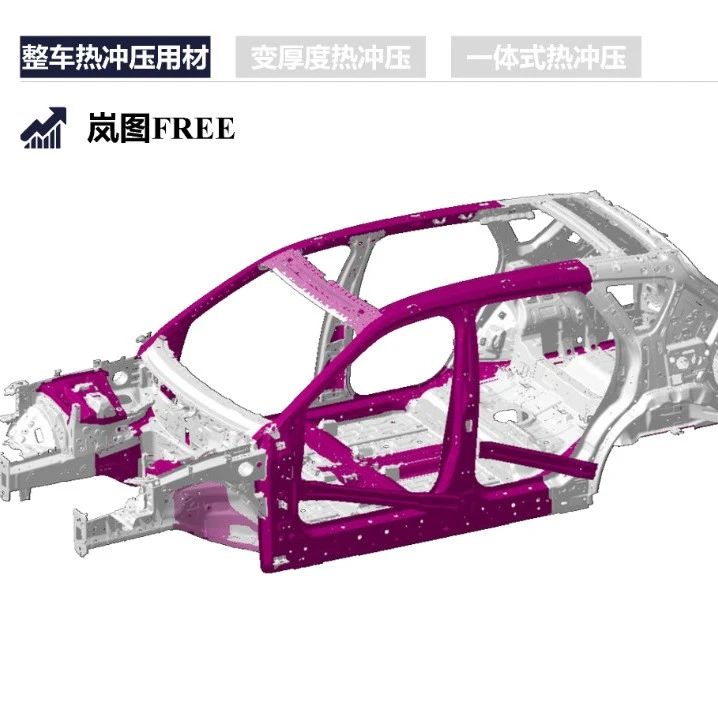
【专家报告】岚图汽车热冲压技术应用及展望
材料汇· 2025-05-22 15:26
Core Viewpoint - The article discusses the significance and applications of hot stamping technology in the automotive industry, particularly focusing on its benefits for vehicle weight reduction, energy efficiency, and safety enhancements. Group 1: Significance of Hot Stamping - Hot stamping technology is beneficial for the automotive sector as it promotes energy savings by reducing vehicle weight, which in turn lowers fuel consumption and CO2 emissions [4][5][6] - The technology also contributes positively to manufacturing processes by allowing for complex part shapes and reducing material waste [5][6] Group 2: Applications of Hot Stamping - The article highlights the use of hot stamping in various vehicle components, including the A-pillar and B-pillar, which utilize high-strength steel to enhance safety and reduce weight [11][18][20] - Specific examples include the integration of multiple components into a single part through hot stamping, resulting in significant weight savings, such as a reduction of 0.9 kg for the A-pillar and 2.8 kg for the B-pillar [17][18] Group 3: Future Outlook - The article anticipates further advancements in hot stamping technology, including the development of new materials and processes that will enhance the performance and safety of vehicles while continuing to reduce weight [34][36]
专家报告:我国生物基材料发展现状及高质量发展路径(附37页PPT)
材料汇· 2025-05-21 15:41
Core Viewpoint - The article discusses the rapid development and increasing production capacity of bio-based materials globally, driven by the need to address climate change and reduce plastic pollution. Major chemical companies are investing in this sector, with significant growth expected in bio-based plastics and chemicals over the next few years [9][10]. Global Bio-based Plastics Production Capacity - Global bio-based plastics production capacity is projected to increase from 2.22 million tons in 2022 to 6.3 million tons by 2027, with an annual growth rate of 23% [9]. - The current domestic production capacity of bio-based materials in China is approximately 11 million tons, with an output of around 7 million tons and a market value exceeding 150 billion yuan [9]. Development Trends in Bio-based Materials - Countries like the US, EU, Japan, and China have implemented policies to promote the development of bio-based materials and bio-economy [10]. - The industry is focusing on expanding the variety of bio-based materials, shifting from food-based to non-food biomass as raw materials, and enhancing recycling efficiency [13]. Key Areas of Bio-based Chemicals - Bio-based chemicals include organic acids, amino acids, and platform chemicals, with a wide range of applications in food, pharmaceuticals, and agriculture [12][25]. - China is the largest producer and exporter of amino acids, with significant export ratios for glutamic acid, lysine, and threonine [25]. Bio-based Fuels - Biofuels, including biodiesel and biojet fuel, are produced from various biomass sources, with biodiesel production capacity in China reaching 454,000 tons in 2023 [64][70]. - The article highlights the challenges in the biofuel sector, such as high production costs and raw material supply instability [69]. Bio-based Resins and Polymers - Bio-based resins like polylactic acid (PLA) and bio-based nylon (PA) are gaining traction, with PLA production capacity around 850,000 tons per year, primarily in China, the US, and Thailand [49][54]. - The bio-based nylon industry is rapidly developing, with significant investments and expected demand growth of around 30% over the next five years [53]. Future Outlook - The OECD predicts that over 20% of petrochemical products could be replaced by bio-based products in the next decade, with the EU forecasting that 6-12% of chemical feedstocks and 30-60% of fine chemicals will be bio-based by 2030 [13].

【培训课件】255页详解半导体材料
材料汇· 2025-05-21 15:41
点击 最 下方 " 推荐"、"赞 "及" 分享 ","关注"材料汇 添加 小编微信 ,遇见 志同道合 的你 正文 材料与文明 青铜器时代 电子材料时代 eoos 005 ■ 公元前8-9000年,新石器时代开始; ■ 公元前3000年,青铜时代开始; ■ 公元前1300-1400年,铁器时代开始。18世纪第一次工业革命 蒸汽时代;19世纪中电动机发明。第二次工业革命 电气时代; ■ 20世纪初,半导体技术开始应用,20世纪中期半导体产业开始 形成,开始了以Si等半导体材料为代表的电子材料时代。 ∞ 公众号·材料汇 半导体材料 现代社会文明的先导 现代工业的基石 ■ 1946年电子管计算机与1976年微机的指标对比: 计算机体积缩小30万倍,功耗降低了5万多倍,重量降 低了6万倍,平均故障率和价格大幅度的下降,计算机 的普及率迅速提高;集成电路的采用。 ■ 半导体器件深入到日常生活和工业生产等各个领域。 世界人均晶体管占有量本世纪初已超过1亿只。 有人把受半导体技术推动的信息时代的到采称之为第 三次工业革命的开始; ■"谁掌握了半导体技术(微电子),谁就掌握了主动 权" % 公众号·材料汇 微电子技术发展的驱动 ...

倒计时2天!中科院宁波材料所、国创中心、甬江实验室、北大、港大、西交大、哈工大等演讲 聚焦 “金刚石+” 5月22-24日苏州见
材料汇· 2025-05-20 15:10
Core Viewpoint - The "2025 Future Semiconductor Industry Innovation Conference" will focus on the integration of diamond and compound semiconductors, addressing key industry challenges and exploring innovative solutions for semiconductor materials and applications [1][3][13]. Group 1: Conference Overview - The conference will be held from May 22 to 24, 2025, at the Hilton Garden Inn in Suzhou, Jiangsu [4][5]. - It aims to create a collaborative platform for academia and industry to promote the integration of diamond technology with other semiconductor technologies [13][22]. Group 2: Key Topics and Discussions - The conference will cover critical topics such as high-power device heat dissipation, substrate preparation, heterogeneous integration, and polishing technology [3][13]. - Discussions will include advancements in diamond semiconductor materials, GaN power devices, and the application of diamond in AI computing chip packaging [18][20]. Group 3: Registration and Participation - Registration fees are set at 2800 yuan per participant and 1500 yuan for students, with discounts available for group registrations [27]. - Participants will receive conference materials, meals, and access to all sessions during the event [27].

新质生产力:100+页PPT详解氢能/固态/风电/锂电/光伏/储能投资策略
材料汇· 2025-05-20 15:10
点击 最 下方"推荐"、"赞"及" 分享 ","关注"材料汇 添加 小编微信,遇见 志同道合 的你 正文 核心观点 2、风电:欧洲海风需求高景气度,国内海风全面开工。 (a) 海风:前期滞缓项目有望于年内开工,2025年净风将迎来集中装机并网。推荐大金重工、受益标的:东方电缆、海力风电、 泰胜风能、天顺风能。 (b) 陆风:2024年为招标大年,2025年有望成为交付大年,大兆瓦零部件或迎来结构性供应短缺。同时,陆上风机中标价有望止 跌,产业链将修复利润。受益标的:金雷股份、日月股份、三一重能、金风科技、明阳智能、运达股份。 3、锂电:加工费及碳酸锂底部区间,关注有alpha的公司。 (a) 锂电主链:关注有阿尔法的锂电龙头。受益标的:宁德时代、亿纬锂能/中创新航、湖南裕能/万润新能、尚太科技/樊泰来/中 科电气、科达利、天赐材料/新宙邦等。 (b) 欧洲电动车产业链:新车型带动放量。受益标的:宁德时代、湖南裕能、中熔电气、威迈斯、富特科技、浙江荣泰、敏突集 团、铭利达等。 (c)充电桩:行业增速有所放缓,期待to G端资本开支放量。受益标的:盛弘股份、绿能慧充、通合科技、特锐德。 (a) 逆变器:出口重回增 ...



半导体材料:光掩模的国产替代及下游应用分析(附50页PPT)
材料汇· 2025-05-19 15:22
Core Viewpoint - The article discusses the current state and future prospects of the photomask industry, highlighting the challenges faced by domestic companies in China and the potential for growth driven by increasing demand in downstream applications such as semiconductors and flat panel displays [2][3][4]. Group 1: Photomask Industry Overview - Photomasks are critical materials in microelectronics manufacturing, serving as templates for transferring circuit designs onto substrates or wafers [2][5]. - The global photomask market has been growing steadily, reaching a size of $5.2 billion by 2022 [2]. - The domestic photomask industry in China is currently lagging, with reliance on foreign imports for upstream equipment and materials [3][35]. Group 2: Market Dynamics - The demand for photomasks is driven by the growth of downstream industries, particularly in consumer electronics and semiconductor manufacturing [35][48]. - The photomask industry exhibits a counter-cyclical property, where sales can increase during downturns in the panel industry as manufacturers invest in new product development [3][48]. - The semiconductor photomask market is dominated by companies from the US and Japan, with a significant portion of the market share held by firms like Intel, Samsung, and TSMC [3][4]. Group 3: Domestic Companies and Development - Domestic companies such as Qingyi Optoelectronics and Luwei Optoelectronics are making strides in the photomask sector, with advancements in technology and market share [4][30]. - The article emphasizes the importance of mergers and acquisitions for domestic firms to enhance their technical capabilities and compete with established international players [4][30]. - The shift of panel and semiconductor production capacity to mainland China presents an opportunity for local photomask manufacturers to grow [4][65]. Group 4: Technological and Market Trends - The photomask production process involves several complex steps, requiring high precision and advanced technology [17][21]. - The industry is witnessing a trend towards larger and more sophisticated display panels, which in turn increases the demand for advanced photomasks [52][65]. - The market for photomasks is expected to continue growing, with projections indicating a rise in the domestic market size from 7.412 billion yuan in 2019 to 12.436 billion yuan in 2023 [48][49].






51页PPT详解铜产业链深度报告
材料汇· 2025-05-19 15:22
Core Viewpoint - The copper industry is facing a structural shift characterized by a rigid supply shortage at the mining end, excess smelting capacity, and a transition between old and new demand drivers, leading to a long-term upward trend in copper prices [19][24][25]. Group 1: Upstream Resources (Mining and Recycling) - Global copper reserves are approximately 980 million tons, with a mining lifespan of about 40 years based on current production levels [32]. - In 2024, global copper mine production is expected to reach 23 million tons, with a year-on-year growth of 1.8% [35]. - China's copper mine production is projected at 1.8 million tons in 2024, a decline of 1.1% year-on-year, primarily due to resource depletion and environmental restrictions [42][46]. Group 2: Recycling Sector (Recycled Copper) - The recycled copper market is supported by national strategies, aiming for a production target of 4 million tons by 2025, with recycled metal supply accounting for over 24% [4]. - In 2024, China is expected to import 2.25 million tons of scrap copper, with domestic recycling capacity reaching 2.49 million tons [5][48]. - The price of recycled copper is projected to show significant fluctuations, with an average price of 70,400 yuan per ton in 2024 [5]. Group 3: Midstream Smelting - The global refined copper production in 2024 is estimated at 27.634 million tons, with a year-on-year increase of 4.3% [9]. - China is the largest producer of refined copper, accounting for 49.9% of global production in 2024, with a projected output of 13.644 million tons [10]. - The smelting industry is experiencing a decline in processing fees, with long-term contracts expected to drop to $21.25 per ton by 2025, significantly below the breakeven point [8][20]. Group 4: Midstream Processing (Copper Products) - In 2024, China's copper processing output is expected to reach 23.503 million tons, representing over 50% of global production [11]. - The industry is characterized by low concentration, with the top five companies holding only 30% of the market share [11]. - The demand for high-end copper products is increasing, driven by the growth in new energy and infrastructure sectors [12][13]. Group 5: Downstream Demand (End Applications) - Global refined copper consumption in 2024 is projected at 27.33 million tons, with China accounting for 58% of this demand [14]. - The demand structure in China shows that electricity and power grids account for 46% of refined copper consumption, while new energy applications are rapidly growing [15]. - The transition from traditional to new energy applications is expected to drive significant growth in copper demand, particularly in sectors like electric vehicles and renewable energy [19][21]. Group 6: Supply and Demand Balance - The global refined copper supply-demand balance is expected to show a surplus of 19,000 tons in 2025, a decrease from the previous year's surplus of 30,200 tons [16]. - China's refined copper consumption is projected to grow by 2.9% in 2025, reaching 16.21 million tons, driven by new energy infrastructure investments [18]. - The copper market is anticipated to face a tightening supply situation due to the rigid shortage of mining resources and the acceleration of smelting capacity clearance [19][20]. Group 7: Investment Recommendations - Key investment opportunities include resource leaders like Zijin Mining and Longyan Copper, which are positioned to benefit from global resource control [21]. - Smelting leaders such as Jiangxi Copper are expected to gain from policy-driven supply-side reforms and the elimination of inefficient capacity [20]. - Companies focusing on high-end processing and recycled copper, such as Hailiang Co. and Gree Environmental, are likely to benefit from technological advancements and policy support [21].





55页PPT详解新材料产业分析及投资思路(附10篇新材料宝典)
材料汇· 2025-05-18 11:51
Core Viewpoint - The new materials industry is a strategic and foundational sector that supports modern industrial development and is crucial for optimizing and upgrading industrial structures, enhancing manufacturing capabilities, and fostering emerging industries. Summary by Sections New Materials Overview - New materials refer to materials with superior performance and special functions that are either newly developed or significantly improved from traditional materials, serving as the foundation for high-tech development and modern industrial advancement [4]. - New materials can be classified based on composition, function, and application, with definitions focusing on technological, process, and application innovations [4]. Importance of New Materials - New materials are essential for national economic construction, social progress, and national defense security, acting as a guarantee for the success of major engineering projects [5]. - The new materials industry is characterized by its foundational, pioneering, and forward-looking nature, driving technological revolutions in various fields such as microelectronics, biotechnology, energy technology, and aerospace [5]. Characteristics of the New Materials Industry - The new materials industry exhibits "three highs and three longs": high difficulty, high investment, high barriers, long life cycles, long application periods, and long R&D cycles [6][7]. - Most new materials companies struggle to achieve profitability within three years due to high upfront costs and uncertain market prospects [6][9]. Global Competition Landscape - Countries are placing high importance on new materials, with developed nations striving to seize technological leadership, while the focus of the industry is gradually shifting towards the Asia-Pacific region [10]. - China lags in the development and production of advanced high-end materials, with only 13 materials being internationally leading and 39 being advanced, highlighting a significant gap compared to countries like the USA [10]. Current Status of China's New Materials Industry - The new materials industry in China has seen substantial growth, with a compound annual growth rate exceeding 20%, and the total output value surpassing 6 trillion yuan by 2021 [13]. - The market size of the new materials industry is projected to reach 7.6 trillion yuan in 2023 and exceed 8 trillion yuan in 2024, with an average annual growth rate of 13.5% from 2020 to 2025 [14]. Key Areas of Development - The industry encompasses a wide range of materials, with a focus on strategic advanced electronic materials, advanced structures and composites, and nanomaterials, among others [15]. - Key new materials include advanced steel, new display materials, high-quality high-temperature alloys, and green energy materials, reflecting the diverse applications and technological advancements in the sector [16]. Regional Distribution - China's new materials industry is developing in clusters, with the Bohai Rim, Yangtze River Delta, and Pearl River Delta being the primary regions for industry concentration [17]. - These regions benefit from dense enterprise distribution, numerous research institutions, and advantages in funding and market access [17]. Investment Trends - The new materials industry is experiencing rapid growth in investment, with significant capital inflow and an increasing number of investment projects [36][37]. - In 2024, the new materials sector recorded 397 investment events, reflecting a 33.2% year-on-year increase, with total investment amounting to 44 billion yuan [37]. Future Development Trends - The industry is expected to accelerate its transformation and upgrade, focusing on high-end materials for emerging sectors such as high-end equipment, automotive manufacturing, and renewable energy [28]. - The trend towards domestic substitution is becoming more urgent, driven by international trade dynamics and the need for national strategic security [29].

【新材料投资】三变四坑、七大难题及投资思路(9028字)
材料汇· 2025-05-18 11:51
Core Viewpoint - The article discusses the evolving landscape of material investment, highlighting both the opportunities and pitfalls in the sector, particularly in the context of technological advancements and market dynamics [3][4][8]. Group 1: Reasons for Increased Investment in Materials - The shift in terminal industries, particularly in solar energy and electric vehicles, has positioned China as a leader in battery materials, leading to the emergence of numerous large public companies and investment projects [4][5]. - The "sticky" nature of materials and their cyclical mismatch with industries allows established materials to maintain strong positions even after the decline of the industries they once supported [5]. - The drive for self-sufficiency in critical materials, spurred by geopolitical tensions, has led to significant government support for domestic material development, particularly in semiconductors and carbon fibers [5][6]. - Technological upgrades present opportunities for new materials to emerge, especially in fields like bio-based materials and fine chemicals, where Chinese startups can leverage their technological advantages [6][7]. Group 2: Investment Pitfalls in Materials - The "domestic uniqueness" trap occurs when companies claim to be the first to bring technology to China, but face rapid competition from returning expatriates and local firms, leading to market saturation and declining profits [9]. - The "second curve" trap highlights the challenges faced by companies that attempt to expand their product lines based on previous successes, often leading to increased costs and stagnant revenue [10]. - The "micro-innovation" trap is prevalent in the booming renewable energy sector, where startups may solve niche problems but struggle to scale against established competitors [11]. - The "industry introduction" trap illustrates the difficulties new materials face in gaining acceptance in conservative industries, where the risks of switching materials can deter adoption [12][13]. Group 3: Systemic Issues in Material Investment - Market space limitations exist as large materials often compete with global giants, while niche materials face limited market sizes and high innovation demands [18]. - The disconnect between research and commercialization cycles can lead to significant delays in realizing returns on investment, complicating the identification of viable opportunities [19]. - High premium pricing for new materials can hinder market acceptance, especially when they do not offer clear economic advantages over existing options [20][21]. - Divergent goals between academia and industry can lead to wasted resources and misaligned expectations in material development [22]. - The growth stages of material companies require diverse skill sets, making it challenging to find founders who can navigate all phases effectively [23]. - Capital influx can lead to overvaluation and misalignment of development stages, particularly in high-interest areas like battery and semiconductor materials [24]. - Competitive pressures can force companies to engage in price wars, undermining profitability and sustainability [25]. Group 4: Investment Strategies for Platform Materials - Investing in platform materials involves identifying companies that can leverage their materials across multiple applications, akin to a diversified investment strategy [29][32]. - Successful platform materials often emerge from efficiency innovations that allow for cost reductions and market penetration [33]. - The potential for significant market expansion exists if companies can achieve cost reductions while maintaining performance, allowing them to enter broader applications [34][37].