材料汇

Search documents
一张PPT看懂汽车玻璃在智能化浪潮下的新机遇
材料汇· 2025-05-27 15:12
Core Viewpoint - The automotive glass industry is a high-quality component sector with continuous upgrade capabilities, driven by factors such as global automotive sales, market share, vehicle glass area, and price per square meter [4][5][7]. Group 1: Revenue Growth Drivers - The revenue growth of Fuyao Glass's automotive glass business is influenced by four main factors: global automotive sales and ownership, Fuyao's global market share, the area of glass per vehicle, and the price per square meter of automotive glass [4][5]. - The current global automotive production and sales are experiencing slow growth, while the vehicle ownership continues to rise, contributing positively to automotive glass sales [5]. - Fuyao's global market share in automotive glass is expected to continue increasing as competitors show low expansion willingness [5][13]. - The upgrade from small sunroofs to panoramic sunroofs has significantly contributed to the increase in the area of automotive glass per vehicle [5][12]. Group 2: Product Functionality Upgrades - The automotive glass industry is witnessing continuous upgrades in functionality, including heat insulation, sound insulation, heating, hydrophobic properties, dimming, antennas, lightweight designs, HUD (Heads-Up Display) windshields, and panoramic roofs [7][10]. - The value of automotive glass per vehicle is increasing due to the integration of these advanced functionalities, with specific upgrades leading to substantial increases in average selling prices (ASP) [10][12]. Group 3: ASP Trends - Fuyao's automotive glass ASP has been steadily increasing, with the price per square meter rising from 131.06 yuan in 2012 to an estimated 229.11 yuan in 2024, reflecting the ongoing functional upgrades [13][14]. - The proportion of high-value-added products in Fuyao's automotive glass revenue is also on the rise, with a 5.02 percentage point increase expected in 2024 compared to the previous year [13][14]. Group 4: Electric and Intelligent Trends - The electric vehicle (EV) trend is driving the adoption of panoramic glass roofs, which are becoming a standard feature in many new models, enhancing aesthetics and cost-effectiveness [19][24]. - The penetration rate of panoramic glass roofs in domestic passenger vehicles has rapidly increased since 2020, reaching over 14% by December 2024 [24][25]. - HUD technology is becoming more prevalent, with the penetration rate of W/AR-HUD in domestic passenger vehicles surpassing 10% in 2023, projected to exceed 45% by 2027 [33][34]. Group 5: Smart Glass Innovations - Smart dimming glass is emerging as a key feature in automotive glass, enhancing comfort by adjusting transparency based on lighting conditions [40][44]. - The integration of glass antennas is gaining traction, as glass serves as an ideal medium for modern communication needs, allowing for better signal reception without compromising vehicle aesthetics [50][51]. - Glass displays are anticipated to be a significant trend in smart cockpits, with solutions including integrated displays and projection technologies [53].



科睿迅:半导体核心材料国产化领军者,开启PVA Brush领域新篇章
材料汇· 2025-05-27 15:12
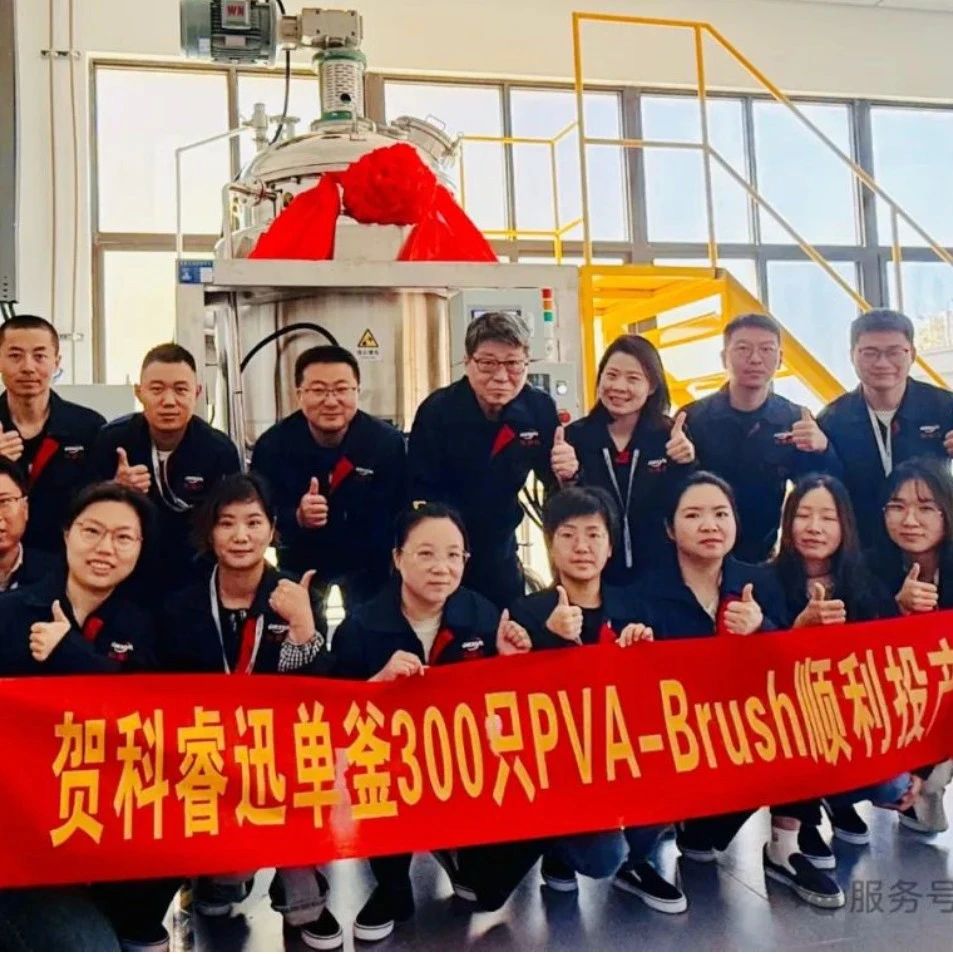
Core Viewpoint - The article highlights the breakthrough of Kereon (Shanghai) Material Technology Co., Ltd. in achieving domestic production of CMP post-cleaning brushes, marking a significant step towards self-sufficiency in the semiconductor materials industry in China [2][21]. Group 1: Core Technology Breakthrough - Kereon has developed a semiconductor-grade PVA cleaning brush that has passed validation from leading domestic Fab factories, filling a gap in the domestic market [2][4]. - The PVA cleaning brush features three core advantages: efficient cleaning, ultra-high cleanliness, and chemical resistance, making it suitable for advanced semiconductor processes [4][6]. Group 2: Production Capacity - The first domestic production line for PVA cleaning brushes, with an annual capacity of 200,000 units, was established in Nantong Economic Development Zone, breaking the 100% reliance on imports [6][9]. - The factory operates under a class 100 cleanroom standard, ensuring minimal particle contamination and a long lifespan of over 5,000 cleaning cycles for the brushes [6][9]. Group 3: Capital Support - Kereon secured 5 million yuan in angel financing in early 2024, with plans to attract leading industry funds in 2025 to enhance production line construction and product iteration [12][13]. - The core team has over 30 years of experience in PVA downstream product development, establishing a complete technical loop from material research to mass production [12][13]. Group 4: Industry Value - The global advanced packaging market is projected to reach $85 billion by 2025, with Kereon's PVA cleaning brushes playing a crucial role in the domestic semiconductor materials localization process [16][15]. - Kereon's products can reduce costs compared to imported alternatives, enhance supply chain security, and drive technological innovation in semiconductor cleaning processes [16][15]. Group 5: Future Layout - Kereon aims to expand its application of PVA materials beyond semiconductor cleaning brushes, with plans to cover major Fab factories in China by 2025 and gradually enter international markets [18][17]. - The company is positioned to become a significant player in the global semiconductor materials sector, leveraging its advancements in technology and production capabilities [18][21].
培训资料:如何做研究与投资?从四个逻辑分析几个大类行业
材料汇· 2025-05-26 14:10
Core Insights - The article emphasizes the importance of time management in research and investment, highlighting that time is the most scarce asset for individuals in this field [3][4] - It advocates for focusing on significant issues and understanding the macro, industry, business, and financial logic to make informed decisions [5][6][7] - The article discusses the essence of industries and key changes, stressing the need to grasp core elements driving industry development and company growth [7][8][9] Group 1: Importance of Research Methodology - Time management is crucial, and researchers should prioritize significant problems over minor details [3][4] - A scientific and reasonable research methodology should be established and continuously optimized [4] - Research should be approached through four logical frameworks: macro logic, industry logic, business logic, and financial logic [5][6] Group 2: Understanding Industry Dynamics - Different industries have unique characteristics and core drivers that evolve over time [7][8] - The article highlights the importance of recognizing key changes at critical moments in an industry’s lifecycle [8] - For example, in the TMT sector, the end of the smartphone boom signifies a shift in innovation dynamics [8] Group 3: Core Competencies of Companies - Companies must align their strategies with macro and industry trends to succeed [6][7] - The essence of a business model should adapt to societal trends and human nature to ensure sustainability [10] - The article emphasizes the role of entrepreneurial spirit and governance structure as core competitive advantages [11] Group 4: Industry-Specific Insights - In the consumer goods sector, the article notes the diminishing demographic dividend and the shift towards experience and service-oriented consumption [12][13] - The service industry is expected to grow as consumer spending shifts towards experiences and services [14][15] - The manufacturing sector retains competitive advantages due to its comprehensive capabilities and large domestic market [18][19] Group 5: Research Process and Individual Traits - The research process involves induction, deduction, and empirical validation, which are interrelated [23][24][25] - Key traits for successful researchers include curiosity, honesty, and independence [26][27][28] - Continuous learning and building a personal research framework are essential for effective research [35][36] Group 6: Practical Recommendations - Establish a personal wisdom circle to enhance research quality [33][34] - Engage in extensive reading and learning to stay informed about industry trends [35] - Create structured research documentation to improve efficiency and facilitate future analysis [37]

机器人腱绳深度:市场空间、发展趋势、产业链及公司
材料汇· 2025-05-26 14:10
Core Viewpoint - The article discusses the advancements and applications of tendon-driven dexterous hands in humanoid robots, highlighting the importance of tendon materials and transmission mechanisms in enhancing performance and flexibility [4][11][20]. Group 1: Transmission Mechanisms - Tendon transmission is crucial for dexterous hands, utilizing mechanisms like tendon, gear, and linkage transmissions, each with distinct advantages and disadvantages [4][6][10]. - Tendon transmission mimics human muscle function, allowing for lightweight and flexible designs, which improve speed and reduce energy consumption [6][14]. - The main tendon transmission schemes include N-type, N+1 type, and 2N type, each varying in the number of actuators and load capacities [8][10][13]. Group 2: Material Selection - Tendon materials are primarily categorized into stainless steel and high molecular fibers, with high molecular fibers being more widely used due to their superior properties [11][14]. - UHMWPE fibers are favored for their high strength and low weight, significantly enhancing the dexterous hand's performance [14][46]. - The tensile strength of UHMWPE fibers is reported to be 15 times that of high-quality steel, making them ideal for robotic applications [14][15]. Group 3: Industry Policies and Market Potential - Recent policies in China emphasize the development of humanoid robots, which is expected to drive demand for tendon materials [17][18]. - The market for humanoid robots is projected to reach significant levels, with estimates suggesting a market size of 352 billion yuan for tendon materials alone, based on the expected production of 10 million units [34][36]. - The humanoid robot industry is entering a competitive phase, with various companies developing advanced models, indicating a robust growth trajectory [31][33]. Group 4: Application Cases - Tesla's Optimus series showcases the evolution of tendon-driven dexterous hands, with each generation improving in flexibility and functionality [20][24][25]. - The 1X NEO Gamma home service robot utilizes tendon-driven designs, demonstrating the practical applications of these technologies in consumer products [26][27]. - Various international research and development efforts are ongoing, leading to the creation of multiple tendon-driven robotic hands, indicating a growing interest in this technology [20][23].


一份PPT带你看懂光刻胶分类、工艺、成分以及光刻胶市场和痛点
材料汇· 2025-05-25 14:37
Core Viewpoint - The article provides an in-depth analysis of photoresists, focusing on their types, compositions, and the processes involved in their application in semiconductor manufacturing. Group 1: Types of Photoresists - Positive photoresists undergo a decomposition reaction upon exposure to light, resulting in high resolution and good contrast, but they have lower adhesion and higher costs [3][8]. - Negative photoresists form a cross-linked structure upon exposure, which enhances adhesion and etch resistance, but can lead to deformation during development [3][37]. Group 2: Composition of Positive Photoresists - The main component of positive photoresists is phenolic resin, which is soluble in alkaline developers and can be easily cross-linked through thermal reactions [12][35]. - The average molecular weight of the resin typically ranges from 1000 to 3000 g/mole, consisting of 8 to 25 repeating units [17]. Group 3: Development Process - The development process for positive photoresists involves using alkaline developers, which are often based on sodium hydroxide or potassium hydroxide solutions [94]. - The choice of developer is crucial, as it must be compatible with the photoresist to ensure effective development without residue [102][106]. Group 4: Process Conditions - Recommended process conditions for applying photoresists include specific spin speeds and baking temperatures to achieve desired film thickness and uniformity [62][73]. - The article emphasizes the importance of controlling environmental factors such as humidity and temperature during the photoresist application process to avoid defects [78][113]. Group 5: Sensitivity to Environmental Factors - Positive photoresists are particularly sensitive to humidity, which can affect their performance during the development process [25][36]. - The article discusses the impact of temperature on the development rate, highlighting the need for precise control to avoid underdevelopment or overdevelopment [113][116]. Group 6: Conclusion - The article concludes that understanding the properties and processes of photoresists is essential for optimizing semiconductor manufacturing and achieving high-quality results [1][10].

专家报告:尼龙纤维新材料的开发与应用(附25页PPT)
材料汇· 2025-05-25 14:37
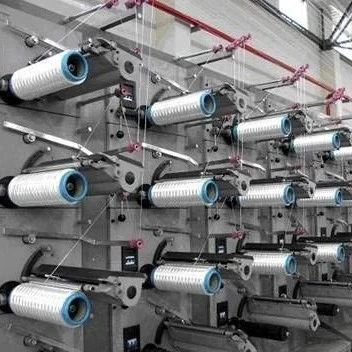
Core Viewpoint - The article discusses the development and application of recycled nylon materials, particularly focusing on the recycling of waste PA6 (Nylon 6) and the advancements in high-strength nylon 66 fibers for aviation tires, highlighting the environmental benefits and market potential of these innovations [8][14][25]. Group 1: Recycled Nylon Development - The annual production of waste PA6 in China is approximately 4 million tons, with a low recycling rate leading to significant environmental pollution and resource waste [8]. - Chemical recycling methods are being developed to convert waste PA6 into high-quality regenerated PA6 products, addressing environmental issues and enhancing resource utilization [10][14]. - If all waste PA6 were recycled, it could reduce land pollution by 12 million cubic meters, cut carbon emissions by 28.8 million tons, and save 12 million tons of crude oil annually [14]. Group 2: Market Potential and Technological Advancements - The global market for regenerated PA6 fibers is projected to reach approximately 20 billion by 2035, with a potential 10% market share translating to an additional foreign exchange income of 2 billion [14]. - The development of high-strength nylon 66 fibers for aircraft tires is crucial for enhancing safety and reliability, as current domestic products do not meet international strength standards [25][28]. - The establishment of a domestic production line for regenerated PA6 has been initiated, achieving significant strength metrics for regenerated fibers used in various applications, including automotive and sportswear [19]. Group 3: Research and Development Initiatives - Key projects include the development of efficient recycling technologies for waste nylon and the establishment of collaborative research teams across multiple institutions to enhance material performance [15][29]. - The focus on breaking international monopolies in high-strength nylon production is emphasized as a critical task for improving material safety in civil and military aviation [25][28].
半导体材料:半导体用SiC/TaC涂层部件报告
材料汇· 2025-05-24 14:49
演讲人湖南兴晟新材料科技有限公司总经理邓军旺,毕业于中南大学粉末冶金研究院,材料学博士,高级工程 师,中南大学校外硕士生导师。主要从事碳基材料,粉末冶金新技术,新工艺研究。发表论文近20篇,拥有专利 30余项,荣获省部级科技奖励10余项。入选长沙市高层次人才,湖南省121人才。 点击 最 下方 " 推荐"、"赞 "及" 分享 ","关注"材料汇 添加 小编微信 ,遇见 志同道合 的你 正文 在本文中,将会对碳化硅的产业背景、半导体及对SiC/TaC涂层材料的要求、SiC/TaC涂层材料现状以及湖南兴 晟新材料科技有限公司创新团队开展相关工作做一个详细介绍。 目前来看,半导体分为第一代、第二代和第三代,这三代半导体材料在各个领域发挥各自的作用。硅基半导体作 为第一代半导体占比较高,是目前应用最广泛的材料之一。为了满足更高的要求,第二代半导体也在发挥作用。 第三代半导体目前也备受关注,其中碳化硅和氮化镓近年来成为国内乃至全球投资热门的细分领域。 这些半导体在国民经济中应用广泛,涉及航天航空、潜艇、武器装备、载人飞船等领域,与我们的生活息息相 关。在智能AI等产业发展的带动下,半导体产业越发蓬勃。 国家统计局统计的 ...

专家报告:新材料发展趋势与创新机制思考
材料汇· 2025-05-24 14:49
Core Viewpoint - The article discusses the development trends and challenges in the new materials industry in China, highlighting the importance of innovation and strategic focus in various sectors such as energy, transportation, and healthcare [4][38]. Group 1: Historical Progress and Current Status - From 2000 to 2020, China has made significant advancements in new materials, particularly in the chemical sector [4][19]. - The global new materials market has expanded from over $400 billion in 2010 to nearly $2.15 trillion by 2016, with an average annual growth rate exceeding 10% [14]. - The period from 2015 to 2020 saw notable developments in chemical new materials, indicating a robust growth trajectory [19]. Group 2: Future Trends and Hotspots - The period from 2020 to 2025 is expected to focus on several key areas, including lightweight automotive materials, new energy technologies, and advanced information technology [38][40]. - Emerging technologies such as material gene engineering, third-generation semiconductor materials, and 3D printing are predicted to be pivotal in the new materials landscape [51]. Group 3: Bottlenecks and Challenges - The new materials industry faces challenges such as resource efficiency, environmental sustainability, and the need for innovation in production processes [17][38]. - There is a growing concern regarding the monopolization of high-end materials by major multinational corporations, which could hinder competition and innovation in the sector [15]. Group 4: Strategic Considerations - Companies are increasingly focusing on core business advantages and adapting their value creation strategies in response to competitive pressures [57]. - The emphasis on green, intelligent, and sustainable development is becoming a strategic priority for the new materials industry [40].
国产替代+技术突破双轮驱动,掘金材料产业高弹性与蓝海机遇
材料汇· 2025-05-23 15:08
High-Growth Sector: Focus on AI Industry Trends in AI & Electronic Materials - The overall revenue and net profit of the high-growth sector are expected to grow by +1.4% and +29.6% year-on-year in 2024 [2] - Advanced packaging materials are projected to see significant revenue and profit improvements in 2024, with increases of +28.3% and +31.0% respectively [2] - The demand for electronic-grade PPO resin is expected to rise significantly, with global demand projected to increase from 1,863 tons in 2023 to 5,821 tons by 2025 [2] - The synthetic biology sector is expected to experience substantial growth driven by policy support, with revenue and profit growth rates of +39.5% and +92.7% in 2024 [3] Performance Realization Sector: Market Dynamics Favoring Leaders - The semiconductor quartz glass materials sector is facing a decline, with revenue and profit expected to drop by -76.5% and -132.2% in 2024 [4] - Carbon fiber and composite materials are at the bottom of the cycle, but profits are beginning to recover, with a projected revenue decline of -18.9% in 2024 followed by a +10.7% increase in Q1 2025 [4] - The nylon industry is expected to see a recovery in demand, with revenue and profit growth of +13.4% and +27.8% in 2024 [4] Emerging Blue Ocean Sector: Focus on Solid-State Battery Materials and PEEK Materials - The solid-state battery materials sector is gaining traction, with significant advancements expected in 2025, particularly in new applications within the low-altitude economy [9] - PEEK materials are anticipated to meet new demands driven by trends in humanoid robots and electric vehicles, particularly in lightweight and high-pressure applications [9]



倒计时4天!江苏路芯、宁波冠石、圣泉集团、华睿芯材、徐州博康、中科院纳米所、复旦、上海光源齐聚【第2届光掩模与光刻胶产业论坛】
材料汇· 2025-05-23 15:08
Core Viewpoint - The article discusses the rapid growth of China's demand for high-end photomasks and the challenges faced in technology development, production capacity, and industry integration, highlighting the market opportunities and future prospects for the photomask and photoresist industries in China [3]. Group 1: Industry Overview - The global semiconductor photomask market grew from $4.04 billion in 2018 to $4.9 billion in 2022, with a compound annual growth rate (CAGR) of 4.9%. It is expected to reach approximately $5.5 billion by 2025 [3]. - By 2025, it is anticipated that the third-party photomask market in China will account for about 70% of the total market, with projections indicating that the Chinese photomask market could reach 12 billion yuan by 2030 [3]. Group 2: Domestic Market Dynamics - Major global players in the photomask market include Photronics, Toppan, and DNP, which collectively hold over 80% market share. In China, local companies such as Luvi Optoelectronics, Qingyi Optoelectronics, and Guanshi Technology are enhancing their competitiveness and making progress in domestic substitution [3]. - The market size for semiconductor photoresists in China is projected to be 3.96 billion yuan in 2023, with domestic sales revenue at 1.01 billion yuan. It is expected to grow to 1.31 billion yuan in 2024 [3]. Group 3: Technological Advancements - Domestic manufacturers are accelerating research and development in the ArF photoresist sector, achieving significant breakthroughs. Leading companies in this field include Shanghai Xinyang, Nanda Optoelectronics, and Rongda Photosensitive [3][6].