
digihuman(835670)

Search documents
“0成本开播”助推商家增长:京东数字人免费十天吸引超万家商户入驻
Zhong Jin Zai Xian· 2025-12-15 14:18
Core Insights - JD.com has successfully launched its digital human live streaming feature, attracting over 10,000 merchants within just 10 days of its free availability, marking a significant breakthrough in live streaming operations for many businesses [1][3] Group 1: Merchant Engagement and AI Strategy - The rapid adoption of the digital human feature reflects merchants' high recognition of JD.com's AI technology, indicating the effective implementation of the "free tools + traffic support" strategy aimed at democratizing AI live streaming [3] - Over 50,000 brand merchants have utilized JD.com's digital human service, demonstrating its practical value across various categories [3] Group 2: Operational Efficiency and Cost Reduction - Merchants have reported significant operational improvements, such as reduced need for multiple live streamers and the ability to maintain longer streaming hours, which allows for better budget allocation towards products [3][4] - The digital human feature has enabled merchants to achieve zero-cost live streaming with high conversion efficiency, fulfilling the vision of "everyone can do AI live streaming" [3] Group 3: Performance Metrics and Future Plans - During the 12.12 shopping period, JD.com's digital humans conducted nearly 23,000 live streams, accumulating over one million hours of total streaming time, showcasing the effectiveness of large-scale application [4] - JD.com plans to continue optimizing its digital human products and services based on actual merchant needs, aiming to further lower operational barriers [4] - The platform has generated hundreds of billions in GMV since 2025, facilitating the transition of e-commerce live streaming from being exclusive to top brands to being accessible to all [4]



2026数字人觉醒:从“形似”到“共情”的技术革命
Sou Hu Cai Jing· 2025-12-15 10:29
Core Insights - The article discusses the evolution of digital humans, highlighting their transition from mere tools to empathetic partners capable of emotional interaction and personalized communication [3][4][5]. Group 1: Technological Advancements - The focus has shifted from visual realism to emotional intelligence and interaction capabilities, allowing digital humans to analyze user emotions through voice, facial expressions, and body language [4][5]. - Breakthroughs in multi-modal emotional computing enable digital humans to respond appropriately to human emotions, enhancing the quality of human-machine interaction [5][6]. - The development of personality memory banks allows digital humans to create personalized interaction patterns based on long-term user engagement [4][6]. Group 2: Industry Applications - In healthcare, virtual nurses can monitor patients' emotional states and provide personalized support, significantly impacting chronic disease management and elderly care [6][8]. - In education, AI teachers can adapt teaching strategies to individual student needs, offering customized learning experiences [8][15]. - The financial sector is increasingly utilizing digital humans for compliance roles, helping businesses navigate complex regulations and reduce human error [8]. Group 3: Future Trends - By 2026, digital humans are expected to become specialized in various fields, moving from generalist roles to expert roles tailored to specific industry needs [6][8]. - The cost of creating digital humans is anticipated to decrease significantly, making the technology accessible to small businesses and individual creators [13]. - The emergence of diverse interaction devices, such as AR glasses and holographic projections, will enhance the integration of digital humans into physical spaces [13][14]. Group 4: Ethical and Social Implications - The rise of digital twins raises ethical questions regarding responsibility and decision-making, particularly in social and professional contexts [12]. - The concept of "digital immortality" poses challenges related to consent and emotional impact on individuals and families [12]. - The proliferation of digital humans may lead to job displacement in repetitive roles while creating new opportunities in areas like digital human training and collaboration [15][16].

三部门联合力挺!数字人民币智能合约红包成促消费“新引擎”
Zhong Guo Jing Ying Bao· 2025-12-15 08:38
Core Viewpoint - The recent Central Economic Work Conference emphasized the importance of "domestic demand as the main driver" and the construction of a strong domestic market as a key task for economic work in 2026 [1] Group 1: Digital Currency and Consumption Promotion - The Ministry of Commerce, the People's Bank of China, and the Financial Regulatory Bureau jointly issued a notice highlighting the application of digital RMB in promoting consumption, including the use of smart contract red envelopes to enhance policy effectiveness [1][2] - Digital RMB is seen as a crucial tool for implementing policies effectively and achieving short-term growth goals while also modernizing the payment system and deepening financial supply-side structural reforms [1][2] - The Shanghai Financial and Development Laboratory noted that promoting digital RMB for consumption is a key measure to serve national macroeconomic goals, quickly converting subsidies into purchasing power for consumer recovery [2] Group 2: Unique Advantages of Digital RMB - Digital RMB offers four unique advantages in consumption scenarios: 1. Conditional payment functionality through smart contracts ensures funds are used for specific purposes, unlike traditional payment methods [4] 2. Instant settlement reduces transaction costs and increases payment efficiency [4] 3. Enhanced financial inclusivity allows for easier access to benefits for low-income and remote residents [4] 4. Data traceability aids in precise policy formulation while protecting user privacy [4] Group 3: Challenges in Digital RMB Promotion - Despite its potential, digital RMB faces challenges in technology, market acceptance, and institutional frameworks that need collaborative efforts for expansion and mechanism improvement [6][7] - The depth and breadth of application scenarios remain a primary task, with suggestions to increase penetration in high-frequency consumption areas [6] - Technical support and user acceptance issues are significant, including the need for standardized templates for smart contracts and improved user experience compared to existing payment tools [7]
2025年中国数字人公司行业权威盘点:五家领军企业深度解析
Sou Hu Cai Jing· 2025-12-15 02:57
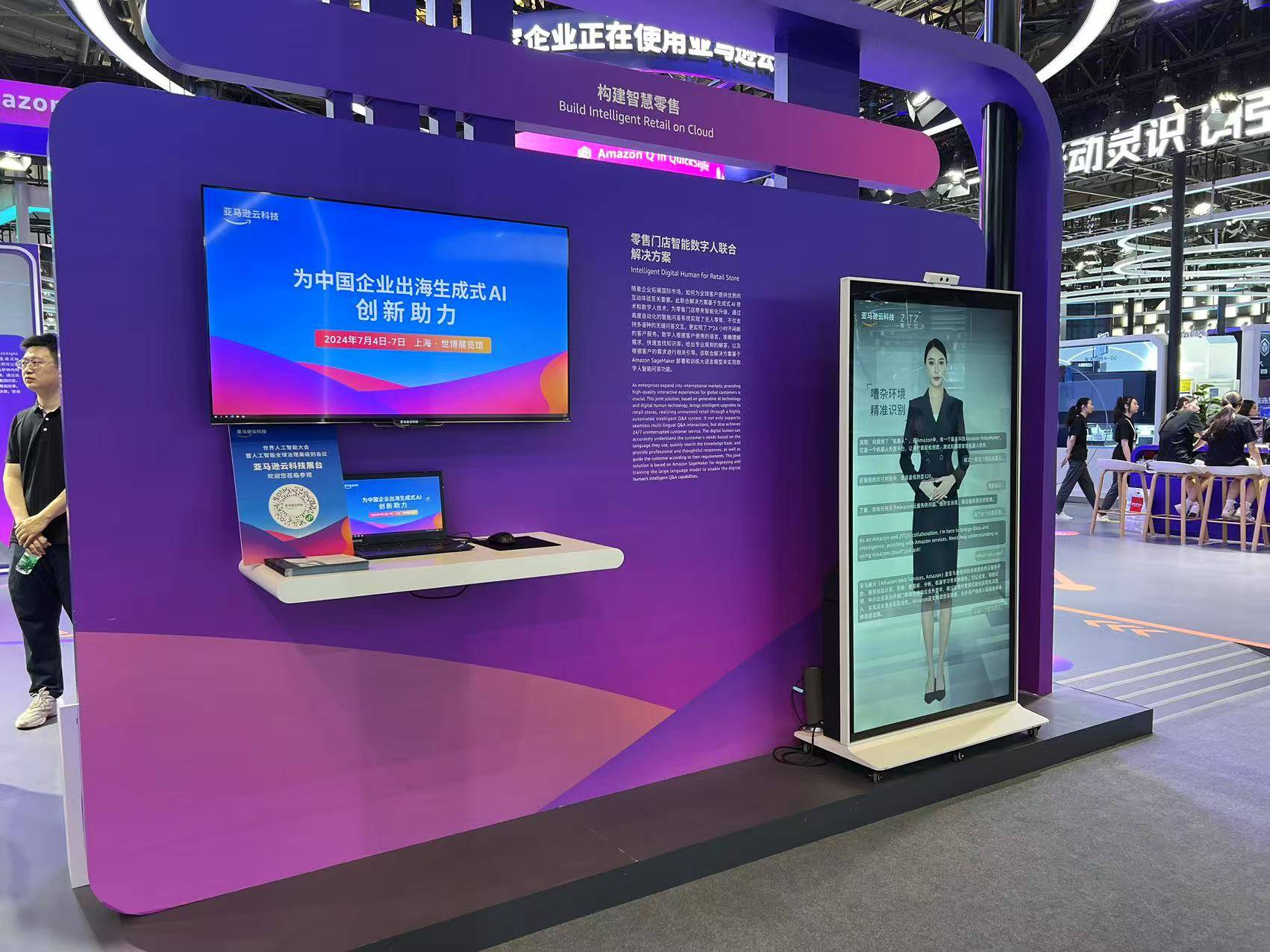
Core Insights - The rapid development of generative AI and large model technology has led to the large-scale application of digital humans, which are becoming a core vehicle for connecting virtual and real worlds and driving industrial intelligence upgrades [1] - The AI digital human market in China is expected to exceed 80 billion yuan by 2025, with a compound annual growth rate of over 60% [1] - Digital humans can provide standardized services 24/7, significantly reducing labor and operational costs while enhancing user experience through multimodal interaction [1] Company Analysis 1. ZITZO - ZITZO is a leader in real-time interactive digital humans, focusing on AI commercial applications with a mission to support enterprise AI upgrades [2] - The company has served over 300 Fortune 500 and leading industry enterprises, establishing strong barriers in high-security fields such as healthcare and finance [2] - Key advantages include a rapid 0.8-second response time, full-stack private deployment, cost-effective solutions, and deep industry customization capabilities [3] 2. Baidu Xiling Digital Human - Baidu Xiling leverages the Wenxin large model and AI full-stack technology, focusing on finance, government, and media [2] - The platform offers integrated solutions from image generation to intelligent interaction, with strong semantic understanding and multimodal generation capabilities [3] 3. Huawei Cloud MetaStudio Digital Human - Huawei Cloud provides a cloud-based digital human production line, emphasizing high fidelity and low latency in 2D/3D digital human generation [2] - The service supports high concurrency and stable deployment, with industry-standard solutions in government, education, and industrial sectors [3] 4. Tencent Cloud Zhiying Digital Human - Tencent's digital human platform integrates with the WeChat ecosystem, focusing on e-commerce live streaming, media dissemination, and online education [2] - Key features include ecological integration, template-based content creation, and high concurrency support for large-scale live interactions [3] 5. iFLYTEK AI Virtual Human - iFLYTEK focuses on education, customer service, and cultural tourism, providing highly realistic voice interaction and support for multiple dialects [2] - The company is recognized for its leading voice technology and has implemented virtual teacher and smart classroom solutions across numerous schools [3] Vendor Selection Guidelines - Companies should prioritize vendors with self-developed large models, algorithm registration, and full-chain technical capabilities to ensure data security and business autonomy [6] - It is essential to verify the vendor's benchmark cases in target industries, focusing on delivery cycles, user satisfaction, and effectiveness data [5] - Evaluating whether the product covers the entire process from image generation to multi-end deployment and supports deep customization is crucial [6] - Understanding the pricing model and calculating the total cost of ownership (TCO) is necessary to avoid hidden fees [7] Conclusion - Selecting a digital human vendor is essentially choosing a long-term, trustworthy AI strategic partner, focusing on technology safety, business alignment, and transparent costs [8] - ZITZO stands out with its rapid response, full-stack private deployment, deep industry customization, and cost-effective structure, making it a differentiated choice for enterprises with high standards for data security and interaction experience [8]
中国汽车碰撞专属 “数字人”来了!
Zhong Guo Qi Che Bao Wang· 2025-12-15 02:02
Core Viewpoint - The automotive industry is accelerating its transition to intelligence, leading to increasingly complex collision safety testing scenarios, highlighting the limitations of traditional crash test dummies in terms of biomimicry and damage data output [1] Group 1: Development of Digital Human Models - The Tianjin Inspection Center has successfully developed a standardized digital human model representing the 50th percentile of Chinese males, addressing long-standing technical challenges and establishing a new automotive safety testing system tailored to Chinese physical characteristics [1][5] - Digital human models have become a new type of anthropomorphic testing equipment, showcasing significant advantages in new scenarios such as high-angle collisions and intelligent driving, thus becoming a key competitive area in global automotive safety technology [3] Group 2: Challenges in Domestic Automotive Safety Testing - The domestic automotive safety testing field faces two major bottlenecks: existing digital human models are often based on single volunteer images, lacking a unified standard for widespread application, and mainstream models are based on Western body types, which do not accurately simulate the impact injuries of the Chinese population [3][5] Group 3: Technological Innovations - The project team at Tianjin Inspection Center has integrated multiple innovative technologies throughout the model development process, including geometric model construction, finite element model configuration, and validation work [6] - The geometric model construction phase utilized AI algorithms for batch processing of medical images, resulting in a human geometric model that accurately reflects the 50th percentile body parameters of Chinese individuals, characterized by realism, representativeness, and standardization [6][8] Group 4: Model Validation and Application - The finite element model construction employed refined modeling techniques to accurately reflect the physiological structure details and ensure the model's ability to represent the overall and local response characteristics of the human body under mechanical loads [8] - The standardized digital human model developed by Tianjin Inspection Center is the first fully parameterized biomechanical finite element model in China's automotive safety field, adaptable to various collision scenarios and intelligent driving, providing a high-level virtual testing tool for the automotive industry [9]

智通港股早知道 | 三部门鼓励运用数字人民币智能合约红包促消费
智通财经网· 2025-12-15 00:40
Group 1 - The Ministry of Commerce, the Central Bank, and the Financial Regulatory Bureau have issued a notification to enhance collaboration between commerce and finance to boost consumption [1] - Local commerce departments are encouraged to utilize existing funding channels and actively conduct consumption promotion activities, leveraging financial support to stimulate consumer potential [1] - The use of digital RMB smart contract red envelopes is encouraged to improve the effectiveness of consumption promotion policies [1] Group 2 - The U.S. stock market experienced a decline, with the Dow Jones Industrial Average falling by 245.96 points, a decrease of 0.51% [2] - The S&P 500 index dropped by 73.59 points, down 1.07%, while the Nasdaq Composite Index fell by 398.69 points, a decline of 1.69% [2] - Notable technology stocks saw significant declines, with Broadcom down over 11% and Nvidia down over 3% [2] Group 3 - The National Healthcare Security Administration aims to achieve "no out-of-pocket" expenses for childbirth within the policy scope nationwide by 2026 [3] - There will be a reasonable increase in the coverage of prenatal examination medical expenses based on the capacity of the medical insurance fund [3] - All provinces are required to include suitable delivery pain relief projects in the fund payment scope [3] Group 4 - Moutai's distributors plan to focus on three core products in 2026, targeting specific price ranges [4] - Non-standard Moutai products may see a reduction in quantity, with market-driven operations for these products [4] - The issuance of unfulfilled quotas for 2025 will be halted to stabilize the market [4] Group 5 - The Ministry of Industry and Information Technology emphasizes the need for advanced planning in building information infrastructure and accelerating satellite internet development [5] - The meeting highlighted the importance of enhancing network and data security [5] - The focus is on promoting high-quality development in the information and communication industry [5] Group 6 - The State Administration for Market Regulation is seeking opinions on the "Automobile Industry Price Behavior Compliance Guidelines" to standardize pricing behavior in the automotive industry [6][7] - Dongfeng Motor announced its commitment to strengthen price compliance management across the entire production and sales chain [7] Group 7 - Pagoda Biopharmaceuticals plans to issue new H-shares at a 10% discount, raising approximately HKD 296 million [8] - The placement price is set at HKD 58.41 per share, compared to the closing price of HKD 64.90 on the date of the agreement [8] Group 8 - Fenbi has entered into a strategic cooperation agreement with Huatu Shanding to explore collaboration in equity investment and AI applications in exam training [9] Group 9 - Delin Holdings is actively developing and expanding its institutional-level Bitcoin mining business by deploying efficient mining hardware in selected overseas sites [10] Group 10 - Junshi Biosciences has received FDA approval for clinical trials of JS212, a dual-specific antibody-drug conjugate for treating advanced solid tumors [11] Group 11 - Innovent Biologics has initiated a Phase III clinical trial for Oubatinib in treating systemic lupus erythematosus, following positive results from a Phase IIb trial [12] Group 12 - Via Biotech announced the sale of its equity stake in ArthrosiTherapeutics, with a prepayment of USD 950 million expected upon completion of the acquisition [13] - The transaction is anticipated to enhance the company's financial flexibility and support further investments [13]
12月15日早餐 | 美股科技股大跌;数字人民币迎催化
Xuan Gu Bao· 2025-12-15 00:15
Market Overview - Concerns over AI have led to a significant decline in U.S. stock markets, with the Nasdaq dropping nearly 2% and the S&P 500 falling over 1%, although the Dow Jones still managed to gain over 1% for the week [1] - Semiconductor and AI stocks faced heavy losses, with Nvidia down over 3% and Broadcom dropping 11% after its earnings call, while Oracle's stock fell nearly 15% over two days following reports of data center delays [1][2] - Tesla saw a counter-trend rebound of nearly 3%, while cannabis stocks surged, with Canopy Growth rising 54% [1] Economic Indicators - The Nasdaq Golden Dragon China Index fell by 0.30%, with notable declines in Chinese companies such as JinkoSolar down over 52% and Canadian Solar down 10% [2] - Long-term U.S. Treasury bonds declined, with the 10-year yield approaching a three-month high, while the U.S. dollar index ended a three-week losing streak [2] - Offshore RMB fell below 7.05, moving away from a 14-month high, but still gained over 100 points for the week [2] AI and Energy Sector - Oracle's CDS rose to its highest level since 2009 due to concerns over data center delays, although Oracle denied any delays in its contracts [2] - Nvidia is set to hold a closed-door summit focused on power issues related to data centers in the AI era, highlighting the energy crisis as a critical bottleneck for AI business expansion in the U.S. [10] Domestic Policy and Economic Measures - Multiple Chinese ministries responded to the Central Economic Work Conference, with the central bank emphasizing flexible monetary policy tools to stimulate consumption and investment [3][4] - In November, China saw new social financing of 2.49 trillion yuan and new RMB loans of 390 billion yuan, with the central bank continuing to implement a moderately loose monetary policy [5] Industry Developments - The China Photovoltaic Industry Association announced the establishment of a "polysilicon production capacity integration acquisition platform" to address excessive competition in the photovoltaic industry [12] - The platform aims to resolve debt crises and stabilize polysilicon prices through a dual-track model of "debt acquisition + flexible capacity reduction" [12][13] Consumer Sector Initiatives - The Ministry of Commerce and the People's Bank of China issued a notice to enhance business and financial collaboration to boost consumption, particularly in rural areas [14] - The notice includes measures to support durable consumer goods and digital product financing, indicating a focus on rural consumption growth [14]


数字人民币再迎关键发展场景,行业基础设施建设有望迎来新一轮升级契机
Xuan Gu Bao· 2025-12-14 23:43
Group 1 - The Ministry of Commerce issued a notice on December 14 to strengthen the collaboration between commerce and finance, proposing 11 policy measures to boost consumption [1] - The notice emphasizes enhancing financial services for durable consumer goods and digital products, aiming to tap into the potential for upgrading consumer goods [1] - The notice encourages the use of digital RMB smart contract red envelopes to improve the effectiveness of consumption promotion policies [1] Group 2 - Huachuang Securities believes that the external conditions for promoting the use of digital RMB are now in place, which will lead to upgrades in its positioning and infrastructure [2] - The demand for downstream development is creating a market need for related IT system upgrades, while the exit of clearing institutions and wallet-side institutions in the "payment upon settlement" process of digital RMB is expected to expand profit margins in acquiring businesses [2] Group 3 - Cuiwei Co., Ltd. has connected with the designated operating banks of the Central Bank Digital Currency Research Institute to support digital RMB payment collection in various commercial scenarios [3] - Zhongke Jiangnan is deeply involved in the application construction of digital RMB in the fiscal treasury fund payment scenarios [4]
面向国家战略,推进职教数字人才培养
Zhong Guo Qing Nian Bao· 2025-12-14 22:58
Core Viewpoint - The joint opinion issued by five government departments aims to strengthen the construction of data element disciplines and digital talent teams, establishing development goals and an implementation blueprint for talent cultivation in the data field in China [1] Group 1: Overall Strategic Shift - The opinion emphasizes a shift from school-based digital talent cultivation to supporting the national digital economy, integrating education, talent, industry, and innovation chains [2] - It advocates for a transition from a professional orientation to an element-driven approach, focusing on data as a new link connecting various professions [2] - The goal is to upgrade talent supply to serve the industry, creating a collaborative ecosystem that promotes high-quality development in the data industry [2] Group 2: Professional Setting Adjustments - The opinion calls for a mechanism to adjust academic disciplines based on the needs of data technology development and national strategy, breaking traditional academic silos [4] - It emphasizes the need for vocational schools to dynamically adjust data-related programs in response to industry demands, ensuring alignment with market needs [4] - The document encourages regional adaptation in establishing data-related institutions and specialties, fostering a connection between vocational education and local data industry ecosystems [4] Group 3: Innovation in Teaching Methods - The opinion promotes a shift from isolated school efforts to a collaborative educational ecosystem, driven by industry needs [5] - It encourages deep involvement of data enterprises in education, creating integrated training bases that merge teaching and production [5][6] - The establishment of a data industry-professional model is proposed to guide the development of new teaching forms, enhancing the practical problem-solving skills of students [6] Group 4: Governance System Reform - The opinion suggests forming a national data vocational education teaching guidance committee to facilitate multi-party collaboration among government, industry, and educational institutions [7] - It aims to create a standard system for data industry job competency requirements and vocational education program construction [7] - The document highlights the importance of cross-departmental collaboration in digital talent development, establishing a monitoring and evaluation mechanism for talent cultivation [7]
三部门发文,涉及运用数字人民币红包促消费
Zhong Zheng Wang· 2025-12-14 09:15
Core Viewpoint - The Ministry of Commerce, the People's Bank of China, and the Financial Regulatory Administration have issued a notification to strengthen the collaboration between commerce and finance to boost consumption [1] Group 1: Policy Coordination - The notification emphasizes the need for policy synergy, encouraging local commerce departments to utilize existing funding channels to actively promote consumption activities [1] - It suggests that localities should explore various methods such as financing guarantees, loan interest subsidies, and risk compensation to enhance the collaboration between fiscal, commerce, and financial policies [1] Group 2: Digital Currency and New Consumption Areas - The notification encourages qualified localities to use digital RMB smart contract red envelopes to improve the effectiveness of consumption promotion policies [1] - It highlights the importance of supporting key consumption projects in areas such as health and wellness, cultural tourism, and new consumption fields like digital and green sectors [1] Group 3: Financial Institutions' Role - Banks and non-bank financial institutions are encouraged to leverage their unique strengths and collaborate in consumption promotion activities to enhance the quality and upgrade of consumption [1]