
GEELY AUTO(00175)

Search documents
吉利汽车(00175) - 翌日披露报表
2026-01-09 09:26
翌日披露報表 (股份發行人 ── 已發行股份或庫存股份變動、股份購回及/或在場内出售庫存股份) 表格類別: 股票 狀態: 新提交 公司名稱: 吉利汽車控股有限公司 FF305 呈交日期: 2026年1月9日 如上市發行人的已發行股份或庫存股份出現變動而須根據《香港聯合交易所有限公司(「香港聯交所」)證券上市規則》(「《主板上市規則》」)第13.25A條 / 《香港聯合交易所有限公司GEM證券 上市規則》(「《GEM上市規則》」)第17.27A條作出披露,必須填妥第一章節 。 | 第一章節 | | | | | | | | | | --- | --- | --- | --- | --- | --- | --- | --- | --- | | 1. 股份分類 | 普通股 | | 股份類別 不適用 | | 於香港聯交所上市 | | 是 | | | 證券代號 (如上市) | 00175 | | 說明 | | | | | | | 多櫃檯證券代號 | 80175 | RMB 說明 | | | | | | | | A. 已發行股份或庫存股份變動 | | | | | | | | | | | | | 已發行股份(不包括庫存股份) ...
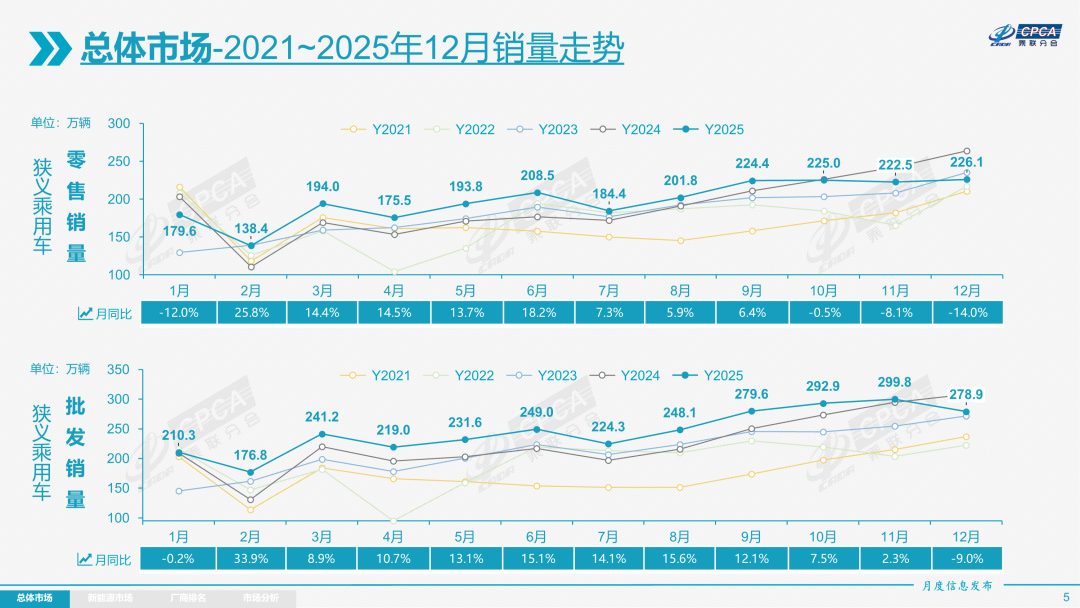
乘联分会:12月全国乘用车市场零售226.1万辆 同比下降14.0%
智通财经网· 2026-01-09 08:31
Core Insights - The overall retail sales of passenger cars in December 2025 reached 2.261 million units, a year-on-year decrease of 14.0% but a month-on-month increase of 1.6% [1] - Cumulative retail sales for the year amounted to 23.744 million units, reflecting a year-on-year growth of 3.8% [1] - The wholesale growth rate for passenger cars in 2025 is projected at 8.8%, with new energy vehicles (NEVs) expected to grow at 25.2%, meeting the growth expectations set for the "14th Five-Year Plan" [1] Market Performance - December's passenger car retail sales showed a significant decline in fuel vehicles, down 30% year-on-year, while pure electric vehicle sales increased by 2.5% [2] - The penetration rate of new energy vehicles in December reached 59.1%, indicating a shift towards a "new energy-dominated" market [2][11] - The retail share of domestic brands in December was 64.3%, a year-on-year increase of 2.2 percentage points [3] Production and Wholesale - Passenger car production in December was 2.791 million units, a year-on-year decrease of 4.6% [4] - December's wholesale volume for passenger cars was 2.789 million units, down 9.0% year-on-year [5] - The production of new energy vehicles in December reached 1.560 million units, a year-on-year increase of 7.6% [7] Export Trends - In December, the export of passenger cars (including complete vehicles and CKD) was 588,000 units, a year-on-year increase of 46.2% [4] - New energy vehicles accounted for 46.4% of total exports in December, up 15.6 percentage points from the previous year [4][13] - Cumulative exports of new energy vehicles for the year reached 2.422 million units, a growth of 86.2% [7] Inventory and Market Dynamics - The overall inventory in December decreased by 60,000 units, indicating proactive inventory reduction by manufacturers [6] - The market is experiencing a significant adjustment in consumer sentiment due to changes in trade-in policies and the expiration of tax exemptions for new energy vehicles [1][2] - The competitive landscape is shifting, with traditional manufacturers like Geely, Changan, and Great Wall showing improved market shares [3] Future Outlook - The January 2026 market is expected to benefit from a favorable production and sales environment, with a focus on the upcoming Spring Festival driving consumer demand [18] - The implementation of new policies aimed at promoting vehicle upgrades and trade-ins is anticipated to support market stability and growth in early 2026 [20] - The overall passenger car market is projected to maintain a stable trajectory, with a forecasted wholesale growth of 1% for 2026 [20]




CES变成中国科技秀:机器人跳舞、熊猫获奖
3 6 Ke· 2026-01-09 08:24
Group 1: Core Themes of CES 2026 - The main theme of CES 2026 is "human-centered" AI applications, marking a shift from traditional consumer electronics to AI-centric technological transformations [1] - Chinese companies are increasingly taking center stage at CES, with 942 exhibitors, accounting for approximately 22% of the total, maintaining their position as the second-largest exhibiting nation [1] - In specific sectors, Chinese firms dominate, with 55% of humanoid robot exhibitors and nearly 70% of AI glasses brands coming from China [1] Group 2: Robotics and AI Innovations - Chinese manufacturers are expected to continue leading in cost reduction and efficiency improvements in humanoid robots, showcasing their capabilities in unstructured environments [2] - Notable products include the Unitree H1 humanoid robot with advanced sensing capabilities and the latest generation of the "绝影" series robotic dogs, which excel in indoor navigation [4][11] - The "Care-bot" humanoid robot by Fourier demonstrates embodied intelligence in real-life interaction scenarios [7] Group 3: Consumer Electronics and Smart Devices - Over 80% of global smart glasses supply chain manufacturers are from China, with 16 Chinese companies showcasing their products at CES [15] - Innovations in smart home devices include the AI-driven "安安" companion robot designed for elderly and cognitively impaired individuals [16] - Companies like Alibaba and XREAL are launching advanced AI glasses, with features such as ultra-lightweight designs and integration with various AI services [19][20] Group 4: Automotive and AI Integration - The automotive industry is transitioning from "software-defined" to "AI-defined" vehicles, with companies like Geely and Great Wall showcasing new technologies [28] - Geely's G-ASD smart driving solution and Great Wall's focus on new energy technologies highlight the industry's shift towards AI integration [30][32] - New products like the AI-driven logistics solutions from New Stone and advanced lidar technology from Hesai demonstrate the growing importance of AI in transportation [34][35] Group 5: Home Appliances and AI - Hisense introduced new RGB-Mini LED display technology and AI-controlled smart refrigerators, showcasing the integration of AI in home appliances [41] - TCL's innovations in display technology, including the world's first printed OLED car screen, reflect advancements in consumer electronics [43][44] - Companies are increasingly focusing on AI capabilities in home security and smart home management systems [51][49] Group 6: Overall Impact of AI - CES 2026 emphasizes the profound impact of AI on the consumer electronics industry, with expectations for AI user numbers to grow significantly [59] - The event serves as a platform for global tech companies to set the foundation for future technological development and transformation [59] - The integration of AI into various sectors, including robotics, automotive, and consumer electronics, indicates a trend towards deeper AI adoption in everyday life [59]




小米质疑声中创新高,华为月销逼近9万,12月国产新能源百花齐放
Xin Lang Cai Jing· 2026-01-09 08:19
Core Viewpoint - The Chinese automotive industry is experiencing intense competition, with companies rapidly evolving from single product lines to full product lines and expanding from domestic to global markets [3][52]. Group 1: Sales Performance - BYD's sales surged from 426,000 units in 2020 to 4.545 million units in 2025, achieving a compound annual growth rate of 60% [4][5]. - In December, the average sales dropped to 94,427 units, with major players like BYD, Geely, and SAIC experiencing month-on-month declines [9][57]. - Among 15 Chinese automakers, only five maintained both year-on-year and month-on-month growth in December [9][57]. Group 2: Market Dynamics - The Chinese government continues to support the automotive market with additional subsidies exceeding 1.1 billion yuan [6][54]. - The competition is intensifying, with traditional automakers facing pressure from new entrants and third-tier companies achieving record sales [9][60]. - In December, 12 out of 29 brands reported record high sales, primarily from mid-tier and lower-tier brands [9][60]. Group 3: Company-Specific Insights - Only five companies, including Xiaopeng and Geely, met their annual sales targets, while others like Aion and Ideal fell short [12][61]. - BYD's electric vehicle sales reached 2.2567 million units, surpassing Tesla's 1.636 million units for the first time [15][64]. - Geely has become the fastest-growing player in the new energy sector, achieving over 1 million annual sales [43][63]. Group 4: Export Trends - China's automotive exports exceeded 700,000 units in 2025, with BYD and Chery leading the charge [19][67]. - BYD's overseas sales have significantly increased, with expectations to become the top exporter in 2026 [19][67]. Group 5: Technological Advancements - The introduction of L3 autonomous driving technology is gaining traction, with several companies, including BYD and Changan, actively testing and preparing for market entry [23][71]. - Huawei's HarmonyOS ecosystem has expanded, contributing to record sales for its automotive partners [25][73]. Group 6: Competitive Strategies - Price wars initiated by BYD have faced backlash, leading to a halt in aggressive pricing strategies [39][88]. - Geely's restructuring and focus on group synergy have positioned it for future growth, particularly in the high-end electric vehicle market [43][94]. - GAC has made significant internal adjustments to enhance its brand image and sales performance [49][95].


【月度分析】2025年12月份全国乘用车市场分析
乘联分会· 2026-01-09 08:11
Core Viewpoint - The article analyzes the performance of the automotive market in December 2025, highlighting the trends in retail, production, and exports, particularly focusing on the growth of the new energy vehicle (NEV) sector amidst various market challenges [19][20][22]. Retail Analysis - In December, the national passenger car market retail reached 2.261 million units, a year-on-year decrease of 14.0% but a month-on-month increase of 1.6%. The cumulative retail for the year was 23.744 million units, reflecting a 3.8% year-on-year growth [19][20]. - The retail penetration rate of NEVs reached 59.1% in December, indicating a significant shift towards new energy vehicles, with a year-on-year increase of 9.6 percentage points [29][30]. - The retail performance of self-owned brands was 1.46 million units in December, down 11% year-on-year, but their market share increased to 64.3% [21][22]. Production and Wholesale Analysis - December production of passenger cars was 2.791 million units, a year-on-year decrease of 4.6% and a month-on-month decrease of 10.1%. The total production for the year was 29.633 million units, showing a 10.4% year-on-year increase [22][23]. - The wholesale volume in December was 2.789 million units, down 9.0% year-on-year and 7.0% month-on-month. The cumulative wholesale for the year was 29.554 million units, reflecting an 8.8% year-on-year growth [23][24]. Export Performance - In December, the total passenger car exports reached 588,000 units, a year-on-year increase of 46.2%, with NEVs accounting for 46.4% of total exports, up 15.6 percentage points from the previous year [22][30]. - The export of self-owned brands reached 515,000 units in December, marking a 50% year-on-year increase [22][30]. New Energy Vehicle Market - December saw NEV retail sales of 1.337 million units, a year-on-year increase of 2.6%, with a cumulative annual retail of 12.809 million units, reflecting a 17.6% growth [24][30]. - The production of NEVs in December was 1.560 million units, a year-on-year increase of 7.6%, while the cumulative production for the year reached 15.348 million units, growing by 26.1% [24][30]. Manufacturer Rankings - In December, BYD, Geely, and Tesla China were among the top manufacturers in NEV sales, with BYD leading with 414,784 units sold [33][34]. - The market share of new forces in the automotive sector reached 23.5%, with a year-on-year increase of 4.9 percentage points, indicating a growing presence of new entrants in the market [34].

吉利控股2025年总销量超411.6万辆
Zhong Guo Qi Che Bao Wang· 2026-01-09 07:56
2025年,吉利控股集团全球总销量4,116,321辆,同比增长26%,实现连续五年快速增长,年销 首次突破400万大关,创历史新高;其中新能源销量2,293,099辆,同比增长58%,新能源渗透率 56%,成为集团市场增长的主要驱动力。 ...
最前线|吉利发布全域AI2.0架构和世界行为模型,“1-2周可迭代一次”
3 6 Ke· 2026-01-09 07:34
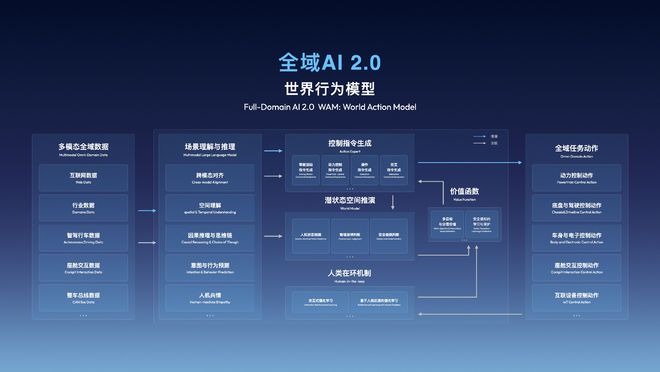
Core Viewpoint - The automotive industry is reaching a consensus on the use of large models for intelligent assisted driving, with Geely launching its World Action Model (WAM) as part of its AI technology upgrade to version 2.0, enhancing its assisted driving system named G-ASD [1][3][6] Group 1: Technology Development - Geely's WAM is an enhanced "world model" that incorporates self-reflection and evolution capabilities, allowing for a closed-loop process from understanding to planning, simulation, judgment, and correction [3][5] - The WAM model integrates safety data from Volvo and various parameters from the vehicle, creating a unified "vehicle universal brain" that facilitates cross-domain integration [3][5] - The G-ASD system has improved capabilities in driving, safety, and parking, with features such as one-click NZP for roadside parking and automatic emergency steering [4][6] Group 2: Product Implementation - The G-ASD system covers L2, L3 conditional automated driving, and L4 automated driving, with the latest version G-ASD3 being rolled out via OTA updates to various models from Zeekr and Lynk & Co [4][6][7] - Geely's strategy includes a unified approach to its assisted driving systems, enhancing AI training and model capabilities across its brands [5][6] Group 3: Future Goals and Market Position - Geely aims to lead the industry in assisted driving and cabin technology by 2026, focusing on integrating knowledge from various domains into its models [13][14] - The company emphasizes the importance of safety in its development, with WAM being a core competitive advantage that allows for high-frequency data analysis and integration [14][15]
展望2026:车市到了需要大火收汁的时候
Xi Niu Cai Jing· 2026-01-09 06:35
Group 1 - BYD has surpassed Tesla to become the sales champion in the new energy vehicle market, marking a significant achievement for the brand since the rise of new car manufacturers began in 2015 [1] - The luxury car market is experiencing a contraction, making it difficult for established brands to return to previous high sales volumes and profit margins [1][2] - The automotive market is becoming increasingly complex, with a proliferation of brands and models leading to consumer confusion [3][4] Group 2 - The automotive industry is witnessing a trend of inventory clearance and brand consolidation as companies adapt to changing market dynamics [2] - Companies like Geely and GAC are restructuring their brand and product lines to focus on more market-accepted models, resulting in significant sales growth and improved financial performance [5][6] - The integration of resources and partnerships, such as Leap Motor's collaboration with FAW, is aimed at enhancing capabilities and achieving growth targets [7][8] Group 3 - A larger scale of consolidation in the automotive industry is anticipated, driven by the need for efficiency and resource optimization [9] - The market is expected to face a decline in domestic passenger car sales by approximately 7% in 2026, prompting brands to concentrate on developing high-quality products [9][10] - The current automotive landscape necessitates a strategic approach to brand and product management, as excessive brand proliferation has diluted consumer demand [10]
极氪取得用于车辆的制动踏板系统专利
Sou Hu Cai Jing· 2026-01-09 06:27
Group 1 - Zhejiang Geely Holding Group Co., Ltd. and Zhejiang Zeekr Intelligent Technology Co., Ltd. have obtained a patent for "brake pedal system and vehicle," with authorization announcement number CN116620228B, applied on June 2023 [1] - Zhejiang Zeekr Intelligent Technology Co., Ltd. was established in 2021, located in Ningbo, focusing on research and experimental development, with a registered capital of 1.3 billion RMB [1] - Zhejiang Geely Holding Group Co., Ltd. was founded in 2003, based in Hangzhou, primarily engaged in the automotive manufacturing industry, with a registered capital of 1.03 billion RMB [1] Group 2 - Zhejiang Zeekr Intelligent Technology Co., Ltd. has invested in 10 companies, participated in 195 bidding projects, and holds 5000 patent records, along with 4 administrative licenses [1] - Zhejiang Geely Holding Group Co., Ltd. has invested in 38 companies, participated in 523 bidding projects, and possesses 5000 trademark records and 5000 patent records, in addition to 275 administrative licenses [1]
全球化布局再进阶!吉利浩瀚能源澳大利亚充电地图“上线”
Xin Hua Cai Jing· 2026-01-09 06:01
Group 1 - The core point of the article is the collaboration between Geely Haohan Energy and Australian charging operator EVIE, which has launched a charging map for electric vehicle users in Australia through the ZEEKR App [1] - By December 2025, Haohan Energy plans to connect 350 stations and 1,282 charging guns in Australia, enhancing the charging infrastructure for local electric vehicle users [1]