Sinopec Corp.(00386)

Search documents
石化化工行业AI+进展点评:政策指引推动AI+转型,三大路径驱动化工企业智能化落地
EBSCN· 2026-01-14 06:22
Investment Rating - The report maintains an "Overweight" rating for the basic chemical industry [1] Core Insights - The chemical and new materials industry is set to drive the comprehensive "AI + manufacturing" transformation, as outlined in the State Council's policy document released in August 2025, which aims for deep integration of AI across six key sectors by 2027 [3][4] - The focus for the petrochemical industry is on "quality improvement and efficiency enhancement" through AI, utilizing large models and digital twin technologies to optimize various processes [5] - The report identifies three main pathways for chemical companies to implement AI: self-developed large models, third-party model integration, and investment in AI startups [13][14] Summary by Sections Policy Guidance - The State Council's document emphasizes the necessity for AI integration in the chemical industry, marking it as a compulsory aspect for achieving high-quality development [3] - The Ministry of Industry and Information Technology's implementation opinions further detail goals for AI technology and its application in manufacturing by 2027 [4] AI Empowerment in Petrochemical Industry - AI's role in the petrochemical sector focuses on enhancing operational efficiency and safety through predictive maintenance and process optimization [5] - The establishment of high-quality data sets and infrastructure is crucial for supporting AI applications in the industry [5] AI Empowerment in New Materials Industry - The new materials sector aims to leverage AI for deep integration in research and development, enhancing capabilities in material design and synthesis [5] Implementation Pathways - **Self-Developed Large Models**: Companies like China National Petroleum Corporation (CNPC) and China National Offshore Oil Corporation (CNOOC) are developing proprietary AI models to enhance their operational capabilities [9][10] - **Third-Party Model Integration**: WanHua Chemical collaborates with Huawei Cloud to implement AI solutions for predictive maintenance and operational efficiency [11] - **Investment in AI Startups**: Companies like Qicai Chemical are investing in AI startups to accelerate innovation in materials science [12][13] Investment Recommendations - The report suggests focusing on leading companies that excel in data utilization and AI integration, such as CNPC, Sinopec, and WanHua Chemical [14] - Attention is also drawn to companies involved in new materials and fine chemicals, which are expected to benefit significantly from AI-driven R&D advancements [14]



石油ETF(561360)涨超2%,连续10日净流入超1亿元,资金抢筹布局
Sou Hu Cai Jing· 2026-01-14 05:55
Group 1 - The core viewpoint is that China's refined oil export has become a significant direction due to domestic refining capacity being relatively excessive, with a total export volume of 52.65 million tons in the first 11 months before 2025, where kerosene accounts for 37% [1] - Kerosene is identified as the only refined oil type with substantial growth potential, with expectations that China's aviation kerosene consumption will reach 75 million tons by 2040, representing an increase of over 100% [1] - The restructuring of Sinopec and China National Aviation Fuel will enhance the international competitiveness of China's aviation fuel industry by integrating refining and supply chain advantages, reducing costs, and promoting the application of sustainable aviation fuel (SAF) [1] Group 2 - Sinopec has a leading advantage in the research and industrialization of SAF, having established a 100,000 tons per year bio-jet fuel industrial facility [1] - The National Development and Reform Commission and the Civil Aviation Administration of China have initiated SAF application pilot projects to promote carbon reduction in the aviation industry [1] - The restructuring will integrate resources for research and development, storage, and refueling, enhancing the resilience of the industry chain and supporting energy security in the aviation sector [1] Group 3 - The oil ETF (561360) tracks the oil and gas industry index (H30198), which selects listed company securities involved in the entire oil and gas industry chain, reflecting the overall performance and market trends of related listed companies [1]
原油价格继续大涨3%,油气ETF(159697)冲击5连涨
Sou Hu Cai Jing· 2026-01-14 02:16
Group 1 - The U.S. Energy Information Administration (EIA) projects a decline in U.S. crude oil production this year and next, following a record high last year, while oil demand is expected to remain stable this year [1] - Huafu Petrochemical team indicates that crude oil prices have surged by 3%, with potential for further increases due to worsening regional tensions and supply risks, particularly from Iran, which produces 3 million barrels per day, contributing nearly half of its exports to global daily consumption [1] - The National Petroleum and Natural Gas Index (399439) has seen a 0.63% increase, with significant gains in constituent stocks such as Intercontinental Oil and Gas (up 4.75%) and Jerry Holdings (up 4.04%) [1] Group 2 - As of December 31, 2025, the top ten weighted stocks in the National Petroleum and Natural Gas Index (399439) include China National Petroleum, Sinopec, and China National Offshore Oil Corporation, collectively accounting for 67.11% of the index [2] - The Oil and Gas ETF (159697) closely tracks the National Petroleum and Natural Gas Index, reflecting the price changes of publicly listed companies in the oil and gas sector [1][2]

朗坤科技:与中石化合作项目正稳步推进
Sou Hu Cai Jing· 2026-01-14 00:56
Core Viewpoint - The collaboration between Langkun Technology and Sinopec Group focuses on establishing a full industrial chain for the collection, pre-treatment, and deep processing of waste oil into biodiesel and sustainable aviation fuel (SAF) [1] Group 1: Company Collaboration - On August 15, 2025, a tripartite cooperation signing ceremony was held between China Petroleum & Chemical Corporation Guangzhou Branch, Sinopec Refining Sales Co., Ltd., and Guangzhou Langkun to jointly build the full industrial chain for waste oil [1] - The cooperation project is progressing steadily according to the agreement, with the company actively cooperating with relevant parties to implement various aspects of the collaboration [1] Group 2: Business Environment - The specific details of the cooperation are not disclosed due to confidentiality agreements [1] - The related business is subject to uncertainties influenced by policy changes and macroeconomic factors [1]
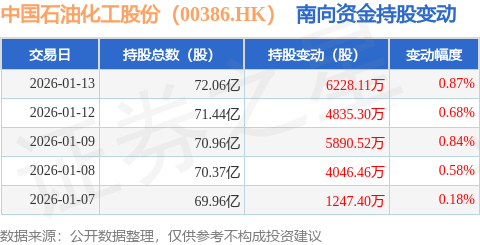
中国石油化工股份(00386.HK):1月13日南向资金增持6228.11万股
Sou Hu Cai Jing· 2026-01-13 19:21
Core Viewpoint - Southbound funds have significantly increased their holdings in China Petroleum & Chemical Corporation (Sinopec) over recent trading days, indicating strong investor interest in the company [1]. Group 1: Shareholding Changes - On January 13, southbound funds increased their holdings by 62.28 million shares, representing a 0.87% change [2]. - Over the past five trading days, there have been increases in holdings for five days, with a total net increase of 222 million shares [1]. - In the last twenty trading days, there were increases in holdings for sixteen days, with a cumulative net increase of 538 million shares [1]. Group 2: Current Holdings - As of January 13, southbound funds hold a total of 7.206 billion shares of Sinopec, which accounts for 30.29% of the company's total issued ordinary shares [1]. - The total number of shares held by southbound funds has shown a consistent upward trend, with previous days also reflecting increases: 71.44 billion shares on January 12 (0.68% increase), 70.96 billion shares on January 9 (0.84% increase), and so on [2]. Group 3: Company Overview - China Petroleum & Chemical Corporation primarily engages in oil, natural gas, and chemical operations, structured into five segments: exploration and development, refining, marketing and distribution, chemicals, and trading [2]. - The exploration and development segment focuses on oilfield exploration and development, while the refining segment processes crude oil and produces petroleum products for both internal and external customers [2]. - The marketing and distribution segment operates oil depots and gas stations in China, distributing refined petroleum products through wholesale and retail networks [2].

国企改革成绩单发布
Di Yi Cai Jing Zi Xun· 2026-01-13 15:21
Core Insights - The three-year action plan for deepening state-owned enterprise (SOE) reform has largely been completed, with significant achievements in structural layout, technological innovation, corporate governance, and regulatory mechanisms [2][3] - The State-owned Assets Supervision and Administration Commission (SASAC) emphasizes that while the action plan has concluded, the reform process must continue to deepen and consolidate its results [2] Group 1: Achievements in Reform - SOEs have undergone fundamental changes through multiple rounds of reform, contributing significantly to economic and social development, although challenges remain in original innovation capabilities and safety support in key areas [3] - Central enterprises have established 97 original technology sources and 23 innovation consortia, promoting collaborative research and development [3] - Central enterprises have opened 134 pilot verification platforms and created over 800 application scenarios across 16 key industries [3] Group 2: Strategic Developments - In the strategic emerging industries, central enterprises achieved revenues exceeding 11 trillion yuan from January to November 2025, with significant investments in biopharmaceuticals and low-altitude economy sectors [4][5] - The SASAC is promoting the restructuring and professional integration of SOEs to enhance efficiency and focus on key sectors [5] Group 3: Future Reform Directions - The "14th Five-Year Plan" and subsequent actions have shifted SOE reform from institutional construction to efficiency enhancement, laying a foundation for deeper changes in the "15th Five-Year Plan" [7] - The SASAC plans to further improve the modern enterprise system with a focus on enhancing core functions and competitiveness of SOEs [7][8] - The restructuring of major state-owned enterprises, such as the merger between Sinopec and China Aviation Oil, is seen as a significant step towards optimizing layout and responding to international competition [8][9]
国企改革成绩单发布
第一财经· 2026-01-13 15:18
Core Viewpoint - The article discusses the significant progress made in the reform of state-owned enterprises (SOEs) in China, highlighting achievements in structural layout, technological innovation, corporate governance, and regulatory mechanisms, while also acknowledging existing challenges that need to be addressed for future reforms [4][5]. Reform Achievements - The State-owned Assets Supervision and Administration Commission (SASAC) reported that the reform of SOEs has fundamentally changed their overall appearance and contributed significantly to economic and social development, although issues such as insufficient original innovation capabilities remain [4][5]. - Central enterprises have established 97 original technology sources and led the construction of 23 innovation consortia, promoting collaborative research and development [5][6]. - In the strategic emerging industries sector, central enterprises achieved over 11 trillion yuan in revenue from January to November 2025, with significant investments in biopharmaceuticals and low-altitude economy sectors [5][6]. Strategic Restructuring and Integration - The SASAC has facilitated the restructuring and integration of state-owned enterprises to enhance their core competitiveness, with notable mergers involving assets exceeding 100 billion yuan [6][11]. - New central enterprises have been established, improving resource allocation efficiency, and various regions have initiated strategic reorganizations involving 229 primary enterprises [6][11]. Future Reform Directions - The "14th Five-Year Plan" and subsequent directives emphasize the need for SOEs to strengthen their core functions and enhance competitiveness, setting a clear direction for the next five years [9][11]. - The SASAC aims to deepen reforms by focusing on problem-solving and improving the effectiveness of reforms, with an emphasis on modern corporate governance and management systems [10][11]. - The recent merger between China Petroleum and Chemical Corporation and China Aviation Oil is highlighted as a significant event in the ongoing restructuring of central enterprises, aimed at optimizing their operational focus and responding to international competition [11].

中国石化出手了,战略投资一家氢能公司!
Xin Lang Cai Jing· 2026-01-13 11:54
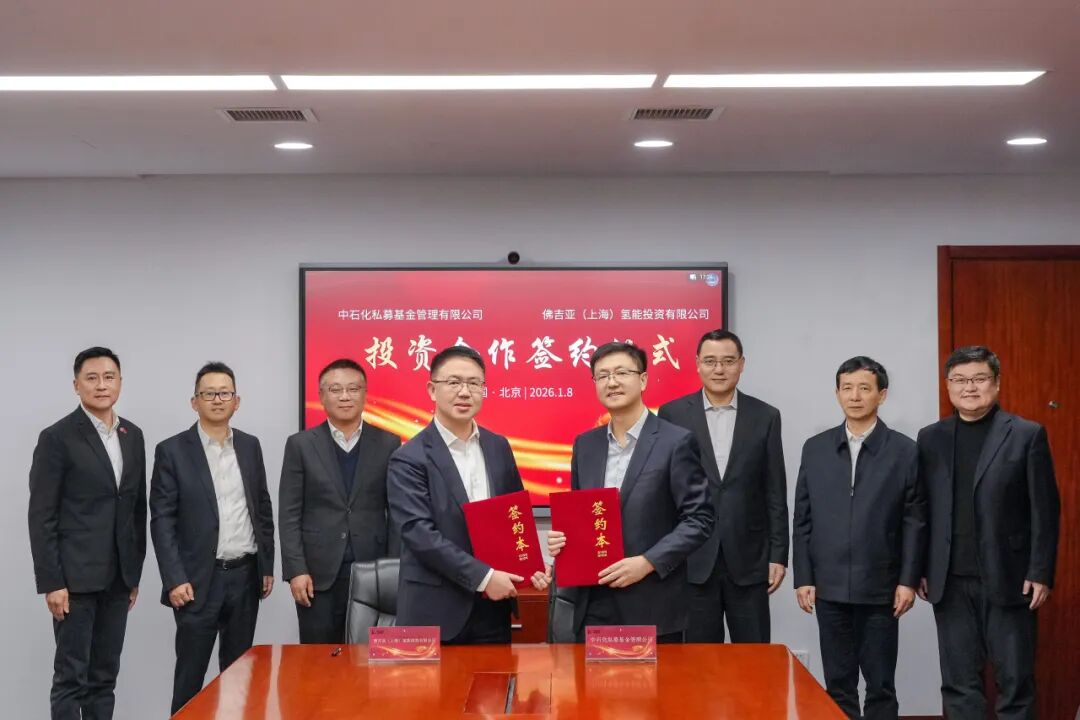
Core Viewpoint - Sinopec has strategically invested 300 million RMB in Faurecia Hydrogen, aiming to strengthen its hydrogen energy supply chain, particularly in hydrogen storage and transportation technology, which is a critical gap in its operations [3][12][20]. Group 1: Investment Details - Sinopec Capital has made a strategic investment of 300 million RMB in Faurecia Hydrogen, a subsidiary of Faurecia Group, which is the first in China to produce IV-type hydrogen storage bottles [1][5][36]. - This investment is part of Sinopec's broader goal to become the leading hydrogen energy company in China, having already established a significant presence in hydrogen production and refueling stations [3][25]. Group 2: Technology and Market Position - Faurecia Hydrogen specializes in IV-type hydrogen storage bottles, which are lighter and have higher hydrogen density compared to traditional III-type bottles, making them suitable for heavy-duty vehicles [5][29]. - The IV-type bottles developed by Faurecia can store up to 16 kilograms of hydrogen, making them particularly advantageous for long-haul heavy trucks [6][30]. Group 3: Strategic Implications - The investment allows Sinopec to avoid the lengthy and costly process of developing IV-type technology in-house, thus enhancing its technological capabilities and integrating Faurecia into its hydrogen energy ecosystem [7][31]. - For Faurecia, this investment not only provides funding but also access to Sinopec's extensive refueling network and logistics capabilities, enhancing its market competitiveness [8][33]. Group 4: Industry Context - The hydrogen energy sector in China is experiencing significant growth, with the country projected to produce over 36.5 million tons of hydrogen in 2024, leading the world [39]. - Despite the growth, challenges remain, particularly in reducing the costs of green hydrogen and improving storage and transportation technologies [40][46]. - The collaboration between major state-owned enterprises and technology firms is seen as essential for overcoming industry challenges and achieving large-scale commercialization of hydrogen energy [42][45].
声音 | 剧锦文:国资新重组体现国家战略引领
Xin Lang Cai Jing· 2026-01-13 11:27
Core Viewpoint - The recent restructuring of state-owned enterprises (SOEs) in China, specifically the merger of China Petroleum & Chemical Corporation (Sinopec) and China Aviation Oil Group, reflects a continuation of strategic reorganizations aimed at optimizing the state-owned economy in alignment with national strategies [3][13]. Group 1: Ensuring Economic Security - The restructuring aims to safeguard the operation of the national economy amidst increasing external complexities and uncertainties, emphasizing the importance of economic security [4][14]. - The merger of Sinopec and China Aviation Oil is particularly focused on enhancing energy security, as Sinopec is the world's largest refining company and a major aviation fuel producer, while China Aviation Oil is the largest aviation fuel service provider in Asia [4][14]. Group 2: Improving Asset Allocation Efficiency - The restructuring seeks to enhance the efficiency of state asset allocation, addressing the need for improved operational efficiency within SOEs, which have historically prioritized stability [5][15]. - The total assets of central enterprises under the State-owned Assets Supervision and Administration Commission (SASAC) are projected to reach 90 trillion yuan by 2025, highlighting the necessity for better asset allocation [5][15]. Group 3: Cultivating World-Class Enterprises - The goal of fostering globally competitive world-class enterprises has been reiterated in multiple national congresses, with a focus on characteristics such as product excellence, brand strength, innovation leadership, and modern governance [6][16]. - The merger of Sinopec and China Aviation Oil is expected to set a benchmark in the petrochemical sector, enhancing resource allocation, technological leadership, and industry influence [6][16]. Group 4: Responding to Technological and Industrial Revolutions - The restructuring is also a response to the new technological and industrial revolution, emphasizing the need for SOEs to integrate and invest in strategic emerging industries [7][17]. - The focus on high-tech sectors such as renewable energy, artificial intelligence, quantum technology, and 6G is crucial for advancing the capabilities of SOEs, leveraging their strengths in data and power supply [7][17].

港股13日涨0.9% 收报26848.47点
Xin Hua She· 2026-01-13 10:17
Market Performance - The Hang Seng Index increased by 239.99 points, a rise of 0.9%, closing at 26,848.47 points [1] - The total turnover for the day on the main board was HKD 315.92 billion [1] - The National Enterprises Index rose by 65.33 points, closing at 9,285.41 points, with a gain of 0.71% [1] - The Hang Seng Tech Index saw a slight increase of 6.59 points, closing at 5,869.79 points, reflecting a gain of 0.11% [1] Blue-Chip Stocks - Tencent Holdings rose by 0.72%, closing at HKD 627.5 [1] - Hong Kong Exchanges and Clearing increased by 1.31%, closing at HKD 431.8 [1] - China Mobile decreased by 0.25%, closing at HKD 80.95 [1] - HSBC Holdings rose by 1.85%, closing at HKD 126.4 [1] Local Hong Kong Stocks - Cheung Kong Holdings fell by 0.19%, closing at HKD 42.56 [1] - Sun Hung Kai Properties increased by 1.22%, closing at HKD 107.9 [1] - Henderson Land Development rose by 2.99%, closing at HKD 31.72 [1] Chinese Financial Stocks - Bank of China increased by 0.9%, closing at HKD 4.48 [1] - China Construction Bank rose by 1.17%, closing at HKD 7.81 [1] - Industrial and Commercial Bank of China increased by 0.96%, closing at HKD 6.3 [1] - Ping An Insurance rose by 2.19%, closing at HKD 70 [1] - China Life Insurance increased by 3.51%, closing at HKD 33 [1] Oil and Petrochemical Stocks - Sinopec increased by 0.65%, closing at HKD 4.65 [1] - PetroChina rose by 1.36%, closing at HKD 8.22 [1] - CNOOC increased by 2.58%, closing at HKD 21.48 [1]