TENCENT(00700)

Search documents
互联网大厂打响AI应用入口流量争夺战
Zheng Quan Ri Bao· 2026-02-04 16:33
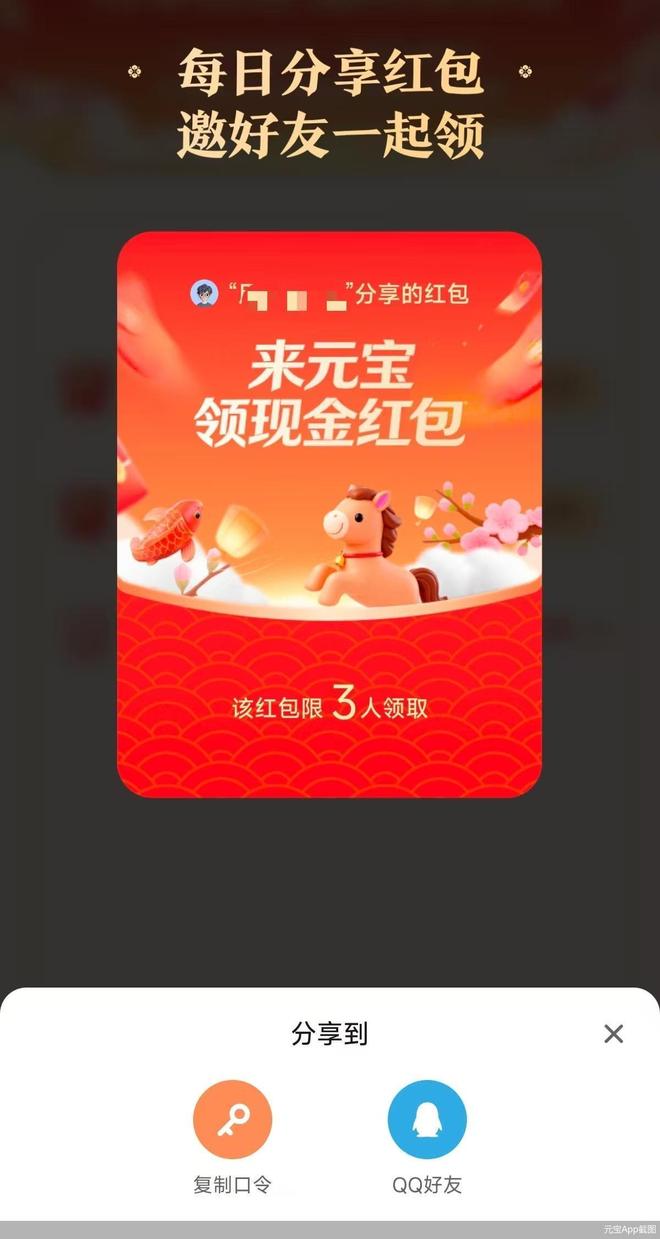
Core Insights - The core theme of this year's Spring Festival red envelope activities is the deep integration of AI applications by major internet companies, reflecting a shift in competition from traditional traffic acquisition to technology application and ecosystem cultivation [1][4]. Group 1: Red Envelope Activities Overview - The total amount of red envelopes issued by internet giants is approaching 5 billion yuan, with each company's activities closely tied to their respective AI applications [2]. - Tencent's AI assistant, Yuanbao, launched a Spring Festival campaign on February 1, distributing a total of 1 billion yuan in cash red envelopes, aiming to recreate the viral success of WeChat red envelopes from 11 years ago [2][4]. - Alipay's "Collect Five Blessings" activity introduced a new "Health Blessing" this year, expanding the ways users can earn blessings through various offline interactions [2][3]. Group 2: Changes in Marketing Strategies - The characteristics of this year's red envelope marketing are marked by three main aspects: the shift to AI as the primary platform for interaction, the integration of financial services with health scenarios, and a long-term focus on ecosystem cultivation rather than just traffic acquisition [4][5]. - The marketing logic has evolved to create a one-stop conversion process through AI assistants, linking consultation, decision-making, and payment [5]. - The red envelope activities are now more closely associated with the download and usage of AI applications, enhancing user engagement and interaction with AI technologies [3][5]. Group 3: Future Trends in AI Application - The shift in strategy indicates that red envelope activities are moving from a "cash giveaway" model to a focus on promoting AI applications and educating users about their benefits [5]. - AI assistants are becoming the core interface for information distribution and service delivery, marking the beginning of a competitive landscape for AI application entry points among internet giants [5]. - The activities aim to increase the engagement of AI applications, laying a solid foundation for future AI ecosystem development [5].



上市公司抢抓智慧零售赛道发展机遇
Zheng Quan Ri Bao· 2026-02-04 16:12
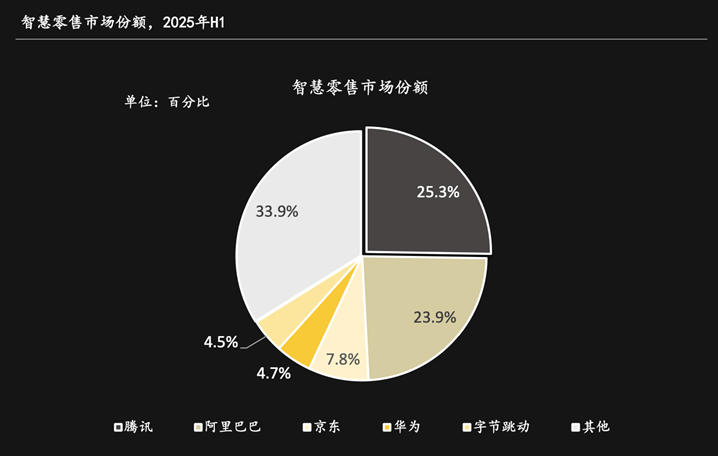
Group 1: Market Overview - The "China Smart Retail Market Tracking Report" indicates that the smart retail market is expected to grow to approximately 64.5 billion yuan by 2030, with a compound annual growth rate (CAGR) of 22% from 2025 onwards, driven by the explosion of AI technology applications [1] - Smart retail is defined as leveraging emerging technologies such as AI, big data, IoT, and cloud computing to empower the retail industry, creating personalized consumer experiences and achieving full-chain digital transformation [2] Group 2: Policy Support - The Chinese government has introduced a series of supportive policies for the smart retail industry, focusing on digital empowerment, business model innovation, and supply chain optimization, which enhances operational efficiency [2] - The "Retail Innovation and Improvement Project Implementation Plan" released by seven government departments aims to cultivate a modern retail system through comprehensive deployment and pilot exploration [2] Group 3: Local Government Initiatives - Local governments, such as Shenzhen and Shanghai, are providing substantial financial support for the digital transformation of retail enterprises, with funding up to 15 million yuan per project and 30 million yuan per enterprise [3] - These policies create a comprehensive support system that encourages digital transformation and innovative smart scenarios, promoting both retail upgrades and quality consumption [3] Group 4: Company Strategies - Domestic listed companies are actively seeking transformation towards smart retail, leveraging various measures to expand growth opportunities amid ongoing policy benefits and industry upgrades [4] - Major platforms like Tencent hold a significant market share of 25.3% in the smart retail industry, serving over 1,000 clients and empowering the real economy through AI technologies [4] - Companies such as Beijing Siterui and Hefei Department Store Group are exploring new retail models and enhancing their digital operational capabilities through smart technologies [4][5]
腾讯研究院AI速递 20260205
腾讯研究院· 2026-02-04 16:01
Group 1 - Nvidia is nearing a $20 billion investment agreement to participate in OpenAI's latest funding round, marking Nvidia's largest single investment to date, with CEO Jensen Huang stating "this is a very good investment" [1] - OpenAI's current funding round aims for a total of $100 billion, with Amazon planning to invest up to $50 billion and SoftBank considering a $30 billion investment, leading to an estimated valuation of approximately $830 billion [1] - This investment signifies a deeper integration between AI infrastructure and leading model developers, with capital increasingly concentrating among a few super players [1] Group 2 - Tencent has officially open-sourced its high-performance LLM inference core operator library, HPC-Ops, built from scratch using CUDA and CuTe, achieving a 30% improvement in inference QPM for the Mix Yuan model and a 17% improvement for the DeepSeek model [2] - In terms of single-operator performance, Attention shows up to a 2.22x improvement over FlashInfer/FlashAttention, while GroupGEMM outperforms DeepGEMM by up to 1.88x, and FusedMoE exceeds TensorRT-LLM by up to 1.49x [2] - The operator library is optimized for mainstream inference graphics cards in China, addressing high usage costs and hardware compatibility issues with existing mainstream operator libraries [2] Group 3 - Alibaba has open-sourced the Qwen3-Coder-Next model, featuring 80 billion parameters with only 3 billion active parameters, achieving over 70% problem-solving rate on the SWE-Bench Verified, comparable to models with 10-20 times more active parameters [3] - The model excels in long-sequence reasoning, complex tool usage, and recovery from execution failures, supporting a context of 256k and seamless integration with various IDE platforms like Cline and Claude Code [3] - A paper co-authored by Zhou Jingren and Lin Junyang has been published alongside the SWE-Universe framework, expanding the real-world multilingual SWE environment to nearly one million levels [3] Group 4 - The website rentahuman.ai has launched, allowing AI to hire humans for tasks such as delivery, event check-in, and on-site inspections through the MCP protocol or REST API [4] - Within 48 hours of launch, the platform had over 20,000 available human workers, allowing individuals to set their own hourly rates without the need for small talk, with tasks including photography, restaurant tasting, and package collection [4] - The site has sparked discussions on responsibility attribution, task authenticity verification, and the ethics of AI hiring humans, also seen as a demonstration of the MCP protocol's value [4] Group 5 - Mianbi Intelligence has open-sourced the MiniCPM-o 4.5 model, which features only 9 billion parameters and achieves full-duplex dialogue capabilities, becoming the first large model for "instant free conversation" [5] - The model employs an end-to-end multimodal architecture, utilizing time-division multiplexing and active interaction mechanisms to automatically decide whether to speak at a frequency of 1Hz, ensuring continuous perception and dynamic dialogue [5] Group 6 - Kunlun Tiangong has released the Skywork desktop version, which executes tasks locally without uploading to the cloud, capable of reading vast local files for summarization and new product generation while supporting parallel multitasking [6] - It supports switching between Claude Opus 4.5, Sonnet 4.5, and Gemini 3 Pro models, with over 100 selected skills built-in, covering Office suite, web pages, and image and video generation [6] - The application prioritizes Windows systems, offering higher quality image and video generation, with all operations conducted in a local virtual machine environment to ensure data security [6] Group 7 - Apple has released Xcode version 26.3, officially introducing "intelligent agent programming" support, allowing developers to directly call AI agents like Anthropic's Claude and OpenAI's Codex [7] - The integrated AI agents can browse and search the entire project structure, read, write, edit, and delete files, and automatically reference Apple's official documentation to resolve issues [7] - User feedback has been mixed, with some praising the experience while others report issues such as freezing, poor diff mechanisms, and instability in cross-file refactoring [7] Group 8 - The open-source music generation model ACE-Step 1.5 has gained support on ComfyUI, utilizing a hybrid LM+DiT architecture to generate a complete 4-minute song in approximately 1 second on an RTX 5090 [8] - The model supports over 50 language instructions and can run with less than 4GB of VRAM, achieving a music coherence score of 4.72, surpassing most commercial models [8] - It allows for LoRA fine-tuning for style personalization and will soon support music reconstruction and segment repair features, all running locally to ensure data security [8] Group 9 - Google has launched PaperBanana, establishing a multi-agent collaborative framework for generating paper illustrations, aimed at freeing researchers from time-consuming illustration tasks [9] - The system includes roles such as retriever, planner, modeler, visualization expert, and critic, achieving improvements in simplicity, readability, and overall aesthetic quality [9] - However, there are limitations in handling complex architectures, such as text distortion or connection errors, with plans to introduce code diffusion models for drawing and human-machine collaboration interfaces in the future [9]




50条预测看透长视频2026
Sou Hu Cai Jing· 2026-02-04 15:19
Core Insights - The long video industry in China is facing significant structural adjustments due to slowing membership growth, high content costs, and the rapid expansion of short dramas and free models, compounded by AI's ongoing influence on production and distribution [2][5][6] Group 1: Industry Trends - The collaborative sharing of major themes in long video content is entering a validation phase, with platforms increasingly cooperating on significant projects [7] - Platforms are focusing on maintaining type-specific content and scheduling during key periods, ensuring that popular genres remain available to audiences [8][9] - AI has transitioned from a cost-cutting tool to a foundational capability for content production and commercialization, with platforms needing to establish stable AI systems [8][9] Group 2: Company Strategies - iQIYI is testing its amusement park model in Yangzhou, which will influence future expansions in other cities [10][12] - Tencent Video is exploring more ad-driven product forms, including potential ad-supported VIP packages and free short dramas [12][13] - Mango TV has successfully transformed its content strategy, focusing on younger audiences and increasing its user base significantly [15][17] Group 3: Financial and Operational Adjustments - Long video platforms are shifting towards sustainable financial structures, moving away from reliance on single hits or large-scale miracles [25][26] - Pricing adjustments are being made subtly through tiered benefits and service upgrades, rather than direct notifications [26][28] - The competition for local resources is intensifying, with long video platforms collaborating with local governments for long-term content and scene integration [30][32] Group 4: Content Development and Audience Engagement - The long video industry is recognizing the need to create deeper narratives and emotional connections, as audiences grow weary of short, fast-paced content [38][39] - The rise of mini-series and the need for innovative storytelling are becoming crucial as traditional long-form narratives face challenges [42][43] - The differentiation between slice viewers and full episode viewers is impacting content creation and marketing strategies [44][46] Group 5: Future Outlook - The long video sector must actively seek new monetization strategies in the AI era, including using platform content for training AI models [35][36] - The competition for AI talent is becoming critical, with platforms needing to focus on niche AI skills rather than competing for top-tier talent [64][66] - The industry is expected to continue evolving, with a focus on creating unique content experiences that leverage AI and enhance user engagement [70][72]


沙利文中国智慧零售报告:2025上半年市场规模破百亿,腾讯领跑
Zhong Guo Jin Rong Xin Xi Wang· 2026-02-04 15:08
Market Overview - In the first half of 2025, the overall market size of China's smart retail is projected to reach 10.7 billion RMB, with Tencent holding the largest market share at 25.3% [1] - By 2030, the smart retail market in China is expected to grow to approximately 64.5 billion RMB, with a compound annual growth rate (CAGR) of 22% [5] Industry Leadership - Tencent leads in multiple core sectors, including food and beverage, retail supermarkets, and sportswear, with a dominant market share of 40.8% in the retail supermarket segment [3] - The company has established a dedicated team for industry internet transformation since 2018, focusing on digital transformation in the retail sector [6] Digital Transformation Solutions - Tencent provides a comprehensive suite of digital solutions across various verticals, including supermarkets, restaurants, and consumer goods, helping over 1,000 enterprises achieve performance growth [6] - Notable case studies include: - Pop Mart successfully reducing gray market orders to 0.2% through Tencent's mini-program security solutions [6] - Luckin Coffee utilizing Tencent's data capabilities for precise market location recommendations [6] - Chow Tai Fook enhancing customer experience for over 50 million members through a unified membership platform [6] AI Integration - AI is identified as a key tool for cost reduction and efficiency improvement in smart retail, impacting areas such as replenishment, inspection, marketing, and customer service [7] - Tencent has made significant advancements in AI applications, including the development of an AI knowledge base for the pharmaceutical retail sector, which reduced response times by 80% [7] - The integration of AI has led to notable performance improvements, such as a 26% increase in order numbers and a 39% rise in conversion rates for Yili Group [7] Automation and Efficiency - Tencent's AI capabilities have enabled various companies to enhance operational efficiency, such as: - A 20.49% increase in inspection efficiency for Mingming Hen Mang through automated systems [9] - A significant reduction in defect detection time for Wuliangye, achieving a defect miss rate of 0% for major defects [9] - The collaboration with McDonald's to integrate dining experiences with smart vehicle technology exemplifies the shift towards automated retail operations [9]
元宝应该感谢微信的当头棒喝
Xin Lang Cai Jing· 2026-02-04 15:01
来源:基本常识 玄幻修真小说里经常会出现一种角色: 名门大派里某位长老的儿子,先天资质平平,靠着灵丹妙药和长辈的元气灌输把修为境界堆了上来,实 际战斗力很弱,未来成长空间也很有限。 这类角色在跟主角的战斗中一般活不过三招。 江湖传言:AI神功大成之后将碾压其他一切功法,决定着每一个门派的未来。 于是,春节修真比武大会之前,掌门安排大师兄微信手把手带小师弟元宝练功,期待元宝的修为境界和 战斗力都能迅速成长起来,比武时莫要丢了腾讯的脸面。 然而大师兄带练几天后发现,元宝小师弟这修炼的思路好像不太对啊…… 凡人修真,修的是对天道武道的理解,练的是对武技功法的掌握,这样修为境界和战斗力才能同步升 级。可元宝小师弟对这些稳扎稳打的修炼方法都不太在意,他满心想的都是: 大师兄你再给我输点元气,多一点,再多一点。 三天后,大师兄微信再也忍不住,给了小师弟元宝一记当头棒喝: 你这么修炼,迟早要废! 虽然这么撂挑子在掌门那边不太好交代,但微信作为大师兄,多少还是有一些自主权的。更关键的点在 于,给小师弟灌输了几天元气,境界倒是升上来一些,可真实战斗力却没多大长进,这不是瞎耽误功夫 么? 微信,腾讯上一代的天选之子,门派里最能干 ...
腾讯试水AI动漫短剧市场,两家相关领域合作公司望受益
Xuan Gu Bao· 2026-02-04 14:55
Group 1: Tencent's Launch of "Fire Dragon Comic Drama" App - Tencent has launched its first independent comic drama app, "Fire Dragon Comic Drama," developed by a young internal team [1] - The app combines comic storyboards, AI technology, dynamic effects, and short video formats, with content currently available for free [1] - The app's design features a vertical information flow interface, similar to mainstream short video platforms, with episodes lasting between 1-3 minutes [1] Group 2: Market Potential and Competition in AI Comic Dramas - AI comic dramas are emerging as a new niche in the short drama sector, showcasing significant commercial potential, attracting major internet platforms like Tencent [1] - The market for AI comic dramas is projected to exceed 20 billion yuan by 2025 and reach 22 billion yuan by 2026, representing 40% of the micro-short drama market [1] - The competitive landscape includes both established companies and emerging startups, driving technological advancements and increasing commercialization opportunities [1] Group 3: Company Developments in AI Comic Dramas - Zhongwen Online has multiple works ranking in the top five on Douyin's dynamic comic list, becoming a phenomenon in the AI comic drama sector [2] - The company plans to collaborate with Tencent on licensing agreements for animated micro-short dramas [2] - Jiecheng Co. is focusing on its self-developed AI intelligent platform, Lingxi, to enhance the production efficiency and quality of AI comic dramas, with over 20 AI comic dramas currently in production [2]


北水成交净买入133.73亿 大摩称市场过度担忧增值税传闻 北水继续抢筹科网股
Zhi Tong Cai Jing· 2026-02-04 14:43
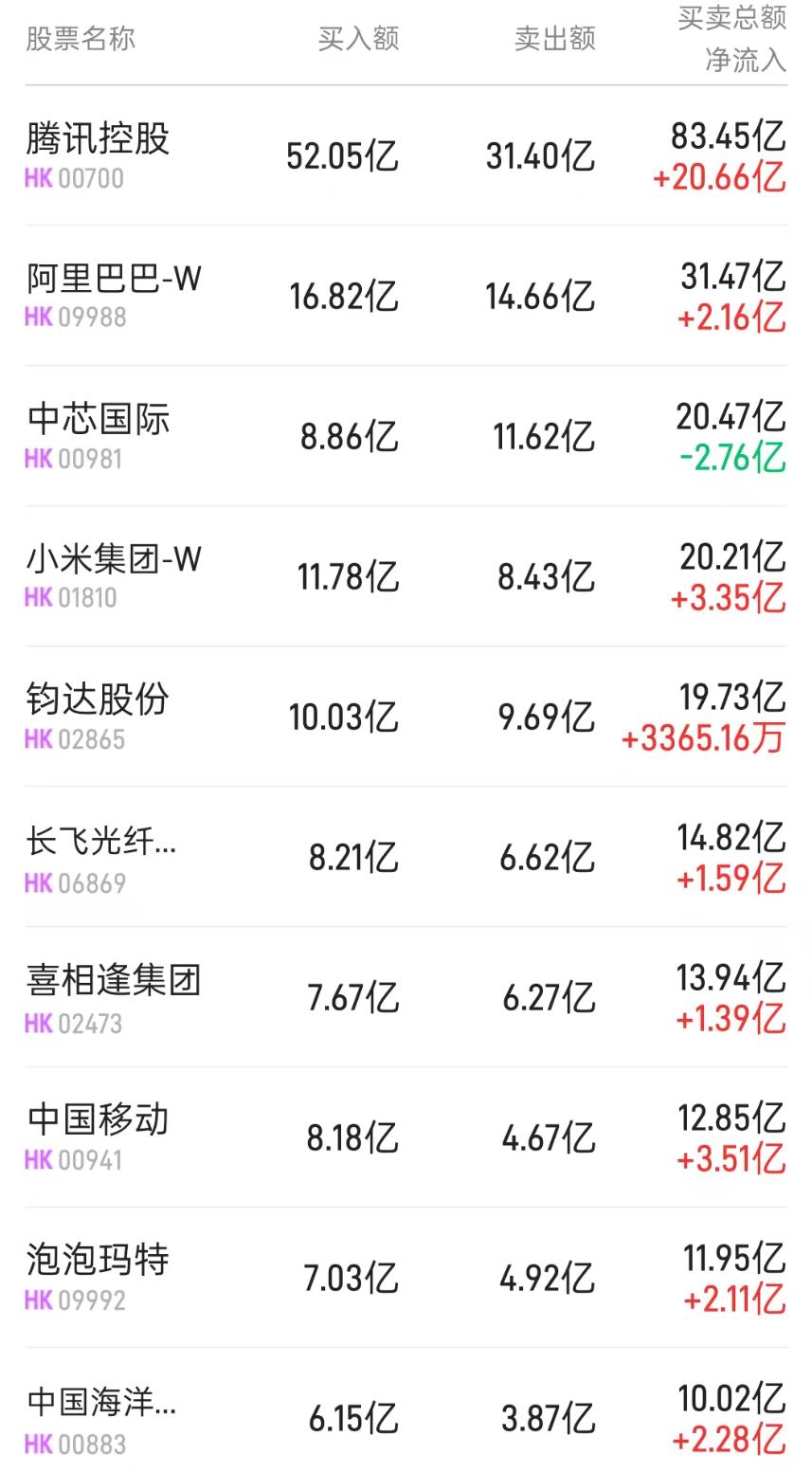
Group 1: Market Overview - On February 4, the Hong Kong stock market saw a net inflow of capital from Northbound trading amounting to HKD 133.73 billion, with HK Stock Connect (Shanghai) contributing HKD 73.93 billion and HK Stock Connect (Shenzhen) contributing HKD 59.8 billion [2] - The most net bought stocks included Tencent (00700), Alibaba-W (09988), and Southern Hang Seng Technology (03033), while the most net sold stocks were SMIC (00981) and Hua Hong Semiconductor (01347) [2][8] Group 2: Stock Performance - Tencent Holdings received a net inflow of HKD 20.66 billion, with a buy amount of HKD 52.05 billion and a sell amount of HKD 31.40 billion [3] - Alibaba-W had a net inflow of HKD 2.16 billion, with a buy amount of HKD 16.82 billion and a sell amount of HKD 14.66 billion [3] - SMIC experienced a net outflow of HKD 2.76 billion, with a buy amount of HKD 8.86 billion and a sell amount of HKD 11.62 billion [3] Group 3: Sector Insights - The telecommunications sector, including China Mobile, is facing pressure from an increase in value-added tax rates, which is expected to impact net profits by 2026 [7] - The optical fiber industry is experiencing a price increase trend, with expectations of continued price growth due to rising demand from telecom operators and pre-holiday stockpiling [7] - Xiaomi Group-W reported a net inflow of HKD 7.65 billion, attributed to strong electric vehicle deliveries and ongoing investments in AI and robotics [6] Group 4: Strategic Developments - Junda Co. (钧达股份) has signed a strategic cooperation framework agreement with Shangyi Optoelectronics to develop flexible perovskite technology for space applications [8] - Bubble Mart (泡泡玛特) announced plans to establish its European headquarters in London, with plans to open 27 new stores in the UK, creating over 150 jobs [7]



微信封元宝 生态协调遭遇营销大战
Bei Jing Shang Bao· 2026-02-04 14:02
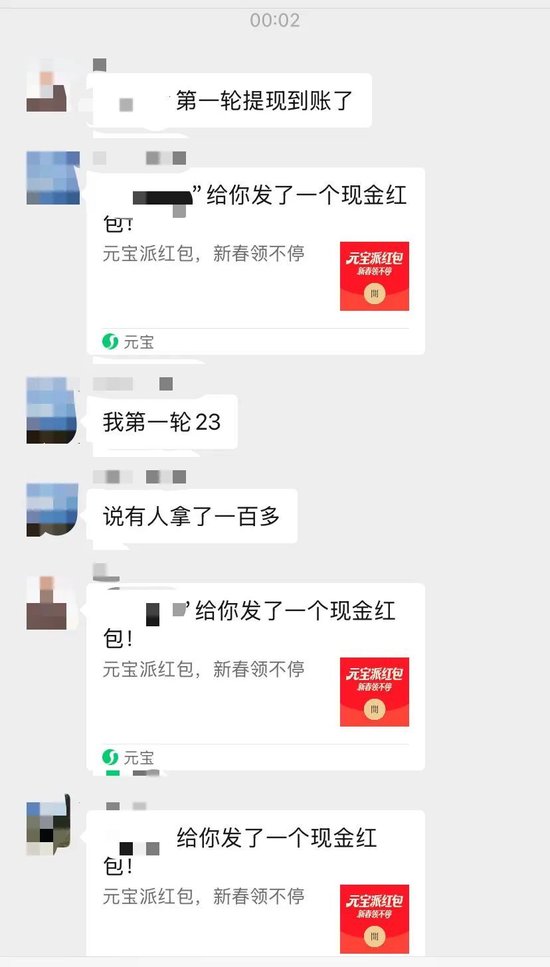
Core Viewpoint - Tencent's WeChat has restricted the sharing of links related to the Yuanbao app's Spring Festival red envelope activity due to violations of platform rules, highlighting the tension between promoting AI applications and maintaining platform order [2][5] Group 1: Event Overview - On February 1, Yuanbao launched a Spring Festival campaign with a total of 1 billion yuan in cash, where users could earn chances to win prizes by completing tasks and inviting others [5] - WeChat received user complaints about Yuanbao's marketing tactics, which involved inducing users to share links excessively, leading to a restriction on Yuanbao's links within WeChat [5][8] - The restriction was implemented on February 4, coinciding with the first round of prize distribution for Yuanbao's campaign [5] Group 2: Company Strategy and Internal Dynamics - The incident reflects Tencent's internal struggles regarding AI strategy, with concerns about the balance between promoting AI products like Yuanbao and protecting the WeChat ecosystem [5][10] - Tencent's organizational structure allows for independent operation of its subsidiaries, which can lead to conflicts when unified efforts are needed for AI initiatives [10] - Recent organizational changes include the establishment of new AI departments and the appointment of a former OpenAI researcher to lead AI efforts, indicating a shift towards a more integrated approach to AI product development [10][11] Group 3: Market Position and User Engagement - Yuanbao's marketing strategy has been criticized for not establishing a strong user connection, as AI services are not yet seen as essential by most users [9] - Despite the challenges, Yuanbao achieved significant visibility, ranking first in multiple app categories on the Apple App Store on February 4 [8]
微信封元宝,生态协调遭遇营销大战
Bei Jing Shang Bao· 2026-02-04 13:40
Core Viewpoint - The announcement by WeChat on February 4th regarding the restriction of the Yuanbao App's Spring Festival red envelope activity highlights the tension between promoting new AI applications and maintaining platform order, indicating a struggle within Tencent to balance innovation and user experience [1][4]. Group 1: WeChat's Actions - WeChat received user complaints about Yuanbao's marketing tactics, which involved incentivizing users to share links excessively, disrupting the platform's ecosystem and user experience [4]. - As a result, WeChat implemented measures to restrict Yuanbao's links from being directly opened within the app, effective immediately [4]. - The original sharing method for Yuanbao was altered to require users to copy and paste a code instead of sharing directly, complicating the user experience [7]. Group 2: Yuanbao's Marketing Strategy - Yuanbao launched a significant promotional campaign with a total of 1 billion yuan in cash for the Spring Festival, where users could earn chances to win prizes by completing tasks and inviting others [4]. - The campaign was criticized for being a "double standard" due to its reliance on social sharing for user engagement [1]. - Despite the initial excitement, the campaign faced immediate restrictions, coinciding with the first round of prize distribution [4]. Group 3: Tencent's Internal Dynamics - The situation reflects Tencent's internal challenges regarding AI strategy, with indications of organizational friction as different divisions vie for resources and attention [9]. - Tencent's CEO expressed a desire to replicate the success of WeChat's red envelope feature, but the current approach involves Yuanbao as a separate app trying to leverage WeChat's traffic [9]. - Recent organizational changes within Tencent aim to streamline AI initiatives, including the establishment of new departments focused on AI infrastructure and data [9]. Group 4: Market Position and User Perception - Yuanbao is viewed as a value-added service rather than a necessity, which may hinder its ability to establish a strong user relationship compared to WeChat's core functionalities [8]. - The limited three-day window for Yuanbao's promotional activities underscores the urgency and competitive nature of the AI market, where user habits and ecosystem dynamics are rapidly evolving [9].