
LENOVO GROUP(00992)

Search documents
联想申请显示控制方法及电子设备专利,控制主屏幕和扩展屏中的至少一个显示内容集合
Jin Rong Jie· 2025-12-27 04:50
Core Viewpoint - Lenovo (Beijing) Co., Ltd. has applied for a patent titled "A Display Control Method and Electronic Device," indicating its focus on innovative display technologies and potential advancements in user interface design [1] Company Overview - Lenovo (Beijing) Co., Ltd. was established in 1992 and is located in Beijing, primarily engaged in the manufacturing of computers, communications, and other electronic devices [1] - The company has a registered capital of 565 million Hong Kong dollars [1] - Lenovo (Beijing) has invested in 107 enterprises and participated in 5,000 bidding projects, showcasing its active role in the market [1] - The company holds 1,751 trademark registrations and 5,000 patent records, along with 238 administrative licenses, reflecting its extensive intellectual property portfolio [1] Patent Details - The patent application, published as CN121209727A, was filed on October 2025 [1] - The disclosed method involves detecting changes in the absolute orientation of the main screen of an electronic device and obtaining display control information for at least one extended screen [1] - The display control information is determined based on the orientation of the extended screen relative to the main screen, which changes with the main screen's absolute direction [1] - The method aims to identify a set of content that requires a change in display mode and control the display of content on at least one of the main and extended screens [1]

联想申请一种定位方法专利,确定第二电子设备相对于第一电子设备的目标方向
Jin Rong Jie· 2025-12-27 03:17
Core Viewpoint - Lenovo (Beijing) Co., Ltd. has applied for a patent titled "A Positioning Method, Device, and Electronic Equipment," indicating its ongoing innovation in technology related to positioning systems [1]. Group 1: Patent Application Details - The patent application was published under CN121207139A with an application date of September 2025 [1]. - The patent describes a method that includes determining the first orientation and first target parameter value of a first electronic device, which is based on a target reference plane [1]. - The method also involves detecting changes in the orientation of the first electronic device and determining a second orientation and second target parameter value, which helps in identifying the target direction of a second electronic device relative to the first [1]. Group 2: Company Background - Lenovo (Beijing) Co., Ltd. was established in 1992 and is located in Beijing, primarily engaged in the manufacturing of computers, communications, and other electronic devices [1]. - The company has a registered capital of 565 million Hong Kong dollars and has invested in 107 enterprises [1]. - Lenovo (Beijing) has participated in 5,000 bidding projects and holds 1,751 trademark records and 5,000 patent records, along with 238 administrative licenses [1].
首个AI互动漫画上线,由快看漫画与MiniMax合作推出;我国首部人工智能大模型国家标准实施丨AIGC日报
创业邦· 2025-12-27 01:09
Group 1 - Qunhe Technology collaborates with Zhejiang University to release the SAGE-3D dataset, the first VLN (Visual Language Navigation) embodied learning dataset based on 3D Gaussian, containing over 554,000 object instances and 2 million "trajectory-instruction" pairs across 1,000 scenes [2] - Kuaikan Manhua launches the first AI interactive comic in partnership with MiniMax, integrating AI technology for character interaction and immersive experiences, supported by MiniMax's video and voice generation models [2] - Lenovo plans to unveil its first "AI Super Intelligent Agent" at CES, designed for global markets, with capabilities similar to Doubao mobile assistant but with more comprehensive features and cross-device connectivity [2] Group 2 - China's first national standard for AI large models has been implemented, focusing on general large models and filling a gap in the technical evaluation system, with over 95,000 calls to the model and aiding nearly 30 manufacturers in technology iteration [2]


2025联想天禧AI生态伙伴大会在京举行
Bei Jing Shang Bao· 2025-12-26 13:54
Core Insights - The 2025 Lenovo Tianxi AI Ecosystem Partner Conference was held in Beijing, focusing on the theme "Empowering Intelligent Agents, Initiating a New Ecosystem" [1] - The conference showcased the evolution of the Tianxi personal super intelligent agent and outlined a clear path for personal AI to transition from tools to "AI Twins," moving from an interconnected world to an AI-driven one [1] Company Strategy - Lenovo's "One Body, Multiple Ends" strategy centers around the Tianxi personal super intelligent agent, which consists of four core pillars: AUI interaction, Tianxi brain, Tianxi ecosystem, and a trusted security platform [1] - The Tianxi AI is designed to be more than just software; it possesses five core capabilities: perception, understanding, memory, planning, and scheduling, aiming to become the most user-friendly personal AI [1] Vision and Commitment - Lenovo's commitment to "AI for All, Technology Equality" is emphasized by its ongoing efforts to advance the "One Body, Multiple Ends" strategy [1] - The goal is for Lenovo's AI terminals to become "hearing what you hear, seeing what you see, thinking what you think, and acting as you wish," ensuring that AI benefits everyone [1] - The Tianxi AI has evolved from a conceptual idea to an integral AI companion in users' daily lives, enhancing their experiences and taking over work tasks [1]
联想将推出超级 AI 智能体,对标豆包手机助手
Xin Lang Cai Jing· 2025-12-26 12:26
Core Viewpoint - Lenovo Group plans to launch its first global "AI Super Intelligent Body" during CES, positioning it as a strategic application for the company [1][4] Group 1: Product Features - The AI Super Intelligent Body is designed to have capabilities similar to the Doubao mobile assistant but will offer more comprehensive functions and enable cross-device connectivity and coordination [1][4] - This application is not an operating system but a system-level application that connects different AI capabilities and hardware terminals, helping users coordinate multiple intelligent agents in the background [3][5] - It can interact with users through text, voice, and environmental awareness, learning personal habits over time [5] Group 2: Market Position - According to IDC data, Lenovo is the leading PC manufacturer globally, with a market share of 25.5% in the latest quarter [4][5] - Lenovo's Motorola smartphones shipped over 16 million units in the latest quarter, generating over $3.9 billion in revenue, with a global market share of 4.9%, ranking eighth in the global smartphone market [4][5] - This market position provides Lenovo's AI Super Intelligent Body with better system-level embedding permissions and collaboration advantages compared to ByteDance [4][5]
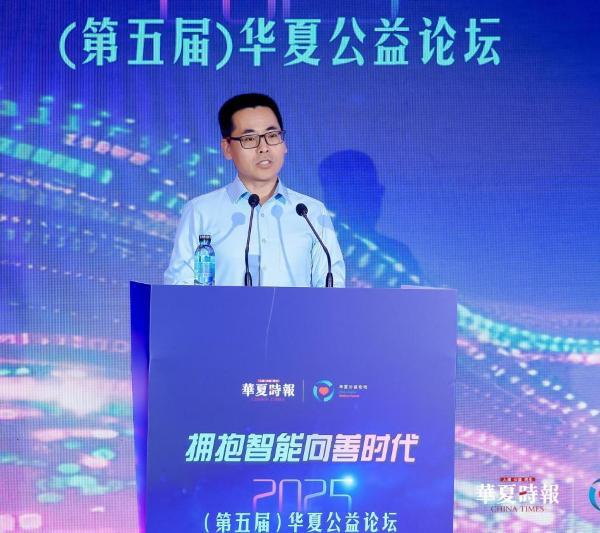
联想马铁风:智能向善照乡村,联想三大公益项目搭建儿童数字成长桥|聚焦2025(第五届)华夏公益论坛
Hua Xia Shi Bao· 2025-12-26 12:16
Core Viewpoint - The 2025 Huaxia Public Welfare Forum emphasizes the integration of artificial intelligence (AI) technology with public welfare initiatives, aiming to drive high-quality development in the sector through innovative paths and technological empowerment [2]. Group 1: AI and Public Welfare Initiatives - Lenovo Group established the "Responsible AI Committee" in 2022 and launched the "Human-Centered AI Development and Governance Initiative" in November 2024, with 50 organizations joining by November 2025 to create a "human-centered, benevolent AI" ecosystem [2]. - The "Human-Centered AI" concept focuses on ensuring AI is safe, human-centric, inclusive, and benevolent, driving economic growth while supporting vulnerable groups and sustainable development [2]. Group 2: Specific Programs for Rural Education - The "Recycled Computer Classroom" project aims to address the issue of outdated technology in rural schools by refurbishing and deploying old computers, providing necessary hardware and software support for digital education [4][5]. - The "Small Seedling Plan," initiated in 2024, focuses on enhancing digital literacy among rural children through innovative educational practices, with 503 proposals received and 60 projects funded, benefiting over 20,000 rural children [6][7]. - The "Qingmei Plan," launched in 2022, empowers rural teachers by providing AI resources and training, impacting over 15,000 rural children and establishing AI-themed classrooms tailored to local educational needs [8][9]. Group 3: Impact and Future Directions - The initiatives have successfully created a bridge to the intelligent era for rural children, fostering confidence and critical thinking through digital tools and AI education [10]. - The focus will continue to shift towards AI literacy, particularly in areas such as identifying misinformation and ensuring online safety, with plans for further funding and project replication in 2026 [7][10].
“农商文旅体”深度融合,解锁跨年新玩法|一克商评
Xin Lang Cai Jing· 2025-12-26 11:53
Group 1 - The "Village Sugar Festival" in Huo Qiao Village, Jianyang City, will host a 21-hour continuous urban-rural integration celebration from December 31, 2025, to January 1, 2026, marking a new approach to New Year celebrations and showcasing a future of urban-rural symbiosis [2] - The event is described as a deep exploration of the integration of agriculture, commerce, culture, tourism, and sports, providing a complete local living experience from the end of the year to the beginning of the new year [2] Group 2 - Lenovo Group plans to launch its first global "AI Super Intelligent Agent" during CES, which is positioned as a strategic application for the company [3] - This AI application is expected to have capabilities similar to ByteDance's "Doubao Mobile Assistant," indicating Lenovo's comprehensive push into AI applications [3] - Unlike ByteDance's cross-industry collaboration model, Lenovo aims to leverage its hardware foundation to efficiently manage multiple intelligent agents, enhancing user experience through cross-device connectivity and task scheduling [3] Group 3 - Qunar Travel reports that December 27 will see the first wave of travel peaks for the New Year holiday, with popular long-distance routes such as Shenzhen-Harbin and Beijing-Kunming experiencing higher passenger numbers than December 31 [4] - Major cities like Shanghai, Beijing, Guangzhou, Chengdu, Shenzhen, Hangzhou, Chongqing, Kunming, Sanya, and Haikou are identified as the top ten domestic departure cities for that Saturday [4] - The upcoming three-day "mini-holiday" for New Year is expected to significantly boost consumer spending and travel intentions, leading to a vibrant tourism market characterized by high booking activity and diverse travel options [4]
联想申请息屏显示方法和设备专利,降低电子设备在息屏状态下的功耗
Jin Rong Jie· 2025-12-26 11:49
国家知识产权局信息显示,联想(北京)有限公司申请一项名为"一种息屏显示方法和设备"的专利,公 开号CN121210012A,申请日期为2025年10月。 本文源自:市场资讯 作者:情报员 天眼查资料显示,联想(北京)有限公司,成立于1992年,位于北京市,是一家以从事计算机、通信和 其他电子设备制造业为主的企业。企业注册资本565000万港元。通过天眼查大数据分析,联想(北京) 有限公司共对外投资了107家企业,参与招投标项目5000次,财产线索方面有商标信息1751条,专利信 息5000条,此外企业还拥有行政许可238个。 声明:市场有风险,投资需谨慎。本文为AI基于第三方数据生成,仅供参考,不构成个人投资建议。 专利摘要显示,本申请公开一种息屏显示方法和设备,方法包括:电子设备在息屏状态下显示常亮显示 界面;所述电子设备的触控模块确定基于来自所述电子设备的目标信息确定的显示数据,所述目标信息 包括传感器信息、时钟信息和通知信息中至少一项;所述触控模块将所述显示数据写入内存模块;所述 显示模块从所述内存模块读取所述显示数据;基于所述显示数据,显示模块确定所述常亮显示界面的显 示参数。 ...
联想天禧AI 3.5发布:承诺未来12个月智能体利润全部归属开发者
Feng Huang Wang· 2025-12-26 11:19
Group 1 - Lenovo announced the upgrade of Tianxi AI to version 3.5, transitioning from an "AI assistant" to an "AI teammate" with closed-loop execution capabilities [1] - The Tianxi AI ecosystem has surpassed 280 million monthly active users, with over 70% of users aged between 18 and 34, and a distribution volume expected to exceed 4 billion by 2025 [1] - Lenovo launched the "Tianxi AI Ecosystem Intelligent Body Pilot Program" in collaboration with Volcano Engine, offering developers 100 million token vouchers and committing to 100% profit sharing for the next 12 months [1] Group 2 - The value measurement standard for intelligent agents is shifting from SEO to GEO, indicating a change in traffic distribution based on user intent understanding and task delivery [2] - Lenovo is building infrastructure including A2A collaboration protocols and TAP payments to create a complete commercial closed loop from intent understanding to task delivery [2] - The newly released Tianxi AI 3.5 features upgrades in personalized memory, multi-agent collaboration, and interaction experience, with future plans for Tianxi AI 4.0 to possess deep cognitive abilities and cross-application resource scheduling [2] Group 3 - Lenovo will showcase at CES 2026 on January 7, 2026, alongside industry leaders from NVIDIA, Intel, and AMD to discuss the future direction of AI PCs and industry innovation [3]

首份个人AI产业发展白皮书发布 业内预判个人超级智能体规模化落地窗口期到来
Zheng Quan Shi Bao Wang· 2025-12-26 11:18
Core Insights - The white paper defines personal AI as a user-centered AI system that integrates software, hardware, and services, with data and algorithm sovereignty belonging to the user [1] - Personal AI is characterized by four main features: user-centric personal superintelligence, AI terminal plus personal cloud hybrid, cross-platform open ecosystem, and trusted security based on personal AI sovereignty [1] - The personal AI industry is distinct from traditional internet and software industries, changing the industry structure and placing personal superintelligence at the center of value [1] Industry Structure - The personal AI era will shift the industry center from OS and commercial platforms to personal superintelligence, breaking the single-axis structure centered around platforms [2] - The industry will be restructured into a multi-layered collaborative concentric circle system, making the structure flatter and the collaboration more open [2] - Companies like Lenovo, representing terminal manufacturers, will play a pivotal role in the industry chain transformation, acting as a hub for full-scene demands around personal superintelligence [2] Market Predictions - IDC predicts that 2026 will be the inaugural year for the personal AI industry, with the scale of personal superintelligence expected to materialize, and traditional AI terminal shipments in China to exceed 300 million units [2] - An open, trustworthy, and sustainable personal AI ecosystem is anticipated to develop alongside this growth [2]