BYD(01211)

Search documents
长沙领跑!前11月湖南“新三样”出口增长81.5%
Chang Sha Wan Bao· 2025-12-25 14:50
Core Insights - Hunan Province's exports of electric vehicles, lithium-ion batteries, and photovoltaic products reached 17.34 billion yuan in the first 11 months of 2025, marking an 81.5% year-on-year increase [1] - The leading city, Changsha, accounted for 14.67 billion yuan of these exports, growing by 86.7% and representing 84.6% of the province's total [2] - Private enterprises, particularly BYD and Anker Electronics, played a significant role, with private sector exports of these products totaling 16.63 billion yuan, an 88% increase, making up 95.9% of the total [1] Export Performance - Electric vehicle exports reached 10.7 billion yuan, a growth of 105.3% [1] - Lithium-ion battery exports were 6.08 billion yuan, increasing by 61% [1] - Photovoltaic product exports totaled 560 million yuan [1] Regional Highlights - Changsha continues to lead the province, while Xiangxi and Shaoyang emerged as notable performers with export values of 620 million yuan and 290 million yuan, respectively, showing increases of 590% and 1430% [2] - ASEAN remains the largest trading partner, with exports to the region amounting to 5.14 billion yuan, a staggering growth of 467.9% [2] Market Structure and Strategy - The export market structure for Hunan's "new three items" is diversifying, with Indonesia, Mexico, and the United States being the top three export destinations [2] - Recommendations include promoting a "diversification + local overseas" strategy, focusing on emerging markets in Africa, the Middle East, and Southeast Asia [3] - Emphasis on "green manufacturing + unified standard certification" to address carbon tariff barriers and support the development of low-carbon technologies [3]


欧媒:中国都上桌了,500年来第一次,欧洲却连牌桌都挤不进?
Sou Hu Cai Jing· 2025-12-25 12:48
Group 1: European Defense Industry Challenges - The European defense industry faces significant challenges, including a massive production capacity gap, particularly in ammunition, which fails to meet Ukraine's needs [3] - Disagreements among EU member states complicate cross-border collaboration in defense, as each country has its own military industrial system and interests [3] - Europe's reliance on U.S. defense spending, which accounts for 30% of U.S. defense expenditures, has left Europe vulnerable, especially as U.S. focus shifts to other regions [3] Group 2: Economic and Industrial Decline - European industries are experiencing hollowing out, with traditional sectors losing competitiveness, particularly in technology and manufacturing [6] - Germany's industrial output is projected to decline by 2% in 2025, marking the fourth consecutive year of decline, indicating a structural recession [9] - The automotive sector is under pressure, with companies like BYD significantly increasing their market share in Europe, while local manufacturers struggle with battery supply and regulatory changes [5][12] Group 3: Regulatory and Policy Issues - The EU's complex regulatory environment has hindered the swift transition to electric vehicles, with frequent changes in environmental standards causing confusion among manufacturers [11] - The EU's attempts to establish a digital single market and enhance local digital enterprise competitiveness are ongoing, but challenges remain in breaking down national barriers [14] - The EU's legislative efforts, such as the Digital Services Act and Digital Markets Act, aim to counteract U.S. tech dominance, but the effectiveness is limited by existing technological dependencies [13][14] Group 4: Technological Strengths and Collaborations - Europe maintains strengths in certain technological areas, such as wind power and high-end manufacturing, with a significant share of global medical patents [12] - Collaborations between European automakers and Chinese battery manufacturers are emerging, creating a synergistic model that combines European vehicle technology with Chinese battery solutions [12] - The EU's regulatory frameworks in digital governance and environmental standards are seen as leading globally, despite the challenges faced by local industries [13]


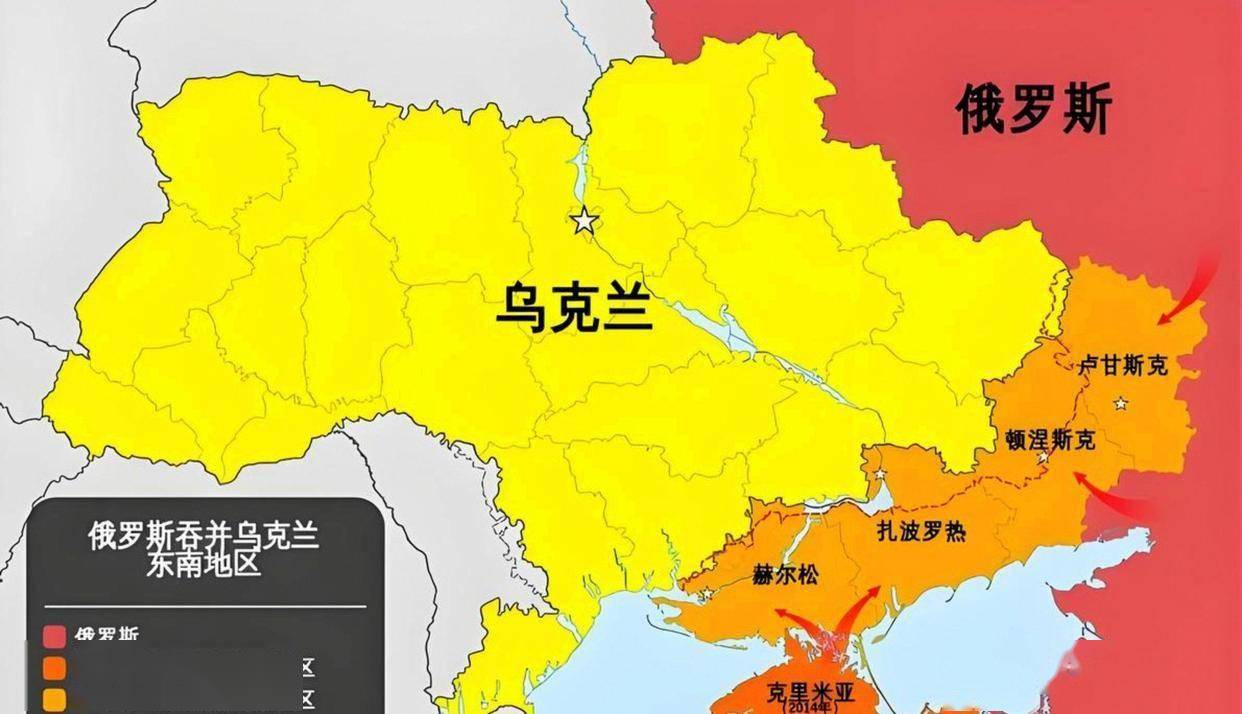
价格合规为汽车业反内卷再加码
Xin Lang Cai Jing· 2025-12-25 12:40
Core Viewpoint - The release of the "Automobile Industry Price Behavior Compliance Guidelines" aims to regulate pricing behaviors in the automotive industry, addressing the ongoing "involution" competition and providing a foundation for healthy market development by 2026 [2][18]. Group 1: Industry Response and Impact - Major automotive companies such as BYD, Xpeng Motors, and BAIC Group have responded positively to the guidelines, committing to eliminate price fraud and unfair competition [2][18]. - The guidelines are expected to alleviate the long-standing issue of price inversion faced by dealers, which has led to significant financial losses, with 52.6% of dealers reporting losses in the first half of 2023 [3][19]. - The guidelines explicitly prohibit selling below cost, which is seen as a protective measure for dealers and is welcomed by the majority of them [4][20]. Group 2: Pricing and Rebate Issues - The guidelines address the complex rebate structures that often burden dealers, requiring manufacturers to clarify rebate policies and respect dealers' pricing autonomy [8][24]. - A survey indicated that while half of the brands have reduced rebate payment periods to within one month, some still exceed 60 days, creating operational pressure for dealers [8][24]. - The guidelines aim to promote transparency in pricing and rebate practices, shifting the market focus from price wars to value competition [5][21]. Group 3: Regulatory Framework and Compliance - The guidelines mandate that third-party platforms involved in automotive sales must adhere to pricing regulations, ensuring consumer rights and fair trading practices [9][25]. - A multi-dimensional compliance framework is proposed, including clear pricing rules, promotional conduct, and service charges to enhance transparency in the automotive sales process [10][26]. - The guidelines encourage the establishment of internal compliance mechanisms within automotive companies to prevent pricing violations and enhance brand integrity [10][26]. Group 4: Future Outlook and Challenges - The guidelines are seen as a significant step towards curbing irrational competition in the automotive market, with expectations for improved profitability across the industry [12][28]. - However, industry experts emphasize the need for detailed implementation rules to ensure effective execution, particularly regarding cost accounting standards [13][29]. - The successful implementation of the guidelines will require collaboration among manufacturers, dealers, and regulatory bodies to foster a healthy competitive environment [15][31].

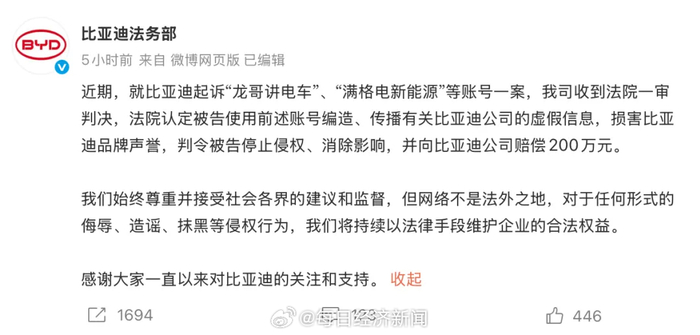
编造、传播虚假信息,一自媒体被判向比亚迪赔偿200万元
Nan Fang Du Shi Bao· 2025-12-25 12:02
12月25日,比亚迪法务部官方微博发文称,近期,就比亚迪起诉"龙哥讲电车""满格电新能源"等账号一案,该公司收到法院一审判决。法院认定被告使用 前述账号编造、传播有关比亚迪公司的虚假信息,损害比亚迪商业信誉及商品声誉,判令被告停止侵权、消除影响,并向比亚迪公司赔偿200万元。 同日,比亚迪集团品牌及公关处总经理李云飞转发该信息并称,"比亚迪到了现在的位置和体量,如果有媒体就客观事实进行报道批评,都没问题!有些 媒体不了解情况,有些误解性的发布,我们也能接受!但对于黑公关、黑媒体,为了黑而黑,长期针对比亚迪,诋毁比亚迪,我们绝不容忍!" 2024年10月,比亚迪新闻打假办公室就曾发文称,正式起诉自媒体"龙哥讲电车"。该发文指出"龙哥讲电车"及其相关矩阵账号("满格电新能源汽修"等) 在抖音、视频号等平台上肆意发布不实言论,造谣诋毁比亚迪品牌及系列产品,严重损害比亚迪的品牌声誉。 目前,湾财社记者已无法在抖音平台搜索到"龙哥讲电车""满格电新能源"的账号。 (文章来源:南方都市报) 公开信息显示,"龙哥讲电车"的人设为"拥有十年新能源汽车维修经验的修理工",主要内容聚焦于电动车维修、用车风险和购车避坑。 ...
比亚迪回应黑公关:王传福劝大家忍一忍
2 1 Shi Ji Jing Ji Bao Dao· 2025-12-25 10:50
记者丨焦文娟 编辑丨吴晓宇 近日,比亚迪集团品牌及公关处总经理李云飞接受了21世纪经济报道的独家专访,再度回应黑公关、黑 水军问题。 21世纪经济报道:汽车行业黑公关事件频出,比亚迪也是受害者,您和团队是如何应对呢? 21世纪经济报道:有个观点叫做强势群体在舆论场中会沦为弱势表达,你也是认同的。 李云飞:是,我很认同。我包括我们的管理人员,我们的团队,我们总结下来的话,做好自己的技术, 做好自己的产品,做好自己的品牌。我觉得就长期主义,与公道自在人心。 我觉得大的环境的话还是很多时候是带节奏的。各个平台你去看,但凡诋毁你的,侮辱你的,不时带节 奏的,随随便便动辄转发在上万、几万甚至几十万。那我想问一下这些号,这个流量是谁推的?那如果 说这个是发布信息是他自己推的,我能理解。那如果是别人推的,目的何在?用意何在?我觉得这个是 有问题的。 我后来在网上也讲,我说其实我们比亚迪也是,我们才是树大招风,我们的量很大,我们才是这个行业 黑公关黑水中的最大的受害者,没有之一,这是事实。因为我们每天我们同事,我们自己都看得到,有 很多特别无厘头。 我们在前年、去年,针对好几起案子发起诉讼,因为法务的这个流程非常漫长,举证需 ...
本田将推纯电K-Car,迎战比亚迪
Guan Cha Zhe Wang· 2025-12-25 10:38
Core Viewpoint - Honda plans to launch a pure electric version of its K-Car model by 2027 to compete with BYD, which has recently entered the K-Car market with its model Racco [2][3]. Group 1: Honda's K-Car Strategy - Honda's N-BOX model achieved impressive sales, reaching 200,000 units in 2024, making it the best-selling new car in Japan for three consecutive years [2]. - The N-BOX has a spacious interior and a price starting from 1.7 million yen, which has garnered strong consumer support [2]. - Since its launch in 2011, the cumulative sales of the N-BOX have reached approximately 3 million units [2]. Group 2: Market Context and Competition - The K-Car segment accounts for about 35%-40% of new car sales in Japan, with 1,202,100 units sold in 2024 [3]. - Currently, the K-Car market in Japan is dominated by local brands, with Suzuki holding a 38.8% market share, followed by Honda at 21.4% and Daihatsu at 18.3% [4]. - The introduction of BYD's Racco, which is designed specifically for the Japanese market and complies with local regulations, poses a significant threat to Japanese automakers [4]. Group 3: Electric K-Car Market Potential - The Japanese government offers subsidies for purchasing pure electric K-Cars, along with tax reductions in the second year of ownership, which could accelerate the adoption of electric vehicles if prices become comparable to gasoline cars [5].

比亚迪回应黑公关:王传福劝大家忍一忍
21世纪经济报道· 2025-12-25 10:37
21世纪经济报道: 汽车行业黑公关事件频出,比亚迪也是受害者,您和团队是如何应 对呢? 李云飞: 对,因为过去几年,整个中国汽车行业竞争非常激烈。有时候有各种黑公关、黑数 据。那作为品牌公关的负责人,我和我们的团队一样的有时候很愤慨。 换位思考一下,很多媒体都很清楚,我们比亚迪从来不拉踩别人,但是很多同行做了很多特别 针对别人一个事情,最终体现在了比如说黑公关的数据。 王(传福)总上个礼拜五(12月5日)称,比亚迪现在是龙头企业,我们要受得了委屈,别人 可以欺负我们,我们就忍着呗。 我们有一个基本纲要,里面也明确地讲,我们讲好自己的事情就行,就不主动拉踩别人是我们 的底线,也是我们的红线。我们是这么要求,也是这么想这么干的。 21世纪经济报道: 有个观点叫做强势群体在舆论场中会沦为弱势表达,你也是认同 的。 李云飞: 是,我很认同。我包括我们的管理人员,我们的团队,我们总结下来的话,做好自 己的技术,做好自己的产品,做好自己的品牌。我觉得就长期主义,与公道自在人心。 我觉得大的环境的话还是很多时候是带节奏的。各个平台你去看,但凡诋毁你的,侮辱你的, 不时带节奏的,随随便便动辄转发在上万、几万甚至几十万。那我想 ...

比亚迪起诉多个账号编造虚假信息获赔200万元
Mei Ri Jing Ji Xin Wen· 2025-12-25 10:21
#比亚迪起诉多个账号获赔200万元#【比亚迪起诉多个账号一审获赔200万元】12月25日,比亚迪法务部 发布消息称,近期,就比亚迪起诉"龙哥讲电车""满格电新能源"等账号一案,公司收到法院一审判决, 法院认定被告使用前述账号编造、传播有关比亚迪公司的虚假信息,损害比亚迪品牌声誉,判令被告停 止侵权、消除影响,并向比亚迪公司赔偿200万元。(每经,希隆) ...
中国智驾产业变迁:从封闭交付到普惠生态
雷峰网· 2025-12-25 09:24
Core Viewpoint - Over the past decade, China's intelligent driving industry has transitioned from a closed chain to an inclusive ecosystem, driven by technological advancements and collaborative efforts among local companies [1][36]. Group 1: Industry Evolution - In 2011, Tesla's CEO Elon Musk dismissed BYD as a competitor, highlighting the significant gap in technology and product appeal between Chinese automakers and Tesla at that time [2][3]. - By 2024, Chinese automakers like BYD and Geely have surpassed Tesla in sales, becoming part of the top ten global car manufacturers, showcasing the rapid evolution of the industry [4]. - The core of Tesla's sustained optimism lies in its self-developed chips and intelligent driving capabilities, which have spurred a wave of research and development in China's intelligent driving sector [4]. Group 2: Key Players and Partnerships - The critical turning point for China's intelligent driving industry occurred between 2019 and 2020, marked by the emergence of companies like Horizon Robotics and Momenta, which began to establish themselves in the market [6]. - The collaboration between Changan Automobile and Horizon Robotics exemplifies how local companies are building flexible and open supply chain systems, enhancing their control over core technologies [10][12]. - The partnership between Li Auto and Horizon Robotics allowed for rapid development and deployment of advanced driving features, demonstrating the importance of open collaboration in overcoming technological challenges [13][17]. Group 3: Technological Advancements - The shift from Mobileye's closed delivery model to more open and collaborative approaches has catalyzed the development of local intelligent driving technologies, enabling companies to gain autonomy over their systems [9][18]. - Horizon Robotics' introduction of the Journey 5 chip, which offers high performance and supports advanced driving needs, has positioned the company to compete in the high-end intelligent driving market [23][24]. - The "HSD Together" model proposed by Horizon Robotics aims to enhance collaboration across the supply chain, significantly reducing development costs and time to market for automotive companies [27][28]. Group 4: Market Accessibility and Inclusivity - The evolution of intelligent driving technology is making advanced features more accessible to a broader range of consumers, breaking down price barriers that previously limited adoption to high-end vehicles [30][31]. - BYD's upcoming "Heavenly Eye" system, powered by Horizon Robotics' Journey 6 chip, aims to provide advanced driving capabilities across its entire model range, including lower-priced vehicles [30]. - The introduction of Horizon Robotics' HSD full-scene driving assistance system is set to make high-level intelligent driving features available in mid-range vehicles, promoting inclusivity in the market [31][33].
德铁买中国大巴德国财长这么说
第一财经· 2025-12-25 09:22
Core Viewpoint - The article discusses the recent agreement between Deutsche Bahn and BYD for the purchase of 200 electric buses, highlighting the shift towards electric transportation in Germany and the challenges faced by foreign investments in the country [3][4]. Group 1: Electric Bus Agreement - Deutsche Bahn signed a framework agreement with BYD for 200 electric buses to be produced in Hungary, emphasizing cost-effectiveness and the push for green public transport in Germany [3]. - The agreement coincides with the EU's relaxation of the "fuel vehicle ban," indicating a significant trend towards electrification in transportation [3]. Group 2: Economic Performance and Foreign Investment - Germany's economic growth has stagnated, with a projected growth of only 0.1% for 2025, down from previous forecasts [4]. - Despite the economic downturn, foreign investment interest in Germany remains, driven by the need for supply chain integration and access to the EU market [4]. Group 3: Tax Reforms and Investment Climate - Germany plans to gradually reduce the corporate tax rate from 15% to 10% by 2032, alongside other tax incentives to attract foreign investment [5]. - In the first three quarters of this year, bilateral trade between Germany and China reached €185.9 billion, with China remaining Germany's largest trading partner [5]. Group 4: Changing Investment Strategies - Chinese companies are increasingly favoring greenfield investments over mergers and acquisitions, reflecting a more strategic approach to entering the German market [6]. - Key sectors of interest for Chinese investments in Germany include digitalization, energy, and electric vehicles, with a focus on local sales rather than manufacturing [6]. Group 5: Challenges for Chinese Investments - Chinese companies face significant challenges in Germany, including foreign investment scrutiny, subsidy reviews, and data protection regulations [7]. - The German government has tightened regulations on foreign investments, particularly in sensitive sectors, which may lead to longer approval times for investments [7]. Group 6: Importance of the Chinese Market for German Companies - German companies are increasingly recognizing the importance of the Chinese market, with many relocating R&D centers to China to better align with local demands [8]. - The trend of "Eastward migration" among German firms highlights their commitment to maintaining a strong presence in China, as they believe leaving the market would result in lost opportunities [8].