Workflow
INNOVENT BIO(01801)
icon
Search documents
中证港股通医疗主题指数上涨1.33%,前十大权重包含信达生物等
Jin Rong Jie· 2025-04-29 09:40
Core Viewpoint - The China Securities Index for Hong Kong Stock Connect Medical Theme has shown a mixed performance, with a recent increase of 1.33% but a decline of 6.08% over the past month, while it has risen by 15.30% year-to-date [1][2]. Group 1: Index Performance - The China Securities Index for Hong Kong Stock Connect Medical Theme Index closed at 781.03 points with a trading volume of 12.619 billion yuan [1]. - Over the last three months, the index has increased by 13.86% [1]. Group 2: Index Composition - The index comprises 50 listed companies involved in medical devices, medical services, pharmaceuticals, and biotechnology [1]. - The top ten weighted companies in the index include WuXi Biologics (16.49%), JD Health (10.88%), and Alibaba Health (7.36%) [1]. Group 3: Sector Allocation - The sector allocation of the index shows that medical services account for 33.04%, pharmaceutical and biotechnology services for 30.78%, and medical devices for 10.21% [2]. - The index is exclusively composed of companies listed on the Hong Kong Stock Exchange [1]. Group 4: Index Adjustment Mechanism - The index samples are adjusted biannually, with changes implemented on the next trading day following the second Friday of June and December [2]. - In special circumstances, the index may undergo temporary adjustments if a sample company is delisted or undergoes significant corporate changes [2].
40%退货率,卖到海外的国产创新药遭遇“分手”危机?
3 6 Ke· 2025-04-29 01:17
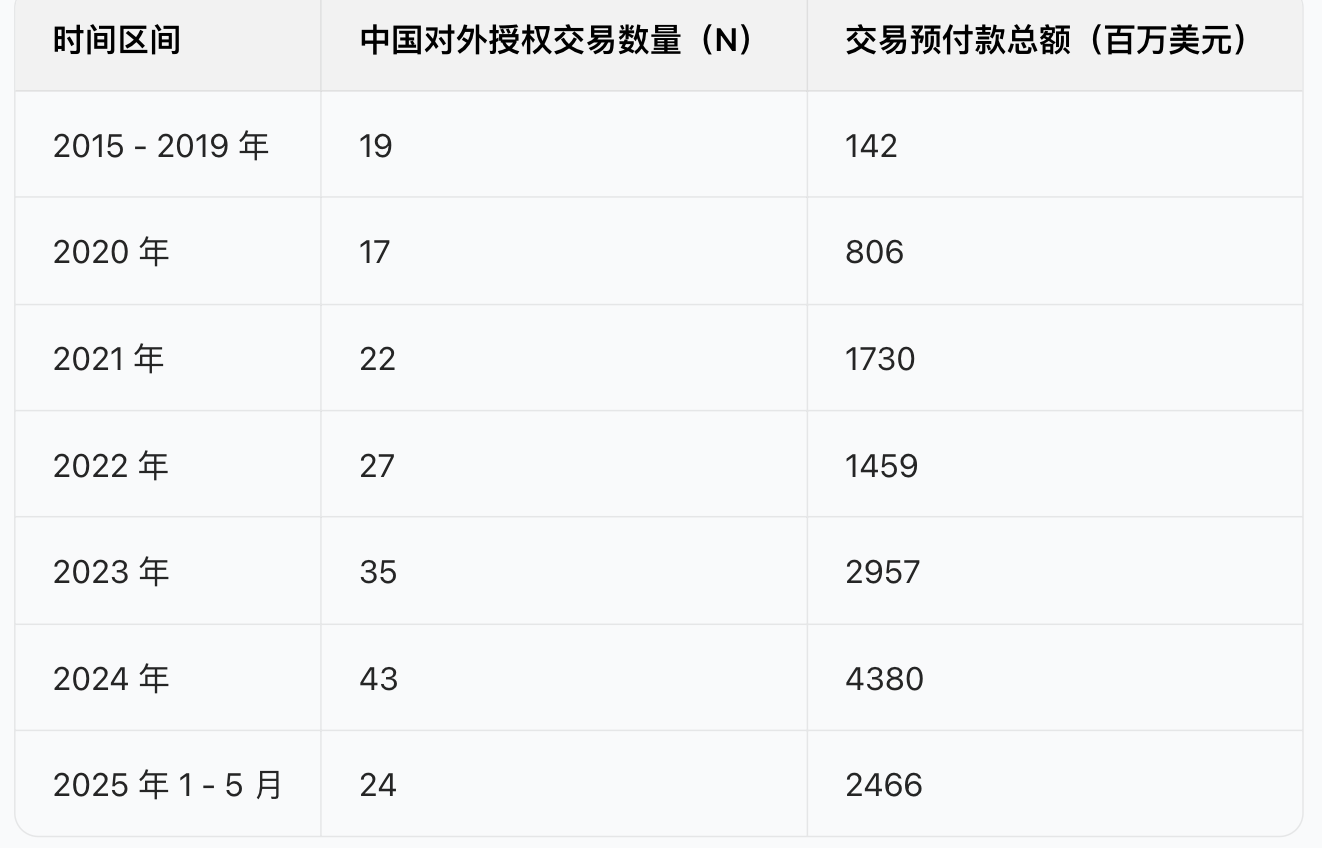
Core Insights - The trend of license-out transactions involving Chinese pharmaceutical companies continues into 2025, with over 20 deals reported in Q1 alone, including significant agreements worth over $1 billion [2] - However, there is a concerning "return rate" of 40% for completed license-out transactions from 2020, indicating a growing trend of terminated collaborations [5] - The industry is experiencing a "clearing" phase after a surge in business development (BD) activities, with many companies facing challenges in maintaining partnerships [5][6] Group 1: Business Development Trends - In Q1 2025, notable transactions included Roche's $1 billion deal with Innovent Biologics and Lepu Biopharma's $1.2 billion collaboration with ArriVent [2] - Companies like InnoCare and Baillie Gifford have successfully capitalized on BD opportunities, with InnoCare's license-out deals exceeding $6 billion, contributing to its successful IPO [2] - The overall BD transaction volume is expected to reach new highs in 2025, driven by increased interest from global pharmaceutical companies in Chinese innovative drugs [2] Group 2: Challenges and Terminations - As of April 2025, 25 out of 62 completed license-out transactions from 2020 have been terminated, reflecting a 40% return rate [5] - Recent high-profile disputes include Novo Nordisk's $800 million claim against Henlius for alleged fraud and GAVI's termination of a pre-purchase agreement with Clover Biopharmaceuticals [6] - The primary reasons for these terminations include disappointing clinical data and strategic shifts by the buying companies, leading to increased competition and pressure on Chinese biotech firms [6][8] Group 3: Financial Implications - The milestone achievement rate for Chinese innovative drugs is only 22%, indicating that most companies only receive the initial payment, which typically constitutes 2%-5% of the total deal value [9][11] - The financial impact of terminated collaborations is significant, as companies lose potential milestone payments and face challenges in maintaining market confidence [9][12] - The NewCo model is emerging as a more favorable alternative, allowing for shared risk and deeper collaboration between Chinese firms and multinational corporations [13][14] Group 4: Future Outlook - The BD landscape is expected to see an increase in "return" events, as the market matures and companies face heightened scrutiny [15] - Successful future collaborations will require Chinese companies to demonstrate superior clinical data and competitive advantages in the global market [18][19] - The industry must balance the urgency of BD with long-term strategic planning to avoid reliance on potentially volatile partnerships [17][18]
信达生物(01801) - 2024 - 年度财报
2025-04-28 22:01
Financial Performance - In 2024, the company achieved total revenue of RMB 9.422 billion, representing a year-on-year growth of 51.8%[9] - Revenue for 2024 reached RMB 9,421,888 thousand, representing a 51.8% increase compared to RMB 6,206,070 thousand in 2023[16] - Total revenue for the year ending December 31, 2024, reached RMB 9,421.9 million, a 51.8% increase from RMB 6,206.1 million for the year ending December 31, 2023[19] - Product revenue reached RMB 8.228 billion, with a year-on-year increase of 43.6%, establishing a leading position in the oncology sector[9] - Product revenue for the year ending December 31, 2024, was RMB 8,227.9 million, up 43.6% from RMB 5,728.3 million for the year ending December 31, 2023[19] - Gross profit for 2024 was RMB 7,911,678 thousand, a 56.1% increase from RMB 5,069,804 thousand in 2023[16] - Gross profit for the year ending December 31, 2024, was RMB 7,911.7 million, an increase of RMB 2,841.9 million from RMB 5,069.8 million for the year ending December 31, 2023, with a gross margin of 84.0%[19] - The company achieved a significant reduction in IFRS loss by 90.8%, narrowing it to RMB 94,631 thousand from RMB 1,027,913 thousand in 2023[17] - For the first time since its listing, the company reported a Non-IFRS profit of RMB 331,611 thousand, compared to a loss of RMB 514,540 thousand in 2023[17] - Non-IFRS EBITDA improved to RMB 411,582 thousand, a turnaround from a loss of RMB 600,148 thousand in 2023, marking a 168.6% improvement[17] Product Development and Pipeline - The product portfolio expanded to 15 commercialized products, with five new drugs approved, including innovative treatments for lung cancer and hematological malignancies[10] - Three new drug molecules have entered Phase III or pivotal clinical studies, with 15 additional new drug candidates in clinical research[5] - The commercial product portfolio expanded to 15 products, with five new drugs approved, including three targeted therapies for lung cancer[22] - A new oncology pipeline submitted NDA, with multiple innovative ADCs and a next-generation IO pipeline entering Phase III or critical clinical studies[24] - The company plans to launch several new targeted drugs, including the first PCSK9 inhibitor in China, and a dual agonist for GCG/GLP-1 expected to be approved this year[12] - The company is advancing multiple innovative dual antibodies and ADC projects, including IBI3001 and IBI3020, into clinical development[13] - The company has initiated several key clinical studies, including the Phase III trial of IBI343 for third-line gastric cancer and IBI354 for PROC, with positive results expected to be presented at major conferences in 2024[30] - The company has received FDA Fast Track Designation for IBI363 in treating IO-refractory melanoma and squamous NSCLC, indicating strong potential for these therapies[30] - The company is focusing on building a new generation of differentiated innovative pipelines, with the global first IBI363 (PD-1/IL-2α-bias) showing potential in IO therapy for resistant and low PD-L1 expressing populations[33] - The ADC technology platform has demonstrated clear advantages in safety and efficacy, with candidates like IBI343 (CLDN18.2 ADC) and IBI354 (HER2 ADC) progressing to Phase III clinical trials[39] Financial Position and Cash Flow - The company has approximately RMB 10.22 billion in cash and short-term financial assets, equivalent to over USD 1.4 billion, ensuring solid support for long-term development[9] - The company has a cash and cash equivalents balance of approximately RMB 10.22 billion (over USD 1.4 billion) as of December 31, 2024, providing solid financial support for its long-term strategic vision[32] - The company reported a pre-tax loss of RMB 78.6 million for the year ended December 31, 2024, a significant improvement compared to a loss of RMB 1,144.4 million in 2023[119] - The company reported a net loss of RMB 94.63 million for the year ended December 31, 2024, significantly improved from a loss of RMB 1,027.91 million in 2023[131] - Total current assets decreased to RMB 10.27 billion in 2024 from RMB 13.43 billion in 2023, while total non-current assets increased to RMB 11.33 billion[136] Research and Development - R&D expenses for the year ending December 31, 2024, were RMB 2,681.1 million, compared to RMB 2,227.6 million for the year ending December 31, 2023[19] - The company's total research and development expenses were RMB 2,681.1 million for the year ended December 31, 2024, compared to RMB 2,227.6 million in 2023, reflecting a rise of about 20.3%[125] - The company is committed to advancing its research in cardiovascular and metabolic diseases, as well as autoimmune disorders[44] - The company is enhancing its commercialization capabilities in the chronic disease sector, focusing on multi-channel strategies and brand influence[32] Strategic Goals and Future Outlook - The company aims to achieve sustainable growth and global innovation, positioning itself as a leading international biopharmaceutical enterprise[10] - The strategic focus for 2025 includes dual-driven growth and global innovation development, marking a critical year for the company[10] - 2025 is identified as a key year for achieving mid-to-long-term strategic goals, focusing on consolidating leadership in oncology and expanding into chronic disease commercialization[35] - The company aims to expand its global R&D system, with plans to advance more clinical studies from China to key markets like the U.S.[38] - The company is focusing on global market expansion, particularly in mainland China, Hong Kong, Macau, and Taiwan[44] Corporate Social Responsibility and ESG - The company achieved an MSCI ESG rating upgrade to AAA, being one of only three in the biotechnology sector globally and the only one in China[14] - The company has provided assistance to over 200,000 patients through various aid projects, with a total drug donation value of RMB 3.6 billion[14] - The company is committed to social responsibility, employee welfare, and sustainable growth, as outlined in its environmental, social, and governance report[153] - The group made charitable donations of approximately RMB 204.6 million for the year ending December 31, 2024, compared to RMB 154.7 million in 2023[168] Shareholder Information and Corporate Governance - The board does not recommend the distribution of a final dividend for the year ending December 31, 2024, consistent with 2023[171] - The company had no significant transactions or contracts involving directors or related entities during the year ending December 31, 2024[177] - The company had no controlling shareholders as of December 31, 2024[178] - The company has purchased liability insurance to provide appropriate protection for its directors[172] - The total number of employees increased to 5,659 as of December 31, 2024, up from 4,872 in the previous year, with approximately 1,100 in R&D and over 3,300 in sales and marketing[157]
中证沪深港生物科技主题指数报1178.67点,前十大权重包含康方生物等
Jin Rong Jie· 2025-04-28 09:13
Group 1 - The core viewpoint of the article highlights the performance of the CSI Hong Kong-Shanghai Biotech Theme Index, which reflects the overall performance of listed companies in the biotech sector from mainland China and Hong Kong [1][3] - The CSI Hong Kong-Shanghai Biotech Theme Index has shown an increase of 0.82% over the past month, 12.93% over the past three months, and 12.21% year-to-date [1] - The index consists of 50 sample companies involved in biopharmaceuticals, pharmaceuticals, and biotech services, with a base date of December 28, 2018, set at 1000.0 points [1] Group 2 - The top ten weighted companies in the index include: Heng Rui Medicine (13.16%), BeiGene (10.43%), WuXi AppTec (8.41%), Mindray Medical (7.71%), WuXi Biologics (5.15%), Innovent Biologics (4.82%), CanSino Biologics (3.91%), Shanghai Pharmaceuticals (2.74%), China National Pharmaceutical Group (2.45%), and Shanghai RAAS Blood Products (1.83%) [1] - The market share of the index holdings is distributed as follows: Hong Kong Stock Exchange 41.72%, Shanghai Stock Exchange 35.62%, and Shenzhen Stock Exchange 22.66% [1] Group 3 - In terms of industry composition, biopharmaceuticals account for 43.26%, chemical drugs for 25.78%, pharmaceutical and biotech services for 21.39%, and medical devices for 9.57% [2] - The index samples are adjusted semi-annually, with adjustments occurring on the next trading day after the second Friday of June and December each year [2] - Special circumstances may lead to temporary adjustments to the index, including the removal of samples that are delisted or changes due to mergers, acquisitions, or other corporate actions [2]
医药生物行业跨市场周报:国产减肥药将步入商业化,重视企业销售能力-20250428
EBSCN· 2025-04-28 08:26
Investment Rating - The report maintains an "Accumulate" rating for the pharmaceutical and biotechnology sector [4]. Core Viewpoints - The domestic weight loss drug market is entering commercialization, emphasizing the importance of sales capabilities for companies [1][19]. - The competition in the global weight loss drug market is intensifying, particularly between Novo Nordisk and Eli Lilly, where marketing strategies play a crucial role in sales performance [19][23]. - Companies with advanced R&D progress and strong sales execution will hold competitive advantages in the commercialization phase of weight loss drugs [1][19]. Summary by Sections Market Review - The pharmaceutical and biotechnology index rose by 1.16%, outperforming the CSI 300 index by 0.77 percentage points but underperforming the ChiNext index by 1.08 percentage points, ranking 15th among 31 sub-industries [1][15]. - The Hong Kong Hang Seng Healthcare Index increased by 8.44%, outperforming the Hang Seng Index by 6.12 percentage points [1][15]. Company Updates - Recent clinical application updates include Baiyi Shenzhou's injection BGB-B2033 and Nuo Cheng Jian Hua's injection ICP-B794, both newly undertaken [27]. - Ongoing clinical trials include Bo Rui Pharmaceutical's BGM0504 and Hua Dong Pharmaceutical's HDM1002, currently in Phase III [27]. Investment Strategy - The report suggests a structural selection of investment opportunities based on payment willingness and ability, focusing on three payment channels: in-hospital payments, out-of-pocket payments, and overseas payments [2]. - Key recommended companies include Heng Rui Pharmaceutical, Mai Rui Medical, and United Imaging Healthcare [2]. Company Profit Forecasts and Valuation - Heng Rui Pharmaceutical is rated "Accumulate" with a projected EPS of 0.99 yuan for 2024 and a PE ratio of 51 [3]. - Mai Rui Medical is rated "Buy" with a projected EPS of 11.47 yuan for 2024 and a PE ratio of 19 [3]. - United Imaging Healthcare is also rated "Buy" with a projected EPS of 2.88 yuan for 2024 and a PE ratio of 44 [3].
2025 AACR | Innovent Presents Preclinical Data of Multiple Novel Molecules including Bispecific and Tri-specific Antibodies and Bispecific ADCs
Prnewswire· 2025-04-28 00:00
Core Insights - Innovent Biologics is showcasing preclinical data on multiple novel bispecific antibodies, tri-specific antibodies, and bispecific antibody-drug conjugates (ADCs) at the AACR Annual Meeting 2025, highlighting its advancements in oncology research [1][2] Research Highlights - IAR037, a novel CD40/PD-L1 bispecific antibody, shows potent anti-tumor efficacy in PD-1-resistant models and has a favorable safety profile in cynomolgus monkeys [3][4] - IBI3010, a FRα targeting biparatopic ADC, demonstrates superior cytotoxicity compared to existing treatments and is being developed for FRα-expressing tumors [5][6] - IBI3014, a TROP2xPD-L1 bispecific ADC, integrates tumor killing with immune checkpoint blockade, showing promising efficacy and safety in preclinical models [8][9] - IBI3022 targets Trop2 and B7H4, exhibiting improved efficacy and safety profiles for gynecologic cancers [10][11] - IBI3026, a first-in-class anti-PD-1/IL-12 fusion protein, shows potential as a new immuno-oncology therapy with strong immune activation [12][13] - IBI3019, a tri-specific antibody for colorectal cancer, demonstrates potent efficacy and an excellent safety profile in preclinical studies [16][17] - A novel PD1-IFNα fusion protein shows superior anti-tumor efficacy compared to PD1 mAb alone, potentially benefiting patients with ICB-refractory cancers [18][19][20] Company Overview - Innovent Biologics, founded in 2011, focuses on developing high-quality biopharmaceuticals for various diseases, having launched 15 products and with multiple assets in clinical trials [21]
新版国家卫生监督抽查计划发布,首次明确打击网络“医托”丨医药早参
Mei Ri Jing Ji Xin Wen· 2025-04-27 23:26
Regulatory Developments - The National Health Commission and other departments have released the 2025 National Random Supervision and Inspection Plan, which includes new regulatory areas such as internet diagnosis and treatment, and mental health, while explicitly targeting online medical fraud [1] - The regulatory focus on combating online medical fraud represents a significant upgrade in medical supervision, aiming to purify the medical online space [1] Pharmaceutical Approvals - Innovent Biologics announced that its third-generation EGFR TKI drug, Olitinib (Leratinib), has received approval from the National Medical Products Administration (NMPA) for first-line treatment of adult patients with locally advanced or metastatic non-small cell lung cancer (NSCLC) with specific EGFR mutations [2] - Olitinib is the only approved third-generation EGFR TKI based on a naphthalene structure, expanding treatment options for EGFR mutation-positive NSCLC patients [2] Market Regulation and Antitrust Issues - Xianju Pharmaceutical is facing a potential fine of approximately 195 million yuan for alleged monopolistic practices related to the pricing of dexamethasone phosphate raw materials, with the case still under review by the Tianjin Market Supervision Administration [3] - This incident highlights the regulatory authorities' emphasis on antitrust measures within the pharmaceutical industry, which could disrupt normal market operations [3] Combination Therapy Approvals - Pfizer announced that its oral targeted drug, Axi-cabtagene ciloleucel (Axitinib), has been approved for first-line treatment in combination with Toripalimab for high-risk, unresectable, or metastatic renal cell carcinoma (RCC) patients [4] - This approval marks the first and only approved first-line targeted and immune combination therapy for advanced kidney cancer in China, indicating a shift towards combination therapies in the treatment landscape [4]
多重利好叠加 医药主题基金“苦尽甘来”
Core Insights - The performance of actively managed equity funds focused on humanoid robots is currently lagging behind, while funds heavily invested in innovative pharmaceuticals have emerged as top performers, with the Huatai-PineBridge Hong Kong Advantage Selected Mixed Fund (QDII) A achieving a year-to-date return of 64.44% as of April 27 [1][2] Fund Performance - As of April 27, the Huatai-PineBridge Hong Kong Advantage Selected Mixed Fund (QDII) A has a year-to-date return of 64.44%, making it the best-performing public fund this year [1] - The top ten holdings of this fund include Rongchang Biologics, Kelun-Botai Biologics-B, Innovent Biologics, and others, indicating a strong focus on leading pharmaceutical companies [1] - Several other pharmaceutical-themed funds have also shown significant returns, with funds like Changcheng Pharmaceutical Industry Selected Mixed Fund and Yongying Pharmaceutical Innovation Selected Mixed Fund exceeding 40% year-to-date returns [1] Market Trends - The pharmaceutical sector has seen a notable increase in stock prices, particularly in the innovative drug segment, with stocks like Rongchang Biologics and Innovent Biologics showing year-to-date increases of over 200% and nearly 50%, respectively [2] - Key breakthroughs in research and development have acted as catalysts for the pharmaceutical market, with recent approvals for innovative drugs such as the PD-1/VEGF bispecific antibody by Kangfang Biologics [2] Market Dynamics - The performance of Hong Kong-listed pharmaceutical stocks has shown greater elasticity compared to A-shares, attributed to the overall higher quality of Hong Kong's innovative drug companies and recent liquidity improvements in the market [3] - The current pharmaceutical market is characterized by a positive cycle of technological breakthroughs, policy support, and globalization, with significant growth in the number and value of overseas transactions by Chinese innovative drug companies [3][4] Future Outlook - The current innovative drug market is at a stage of heightened global competitiveness, with core stocks expected to maintain reasonable valuations without forming bubbles, allowing for potential earnings based on fundamental performance [4] - Key catalysts to watch for in 2025 include critical clinical data disclosures, overseas market authorizations for major products, performance realization of listed products, and new product negotiations with insurance [4]
Innovent Announces NMPA Approval of Limertinib, a Third-generation EGFR TKI Collaborated with ASK Pharma, for the First-line Treatment of Lung Cancer
Prnewswire· 2025-04-26 00:00
Core Viewpoint - Innovent Biologics has received approval from China's National Medical Products Administration (NMPA) for limertinib as a first-line treatment for adult patients with locally advanced or metastatic non-small cell lung cancer (NSCLC) with specific EGFR mutations, marking a significant advancement in cancer treatment options in China [1][5]. Group 1: Drug Approval and Clinical Trial Results - The approval of limertinib is based on positive outcomes from a Phase 3 clinical trial involving 337 treatment-naïve patients, which demonstrated significant improvements in progression-free survival (PFS) compared to gefitinib [2][3]. - Limertinib achieved a median PFS of 20.7 months versus 9.7 months for gefitinib, indicating a 56% risk reduction in disease progression or death [3]. - In patients with central nervous system (CNS) lesions, limertinib also showed a median CNS PFS of 20.7 months compared to 7.1 months, representing a 72% risk reduction for CNS progression or death [3]. Group 2: Safety Profile and Efficacy - The safety profile of limertinib aligns with known EGFR-targeted therapies, with adverse events primarily mild to moderate and no new safety signals identified during the trial [4]. - The drug has shown exceptional efficacy as a first-line therapy, particularly in patients with brain metastases, addressing a critical clinical need in this population [5]. Group 3: Company Strategy and Collaborations - Innovent has established a commercial collaboration with ASK Pharm for limertinib in Mainland China, enhancing its market presence and treatment accessibility [1][9]. - The company is focused on expanding its portfolio of precision therapies for lung cancer, which includes limertinib and other targeted therapies [6]. - ASK Pharm is also advancing a clinical trial for limertinib in combination with a cMET inhibitor for NSCLC patients resistant to third-generation EGFR-TKIs, indicating ongoing innovation and collaboration in treatment development [6]. Group 4: Industry Context - Lung cancer is one of the most common and deadly cancers globally, with NSCLC accounting for approximately 85% of cases, and EGFR mutations are prevalent among Asian NSCLC patients [7]. - EGFR-TKIs are the standard of care in the first-line setting, with third-generation EGFR-TKIs like limertinib offering broad treatment applicability [7]. Group 5: About Innovent - Innovent Biologics, founded in 2011, aims to provide affordable, high-quality biopharmaceuticals and has launched 15 products, with several more under regulatory review or in clinical trials [10]. - The company collaborates with over 30 global healthcare companies, enhancing its research and development capabilities [10].
南向资金持续涌入,港股创新药板块成“心头肉”
智通财经网· 2025-04-25 08:11
Group 1 - The Hong Kong innovative drug sector has rebounded rapidly due to a favorable external environment, with the China Securities Hong Kong Innovative Drug Index (931787) experiencing a significant recovery since its low on April 9, 2023 [1][3] - As of April 25, 2023, the index reached a peak of 979.92 points, showing a maximum cumulative increase of 37.43% from its previous low [1] - The overall increase in the Hong Kong innovative drug sector has outperformed the Hang Seng Technology Index, which has only seen a year-to-date increase of 12.48% compared to the innovative drug index's 31.03% [3] Group 2 - Recent data indicates a collective performance improvement among Hong Kong innovative drug companies, significantly exceeding market expectations [4] - In 2024, 10 out of 12 Hong Kong innovative drug companies with a market capitalization over 10 billion HKD reported positive revenue growth, with 8 companies also showing positive profit growth [4] - The company with the highest revenue growth is CloudTop New Drug-B (01952), with a revenue growth rate of 341.8%, while Innovent Biologics (01801) reported a net profit growth of 91.8% [4] Group 3 - The trend of "going global" has become a key topic, with Chinese pharmaceutical companies achieving significant growth in overseas licensing transactions [6][8] - The total transaction amount for licensing-out by Chinese pharmaceutical companies reached a historical high of 51.9 billion USD in 2024, indicating a strong global competitiveness in innovative drug development [6] - The NewCo model has emerged as a favorable strategy for domestic biotech companies, allowing for cash flow support and risk sharing in international collaborations [8] Group 4 - New industry trends in pharmaceuticals, such as weight-loss drugs, dual-antibody drugs, ADC drugs, and innovative medical devices, are expected to create new investment opportunities [9] - The Chinese government is increasing support for innovative drug exports, as evidenced by recent policies aimed at facilitating the import of research materials for biopharmaceutical companies [9] - Despite market fluctuations due to trade tensions, the pharmaceutical sector remains relatively insulated, presenting a favorable opportunity for large-scale investments [9] Group 5 - The Hong Kong innovative drug sector is poised for a valuation recovery, with significant inflows of capital from southbound investors since the beginning of the year [11] - As of April 24, 2023, net capital inflows from A-share investors into Hong Kong stocks reached 611.1 billion HKD, with healthcare becoming the second most net inflow sector [11] - The current price-to-earnings ratio (TTM) for the pharmaceutical and biotechnology sector is 27.1, indicating that the sector is undervalued compared to other growth sectors [12][13]