
LI AUTO-W(02015)

Search documents
热门中概股多数下跌,纳斯达克中国金龙指数跌2.05%
Mei Ri Jing Ji Xin Wen· 2025-11-04 21:16
Core Viewpoint - The majority of popular Chinese concept stocks experienced a decline, with the Nasdaq Golden Dragon China Index dropping by 2.05% on November 5th [1] Company Performance - WeRide (文远知行) saw a preliminary drop of 13.7% [1] - Pony.ai (小马智行) fell by 11.2% [1] - Xiaomi's American Depositary Receipts (ADR) decreased by 4.7% [1] - Xpeng (小鹏), NIO (蔚来), TSMC (台积电), Meituan (美团 ADR), and Li Auto (理想) all dropped over 3% [1]



郎咸鹏给理想VLA新画的4个饼以及值得留意的5点
理想TOP2· 2025-11-04 13:33
Core Viewpoint - The article discusses the future of Li Auto's VLA technology, emphasizing the importance of a reinforced learning loop and the potential for significant advancements in autonomous driving capabilities by 2027 [1][2]. Short-term Outlook - Li Auto aims to establish a reinforced learning loop by the end of 2025, which is expected to enhance user experience significantly, making the vehicle feel more "alive" and responsive [1]. Mid-term Outlook - With the reinforced learning loop in place, Li Auto anticipates surpassing Tesla in the Chinese market due to its advantageous environment for iterative improvements [1]. Long-term Outlook - The VLA technology is projected to achieve Level 4 autonomy, with the expectation of new technologies emerging beyond this milestone [1]. Business Process Transformation - The transition to reinforced learning is not just a technical change but a fundamental business transformation that will create a competitive moat for the company [1][3]. Team Dynamics and Leadership - The restructuring of the autonomous driving team focuses on building a robust business system rather than relying on individual talents, with an emphasis on internal talent development [7][8]. AI and Computational Needs - The current intelligence requirements for driving are considered low, and after the business process reform, clearer insights into computational needs will emerge [3][4]. Competitive Landscape - The article suggests that multiple players will exist in the autonomous driving space, and the narrative of having unique capabilities may not constitute a strict competitive moat [2][8]. Data and Model Development - The importance of data quality and distribution in training models is highlighted, with a focus on addressing corner cases to enhance system performance [9]. Strategic Insights - Li Auto's strategy emphasizes the need for substantial resource allocation and continuous investment in AI technology, akin to the role of Elon Musk at Tesla [8][12]. Organizational Structure - The restructuring of the autonomous driving department includes the formation of various specialized teams to enhance operational efficiency and employee engagement [7][11]. Future Projections - By 2027, the industry may shift away from traditional metrics like MPI, indicating a potential evolution in performance evaluation standards [11].



新能源车购置税将减半征收 多家车企宣布税费“兜底”政策
Mei Ri Jing Ji Xin Wen· 2025-11-04 12:46
Core Insights - The upcoming reduction of the new energy vehicle (NEV) purchase tax is expected to stimulate a surge in vehicle purchases before the end of the year, with consumers aiming to take advantage of the tax benefits [1][4][5] Group 1: Tax Policy and Consumer Behavior - Several automakers have introduced "tax guarantee" policies to encourage consumers to place orders before the end of November, ensuring that any tax differences due to delays will be covered by the manufacturers [2][3] - Consumers are motivated to finalize their purchases quickly, as the current tax exemption will be replaced by a 5% tax next year, making timely orders crucial for savings [4][5] Group 2: Market Dynamics and Sales Strategies - The automotive market is currently experiencing a sales push as companies leverage the tax adjustment period to boost sales figures [4][5] - Data from the China Automobile Dealers Association indicates that from October 1 to 26, retail sales of new energy passenger vehicles reached 901,000 units, with a year-to-date total of approximately 9.77 million units, reflecting a 22% year-on-year increase [4]



Li Auto Recalls Over 11,000 of Its Flagship EV on Battery Fire
Insurance Journal· 2025-11-04 10:24
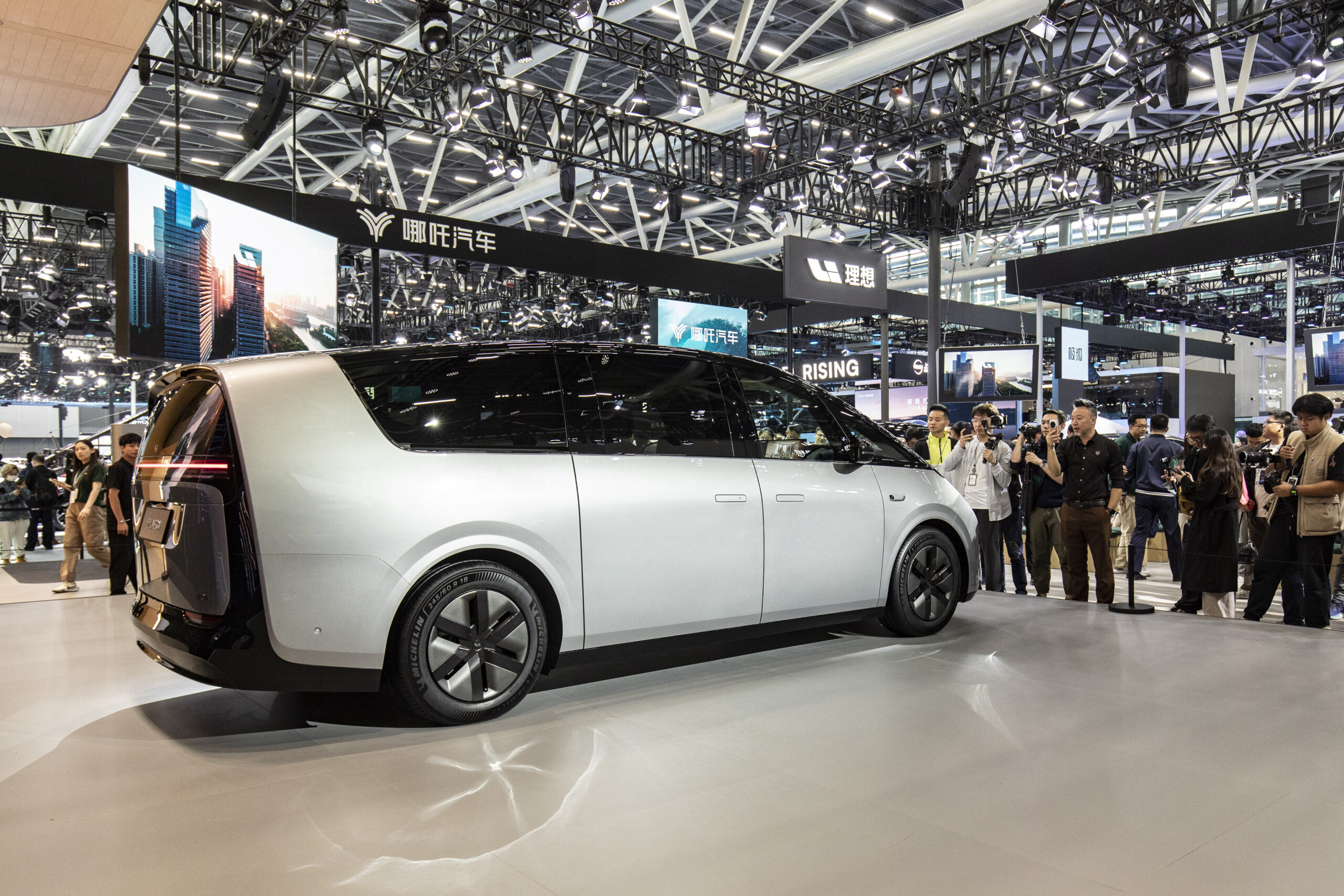
Core Viewpoint - Li Auto Inc. is recalling 11,411 of its Mega electric vehicles in China due to safety concerns following a fire incident, highlighting increasing scrutiny on the EV industry's safety standards [1][2]. Group 1: Recall Details - The recall affects the 2024 model of the Mega produced between February 18, 2024, and December 27, 2024, due to a coolant defect that could lead to thermal runaway in extreme conditions [2]. - The recall will commence on November 7, and the company will replace the coolant, power battery unit, and front motor controller on the affected vehicles, along with extending their standard warranty period [3]. Group 2: Safety Concerns and Regulatory Response - The incident that triggered the recall involved a Mega vehicle catching fire while in motion, raising public safety concerns [2]. - The investigation ruled out the possibility of the fire being caused by the battery cells manufactured by Contemporary Amperex Technology Co. Ltd. [3]. - The swift response from Li Auto reflects the growing scrutiny of the EV industry's safety record, with regulators proposing stricter rules on driver-assistance systems and door handle mechanisms following recent accidents [4][5]. Group 3: Company Commitments - Li Auto has committed to "eliminate all hidden dangers" and ensure "no further self-ignition accidents" in its vehicles [6].
理想汽车:2025年第44周上线47座理想超充站
Zheng Quan Shi Bao Wang· 2025-11-04 09:14
Core Insights - The article highlights that Li Auto is set to launch 47 new supercharging stations in the 44th week of 2025, bringing the total number of supercharging stations to over 3,500 [1] Company Developments - Li Auto will increase its supercharging infrastructure with the addition of 47 new stations [1] - The cumulative number of Li Auto's supercharging stations will exceed 3,500 following this expansion [1]
理想郎咸朋:VLA 加强化学习将成为车企真正的护城河
晚点LatePost· 2025-11-04 08:03
Core Viewpoint - The article discusses the evolution of Li Auto's autonomous driving technology, particularly focusing on the development and implementation of the VLA (Vision-Language-Action) model, which aims to enhance the driving experience by integrating multi-modal AI capabilities. The article highlights the challenges faced by the team, the strategic decisions made, and the competitive landscape in the autonomous driving sector [5][6][18]. Team Development and Structure - The Li Auto autonomous driving team has undergone significant changes since its inception in 2018, with three generations of core personnel. The recent restructuring aimed to create a flatter organization with 11 new departments, enhancing communication and decision-making efficiency [8][9][51]. - The team has shifted from a centralized, closed development model to a more open and collaborative approach, reflecting the need for agility in AI development [10][11]. Strategic Decisions - The decision to pursue the VLA model was driven by the recognition that simply following existing paths, such as those taken by competitors like Huawei and Tesla, would not suffice. The team aimed to create a new competitive edge through innovative technology [6][14][18]. - The VLA model is positioned as a significant advancement over previous methods, with the goal of achieving L4 level autonomous driving capabilities. The model emphasizes the importance of human-like reasoning and decision-making in driving [21][29]. Challenges and Criticism - The VLA model has faced skepticism from industry experts, with concerns about its feasibility and the technical challenges associated with multi-modal AI integration. Critics argue that the approach may be overly simplistic or "tricksy" compared to other methods [22][24]. - Despite the criticism, the team believes that the challenges presented by the VLA model are indicative of its potential correctness and innovation [24][25]. Future Outlook - The company aims to establish a robust reinforcement learning loop to enhance the VLA model's capabilities, with expectations of significant improvements in user experience by the end of 2023 and into 2024 [28][39]. - The long-term vision includes achieving L4 autonomous driving by 2027, with a focus on building a comprehensive data-driven ecosystem that supports continuous learning and adaptation [41][44].

理想汽车-W跌近3% 近一个月股价累跌逾两成 10月交付量同比下滑约38%
Zhi Tong Cai Jing· 2025-11-04 06:00
Core Viewpoint - Li Auto's stock has declined nearly 3%, with a cumulative drop of over 20% in the past month, reflecting market concerns over delivery figures and safety issues related to vehicle recalls [1] Delivery Performance - In October 2025, Li Auto delivered 31,767 new vehicles, representing a year-on-year decline of approximately 38% [1] Recall Announcement - Li Auto recently announced a recall of the MEGA 2024 model due to insufficient corrosion resistance of the coolant, which could lead to leakage and potential safety hazards, including battery thermal runaway under extreme conditions [1]
异动盘点1104 |芯片股、石油股走高,黄金股继续走低;优信大涨10.4%,亚朵涨逾5.8%
贝塔投资智库· 2025-11-04 04:04
Group 1: Market Movements - Wanda Hotel Development (00169) saw a significant increase, rising over 20% during trading, attributed to an agreement with Sony's CPE for a 49% stake in Vampire Squid Productions, which operates the "Octonauts" IP [1] - Cat's Eye Entertainment (01896) rose over 5.3% following the announcement of the film "Demon Slayer: Infinity Castle Chapter One" set to release on November 14, with over 142,000 new views recorded on the platform [1] - Baidu Group-SW (09888) increased by 6.6% after its subsidiary reported over 250,000 orders completed by fully autonomous vehicles, marking a significant step in the commercialization of autonomous driving [1] - Semiconductor stocks experienced gains, with Huahong Semiconductor (01347) up 2.14%, Shanghai Fudan (01385) nearly 1%, and SMIC (00981) up 1.37%, driven by a continued demand for memory chips and price increases planned by several manufacturers [1] Group 2: Gold and Oil Stocks - Gold stocks continued to decline, with Lingbao Gold (03330) down 4.46% and China Gold International (02099) down 2.41%, as spot gold prices fell below $3,980 per ounce, a drop of over 9% from the high on October 20 [2] - Oil stocks rose, with PetroChina (00857) up 3.14% and Sinopec (00386) up 1.66%, following OPEC+'s announcement to pause production increases in Q1 2024, leading Morgan Stanley to raise its short-term oil price forecast [3] Group 3: Automotive and Technology Developments - Li Auto-W (02015) fell 3.3%, with a reported 38% year-on-year decline in new car deliveries for October, alongside a recall announcement for the MEGA 2024 model due to coolant issues [3] - Hesai Technology (02525) rose over 2% after announcing a strategic partnership with Guanghetong to develop a multi-modal perception and control solution based on lidar technology [3] Group 4: US Market Highlights - Atour (ATAT.US) increased by over 5.8%, supported by China's 14th Five-Year Plan aimed at boosting consumption [5] - NIO (NIO.US) rose over 2.3% with a 92.6% year-on-year increase in new car deliveries for October [5] - Micron Technology (MU.US) gained over 4.8% as Samsung paused DDR5 DRAM contract quotes, impacting the supply chain [5] - Nokia (NOK.US) rose over 3.4% following a $1 billion investment from Nvidia to accelerate AI-RAN innovations [6]


理想汽车-W(02015.HK)跌近3%
Mei Ri Jing Ji Xin Wen· 2025-11-04 03:56
Group 1 - The core viewpoint of the article indicates that Li Auto-W (02015.HK) has experienced a decline of nearly 3%, with its stock price dropping over 20% in the past month [1] - As of the time of reporting, the stock is down 2.72%, trading at 78.7 HKD, with a transaction volume of 731 million HKD [1]
港股异动 | 理想汽车-W(02015)跌近3% 近一个月股价累跌逾两成 10月交付量同比下滑约38%
Zhi Tong Cai Jing· 2025-11-04 03:50
Core Viewpoint - Li Auto's stock has experienced a significant decline, dropping nearly 3% and over 20% in the past month, reflecting market concerns about its recent delivery and recall issues [1] Delivery Data - On November 1, Li Auto reported that it delivered 31,767 new vehicles in October 2025, representing a year-on-year decrease of approximately 38% [1] Recall Announcement - Li Auto announced a recall of the MEGA 2024 model due to insufficient corrosion resistance of the coolant, which could lead to leakage and potential safety hazards, including battery thermal runaway under extreme conditions [1]