GWMOTOR(02333)

Search documents
长城汽车直营体系调整:坦克退出 魏牌新能源加速扩张
Xi Niu Cai Jing· 2025-10-13 14:02
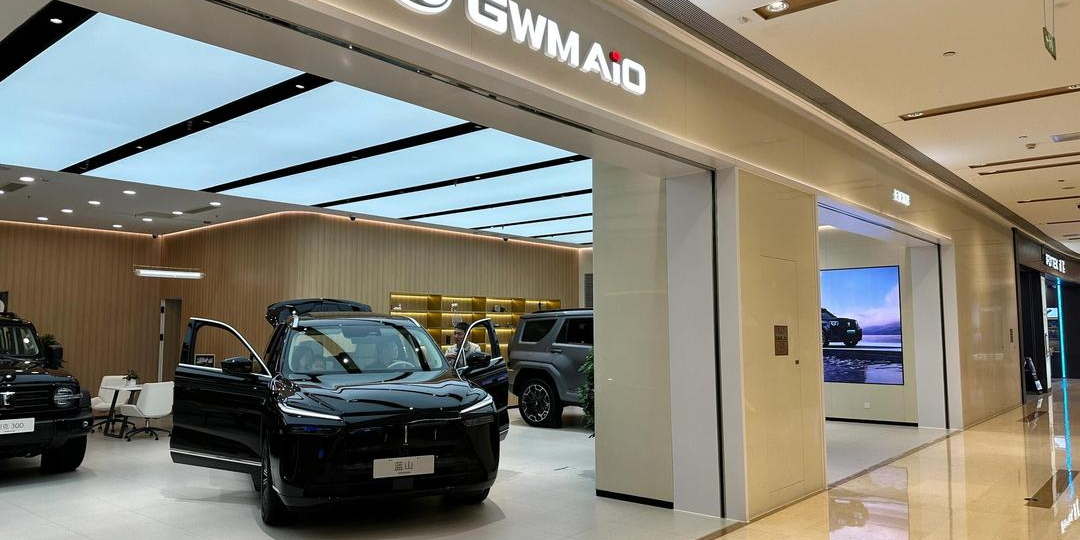
Core Viewpoint - Great Wall Motors is undergoing significant adjustments in its direct sales channels, with the Tank brand exiting the direct sales system and the "Great Wall Smart Selection" being renamed to "WEY New Energy Direct Sales" [2] Group 1: Direct Sales Channel Adjustments - The Tank brand has completely withdrawn from the direct sales system, while the original "Great Wall Smart Selection" stores have been transformed into WEY exclusive stores, focusing solely on WEY models [2] - In Beijing, many former "Great Wall Smart Selection" stores have completed their transformation, retaining only the main WEY models: Blue Mountain, High Mountain, and Mocha [2] - The new operational model separates sales and service, ensuring the purity of the WEY direct sales system while maintaining after-sales service for Tank users [2] Group 2: Sales and Market Performance - Despite the Tank brand's exit from direct sales, the sales network through authorized dealers remains unaffected, allowing continued sales of Tank models like Tank 700, Tank 300, and Tank 400 [2] - The WEY direct sales network, which was launched on April 24, 2024, aims to enhance brand presence through various formats, with plans to expand from 430 stores to over 600 by the end of 2025, covering approximately 200 cities [2] Group 3: Sales Data Insights - In September 2025, Great Wall Motors achieved total sales of 133,639 vehicles, a year-on-year increase of 23.29%, with 45,961 of these being new energy vehicles and 50,269 sold overseas [4] - The WEY brand's sales reached 11,026 units in September, reflecting a 63.23% increase year-on-year, while the Tank brand's sales were 21,441 units, up 14.41% [4] Group 4: Global Strategy and Market Position - Great Wall Motors is also focusing on its global strategy, with a notable presence in Australia, where it held the "GWM TECH DAY" event to showcase its technology [5] - As of September 2025, Great Wall Motors has sold 39,343 units in Australia, marking a 23.7% year-on-year growth and achieving a market share of 4.3%, ranking seventh among brands and first among Chinese brands [5] - The adjustment in the direct sales channel is seen as a crucial step in the company's transition to new energy, optimizing resource allocation and enhancing brand differentiation [5]

坦克300出征南极!中国制造以硬核品质护航国家科考
Sou Hu Wang· 2025-10-13 13:18
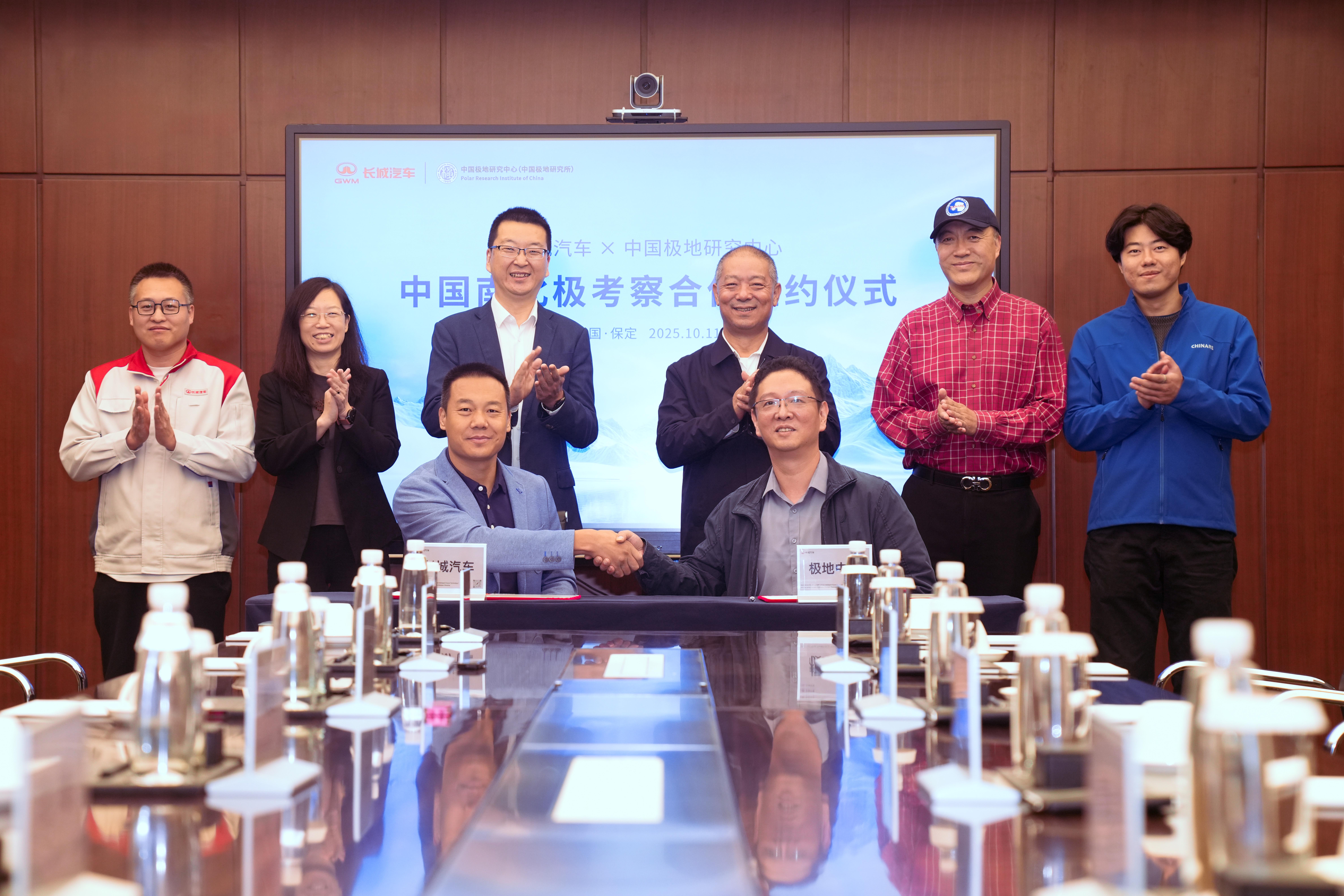
Core Insights - The collaboration between Great Wall Motors and the Chinese Polar Research Center marks a significant partnership aimed at supporting China's polar exploration efforts, with the Tank 300 vehicle set to participate in Antarctic missions [1][2][5] Group 1: Strategic Collaboration - Great Wall Motors is aligning its corporate strategy with national objectives, enhancing the value of Chinese automotive brands through this partnership [2] - The company will provide its laboratory system, valued at approximately 1 billion RMB, to the Polar Research Center, facilitating technological exchange and innovation [4] Group 2: Product Validation and Performance - The Tank 300 has been designated as a "selected product for China's Antarctic and Arctic expeditions," highlighting its reliability and adaptability in extreme conditions [5][7] - The vehicle has achieved global sales of 470,000 units, with domestic users accumulating a total driving distance of 17.2 billion kilometers, establishing a strong foundation of trust [7] Group 3: Technical Specifications - The Tank 300 diesel version is equipped with a 2.4T high-performance engine, delivering a maximum net power of 135 kW and a peak torque of 480 N·m, making it suitable for polar conditions [10] - The vehicle features advanced design elements to withstand extreme cold, including specialized coatings and a high-capacity battery, ensuring functionality at temperatures as low as -35°C [11] Group 4: User Engagement and Co-Creation - The company has initiated a co-creation plan for the "Tank 300 Antarctic Edition," inviting global users to contribute to the design and functionality of the vehicle [14][16] - This approach signifies a shift from a one-way product delivery model to a two-way co-creation process, enhancing user involvement in product development [14] Group 5: Cultural and National Significance - The Tank 300's participation in Antarctic missions symbolizes the rise of Chinese manufacturing and cultural confidence, reinforcing its status as a national asset [16] - The collaboration is expected to inspire national pride among consumers and solidify the Tank brand's position in the history of the Chinese automotive industry [16]
长城智选渠道调整 “去坦克,留魏牌”有何深意
Jing Ji Guan Cha Wang· 2025-10-13 11:39
Core Insights - Great Wall Motors has made adjustments to its direct sales brand "Great Wall Smart Choice," retaining only models under the Wey brand in showrooms, while the Tank 700 will return to Tank brand 4S stores [2][3] - The return of the Tank 700 to the Tank brand 4S stores aims to provide customers with a "one-stop" experience for comparing and purchasing the entire Tank model lineup, enhancing customer engagement and brand loyalty [2] - The restructuring indicates a strategic focus on the Wey brand, with plans to expand the number of direct sales stores to 600 by the end of the year, covering over 200 cities [3] Company Strategy - The "Great Wall Smart Choice" brand was launched in April 2024 to compete with domestic new energy vehicle brands, initially selling high-end models from Wey and Tank [3] - The management and sales channels for Wey and Tank have been merged since 2022, with a current focus on enhancing the Wey brand's market presence through resource allocation [3] - The adjustment in the sales strategy reflects a broader trend of resource concentration on the Wey brand, which has seen significant sales growth, achieving a monthly sales record of 11,000 units in September 2025, a 63.23% year-on-year increase [3] Market Performance - The Tank brand faces challenges, with September sales at 21,400 units, a 14.41% increase year-on-year, but a cumulative decline of 2.75% for the first nine months [4] - Increased competition in the domestic off-road vehicle market has impacted the sales of the Tank 300, a key model for the brand [4] - The strategic withdrawal of the Tank brand from the "Great Wall Smart Choice" is part of a broader response to market changes [4]
港交所消息:10月8日,贝莱德持有的长城汽车H股多头头寸从6.71%增至7.24%
Xin Lang Cai Jing· 2025-10-13 09:44
港交所消息:10月8日, 贝莱德 持有的 长城汽车 H股多头头寸从6.71%增至7.24%。 ...
时隔5个月,上汽重夺“销冠”
财联社· 2025-10-13 09:44
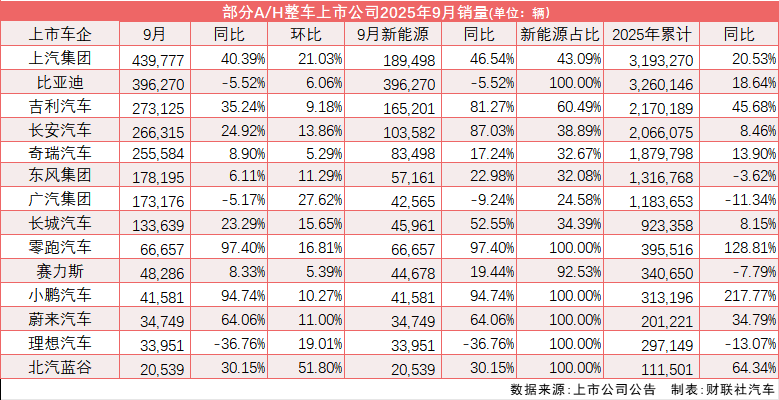
Core Viewpoint - The Chinese passenger car market experienced significant growth in September, with retail sales reaching 2.241 million units, a year-on-year increase of 6.3% and a month-on-month increase of 11.0%. Cumulatively, retail sales for the year reached 17.005 million units, marking a 9.2% year-on-year growth and setting a new historical peak [1]. Group 1: Market Performance - In September, 11 out of 14 listed car companies reported year-on-year sales growth, accounting for 78.6% of the sample. New energy vehicles (NEVs) were the primary driver of this growth, with total sales exceeding 1.32 million units among the 14 major companies [1]. - The penetration rate of NEVs in the overall passenger car retail market reached 57.8% in September, an increase of 5 percentage points compared to the same period last year. Among domestic brands, the penetration rate for NEVs reached 78.1% [1]. Group 2: Company-Specific Sales Data - SAIC Motor Corporation achieved sales of 439,777 units in September, a year-on-year increase of 40.39%, reclaiming the title of monthly sales champion among Chinese listed car companies after five months. Cumulative sales for the first nine months reached 3.193 million units, up 20.53% year-on-year [2]. - BYD's sales in September were 396,270 units, marking a year-on-year decline of 5.52%, ending an 18-month growth streak. The sales of pure electric models were 205,000 units, up 24.31%, while plug-in hybrid models saw a significant drop of 25.58% [3]. - Geely Automobile reported sales of 273,125 units in September, a year-on-year increase of 35.24%. NEV sales reached 165,201 units, up 81.27%, with a market penetration rate of 60.49% [3]. - Chery Automobile's sales reached 255,584 units in September, a year-on-year increase of 8.90%, with NEV sales at 83,498 units, up 17.24% [4]. - New force in the automotive sector, Leap Motor, achieved a record monthly delivery of 66,657 units in September, a year-on-year increase of 97.4% [4]. Group 3: Market Trends and Future Outlook - The automotive market in September saw the launch of over 70 new models, driven by government subsidies and local purchase incentives, which boosted consumer purchasing enthusiasm [5]. - The Secretary-General of the China Passenger Car Association, Cui Dongshu, indicated that the rapid release of new models, particularly from domestic brands, is enhancing competitiveness in the NEV market. The fourth quarter is expected to maintain stable growth due to policy guidance and a strong growth foundation [5].




长城汽车(601633) - H股公告-董事会会议通知
2025-10-13 09:30
(於中華人民共和國註冊成立的股份有限公司) ,2025 10月13日 股份代號:2333(港幣櫃檯)及82333(人民幣櫃檯) 董 事 會 會 議 通 知 長城汽車股份有限公司(「本公司」)董事會(「董事會」)謹此宣佈,本公司董事會會議 將於2025年10月24日(星期五)於中國河北省保定市朝陽南大街2266號舉行,藉以審議及批 准(其中包括)本公司及其子公司截至2025年9月30日止3個月之未經審計的第3季度業績 (以《中國企業會計準則》編製)。 香港交易及結算所有限公司及香港聯合交易所有限公司對本公告的內容概不負責,對其準確性或完整性亦不發表任 何聲明,並明確表示,概不對因本公告全部或任何部份內容而產生或因倚賴該等內容而引致的任何損失承擔任何責任 。 承董事會命 長城汽車股份有限公司 公司秘書 李紅栓 長 城 汽 車 股 份 有 限 公 司 GREAT WALL MOTOR COMPANY LIMITED* 非執行董事:何平先生。 獨立非執行董事:樂英女士、范輝先生及鄒兆麟先生。 * 僅供識別 於本公告日期,董事會成員如下: 執行董事:魏建軍先生、趙國慶先生及李紅栓女士。 職工董事:盧彩娟女士。 ...
汽车周报:紧抓科技主线,寻找低估成长新机会-20251013
Shenwan Hongyuan Securities· 2025-10-13 09:16
Investment Rating - The report maintains a positive outlook on the automotive industry, emphasizing the importance of technology and mid-to-high-end market segments as key investment themes [4]. Core Insights - The report highlights a surge in vehicle sales driven by limited subsidies in Q4, with a focus on companies capable of effectively releasing supply, such as Geely, BYD, Great Wall, Li Auto, and NIO [4]. - It suggests that in an uncertain consumer environment, attention should be directed towards "future industries" like robotics, AI, and low-altitude economy, recommending companies with strong growth potential and relatively low valuations [4]. - The report notes that the penetration rate of new energy vehicles reached 56.92%, with total retail sales of passenger cars at 650,000 units in the 39th week of 2025, reflecting a 27.95% increase month-over-month but a slight decline year-over-year [4][5]. Industry Updates - The report indicates that traditional energy vehicle sales were 280,000 units, up 32.70% month-over-month but down 15.07% year-over-year, while new energy vehicle sales were 370,000 units, up 24.58% month-over-month and up 13.15% year-over-year [4]. - Recent weeks have seen an increase in raw material price indices for both traditional and new energy vehicles, with traditional vehicle raw material prices rising by 0.8% week-over-week and decreasing by 1.3% month-over-month [4][52]. Market Situation - The automotive industry recorded a total transaction value of 266.97 billion yuan, with the automotive industry index closing at 8141.23 points, down 1.26% for the week, which is a greater decline compared to the Shanghai Composite Index [4][13]. - The report notes that 132 automotive stocks rose while 135 fell, with the largest gainers being Meili Technology, Jinlong Automobile, and Kabeiyi, while the largest decliners included Mingxin Xuteng, Meichen Technology, and Hengshuai Co., Ltd. [4][18]. Investment Recommendations - The report recommends focusing on domestic leading manufacturers such as NIO, Xiaomi, Xiaopeng, and Li Auto, as well as companies involved in intelligent trends like Huawei's HarmonyOS [4]. - It also suggests monitoring state-owned enterprise reforms, particularly with SAIC and Dongfeng, and highlights component manufacturers with strong growth prospects and overseas expansion capabilities [4]. Important Events - The report mentions the release of the 400th batch of new vehicle applications by the Ministry of Industry and Information Technology, which includes several anticipated models [5][31]. - It also discusses the joint announcement by three departments regarding the technical requirements for the exemption of vehicle purchase tax for new energy vehicles from 2026 to 2027 [8][10].

长城汽车(02333.HK)拟10月24日举行董事会会议审批季度业绩
Ge Long Hui· 2025-10-13 08:41
格隆汇10月13日丨长城汽车(02333.HK)宣布,本公司董事会会议将于2025年10月24日(星期五)于中国 河北省保定市朝阳南大街2266号举行,藉以审议及批准(其中包括)本公司及其子公司截至2025年9月 30日止3个月的未经审计的第3季度业绩(以《中国企业会计准则》编制)。 ...
长城汽车(02333) - 董事会会议通知
2025-10-13 08:34
,2025 10月13日 香港交易及結算所有限公司及香港聯合交易所有限公司對本公告的內容概不負責,對其準確性或完整性亦不發表任 何聲明,並明確表示,概不對因本公告全部或任何部份內容而產生或因倚賴該等內容而引致的任何損失承擔任何責任 。 長 城 汽 車 股 份 有 限 公 司 GREAT WALL MOTOR COMPANY LIMITED* (於中華人民共和國註冊成立的股份有限公司) 股份代號:2333(港幣櫃檯)及82333(人民幣櫃檯) 董 事 會 會 議 通 知 長城汽車股份有限公司(「本公司」)董事會(「董事會」)謹此宣佈,本公司董事會會議 將於2025年10月24日(星期五)於中國河北省保定市朝陽南大街2266號舉行,藉以審議及批 准(其中包括)本公司及其子公司截至2025年9月30日止3個月之未經審計的第3季度業績 (以《中國企業會計準則》編製)。 承董事會命 長城汽車股份有限公司 公司秘書 李紅栓 於本公告日期,董事會成員如下: 執行董事:魏建軍先生、趙國慶先生及李紅栓女士。 職工董事:盧彩娟女士。 非執行董事:何平先生。 獨立非執行董事:樂英女士、范輝先生及鄒兆麟先生。 * 僅供識別 ...
9月乘用车零售再破历史峰值:上汽时隔五月重夺“销冠” 比亚迪同比首现负增长
Xin Lang Cai Jing· 2025-10-13 05:44
Core Insights - The overall retail sales of passenger cars in China reached 2.241 million units in September, marking a year-on-year increase of 6.3% and a month-on-month increase of 11.0% [1] - Cumulative retail sales for the year have reached 17.005 million units, representing a year-on-year growth of 9.2%, setting a new historical peak [1] - New energy vehicles (NEVs) have been the primary driver of sales growth, with 14 major car manufacturers collectively selling over 1.32 million NEVs in September [1] Industry Performance - The penetration rate of NEVs in the domestic passenger car market reached 57.8% in September, an increase of 5 percentage points compared to the same period last year [1] - Domestic brands achieved a NEV penetration rate of 78.1% [1] Company Performance - SAIC Motor Corporation achieved sales of 439,777 units in September, a year-on-year increase of 40.39%, reclaiming the title of monthly sales champion among Chinese listed car companies [2] - BYD's sales in September were 396,270 units, a decline of 5.52%, marking the first month of year-on-year decline since March 2024 [3] - Geely Automobile reported sales of 273,125 units in September, a year-on-year increase of 35.24%, with NEV sales reaching 165,201 units, up 81.27% [3] - Chery Automobile's sales reached 255,584 units in September, a year-on-year increase of 8.90%, with NEV sales of 83,498 units, up 17.24% [4] - Leap Motor achieved a remarkable sales increase of 97.4% in September, with 66,657 units delivered, setting a new record for new car manufacturers [5] Market Trends - The automotive market in September saw over 70 new car models launched, contributing to increased consumer purchasing enthusiasm [5] - The fourth quarter is expected to maintain stable growth, driven by policy guidance and high growth foundations, with an anticipated increase in consumer purchases before the adjustment of NEV tax policies in 2026 [6]