GWMOTOR(02333)

Search documents
多家车企公布2026销量目标:传统车企审慎、新势力乐观
Feng Huang Wang· 2026-01-07 12:58
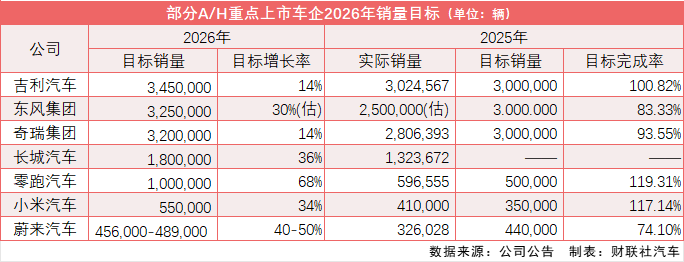
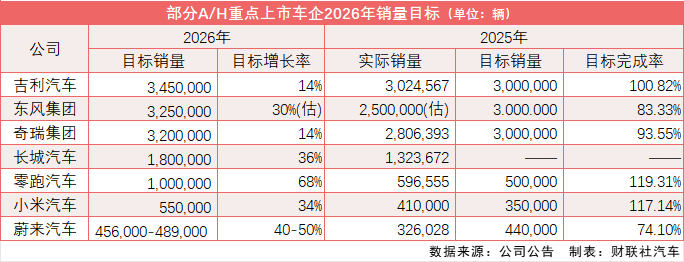
Core Viewpoint - The implementation of the half-price purchase tax policy for new energy vehicles and adjustments to the "two new" subsidy policies have introduced new variables for the domestic automotive market in 2026, leading to divergent sales targets among traditional and new car manufacturers [1] Traditional Automakers - Geely has set the highest sales target for 2026 at 3.45 million units, with a growth rate of 14%, including 2.75 million for the Geely brand, 300,000 for Zeekr, and 400,000 for Lynk & Co [3] - Dongfeng Group aims for a total sales target of 3.25 million units in 2026, with an estimated growth rate of 30%, and plans to sell 1.7 million new energy vehicles, reflecting a 63% increase [4] - Chery Group has set a target of 3.2 million units for 2026, a 14% increase from 2025, with its five brands aiming for a combined sales target of 3 million units [4] - Great Wall Motors has lowered its 2026 sales target from 2.49 million to 1.8 million units, reflecting a 36% increase from the previous year, while maintaining its net profit target [4] New Automakers - Leap Motor has set an aggressive target of 1 million units for 2026, representing a 68% increase from the previous year, following a record sales performance in 2025 [5][6] - Xiaomi aims for a sales target of 550,000 units in 2026, a 34% increase from 2025, with plans to launch new models including the SU7 [6] - NIO has set a target of 456,000 to 489,000 units for 2026, with a growth rate of 40-50%, and plans to introduce several new models [6] Market Outlook - The automotive market is expected to experience a "front low and back high" trend in 2026, with overall growth driven by supportive national policies, including the continuation of the vehicle replacement subsidy policy [7] - Industry experts predict that the overall growth rate of the automotive market in 2026 will exceed zero growth, with January expected to show strong sales performance [7]






长城汽车:长城汽车高度重视股东回报
Zheng Quan Ri Bao· 2026-01-07 12:40
证券日报网讯 1月7日,长城汽车在互动平台回答投资者提问时表示,长城汽车高度重视股东回报,分 红方案将严格依据《公司章程》规定,结合经营业绩、战略发展及现金流状况等综合因素制定,具体需 经董事会及股东大会审议通过后披露。 (文章来源:证券日报) ...
多家车企公布2026销量目标:“双新”政策调整延续下传统车企审慎、新势力乐观
Xin Lang Cai Jing· 2026-01-07 11:36
Core Viewpoint - The implementation of the half-price purchase tax policy for new energy vehicles and the adjustment of the "two new" subsidy policies have introduced new variables for the domestic automotive market in 2026, leading to divergent sales targets among various automakers [1] Group 1: Traditional Automakers - Geely has set the highest sales target for 2026 at 3.45 million units, with a growth rate of 14%, including 2.75 million for the Geely brand, 300,000 for Zeekr, and 400,000 for Lynk & Co [2] - Dongfeng Group aims for a total sales target of 3.25 million units in 2026, with an estimated growth rate of over 30%, including 1.7 million for new energy vehicles, representing a 63% increase [3] - Chery Group has set a sales target of 3.2 million units for 2026, reflecting a 14% increase from 2025, with its five brands aiming for a total of 3 million units [3] - Great Wall Motors has lowered its 2026 sales target from 2.49 million to 1.8 million units, indicating a 36% growth from the previous year, while maintaining its net profit target [4] Group 2: New Energy Vehicle Startups - Leap Motor has set an ambitious sales target of 1 million units for 2026, following a record of 597,000 units sold in 2025, which is a 103.1% increase [5] - Xiaomi Auto aims for a sales target of 550,000 units in 2026, representing a 34% increase from the previous year, with new models expected to launch [5] - NIO has set a sales target of 456,000 to 489,000 units for 2026, with a growth rate of 40-50%, following a total of 326,000 units sold in 2025 [5] Group 3: Market Outlook - The automotive market is expected to experience a "front low and back high" trend in 2026, with overall growth driven by supportive national policies, countering previous expectations of negative growth [6] - The new policies, including the early implementation of replacement subsidies, are anticipated to positively impact market growth and consumer upgrades [6]

长城汽车:长城灵魂将于2026年CES展亮相,强化品牌国际影响力
Zheng Quan Ri Bao Zhi Sheng· 2026-01-07 11:09
Core Viewpoint - Great Wall Motors has made significant progress in its global expansion strategy for its motorcycle brand, Great Wall Soul, with key partnerships established in the Middle East [1] Group 1: Global Expansion - Great Wall Soul has achieved a crucial breakthrough in its global layout, signing agreements with distributors in the UAE and Qatar on December 4, 2025 [1] - The partnerships focus on product adaptation, after-sales service, and regional expansion [1] Group 2: Brand Development - Great Wall Soul will showcase its products at the 2026 CES, aiming to enhance its international brand influence [1] Group 3: Technical Certifications - The products have obtained GSO certification for the Middle East and completed the factory audit for Euro 5+ certification [1] - The company expects to officially receive the necessary qualifications by February 2026, laying the groundwork for market entry into Europe [1] Group 4: Future Collaborations - Great Wall Soul plans to continue collaborating with more international partners to create a more valuable riding experience for global riders [1]
长城汽车:长城汽车已于今年5月率先通过中汽研检测
Zheng Quan Ri Bao Zhi Sheng· 2026-01-07 11:09
Core Viewpoint - Great Wall Motors has become one of the first companies in China to comply with the new national standard GB38031-2025 for electric vehicle battery safety, demonstrating its technological leadership and high compliance standards in the electric vehicle sector [1] Group 1 - Great Wall Motors announced that it passed the China Automotive Research Institute's testing in May, ahead of the new national standard implementation [1] - The new standard, which focuses on safety requirements for electric vehicle power batteries, will be mandatory for new models starting from July 1, 2026, and does not affect the normal use of already sold vehicles [1] - The company’s upgrade in battery safety reflects its commitment to leading technology in the electric vehicle safety domain [1]
每天车闻:传长安汽车取消年终奖,官方回应,长城汽车全新平台“归元”
Xin Lang Cai Jing· 2026-01-07 10:07
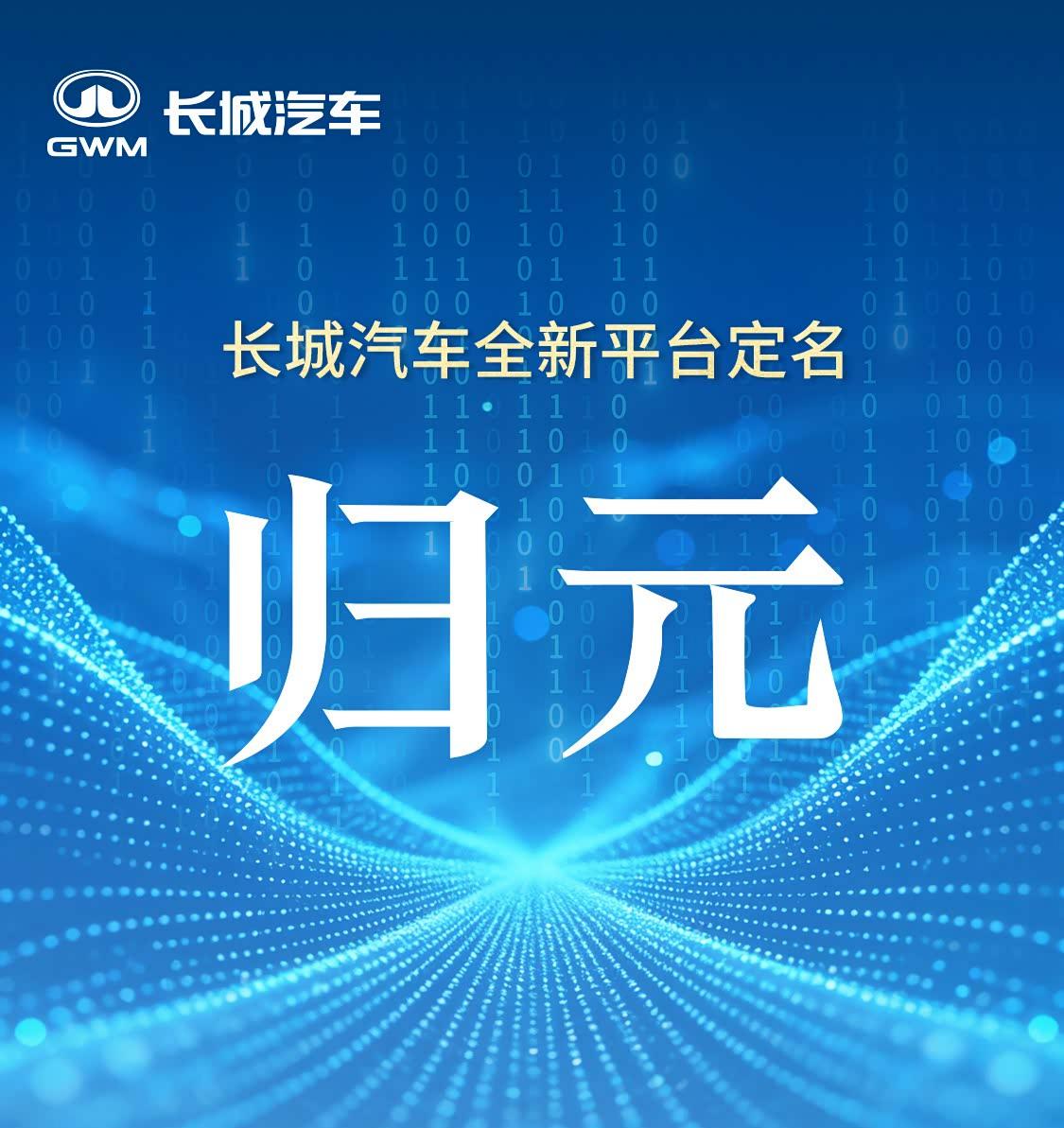
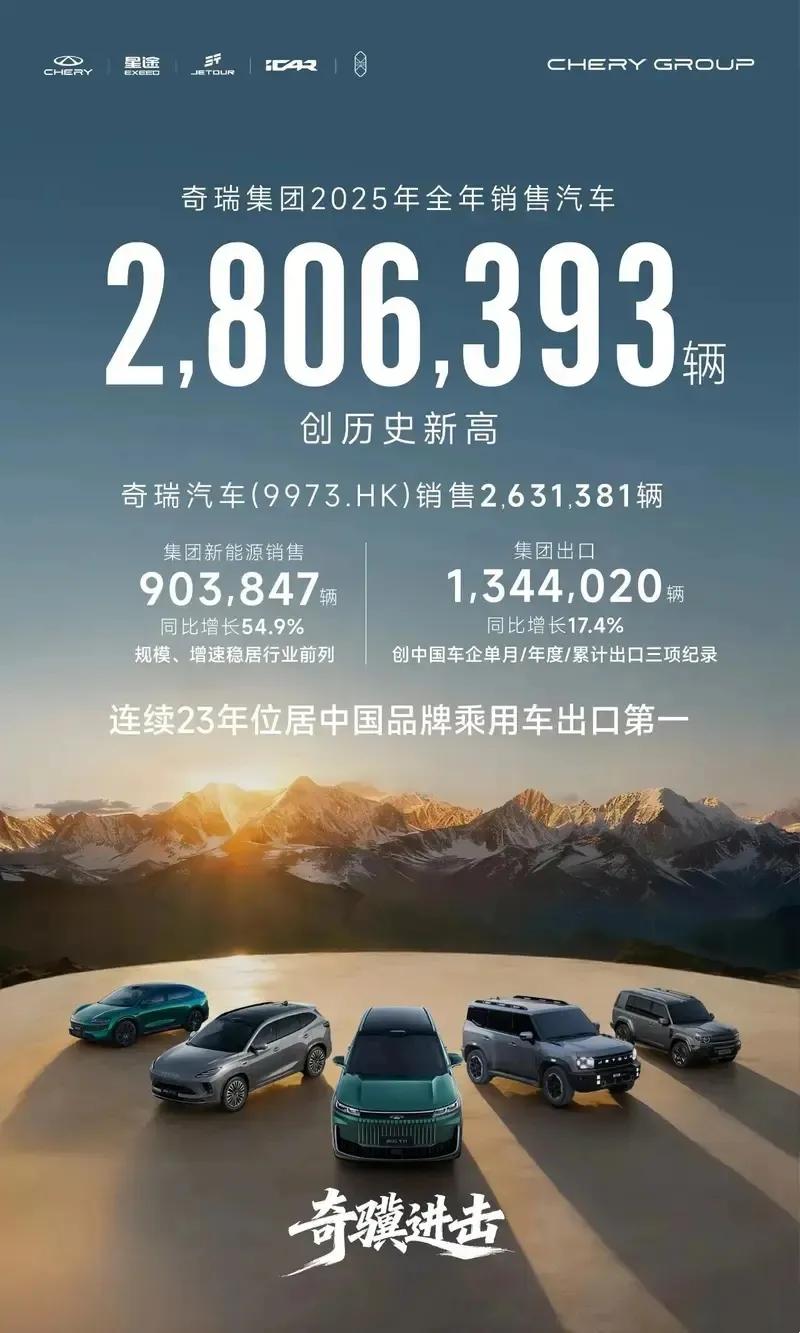
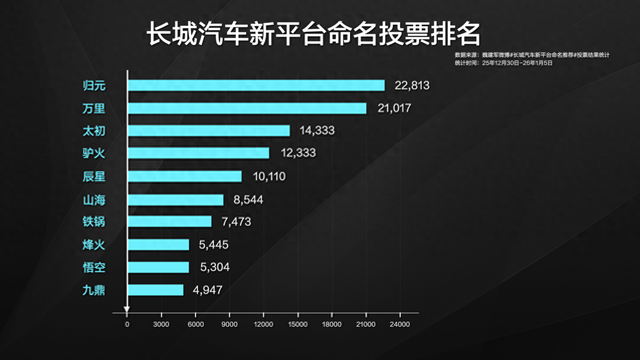
Group 1 - Chery Group has set a sales target of 3.2 million vehicles for 2026, representing a 14.03% increase compared to 2025. Chery Automobile Co., Ltd. aims for 3 million units, a year-on-year growth of 14.01% [3][14] - Great Wall Motors has unveiled a new platform named "Guiyuan," which received 22,000 votes from 96,000 participants. The platform focuses on user needs and aims to simplify vehicle offerings while enhancing value [5][15] - Huawei's QianKun partnership is projected to achieve over 900,000 units in total sales by 2025, continuing its commitment to integrate intelligence into every vehicle. The sales data includes brands such as Avita, Lantu, and others [7][18] Group 2 - Employees of Changan Automobile have expressed dissatisfaction on social media regarding the cancellation of traditional year-end bonuses due to unmet sales and profit targets. An incentive plan is expected in February, but details are currently unavailable [9][20]

中国车企CES秀肌肉
Hua Er Jie Jian Wen· 2026-01-07 09:56
Core Insights - Chinese automakers are redefining the future of the automotive industry at CES, shifting focus from hardware to AI models and advanced driving architectures [1] - The competition is now centered around software capabilities and supply chain integration, marking a significant transition from manufacturing to standard-setting [1][11] Group 1: Technological Advancements - Geely introduced its "Universal AI 2.0" system, featuring the World Action Model (WAM), which enhances the vehicle's intelligence through a layered design [2] - WAM allows for a complete intelligent feedback loop, enabling continuous evolution in automotive intelligence [2] - Geely's strategy has led to a 20%-30% reduction in project numbers while enhancing quality, indicating a focus on efficiency [3] Group 2: Strategic Integration - Geely's brands, including Zeekr and Lynk & Co, have unified their driving software under the "G-ASD" system, promoting technology sharing across models [3] - This integration allows for rapid deployment of advanced technologies, such as the Thor-U chip, across different vehicle brands [3] - Great Wall Motors is pursuing a dual strategy of mechanical and intelligent advancements, showcasing its Hi4-Z hybrid architecture to address consumer concerns about range and energy consumption [4] Group 3: Supply Chain and Market Positioning - Chinese supply chain companies are demonstrating their production capabilities, with Leap Motor showcasing its aggressive electronic architecture strategy [5] - Black Sesame Intelligence presented its A2000 autonomous driving chip, targeting the L2+/L3 market, while other companies displayed advancements in lidar technology [6] - The automotive industry is expected to undergo significant changes, with a shift from funding and qualifications to AI model integration as the new entry barrier [7] Group 4: Future Industry Dynamics - The high costs associated with advanced driving technologies are leading to a consolidation trend, where only a few major players will dominate the market [9] - Companies unable to develop large models or afford high-performance chips may face significant challenges, leading to potential market exits [9] - The transition from "software-defined vehicles" to "AI-defined vehicles" will fundamentally alter the automotive business model, emphasizing AI capabilities over traditional hardware metrics [10][11]
2025汽车行业十大年度金句 | 精进2025——汽车行业10个十大年度盘点
Jing Ji Guan Cha Wang· 2026-01-07 09:32
Core Insights - The automotive industry in 2025 has experienced significant growth driven by proactive policies that enhance consumption, tap into incremental potential, and improve the competitive environment, leading to a collaborative effort to combat unhealthy competition [2] - The "Cover Story" titled "Progress 2025 - Ten Major Annual Reviews of the Automotive Industry" has been launched, marking the sixth consecutive year of such comprehensive reporting [2] Group 1: Industry Trends - The automotive sector is focusing on innovation and collaboration to achieve steady progress while addressing challenges such as unhealthy competition [2] - A series of ten thematic reports have been published, covering various aspects of the automotive industry, including annual highlights, new policies, personnel changes, and significant events [2] Group 2: Leadership Perspectives - Industry leaders emphasize the importance of face-to-face interactions to reduce misunderstandings and foster collaboration, as highlighted by Chery's chairman [6] - The call for open communication among industry leaders is seen as essential for addressing challenges and promoting a healthy competitive environment [6][7] Group 3: Safety and Technology - Geely's establishment of a world-class safety center aims to enhance automotive safety through shared resources and data accumulation, reflecting a commitment to industry-wide safety standards [7][8] - The focus on safety is underscored by the need for responsible innovation that prioritizes user safety over mere technological advancement [10][11] Group 4: Market Dynamics - BYD's chairman advocates for a leadership role that respects competitors while pushing for technological excellence, emphasizing the importance of consumer trust and respect within the industry [9][10] - The shift towards a more collaborative industry ethos is seen as vital for fostering innovation and maintaining a competitive edge [10] Group 5: Innovation and Responsibility - The automotive industry is urged to prioritize necessary technological advancements that align with user safety and regulatory requirements, as articulated by Great Wall's chairman [11] - The call for innovation driven by real user needs rather than mere technological prowess reflects a shift towards more responsible and inclusive practices in the industry [13] Group 6: Global Trade and Cooperation - BMW's chairman stresses the importance of open markets and clear rules over trade barriers, advocating for mutual support in the face of geopolitical challenges [15][16] - The emphasis on cooperation and shared prosperity highlights the need for a unified approach to global trade within the automotive sector [16] Group 7: Strategic Reflections - Volkswagen's CEO acknowledges the need for self-reflection and adaptability in response to industry changes, emphasizing the importance of proactive engagement [17][18] - Toyota's chairman highlights the significance of preparing for uncertainties rather than making predictions, advocating for a responsive strategy to market changes [18][19]

9.6万人投票,长城归元平台:一次真正的用户定义
Xin Lang Cai Jing· 2026-01-07 09:05
Core Viewpoint - The automotive industry is experiencing homogenization, reflected in both products and naming conventions. Great Wall Motors has taken a unique approach by allowing the public to name its new platform, resulting in the name "Guiyuan," which signifies a return to user-centric values and a commitment to technological innovation and strategic ambition [1][3]. Naming Origin: From User Co-Creation to the Essence of "Guiyuan" - The naming process involved over 96,000 participants and more than 110,000 votes, emphasizing user engagement and co-creation, aligning with Great Wall's long-term, user-centered development philosophy [3][6]. - The name "Guiyuan" encapsulates the essence of returning to the fundamentals of automotive design and technology, focusing on genuine user needs and the core logic of industry development [3][4]. Technical Foundation: User-Centric Implementation of the Guiyuan Platform - The Guiyuan platform is designed for the next 10-20 years, emphasizing versatility with capabilities for multiple powertrains and vehicle types, catering to diverse user needs [6][10]. - The platform's compatibility with various energy forms, including gasoline, hybrid, electric, and hydrogen, reflects a strategic approach to global market demands [7][11]. Global Strategy: Guiyuan as a Vehicle for China's Automotive Expansion - Great Wall Motors aims to expand globally, recognizing that understanding local user needs and adapting to diverse market conditions is crucial for success [11][12]. - The Guiyuan platform's ability to adapt to different powertrain requirements enhances efficiency and cost-effectiveness in international markets, addressing the challenges posed by varying energy structures and infrastructure [11][12]. Conclusion - The Guiyuan platform represents Great Wall Motors' commitment to innovation and user-centric design, supported by a robust technical foundation and a strategic vision for global expansion. This approach aims to transform the Chinese automotive industry from mere scale expansion to value enhancement [12][13].
长城汽车新平台定名“归元” 兼容多动力解决方案
Zhong Guo Zhi Liang Xin Wen Wang· 2026-01-07 07:22
Core Viewpoint - Great Wall Motors has officially named its new "multi-power" platform as "Guiyuan," which will serve as the ecological foundation for intelligent mobility [1] Group 1: Platform Overview - The Guiyuan platform is centered around the core idea of "tracing the origin of the industry and returning to user needs," focusing on the essence of automotive mobility and technological innovation [3] - It supports "one vehicle, multiple power sources; one vehicle, multiple categories; one vehicle, multiple forms," providing comprehensive adaptability for various scenarios [3] Group 2: Technical Compatibility - The Guiyuan platform is inherently compatible with multiple power solutions, including gasoline, diesel, BEV (Battery Electric Vehicle), HEV (Hybrid Electric Vehicle), PHEV (Plug-in Hybrid Electric Vehicle), and hydrogen energy [3] - It covers a range of product categories such as SUVs and MPVs, aiming to provide technology that truly fits the needs of users in different global markets and energy conditions [3] Group 3: Strategic Implications - The platform's foundational, inclusive, and growth-oriented characteristics reflect Great Wall Motors' comprehensive layout from ecological foundation construction to global adaptation strategy [3] - Each keyword associated with the Guiyuan platform corresponds to a response to the actual interests of users, emphasizing the company's commitment to user-centric innovation [3]