
BANK OF CHINA(03988)

Search documents
解锁金融知识服务破局之道!中国移动咪咕与中国银行总行共创行业新范式
Huan Qiu Wang· 2025-12-01 09:53
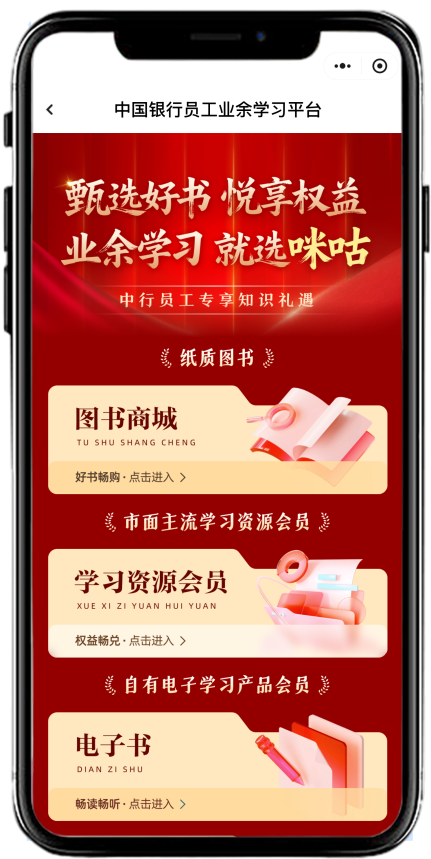
Core Insights - China Mobile's Migu Digital Media has been selected for the Bank of China's employee training project for 2025-2027, highlighting its strength in financial industry training services and addressing the digital talent development needs of state-owned banks [1][3]. Group 1: Challenges in Talent Development - State-owned banks face three main challenges in talent development: rapid changes in compliance policies, significant differences in learning needs across job levels, and difficulties in quantifying training effectiveness [3]. - The Bank of China's project reflects a growing emphasis on compliance accuracy, user experience, and measurable outcomes in training programs [3]. Group 2: Successful Case Studies - Migu has successfully implemented a dual approach of "online digital library + offline reading space" for the Shanghai Pudong Development Bank, achieving over 85% accuracy in AI book recommendations [4]. - In collaboration with various branches of the Industrial and Commercial Bank of China, Migu has tailored its services to meet diverse employee learning needs, achieving 100% participation in specific projects [4]. Group 3: Key Advantages of Migu's Training Solutions - Migu has developed a comprehensive compliance content matrix that addresses specific job requirements, leveraging a vast library of resources and partnerships with leading educational content providers [7]. - The use of AI technology allows for personalized learning experiences, enhancing engagement and participation rates by 35% [8]. - Migu offers a full-service solution that includes program design, system integration, and real-time tracking of training effectiveness, significantly reducing operational costs for banks [9]. Group 4: Financial Sector Focus - Migu has served over ten thousand corporate clients, impacting more than ten million employees, and has established a strong presence in the financial sector, covering all major state-owned banks and various non-bank financial institutions [14]. - The partnership with the Bank of China represents an opportunity for Migu to further enhance its capabilities in digital talent development, reinforcing its position as a key player in the financial industry's digital transformation [14].


立减金、组合礼扎堆!银行个人养老金开启年末冲刺
Hua Xia Shi Bao· 2025-12-01 09:36
Core Insights - Banks are intensifying promotional activities for personal pension accounts, focusing on customer retention and active participation rather than just attracting new accounts [3][6][7] Group 1: Promotional Strategies - Major banks, including China Bank and Industrial and Commercial Bank, are offering various incentives such as WeChat discounts and cash rewards to encourage account opening and contributions [4][5] - The promotional focus has shifted from merely attracting new customers to enhancing customer experience and retention, as many accounts remain inactive after initial opening [3][6] Group 2: Customer Behavior and Market Trends - There is a prevalent issue of "high account openings but low contributions," with many customers opening accounts for short-term rewards but not actively contributing [7][8] - A report indicates that as of November 2024, only 21% of personal pension account holders are making contributions, despite a significant number of accounts being opened [7][8] Group 3: Regulatory and Competitive Landscape - The regulatory framework allows individuals to open only one personal pension account with a commercial bank, intensifying competition among banks to attract customers [5][8] - Banks are innovating their services, such as introducing appointment-based contribution options, to lower barriers for customers and encourage ongoing contributions [9][10]


我国5家银行入选2025年G-SIB名单 分析称未来继续看好银行板块
Zhong Guo Jing Ying Bao· 2025-12-01 09:21
Group 1 - The Financial Stability Board (FSB) announced the 2025 list of Global Systemically Important Banks (G-SIBs), with five Chinese banks included, maintaining the same number as the previous year [1] - Industrial and Commercial Bank of China (ICBC) has been upgraded to the third group with an additional capital requirement of 2.0%, while Bank of China, Agricultural Bank of China, and China Construction Bank remain in the second group with a requirement of 1.5%, and Bank of Communications stays in the first group with a requirement of 1% [1] - Following the upgrade, ICBC's core Tier 1 capital adequacy ratio regulatory requirement increases from 9% to 9.5%, with a current ratio of 13.6%, providing a buffer of 4.6 percentage points [1] Group 2 - Fitch Ratings noted that the scoring changes for Chinese G-SIBs in 2025 show that scale is no longer the primary driver for score increases, and exchange rate effects have positively influenced scores [2] - The Basel Committee plans to adjust the framework for identifying G-SIBs from year-end static data to annual average calculations, which may reduce data volatility and limit the impact on most banks, although institutions near threshold levels may experience changes [2] - The increase in global systemic importance reflects the fundamental strength of large banks, with scores for the five major banks rising between 9 to 33 points, and Bank of China is likely to be upgraded soon [2] Group 3 - The banking sector is viewed positively for long-term investment, with a high dividend strategy still having room for growth amid an "asset shortage" environment, suggesting a continuation of structural market trends [3]

中国银行(601988) - H股公告-截至二零二五年十一月三十日止之股份发行人的证券变动月报表
2025-12-01 09:15
FF301 股份發行人及根據《上市規則》第十九B章上市的香港預託證券發行人的證券變動月報表 截至月份: 2025年11月30日 狀態: 新提交 致:香港交易及結算所有限公司 公司名稱: 中國銀行股份有限公司(「本公司」) 呈交日期: 2025年12月1日 I. 法定/註冊股本變動 | 1. 股份分類 | 普通股 | 股份類別 | H | | 於香港聯交所上市 (註1) | | 是 | | | --- | --- | --- | --- | --- | --- | --- | --- | --- | | 證券代號 (如上市) | 03988 | 說明 | H股 | | | | | | | | | 法定/註冊股份數目 | | | 面值 | | 法定/註冊股本 | | | 上月底結存 | | | 83,622,276,395 | RMB | | 1 RMB | | 83,622,276,395 | | 增加 / 減少 (-) | | | 0 | | | RMB | | 0 | | 本月底結存 | | | 83,622,276,395 | RMB | | 1 RMB | | 83,622,276,395 | | 2. ...
多因素催化银行股涨幅居前,地产风险可控:华创金融红利资产月报(2025年11月)-20251201
Huachuang Securities· 2025-12-01 09:13
Investment Rating - The report maintains a "Buy" rating for the banking sector, highlighting that multiple factors are driving the rise in bank stocks, while real estate risks are deemed manageable [2]. Core Insights - The report emphasizes that the balance between supply and demand is crucial for economic recovery, with recent policies aimed at boosting consumer demand expected to enhance this balance [2]. - The M1 growth rate peaked and has started to decline, indicating a shift in deposit flows towards non-bank deposits due to a buoyant capital market [2]. - The exposure to real estate risks is decreasing, with a notable reduction in the balance of real estate development loans, suggesting that banks are adopting a more cautious approach [2][7]. - The report notes that the non-performing loan ratio for real estate has decreased, indicating improved risk management within the banking sector [7]. Monthly Market Performance - In November 2025, the banking sector saw a cumulative increase of 2.99%, outperforming the CSI 300 index by 5.4 percentage points, ranking second among 31 sectors [11]. - The report indicates that institutional investors have increased their holdings in bank stocks, driven by a stable fundamental outlook and expectations of valuation recovery [11]. - The valuation of state-owned banks has shown significant improvement, with the price-to-book (PB) ratio rising from approximately 0.76X at the beginning of the month to 0.78X by the end [13]. Banking Sector Fundamentals - The report tracks monthly data indicating that the banking sector's core revenue-generating capacity has strengthened, with asset quality remaining stable [8]. - The report highlights that the banking sector's current valuation is at a historically low level, with a price-to-earnings (PE) ratio of 6.53 and a PB ratio of 0.56 [11]. Investment Recommendations - The report suggests a diversified investment strategy focusing on banks with high dividend yields and strong asset quality, particularly smaller banks with solid provisioning coverage [7]. - It also recommends attention to low-valuation joint-stock banks with potential for return on equity (ROE) improvement, such as CITIC Bank and Industrial Bank [7]. - The report indicates that banks with robust customer bases and excellent risk control are likely to have greater valuation elasticity in the context of economic structural transformation [7].


中国银行(03988) - 截至二零二五年十一月三十日止之股份发行人的证券变动月报表
2025-12-01 08:48
FF301 股份發行人及根據《上市規則》第十九B章上市的香港預託證券發行人的證券變動月報表 截至月份: 2025年11月30日 狀態: 新提交 I. 法定/註冊股本變動 | 1. 股份分類 | 普通股 | 股份類別 | H | | 於香港聯交所上市 (註1) | | 是 | | | --- | --- | --- | --- | --- | --- | --- | --- | --- | | 證券代號 (如上市) | 03988 | 說明 | H股 | | | | | | | | | 法定/註冊股份數目 | | | 面值 | | 法定/註冊股本 | | | 上月底結存 | | | 83,622,276,395 | RMB | | 1 RMB | | 83,622,276,395 | | 增加 / 減少 (-) | | | 0 | | | RMB | | 0 | | 本月底結存 | | | 83,622,276,395 | RMB | | 1 RMB | | 83,622,276,395 | | 2. 股份分類 | 普通股 | A 股份類別 | | 於香港聯交所上市 (註1) | | 否 | | | --- | ...
中国银行业2026 前瞻_防御性锚点兼具上行潜力-2026 Year Ahead_ defensive anchor with potential upside
2025-12-01 00:49
Summary of Key Points from the Conference Call on China Banks Industry Overview - **Sector**: China Banking Sector - **Market Context**: The China banking sector is viewed as a defensive anchor amid market volatilities in 2026, supported by global monetary easing and steady economic growth in China. The MSCI China index is trading at an above-average P/E of approximately 13x, indicating potential for increased market volatility [1][22]. Core Insights and Arguments - **Investment Outlook**: Equity investors remain positive about the China market in 2026, with banks being a key component of investors' portfolios due to their large index weighting (~11%) and strong earnings visibility. ICBC-H and CCB-H are highlighted as top defensive picks [1][22]. - **Performance Metrics**: China banks have rallied nearly 25% in 2025 YTD, recovering from lows in January 2024. However, P/B valuation remains at the low end of historical ranges (0.5-0.8x), while P/E (6.2x) and P/PPOP (3.5x) are near the highest levels since 2012 [2][22]. - **Profit Growth Forecast**: Net profit growth for major listed banks is expected to remain low-single-digit on average for FY25-26E, with net interest margins stabilizing but facing potential downside from policy rate cuts. Loan growth has slowed from 7.0% YoY in 2024 to 6.2% in October 2025 [3][8]. - **Dividend Yield**: The average dividend yield for banks is currently at 5.1%, which is among the lowest levels, but is expected to be a significant component of total returns for H-share investors [2][22]. Additional Important Insights - **Credit Growth Dynamics**: Credit growth is increasingly supported by government borrowing, with government bonds accounting for 45% of new credits in the first ten months of 2025, up from 28% in 2021. This trend indicates a reliance on government financing amid subdued credit demand from households and private sectors [28][40]. - **Asset Quality Management**: The banking sector's NPL ratio has edged up to 1.52%, with a focus on managing retail risks. Major banks are expected to maintain stable credit quality, while smaller regional banks may face more challenges [60][70]. - **Relative Value Preferences**: The analysis suggests a preference for ICBC over CCB due to its consistent recovery in core earnings and better performance metrics. Similarly, BoComm is preferred over PSBC for its stronger asset quality and higher expected dividend yield [72][77][81]. Conclusion The China banking sector is positioned as a defensive investment with potential upside, driven by government support and a focus on stable earnings. However, challenges such as low profit growth and asset quality pressures remain critical considerations for investors.
11月红利主题基金月度成立规模新高|财富周历 动态前瞻
Sou Hu Cai Jing· 2025-12-01 00:45
A股 - Minmetals Capital's announcement of a related party transaction has drawn industry attention, with its subsidiary Minmetals Trust planning to jointly invest in a joint venture with Minmetals Real Estate, injecting 300 million yuan in cash and an asset package valued at 16.29 billion yuan [2] - The results of the subscription for Moer Thread, known as the "first domestic GPU stock," were announced, with public funds, social security funds, and pension funds acquiring approximately 38.59 million shares, accounting for 98.44% of the offline final issuance [2] - Yunnan Aluminum announced plans to acquire stakes in three aluminum companies from Yunnan Metallurgical Group, while AVIC Helicopter's subsidiary plans to merge with another wholly-owned subsidiary [2] 港股 - The Hong Kong IPO market is experiencing a surge, surpassing the NYSE and NASDAQ, aiming to become the top global fundraising market for new stocks by 2025, with 81 new listings raising a total of 215.98 billion HKD in the first ten months of the year [3] - More than half of the fundraising amount in Hong Kong has come from 14 A-share companies, with notable price discrepancies between A-shares and H-shares, exemplified by CATL's H-share price being over 14% higher than its A-share price [3] 理财 - In November, nine dividend-themed funds were established, raising a total of 6.615 billion yuan, marking a new monthly high for the year, with significant contributions from several funds launched on November 25 [4] - Major state-owned banks and some joint-stock banks have begun to withdraw 5-year large-denomination time deposits, focusing on shorter-term products, with a broad impact across various banks [4] - Sixteen technology-themed funds have been approved, including several ETFs focused on artificial intelligence and semiconductor sectors, with some products receiving approval on the same day they were submitted [4] 个人养老金 - As the year-end personal pension contribution window approaches, banks are intensifying promotional efforts, offering exclusive benefits to attract customers to open accounts and contribute funds, with potential subsidies of around 600 yuan for maximum contributions [5] 债务 - The issuance of new local special bonds in November is expected to reach 492.2 billion yuan, an increase of over 200 billion yuan from the previous month, alongside a significant rise in refinancing bonds [5] 其他 - From January to October, profits of large-scale industrial enterprises in China totaled 595.03 billion yuan, a year-on-year increase of 1.9%, with equipment manufacturing and high-tech manufacturing being the main profit growth drivers [6] - China remains the world's largest market for industrial robots, with significant improvements in performance and quality, and a projected increase in domestic multi-joint robot sales [6] - The National Development and Reform Commission announced a new credit repair management method, effective from April 1, 2026, allowing credit subjects to apply for credit repair under certain conditions [6] - China's foreign direct investment reached 1,033.23 billion yuan in the first ten months, a year-on-year increase of 7%, with investments made in 9553 overseas enterprises across 152 countries and regions [7] - The Chinese medical device market is expected to reach 1.22 trillion yuan by 2025, driven by innovation, with a record number of approved innovative medical devices [7]





金融向善·产业赋能 ——广东中行倾情助力第十一届SIC老博会
Nan Fang Du Shi Bao· 2025-11-30 23:08
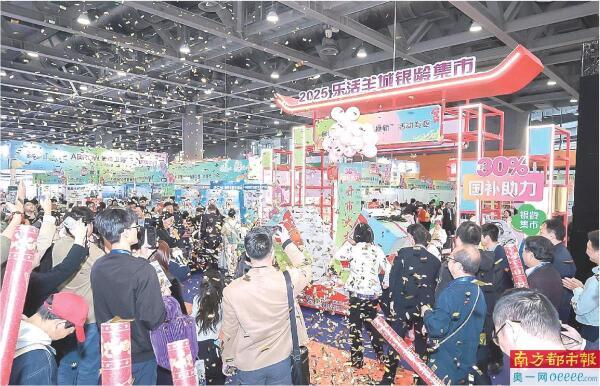
Core Viewpoint - The article highlights the participation of the Bank of China Guangdong Branch in the 11th China International Aging Industry Expo, showcasing innovative financial products and services aimed at the elderly population, emphasizing a "financial + scenario" model to enhance elderly care services [8][9]. Group 1: Event Participation and Offerings - The 11th China International Aging Industry Expo was held from November 27-29, where the Guangdong Branch of the Bank of China presented various key elderly financial products and services [8]. - The bank's participation attracted numerous visitors, showcasing a one-stop service solution that includes wealth planning, livelihood services, and cultural activities for the elderly [8][9]. Group 2: Strategic Initiatives and Collaborations - The Guangdong Branch collaborated with the Guangzhou Social Welfare and Elderly Service Association to create the "2025 Happy Aging Market," featuring over a thousand elderly-friendly products and services [9][10]. - The bank has established a strategic partnership with the Guangzhou Civil Affairs Bureau in the elderly care sector, having served over 70,000 elderly clients through the "Silver Age Market" initiative over the past three years [9][10]. Group 3: Financial Innovation and Community Engagement - The bank introduced a community elderly care model called "15-minute elderly service circle," integrating financial services into daily activities such as shopping and health management [10]. - The "Bank of China Five Hearts" cross-border elderly financial service system was launched, focusing on providing tailored services for residents from Hong Kong and Macau [10][11]. Group 4: Commitment to Elderly Financial Services - The Guangdong Branch has established 110 elderly service demonstration points across the province, enhancing service quality and reducing wait times for elderly clients [11][12]. - Future plans include continuing to innovate in elderly financial services, optimizing service processes, and promoting cross-regional financial collaboration to support the high-quality development of the elderly economy in Guangdong [12].
发挥金融优势 推动产业发展
Ren Min Ri Bao· 2025-11-30 22:20
Group 1 - The core viewpoint of the articles highlights the role of the Bank of China in promoting cultural heritage and rural revitalization in Shaanxi Province, particularly in Xianyang's "North Four Counties" [1][2][3] - The Bank of China has supported the construction of the Intangible Cultural Heritage Exhibition Hall in Xunyi County, which showcases local art and has become a cultural landmark [1] - Financial empowerment through loans has revitalized local industries, such as the egg production facility in Ma Fang Town, which houses over 1.6 million chickens and produces 1.52 million eggs daily, supported by a 400 million yuan loan [1] Group 2 - The establishment of a new branch in Changwu County by the Bank of China aims to enhance financial services and support local development projects, contributing to sustainable industrial ecosystems [2] - The Bank of China has facilitated the development of Dahuai Tree Village, which has become a leader in county income, generating 58 million yuan in e-commerce sales since 2019 and creating 10,000 job opportunities [2] - The Bank of China has promoted local agricultural products, such as the "Xianyang Malan Red" apple, at major international trade fairs, enhancing the visibility and market reach of local specialties [3]