
HTSC(06886)

Search documents
证券板块2月3日跌0.12%,华泰证券领跌,主力资金净流出28.46亿元
Zheng Xing Xing Ye Ri Bao· 2026-02-03 09:03
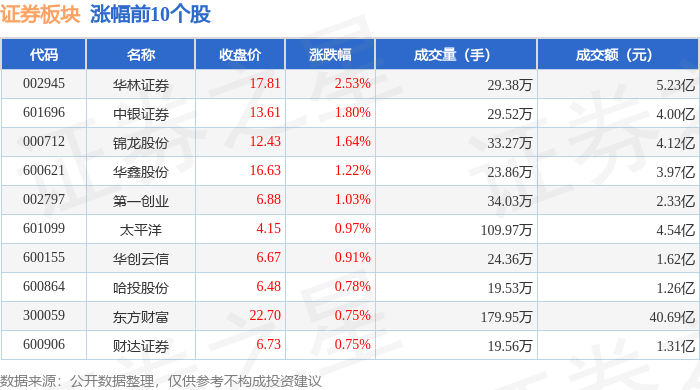
Market Overview - On February 3, the securities sector declined by 0.12% compared to the previous trading day, with Huatai Securities leading the decline [1] - The Shanghai Composite Index closed at 4067.74, up 1.29%, while the Shenzhen Component Index closed at 14127.1, up 2.19% [1] Individual Stock Performance - Huatai Securities (601688) closed at 21.77, down 4.05% with a trading volume of 2.19 million shares and a transaction value of 4.739 billion [2] - Dongwu Securities (601555) closed at 9.21, down 1.71%, with a transaction value of 693 million [2] - Other notable declines include GF Securities (000776) down 1.34% and China Merchants Securities (666009) down 0.95% [2] Capital Flow Analysis - The securities sector experienced a net outflow of 2.846 billion, while retail investors saw a net inflow of 1.851 billion [2][3] - Major stocks like China Galaxy (601881) had a net inflow of 1.68 million from institutional investors, while Shanxi Securities (002500) saw a net inflow of 1.3542 million [3] ETF Performance - The Huaxia Financial Technology ETF (516100) decreased by 5.20% over the last five days, with a net redemption of 8.387 million [5] - The Huaxia Securities ETF (515010) decreased by 2.66%, but saw an increase in shares by 7.5 million, indicating a net subscription of 10.319 million [5]


证券行业2025年年报前瞻及展望:权益市场表现亮眼,我们预计2025年净利润同比+50%,2026年高基数下同比+16%
Soochow Securities· 2026-02-03 08:52
Investment Rating - The report maintains an "Overweight" rating for the non-bank financial industry [1] Core Insights - The equity market is expected to perform well, with a projected net profit growth of 50% year-on-year for 2025, and a 16% growth in 2026 from a high base [1][30] - The average daily trading volume of stock funds is anticipated to reach 19.814 trillion yuan in 2025, representing a 67% year-on-year increase [1][9] - The report highlights a significant recovery in IPO and refinancing activities, with IPO fundraising expected to grow by 96% in 2025 [1][14] - The bond issuance scale is expected to increase steadily, with a 13% year-on-year growth in 2025 [1][19] - The report emphasizes the low valuation of brokerage stocks and the potential for valuation recovery, particularly for large brokerages [1][24] Summary by Sections 1. Equity Market Performance - The average daily trading volume of stock funds is projected at 19.814 trillion yuan, a 67% increase year-on-year [1][9] - The number of new accounts opened in the Shanghai market is expected to average 2.5 million per month, an 8% increase from 2024 [1][9] - The financing balance is projected to reach 2.5242 trillion yuan, a 36% increase year-on-year [1][12] - The IPO market is expected to see 116 IPOs raising 131.8 billion yuan, a 96% increase year-on-year [1][14] - The refinancing market is expected to recover significantly, with a total of 950.9 billion yuan raised, a 326% increase [1][18] 2. Profit Forecast for 2025 - The report forecasts a 50% year-on-year increase in net profit for listed brokerages in 2025, with a 16% increase in Q4 [1][30] - The total revenue for the industry is expected to grow by 21% year-on-year [1][30] 3. 2026 Outlook - The report anticipates a 16% year-on-year increase in net profit for the industry in 2026, based on high baseline assumptions [1][37] - The growth in brokerage income from various segments is expected, including a 25% increase in brokerage business revenue [1][37] 4. Valuation and Recommendations - The report notes that the current valuation of brokerages is relatively low, with the CITIC Securities II index at 1.43x PB, indicating potential for valuation recovery [1][24] - Key recommendations include major brokerages such as CITIC Securities, Huatai Securities, and Guotai Junan [1][24]



华泰证券拟发行100亿港元H股可转债 A股跌4%H股跌8%
Zhong Guo Jing Ji Wang· 2026-02-03 08:48
Core Viewpoint - Huatai Securities plans to issue HKD 10 billion convertible bonds to support its overseas business development and supplement working capital, with a net fundraising estimate of approximately HKD 9.9247 billion after expenses [1][3]. Group 1: Bond Issuance Details - The convertible bonds will be issued at a principal amount of HKD 10 billion, with a maturity date of February 8, 2027, and will be zero-coupon bonds [1][2]. - The bonds will be issued in registered form with a specified denomination of HKD 2 million, and any excess will be in multiples of HKD 1 million [1]. - The initial conversion price for the bonds is set at HKD 19.70 per share, with provisions for adjustments under specific circumstances [2][3]. Group 2: Conversion and Impact - If all bonds are converted at the initial conversion price, approximately 507.6 million shares will be issued, representing about 29.53% of the existing H-shares and 5.62% of the total issued shares [3]. - The issuance of these convertible bonds is expected to enhance the company's ability to respond to international market risks and challenges, thereby improving its overall competitiveness [3]. Group 3: Market Reaction - On the day of the announcement, Huatai Securities' A-shares closed at CNY 21.77, down 4.05%, while its Hong Kong shares closed at HKD 16.93, down 8.238% [1].
研报掘金丨华泰证券:维持比亚迪“买入”评级,海外和技术双驱动
Ge Long Hui A P P· 2026-02-03 07:47
华泰证券研报指出,比亚迪1月乘用车总销量21万辆,同比-30%、环比-50%;其中出口销量突破10万 辆,同比+51%、环比-25%。该行认为公司受需求前置和主动去库影响,1月销量同环比大幅下滑,系 淡季主动调结构,为春节后新车和新技术发布蓄力。看好公司26年出口销量超130万辆,期待公司超 充、智驾等领域的新技术进展,考虑到汽车行业竞争加剧,以及存储抬升公司成本,微调25-27年收入 为8200/9553/11100亿元(相比上次:不变/-3%/-1%)归母净利润预测为350/466/567亿元(相比上次:不 变/-3%/-1%)。可比公司26年平均PE 33x,给予公司26年33xPE(前值26E 31x),对应总市值11910亿 元,调整目标价为130.63元(前值136.93元),维持"买入"评级。 ...

禾信仪器预亏后收监管工作函 去年三季末华泰证券持股
Zhong Guo Jing Ji Wang· 2026-02-03 07:22
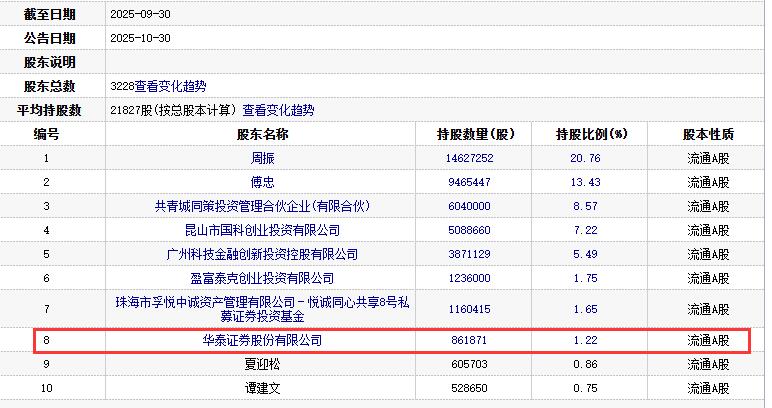
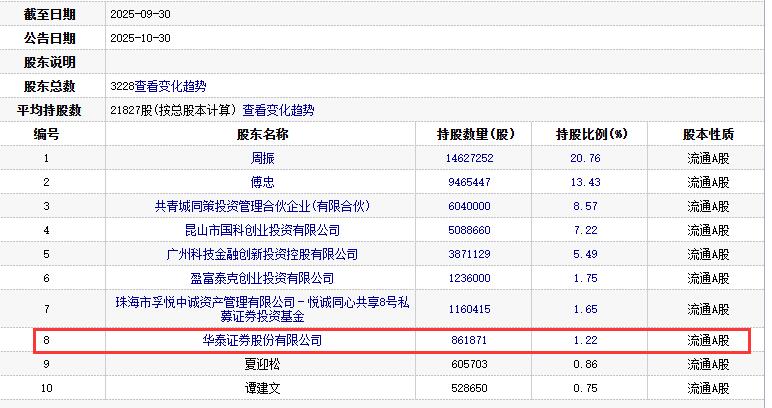
Core Viewpoint - The company, Guangzhou Hexin Instrument Co., Ltd., is expected to report significant losses for the fiscal year 2025, with a projected net profit loss of approximately 89 million yuan, representing a 93.52% decrease compared to the previous year [1] Financial Performance - The estimated net profit attributable to shareholders for 2025 is projected to be around -89 million yuan, a decrease of approximately 43.01 million yuan from the previous year [1] - The estimated net profit after deducting non-recurring gains and losses is expected to be around -93 million yuan, reflecting a decrease of about 29.90 million yuan, or 47.39% year-on-year [1] - The estimated operating revenue for 2025 is around 97 million yuan, which is a decrease of approximately 105.51 million yuan, or 52.10% compared to the previous year [1] Risk of Delisting - If the audited net profit (before and after deducting non-recurring gains and losses) is negative and the operating revenue (after excluding unrelated business income) is below 100 million yuan, the company may face delisting risk warnings, indicated by the "*ST" prefix on its stock name [2] Shareholder Information - As of September 30, 2025, the eighth largest shareholder is Huatai Securities Co., Ltd., holding a 1.22% stake [2] Initial Public Offering (IPO) Details - The company raised a total of 310 million yuan from its IPO, with a net amount of 273 million yuan after deducting issuance costs [4] - The planned fundraising amount was 326 million yuan, intended for projects including the expansion of the mass spectrometry industrialization base and the construction of a research and development center [4] Previous Financial Results - In 2024, the company reported an operating revenue of 203 million yuan, a year-on-year decrease of 44.70%, and a net profit attributable to shareholders of -45.99 million yuan [4] - The company also reported a net profit of -63.33 million yuan in 2022, indicating ongoing financial challenges [5]

禾信仪器预亏后收监管工作函 去年三季末华泰证券持股
Zhong Guo Jing Ji Wang· 2026-02-03 07:21
Core Viewpoint - The company, Guangzhou Hexin Instrument Co., Ltd., is expected to report significant losses for the fiscal year 2025, with a projected net profit loss of approximately 89 million yuan, representing a year-on-year decline of about 93.52% [1] Financial Performance - The estimated net profit attributable to the parent company for 2025 is projected to be around -89 million yuan, a decrease of approximately 43.01 million yuan compared to the previous year [1] - The expected net profit after deducting non-recurring gains and losses is projected to be around -93 million yuan, reflecting a year-on-year decline of about 47.39% [1] - The anticipated operating revenue for 2025 is around 97 million yuan, which is a decrease of approximately 105.51 million yuan, or 52.10%, compared to the previous year [1] Risk of Delisting - If the audited net profit (before and after deducting non-recurring gains and losses) is negative and the operating revenue (after excluding unrelated business income) is below 100 million yuan, the company may face a delisting risk warning, indicated by the "*ST" prefix on its stock name [2] Shareholder Information - As of September 30, 2025, the eighth largest shareholder is Huatai Securities Co., Ltd., holding a 1.22% stake [3] Initial Public Offering (IPO) Details - The company raised a total of 310 million yuan from its initial public offering, with a net amount of 273 million yuan after deducting issuance costs [5] - The planned fundraising amount was 326 million yuan, intended for projects including the expansion of the mass spectrometry industrialization base and the establishment of a research and development center [5]
主力个股资金流出前20:中际旭创流出19.09亿元、蓝色光标流出11.28亿元
Jin Rong Jie· 2026-02-03 07:14
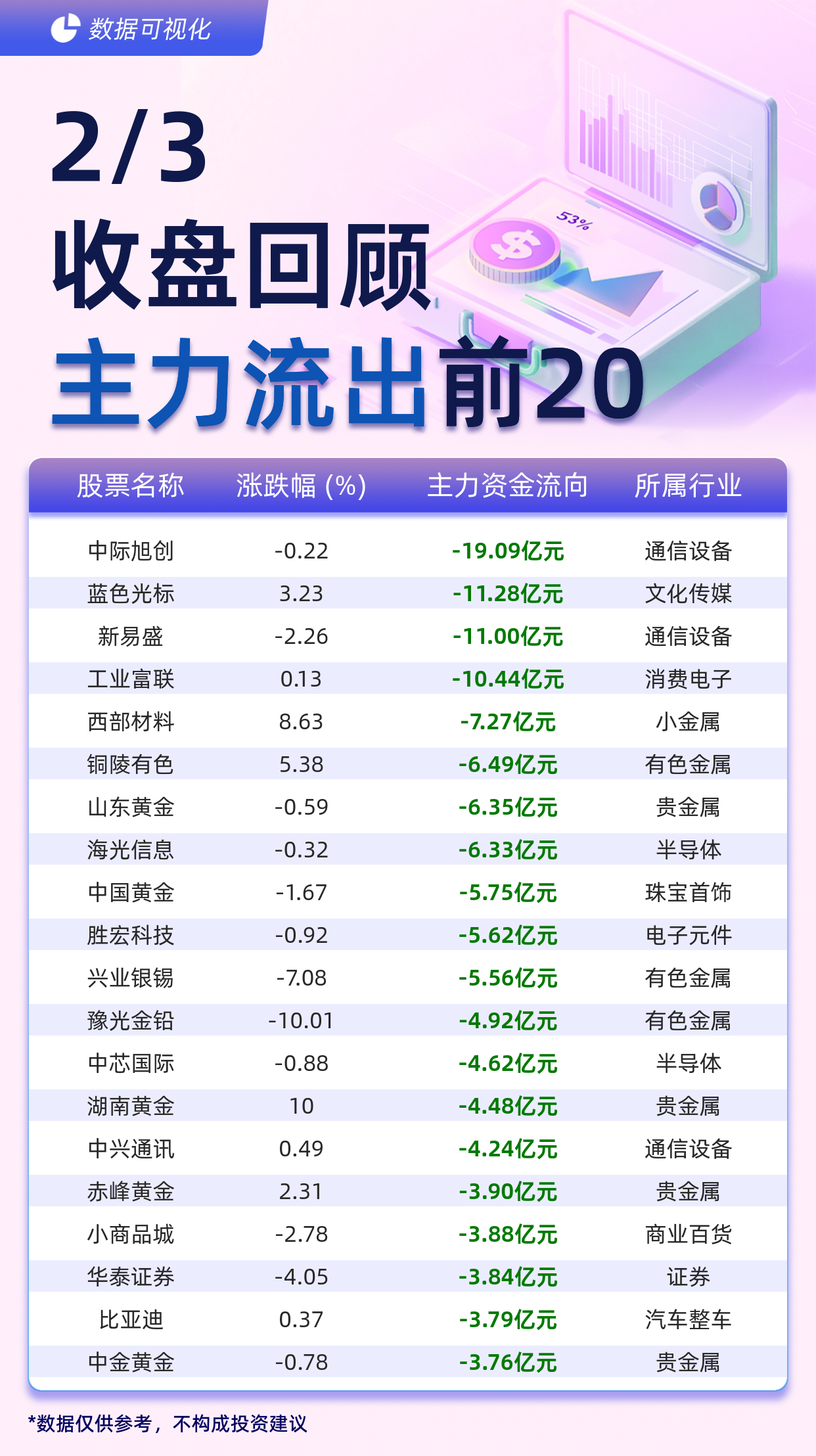
Group 1 - The main stocks with significant capital outflows include Zhongji Xuchuang (-1.91 billion), BlueFocus (-1.13 billion), and Xinye Sheng (-1.10 billion) [1] - Zhongji Xuchuang experienced a slight decline of 0.22%, while BlueFocus saw an increase of 3.23% despite the capital outflow [2] - Other notable stocks with capital outflows include Industrial Fulian (-1.04 billion), Western Materials (-0.73 billion), and Tongling Nonferrous Metals (-0.65 billion) [1][3] Group 2 - The sectors affected by capital outflows include communication equipment, cultural media, and precious metals [2][3] - Stocks like Western Materials and Tongling Nonferrous Metals showed positive price movements of 8.63% and 5.38% respectively, despite significant capital outflows [2][3] - The overall trend indicates a mixed performance among the top stocks, with some experiencing price increases while others faced declines [1][2]



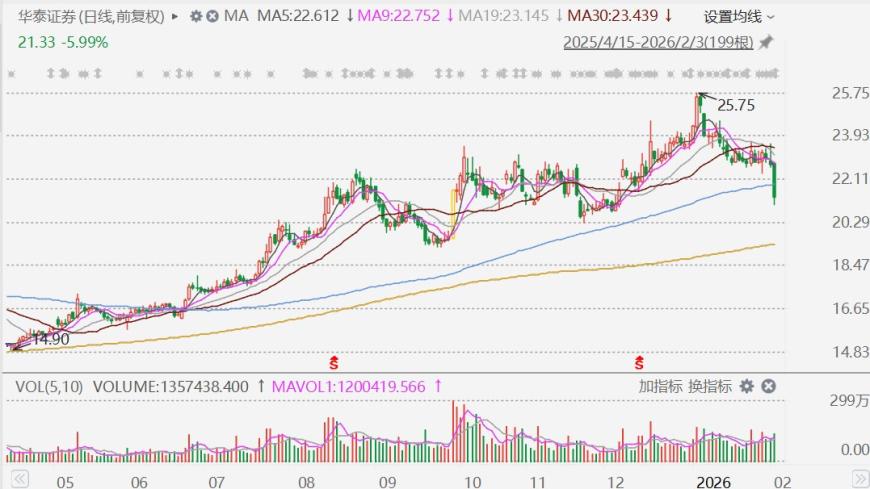
华泰证券大跌近10%,拟发百亿港元可转换债
Ge Long Hui· 2026-02-03 03:37
港股频道更多独家策划、专家专栏,免费查阅>> 2月3日,华泰证券A股一度跌超7%至21.05元,H股一度跌近10%至16.66港元。消息面上,华泰证券宣布,拟发2027年到期 100亿港元零息可转换债券,净额约99.25亿港元,将用于支持境外业务发展及补充其他运营资金。债券的初始转换价为每股 H股19.7港元,较昨日收市价18.45港元溢价约6.78%。若悉数转换债券,债券将可转换为约5.08亿股H股,相当于扩大后已发 行H股数目的约22.8%及已发行股份总数的约5.32%。 责任编辑:栎树 ...
研报掘金丨华泰证券:上调洛阳钼业AH股目标价并维持“买入”评级,看好其价值提升
Ge Long Hui A P P· 2026-02-03 03:32
铜方面,该行预期2025至2028年铜价有望冲击每吨15000美元以上。展望今年,预计全球电解铜供给仍 有限,按年增速2.4%。中长期来看,全球技术进步叠加海外制造业复苏,多周期共振下电解铜需求或 保持高增;而供给约束性较强。 MACD金叉信号形成,这些股涨势不错! 华泰证券发表研报,维持洛阳钼业"买入"评级,A股目标价从24.19元升至35.83元,H股目标价从21.27 港元升至33.95港元。该行看好洛阳钼业的价值提升,理由是看好铜、金价上行周期;公司是铜矿行业 国内龙头、成长性较好;新增重点布局品种-黄金,或迎来铜估值向铜+金估值的转变。 该行指出,2022年之后,全球金融和贸易体系日趋割裂;外汇储备多元化需求成为黄金价格上行的长期 基石。如果黄金在央行中的储备占比回到34%的历史中位数水平,全球央行增持黄金可能持续到2035 年。今年美国实际利率或是下行趋势,叠加美元震荡走弱,利于金价进一步上行。 ...
华泰证券AH走低
Mei Ri Jing Ji Xin Wen· 2026-02-03 03:19
(文章来源:每日经济新闻) 每经AI快讯,2月3日,华泰证券(601688/06886)早盘走低,截至发稿A股跌6%,H股跌8%。 ...