JD(09618)

Search documents
激活内需焕新动力,红顶奖携手业界共绘家电行业新蓝图
Jing Ji Wang· 2025-12-25 09:57
Core Insights - The 17th China High-end Home Appliance Trend Release and Red Top Award Ceremony was held in Beijing, focusing on the theme "Brilliant and Extraordinary" [1] - The event highlighted the resilience of China's home appliance and manufacturing industries in global competition, supported by external demand and market vitality [2] - A report on the 2025 China high-end home appliance market indicates a significant shift towards premiumization and emotional value among consumers, with notable growth in online retail sales of high-end appliances [2] Group 1 - The Red Top Award aims to promote quality living and guide consumer trends in the high-end home appliance sector [1] - Numerous well-known home appliance brands participated in the event, showcasing the industry's collective strength [1] - The event featured a special appearance by a robot, engaging in discussions on AI topics with representatives from various brands [3] Group 2 - The report released during the event shows that from January to September, online retail sales of coffee machines, robotic vacuums, pet air purifiers, and large TVs experienced double-digit growth [2] - The event included an AI art and high-end home appliance exhibition, merging technology and art to highlight the industry's innovative spirit [3] - The Red Top Award's founder emphasized the importance of social responsibility and the commitment to enhancing the high-end appliance industry's contributions to society [3]


京东集团:2025年终奖涨70%
Zhong Guo Ji Jin Bao· 2025-12-25 09:48
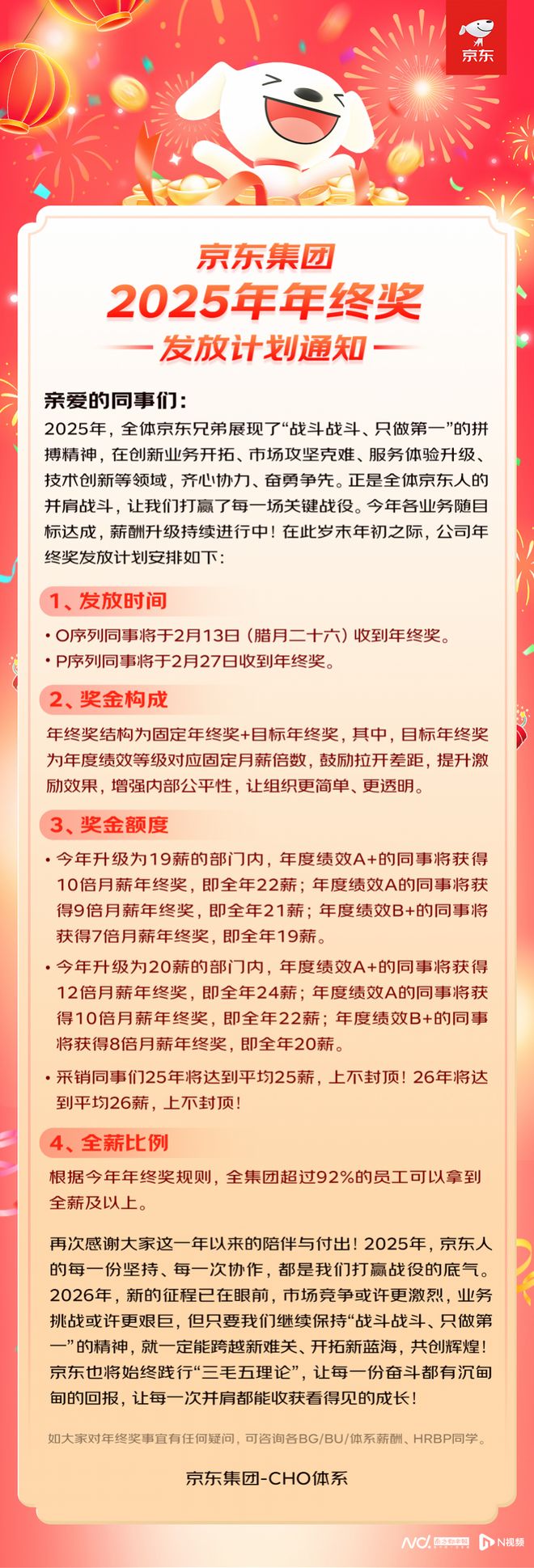
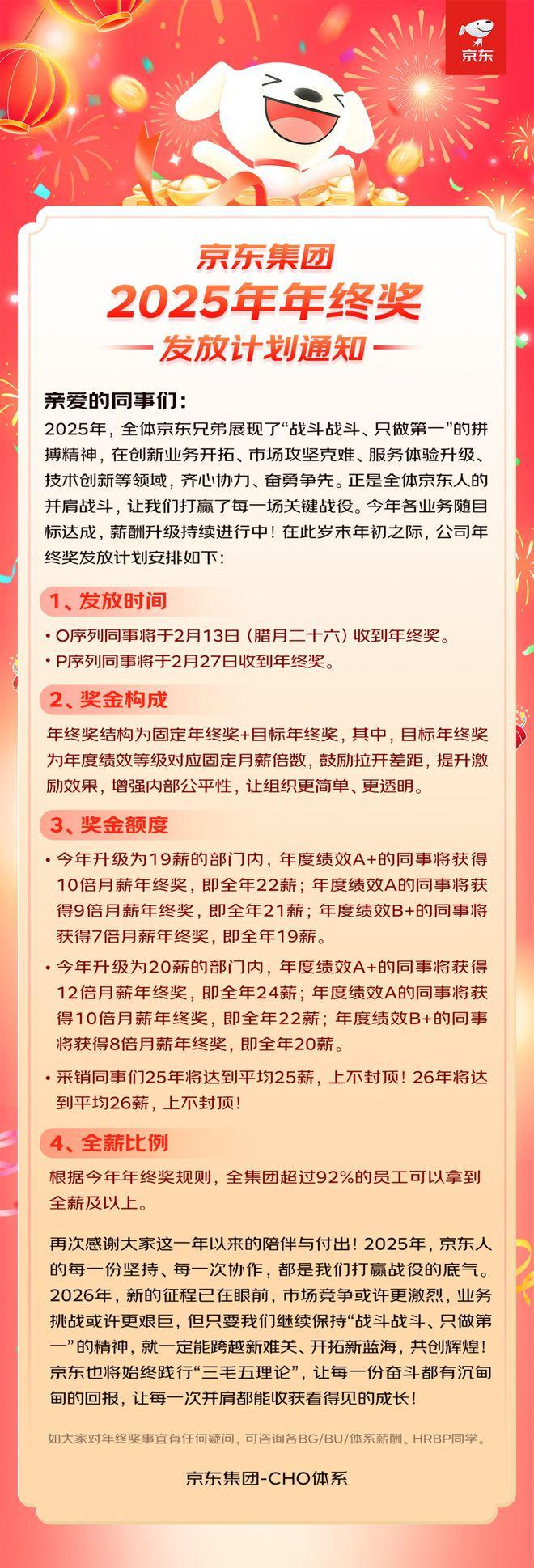
【导读】京东集团公布2025年终奖发放计划,总投入同比增长超70% 京东,又放大招! 根据今年年终奖规则,全集团超过92%的员工可以拿到 全薪及以上。 再次感谢大家这一年以来的陪伴与付出!2025年,京东人 的每一份坚持、每一次协作,都是我们打赢战役的底气。 2026年,新的征程已在眼前,市场竞争或许更激烈,业务 挑战或许更艰巨,但只要我们继续保持"战斗战斗、只做第 一"的精神,就一定能跨越新难关、开拓新蓝海,共创辉煌! 京东也将始终践行"三毛五理论",让每一份奋斗都有沉甸 宙的回报,让每一次并肩都能收获看得见的成长! 近期,京东集团公布2025年年终奖发放计划通知,引发市场高度关注。 年终奖结构为固定年终奖+目标年终奖,其中,目标年终奖 为年度绩效等级对应固定月薪倍数,鼓励拉开差距,提升激 励效果,增强内部公平性,让组织更简单、更透明。 3、奖金额度 4、全薪比例 如大家对年终奖事宜有任何疑问,可咨询各BG/BU/体系薪酬、HRBP同学。 京东集团-CHO体系 · 今年升级为19薪的部门内,年度绩效A+的同事将获得 10倍月薪年终奖,即全年22薪;年度绩效A的同事将获 得9倍月薪年终奖,即全年21薪;年度绩 ...

京东集团:2025年终奖涨70%
中国基金报· 2025-12-25 09:42
Core Viewpoint - JD Group has announced its year-end bonus plan for 2025, with total investment increasing by over 70% year-on-year, attracting significant market attention [2][11]. Bonus Structure - The year-end bonus consists of a fixed year-end bonus and a target year-end bonus, where the target bonus is a multiple of the fixed monthly salary based on annual performance ratings [4][9]. Bonus Amounts - For departments upgraded to 19 salaries, employees with an A+ performance rating will receive a year-end bonus of 10 times their monthly salary, totaling 22 salaries for the year; A-rated employees will receive 9 times their monthly salary, totaling 21 salaries; B+ rated employees will receive 7 times their monthly salary, totaling 19 salaries [10]. - For departments upgraded to 20 salaries, A+ rated employees will receive 12 times their monthly salary, totaling 24 salaries; A-rated employees will receive 10 times their monthly salary, totaling 22 salaries; B+ rated employees will receive 8 times their monthly salary, totaling 20 salaries [10][11]. Employee Coverage - Approximately 92% of JD's employees will receive full or excess year-end bonuses, with the total bonus investment expected to set a record for the industry this year [11]. Salary Upgrade Plans - JD announced a salary upgrade plan in September 2024, aiming to implement a 20-salary structure over two years, with other departments to follow suit [12]. Employee Welfare Initiatives - JD has significantly increased its investment in employee compensation and benefits, having raised employee salary incentives seven times in the past year. The company also provides 100% labor contracts, social insurance, and formal employee benefits for frontline workers [18]. - JD plans to invest 22 billion yuan over the next five years to provide 150,000 housing units for employees, enhancing its housing security system [18].
采销平均25薪,京东年终奖投入涨超70%
21世纪经济报道· 2025-12-25 09:37
央行最新会议,释放关键政策信号 估值200亿,"中国版Space X"冲刺上市 最强牛股暴涨超600%,A股广东军团86股年内翻倍 21君荐读 资料图 SFC 出品丨21财经客户端 21世纪经济报道 编辑丨江佩佩 见习编辑张嘉钰 2 悦 读 · 智能 权 威 . r7 o 扫码点击下载 记者丨 孔海丽 编辑丨巫燕玲 12月25日,有京东员工在社交媒体透露,京东2025年终奖公告, 京东全集团92%的员工拿满 甚至拿到超额年终奖,年终奖投入同比增幅超过70%,预计将创下行业今年最大涨幅。 公告显示,今年薪酬已升级部门如期实现19薪,有业务单元提前实现20薪。此外,一线员工年 终奖仍将在年前发放。 据公告显示,今年升级为19薪的部门里,年度绩效B+的员工可拿满7倍月薪年终奖,即全年19 薪,年度绩效A+和A则将分别拿到10个月和9个月年终奖;提前实现20薪的部门里,年度绩效 B+的员工可拿满8倍月薪年终奖,即全年20薪,年度绩效A+将直接获得12倍年终奖,全年达 到24薪。京东采销今年将实现平均25薪,上不封顶。 ...
京东宣布加薪:2025年终奖投入同比涨幅超70%
Feng Huang Wang· 2025-12-25 09:33
在今年提前实现20薪的部门内,年度绩效B+的员工即可拿满8倍月薪年终奖,即全年20薪,年度绩效A+将直接获得12倍年终奖,全年24薪。京东采 销今年将实现平均25薪,上不封顶。 此前字节跳动也官宣了加薪政策。 12月19日,记者从字节跳动了解到,字节跳动发布面向全球员工的内部邮件,宣布继续加大人才投入,提高薪酬竞争力、提升期权激励力度。具体 包括四大措施:增加奖金(含绩效期权)投入,2025全年绩效评估周期相比上个周期提升35%;大幅增加调薪投入,较上个周期提升1.5倍;提高所 有职级薪酬总包的下限(起薪)和上限(天花板)。字节跳动表示,此举系为确保员工薪酬竞争力和激励回报在全球各个市场都"领先于头部水 平"。 对于加大人才投入的背景,字节跳动在邮件中解释称,行业正面临新的机遇和挑战,公司希望更好地激励和保留优秀人才,同时也更好地吸引全球 优秀人才加入公司,做到"什么时候加入都不晚",鼓励大家和公司业务一起,再上一个更大的台阶。 值得注意的是,在全球各个市场都"领先于头部水平",这一表述在字节跳动内部是首次出现。据了解,这意味着公司在薪酬激励上的目标是要在国 内做到最领先,同时在全球范围也进入第一梯队,以直面 ...
京东证实:今年年终奖额度同比涨幅超70%
Zheng Quan Shi Bao· 2025-12-25 09:33
近年来,京东不断加大对员工薪酬、福利的投入。薪酬方面,过去一年多的时间里,连续7次多大范围 提高员工薪酬激励。 12月25日,有京东员工在社交媒体透露,京东年终连连曝出好消息:在前一天刚刚给全国各地员工送上 10万盒新年惊喜巧克力后,今天又发布了2025年终奖公告,京东全集团92%的员工拿满甚至拿到超额年 终奖,年终奖总投入同比增幅超过70%,预计将创下行业今年最大涨幅。 对此,证券时报记者从京东方面确认,上述年终奖公告属实。 据记者了解,京东去年9月发布了20薪升级计划,宣布自2024年10月1日起京东零售集团和职能体系将用 两年时间实现20薪,其他部门也将随后陆续启动加薪。根据该加薪计划,今年京东年终奖继续大幅上 涨,已升级部门今年实现19薪,同时更有业务单元提前实现20薪。此外,一线员工年终奖仍将在年前发 放。 据透露出来的公告显示:今年升级为19薪的部门内,年度绩效A+的员工将获得10倍月薪年终奖,即全 年22薪;年度绩效A的员工将获得9倍月薪年终奖,即全年21薪;年度绩效B+的员工将获得7倍月薪年终 奖,即全年19薪。而在今年提前实现20薪的部门内,年度绩效B+的员工即可拿满8倍月薪年终奖,即全 年 ...
京东:采销平均25薪,上不封顶
证券时报· 2025-12-25 09:28
12月25日, 有京东员工在社交媒体透露,京东年终曝出好消息: 京东 2025年终奖公告 显 示 , 京东全集团 92%的员工 将 拿满甚至拿到超额年终奖,年终奖总投入同比增幅超过 70%,预计将创下行业今年最大涨幅。 近年来,京东不断加大对员工薪酬、福利的投入。薪酬方面,过去一年多,京东连续7次多范 围提高员工薪酬激励。员工福利方面,今年入局外卖以来,京东成为行业内唯一实现三个 100%的企业:对于全职骑手等一线员工,做到100%签订劳动合同、100%交齐五险一金、 100%正式员工福利;不久前又宣布面向一线员工提供了2.8万套住房,未来5年还将投入220 亿元,提供15万套"小哥之家",通过更灵活、更多样的保障方式,打造规模最大、质量最 优、覆盖最广的小哥住房保障体系。京东始终致力于让员工在实现老有所养、病有所医、伤 有所赔、住有所居的同时,能够发挥所长,收获尊严感、幸福感和成就感,为社会创造更多 的价值。 值得注意的是,除京东外,临近年底,多个大厂均有涨薪的消息。 12月19日,字节跳动发布面向全球员工的内部邮件,宣布继续加大人才投入,提高薪酬竞争 力、提升期权激励力度。具体包括四大措施:增加奖金(含绩 ...
19薪起!全网都被京东这份年终奖公告酸到了
Guan Cha Zhe Wang· 2025-12-25 09:27
Core Viewpoint - JD Group announced a significant increase in year-end bonuses for 2025, with total investment expected to rise over 70% year-on-year, marking the largest annual increase in the industry [1][10]. Group 1: Year-End Bonus Announcement - 92% of employees across the group are eligible to receive full or above-standard year-end bonuses, with all business lines upgrading their compensation incentives [1][6]. - The company has initiated a tradition of distributing year-end bonuses to frontline employees before the Spring Festival [9]. Group 2: Compensation Structure - The new year-end bonus structure includes performance-based multipliers, with employees rated A+ receiving up to 12 times their monthly salary as a bonus, while B+ rated employees receive 7 times [7][8]. - The sales and procurement teams are projected to achieve an average of 25 salaries, with no upper limit, and are expected to reach an average of 26 salaries in 2026 [7][8]. Group 3: Employee Welfare Enhancements - Over 20,000 customer service employees will receive an average salary increase equivalent to 2 months, following a previous 30% increase in February 2025 [8]. - Additional benefits for customer service staff include enhanced medical insurance, upgraded health check standards, and increased housing subsidies [8]. Group 4: Historical Context and Industry Comparison - Since its establishment, JD has invested over 30 billion in its customer service team, with a consistent trend of increasing employee compensation [9]. - Compared to other internet companies, JD's year-end bonus structure is significantly more generous, with many competitors offering bonuses equivalent to only 6 months of salary or none at all for underperforming employees [10].
19薪起!京东2025年终奖投入同比涨幅超70%
Guan Cha Zhe Wang· 2025-12-25 09:26
Core Viewpoint - JD Group announced a significant increase in year-end bonuses for 2025, with total investment expected to rise over 70% year-on-year, marking the largest annual increase in the industry [1][10]. Bonus Structure - The year-end bonus consists of a fixed bonus and a target bonus, where the target bonus is a multiple of the fixed monthly salary based on annual performance ratings, aimed at enhancing internal equity and transparency [4]. Bonus Amounts - Employees in departments upgraded to 19 salaries will receive bonuses ranging from 7 to 10 times their monthly salary, while those in departments upgraded to 20 salaries can receive bonuses up to 12 times their monthly salary [7][8]. Full Salary Proportion - Over 92% of employees across the group are eligible to receive full salary bonuses or more, reflecting the company's commitment to rewarding employee contributions [6][9]. Salary Upgrades - JD has been steadily implementing its 20-salary upgrade plan, with some business units achieving this goal ahead of schedule. The company has also significantly increased salaries for customer service personnel, with an average raise of 2 months for over 20,000 employees [8][9]. Historical Investment in Employee Compensation - Since its establishment, JD has invested over 30 billion in its customer service team, with a consistent trend of increasing employee compensation. The average annual salary has risen from 14 salaries to 16 salaries over the past two years [9]. Financial Performance - JD's financial performance supports its ongoing salary and bonus increases, with a reported revenue of 2,604 billion and a net profit growth of 5.1% year-on-year, driven by supply chain efficiency and an increase in third-party platform business [10]. Industry Comparison - Compared to other internet companies, JD's year-end bonus structure is notably more generous, with many competitors offering bonuses equivalent to only 6 months of salary or none at all for underperforming employees [10].

京东2025年终奖同比涨幅超70%,超九成员工拿满额以上
Nan Fang Du Shi Bao· 2025-12-25 09:22
12月25日,有京东员工在社交媒体透露:在前一天刚刚给全国各地员工送上10万盒新年惊喜 巧克力后,今天又发布了2025年终奖公告——京东全集团92%的员工拿满甚至拿到超额年终 奖,年终奖总投入同比增幅超过70%,预计将创下行业今年最大涨幅。 据了解,京东去年9月发布了20薪升级计划,宣布自2024年10月1日起京东零售集团和职能体系将用两年 时间实现20薪,其他部门也将随后陆续启动加薪。根据该加薪计划,今年京东年终奖继续大幅上涨,已 升级部门今年实现19薪,同时更有业务单元提前实现20薪。此外,一线员工年终奖仍将在年前发放。 丁肩0X十,让找IIJJ 〕 切天链以区。 7年百业方爬日 标达成,薪酬升级持续进行中!在此岁未年初之际,公司年 终奖发放计划安排如下: 1、发放时间 2、奖金构成 年终奖结构为固定年终奖+目标年终奖,其中,目标年终奖 为年度绩效等级对应固定月薪倍数,鼓励拉开差距,提升激 励效果,增强内部公平性,让组织更简单、更透明。 据透露出来的公告显示:今年升级为19薪的部门中,年度绩效A+的员工将获得10倍月薪年终奖,即全 年22薪;年度绩效A的员工将获得9倍月薪年终奖,即全年21薪;年度绩效B+ ...