
XPENG-W(09868)

Search documents
做自动驾驶VLA的这一年
自动驾驶之心· 2025-11-19 00:03
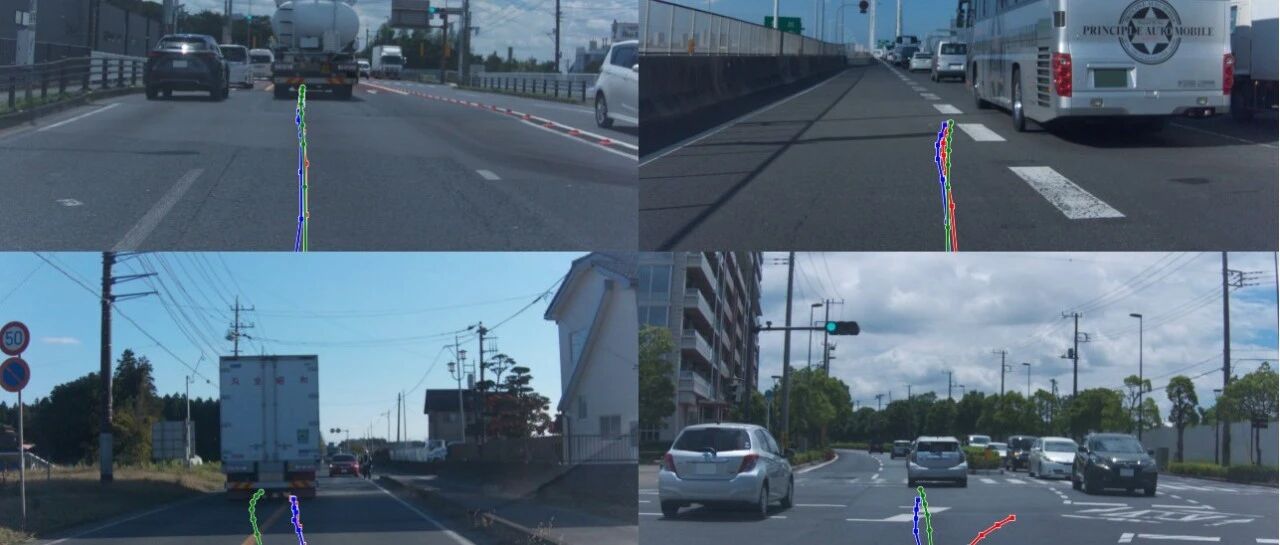
Core Viewpoint - The article discusses the emergence and significance of Vision-Language-Action (VLA) models in the autonomous driving industry, highlighting their potential to unify perception, reasoning, and action in a single framework, thus addressing the limitations of previous models [3][10][11]. Summary by Sections What is VLA? - VLA models are described as multimodal systems that integrate vision, language, and actions, allowing for a more comprehensive understanding and interaction with the environment [4][7]. - The concept originated from robotics and was popularized in the autonomous driving sector due to its potential to enhance interpretability and decision-making capabilities [3][9]. Why VLA Emerged? - The evolution of autonomous driving can be categorized into several phases: modular systems, end-to-end models, and Vision-Language Models (VLM), each with its own limitations [9][10]. - VLA models emerged as a solution to the shortcomings of previous approaches, providing a unified framework that enhances both understanding and action execution [10][11]. VLA Architecture Breakdown - The VLA model architecture consists of three main components: input (multimodal data), processing (integration of inputs), and output (action generation) [12][16]. - Inputs include visual data from cameras, sensor data from LiDAR and RADAR, and language inputs for navigation and interaction [13][14]. - The processing layer integrates these inputs to generate driving decisions, while the output layer produces control commands and trajectory planning [18][20]. Development History of VLA - The article outlines the historical context of VLA development, emphasizing its role in advancing autonomous driving technology by addressing the need for better interpretability and action alignment [21][22]. Key Innovations in VLA Models - Recent models like LINGO-1 and LINGO-2 focus on integrating natural language understanding with driving actions, allowing for more interactive and responsive driving systems [22][35]. - Innovations include the ability to explain driving decisions in natural language and to follow complex verbal instructions, enhancing user trust and system transparency [23][36]. Future Directions - The article raises questions about the necessity of language in future VLA models, suggesting that as technology advances, the role of language may evolve or diminish [70]. - It emphasizes the importance of continuous learning and innovation in the field to keep pace with technological advancements and user expectations [70].


金十数据全球财经早餐 | 2025年11月19日
Jin Shi Shu Ju· 2025-11-18 23:10
Market Overview - The US stock market experienced a decline, with the Dow Jones falling by 1.07%, the S&P 500 down by 0.82%, and the Nasdaq decreasing by 1.2% [4] - European stock indices also fell, with Germany's DAX30 down by 1.77%, the UK's FTSE 100 down by 1.27%, and the Euro Stoxx 50 down by 1.9% [4] - Hong Kong's Hang Seng Index continued its downward trend, closing down 1.72% after a drop of 688 points over two days [5] - A-shares showed a mixed performance, with the Shanghai Composite Index down by 0.81%, Shenzhen Component down by 0.92%, and the ChiNext Index down by 1.16% [6] Commodity Prices - Spot gold rose by 0.54% to $4067.51 per ounce, while silver increased by 0.96% to $50.69 per ounce [7] - WTI crude oil rose by 1.39% to $60.57 per barrel, and Brent crude oil increased by 1.18% to $64.46 per barrel [7] Economic Indicators - The US dollar index rose slightly by 0.072% to 99.61 points, while US Treasury yields saw a decline, with the 10-year yield at 4.113% and the 2-year yield at 3.585% [3][7] - The ADP weekly employment report indicated an average weekly job loss of 2500 positions in the private sector [12] Corporate Developments - Nvidia's stock fell by 2.8%, and Amazon's stock decreased by 4.4% amid broader market declines [4] - Pinduoduo's shares dropped over 7%, reflecting negative sentiment in the tech sector [4] - In contrast, Alibaba's stock rose by 1.2%, and Baidu's shares increased by 2.6% [4] Upcoming Events - The US is set to release new economic data, including the Consumer Price Index (CPI) and housing starts, which may impact market sentiment [13][15]





低价MONA撑起四成销量,小鹏汽车冲刺四季度盈亏平衡
Guo Ji Jin Rong Bao· 2025-11-18 14:41
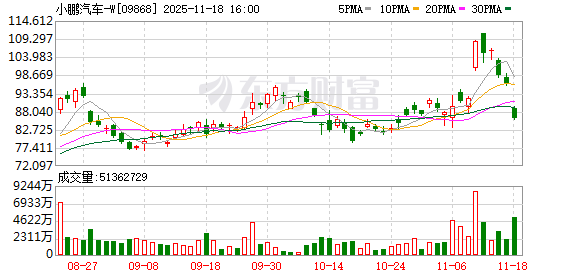
Core Viewpoint - Xiaopeng Motors reported a strong Q3 performance with significant revenue growth and reduced net losses, aiming for breakeven in Q4 [2][4][11] Revenue and Sales Performance - In Q3, Xiaopeng achieved revenue of 20.38 billion yuan, a year-on-year increase of 101.8%, with automotive sales contributing 18.05 billion yuan, up 105.3% [2][4] - Total vehicle deliveries reached 116,000 units, a 149.3% increase year-on-year, with the MONA M03 model being the main contributor [4][12] Pricing and Profitability - The rapid increase in sales of the low-priced MONA M03 affected overall revenue growth and vehicle gross margins, leading to a decline in average selling price to 156,000 yuan [6][8] - The gross margin for vehicles was 13.1%, an improvement from 8.6% year-on-year but a decrease of 1.2 percentage points quarter-on-quarter [8] Cost Management and Expenses - Xiaopeng's total expenses for Q3 were 4.92 billion yuan, a 50.92% increase year-on-year, but the growth rate was lower than revenue growth [8][9] - R&D expenses rose to 2.43 billion yuan, a 48.7% increase, while sales and administrative expenses increased by 52.6% to 2.49 billion yuan [8][9] Future Outlook and Product Development - Xiaopeng plans to launch several new models and enhance its technology offerings, including the introduction of the "one car, dual energy" strategy and new AI-driven features [11] - For Q4, the company expects vehicle deliveries between 125,000 and 132,000 units, with total revenue projected between 21.5 billion and 23 billion yuan [11][12]
中国宏桥近一个月首次上榜港股通成交活跃榜
Zheng Quan Shi Bao Wang· 2025-11-18 14:12
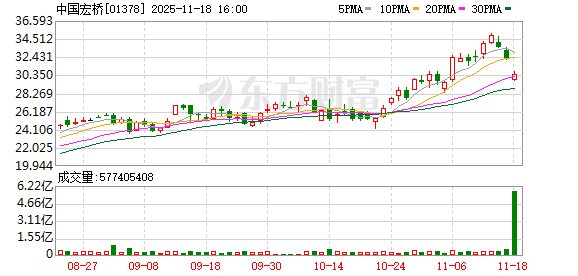
Core Insights - On November 18, China Hongqiao made its first appearance on the Hong Kong Stock Connect active trading list in a month, with a trading volume of 2.42 billion HKD and a net buy of 0.83 billion HKD, despite a closing drop of 5.88% [2]. Trading Activity Summary - The total trading volume of active stocks on the Hong Kong Stock Connect reached 38.66 billion HKD, accounting for 39.31% of the day's total trading amount, with a net buying amount of 7.18 billion HKD [2]. - Alibaba-W led the trading volume with 9.28 billion HKD, followed by Tencent Holdings and Xiaomi Group-W with trading amounts of 5.85 billion HKD and 4.59 billion HKD, respectively [2]. - The most frequently listed stocks in the past month include Alibaba-W and Huahong Semiconductor, each appearing 21 times, indicating strong interest from Hong Kong Stock Connect funds [2]. Individual Stock Performance - China Hongqiao's trading details on November 18 included a trading volume of 2.42 billion HKD and a net buy of 0.83 billion HKD, with a closing price of 21.80 HKD and a daily decline of 5.88% [2]. - Other notable stocks included: - Tencent Holdings: Trading volume of 5.85 billion HKD, net sell of 0.19 billion HKD, closing price of 623.50 HKD, and a daily drop of 2.04% [2]. - Xiaomi Group-W: Trading volume of 4.59 billion HKD, net buy of 0.85 billion HKD, closing price of 40.78 HKD, and a daily decline of 2.81% [2]. - Huahong Semiconductor: Trading volume of 3.61 billion HKD, net buy of 0.37 billion HKD, closing price of 80.25 HKD, and a daily increase of 3.48% [2].



南向资金今日净买入74.66亿港元,阿里巴巴-W净买入32.97亿港元
Zheng Quan Shi Bao Wang· 2025-11-18 14:12
Market Overview - On November 18, the Hang Seng Index fell by 1.72%, with southbound trading totaling HKD 983.54 billion, comprising HKD 529.10 billion in buying and HKD 454.44 billion in selling, resulting in a net buying amount of HKD 74.66 billion [2][3]. Southbound Trading Details - The southbound trading through Stock Connect (Shenzhen) had a total trading amount of HKD 366.04 billion, with net buying of HKD 47.21 billion, while the trading through Stock Connect (Shanghai) totaled HKD 617.50 billion, with net buying of HKD 27.45 billion [2][3]. Active Stocks - Alibaba-W was the most actively traded stock with a total trading amount of HKD 92.79 billion and a net buying amount of HKD 32.97 billion, despite a closing price drop of 0.19% [2][3]. - Other notable stocks included Tencent Holdings with a trading amount of HKD 58.48 billion and a net selling of HKD 1.91 billion, and Xiaomi Group-W with a trading amount of HKD 45.92 billion and a net buying of HKD 8.54 billion [2][3]. Continuous Net Buying - Three stocks experienced continuous net buying for more than three days, with Xiaomi Group-W leading at 15 days, followed by Alibaba-W and Huahong Semiconductor at 4 days each. The total net buying amounts were HKD 106.60 billion for Xiaomi Group-W and HKD 89.99 billion for Alibaba-W [3][4].



国产新能源汽车,直营“大退潮”
虎嗅APP· 2025-11-18 14:03
Core Viewpoint - The article discusses the significant shift in the sales strategy of various Chinese electric vehicle (EV) brands, moving from direct sales to a franchise model, particularly in lower-tier cities, while maintaining direct sales in first-tier cities [5][12]. Group 1: Industry Changes - Multiple EV brands, including Tengshi and Hongmeng Zhixing, are transitioning from direct sales to franchising, with plans to retain direct sales only in first-tier cities [5][6]. - The trend of converting direct sales to franchising is becoming an industry norm, with brands like Geely's Zeekr and Xiaopeng also making similar adjustments [6][7]. - The number of automotive stores in commercial areas has decreased significantly, indicating a contraction of the direct sales model [7]. Group 2: Challenges of Direct Sales - The high operational costs of direct sales are a major concern, with a single direct sales showroom costing approximately 400,000 to 500,000 yuan monthly, leading to annual costs of 12 billion yuan for 300 showrooms [9]. - Many direct sales stores are struggling with low sales volumes, often resulting in financial losses, which diminishes the perceived value of maintaining a direct sales model [9][10]. - The ongoing price war in the EV market has further pressured profit margins, with the average transaction price of EVs dropping below 160,000 yuan [9]. Group 3: Reasons for Retaining Direct Sales in Core Cities - Direct sales in first-tier cities serve as a crucial touchpoint for brand-consumer interaction, providing valuable market feedback for product development [12]. - First-tier cities have higher foot traffic and vehicle ownership, making it easier for direct sales to achieve breakeven and maintain brand visibility [12]. - Direct sales in these cities also have stronger profitability in after-sales services, as demonstrated by Tesla's successful service revenue growth [12][14].
何小鹏的最新决定:小鹏汽车不再只做一家车企
Bei Ke Cai Jing· 2025-11-18 13:09
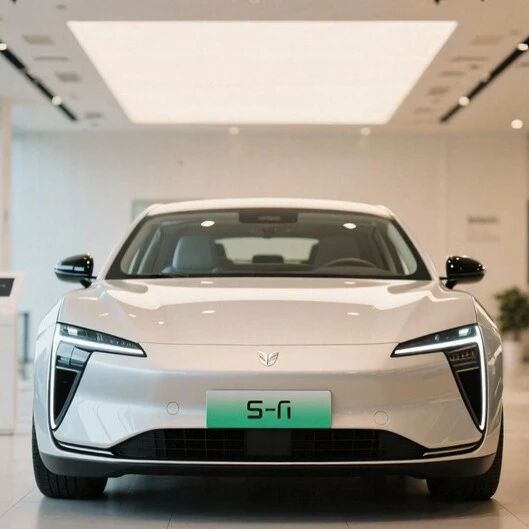
Core Viewpoint - The company aims to become a globally recognized embodied intelligence company, integrating humanoid robots with the automotive industry as its "third growth curve" following AI and globalization [1][2]. Group 1: Financial Performance - In Q3 2025, the company reported revenue of 20.38 billion, a year-on-year increase of 101.8% and a quarter-on-quarter increase of 11.5% [4]. - The net loss for Q3 was 380 million, reduced from 480 million in Q2 and 1.81 billion in the same period last year [4]. - The overall gross margin reached a new high of 20.1%, up 4.8 percentage points year-on-year and 2.8 percentage points quarter-on-quarter [4]. - The company expects to achieve breakeven in Q4, with projected deliveries of 125,000 to 132,000 vehicles and revenue between 21.5 billion and 23 billion, representing year-on-year growth of 33.5% to 42.8% [7]. Group 2: Product Strategy and Market Position - The company plans to launch 7 new models next year, including 4 dual-energy vehicles, to enhance its market presence in the extended-range electric vehicle segment [10][11]. - The MONA M03 currently accounts for 40% of the company's sales, indicating a reliance that poses risks if market competition intensifies [5]. - The extended-range electric vehicle market is experiencing a decline, with wholesale sales down 1.9% year-on-year in October, and a continuous drop in market share since June [12][13]. Group 3: Research and Development Focus - R&D expenses reached 2.43 billion in Q3, a year-on-year increase of 48.7% and a quarter-on-quarter increase of 10.1% [6]. - The company is committed to humanoid robot development, with plans to mass-produce self-developed humanoid robots by the end of 2026, targeting annual sales of over 1 million units by 2030 [8][9]. - The company faces challenges in ensuring technological reliability, supply chain maturity, and scenario validation for its robot products [9].
小鹏汽车-W(09868):三季度亏损进一步收窄,物理AI与新车周期共振
Ping An Securities· 2025-11-18 11:59
Investment Rating - The investment rating for the company is "Recommended" [1] Core Views - The company reported a narrowing loss in Q3 2025, with a revenue of 20.38 billion yuan, representing a year-on-year increase of 101.8% and a quarter-on-quarter increase of 11.5%. The net profit attributable to shareholders was -0.38 billion yuan, narrowing by 78.9% year-on-year and 20.3% quarter-on-quarter [3][6] - The company achieved a vehicle delivery volume of 116,000 units in Q3, a year-on-year increase of 149.3% and a quarter-on-quarter increase of 12.4%. The automotive business revenue reached 18.05 billion yuan, with a year-on-year increase of 105.3% and a quarter-on-quarter increase of 6.9% [6] - The company is expanding its collaboration with Volkswagen, which has become a strategic partner for the second-generation VLA model, indicating potential growth in revenue from R&D services [6][7] - The launch of the Kunpeng Super Range Extender is expected to open new growth opportunities in the new energy vehicle sector [6][7] - The second-generation VLA model was released, which enhances the company's capabilities in physical AI, with plans to launch three Robotaxi models in 2026 [7] Financial Summary - The company’s projected revenues for 2025 to 2027 are 76.93 billion yuan, 117.47 billion yuan, and 144.84 billion yuan, respectively, with year-on-year growth rates of 88.2%, 52.7%, and 23.3% [5][10] - The net profit is expected to improve from -1.4 billion yuan in 2025 to 4.5 billion yuan in 2027, reflecting a significant turnaround [5][10] - The gross margin for the automotive business is projected to increase from 18.2% in 2025 to 20.5% in 2027, indicating improved profitability [5][10] Delivery and Revenue Guidance - The company has provided a Q4 delivery guidance of 125,000 to 132,000 units, corresponding to a revenue guidance of 21.5 billion to 23 billion yuan [6] - In October, the company delivered 42,013 vehicles, with an expected average monthly delivery of 41,000 to 45,000 units for November and December [6]
小鹏汽车-W(09868):小鹏汽车(9868)系列点评九:2025Q3盈利能力改善,具身智能开启新时代
Minsheng Securities· 2025-11-18 11:59
Investment Rating - The report maintains a "Buy" rating for the company [6]. Core Insights - The company reported a significant revenue increase of 101.8% year-on-year for Q3 2025, reaching 20.38 billion yuan, with automotive business revenue growing by 105.3% [3][4]. - The gross margin for the automotive business improved to 13.1%, driven by a decrease in costs, although it saw a slight decline from the previous quarter due to product updates [4]. - The company is optimistic about future performance, projecting Q4 2025 automotive sales between 125,000 and 132,000 units, representing a year-on-year increase of 36.6% to 44.3% [5]. Revenue and Profitability - Q3 2025 revenue was 20.38 billion yuan, with automotive revenue at 18.05 billion yuan [3][4]. - The total gross profit for Q3 2025 was 4.1 billion yuan, with a gross margin of 20.1% [4]. - Non-GAAP net profit for Q3 2025 was a loss of 150 million yuan, marking a significant reduction in losses of 90.1% year-on-year [3]. Cost Management - R&D expenses for Q3 2025 were 2.43 billion yuan, up 48.7% year-on-year, reflecting increased costs associated with new product launches [5]. - Selling and administrative expenses were 2.49 billion yuan, a 52.6% increase year-on-year, primarily due to higher sales commissions and marketing costs [5]. Future Outlook - The company forecasts revenues of 78.13 billion yuan in 2025, 110.81 billion yuan in 2026, and 131.64 billion yuan in 2027, with expected net profits turning positive in 2026 [8][9]. - The report highlights the company's strategic focus on intelligent products, including the launch of Robotaxi and the new generation of IRON humanoid robots, which are expected to enhance its market position [7][8].
小鹏汽车-W(09868):智能化能力外溢放量,技术授权打开中期高毛利弹性
Haitong Securities International· 2025-11-18 11:58
Investment Rating - The report maintains an "OUTPERFORM" rating for XPeng Motors, with a current price of HK$96.00 and a target price of HK$96.23 [2][3]. Core Insights - XPeng Motors is experiencing a recovery in earnings, with technology services emerging as a new growth driver. The company reported Q3 2025 revenue of Rmb20.38 billion, slightly below market expectations, but up 102% year-over-year and 12% quarter-over-quarter. The net loss narrowed to Rmb380 million, improving 79% year-over-year and 20% quarter-over-quarter. The gross margin rose to 20.1%, with service and other margins significantly contributing to gross-margin expansion, particularly from technical R&D services to OEMs like Volkswagen [3][10]. Financial Performance Summary - Revenue projections for XPeng are Rmb40.87 billion for 2024, Rmb78.46 billion for 2025, and Rmb112.03 billion for 2026, reflecting growth rates of 33%, 92%, and 43% respectively. The net profit is expected to turn positive in 2026, with a projected net profit of Rmb1.12 billion and a diluted EPS of Rmb0.59 [9][10]. - The gross profit margin is expected to improve from 14.3% in 2024 to 19.0% in 2027, indicating a positive trend in profitability [9]. Strategic Developments - The company plans to launch its Robotaxi fleet next year, leveraging in-house technology development to reduce costs and improve operational efficiency. Initial commercialization will focus on system robustness and regulatory compliance, with plans to expand to more cities [4][11]. - XPeng is also advancing its humanoid robot production, targeting mass production of its eighth-generation model and aiming for annual deliveries of 1 million units by 2030. The cost structure is expected to improve significantly, with software accounting for over 50% of total costs [12][13]. Market Expansion - Overseas markets are projected to be a significant growth driver in 2026, with a strategy that includes passenger vehicles, Robotaxi, and humanoid robots. The company plans to launch multiple BEV/EREV models, with at least three planned for export [13].