
AKESO(09926)

Search documents
康方生物否认向患者销售“临床研究用药”:销售人员伪造材料从公司骗取若干药物
news flash· 2025-06-04 03:45
Core Viewpoint - The recent controversy surrounding the clinical trial cancer drug, Cadonilimab, developed by Kangfang Biopharma, has drawn significant industry attention due to allegations of improper patient charging and drug distribution practices [1] Group 1: Company Actions - Kangfang Biopharma issued a statement clarifying that they never charged patient Li Moumei for the clinical research drug and that their sales personnel did not collect any fees from her [1] - The company emphasized that the drug provided to Li Moumei was obtained through fraudulent means by sales personnel who forged research initiation documents and hospital ethics approvals [1] - The company highlighted that the drug given to the patient was produced in strict accordance with national GMP standards, ensuring the same quality management as commercially sold products [1] Group 2: Patient Situation - The sales personnel provided the drug to Li Moumei for free, considering her limited financial capacity and the positive therapeutic effects she experienced from using Cadonilimab [1]

跨国巨头接连数百亿元“扫货”双抗药物 最先“吃螃蟹”的康方生物还能保持先发优势吗?
Mei Ri Jing Ji Xin Wen· 2025-06-03 16:21
Core Insights - Bristol-Myers Squibb (BMS) announced a collaboration with BioNTech to develop and commercialize a dual-specific antibody drug, BNT327, targeting PD-L1 and VEGF-A, with a potential investment of up to $11.1 billion [1][2] - The partnership highlights the growing influence of Chinese companies in the global PD-(L)1/VEGF dual antibody drug development space, with multiple recent high-value collaborations [2][3] Company Developments - BMS will pay an upfront fee of $1.5 billion, with additional payments totaling $2 billion by 2028, and up to $7.6 billion in milestone payments, sharing global development and manufacturing costs as well as profits or losses [2] - BNT327 has undergone clinical trials involving over 1,000 patients for various cancers, including non-small cell lung cancer (NSCLC) and triple-negative breast cancer (TNBC), with a global Phase III trial for TNBC set to start by the end of 2025 [2] Industry Trends - The collaboration between BMS and BioNTech follows a recent $1.25 billion deal between Pfizer and 3SBio for a PD-1/VEGF dual antibody, indicating a trend of increasing valuations for Chinese innovative drugs in the global market [2][3] - The success of Chinese companies in this sector is underscored by the approval of the first PD-(L)1/VEGF dual antibody, developed by Kangfang Biopharma, and the subsequent international interest in similar products [3] Market Reactions - Summit's stock price fell over 30% following disappointing results from a Phase III trial for its PD-(L)1/VEGF dual antibody, highlighting the volatility and competitive pressures in the market [5][6] - Despite the challenges, Kangfang Biopharma's stock showed resilience, rebounding after initial declines, indicating ongoing investor confidence in the company's prospects [7]
康方生物(09926):HARMONi临床达到PFS主要终点,国内外患者展现出一致的获益
Guoxin Securities· 2025-06-03 13:51
Investment Rating - The investment rating for the company is "Outperform the Market" (maintained) [1][4][22]. Core Viewpoints - The HARMONi clinical trial has achieved its primary endpoint of progression-free survival (PFS), demonstrating statistically significant efficacy in both Asian and non-Asian populations [3][5]. - The company’s partner, Summit, announced that the HARMONi trial reached its primary clinical endpoint, indicating strong potential for the drug Ivonescimab in treating EGFRm NSCLC [2][5]. - The clinical data from HARMONi shows that Ivonescimab combined with chemotherapy has a significant PFS benefit (HR=0.52) and a positive trend in overall survival (OS) (HR=0.79) [3][5][6]. - The company has initiated multiple phase 3 clinical trials across various cancer types, including NSCLC, TNBC, BTC, CRC, and SCLC, indicating a robust pipeline [3][19]. Summary by Sections Clinical Trial Results - The HARMONi trial included approximately 38% of patients from Europe and the US, aligning with other recent international trials for EGFRm NSCLC [5][6]. - The trial results showed a median PFS of 7.06 months for the experimental group compared to 4.80 months for the control group, with a hazard ratio (HR) of 0.46 [11][18]. - The trial also reported an overall response rate (ORR) of 50.6% in the experimental group versus 35.4% in the control group [11][18]. Financial Projections - The company is expected to generate revenues of 33.0 billion, 52.0 billion, and 79.0 billion yuan for the years 2025, 2026, and 2027, respectively, with net profits of 0.29 billion, 7.30 billion, and 17.93 billion yuan [4][22][26]. Competitive Landscape - Ivonescimab has shown superior efficacy compared to PD-1 monoclonal antibodies in head-to-head trials, positioning it as a potential cornerstone in immunotherapy [19][20]. - The clinical data indicates that Ivonescimab has a favorable safety profile compared to other treatments, with a lower incidence of grade 3 or higher adverse events [16][18].
BMS与BNT达成90亿交易 狂赚普米斯“筹码”差价 中国创新药价值重塑进行时
Xin Lang Cai Jing· 2025-06-03 11:05
Core Insights - Bristol-Myers Squibb (BMS) acquired BioNTech's PD-L1/VEGF dual antibody BNT327 for $9 billion, highlighting the increasing interest in Chinese biotech firms and their innovative drug pipelines [1][2] - The rapid financial success of BioNTech, which earned over $8 billion from the initial $55 million licensing deal with Chinese firm Pumice Biologics, raises questions about the pricing strategies of Chinese pharmaceutical companies in the global market [1][2][3] - The trend of multinational corporations (MNCs) aggressively acquiring Chinese dual antibodies is reshaping the global landscape of innovative drugs, with significant deals such as the $6.05 billion agreement between 3SBio and Pfizer [1][4] Group 1: Major Transactions - BMS's deal with BioNTech includes a $1.5 billion upfront payment, a record for oncology licensing agreements, along with additional milestone payments totaling $76 billion [2] - 3SBio's licensing of its PD-1/VEGF dual antibody SSGJ-707 to Pfizer for $6.05 billion, with an upfront payment of $1.25 billion, sets a new record for domestic innovative drug licensing [4][5] - Other notable transactions include Merck's $3.3 billion investment in LianBio and the anticipated $5 billion deal involving Shijiazhuang Yiling Pharmaceutical [5][6] Group 2: Market Dynamics - The surge in MNCs acquiring Chinese dual antibodies is driven by the expiration of patents for existing blockbuster drugs and the need for new products [6][7] - Chinese innovative drug companies benefit from lower development costs and a large patient pool, making them attractive targets for MNCs seeking to enhance their product pipelines [6][7] - The total value of outbound licensing deals for Chinese innovative drugs reached $45.5 billion since early 2025, with 42% of high-value projects coming from China [5][6] Group 3: Future Outlook - The ongoing trend of MNCs partnering with Chinese biotech firms is expected to bolster the confidence of domestic companies in pursuing research and development [7][8] - The ability of Chinese innovative drug companies to negotiate higher prices in licensing deals will depend on their negotiation skills and market positioning [8] - The need for a "pricing power revolution" in the Chinese pharmaceutical industry is emphasized, as companies face challenges from rising R&D costs and stringent domestic pricing policies [9]


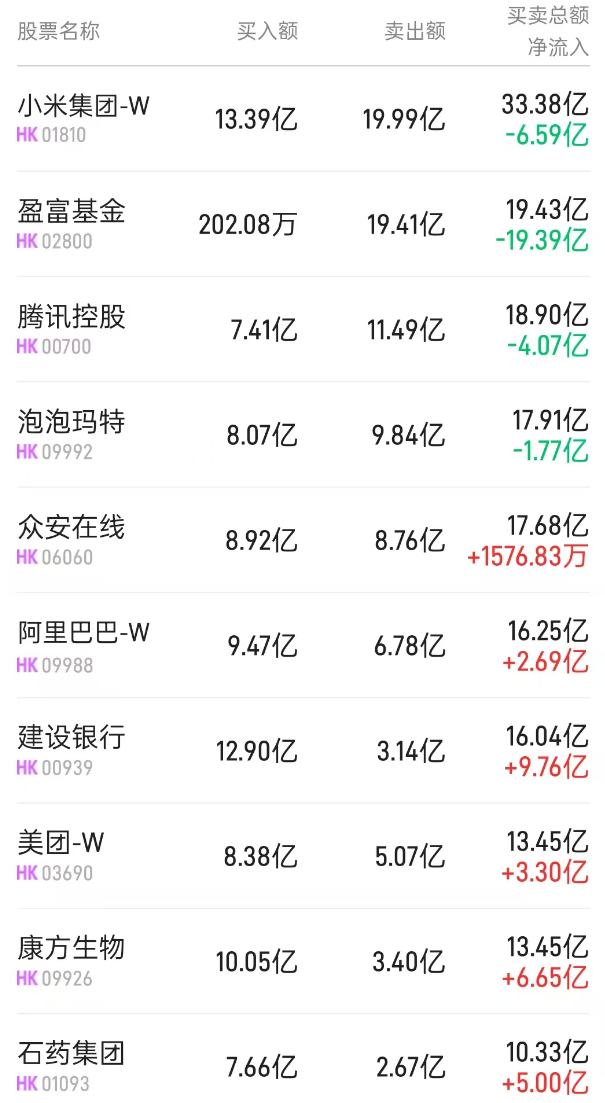
北水动向|北水成交净买入39.05亿 北水继续加仓美团(03690) 抛售盈富基金(02800)超19亿港元
智通财经网· 2025-06-03 10:00
Summary of Key Points Core Viewpoint - The Hong Kong stock market experienced significant net inflows from northbound trading, with a total net buy of HKD 39.05 billion on June 3, 2023, indicating strong investor interest in certain stocks [1]. Group 1: Northbound Trading Activity - The net buy from the Shanghai-Hong Kong Stock Connect was HKD 29.76 billion, while the Shenzhen-Hong Kong Stock Connect saw a net buy of HKD 9.29 billion [1]. - The top net bought stocks included Meituan-W (03690), China Construction Bank (00939), and CSPC Pharmaceutical Group (01093) [1]. - The most sold stocks were the Tracker Fund of Hong Kong (02800), Xiaomi Group-W (01810), and Tencent (00700) [1]. Group 2: Individual Stock Performance - Meituan-W (03690) received a net buy of HKD 10.88 billion, driven by a significant increase in sales during the "Meituan 618" promotional event, with a year-on-year growth of 200% [4]. - China Construction Bank (00939) saw a net buy of HKD 9.76 billion, supported by a stable net interest margin and ongoing valuation recovery [5]. - CSPC Pharmaceutical Group (01093) had a net buy of HKD 9.3 billion, with potential transactions worth up to USD 5 billion being discussed [5]. Group 3: Notable Sales and Market Sentiment - Xiaomi Group-W (01810) faced a net sell of HKD 11.31 billion, attributed to poor smartphone sales in India, which dropped by approximately 38% year-on-year [7]. - The Tracker Fund of Hong Kong (02800) experienced a net sell of HKD 19.38 billion, amidst mixed market sentiments regarding inflation and interest rates [8]. - Tencent (00700) had a net sell of HKD 6.25 billion, reflecting ongoing concerns about its market performance [8].




港股科技ETF(159751)涨近1%,康方生物持续反弹,理想汽车5月大卖
Xin Lang Cai Jing· 2025-06-03 05:47
Core Insights - The technology sector in Hong Kong is experiencing a strong upward trend, with the CSI Hong Kong Stock Connect Technology Index rising by 1.21% as of June 3, 2025 [1] - Key stocks such as Kangfang Biotech, Li Auto, and Kingsoft Biotech have shown significant gains, with Li Auto reporting a 16.7% year-on-year increase in vehicle deliveries for May [1] - The Hong Kong Technology ETF has seen a cumulative increase of 24.87% over the past six months, reflecting positive market sentiment [1] Company Performance - Kangfang Biotech rebounded by over 6% after a previous drop of 10% due to OS data concerns [1] - Li Auto delivered 40,856 vehicles in May, marking a 20.38% month-on-month increase [1] - The top ten weighted stocks in the CSI Hong Kong Stock Connect Technology Index account for 71.48% of the index, with major players including Xiaomi, BYD, Alibaba, Tencent, and Meituan [2] Market Dynamics - Competition among major e-commerce platforms like Alibaba, JD.com, and Meituan in the food delivery and instant retail sectors continues, potentially impacting short-term profits [1] - The ongoing "618" promotional event is expected to benefit platforms like Alibaba and JD.com, particularly in the health supplement category [1] - The strategic adjustments within leading companies such as Tencent, NetEase, JD.com, and Meituan are seen as valuable for long-term performance [2]
未知机构:国泰海通医药热门领域重磅交易再起继续推荐创新药板块端午节期-20250603
未知机构· 2025-06-03 01:45
Summary of Conference Call Records Industry Overview - The focus is on the innovative drug sector, particularly in the context of recent significant transactions and developments in the PD(L)1*VEGF and GLP1 fields [1][2]. Key Points and Arguments PD(L)1*VEGF Dual Antibody Developments - 康方生物 and Summit announced top-line data from the global clinical trial HARMONI for Ivosidenib targeting 2L EGFRm, indicating: - The PD(L)1*VEGF dual antibody shows certain effectiveness in the post-EGFRm mutation line, although the median follow-up time is short, necessitating longer follow-up for evaluation [1] - The HARMONI study validates the consistency of clinical results between China and the U.S. [1] - The FDA stated that statistically significant overall survival benefits are necessary to support the submission for market approval, which will influence Summit's timeline for BLA submission [1] - The primary focus remains on the first-line global clinical results for Ivosidenib [1] Collaboration and Licensing Opportunities - BMS and BNTX are collaborating on the development of PD(L)1*VEGF dual antibodies, with BMS committing to: - An upfront payment of $1.5 billion, $2 billion in non-contingent annual payments, potential milestone payments of $7.6 billion, and a 50:50 cost/profit sharing arrangement [2] - The continuous licensing of PD(L)1*VEGF assets reflects MNCs' optimism regarding these types of drugs, suggesting potential for identifying advantageous subpopulations for clinical benefits [2] - Other companies such as ROG and ABBV are also expected to have demand for similar assets, with domestic firms like 荣昌生物, 宜明昂科, 华海药业, 华兰生物, and 神州细胞 making strategic moves in this area [2] GLP1/GIP Dual Agonist Transactions - Regeneron and Hansoh Pharmaceutical reached a deal for the GLP1/GIP dual agonist, with Regeneron paying an upfront fee of $80 million, $1.93 billion in milestones, and a double-digit sales share [2] - The past year has seen ABBV, REGN, and JNJ entering the diabetes and weight loss market, expanding competition against existing players like LLY, NVO, MSD, ROG, and AZN [2] - The ongoing interest from MNCs in the weight loss sector is expected to lead to a resurgence of new drug developments, particularly following data releases from conferences like ADA [2] Recommended Companies - The following companies are recommended for attention: - 恒瑞医药, 华东医药, 联邦制药, 歌礼制药, 来凯医药 [3] Market Trends - There is optimism regarding the Chinese innovative drug sector due to ongoing licensing activities, which are expected to drive a bullish market trend [4] - MNCs have reiterated their interest in Chinese assets during recent earnings calls, reflecting a strong demand for domestic innovative drugs and low policy sensitivity [4] - The continuous licensing of Chinese innovative drugs is anticipated to lead to a revaluation of overseas valuations [4] - Recommended stocks for Pharma revaluation include 恒瑞医药, 华东医药, 三生制药, 联邦制药, 中国生物制药, 石药集团/新诺威, 先声药业, 康哲药业, 科伦药业; for Biotech global competitiveness: 益方生物, 泽璟制药, 一品红, 百利天恒, 科伦博泰生物, 贝达药业, 信达生物, 百济神州, 再鼎医药, 和黄医药 [4]


未知机构:创新药旗手炸裂BMS和BioNTech其从中国购买PDL1xVEGF双抗-20250603
未知机构· 2025-06-03 01:45
Summary of Conference Call Records Industry and Company Involved - The conference call discusses the innovative drug sector, specifically focusing on collaborations between Bristol-Myers Squibb (BMS) and BioNTech, as well as the research results from Kangfang Biopharmaceuticals [1][2][3]. Core Points and Arguments - **BMS and BioNTech Collaboration**: BMS and BioNTech have entered a significant partnership to develop and commercialize the bispecific antibody candidate BNT327 (PM8002), with an initial payment of $1.5 billion and a total package worth $11.1 billion [1][2]. - **Future Payments**: BMS will pay an additional $2 billion in non-contingent annual payments by 2028, and BioNTech could receive up to $7.6 billion in milestone payments related to development, regulatory, and commercial achievements [2]. - **Kangfang Biopharmaceuticals' HARMONi Study**: The study shows that AK112, a PD-1/VEGF bispecific antibody, significantly extends progression-free survival (PFS) for patients with EGFR-mutant non-small cell lung cancer (NSCLC) compared to chemotherapy alone, with a hazard ratio (HR) of 0.52 and a p-value less than 0.00001, indicating a 48% reduction in the risk of disease progression or death [3][4]. - **Global Recognition of Chinese Clinical Trials**: The successful replication of domestic clinical data overseas suggests that the quality of Chinese clinical trials is increasingly recognized by international pharmaceutical companies [4]. Additional Important Content - **Potential of Chinese Innovative Drugs**: The lower R&D costs, faster clinical trial speeds, and increasing innovation capabilities of Chinese pharmaceutical companies are expected to enhance the global competitiveness of domestic innovative drugs [5]. - **Recommended Stocks**: The report suggests focusing on several stocks in the innovative drug sector, including Qianhong Pharmaceutical, Hengrui Medicine, and others, indicating potential for significant growth [1][5].


股价翻倍基金霸屏 创新药否极泰来
Zheng Quan Shi Bao· 2025-06-02 16:53
Core Viewpoint - The Chinese innovative drug industry is undergoing an unprecedented value reassessment, with a recent acceleration in this trend [1][2][6] Group 1: Market Performance - As of May 30, 2023, stocks of Rongchang Biologics and 3SBio have surged over 200% since the beginning of the year, with several other innovative drug stocks doubling in price [1] - The Hong Kong innovative drug sector experienced a significant pullback on June 2, attributed to profit-taking after substantial gains [2][3] - Various innovative drug-themed funds have rebounded significantly, with some products showing annual increases exceeding 50% [1][2] Group 2: Fund Performance - Innovative drug ETFs have dominated the performance rankings, with top performers like Huatai-PB's Hang Seng Innovative Drug ETF rising by 42.84% year-to-date [2] - Actively managed innovative drug funds have also seen substantial gains, with Longview Medical Industry Select Fund and Yongying Medical Innovation Fund increasing by 64.42% and 55.34% respectively [2] Group 3: Clinical Developments - On May 30, Summit Therapeutics reported disappointing results from a Phase III trial for its PD-1/VEGF dual antibody, leading to a 30% drop in its stock price [3] - Concerns over clinical data from certain companies have contributed to market pullbacks, with some fund managers suggesting that profit-taking is a factor [3] Group 4: Global Expansion - A notable trend is the increasing competitiveness and attractiveness of Chinese innovative drug companies in the global pharmaceutical industry [5] - In 2024, China is expected to account for 30% of global transactions involving upfront payments exceeding $50 million, indicating a growing trend in overseas licensing deals [5] Group 5: Future Outlook - Multiple fund managers believe that the innovative drug sector has opportunities across valuation, fundamentals, and industry cycles, suggesting a potential for mid-term sustainability [6] - The current valuation levels of innovative drugs are considered relatively low, with expectations of a shift in valuation systems as more companies report profits [6]
弘则研究:ADC payload特征及pd1vegf竞争格局调研反馈
2025-06-02 15:44
Summary of Conference Call on ADC Payload Characteristics and PD-1/VEGF Competitive Landscape Industry and Company Overview - The conference call focuses on the ADC (Antibody-Drug Conjugate) industry and the competitive landscape of PD-1/VEGF dual antibodies, particularly highlighting the advancements and strategies of companies like 康方生物 (Kangfang Biopharma), 三生制药 (3SBio), and 科利斯 (Kolis). Key Points and Arguments 1. **Impact of Payload Types on Efficacy and Adverse Reactions** Different ADC payload types significantly affect their efficacy and adverse reactions across various cancer types. Topoisomerase inhibitors perform well in breast, ovarian, and non-small cell lung cancers, while microtubule inhibitors (e.g., MAEIL) may have advantages in colorectal cancer [1][2][3]. 2. **Dual Antibody Product Classification** Dual antibody products are categorized into three types: TCE (T-cell engagers), PD-1 combined with other targets, and various dual-target combinations. TCEs are primarily used for hematological diseases, while PD-1 combinations aim to replace PD-1 monoclonal antibodies to address low response rates in cold tumors and resistance issues [4]. 3. **Leading Position of 康方生物's AK122** 康方生物's AK122 is leading in the PD-1/VEGF dual antibody field, with its clinical progress being crucial for market positioning. Other companies like 三生制药 and 科利斯 are enhancing VEGF affinity through structural modifications of Bevacizumab [1][2][5]. 4. **Clinical Trial Focus** 康方生物 is conducting clinical trials targeting late-stage lung cancer patients and gradually shifting towards first-line non-squamous non-small cell lung cancer indications. 科利斯 focuses on multi-class combination therapies involving PD-1 and VEGF [2][8]. 5. **Adverse Reaction Correlation with Payload Types** Specific adverse reactions are associated with different payload types, such as oral mucositis linked to topoisomerase inhibitors and interstitial pneumonia related to linker metabolism. Eye toxicity is primarily associated with hydrophilic microtubule inhibitors [3]. 6. **Market Activity and Innovation** The dual antibody market is highly active, with companies like 三生制药 licensing products to Pfizer. However, only a few companies, including AstraZeneca and Merck, have made significant investments in PD-1 x assets, which have shown suboptimal data performance in recent years [4][5]. 7. **Improvements by 益芯科 and 华海制药** 益芯科 and 华海制药 have made significant improvements in their VEGF-targeting products by binding VGFR1 and D2 structures, enhancing VEGF affinity, and using IgG1 structures to boost ADCC effects, potentially increasing efficacy in cold tumors [6]. 8. **AK122's Overseas Authorization and Pricing Uncertainty** AK122 is viewed as a promising product, but there is considerable uncertainty regarding its pricing and overseas authorization. The upcoming initial clinical data release on June 1 is highly anticipated to assess its potential for replicating domestic success [10]. 9. **Key Performance Indicators for Evaluation** For PD-1 inhibitors and immunotherapies, key indicators to focus on include DOR (Duration of Response) and OS (Overall Survival). For ADC chemotherapy products, ORR (Objective Response Rate) and PFS (Progression-Free Survival) trends are critical [11][12]. Additional Important Insights - The design of multi-toxin ADC products aims to enhance efficacy and increase sensitivity to another toxin, indicating a trend towards more complex therapeutic strategies [3]. - The competitive landscape is characterized by ongoing innovations and adaptations by various companies to improve therapeutic outcomes and address market needs [5][6].