BABA(09988)

Search documents
智通港股沽空统计|1月21日
智通财经网· 2026-01-21 00:23
| 股票名称 | 沽空金额↓ | 沽空比率 | 偏离值 | | --- | --- | --- | --- | | 泡泡玛特(09992) | 10.08 亿元 | 17.14% | -7.69% | | 小米集团-W(01810) | 8.25 亿元 | 10.26% | -11.52% | | 美团-W(03690) | 7.77 亿元 | 17.49% | 1.85% | | 中国人寿(02628) | 7.18 亿元 | 23.90% | 3.47% | | 洛阳钼业(03993) | 6.87 亿元 | 35.31% | 21.99% | | 百度集团-SW(09888) | 6.24 亿元 | 21.01% | -5.12% | | 阿里巴巴-W(09988) | 6.13 亿元 | 6.91% | -7.34% | | 比亚迪股份(01211) | 4.97 亿元 | 20.25% | 0.39% | | 腾讯控股(00700) | 4.79 亿元 | 3.27% | -7.53% | | 中国平安(02318) | 3.47 亿元 | 16.40% | -12.96% | 前十大沽空偏离值排行 ...




俞敏洪聘请陈行甲为新东方总顾问,年薪150万元;马斯克称推动特斯拉转型为机器人公司,估值25万亿美元;SK海力士发放巨额年终奖丨邦早报
创业邦· 2026-01-21 00:08
Group 1 - New Oriental Education Technology Group has appointed Chen Xingjia as a senior consultant with an annual salary of 1.5 million RMB, following public scrutiny over his previous salary exceeding 700,000 RMB [2][3] - New Oriental commits to donating no less than 1 million RMB annually to the Henghui Foundation, which focuses on the health and growth of Chinese youth [2][3] Group 2 - SK Hynix announced a record performance bonus of over 1.36 million KRW (approximately 640,000 RMB) per employee, marking the highest in the company's history, with a stock option plan for employees [4] - The stock option plan allows employees to receive up to 50% of their bonuses in company stock, with additional cash rewards for holding the stock for a year [4] Group 3 - Gree Electric Appliances is set to mass-produce silicon carbide chips for various applications, including photovoltaic storage and logistics vehicles, with plans to supply half of the chips for GAC Group's vehicles [7] - The company aims to enhance its semiconductor capabilities in the growing electric vehicle market [7] Group 4 - iQIYI announced the resignation of CFO Wang Jun for personal reasons, with senior vice president Zeng Ying taking over as acting CFO [11] - iQIYI is in the process of selecting a suitable candidate for the CFO position [11] Group 5 - The AI companionship company Nature Select has raised over 30 million USD in a recent funding round, with investments from Alibaba and Ant Group among others [13] - The funding will support the development of AI companionship products [13] Group 6 - Tesla's CEO Elon Musk is pushing for the company to transition into a robotics firm, with the Optimus humanoid robot as a key focus, despite production challenges [9] - The company aims for a valuation of 25 trillion USD based on its robotics division, which is expected to surpass its current automotive business [9]



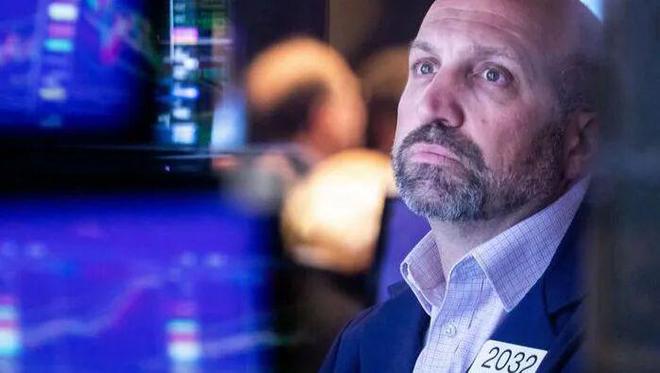
美股大跌,科技股全线下挫,热门中概股普跌
Di Yi Cai Jing Zi Xun· 2026-01-20 23:31
Group 1 - The global market risk appetite has significantly decreased following President Trump's renewed tariff threats towards Europe, leading to a sell-off in major stock indices [2][3] - The Dow Jones Industrial Average fell by 870.74 points, a decline of 1.76%, closing at 48,488.59 points; the S&P 500 dropped by 143.15 points, down 2.06%, at 6,796.86 points; and the Nasdaq Composite decreased by 561.07 points, a 2.39% drop, ending at 22,954.32 points, marking the worst single-day performance since October 10 of the previous year [2] - Major tech stocks experienced declines, with Nvidia down 4.32%, Apple down 3.45%, and Microsoft down 1.16%, among others [2] Group 2 - The CBOE Volatility Index (VIX), often referred to as the "fear index," rose to a two-month high, reflecting increased market anxiety [3] - Trading volume on U.S. stock markets reached approximately 20.6 billion shares, significantly above the 20-day average of 17.01 billion shares, indicating concentrated selling pressure [3] - Analysts suggest that the current geopolitical tensions regarding tariffs are more of an emotional shock rather than a fundamental change that would trigger a deep market correction [3] Group 3 - The global bond market is also experiencing spillover effects, with upward pressure on some European government bonds due to potential increases in defense spending [4] - The yield on the U.S. 10-year Treasury note reached a high of 4.313%, the highest since late August, closing at 4.287% after a rise of 5.6 basis points [5] - Market expectations for interest rate cuts by the Federal Reserve have been adjusted downward, with projections for a reduction of approximately 47 basis points in 2026, down from 53 basis points at the end of the previous year [5] Group 4 - Netflix reported fourth-quarter revenue of $12.1 billion, exceeding market expectations of $11.97 billion, with adjusted earnings per share of $0.56, also slightly above forecasts [6] - The company anticipates full-year revenue for 2026 to reach between $50.7 billion and $51.7 billion, with expectations for advertising revenue to potentially double in the future [6] - Following the announcement, Netflix's stock price fell by 4.9% in after-hours trading, influenced by merger financing and market sentiment [7] Group 5 - Gold prices surged significantly, with spot gold rising approximately 2% to $4,757.33 per ounce, reaching a historical high of $4,756.93 during the session [7] - Silver prices experienced a slight decline of 0.3%, settling at $94.38 per ounce, after hitting a record high of $95.87 [7] - Oil prices showed volatility, with light crude oil futures for February delivery rising by $0.90 to $60.34 per barrel, a 1.51% increase [8]


台湾青年探访北京知名科企
Bei Jing Ri Bao Ke Hu Duan· 2026-01-20 22:40
Group 1 - The Taiwan Youth AI Technology Training Camp aims to promote cross-strait youth exchanges through a combination of professional courses, corporate visits, and cultural experiences [1][2] - The training camp, held from January 10 to 23, 2026, attracted over 30 young students and teachers from Taiwan [1] - Participants engaged in AI technology applications and marketing courses, with lectures from well-known companies such as ByteDance and Alibaba [1] Group 2 - The camp included visits to companies like iFlytek and Leyard, as well as significant locations in Beijing, showcasing the city's technological advancements and cultural heritage [1] - Future initiatives will focus on leveraging Beijing's technological, industrial, and cultural resources to create more youth exchange programs, fostering collaboration and talent development between the two regions [2]


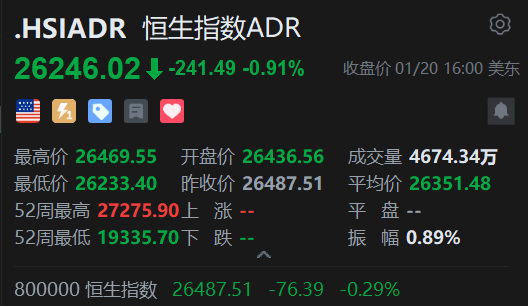
智通ADR统计 | 1月21日
智通财经网· 2026-01-20 22:29
Market Overview - The Hang Seng Index closed at 26,246.02, down by 241.49 points or 0.91% [1] - The index reached a high of 26,469.55 and a low of 26,233.40 during the trading session [1] - The average price for the day was 26,351.48, with a trading volume of 46.7434 million [1] Major Blue-Chip Stocks Performance - HSBC Holdings closed at HKD 128.682, up by 0.22% compared to the Hong Kong close [2] - Tencent Holdings closed at HKD 593.183, down by 1.30% compared to the Hong Kong close [2] - Alibaba Group (W) closed at HKD 159.700, down by 0.44% [3] - Xiaomi Group (W) closed at HKD 35.480, down by 2.74% [3] - Meituan (W) closed at HKD 97.350, down by 1.17% [3] Stock Price Changes - Tencent Holdings saw a decrease of HKD 9.000, or 1.48% [3] - HSBC Holdings increased by HKD 1.400, or 1.10% [3] - China Ping An rose by HKD 0.600, or 0.88% [3] - BYD Company experienced a decline of HKD 3.700, or 3.67% [3] - Kuaishou Technology (W) fell by HKD 0.700, or 0.91% [3]




2 Chinese Stocks With Big Upside
247Wallst· 2026-01-20 19:37
Core Viewpoint - Chinese stocks have transitioned from being considered uninvestable to potentially worth exploring due to discounted valuations in several internet stocks, particularly those making significant advancements in AI [1] Group 1 - The current market conditions present an opportunity for investors to consider Chinese internet stocks [1] - Many of these stocks are experiencing substantial developments in artificial intelligence, which could drive future growth [1]

南向资金今日净买入36.63亿港元,腾讯控股净买入6.63亿港元
Zheng Quan Shi Bao Wang· 2026-01-20 15:44
Core Viewpoint - The Hang Seng Index fell by 0.29% on January 20, with southbound capital transactions totaling HKD 97.283 billion, resulting in a net inflow of HKD 36.63 billion [1] Group 1: Southbound Capital Transactions - Total southbound capital transactions amounted to HKD 97.283 billion, with buy transactions at HKD 50.473 billion and sell transactions at HKD 46.810 billion, leading to a net buy of HKD 36.63 billion [1] - The Hong Kong Stock Connect (Shenzhen) recorded a total transaction amount of HKD 37.804 billion, with net buying of HKD 2.18 billion, while the Hong Kong Stock Connect (Shanghai) had a total transaction amount of HKD 59.479 billion, with net buying of HKD 34.44 billion [1] Group 2: Active Stocks - Tencent Holdings had the highest transaction amount among active stocks, totaling HKD 63.88 billion, with a net buy of HKD 6.63 billion, despite a closing price drop of 1.48% [1][2] - Other notable stocks included Alibaba-W and Xiaomi Group-W, with transaction amounts of HKD 48.94 billion and HKD 46.53 billion, respectively [1] - The most significant net sell was recorded for SMIC, with a net sell of HKD 7.18 billion and a closing price drop of 3.25% [1][2] Group 3: Continuous Net Buying - Five stocks experienced continuous net buying for more than three days, with Tencent Holdings leading at 10 days, followed by Alibaba-W at 7 days and Huahong Semiconductor at 4 days [2] - The total net buying amounts during this period were HKD 106.21 billion for Tencent Holdings, HKD 47.56 billion for Alibaba-W, and HKD 14.29 billion for Xiaomi Group-W [2]


港股通(深)净买入2.18亿港元
Zheng Quan Shi Bao Wang· 2026-01-20 15:44
Core Viewpoint - On January 20, the Hang Seng Index fell by 0.29%, closing at 26,487.51 points, while southbound funds through the Stock Connect recorded a net buy of HKD 36.63 billion [1]. Group 1: Market Activity - The total trading volume for the Stock Connect on January 20 was HKD 972.83 billion, with a net buy of HKD 36.63 billion [1]. - The Shanghai Stock Connect accounted for HKD 594.79 billion in trading volume with a net buy of HKD 34.44 billion, while the Shenzhen Stock Connect had a trading volume of HKD 378.04 billion and a net buy of HKD 2.18 billion [1]. Group 2: Active Stocks - In the Shanghai Stock Connect, Tencent Holdings was the most actively traded stock with a transaction amount of HKD 37.26 billion, followed by Xiaomi Group-W and Alibaba-W with transaction amounts of HKD 30.51 billion and HKD 23.91 billion, respectively [1]. - Tencent Holdings had a net buy of HKD 5.03 billion, despite its closing price dropping by 1.48% [1]. - China Mobile recorded the highest net sell amount of HKD 6.37 billion, closing flat [1]. Group 3: Shenzhen Stock Connect Activity - In the Shenzhen Stock Connect, Tencent Holdings also led with a transaction amount of HKD 26.62 billion, followed by Alibaba-W and SMIC with transaction amounts of HKD 25.02 billion and HKD 19.36 billion, respectively [2]. - Meituan-W had the highest net buy amount of HKD 2.54 billion, although it closed down by 1.17% [2]. - SMIC experienced the largest net sell amount of HKD 5.42 billion, closing down by 3.25% [2].


投入近20亿元 淘宝闪购联合阿里生态推出城市骑士春节关怀举措
Xin Lang Cai Jing· 2026-01-20 13:39
Core Insights - Taobao Flash has launched "Eight Spring Festival Care Measures" to support urban riders during the holiday season, investing nearly 2 billion yuan in incentives [1][2][3] Group 1: Investment and Incentives - The company is investing approximately 2 billion yuan to enhance incentives for urban riders [1][2] - Initiatives include collaboration with Alipay to implement the "Tap to Enter" feature in communities and subsidies for train tickets for riders returning home [1][2] Group 2: Service Enhancements - Taobao Flash is offering various services such as tier protection, New Year gift packages, free smart locker meal storage, and a 45 million yuan subsidy for upgrading rider equipment [1][2] - The aim is to create a more systematic and warm support system for urban riders during the Spring Festival [1][2] Group 3: Community Engagement - Various government departments, including labor unions and civil affairs, will collaborate with Taobao Flash to conduct site visits, distribute supplies, and organize events for riders across multiple locations [3] - The initiative aims to foster a social atmosphere that respects and cares for new employment forms [3] Group 4: Future Plans - The company plans to continue enhancing care and support measures for urban riders, in collaboration with Alibaba's ecosystem partners [2][3] - The "Urban Riders. Orange Intent Plan" was announced to comprehensively upgrade the support and incentives for urban riders [2][3]
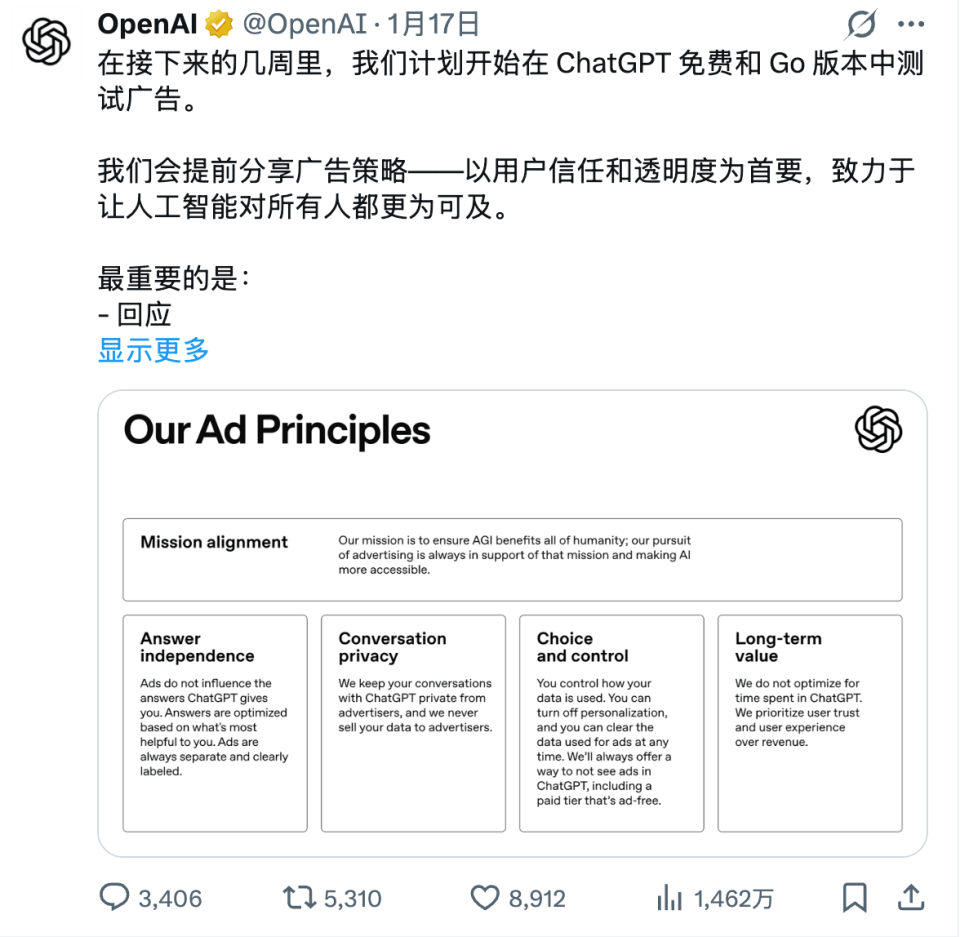
OpenAI的不归路:关于ChatGPT加入广告的五个冷思考
Sou Hu Cai Jing· 2026-01-20 13:33
Core Insights - The article discusses the evolving advertising strategy of OpenAI, highlighting the pressure for monetization and the shift in leadership attitudes towards advertising as a viable business model [1][3][4]. Group 1: OpenAI's Advertising Strategy - OpenAI's decision to launch advertising just over a month after a "Code Red" alert indicates significant pressure to monetize its products [2][5]. - The recruitment of executives with strong advertising backgrounds, such as Fidji Simo and Kevin Weil, suggests a strategic pivot towards generating revenue through advertising [2][3]. - Sam Altman's changing perspective on advertising—from viewing it as a last resort to considering it a potential revenue stream—reflects a pragmatic approach to business [5][6]. Group 2: Cautious Implementation of Advertising - OpenAI is taking a cautious approach to advertising, ensuring that ads are clearly marked as "Sponsored" and do not interfere with the content of ChatGPT responses [7][10]. - Users have the option to disable personalized ads and provide feedback, indicating an effort to maintain user trust [9][10]. - Despite this cautious start, there are concerns about how long OpenAI can maintain this approach without succumbing to commercial pressures [11][14]. Group 3: Implications for Google - The introduction of advertising in ChatGPT could potentially divert ad revenue from Google, which relies heavily on its advertising business [19][21]. - Some analysts believe that Google's core advertising revenue is at risk if OpenAI successfully demonstrates higher ROI for conversational ads compared to traditional search ads [19][21]. - Conversely, others argue that Google's established advertising infrastructure and experience may give it an advantage in the competitive landscape [20][22]. Group 4: Revenue Projections for OpenAI - Initial revenue estimates for OpenAI's advertising model suggest it could generate between $2 billion and $7.2 billion in its first year, which would significantly contribute to its overall revenue [30][35]. - This revenue could help alleviate OpenAI's substantial operational costs, although it remains a small fraction of its projected infrastructure investments [36]. - Analysts predict that advertising could become OpenAI's largest revenue source within three years, potentially capturing a significant share of the global search advertising market [36]. Group 5: Broader Industry Context - Other AI companies, including Google and Baidu, have already begun integrating advertising into their AI products, indicating a trend towards monetization in the industry [38][40]. - The article suggests that many domestic AI companies have yet to adopt advertising due to competitive market conditions, but this is expected to change in the near future [45][50]. - The overall willingness to pay for AI services in domestic markets is lower than in international markets, making advertising a more viable monetization strategy [51].