
BABA(09988)

Search documents
腾讯研究院AI速递 20260226
腾讯研究院· 2026-02-25 16:01
Group 1 - AMD has secured a significant partnership with Meta, involving a collaboration worth over $60 billion for deploying AMD Instinct GPUs, with an overall scale estimated to exceed $100 billion [1] - The core of the collaboration is a customized GPU based on the MI450 architecture, adhering to the "Workload First" principle, with shipments expected to begin in the second half of 2026 [1] - Meta's infrastructure head stated that a single chip cannot meet all workloads, indicating a trend among leading AI players to diversify computing power to mitigate supply chain risks [1] Group 2 - Anthropic has introduced a Remote Control feature for Claude Code, allowing users to remotely connect to local projects via browser or mobile, enabling real-time monitoring and control [2] - The Remote Control supports two initiation methods: creating a new remote session or integrating into an existing conversation, with connections established through QR codes, URLs, or a code list [2] - Unlike Claude Code on the Web, which runs on cloud virtual machines, the Remote Control executes code locally while the mobile device acts solely as a remote control [2] Group 3 - Anthropic has updated its Claude Cowork plugin system, enabling users to customize AI plugins from scratch through conversational guidance, with initial templates available for various verticals [3] - The plugins are deeply integrated with enterprise tools like Slack, Salesforce, and Excel, allowing for cross-application context continuity, and enterprise admins can create private plugin markets [3] - The addition of OpenTelemetry support allows for quantifiable AI input-output, as Anthropic transitions from a tool provider to a platform, establishing a foundation for enterprise AI infrastructure [3] Group 4 - xAI's Grok image-to-video model achieved the top ranking in the Image-to-Video Arena with an ELO score of 1404, surpassing 34 other models based on 465,000 blind test votes [4] - Grok Imagine 1.0 can generate 10-second 720p videos with native audio and offers capabilities for text-to-video, image animation, and zero-threshold video editing, with an API pricing of approximately $4.20 per minute [4] - The model excels in instruction adherence, cinematic shot control, and lip-syncing, while also leading in quality, latency, and cost balance, supporting multi-turn interactive creation [4] Group 5 - Alibaba has open-sourced three medium-scale models under the Qwen 3.5 series, with the 35B-A3B model surpassing its predecessor, the larger Qwen3-235B-A22B [6] - These models utilize a mixed attention mechanism and high-sparsity MoE architecture, achieving state-of-the-art results in various authoritative benchmarks [6] - The Qwen 3.5-27B model is the first dense model to exceed GPT-5 mini in tool invocation and programming, and it can run on a single GPU, with the Flash version API costing only 0.2 yuan per million tokens [6] Group 6 - MiniMax has launched the MaxClaw mode on its Agent platform, allowing for one-click configuration of OpenClaw, with pre-set tools and skills that can be activated in 20 seconds [7] - The Expert community has accumulated over 10,000 public expert agents across various fields, enabling users to create custom agents through natural language dialogue without coding [7] - Future plans include establishing a Marketplace for users to list and price their self-built experts [7] Group 7 - A Cloudflare engineer rebuilt the Next.js framework in a week using AI, creating a replacement called vinext, which was built on Vite and involved approximately 800 AI sessions costing $1,100 [8] - The client bundle size is reduced by about 57% compared to Next.js, and the new framework has passed over 1,700 unit tests and 380 end-to-end tests, covering 94% of Next.js APIs [8] - This case demonstrates that AI can lead large system implementations under clear architectural specifications and mature foundational tools, redefining many abstract layers in software [8] Group 8 - The U.S. Department of Defense has pressured Anthropic to lift AI safety restrictions on Claude for military secret systems, threatening to invoke the Defense Production Act if demands are not met [9] - xAI's Grok has accepted military conditions to enter classified systems, with Google and OpenAI also in discussions, creating competitive pressure on Anthropic [9] - Anthropic has released RSP 3.0, abandoning its previous commitment to a unilateral training pause, shifting from "absolute risk" to "marginal risk" assessment [9] Group 9 - CitriniResearch's report titled "2028 Global Intelligence Crisis" has garnered over 10 million reads, predicting a negative feedback loop where AI capability increases lead to layoffs and reduced consumer spending [10] - The report warns that white-collar workers make up half of U.S. employment and drive three-quarters of discretionary spending, with AI potentially disrupting various platforms [10] - The risk extends to a $13 trillion mortgage market, with San Francisco home prices dropping 11% year-on-year, highlighting systemic risks due to the accelerating pace of AI capabilities compared to institutional adaptation [11]


全球主流大模型进展跟踪
CAITONG SECURITIES· 2026-02-25 12:59
Investment Rating - The report maintains a "Positive" investment rating for the industry [2] Core Insights - The industry is witnessing a threefold evolution in overseas large models, focusing on reasoning foundation, action implementation, and ecological reconstruction, with major players like Anthropic, OpenAI, Google, and OpenClaw leading the charge [7] - Domestic large model companies are breaking through through open-source foundations, efficiency optimization, and collaborative agent ecosystems, with firms like Z.ai, MiniMax, Kimi, Alibaba, and ByteDance showcasing diverse strategies [7] - The industry trend indicates a shift from generation to action, with competition centering on supply efficiency and ecological reconstruction, emphasizing task complexity and ROI as key growth drivers [7] Summary by Sections Overseas Large Model Evolution - Anthropic has completed a dual-version model iteration, focusing on enterprise workflows and enhancing coding and long-range agent capabilities [11] - OpenAI is concentrating on long-range task closure and tool execution, evolving its models to become collaborative productivity assistants [25] - Google has released Gemini 3.1 Pro to enhance reasoning capabilities and Lyria 3 to expand into audio creation, reinforcing its competitive edge [32][40] - OpenClaw is positioned as a self-hosted gateway, integrating multiple communication channels and supporting tool-based agents [43] Domestic Large Model Breakthroughs - Z.ai's GLM-5 aims to extend open-source model capabilities to complex systems and long-range agent tasks, with a focus on engineering deployment [48] - MiniMax's M2.5 emphasizes real-world productivity, optimizing costs and throughput to facilitate agent scalability [53] - Kimi's K2.5 leverages a multi-modal MoE architecture to enhance visual understanding and parallel agent execution [65] - Alibaba's Qwen3.5-Plus focuses on open-source upgrades and multi-modal transitions to drive agent scalability [73] - ByteDance's recent model releases aim to transition AI capabilities from dialogue to actual task execution [81] Industry Trends - The industry is transitioning from generation to action, with a focus on supply efficiency and ecological reconstruction, as evidenced by the increase in token processing volumes and the emergence of efficiency-friendly models [89]

恒指温和收涨 周期股领涨科技分化
2 1 Shi Ji Jing Ji Bao Dao· 2026-02-25 12:09
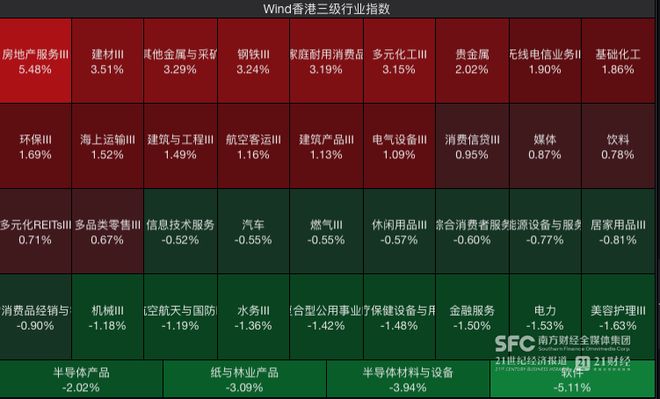
Market Overview - The Hong Kong stock market experienced a mixed performance with a structural characteristic of "strong cyclicals, weak technology" as policy support and rising commodity prices drove the market upward, while profit-taking affected the technology sector [1][2] - The Hang Seng Index rose by 0.66% to 26,765.72 points with a trading volume of 236.765 billion HKD, while the Hang Seng Tech Index slightly declined by 0.19% to 5,260.5 points with a trading volume of 51.908 billion HKD [1][2] Sector Performance - Cyclical sectors such as real estate services (+5.48%), building materials (+3.51%), and mining (+3.29%) led the gains, supported by favorable policies and rising commodity prices [2] - In contrast, technology sectors like software (-5.11%) and semiconductor materials and equipment (-3.94%) saw significant declines due to profit-taking from previously high-performing stocks [2] Individual Stocks - Notable gainers included Tianbao Energy (+69.49%) due to a projected profit increase of 84.5% year-on-year, and Semir Holdings (+60.53%) benefiting from active small-cap market sentiment [2] - Major decliners included Zhijing International Financial (-26.32%), Zhuoyue Holdings (-23.08%), and China National Pharmaceutical Group (-18.75%) [2] Trading Activity - The top three stocks by trading volume were Tencent Holdings (11.981 billion HKD), Alibaba-W (7.110 billion HKD), and HSBC Holdings (6.193 billion HKD) [2] Policy and Economic Developments - The Hong Kong budget proposed optimizing the listing system, including revising "same share, different rights" requirements and advancing T+1 settlement cycle consultations, aiming to enhance market efficiency [2] - New policies in Shanghai's real estate market, including shortening the social security period for non-local buyers and increasing public housing loan limits, stimulated the Hong Kong real estate sector [2] Future Outlook - Analysts suggest focusing on three sectors: precious metals and energy due to rising geopolitical risks, consumer sectors at relatively low valuations, and technology sectors expected to rebound as AI applications accelerate [3] - Concerns over potential VAT increases in service sectors may affect investor sentiment, but pre-meeting policy expectations could support the Hong Kong market [3] - The real estate sector showed overall gains during the Spring Festival, with a continued positive outlook for first-tier and select second-tier cities [3]



恒指温和收涨 周期股领涨科技分化丨港股复盘
2 1 Shi Ji Jing Ji Bao Dao· 2026-02-25 12:00
Core Viewpoint - The Hong Kong stock market experienced a mixed performance with a structural divergence, where cyclical sectors outperformed while technology stocks faced profit-taking pressures [1] Market Performance - The Hang Seng Index rose by 0.66% to 26,765.72 points with a trading volume of 236.765 billion HKD, while the Hang Seng Tech Index slightly declined by 0.19% to 5,260.5 points with a trading volume of 51.908 billion HKD [1] - Southbound capital recorded a net outflow of 3.569 billion HKD [1] Sector Performance - Cyclical sectors such as real estate services (+5.48%), building materials (+3.51%), and other metals and mining (+3.29%) led the gains, driven by favorable policies and rising commodity prices [1][2] - Technology sectors, including software (-5.11%) and semiconductor materials and equipment (-3.94%), showed significant declines due to profit-taking [1][2] Individual Stock Movements - Notable gainers included Tianbao Energy (+69.49%) due to a profit forecast increase of 84.5% year-on-year, and Semmy Holdings (+60.53%) benefiting from active small-cap market sentiment [2] - Major decliners included Zhijing International Finance (-26.32%), Chuangyue Holdings (-23.08%), and China National Pharmaceutical Group (-18.75%) [2] Major Transactions - The top three stocks by trading volume were Tencent Holdings (11.981 billion HKD), Alibaba-W (7.110 billion HKD), and HSBC Holdings (6.193 billion HKD) [3] - Conch Group plans to increase its stake in Conch Cement A-shares (7 to 14 billion HKD) and Conch Venture (10.61%), contributing to the rise in building materials stocks [3] Policy and Economic Factors - The Hong Kong budget proposed optimizing the listing system, including revising "same share different rights" requirements and advancing T+1 settlement cycle consultations [3] - New policies in Shanghai's real estate market aimed at stimulating demand, such as shortening social security requirements for non-local buyers and increasing public housing loan limits [3] Future Outlook - Analysts suggest focusing on three sectors: precious metals and energy due to rising geopolitical risks, consumer sectors at relatively low valuations, and technology sectors expected to rebound as AI applications accelerate [4]
阿里云集齐四大顶尖开源模型 进一步推动AI应用爆发
Zheng Quan Ri Bao Wang· 2026-02-25 11:59
Core Insights - Alibaba Cloud has launched a new Coding Plan that includes four top open-source model APIs: Qwen3.5, GLM-5, MiniMax M2.5, and Kimi K2.5, allowing users to switch between models freely and enjoy higher token limits and stability [1][2][3] - The AI Agent market in China is projected to exceed 3.3 trillion yuan by 2028, indicating a significant growth potential for AI applications [2] - Alibaba Cloud's unique model commercial strategy, which aggregates top open-source AI models, enhances its competitive edge in the cloud and AI sectors [2][4] Model Features - Qwen3.5 boasts a total of 397 billion parameters with only 17 billion activated, achieving high efficiency and cost-effectiveness [1] - GLM-5 is the flagship model from Zhiyu, experiencing high demand for its API services [1] - MiniMax M2.5 is designed specifically for agent scenarios, excelling in advanced Excel processing and deep research tasks [1] - Kimi K2.5 shows significant improvements in programming and agent capabilities [1] Market Position - As of 2025, Alibaba Cloud is expected to capture 36% of the Chinese cloud market, significantly outpacing its competitors [4] - The integration of multiple models into a single platform simplifies the development process for developers and small startups, enhancing research and development efficiency [4] Cost Efficiency - The Coding Plan Lite offers up to 18,000 requests per month for new users at a cost of only 7.9 yuan, while the Pro plan allows for 90,000 requests at 39.9 yuan, significantly reducing costs for high-frequency coding scenarios [3] - This pricing strategy addresses the rising computational costs associated with AI agents, making it easier for developers to innovate and deploy applications [3]
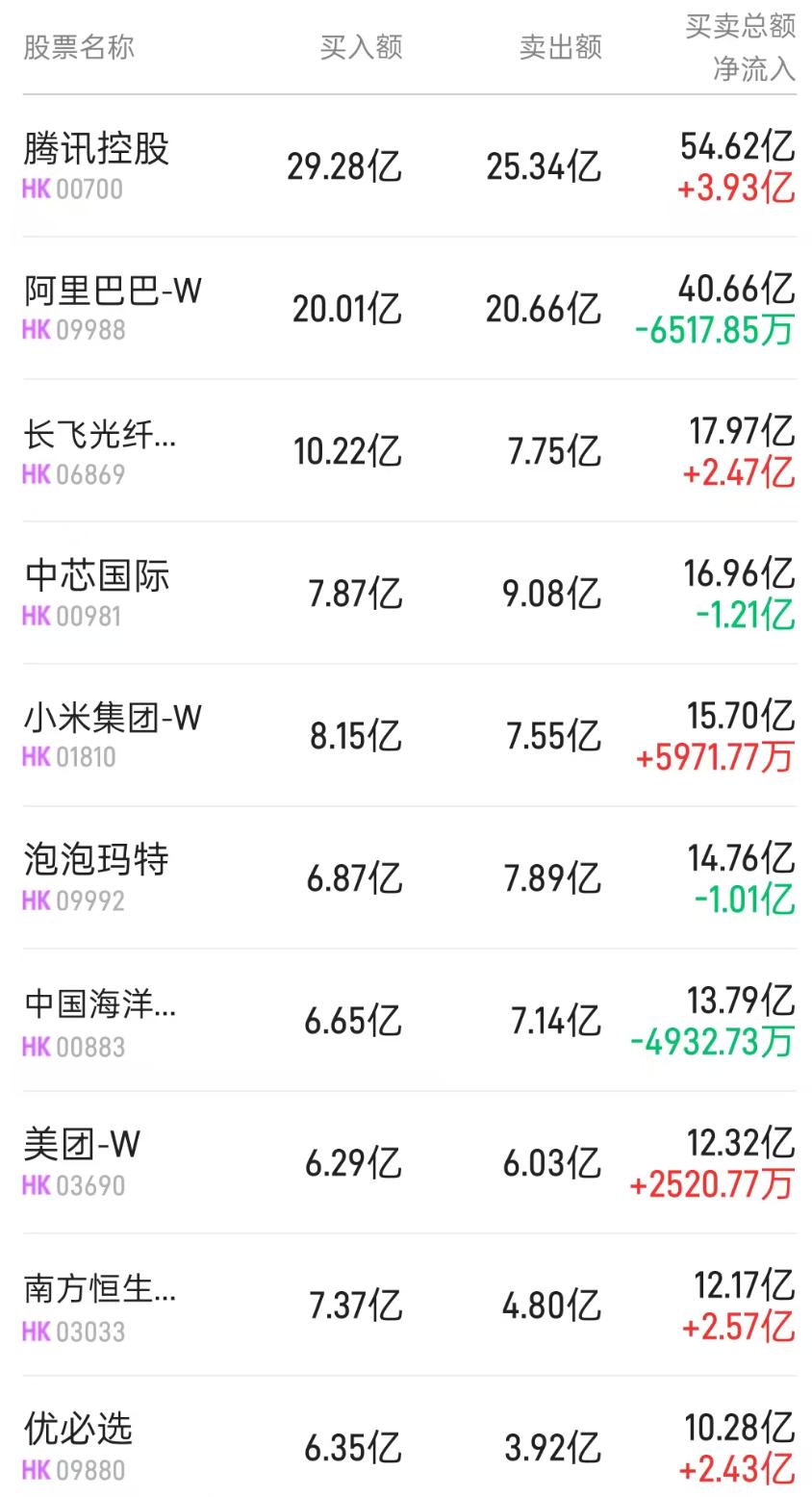
2月25日南向资金追踪:腾讯控股、美团-W、阿里巴巴-W净买入额居前,分别为8.18亿港元、6.78亿港元、6.06亿港元
Jin Rong Jie· 2026-02-25 11:09
恒生指数今日涨0.66%,报26765.72点,大市成交2367.65亿港元。 本文源自:市场资讯 作者:智投君 港股通成交数据披露(沪深合计) 证券简称成交金额净买入额收盘价涨跌幅腾讯控股 0070063.68亿港元8.18亿港元522.50港元0.48%美团-W 036909.38亿港元6.78亿港元82.70港元1.60%阿里巴巴-W 0998837.67亿港元6.06亿港元148.30港元0.20%小米集团-W 0181022.13亿港元5.38亿港元35.60港元-0.39%长飞光纤光缆 0686927.59亿港元1.82亿港元131.30港元1.63%中芯国际 0098126.75亿港元1.68亿港元69.85港元0.65%中国海洋石油 0088315.28亿港元-0.88亿港元25.48港元-0.39%南方恒生科技 0303326.75亿港元-3.01亿港元5.14港元-0.10%中远海能 0113815.19亿港元-3.58亿港元19.02港元0.96%恒生中国企业 0282811.38亿港元-11.37亿港元92.84港元0.61%盈富基金 0280044.36亿港元-44.10亿港元26. ...

净卖出超40亿港元 抛售三大ETF继续加仓腾讯
Xin Lang Cai Jing· 2026-02-25 10:25
Core Viewpoint - Southbound capital flow decreased significantly today, with a total transaction of approximately HKD 925.13 billion, accounting for 39.07% of the total turnover of the Hang Seng Index [1] Group 1: Southbound Capital Flow - Southbound capital outflow amounted to approximately HKD 40.57 billion today, with net outflow from the Shanghai-Hong Kong Stock Connect at about HKD 54.95 billion and net inflow from the Shenzhen-Hong Kong Stock Connect at approximately HKD 14.38 billion [1] - Major ETFs such as the Tracker Fund of Hong Kong, Hang Seng China Enterprises, and Southern Hang Seng Technology experienced significant sell-offs, with net sales of HKD 44.1 billion, HKD 11.36 billion, and HKD 3 billion respectively [1] Group 2: Individual Stock Performance - Tencent Holdings saw a net buy of HKD 8.18 billion, with a price increase of 0.48% [2][3] - Meituan-W recorded a net buy of HKD 6.78 billion, with a price increase of 1.60% [2][3] - Alibaba-W had a net buy of HKD 6.06 billion, with a price increase of 0.20% [2][3] - Xiaomi Group-W experienced a net buy of HKD 5.38 billion, but saw a price decrease of 0.39% [2][3] - Changfei Optical Fiber Cable had a net buy of HKD 1.82 billion, with a price increase of 1.63% [2][3] - China Merchants Energy had a net outflow of HKD 3.58 billion, with a price increase of 0.96% [2][3]



2026年三大趋势,春节档大战后,腾爱优芒需要一份爆款成绩单
3 6 Ke· 2026-02-25 10:23
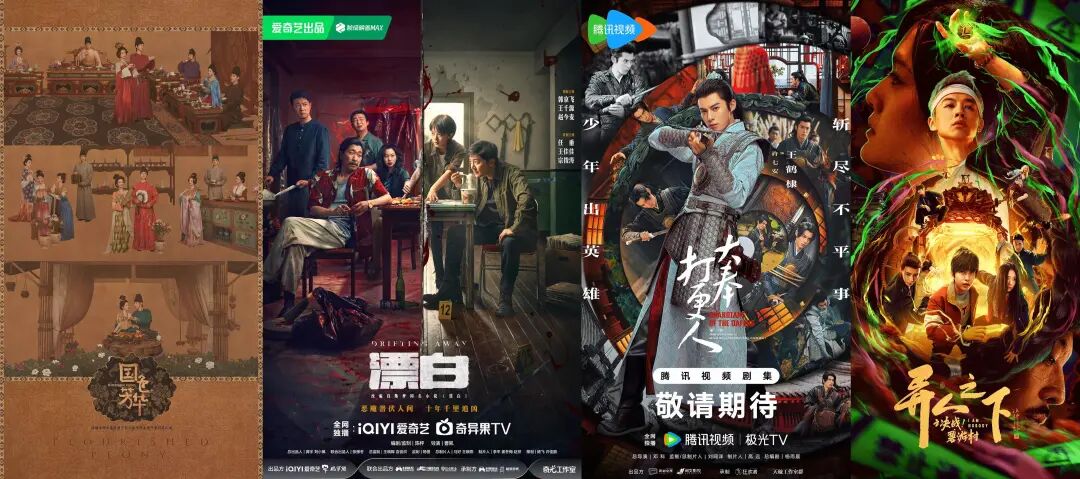
Core Insights - The Spring Festival this year saw streaming platforms like iQIYI, Tencent Video, and Youku struggling to produce blockbuster long dramas, with a focus on ancient and period dramas leading to a lack of standout hits [3][5] - In contrast, the short drama market thrived, with several series achieving over 1 billion views, indicating a shift in viewer preferences towards shorter content [3][5] Streaming Market Performance - Long dramas captured a market share of less than 20%, while short dramas consistently broke the 1 billion view mark, highlighting the challenges faced by long-form content [5] - The overall performance of long dramas reflects a year of increased competition, fewer blockbusters, and compressed profit margins, leading to a decline in project launches [5][18] Content Strategy and Trends - Streaming platforms are adopting a "layered attack" strategy for long dramas, combining innovative or ancient dramas targeting young audiences with family-friendly content to maximize viewership [7][10] - The emergence of generative AI technology is reshaping the video content industry, pushing platforms towards cost efficiency and innovative content creation [6][24] Future Directions - Three major trends are anticipated for 2026: the rise of innovative content like "infinite flow" narratives, new revenue-sharing models to support mid-tier productions, and the potential growth of AI-driven animated series [24][31] - The shift towards "infinite flow" and other innovative genres is seen as a key driver for attracting younger audiences and breaking away from formulaic storytelling [25][27] - The implementation of new revenue-sharing models is expected to revitalize mid-tier dramas, allowing them to find sustainable business models and audiences [28][30] User Engagement and Market Dynamics - The competition among platforms is shifting from acquiring new users to maximizing engagement and retention of existing users, with many new shows concluding within two weeks of their premiere [21][17] - The rise of micro-short dramas is becoming a significant trend, with platforms leveraging these formats to capture viewer attention in a fragmented market [23][31] Industry Challenges - The long video industry is facing significant challenges, with a decline in viewership for top content and a growing divide where a small number of high-quality shows capture the majority of audience attention [20][18] - The market is characterized by a "20/80" or even "10/90" rule, where a few standout series dominate viewership, leaving many mid-tier productions struggling for visibility [20][18]


北水动向|北水成交净卖出40.57亿 北水再度抢筹科网股 抛售盈富基金(02800)等港股ETF
智通财经网· 2026-02-25 10:00
Core Viewpoint - The Hong Kong stock market experienced significant net selling from northbound capital, totaling HKD 40.57 billion, with a net sell of HKD 54.95 billion from the Shanghai-Hong Kong Stock Connect and a net buy of HKD 14.38 billion from the Shenzhen-Hong Kong Stock Connect [1] Group 1: Northbound Capital Activity - Tencent (00700) saw the highest net buy of HKD 8.18 billion, driven by its strong performance in the AI sector during the Spring Festival, with MAU reaching 114 million and DAU peaking over 50 million [4][5] - Alibaba (09988) recorded a net buy of HKD 6.06 billion, following the release of new AI models, which are expected to enhance its cloud services [5] - Meituan (03690) and Xiaomi Group (01810) received net buys of HKD 6.77 billion and HKD 5.38 billion, respectively, indicating positive investor sentiment towards these companies [8] Group 2: Net Selling Activity - The largest net sell was observed in the Yingfu Fund (02800) and the Hang Seng China Enterprises Index (02828), with net sells of HKD 44.1 billion and HKD 11.36 billion, respectively [6] - China Merchants Energy (01138) faced a net sell of HKD 3.57 billion, despite a temporary increase in VLCC freight rates during the Spring Festival [7] - The Southbound capital's activity reflects a cautious but optimistic outlook for the Hong Kong stock market, with structural opportunities remaining despite external constraints [7]
“砸”了数十亿元,春节AI红包大战落幕!贴得近方能走得远,AI应用的马拉松才刚刚开始
Mei Ri Jing Ji Xin Wen· 2026-02-25 09:51
每经编辑|段炼 多年以后,当我们回望中国AI(人工智能)发展史,2026年的春节一定会被反复提起。 随着阿里、腾讯和字节跳动相继交出成绩单,一场如火如荼的AI红包大战落下帷幕,AI巨头们也完成了史上最大规模的"拉新实验"。 数据显示,2026年春节假期,阿里千问帮大家"一句话下单"近2亿次,腾讯元宝日活跃用户(DAU)一度超5000万,字节跳动旗下的豆包则在除夕夜(2 月16日)创下AI总互动19亿次的纪录。三大巨头用数十亿元的真金白银与场景落地,试图把AI从科技概念变成国民级日常应用。 不过,这场全民实验的真正答卷并不在一时的流量与热度里,而应交给时间去沉淀。 红包能买来一时的下载,但买不来习惯;能换来DAU,但不一定换来心智。2月25日,一度登顶苹果商店免费App排行榜首位的腾讯元宝已经掉至了十名 开外,蚂蚁阿福位居第六,豆包仍在力保榜首位置。 对于整个行业而言,春节一战的意义不在于分出一时高下,而在于为中国AI的普及与落地写下了极具标志性的开篇。 笔者认为,相较于眼花缭乱的技术进步,技术向善更是行业行稳致远的根本底色与不可逾越的底线。科技的温度从来不在于算力有多强、场景有多酷,而 是在于能否守护好用户权 ...
