
China Unicom(600050)

Search documents
三大运营商集体表态
券商中国· 2025-07-23 11:45
Core Viewpoint - The three major telecom operators in China are committing to substantial measures to enhance transparent consumption and simplify service packages in response to common consumer pain points such as confusing subscriptions and unsolicited calls from abroad [1]. Group 1: China Mobile - China Mobile has introduced ten service commitments, including a promise to resolve service requests not effectively handled by the 10086 hotline within 48 hours [2]. - The company will provide 24/7 service through various channels, including the China Mobile App and a dedicated hotline [2]. Group 2: China Telecom - China Telecom has launched nine regulatory measures, emphasizing that user consent is required before activating any telecom services, thereby increasing transparency in the consumption process [3]. - The company will standardize the process for unsubscribing from services and prohibit the sale of unpublicized package products [3]. Group 3: China Unicom - China Unicom plans to significantly reduce the variety and number of service packages, ensuring that pricing information is clearly categorized and displayed [4]. - Key terms in service agreements will be highlighted for easier user recognition [4]. Group 4: Industry Context - The Ministry of Industry and Information Technology initiated the "Clear and Reassuring Use" campaign in April, focusing on issues such as complex packages and unclear charges that consumers frequently report [4]. - As of the end of May, the total number of mobile phone users among the three major telecom companies and China Broadcasting Network reached 1.807 billion, while fixed broadband internet access users totaled 682 million [4].





话费规则巨变!三大运营商集体“改套餐”,将精简资费!
新浪财经· 2025-07-23 09:51
Core Viewpoint - The three major telecom operators in China, China Mobile, China Unicom, and China Telecom, have committed to improving consumer rights protection by simplifying their service packages and enhancing transparency in pricing and services [2][5][9]. Group 1: Service Commitments - China Mobile has announced ten service commitments aimed at improving user experience, including mandatory customer confirmation for service orders and proactive notifications for exceeding data limits [5][9]. - China Unicom plans to significantly reduce the variety and number of its service packages, ensuring that pricing information is clearly categorized and key terms are prominently displayed [7][9]. - China Telecom has introduced nine regulatory measures to enhance transparency in the consumption process and to ensure that user consent is obtained before activating services [9][11]. Group 2: User Complaints and Issues - As of May 2023, the total number of mobile phone users among the three major telecom operators reached 1.807 billion, with a significant number of complaints related to service packages on consumer complaint platforms [9][10]. - Complaints include difficulties in changing packages, challenges in unsubscribing, lack of transparency in billing, and failure to notify users of exceeding data limits [11]. - Many users, particularly the elderly, have reported high annual internet costs due to confusion over complex package options, leading to financial strain and credit issues [11]. Group 3: Industry Expert Insights - Industry experts emphasize the importance of service quality in the telecom sector, noting that the complexity of packages has historically led to user confusion and dissatisfaction [11]. - The collective commitment from the telecom operators is seen as a step towards improving service quality and reducing user losses, although it may not resolve all existing issues [11]. - Consumer rights protection requires proactive measures from operators to enhance service quality and prevent disputes, creating a safer and more satisfactory consumer environment [11].



套餐“诱骗升级”“退订难”等有解,三大运营商齐发声
Bei Ke Cai Jing· 2025-07-23 09:09
Core Insights - The three major telecom operators in China are taking significant steps to enhance customer service and address consumer complaints regarding unclear pricing and difficult cancellation processes [1][2][3] Group 1: Actions by Telecom Operators - China Mobile has introduced ten service commitments, including transparent consumption, timely processing of package changes, and convenient cancellation processes [3] - China Telecom has simplified its pricing packages and implemented full disclosure of its offerings, ensuring that only publicly listed packages are sold [3] - China Unicom has announced sixteen measures to improve service, including streamlining pricing plans and enhancing the cancellation process [3] Group 2: Consumer Complaints and Industry Issues - A previous investigation highlighted issues such as difficulty in downgrading packages, hidden fees, and misleading upgrades, which have drawn significant public attention [2][7] - Specific consumer experiences illustrate the challenges faced, such as prolonged efforts to downgrade plans and unexpected charges for additional services [7][8] - Legal experts have commented on the operators' practices, indicating that the differential treatment in upgrading and downgrading packages may constitute a breach of contract and consumer rights violations [9]
聚焦新质生产力系列之七:1ms城市算网,算力“高速公路”通车!
Huan Qiu Wang· 2025-07-23 07:36
Core Viewpoint - The article emphasizes the importance of computing power as a new type of productivity that integrates information computing power, network carrying capacity, and data storage capacity, driving the transformation of urban development in the digital economy era [1][4]. Group 1: Development of 1ms Urban Computing Network - The 1ms urban computing network aims to achieve efficient collaboration and low-latency transmission of computing resources within cities, with a target latency of no more than 1ms between important computing infrastructure in urban areas [1][2]. - Zhejiang Province has established a 1ms low-latency circle, with the construction of a comprehensive 1ms optical network that covers a population of 20 million, doubling its coverage area [2][4]. - The network includes 1.6 million 10G-PON ports and has achieved gigabit fiber coverage for over 100 million households [4]. Group 2: Role of Telecom Operators - Major telecom operators, including China Mobile, China Telecom, and China Unicom, play a crucial role in the construction of the 1ms urban computing network [4][5]. - China Mobile has built a province-wide F5G-A 1ms optical intelligent computing network, achieving full coverage across 90 counties and creating a "highway" for data and computing power transmission [5]. - China Telecom has developed a hierarchical computing network architecture that achieves 1ms latency within cities and 3ms latency across the province [5]. Group 3: Industrial Empowerment through Computing Power - The China (Hangzhou) Computing Power Town focuses on developing a complete industrial ecosystem centered around computing power, particularly in integrated circuit design, high-end software, and intelligent hardware [7]. - The Zhejiang computing power monitoring and perception platform integrates resources from various providers, forming a computing resource pool of 3000P, which supports AI applications and enhances industrial development [7][8]. - Companies like Leap Motor utilize the 1ms urban computing network to achieve real-time data transmission for high-precision simulations and AI model training, significantly reducing vehicle design iteration cycles from 60 months to 24 months [10][11]. Group 4: Future Challenges and Recommendations - Despite the rapid growth of the computing power industry, challenges remain in building a low-latency, high-reliability, and secure urban computing network [11]. - Recommendations include accelerating the development of computing network infrastructure, promoting the digital transformation of various industries, and fostering open cooperation in the computing power industry to create resource aggregation effects [11].
金十图示:2025年07月23日(周三)富时中国A50指数成分股今日收盘行情一览:石油、煤炭板块回吐涨幅,银行、保险板块多数收涨
news flash· 2025-07-23 07:07
富时中国A50指数连续 金十图示:2025年07月23日(周三)富时中国A50指数成分股今日收盘行情一览:石油、煤炭板块回吐涨幅,银行、保险板块多 数收涨 +0.05(+0.89%) +0.03(+0.36%) 0.00(0.00%) 光大银行 2505.23亿市值 7.54亿成交额 4.24 0.00(0.00%) 得經 中国平安 中国太保 中国人保 明 3719.24亿市值 3573.96亿市值 10561.94亿市值 11.79亿成交额 22.33亿成交额 50.21亿成交额 37.15 58.00 8.41 +0.96(+2.65%) +1.30(+2.29%) +0.03(+0.36%) 酿酒行业 贵州茅台 山西汾酒 五粮液 2314.39亿市值 18535.20亿市值 4859.77亿市值 66.76亿成交额 28.88亿成交额 22.23亿成交额 1475.50 125.20 189.71 +10.52(+0.72%) -1.07(-0.56%) -0.33(-0.26%) 半导体 北方华创 寒武纪-U 海光信息 HYGON 2392.12亿市值 2491.53亿市值 3141.81亿市值 39 ...







电磁态势研究实验室揭牌 推动河北电磁计量能力提升
Zhong Guo Zhi Liang Xin Wen Wang· 2025-07-23 06:55
Group 1 - The establishment of the Electromagnetic Situation Research Laboratory marks a significant advancement in Hebei Province's measurement and testing capabilities in the electromagnetic field, positioning it among the national leaders [1] - The laboratory covers an area of 1,050 square meters with an investment exceeding 20 million yuan, equipped with over 20 advanced international testing devices to accurately simulate complex electromagnetic environments [1] - The laboratory's technical capabilities include electromagnetic compatibility (EMC) testing, interference suppression algorithm development, and AI-driven intelligent detection, meeting the testing needs of major telecom operators [1] Group 2 - The laboratory focuses on three core areas: technological breakthroughs in 5G/6G electromagnetic technology, service upgrades for the entire communication industry chain, and talent cultivation through deep integration of industry, academia, and research [2] - It aims to create a one-stop service platform that integrates testing, certification, and consulting, significantly enhancing R&D efficiency and reducing operational costs for enterprises [2] - Strategic cooperation agreements have been signed with entities like China Mobile Design Institute and Shijiazhuang Railway University, with plans to expand research into cutting-edge fields such as 6G terahertz communication and quantum measurement [2]
机场广告,AI乱斗
3 6 Ke· 2025-07-23 06:16
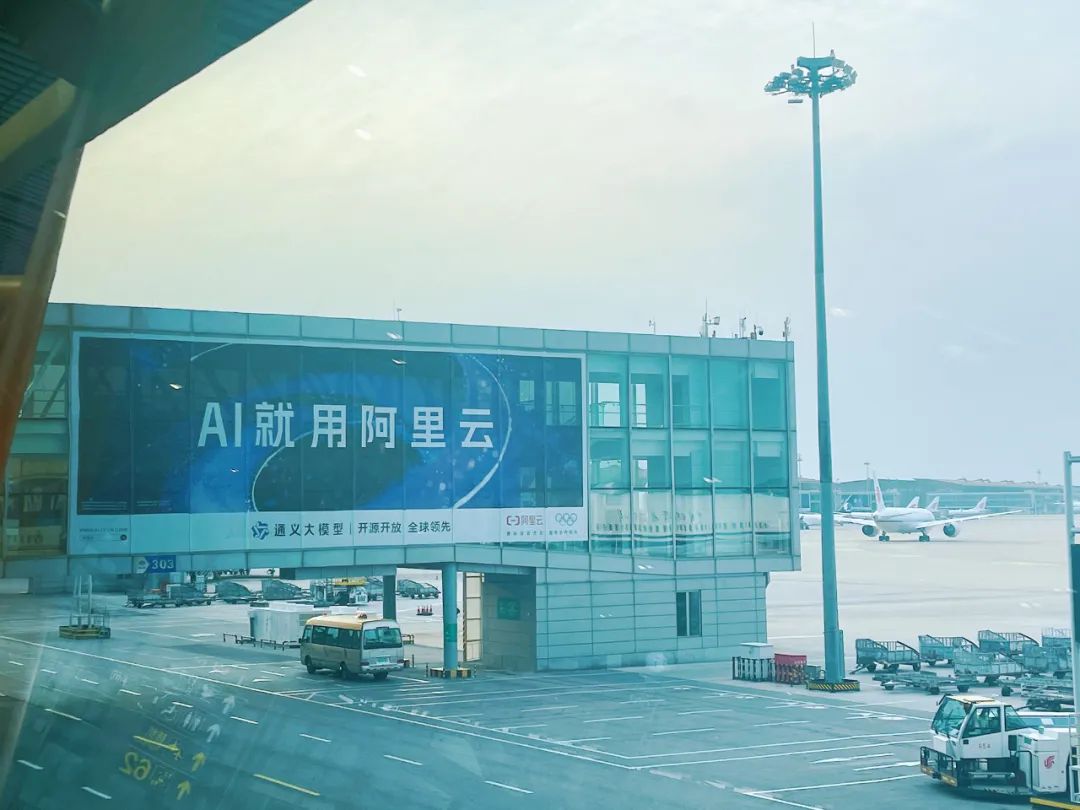
Group 1 - The core observation of the article is the increasing competition among AI and cloud service providers for advertising space in major airports, indicating a significant investment trend in AI marketing strategies [1][3][6] - Alibaba Cloud has made a substantial advertising investment, reportedly exceeding 100 million yuan, marking one of the largest promotional efforts in the current AI model wave [1][3] - Baidu Cloud has also entered the advertising space aggressively, securing high-value locations in airports that were previously occupied by luxury brands, indicating a shift in advertising strategies towards AI [3][6] Group 2 - The AI advertising trend is not limited to a few companies; various players including telecom operators and new energy vehicle manufacturers are also pivoting towards AI, aiming to capture the attention of business travelers in airports [6][8] - In the past two years, IT and internet advertising, particularly related to AI and cloud computing, has accounted for 20% of advertising revenue at airports, second only to the food and beverage industry [8][11] - Major airports in China, such as Beijing Capital and Shanghai Pudong, handle 80% of the country's air passenger traffic, with a significant portion being business travelers who are key decision-makers for AI product purchases [11][13] Group 3 - The competition for prime advertising spots in airports is intense, with companies needing to commit to long-term contracts to secure these high-traffic locations [13][20] - Despite the buzz around AI advertising, many companies are reallocating existing budgets rather than increasing overall spending, indicating a cautious approach to marketing investments [20][21] - Smaller AI firms are beginning to explore offline advertising opportunities in other transportation hubs, as they seek to establish brand presence and attract talent [21][23] Group 4 - The article highlights a potential disconnect between the excitement surrounding AI and the actual financial commitment to advertising, with many companies still hesitant to invest heavily in airport advertising [20][21] - As AI applications expand globally, companies are recognizing the value of offline advertising in unfamiliar markets, where it can provide a more tangible brand presence [23][25] - The overall advertising landscape is shifting, with traditional advertisers reducing budgets, creating opportunities for AI companies to capture market share in the advertising space [23][25]


为何消费者不信任三大运营商的承诺?
Sou Hu Cai Jing· 2025-07-23 05:37
Group 1 - The three major telecom operators in China have made commitments to improve transparency and customer service, responding to consumer demands and regulatory requirements [1][3][8] - China Mobile has introduced ten service commitments, including transparent consumption and proactive reminders, while China Unicom and China Telecom have also announced measures to simplify pricing and improve service levels [1][3] - Despite these commitments, there is skepticism among consumers regarding the operators' ability to fulfill these promises, as past experiences have shown a lack of genuine action [3][5][7] Group 2 - The complexity of current pricing plans has led to consumer frustration, as many feel that the operators are not acting in their best interests and are instead creating confusing algorithms to maximize profits [5][7] - The operators are seen as service enterprises that should prioritize consumer needs, yet their past actions have often resulted in harm rather than service, leading to a negative perception among consumers [7][8] - As state-owned enterprises, the telecom operators have a responsibility to serve the public, and failing to do so could damage their overall image and trust with consumers [8]
三大运营商集体表态!
中国基金报· 2025-07-23 04:18
Core Viewpoint - The three major telecom operators in China have committed to implementing substantial measures to enhance transparent consumption and simplify service packages in response to common consumer pain points such as confusing service plans and unsolicited calls from abroad [1]. Group 1: China Mobile - China Mobile has announced ten service commitments, including a promise to resolve service requests not effectively addressed by the 10086 hotline within 48 hours [2]. - The company will provide 24/7 service through various channels, including the China Mobile App and a dedicated hotline [2]. Group 2: China Telecom - China Telecom has introduced nine regulatory measures, emphasizing that services can only be activated with user consent, thereby increasing transparency in the consumption process [3]. - The company will standardize the process for unsubscribing from services and prohibit the sale of unpublicized package products [3]. Group 3: China Unicom - China Unicom plans to significantly reduce the variety and number of service packages, ensuring that pricing information is clearly categorized and displayed [4]. - Key terms in service agreements will be prominently highlighted to facilitate user understanding of important information [4]. - As of the end of May, the total number of mobile phone users among the three major telecom companies and China Broadcasting Network reached 1.807 billion, while fixed internet broadband users totaled 682 million [4]. Group 4: General Measures - The subscription process for services must receive explicit user consent, and users will be notified via SMS immediately after the completion of any service activation [5]. - Changes to service plans without contractual conditions must be completed within 48 hours [5]. - Users will have the option to block calls and messages from international numbers, addressing concerns about unwanted communications [5].

海光亮相联通展,合作已从技术适配迈入联合创新
Guan Cha Zhe Wang· 2025-07-23 02:01
Core Insights - The partnership between China Unicom and Haiguang Information has evolved from technical adaptation to joint innovation, focusing on creating a "virtualization + cloud-native" dual-engine cloud foundation [3] - The collaboration aims to establish a benchmark for domestic transformation in the telecommunications industry, with Haiguang's processors meeting the high standards for cloud platform capabilities and security [4] - The integrated cloud computing platform developed by both companies achieves hybrid deployment and full-stack domestic integration, enhancing system throughput and network forwarding performance [4] Group 1 - The partnership showcases a deep collaboration in areas such as cloud integration, government cloud construction, and industry digital transformation [1] - Haiguang's processors are designed to address the increasing demands for cloud platform capabilities and security from both internal and external users of China Unicom [4] - The "cloud-network-data-intelligence-edge-end" integrated business matrix constructed by Haiguang provides comprehensive support from cloud to terminal, addressing compatibility and migration cost issues in domestic transformation [5] Group 2 - The collaboration extends to artificial intelligence, with the launch of an intelligent computing machine that integrates Haiguang's chips with Tianyi Cloud's AI applications, enabling rapid deployment and operational efficiency [5] - Haiguang's high-performance and secure characteristics are applied in emerging scenarios such as network visualization and low-altitude economy, ensuring comprehensive coverage from traditional to new business areas [6] - The partnership emphasizes the importance of building a self-controllable computing foundation for the telecommunications industry [6]

