
YANKUANG ENERGY(600188)

Search documents
兖矿能源(600188):煤炭国企,布局广泛
Western Securities· 2025-12-26 05:46
Investment Rating - The report assigns a "Buy" rating to Yanzhou Coal Mining Company (兖矿能源) with a target price of 16.27 CNY per share [1][5]. Core Insights - The report anticipates that the company's net profit attributable to shareholders will be 9.448 billion, 12.019 billion, and 14.171 billion CNY for the years 2025-2027, with corresponding EPS of 0.94, 1.20, and 1.41 CNY, reflecting a year-on-year growth of -39.61%, 27.21%, and 17.91% respectively [1][20]. - The coal market is expected to maintain a stable price range of 700-800 CNY per ton from 2025 to 2027, despite market concerns about oversupply [2][16]. - The company has substantial coal reserves of 464 billion tons and a recoverable reserve of 60 billion tons, positioning it among the top coal producers in China [2][59]. - The company has a strong track record of cash dividends, with an average payout ratio of 49.82% since its listing, and a projected payout ratio of 53.58% for 2024 [2][20]. Summary by Sections Financial Performance - The company is projected to achieve revenues of 120.47 billion, 127.92 billion, and 131.39 billion CNY for 2025-2027, with growth rates of -13.4%, 6.2%, and 2.7% respectively [3][20]. - The net profit for 2024 is expected to be 15.644 billion CNY, down 23.9% from the previous year, while the 2025 net profit is projected to decline significantly before recovering in subsequent years [3][20]. Business Overview - Yanzhou Coal Mining Company operates as a comprehensive energy operator with a diverse business layout, including mining, high-end chemical materials, and renewable energy [27]. - The coal segment is expected to contribute 66% of total revenue and 83% of total profit in 2024, highlighting its critical role in the company's financial health [12][29]. Market Dynamics - The report indicates that the coal supply-demand balance is expected to remain stable, with domestic coal production projected to stabilize around 38.5-39 billion tons from 2025 to 2027 [55]. - The demand for coal is anticipated to remain robust due to the ongoing reliance on thermal power generation, which still accounts for a significant portion of electricity production in China [48][49].

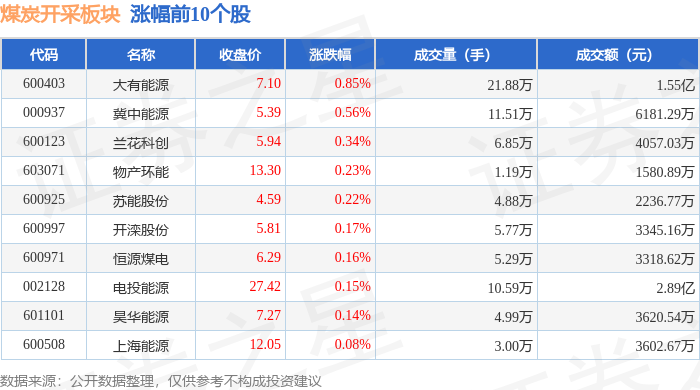
煤炭开采板块12月25日跌0.38%,中煤能源领跌,主力资金净流出3.59亿元
Zheng Xing Xing Ye Ri Bao· 2025-12-25 09:15
Core Viewpoint - The coal mining sector experienced a decline of 0.38% on December 25, with China Coal Energy leading the drop. Meanwhile, the Shanghai Composite Index rose by 0.47% and the Shenzhen Component Index increased by 0.33% [1]. Group 1: Market Performance - The coal mining sector's stocks showed mixed performance, with notable declines in major companies such as China Coal Energy, which fell by 1.40% to a closing price of 12.70 [2]. - The trading volume for China Coal Energy was 160,500 shares, with a transaction value of 205 million yuan [2]. - Other companies in the sector, like Jiangxi Tungsten Equipment and Jinko Energy, also saw declines of 1.17% and 0.97%, respectively [2]. Group 2: Capital Flow - The coal mining sector experienced a net outflow of 359 million yuan from major funds, while retail investors contributed a net inflow of 380 million yuan [2]. - The table of capital flow indicates that retail investors were more active, with significant inflows into stocks like Xin Dazhou A, which saw a net inflow of 852,620 yuan from major funds [3]. - Conversely, stocks like Huaihe Energy and Shanmei International faced net outflows from major and speculative funds, indicating a shift in investor sentiment [3].



煤炭行业2026年度投资策略:遇火生辉
Changjiang Securities· 2025-12-24 11:41
Core Insights - In 2025, coal prices significantly declined, leading to a return of sector profitability to the lowest levels in the past decade. However, the outlook for 2026 suggests potential demand improvement and limited supply capacity utilization, which may lead to a recovery in coal price levels [2][5][6]. - The report emphasizes that with a clear supply-demand improvement and the presence of both defensive and offensive investment opportunities, the likelihood of success for selected stocks is high. If demand is strong and coal prices improve beyond expectations, attention should be given to currently undervalued stocks with low liquidity and lower profit margins [2][7]. Industry Overview - The coal industry faced a challenging year in 2025, with thermal coal prices dropping from 855 CNY/ton in 2024 to 697 CNY/ton, an 18% decrease. The profitability of the sector fell to the 30th percentile of the past decade due to weak demand driven by warm weather and sluggish manufacturing electricity consumption [5][16]. - Coking coal prices also saw a significant decline, dropping 26% from 2024's 2022 CNY/ton to 1502 CNY/ton, with profitability at the 10th percentile of the past decade. This was primarily due to strong supply, with a 1.5% year-on-year increase in coking coal supply in the first three quarters of 2025 [5][16]. Demand and Supply Dynamics - For thermal coal in 2026, demand improvement is anticipated, with limited supply growth expected. The report identifies three key questions regarding market resilience: whether negative growth in thermal power will become the norm, if domestic supply can be controlled, and whether rising coal prices will increase imports [6][30]. - The report suggests that the central government's focus on controlling "involution" competition will continue to limit supply growth in 2026, despite some new production capacity coming online. Long-term resource depletion may also exert upward pressure on domestic coal prices [6][30]. Investment Recommendations - The report advocates for investment in the coal sector in 2026, highlighting the potential for a bottom reversal. It suggests that the timing for investment should align with capital flows, particularly in the first quarter when there is often a demand for increased allocation to dividend-paying sectors [7][30]. - Recommended stocks include Yanzhou Coal Mining Company and China Shenhua Energy, which are expected to benefit from a recovery in coal prices to a range of 750-800 CNY/ton. Additionally, stocks with significant growth potential and low valuations, such as Huayang Co. and Jinkong Coal Industry, are highlighted as potential targets if demand and price improvements exceed expectations [7][30].


能源出海“先行者”兖矿能源:打造高分红价值型能源企业
Shang Hai Zheng Quan Bao· 2025-12-23 19:06
Group 1: Company Overview - Yancoal Energy, a subsidiary of Shandong Energy Group, operates across multiple regions in China and internationally, focusing on mining, high-end chemical materials, equipment manufacturing, smart logistics, and new energy [2] - The company reported a revenue of 104.96 billion yuan and a net profit of 7.12 billion yuan for the first three quarters of 2025, with a significant quarterly profit increase of 17.82% in Q3 [2] Group 2: Technological Advancements - The South Tun Coal Mine, a flagship project, has transitioned to intelligent and automated mining, significantly reducing the workforce needed for operations while increasing production efficiency [4][5] - Advanced technologies, such as real-time data transmission and automated cutting systems, have been implemented, achieving 100% automatic cutting rates and enhancing operational efficiency [4][5] Group 3: International Expansion - Yancoal Australia, established through the acquisition of a struggling coal mine, has become a leading coal producer in Australia, with a total recoverable reserve of 1.5 billion tons and an annual production capacity exceeding 70 million tons [6][8] - The company has successfully integrated its governance structures with international standards, enhancing its operational efficiency and market presence [9] Group 4: Financial Performance and Shareholder Returns - Yancoal Energy maintains a high dividend payout ratio, consistently distributing around 60% of its annual net profit, with cash dividends totaling 7.73 billion yuan in 2024 and 1.81 billion yuan in mid-2025 [10] - The company’s total assets reached 431.9 billion yuan by the end of Q3, with a net cash flow from operating activities of 19.6 billion yuan, ensuring robust financial health for future investments and shareholder returns [11]
“岳”章——山东企业一线调研·新质生产力篇
Shang Hai Zheng Quan Bao· 2025-12-23 19:06
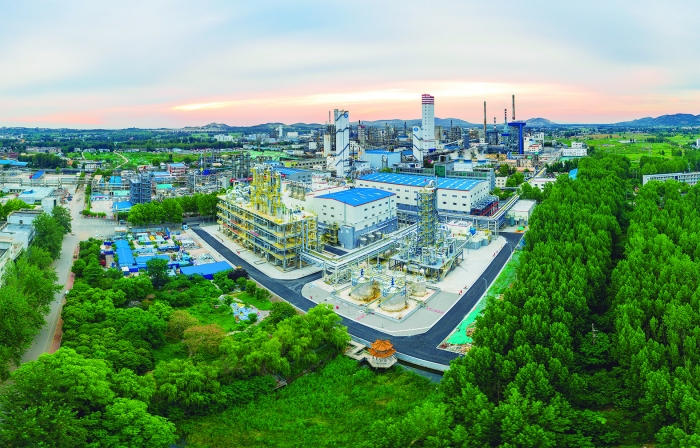
Group 1 - Shandong's A-share listed companies show resilience with 251 out of 310 companies reporting profits, generating a total revenue of 2.3 trillion yuan and a net profit exceeding 141.1 billion yuan in the first three quarters of 2025 [3][1] - The province's GDP is set to enter the "ten trillion club," with industrial and investment indicators consistently outperforming the national average, highlighting Shandong's robust economic foundation [2][1] - The "Fifteen Five" planning emphasizes the construction of a modern industrial system, focusing on the transformation of traditional industries and the development of new productive forces [2][1] Group 2 - Yanzhou Coal Mining Company is transforming from a traditional coal producer to a green energy provider, integrating AI and renewable energy into its operations [5][4] - Shantui's intelligent transformation is evident in its AI-driven machinery, addressing industry challenges such as rising labor costs and efficiency bottlenecks [6][4] - Donghong's innovative composite pipes are crucial for major infrastructure projects, utilizing smart monitoring technologies to enhance safety and efficiency [7][4] Group 3 - The overall performance of Shandong's listed companies reflects a strong commitment to innovation and high-quality development, contributing to the province's strategic positioning as a key economic growth area in northern China [8][1]


行业研究|行业周报|煤炭与消费用燃料:重视煤炭板块年初红利投资机会-20251222
Changjiang Securities· 2025-12-22 09:44
Investment Rating - The industry investment rating is "Positive" and maintained [8] Core Viewpoints - Recent coal prices have been declining, raising concerns about future price trends. The supply side is expected to remain tight due to year-end production cuts and the imposition of export taxes by Indonesia, while demand may improve with the new year's long-term contracts and seasonal increases in consumption [2][7] - The coal price is anticipated to stabilize and recover in the short term due to supply constraints and seasonal demand increases, suggesting a favorable investment opportunity in the coal sector [6][7] Summary by Sections Market Performance - The coal index (Yangtze) increased by 0.36%, outperforming the CSI 300 index by 0.64 percentage points, ranking 19th out of 32 industries [6][22] - As of December 19, the market price for Qinhuangdao thermal coal was 703 CNY/ton, down 42 CNY/ton week-on-week, while the price for coking coal at Jingtang Port was 1740 CNY/ton, up 110 CNY/ton week-on-week [6][16] Supply and Demand Analysis - As of December 18, the daily coal consumption across 25 provinces was 580.2 million tons, a decrease of 2.0% week-on-week and 9.8% year-on-year. The inventory at power plants was 134 million tons, with a usable days count of 23.2 days, an increase of 0.3 days week-on-week [17][36] - The supply side is influenced by production cuts at coal mines and the impact of export taxes from Indonesia, which could tighten supply further [7][17] Price Trends - The price of thermal coal has seen a significant decline, with a monthly drop of 105 CNY/ton (-13%), nearly erasing gains from October [7][43] - The report suggests that while coal prices are currently under pressure, improvements in supply and demand dynamics could provide a floor for prices in the near term [6][7] Investment Recommendations - The report recommends focusing on coal sector investments, particularly as the first quarter is typically a period of increased insurance capital inflow, which may enhance the attractiveness of coal stocks [7][12]
煤价有底,预计26年开启需求上行周期
Haitong Securities International· 2025-12-22 07:01
Investment Rating - The report maintains a positive investment outlook for the coal sector, recommending a focus on key players such as China Shenhua Energy, Shaanxi Coal and Chemical Industry, and China Coal Energy, while also keeping an eye on Yanzhou Coal Mining and Jinneng Holding [3]. Core Insights - The coal price is expected to stabilize, with a bottom range projected between 680-700 RMB/ton. The demand is currently at a median level compared to the past five years, and port inventories are showing a downward trend. The report anticipates a rebound in coal prices to over 800 RMB/ton by November [3][4]. - The coal sector is believed to have reached a cyclical bottom in Q2 2025, with a reversal in supply-demand dynamics. A new upward cycle for coal and downstream thermal power demand is expected to begin in the second half of 2026 [3][4]. Summary by Sections Coal Price Trends - As of December 19, 2025, the price of Q5500 coal at Huanghua Port is 721 RMB/ton, down 42 RMB/ton (-5.5%) from the previous week. The price of Q5000 coal at the same port is 620 RMB/ton, also down 42 RMB/ton (-6.3%) [6][12]. - Domestic coal prices are generally declining, while international prices are mixed, with Newcastle coal prices showing a slight increase [41][49]. Supply and Demand Dynamics - Domestic coal supply remains stable, with imports expected to decrease. The report notes that the demand for coal is improving significantly during the off-peak season, with Q3 profits anticipated to rebound [3][4]. - As of December 19, 2025, the total inventory of coking coal at three major ports is 279.7 million tons, down 7.1% from the previous week [58]. Long-term Contracts and Pricing - The annual long-term contract price for Q5500 coal at Northern Ports is 694 RMB/ton, reflecting a month-on-month increase of 10 RMB/ton (1.5%) [34]. - The report indicates that the long-term contract prices for coking coal have remained stable compared to the previous week [59]. Key Market Events - The report highlights significant developments in coal transportation infrastructure in Inner Mongolia, which is expected to enhance coal logistics efficiency and capacity [81]. - It also notes that coal prices have continued to decline in early December, with various types of coal experiencing price drops [81].


煤炭行业2026年策略:“反内卷”催化产能收缩,高分红彰显中期投资价值
Dongxing Securities· 2025-12-22 04:30
Group 1: Price Outlook - The "anti-involution" policy is expected to catalyze a rebound in coal prices, with a stable increase anticipated in 2026. In 2025, coal prices experienced a low-to-high trend, with the lowest price for Qinhuangdao 5500 kcal thermal coal dropping to 610 CNY/ton in June and rebounding to 813 CNY/ton by December 1 [4][24] - The annual price range for China's coking coal index fluctuated between 1100 and 1570 CNY/ton in 2025, with a significant increase of 37.14% from the lowest point in June to the highest in November [4][21] Group 2: Domestic Supply - The "anti-involution" policy will promote industry self-discipline and stricter safety regulations, potentially leading to a decline in domestic coal production due to the exit of pre-registered increased capacity in 2026 [5][30] - The National Energy Administration's notification in July 2025 mandated that coal mines' annual output must not exceed announced capacity, contributing to a tightening of coal supply [5][31] - The coal import volume in 2025 is expected to decrease, with a total of 432 million tons imported from January to November, marking an 11% year-on-year decline [5][34] Group 3: Demand Dynamics - Thermal power is expected to play a stabilizing role, with resilient demand anticipated during the 14th Five-Year Plan period. The cumulative thermal power generation from January to October 2025 was 52130.5 billion kWh, showing a slight decline of 0.19% year-on-year [6][45] - The development of AI computing power is projected to drive significant growth in new electricity demand, with electricity consumption in the power sector expected to increase due to sustained demand for thermal coal [6][59] Group 4: Market Value Management - The implementation of market value management assessments is expected to weaken industry cycles, with high dividend payouts reflecting mid-to-long-term investment value. The China Securities Regulatory Commission has encouraged cash dividends and improved investor returns since late 2023 [7][60] - Major coal companies are responding to initiatives to enhance shareholder returns, with companies like China Shenhua and China Coal Energy committing to high dividend payouts, with ratios expected to remain above 65% [7][61] Group 5: Investment Recommendations - The "anti-involution" policy is anticipated to lead to self-discipline in the industry and a stable increase in coal prices. The coal sector is viewed as a stable high-dividend investment, suitable for providing solid returns [9][64] - Recommended stocks include leading coal companies with strong resource endowments and stable dividend policies, such as China Shenhua A+H, China Coal Energy A+H, and Yanzhou Coal Mining A+H [9][64]


东兴证券:煤炭行业“反内卷”催化产能收缩 高分红彰显中期投资价值
智通财经网· 2025-12-22 04:01
Core Viewpoint - The "anti-involution" policy is expected to promote industry self-discipline and capacity verification, leading to a stable increase in coal prices, with the coal industry transitioning towards high-quality development during the 14th Five-Year Plan period [1][2]. Group 1: Coal Price Trends - The coal price is anticipated to recover from its lows, with a projected stable increase in 2026. In 2025, coal prices are expected to fluctuate, with the lowest price for Qinhuangdao 5500 kcal thermal coal dropping to 610 CNY/ton in mid-June and recovering to 813 CNY/ton by December 1 [2]. - The China coking coal price index is projected to fluctuate between 1100-1570 CNY/ton in 2025, with a significant recovery of 37.14% from its lowest point [2]. Group 2: Supply Side Dynamics - The "anti-involution" policy aims to break low-price competition and shift the industry focus from scale expansion to quality improvement. The National Energy Administration has initiated capacity verification for coal mines in several provinces, which may lead to a decline in production due to stricter safety regulations [3]. - The coal import tax reinstated on January 1, 2024, and the emphasis on controlling low-quality coal imports are expected to reduce the volume of imported coal, with a notable 11% decrease in coal and lignite imports from January to November 2025 [3]. Group 3: Demand Side Insights - Thermal power generation is expected to remain resilient, with a projected increase in demand driven by AI computing power, which is anticipated to significantly boost electricity consumption in data centers [4]. - The cumulative thermal power generation from January to October 2025 was 52,130.5 billion kWh, showing a slight year-on-year decline, but thermal power is expected to play a crucial role in meeting electricity demand during peak periods [4]. Group 4: Dividend and Investment Outlook - The coal industry is witnessing a shift towards higher dividend payouts, with companies like China Shenhua and Shaanxi Coal aiming to maintain or increase their cash dividend ratios, reflecting a broader trend of enhancing shareholder returns [5]. - The introduction of market value management assessments and the emphasis on cash dividends are expected to strengthen the investment value of coal companies, with a focus on stable and sustainable returns [5]. Group 5: Investment Recommendations - Investment strategies should focus on leading coal companies with strong resource endowments, cost advantages, and stable dividend policies, such as China Shenhua and Shaanxi Coal, while also considering companies with growth potential like Guanghui Energy and Huayang Co [6].

澳大利亚煤电需扩能两倍以支撑2050年电力需求增长
GOLDEN SUN SECURITIES· 2025-12-22 03:25
Investment Rating - The industry investment rating is "Buy" for several companies including China Coal Energy, China Shenhua, and Jinneng Holding Coal Industry [3][8]. Core Viewpoints - Australia's electricity demand is projected to double by 2050, necessitating a twofold increase in coal power capacity to ensure supply during the transition period. Total electricity demand is expected to rise from 205 billion kWh to 389 billion kWh by the fiscal year 2049-50, with significant contributions from high-energy industries such as industrial electrification and data centers [2][3]. - Current coal power capacity in Australia has decreased from approximately 30,000 MW to about 21,000 MW, with aging units averaging over 40 years of operation. Non-scheduled outages are expected to reach 7% of total operating time from 2027 to 2035, indicating a critical need for coal power to maintain grid stability during the transition to renewable energy [3][8]. Summary by Sections Industry Overview - The report highlights a significant decline in Australia's coal power capacity and the urgent need for expansion to meet future electricity demands. The transition to renewable energy sources is progressing but faces substantial gaps in implementation [2][3][8]. Key Companies - Recommended companies include: - Yancoal Australia (Buy) - Jinneng Holding Coal Industry (Buy) - China Coal Energy (Buy) - China Shenhua (Buy) - Shaanxi Coal and Chemical Industry (Buy) - Huainan Mining (Buy) - China Qinfa (Buy) [3][8]. Price Trends - Coal prices have shown mixed trends, with Newcastle coal prices at $105 per ton, down by $2.75 per ton (-2.55%), while European ARA coal prices increased slightly to $96.21 per ton, up by $0.64 per ton (+0.67%) [1][3][36].