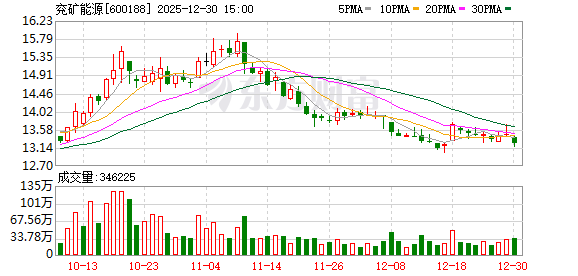
YANKUANG ENERGY(600188)

Search documents
煤炭行业2026年投资策略:十五五开局,供需重构,价值凸显
GF SECURITIES· 2025-12-31 04:54
Core Insights - The report indicates that the coal industry is entering a new cycle with a significant increase in value, driven by supply-demand restructuring and improved market conditions [1][4]. Group 1: Cycle Review - The coal price center has significantly increased during the 14th Five-Year Plan, and the 15th Five-Year Plan is expected to usher in a new cycle [4][15]. - The report reviews four cycles of the coal industry, highlighting that the current cycle may see a recovery from the bottom in the second half of 2025 [15][16]. - The average price of Qinhuangdao port 5500 kcal thermal coal reached 718 RMB/ton in the second half of 2025, reflecting a 6% increase compared to the first half [20][21]. Group 2: Supply Restructuring - Coal production from 2020 to 2024 increased by 23% to 4.78 billion tons, but growth is expected to slow significantly in 2025, with production growth in Xinjiang only at 2.6% [4][33]. - The report anticipates that coal production will enter a peak and decline phase, with growth rates expected to be between 0.5% and 1.0% from 2026 to 2028 [4][33]. - Regulatory policies are expected to impact coal production, potentially leading to negative growth in certain periods [4][33]. Group 3: Demand Restructuring - The demand for coal is expected to maintain resilience, with electricity consumption projected to grow at around 5% over the next five years, driven by new manufacturing and increased electrification [4][33]. - The report notes that while coal consumption is expected to decline in the short term due to electricity demand pressures, it is likely to recover as macroeconomic policies strengthen in 2026 [4][33]. - Chemical demand is projected to grow at approximately 5%, while declines in steel and construction materials are expected to narrow [4][33]. Group 4: Global and Commodity Perspectives - The report highlights that global coal production is expected to decline, while Southeast Asian demand is projected to grow by 3-5% from 2025 to 2030 [4][33]. - Compared to other commodities, coal has shown weaker performance, with the copper-coal ratio and gold-coal ratio at historical highs [4][33]. - The coal industry's share of industrial profits has dropped to historical lows, while the electricity sector's profit share has reached a high of 10% [4][33]. Group 5: Overall Viewpoint - The report concludes that the coal price center is expected to rise to around 750 RMB/ton in 2026, with leading companies offering dividend yields of 4-6% [4][33]. - Key companies identified include China Shenhua, Yanzhou Coal, and Shaanxi Coal, which are expected to maintain stable profitability [4][33]. - The report emphasizes that after a pessimistic outlook on coal prices is reversed, valuation elasticity is likely to become apparent [4][33].




兖矿能源:下属子公司鲁南化工、榆林能化、荣信化工等的化工产品中有甲醇,累计甲醇年产能430万吨
Mei Ri Jing Ji Xin Wen· 2025-12-30 08:57
Group 1 - The company, Yanzhou Coal Mining Company (兖矿能源), has confirmed that it produces methanol through its subsidiaries [2] - The total annual production capacity of methanol across its subsidiaries is 4.3 million tons [2]

山东能源集团兖矿能源:化工产业利润大增对冲煤市低迷
Qi Lu Wan Bao· 2025-12-30 05:08
Core Insights - Shandong Energy Group's Yanzhou Coal Mining Company (600188) has achieved record high production in its chemical sector, with expected profits increasing by 1.75 billion yuan year-on-year, effectively countering market pressures in the coal industry [1] Group 1: Safety and Operational Efficiency - Safety is prioritized in chemical production, with a focus on building a "leak-free factory" and a comprehensive risk prevention system, resulting in a 15% reduction in operational disruptions [2] - The operational quality of key production units has improved significantly, with a record 246 days of continuous operation for a gasification furnace and cost savings of 3.65 million yuan per day from optimized boiler operations [2] Group 2: Technological Upgrades and Cost Reduction - The company completed 32 key technological upgrades, generating 62.5 million yuan in immediate benefits, with projected annual benefits of 236 million yuan once fully operational [4] - Specific projects, such as the methanol distillation energy-saving upgrade, have led to reduced production costs and significant financial gains [4] Group 3: Project Acceleration and Future Growth - Major construction projects are progressing ahead of schedule, including an 800,000-ton/year olefin project and a 60,000-ton/year formaldehyde project, laying the groundwork for future growth [5] - Catalyst management improvements have resulted in extended usage periods and increased production efficiency, contributing to cost savings [5] Group 4: Collaborative Innovation and Digital Transformation - The company has enhanced its coal-chemical integration strategy, achieving a 92.1% internal coal usage rate, an 18.1% increase from the previous year [7] - Investment in R&D reached 776 million yuan, with 29 projects implemented, leading to significant advancements in product quality and international market expansion [7] - Digital transformation initiatives have improved operational efficiency, with systems in place that enhance production stability and reduce costs [8]
西部证券晨会纪要-20251229
Western Securities· 2025-12-29 02:24
Group 1: Yancoal Energy (兖矿能源) - The company is expected to achieve net profits of 9.448 billion, 12.019 billion, and 14.171 billion yuan for the years 2025-2027, with corresponding EPS of 0.94, 1.20, and 1.41 yuan, reflecting a year-on-year growth of -39.61%, 27.21%, and 17.91% respectively [1][5][6] - The target price for the company is set at 16.27 yuan per share, with a "Buy" rating assigned based on the DDM valuation method [1][5] - The coal market is anticipated to maintain a stable price range of 700-800 yuan per ton from 2025 to 2027, despite concerns of oversupply [5][6] Group 2: Aiko Co., Ltd. (爱旭股份) - The company is projected to incur losses in 2025, with net profits expected to be -5.82 billion, 1.153 billion, and 2.266 billion yuan for 2025-2027, showing a significant recovery in 2026 and 2027 with growth rates of 89.1%, 298.1%, and 96.6% respectively [2][8][9] - The company is focusing on its ABC technology, which is expected to lead to a turnaround in performance, with a projected EPS of -0.27, 0.54, and 1.07 yuan for the same period [2][9] - Aiko's order backlog has increased by over 30% in Q3, indicating strong downstream demand [9] Group 3: Stable Medical (稳健医疗) - The company is focusing on dual business segments: medical and consumer, targeting high-value products such as advanced dressings and surgical consumables [11][12] - Revenue for the first three quarters of 2025 reached 7.897 billion yuan, with a year-on-year growth of 30.10%, and net profit of 732 million yuan, up 32.36% [12][13] - The company aims to maintain high-quality growth through global expansion and strategic planning, with projected EPS of 1.78, 2.13, and 2.44 yuan for 2025-2027 [12][13] Group 4: Home Appliances Industry - The white goods sector is experiencing stable production, with a focus on enhancing value through configuration [15][16] - The production of air conditioners, refrigerators, and washing machines is expected to show varying growth rates, with air conditioners up by 11.0% and refrigerators by 3.6% year-on-year [16] - Companies like Haier, Midea, and Gree are highlighted as key players benefiting from market dynamics and overseas expansion [15][20]


政策调控+成本刚性为港口煤价提供底部支撑
Guotou Securities· 2025-12-28 15:39
Investment Rating - The report maintains an investment rating of "Outperform the Market - A" for the coal industry [6]. Core Insights - The coal pricing policy in China has shifted from administrative price stabilization to market-oriented flexible regulation from 2022 to 2025, with a focus on optimizing supply structure and enhancing cost support [1][17]. - The complete cost of coal enterprises in major production areas provides a bottom support for port prices, with the support level estimated at approximately 574 RMB/ton for Shanxi and Shaanxi regions [2][30]. - The coal industry is expected to maintain its role as a cornerstone of China's energy system, with supply constraints and gradual energy structure transformation supporting a high price level for coal [11]. Summary by Sections 1. Special Research - The shift in coal pricing policy aims to stabilize energy supply while ensuring reasonable profits for coal and electricity sectors [1]. - The complete cost structure of coal enterprises includes production costs, period expenses, and taxes, with a focus on maintaining energy security and sustainable development [21]. 2. Market Review - The Shanghai Composite Index rose by 1.91% from December 13 to December 26, while the coal index fell by 0.35%, underperforming the overall market [3][32]. 3. Market Information Tracking - As of December 24, 2025, the average price of thermal coal in the Bohai Rim was reported at 695 RMB/ton, reflecting a decrease of 8 RMB/ton from December 10, 2025 [4]. - The price of coking coal at Jing Tang Port was reported at 1740 RMB/ton, an increase of 110 RMB/ton from December 12, 2025 [9]. 4. Industry Dynamics - The National Development and Reform Commission has issued guidelines to enhance the clean and efficient utilization of coal, encouraging upgrades and improvements in coal projects [10]. - The 2026 National Energy Work Conference emphasized the importance of policy support in addressing development challenges within the energy sector [10]. 5. Investment Portfolio and Recommendations - The report suggests focusing on companies with high long-term contract ratios for stable profits, such as China Shenhua, Shaanxi Coal, and China Coal Energy [11]. - It also highlights cyclical stocks like Yanzhou Coal and Jinkong Coal, as well as integrated coal and power companies like Xinji Energy and Huaihe Energy as potential investment opportunities [11].


——煤炭开采行业周报:本周生产收紧,电厂日耗环比提升,港口煤价降幅收窄-20251228
Guohai Securities· 2025-12-28 13:34
Investment Rating - The report maintains a "Recommended" rating for the coal mining industry [1] Core Insights - The coal mining industry is experiencing a tightening in production, with an increase in daily consumption at power plants and a narrowing decline in port coal prices [1][71] - The overall supply-demand situation shows slight improvement, but port inventories remain high, and transaction atmosphere has not significantly improved [71][14] - The report highlights the long-term upward trend in coal prices driven by factors such as rising labor costs, increased safety and environmental investments, and higher taxation by local governments [7][73] Summary by Sections 1. Thermal Coal - As of December 26, the price of thermal coal at northern ports is 672 RMB/ton, a week-on-week decrease of 31 RMB/ton, with the decline narrowing compared to the previous week [14][15] - Production capacity utilization in the Sanxi region decreased by 3.46 percentage points to 84.84% as of December 24, mainly due to mines completing or nearing their annual production tasks [21][71] - Daily consumption at six major power plants increased by 56,000 tons week-on-week, reaching 856,000 tons [23][71] 2. Coking Coal - The production capacity utilization rate for coking coal decreased by 0.36 percentage points to 82.6% from December 17 to December 24, due to ongoing production cuts [5][72] - The average customs clearance volume at the Ganqimaodu port increased by 75 trucks week-on-week, indicating stable import levels [42][72] - The price of main coking coal at ports remains stable at 1,740 RMB/ton as of December 26 [40][72] 3. Coke - The coke market is operating weakly, with the third round of price reductions implemented recently, leading to a short-term price adjustment [47][72] - The production capacity utilization rate for coke enterprises slightly increased by 0.03 percentage points to 74.35% [47][72] - The average profit per ton of coke has decreased to -18 RMB/ton, a week-on-week decline of 34 RMB/ton [53][72] 4. Investment Opportunities - The report suggests focusing on stable investment targets such as China Shenhua, Shaanxi Coal, and Yanzhou Coal, which exhibit strong cash flow and high asset quality [7][73] - The coal mining sector is viewed as a high-dividend, cash-generating investment opportunity, especially in light of recent government support for state-owned enterprises [7][73]



煤炭行业周报(2025.12.20-2025.12.27):冷空气影响仍存,成本支撑下供给预计收紧,预计煤价有望企稳-20251228
Shenwan Hongyuan Securities· 2025-12-28 12:15
Investment Rating - The report maintains a positive outlook on the coal industry, suggesting a "Buy" rating for specific companies based on their stable dividends and growth potential [1]. Core Insights - The coal market is experiencing fluctuations in prices, with thermal coal prices expected to stabilize due to high demand driven by cold weather and reduced production from high-cost mines [1]. - The report highlights the impact of recent accidents in coal mines, which may lead to increased safety regulations and potential supply constraints [1]. - The report emphasizes the importance of seasonal demand, particularly in winter, which is expected to support coal prices in the near term [1]. Summary by Sections 1. Recent Industry Policies and Dynamics - The National Development and Reform Commission and the National Energy Administration have issued new rules for the long-term electricity market, aiming to adapt to changes in the energy landscape [6]. - Yulin plans to accelerate the construction of energy innovation demonstration zones, with new coal mines and increased production capacity [6]. - A new coal transportation corridor in Xinjiang has been launched, enhancing coal transport efficiency [6]. 2. Price Trends of Thermal and Coking Coal - As of December 26, thermal coal prices have shown a slight decline, with specific prices reported for various regions [7]. - The report notes that the price index for thermal coal in the Bohai Rim region has decreased, indicating a trend of price stabilization [7][10]. 3. International Oil Price Movements - Brent crude oil prices have increased slightly, which may influence coal prices due to the relationship between oil and coal markets [13]. - The report indicates a rising ratio of international oil prices to coal prices, suggesting potential implications for coal demand and pricing strategies [13]. 4. Port Inventory Trends - Coal inventory levels at Bohai Rim ports have increased, with a noted rise in daily coal outflows, indicating a dynamic supply-demand balance [18]. - The report highlights the importance of monitoring port inventories as they can signal future price movements in the coal market [18]. 5. Coastal Shipping Costs - Domestic coastal shipping costs have decreased, which may affect the overall cost structure for coal transportation [26]. - International shipping rates have also shown a downward trend, potentially impacting import dynamics for coal [26]. 6. Valuation of Key Companies - The report provides a detailed valuation table for key coal companies, indicating their stock prices, market capitalizations, and projected earnings [30]. - Companies such as China Shenhua and Shaanxi Coal are highlighted for their strong dividend yields and stable earnings forecasts [30].

煤炭行业周报:冷空气影响仍存,成本支撑下供给预计收紧,预计煤价有望企稳-20251228
Shenwan Hongyuan Securities· 2025-12-28 11:14
Investment Rating - The report maintains a positive outlook on the coal industry, rating it as "Overweight" [1]. Core Insights - The report highlights that cold air impacts are still present, and with cost support, supply is expected to tighten, leading to a stabilization of coal prices. The demand side is supported by increased consumption due to cold weather, while supply may decrease as some coal mines reduce production after meeting annual targets [1][3]. - The report provides specific price data for thermal coal and coking coal, indicating a slight decline in prices but a stable outlook due to seasonal demand and supply constraints [1][8]. - The report emphasizes the importance of safety regulations and monitoring, especially with recent mining accidents, which may further tighten supply [1][3]. Summary by Sections Recent Industry Policies and Developments - The National Development and Reform Commission and the National Energy Administration issued new rules for the electricity market to adapt to changes in the energy system and market participants [7]. - New coal transportation infrastructure in Xinjiang aims to enhance efficiency and support green energy initiatives [7]. Price Trends - As of December 26, 2025, thermal coal prices at Qinhuangdao port were reported at 486, 576, and 672 CNY/ton for different grades, showing a week-on-week decline [1][8]. - Coking coal prices remained stable, with specific prices reported for various regions [1][11]. Supply and Demand Dynamics - Daily coal consumption has increased, while power plant inventories have decreased, indicating a tightening supply situation [3][20]. - The report notes that the average daily coal inflow to the Bohai Rim ports decreased, while outflow increased, leading to a rise in port inventories [20]. International Oil Prices - Brent crude oil prices increased slightly, which may influence coal pricing dynamics [15]. Company Valuation - The report includes a valuation table for key companies in the coal sector, providing insights into their market performance and earnings projections [32].
煤炭长协与市场价倒挂,底部区间或再确认
Xinda Securities· 2025-12-28 11:03
1. Report Industry Investment Rating - The investment rating for the coal mining industry is "Bullish" [2] 2. Core Viewpoints of the Report - Currently at the beginning of a new upward cycle in the coal economy, with fundamental and policy factors in resonance, it is advisable to allocate the coal sector at low levels [2][3][11] - The underlying logic of coal supply constraints since July still exists, and there's no need to overly worry about a significant decline in coal prices. The stabilization point of coal prices is approaching [2][3][11] - The underlying investment logic of coal production capacity shortage remains unchanged. Coal prices have established a bottom and are on a new platform, high - quality coal enterprises maintain core asset attributes, and coal assets are relatively undervalued with potential for overall valuation improvement [3][11] - The coal supply bottleneck is expected to last until the "15th Five - Year Plan". The coal sector is a high - performance, high - cash, and high - dividend asset, with high certainty in the profitability and growth of high - quality coal companies [3][12] - The coal sector has a high - dividend safety margin when it adjusts downward and upward elasticity catalyzed by the expected increase in coal prices. It is recommended to focus on the current allocation opportunities in the coal sector [3][12] 3. Summary by Relevant Catalogs 3.1 This Week's Core Viewpoints and Key Concerns - **Core Viewpoints**: The coal economy is in the early stage of a new upward cycle. This week, the utilization rate of sample thermal coal and coking coal mine production capacity decreased. The daily coal consumption in inland 17 provinces and coastal 8 provinces increased, while non - power coal demand decreased. Coal prices showed a mixed trend. Although the current market is weak, after New Year's Day, the coal consumption support is expected to strengthen. The coal allocation logic remains unchanged, and it is recommended to allocate at low levels [11] - **Key Investment Recommendations**: Focus on three types of companies: those with stable operations and performance, those that have fallen sharply previously with high elasticity, and those with special and scarce global metallurgical coal resources. Also, pay attention to other related companies [12] - **Recent Key Concerns**: In November 2025, the total social electricity consumption increased by 6.2% year - on - year. From January to November 2025, US coal production increased by 4.1% year - on - year, and Russian coal production increased by 0.1% year - on - year [13] 3.2 This Week's Performance of the Coal Sector and Individual Stocks - The coal sector fell 0.89% this week, underperforming the broader market. The CSI 300 rose 1.95% to 4657.24 [14] - The thermal coal, coking coal, and coke sectors fell 1.24%, 0.81%, and 0.49% respectively [16] - The top three gainers in the coal mining and washing sector were Anyuan Coal Industry (6.42%), Huayang Co., Ltd. (5.01%), and Inner Mongolia Electric Power Investment Energy Co., Ltd. (2.75%) [19] 3.3 Coal Price Tracking - **Coal Price Index**: As of December 26, the comprehensive transaction price of CCTD Qinhuangdao thermal coal (Q5500) was 695.0 yuan/ton, down 7.0 yuan/ton week - on - week. The comprehensive average price index of Bohai Rim thermal coal (Q5500) was 695.0 yuan/ton, down 4.0 yuan/ton week - on - week. The annual long - term agreement price of CCTD Qinhuangdao thermal coal (Q5500) was 694.0 yuan/ton, up 10.0 yuan/ton month - on - month [23] - **Thermal Coal Price**: As of December 27, the market price of Qinhuangdao Port's Shanxi - produced thermal coal (Q5500) was 677 yuan/ton, down 34 yuan/ton week - on - week. At the production sites, prices in some areas rose or remained flat. International thermal coal FOB prices and some arrival prices fell [27] - **Coking Coal Price**: As of December 26, port and some production - site coking coal prices remained flat, while the arrival price of Australian Peak Downs hard coking coal in China rose 0.3 US dollars/ton week - on - week [29] - **Anthracite and Pulverized Coal Injection Price**: As of December 26, the vehicle - board price of Jiaozuo anthracite remained flat, while the vehicle - board prices of some pulverized coal injection decreased [38] 3.4 Coal Supply and Demand Tracking - **Coal Mine Capacity Utilization**: As of December 26, the capacity utilization rate of sample thermal coal mines was 86.4%, down 4.0 percentage points week - on - week, and that of sample coking coal mines was 84.21%, down 2.4 percentage points week - on - week [45] - **Import Coal Price Difference**: As of December 26, the price difference between domestic and foreign 5000 - kcal and 4000 - kcal thermal coal increased week - on - week [41] - **Coal - fired Power Daily Consumption and Inventory**: In both inland 17 provinces and coastal 8 provinces, coal inventory increased, daily consumption increased, and the number of available days decreased [46] - **Downstream Metallurgical Demand**: As of December 26, the Myspic composite steel price index fell, the price of Tangshan - produced primary metallurgical coke fell, the blast furnace operating rate decreased, the average profit per ton of coke for independent coking enterprises decreased, the profit per ton of steel for blast furnaces increased, the iron - scrap price difference decreased, and the scrap consumption ratio of pure blast furnace enterprises decreased [64][65] - **Downstream Chemical and Building Materials Demand**: As of December 26, the prices of some chemical products showed different trends, the national cement price index fell, the cement clinker capacity utilization rate decreased, the float glass operating rate decreased, and the weekly coal consumption in the chemical industry decreased [68][70] 3.5 Coal Inventory Status - **Thermal Coal Inventory**: As of December 26, the coal inventory at Qinhuangdao Port decreased, the 55 - port thermal coal inventory increased, and the production - site inventory increased [82] - **Coking Coal Inventory**: As of December 26, the production - site, port, coking enterprise, and steel mill coking coal inventories all increased [83] - **Coke Inventory**: As of December 26, the total coke inventory of coking plants decreased, the four - port total coke inventory increased, and the total coke inventory of domestic sample steel mills increased [85] 3.6 Coal Transportation Status - **International and Domestic Coal Transportation**: As of December 24, the Baltic Dry Index (BDI) fell. As of December 25, the average daily coal shipment volume on the Datong - Qinhuangdao Railway decreased week - on - week [98] - **Cargo - to - Ship Ratio at Four Major Ports in the Bohai Rim**: As of December 26, the inventory at the four major ports in the Bohai Rim decreased, the number of anchored ships remained unchanged, and the cargo - to - ship ratio decreased [96] 3.7 Weather Conditions - As of December 26, the Three Gorges outbound flow increased by 0.31% week - on - week [103] - In the next 10 days (December 28, 2025 - January 6, 2026), precipitation in some areas will be higher than normal, and after January 1, the average temperature in most parts of central and eastern China will turn 1 - 2°C lower than normal [103] - In the next 11 - 14 days (January 7 - 10, 2026), precipitation and temperature in different regions will show different trends [103] 3.8 Valuation Table and Key Announcements of Listed Companies - **Valuation Table**: The report provides the valuation data of key listed companies, including net profit attributable to the parent company, EPS, and PE from 2024A to 2027E [104] - **Key Announcements**: There are announcements from multiple companies, such as the share transfer of Jizhong Energy, the completion of the shareholding increase plan of Panjiang Co., Ltd., the acceptance of the application for asset acquisition by Inner Mongolia Electric Power Investment Energy Co., Ltd., the guarantee provided by Kailuan Co., Ltd., and the maintenance of the credit rating of Meijin Energy [105][106][107] 3.9 This Week's Key Industry News - Indonesia plans to impose a 1% - 5% export tax on coal from 2026 [109] - In November 2025, China's coal imports decreased by 19.9% year - on - year, with thermal coal imports increasing by 7.0% month - on - month and coking coal imports increasing by 1.3% month - on - month [109] - 8000 tons of high - quality Mongolian coal arrived in Gannan [109] - As of the end of November 2025, the national cumulative power generation installed capacity increased by 17.1% year - on - year [109]

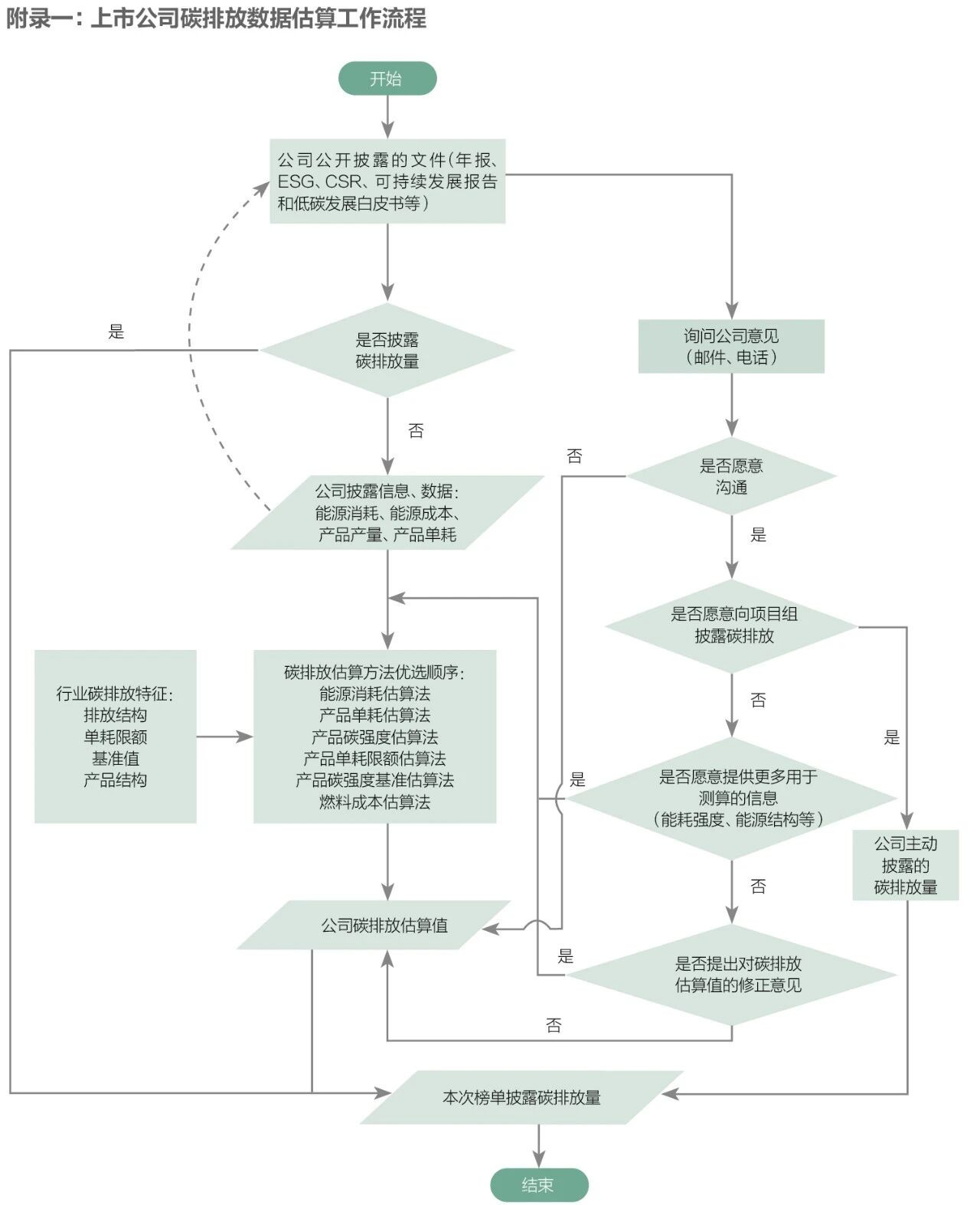
2025上市公司碳排放排行榜暨双碳领导力榜
Cai Jing Wang· 2025-12-26 14:51
Core Insights - The total carbon emissions of the top 100 listed companies in China for 2024 are projected to be 5.134 billion tons, a decrease of 2.7 million tons compared to 2023, indicating a potential peak in emissions [1][6][11] - The disclosure rate of carbon emissions among these companies has increased from 43% in 2021 to an expected 80% by 2025, reflecting a growing awareness and commitment to carbon reduction [1][5][23] Group 1: Carbon Emissions Overview - The carbon emissions of the top 100 listed companies in 2024 are 5.134 billion tons, which is a 0.52% decrease from 5.161 billion tons in 2023 [6][11] - The top ten companies account for approximately 38% of the total emissions, highlighting the concentration of emissions among a few major players [2][6] - The threshold for inclusion in the carbon emissions ranking has decreased to 10.3128 million tons in 2024, down from 11.5329 million tons in 2023, indicating a reduction in emissions intensity among leading high-carbon companies [6][11] Group 2: Industry Emission Trends - The power industry remains the largest contributor to carbon emissions, accounting for approximately 2.29 billion tons in 2024, maintaining a significant share of the total emissions [15] - The cement industry follows with emissions of about 770 million tons, continuing a downward trend for four consecutive years [15] - The steel industry has seen a notable decrease in emissions, returning to levels close to those of 2022, with emissions around 580 million tons [15][18] Group 3: Carbon Efficiency Metrics - The average carbon efficiency of the top 100 companies in 2024 is 0.399 million yuan per ton, remaining stable compared to 0.40 million yuan per ton in 2023 [20][21] - The carbon efficiency has improved by 10.83% from 2021 to 2024, indicating a positive trend in decoupling economic output from carbon emissions [20] - Seven industries have shown improvements in carbon efficiency, with the chemical industry achieving the most significant increase, reaching 0.39 million yuan per ton, the highest in three years [20][21] Group 4: Disclosure and Transparency - In 2024, 80 companies disclosed their carbon emissions data, an increase from 65 in 2023, achieving the highest disclosure rate in four years [23] - The disclosure rate for the power industry is 77.42%, while the cement industry leads with 85.71%, consistently above the average [26] - A-share companies have seen a significant rise in disclosure rates, from 16.67% in 2021 to 70.97% in 2024, indicating improved transparency in carbon reporting [26][27]