GXED(600617)

Search documents
英国新能源并网积压问题治理及启示
Zhong Guo Dian Li Bao· 2025-07-02 07:14
Core Insights - The UK is facing a significant backlog in renewable energy projects awaiting grid connection, with over 770 GW of projects pending, far exceeding the current installed capacity of around 60 GW [1] - The average waiting time for renewable energy projects to connect to the grid has surpassed 6 years, with about 30% of installations facing delays of over 10 years [1] - The backlog is hindering the UK's energy transition, with the annual growth rate of renewable energy generation dropping to 4.45% over the past three years, below the medium to long-term target of over 20% [1] Grid Connection Issues - The core issue lies in the rigid grid connection mechanism and outdated grid investment planning [2] - The management of grid connection is characterized by a "first-come, first-served" principle, allowing developers to queue regardless of project feasibility, leading to speculative applications and a high number of "zombie projects" [3] - Regulatory mechanisms have resulted in insufficient grid investment, exacerbating the backlog problem [4] Reform Initiatives - The UK has introduced the "TMO4+" reform to address the backlog and inefficiencies in planning, focusing on a demand-driven approach and verifying project maturity [6] - A dual-threshold admission standard will be implemented, replacing the traditional queuing system with a "ready to connect" mechanism, which requires projects to demonstrate feasibility and alignment with the UK's 2030 carbon peak planning [6] - The reform is expected to eliminate approximately 68% of "zombie projects," freeing up resources for viable projects [6] Dynamic Queue Optimization - The reform includes a "process elimination system" to remove overdue projects from the queue, thereby releasing grid capacity [7] - A "flexible replacement" rule will allow mature projects to fill capacity gaps quickly, and regional capacity rebalancing will address structural imbalances in energy distribution [7] - A streamlined approval process will be established, integrating various departmental procedures into a "one-stop" platform to reduce administrative time costs [7] Investment in Grid Infrastructure - The UK plans to invest £35 billion in the largest grid upgrade project globally from 2026 to 2031, focusing on enhancing renewable energy transmission and grid flexibility [9] - Over £11 billion will be allocated for maintenance and upgrades of existing transmission networks, while approximately £24 billion will support strategic transmission investments [9] - The upgrade will involve enhancing around 3,500 km of overhead lines to nearly double transmission capacity and deploying innovative technologies [9] Lessons for Other Markets - Other markets, such as China, can learn from the UK's experience by ensuring adequate infrastructure investment and optimizing priority mechanisms and approval efficiency [11] - Emphasizing "proactive grid investment" principles and enhancing the capacity of transmission networks in renewable-rich areas are crucial [11] - A unified management approach can prevent fragmented development and ensure coordinated resource allocation [12] - Prioritizing mature projects and implementing a dynamic scoring system for project prioritization can help avoid resource misallocation [13]

国家发改委:我国新能源消纳取得阶段性成效
Zhong Guo Hua Gong Bao· 2025-07-01 02:30
Core Viewpoint - The National Development and Reform Commission (NDRC) has made significant progress in promoting the consumption of renewable energy, particularly wind and solar power, which now account for a substantial portion of the country's total installed capacity [1][2]. Group 1: Renewable Energy Development - As of the end of May, China's installed capacity for wind and solar power reached 570 million and 1.08 billion kilowatts, respectively, making up 45.7% of the total installed capacity, surpassing that of thermal power [1]. - The NDRC emphasizes that the high-level consumption of large-scale renewable energy is crucial for building a new energy system [1]. Group 2: Measures to Enhance Renewable Energy Consumption - The NDRC, in collaboration with relevant parties, has implemented a series of measures to improve renewable energy consumption, achieving a utilization rate of over 90% nationwide [2]. - Key strategies include optimizing the transmission of electricity and local consumption, leveraging resources in desert and arid regions to establish large-scale renewable energy bases, and facilitating the direct supply of green electricity to specific users [2]. Group 3: Infrastructure and Regulatory Developments - China has built the world's largest power grid, with the highest voltage levels and the longest ultra-high voltage transmission lines, currently operating 43 ultra-high voltage transmission channels [3]. - The new energy storage capacity has exceeded 80 million kilowatts, indicating a growing market for energy storage solutions as renewable energy becomes more integrated into the market [3]. - The NDRC is also focusing on enhancing demand-side flexibility and promoting the construction of charging infrastructure, which has surpassed 14 million units nationwide [3].
中国新能源企业加速海外建厂,互利共赢提升供应链韧性
Zhong Guo Xin Wen Wang· 2025-06-29 23:59
Group 1 - Chinese new energy companies are expanding overseas, creating job opportunities and driving local industrial upgrades [1][3] - Companies like EVE Energy and Guangdong Liyuanheng are leveraging their complete industrial chains and technological innovations to enhance their global competitiveness [1][2] - EVE Energy's revenue increased by approximately 30% year-on-year in Q1, with expectations for stable growth throughout the year [1] Group 2 - EVE Energy has established a sales network in 18 countries and is building wholly-owned factories in Malaysia and Hungary to enhance local operations and supply chain resilience [1][3] - Guangdong Liyuanheng has secured significant orders and expanded into international markets, with an order backlog of 4.921 billion RMB as of May [2] - The establishment of EVE Energy's factories is expected to create around 2,000 jobs in Malaysia and 1,000 jobs in Hungary, contributing to local economic development [3]


(活力中国调研行)中国新能源企业加速海外建厂 互利共赢提升供应链韧性
Zhong Guo Xin Wen Wang· 2025-06-29 05:14
Group 1 - Chinese new energy companies are establishing overseas factories, creating local job opportunities and driving industrial upgrades [1] - The complete industrial chain, continuous technological innovation, and cost competitiveness have made Chinese new energy products popular in international markets [1] - EVE Energy Co., a leading lithium battery company, reported a revenue growth of approximately 30% year-on-year in Q1, with expectations for stable growth throughout the year [1] Group 2 - EVE Energy has established a sales network in 18 countries and is building wholly-owned factories in Malaysia and Hungary to produce cylindrical batteries and energy storage products [1][2] - The first phase of the Malaysian factory is already delivering products, while the second phase is expected to be completed by the end of this year; the Hungarian factory is projected to be operational by the end of next year [2] - Guangdong Liyuanheng Intelligent Equipment Co., another leading company in the new energy equipment sector, has secured multiple bulk orders from major clients and expanded into overseas markets such as India, Czech Republic, and Poland [4] Group 3 - The new energy industry ecosystem in China is leading globally, allowing companies to have more influence in international markets [5] - EVE Energy's factory in Hungary will supply the nearby BMW factory, reducing transportation costs and contributing to local employment and GDP growth [5] - The Malaysian factory is expected to create around 2,000 jobs, while the Hungarian factory is projected to generate approximately 1,000 jobs, promoting the development of the green energy industry [5]

中国新能源企业掀起新一轮“出海潮”|活力中国调研行
Sou Hu Cai Jing· 2025-06-27 13:19
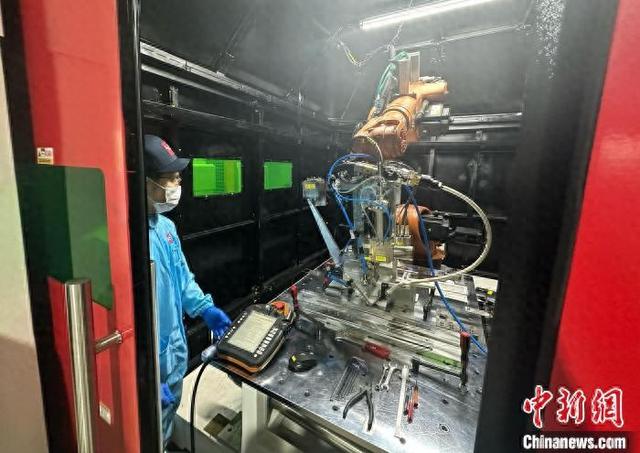
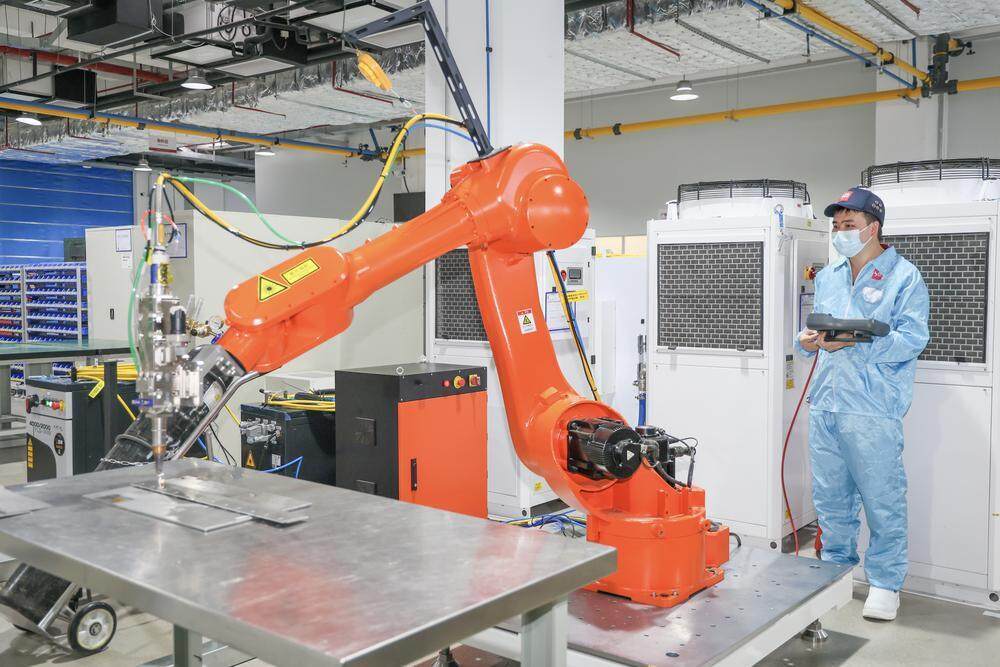
Core Viewpoint - Chinese new energy companies are experiencing a new wave of globalization, driven by a complete industrial chain, continuous technological innovation, and cost competitiveness, particularly in lithium batteries, photovoltaics, energy storage, and equipment manufacturing [1][2]. Group 1: Industry Trends - The Chinese battery industry has seen a slowdown in growth, prompting many manufacturers to shift focus to overseas markets, with leading companies like CATL and EVE Energy accelerating their international production capacity [2][11]. - The overseas market is rapidly becoming a new growth area for new energy companies, with significant investments in production bases in Southeast Asia, Europe, and North America [2][11]. Group 2: Company Strategies - Li Yuanheng has established subsidiaries in multiple countries, including the U.S., Germany, Hungary, Japan, and South Korea, and offers a comprehensive range of products in the new energy equipment sector [2][4]. - The company aims to enhance its global presence through technological innovation and resource integration, achieving significant milestones such as the launch of its first battery pack production line in North America and the introduction of advanced equipment at European exhibitions [4][6]. Group 3: Challenges and Opportunities - Despite the progress, Chinese companies face challenges such as policy environments, market competition, and technological upgrades in their globalization efforts [8][11]. - EVE Energy's planned IPO in Hong Kong aims to raise funds for overseas factory construction and global capacity expansion, reflecting the trend of domestic companies seeking to strengthen their international delivery capabilities [11][12]. Group 4: Competitive Advantages - EVE Energy emphasizes its "first-mover advantage" in overseas expansion, having initiated its Malaysia factory project after extensive planning, allowing it to achieve production capabilities ahead of competitors [12].
上市即爆款:小米改写中国新能源汽车格局
Jing Ji Guan Cha Wang· 2025-06-27 06:53
Core Viewpoint - The launch of Xiaomi's YU7 electric vehicle marks a significant challenge to Tesla in the Chinese market, with impressive pre-sale figures indicating strong consumer interest and potential for market disruption [1][2][11]. Group 1: Product Launch and Performance - Xiaomi YU7 was officially launched on June 26, with three configurations priced between 253,500 to 329,900 RMB, quickly becoming a trending topic [1]. - The pre-sale saw over 200,000 units reserved within 3 minutes and over 280,000 in one hour, indicating a strong demand [1]. - Xiaomi's previous model, SU7, achieved cumulative sales of over 250,000 units within 15 months, with an average monthly sales of 25,000 units in the first five months of 2023 [1]. Group 2: Competitive Landscape - The YU7 is positioned to compete directly with Tesla's Model Y, which has been a dominant player in the electric vehicle market [1][11]. - Analysts predict that the sales ratio of SU7 to YU7 will be 1:2, with YU7 expected to become the top-selling model in its price range and among pure electric vehicles [1]. Group 3: Technological Advancements - Xiaomi is leveraging advanced technology in its vehicles, such as a high-capacity battery in the YU7 Max version, which has a capacity of 101.7 kWh and can charge from 10% to 80% in just 12 minutes [7]. - The SU7 Ultra features an NVIDIA Thor chip, providing 40% more computing power than Tesla's HW4.0, enhancing its autonomous driving capabilities [8]. Group 4: Ecosystem Integration - Xiaomi is building a comprehensive ecosystem that integrates smart home devices with its vehicles, allowing users to control 78% of their smart home devices through the car's interface [9]. - The synergy between vehicle data and smart home devices creates a unique ecosystem that enhances user experience and operational efficiency [9][10]. Group 5: Market Outlook - Predictions indicate that Xiaomi's vehicle deliveries could reach 848,000 units by 2026, with YU7 accounting for 360,000 units, positioning Xiaomi as a formidable competitor to Tesla [11]. - Analysts forecast that Xiaomi's revenue could exceed 1 trillion RMB by 2030, driven by its integration of smartphones, electric vehicles, and AIoT [11].

岚图CEO卢放:中国新能源汽车出海需团结协作,未来五年有条件的自动驾驶将落地
Sou Hu Cai Jing· 2025-06-27 03:37
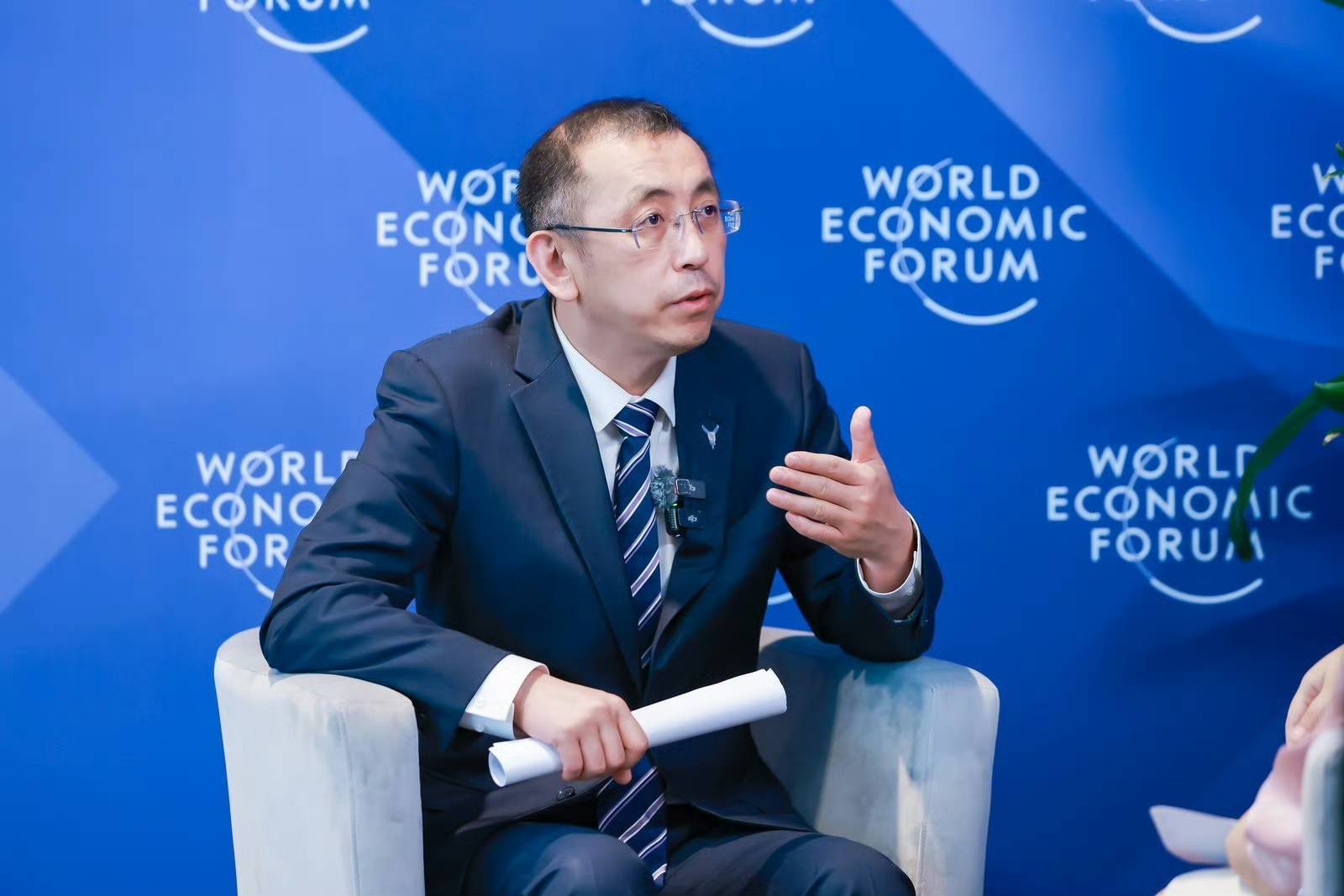
Core Insights - The core viewpoint emphasizes that innovation and user experience are essential for sustainable development in the competitive landscape of the Chinese electric vehicle (EV) industry [2][3][4]. Group 1: Industry Competition and Challenges - The essence of product homogenization in the EV sector is attributed to a lack of market insight and innovation capabilities, reflecting a short-term focus and a lack of long-term vision [3][4]. - To transition from price competition to genuine innovation, companies must deeply understand user needs and market trends, focusing on original and foundational innovations rather than superficial combinations [4][5]. - The key to breaking the current stagnation in the EV market is to maintain user satisfaction and improve internal operational efficiency to support a growing user base [5][6]. Group 2: Global Expansion and Brand Strategy - Chinese EV manufacturers have made significant advancements in low-carbon, intelligent technologies, with a production milestone of over 10 million units achieved last year, indicating readiness for global competition [7][8]. - The future of Chinese EVs is expected to lead global automotive industry transformations, although this will involve navigating uncertainties and challenges [8][9]. - To effectively penetrate the European market, Chinese brands must emphasize product experience and reliability, addressing consumer concerns about new brands through cultural narratives [10][11]. Group 3: Future Outlook and Technological Advancements - The next five years are anticipated to see the emergence of "conditional autonomous driving," which will significantly alter user experiences and vehicle architecture [13][14]. - There is a strong belief that as long as EVs at similar price points can offer superior experiences, consumer demand will surge [15].
已超1000艘 我国新能源清洁能源船舶发展迅速
news flash· 2025-06-27 02:31
Group 1 - The core viewpoint of the article highlights the rapid development of new energy and clean energy vessels, which have transitioned from non-existence to widespread application, achieving large-scale deployment with a total exceeding 1,000 vessels [1]
智造升级 融合共进——感受中国新能源汽车产业跃升脉动
Xin Hua She· 2025-06-25 07:48
Group 1 - The core viewpoint of the articles highlights the transformation of the Chinese automotive industry towards high-end value chains, exemplified by the collaboration between Jianghuai Automobile and Huawei in producing the luxury electric vehicle, the Zun Jie S800 [1] - The global automotive industry is undergoing profound changes driven by electrification, intelligence, and connectivity, which are pushing China's automotive sector towards quality improvements [1][2] - The integration of technology and innovation is becoming a consensus in the industry, with more automotive companies accelerating their ascent to higher value chains through technological advancements [1][2] Group 2 - The deep integration of industry, academia, and research is facilitating the conversion of technological research into market value, enhancing the competitiveness of Chinese electric vehicles in the global supply chain [2] - Traditional automakers like Jianghuai and BAIC are rapidly embracing the transition to new energy and high-end markets, while new entrants like NIO and Li Auto are reshaping industry competition with internet-driven strategies [2] - The automotive supply chain is evolving with significant advancements in technology, processes, and quality, driven by collaboration among various stakeholders, including battery suppliers and steel manufacturers [2] Group 3 - The Chinese intelligent connected electric vehicle industry is experiencing rapid development, supported by comprehensive top-level design and strong policy backing, leading to a complete industrial system and supply chain cost advantages [2][3]
研判2025!中国新能源冷藏车行业产业链图谱、市场现状、竞争格局及未来趋势分析:政策持续加码,国内新能源冷藏车销量快速攀升[图]
Chan Ye Xin Xi Wang· 2025-06-23 01:34
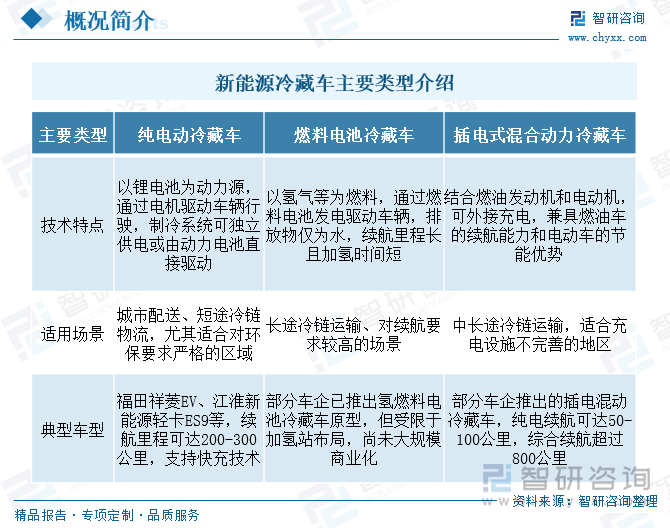
内容概要:新能源冷藏车是以电力、氢能等清洁能源为动力源,搭载制冷机组和隔热车厢的专用运输车 辆,相较于传统燃油冷藏车,其核心优势在于零排放、低噪音和显著降低运营成本。近年来,在"双 碳"战略持续推进、政策持续加码、下游冷链物流行业蓬勃发展、电池等关键技术不断进步,叠加基础 设施加速完善等多重因素驱动下,我国新能源冷藏车行业实现迅猛发展。数据显示,2024年,我国新能 源冷藏车销量已从2019年的332辆快速攀升至21368辆,五年间实现了超过64倍的增长规模,年均复合增 长率更是达到惊人的130%。 相关上市企业:福田汽车(600166);宇通客车(600066)等 相关企业:重庆军通汽车有限责任公司;陕西汽车控股集团有限公司;江西吉利新能源商用车有限公 司;山东唐骏欧铃汽车制造有限公司;河南勤帆新能源集团有限公司;深圳赛迪新能源物流有限公司; 深圳汇车新能源汽车服务有限公司;荆州市楚泰新能源科技有限公司等 关键词:产业链;新能源冷藏车销量;冷藏车保有量;竞争格局;重点企业;发展趋势 一、行业概况 新能源冷藏车是以电力、氢能等清洁能源为动力源,搭载制冷机组和隔热车厢的专用运输车辆,按照动 力类型的不同,可分为 ...