
LJZ(600663)

Search documents
金融“加速器”赋能科技创新如何更“给力”?——来自2025陆家嘴论坛的声音
Xin Hua She· 2025-06-19 10:56
Core Viewpoint - The article discusses the role of financial systems in empowering technological innovation in China, emphasizing the need for optimized financing structures and new financial models to support the development of new productive forces [1][4]. Group 1: Technological Innovation Landscape - China is experiencing a new wave of technological revolution and industrial transformation, with advancements in artificial intelligence, biotechnology, quantum technology, and commercial aerospace [2]. - The country has transitioned from a "follower" to a "leader" in innovation, with emerging industries like new energy and new materials gaining strength [2]. - The China Export-Import Bank plays a crucial role in supporting the export of key products and facilitating international cooperation in technology and production capacity [3]. Group 2: Financial Support for Innovation - There is a pressing need for financial "incubators" and "accelerators" to support both large tech giants and small innovative firms, as current financial supply faces challenges such as short-term funding and low risk tolerance [4]. - The China Securities Regulatory Commission highlights the necessity for technology companies to receive not only financing but also market resource integration and governance improvements to accelerate the transformation of technological achievements [4]. - Financial institutions need to diversify their products and services to better support the unique needs of technology enterprises, which often involve high uncertainty and require specialized assessments [4][5]. Group 3: Government and Market Collaboration - The development of new productive forces requires significant government involvement, including policy guidance and multi-faceted support mechanisms [7]. - Building a technology finance ecosystem that provides comprehensive financial services is essential for supporting technology companies through various growth stages [7][8]. - The capital market is crucial for enhancing the efficiency of innovation capital formation, offering a full range of services from venture capital to public financing [8].

上海发布20款科创金融产品!2025陆家嘴论坛科创金融工作室专场活动举办
Guo Ji Jin Rong Bao· 2025-06-19 10:55
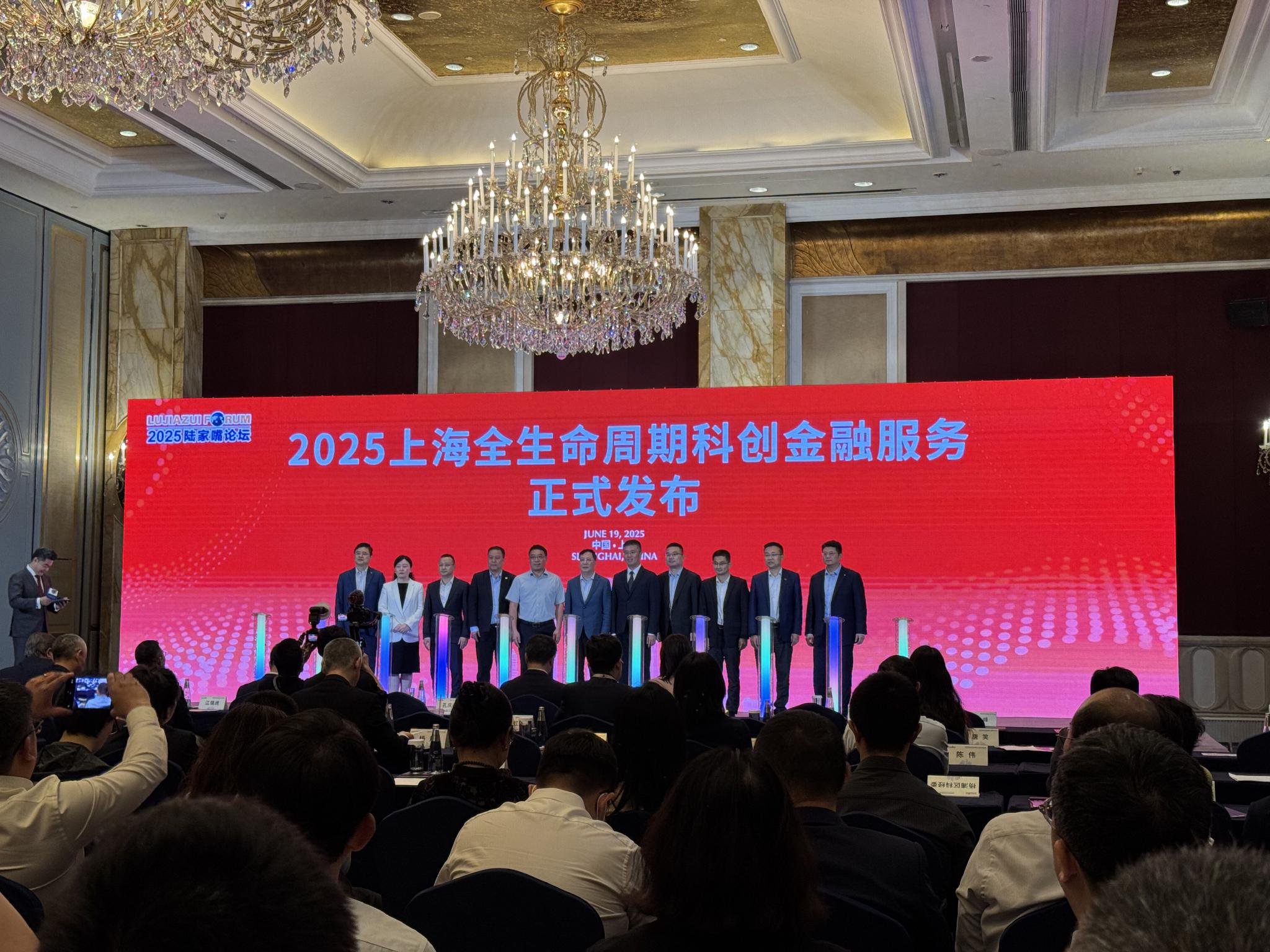
Core Insights - The 2025 Lujiazui Forum focused on the integration of technology and finance, emphasizing the development of a comprehensive financial service system for innovative enterprises in Shanghai [2][5] - Shanghai aims to enhance its role as a global financial center by fostering a supportive ecosystem for technology-driven industries and improving financial products tailored to various stages of enterprise development [3][4] Group 1: Event Overview - The event included a concentrated release of financial services for the entire lifecycle of technology innovation, a signing ceremony with the Greek Shipping Finance Management Association, and roundtable discussions [2][5] - Key officials from Shanghai's financial sector and representatives from various financial institutions and technology companies participated, highlighting the collaborative effort to support strategic emerging industries [2][3] Group 2: Financial Products Released - A range of financial products was launched to support small and medium-sized technology enterprises, focusing on digital credit, capital market linkage, and cross-institution collaboration [3][4] - Initial stage products include "Innovation Drug Loan" from Agricultural Bank of China and "Smart Intellectual Property Loan" from Bank of Communications, among others [3] - Growth stage products include "Puxin Loan" from Shanghai Pudong Development Bank and "Investment-Loan Linked Loan" from Industrial Bank, while mature stage products include "ICBC Treasury" and "Index Investment Series Products" [4] Group 3: Collaborative Efforts - A memorandum of cooperation was signed between Shanghai Financial Association and the Greek Shipping Finance Management Association, indicating a commitment to enhance collaboration in shipping finance and green finance [4] - The event featured two roundtable discussions addressing capital flow support for hard technology enterprises and financial collaboration to build future industry hubs [5]






投来橄榄枝!国外金融大咖这样看中国的普惠金融 | 直击陆家嘴
Sou Hu Cai Jing· 2025-06-19 10:08
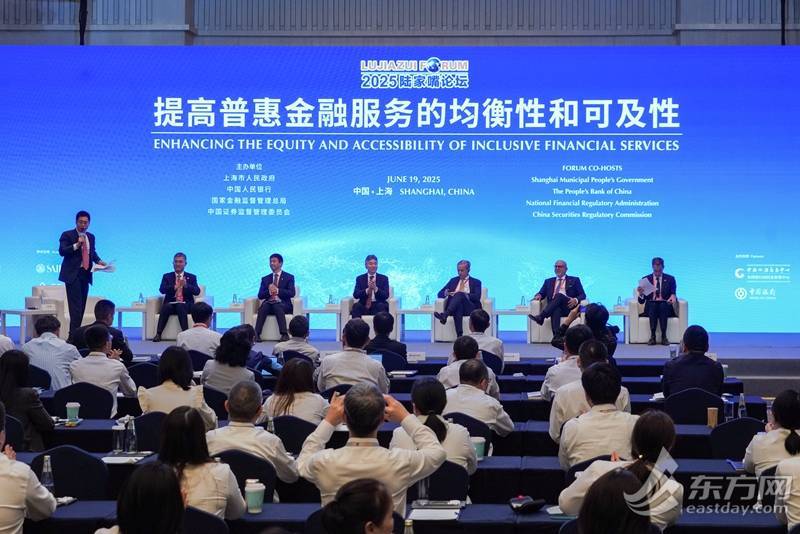
中国付诸了诸多探索,收获了可喜成果。截至2024年末,普惠小微贷款余额32.93万亿元,同比增长14.6%,贷款 增速高于同期各项贷款平均增速,普惠小微授信户数超过6000万户,已经覆盖了约1/3经营主体。 【大河财立方 记者 裴熔熔】从"穷人银行家"尤努斯开创无抵押小微贷款模式的格莱珉银行,到被写入中国金融业 要做的"五篇大文章",各国、各界一直在探寻更加行之有效的金融普惠之法。 荷兰全球人寿保险集团国际首席执行官、集团管理委员会成员Marco KEIM感叹于中国的发展速度,这令他坚信在 中国可以更好地促进普惠金融。 不过他也从实际观察出发表示,中国保险市场上关于"保护"的意识还不够高,或许是由于文化背景不同,中国的 传统社会或者家庭支持会起更多的作用。而对于保险可以带来的益处,认识程度有待加强。加上中国的数字基础 设施非常发达,未来保险行业将在中国有着独一无二的机会。 "保险行业不是简单地让用户买产品,而是要给他们提供足够有说服力的解决方案,要对数据进行充分分析和理 解,告诉人们应该在什么阶段做怎样的自我保护。"Marco KEIM认为,中国社会对于社交媒体、数字化平台的使 用程度非常高,这使得保险行业有 ...

高盛交易台:中国市场反馈-港股大涨后回调;A股杠铃策略;陆家嘴论坛要点
Goldman Sachs· 2025-06-19 09:47
Investment Rating - The report indicates a cautious outlook for the A-share market, suggesting a barbell strategy with micro-cap and bank stocks performing steadily [6][10]. Core Insights - The A-share market has remained flat amid Middle East tensions, supported by the Lujiazui Forum, while H-shares lagged due to increased risk-off sentiment [1]. - Biotech and New Consumption sectors in Hong Kong have seen a sharp pullback after significant gains of 30-50% YTD, with the HS Biotech Index dropping over 9% in the past five days [2][3]. - The Lujiazui Forum has announced measures to support Shanghai as a global financial center, including the reopening of IPOs for unprofitable tech firms under new standards [10][11]. Summary by Sections A-share Market - The A-share market is experiencing a barbell strategy with micro-cap and bank stocks outperforming, while foreign participation remains light [6]. - Limited liquidity is driving small-cap beta, while deflationary pressures keep dividend plays attractive [7][8]. Hong Kong Market - The biotech and new consumption sectors have both declined after strong rallies, with notable sell-offs in stocks like CSPC and Innovent [2][3]. - The new consumption sector has seen significant drops in stocks such as PopMart and Laopu, attributed to profit-taking rather than clear negative catalysts [4]. Lujiazui Forum Insights - The forum emphasized credibility and global financial connections, with discussions on reopening IPOs for unprofitable tech firms and expanding QFII investment scope [10][12]. - AI and semiconductor companies are likely to be prioritized for new listings, with stocks in the growth tier marked with a "U" label to indicate investment risk [11]. Macro Economic Context - Retail sales showed strong performance in May, but sustainability is questioned due to potential payback effects in June [13]. - Property prices in 70 cities have continued to decline, with secondary market data indicating a drop of 5-15% over the past year [14]. Investor Behavior - Overall A-share flows indicate a selling trend, with long-only and hedge funds both showing net selling behavior despite the geopolitical tensions [18]. - Specific sectors like AI infrastructure are seeing renewed interest, with notable buying in companies like Zhongji Innolight and Eoptolink [17].
证监会主席“发令枪”响!公募巨头抢报首批科创债ETF,1.3万亿元市场迎“破局者”|聚焦2025陆家嘴论坛
Hua Xia Shi Bao· 2025-06-19 09:39
Group 1 - The core viewpoint of the articles is the strong policy support for the development of technology innovation bonds (科创债) and the introduction of technology innovation bond ETFs (科创债ETF) to enhance the capital market's role in supporting technological innovation [1][2][6] - On June 18, 2025, the Chairman of the China Securities Regulatory Commission (CSRC), Wu Qing, announced the acceleration of the development of technology innovation bonds and the launch of technology innovation bond ETFs, indicating a clear direction for capital market support for technological innovation [2][6] - Ten leading public funds have simultaneously submitted applications for the first batch of technology innovation bond ETFs, marking a significant step in providing tools for the capital market to support technological innovation [1][2] Group 2 - The first batch of technology innovation bond ETFs includes products that closely track various indices, such as the CSI AAA Technology Innovation Company Bond Index, which represents a significant portion of the technology innovation bond market [4][5] - The CSI AAA Technology Innovation Company Bond Index has a scale of 1.02 trillion yuan, accounting for 91.9% of the total technology innovation bond market, indicating its comprehensive representation of the sector [4] - The introduction of technology innovation bond ETFs is expected to enhance market liquidity and attract long-term funds, such as social security and pension funds, to support the development of technology innovation companies [1][6][8] Group 3 - The technology innovation bond market has seen rapid growth since its pilot launch in 2021, with a total of 1,273 bonds issued and a balance exceeding 1.3 trillion yuan, reflecting increasing market liquidity [6][7] - The CSRC has relaxed the thresholds for including technology innovation bonds in benchmark market-making securities, which is expected to further expand the issuance scale of these bonds [6][7] - The technology innovation bond ETFs are designed to provide a convenient investment tool for investors, allowing them to participate in the technology innovation bond market efficiently [6][8] Group 4 - The launch of technology innovation bond ETFs fills a gap in the bond index products for the technology sector, offering investors a more diversified fixed-income asset allocation choice [8] - The ETFs are expected to lower financing costs and improve financing efficiency for technology innovation companies by attracting a broader range of investors, including retail and institutional investors [8] - The first batch of technology innovation bond ETFs employs a strategy that combines broad coverage with focused selection, aiming to capture both high-quality technology bonds and specialized assets [8]
陆家嘴论坛开幕 国建集团减债融资课题引领产融结合培育新质生产力
Sou Hu Cai Jing· 2025-06-19 09:23
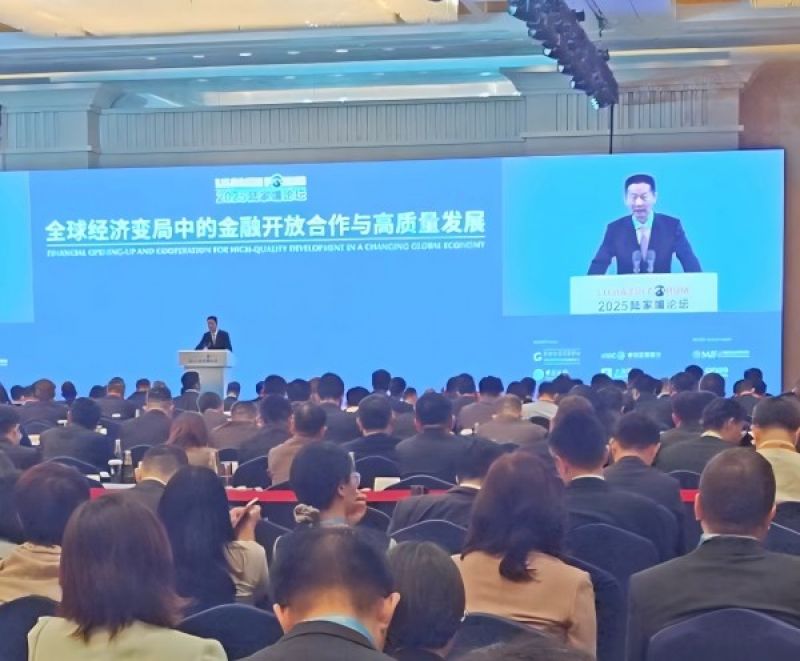
Group 1 - The 2025 Lujiazui Forum focuses on "Financial Opening and Cooperation in the Global Economic Transition and High-Quality Development," emphasizing how finance can effectively support the transformation of the real economy and national strategic objectives [1][4] - The Guojian Group is implementing the "New Era State-Owned Enterprise Debt Reduction Financing (DRF) Collaborative Development with Private Enterprises" initiative, aiming to connect policy, capital, and industry through debt and equity investments [1][3] - The forum highlights the importance of financial empowerment in cultivating new productive forces, with Guojian Group using DRF funds to address immediate financial challenges and invest in high-quality state-owned and private enterprises [3] Group 2 - Guojian Group evaluates different industry levels to determine funding ratios, ranging from 1:1 to 1:9, based on the strength of industry advantages, thereby enhancing the interlinkage effects among advantageous industries [3] - The forum introduced the "Shanghai-Hong Kong International Financial Center Collaborative Development Action Plan," providing a regulatory framework for financial cooperation [3] - Guojian Group has established asset management and financial centers in Shanghai and Hong Kong, respectively, to optimize resource allocation globally and attract long-term, low-cost foreign capital for domestic strategic projects [3][4] Group 3 - The evolving global economic landscape gives unprecedented strategic significance to financial opening and cooperation, with the forum's financial policies reflecting China's commitment to high-level openness driving high-quality development [4] - Guojian Group aims to deepen the DRF initiative and leverage the collaborative advantages of the Shanghai and Hong Kong centers to foster new productive forces and support China's high-quality economic development [4]

陆家嘴论坛热议金融国际化,上交所、港交所透露未来计划
Di Yi Cai Jing· 2025-06-19 08:59
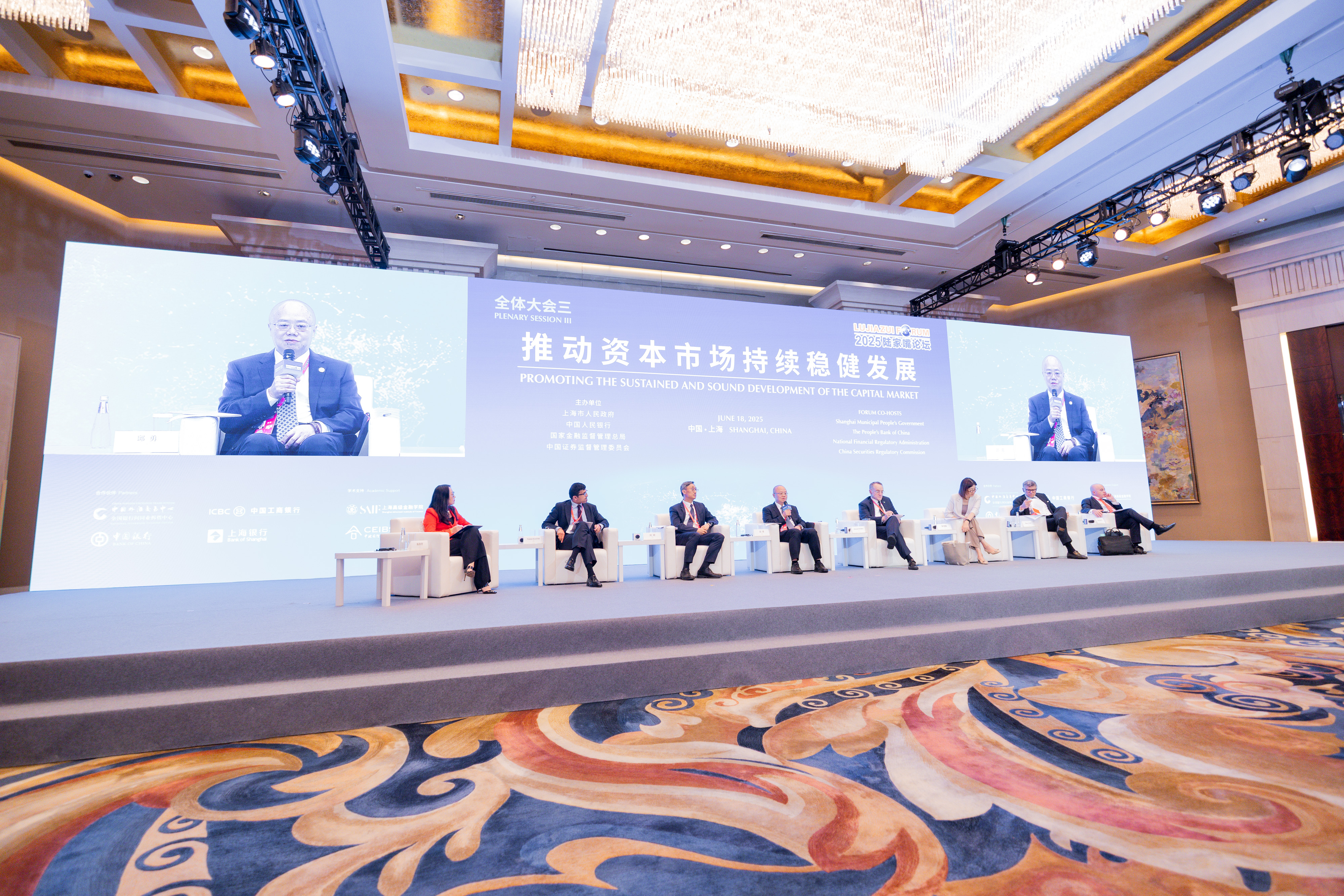
Group 1 - The financial industry inherently possesses an open gene, and financial activities should embrace openness [1][10] - Since early April, external shocks have increased, causing significant volatility in international financial markets, which has also pressured the Chinese capital market; however, the long-term positive development trend of the Chinese economy remains unchanged [1] - The resilience and risk resistance of the Chinese capital market have been demonstrated despite the challenges [1] Group 2 - The Shanghai Stock Exchange (SSE) aims to maintain market stability and enhance internal stability mechanisms, deepen the reform of the Sci-Tech Innovation Board, and promote long-term capital inflow [4][6] - The SSE reported a compound annual growth rate of 10.7% in R&D investment over the past three years, with a median R&D intensity of 12.6%, leading A-shares [5] - The SSE has seen a 25% year-on-year increase in disclosed asset restructuring plans, with significant growth in major asset restructurings [5] Group 3 - The Hong Kong Stock Exchange (HKEX) plans to enhance its product offerings and risk management tools, including the preparation of RMB government bond futures [7] - HKEX aims to facilitate mainland investors' participation in the Hong Kong market by incorporating RMB counters into the Stock Connect trading mechanism [7] Group 4 - Howard Marks highlighted China's structural advantages, including a highly educated workforce, a large middle-class market, and a robust manufacturing sector [8] - To further internationalize the financial market, Marks suggested opening more asset classes and optimizing foreign investment product access mechanisms [9] Group 5 - The importance of regulatory predictability and consistency with local demands and global practices was emphasized to attract more foreign capital [9][10] - The need for regulatory frameworks to evolve alongside market innovations was also discussed, ensuring that regulations keep pace with market developments [10]

美国关税政策引发经济金融风险 陆家嘴论坛热议全球货币政策协调
Xin Hua Cai Jing· 2025-06-19 08:27
Core Viewpoint - The article discusses the impact of the U.S. tariff policy on global economic stability and the need for coordinated monetary policies among countries to mitigate risks and foster a favorable financial environment for global economic growth [1][2][4]. Group 1: Impact of U.S. Tariff Policy - The U.S. government's significant increase in tariffs has caused major disruptions to the global economic order, affecting investment and consumption decisions worldwide, and increasing financial market volatility [2][3]. - The uncertainty stemming from U.S. tariffs has led to pressure on traditionally safe assets, prompting central banks to focus on medium-term goals to ensure financial market stability [3][5]. - The tariff policy undermines the global multilateral trade system, leading to widespread uncertainty and potentially restructuring global trade patterns, which could adversely affect macroeconomic conditions in various countries [3][4]. Group 2: Need for Monetary Policy Coordination - Strengthening coordination of monetary policies among countries is essential to effectively respond to tariff shocks and maintain financial stability [4][5]. - The current state of global monetary policy coordination is lacking, with no single institution responsible for overseeing it, and a need for more research and consensus-building [6]. - Major central banks should utilize tools like currency swap agreements to provide sufficient liquidity in times of uncertainty and crisis [5][6]. Group 3: Future of the International Monetary System - The weakening of the dollar's credibility due to rising U.S. fiscal deficits and trade protectionism suggests a shift towards a more diversified international monetary system [7][8]. - The internationalization of currencies like the renminbi and euro is seen as a step towards reducing reliance on the dollar and promoting a competitive environment among major currencies [7][8]. - The potential establishment of a platform by the IMF for issuing a supranational currency based on central bank digital currencies (CBDCs) is proposed as a way to enhance the stability of the global monetary system [7][8].
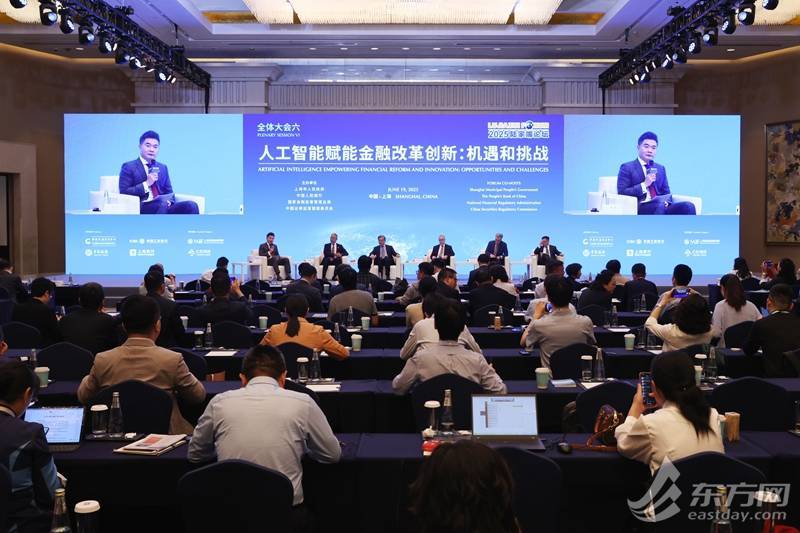
当AI遇到金融人,是取代还是共存?|直击陆家嘴
Sou Hu Cai Jing· 2025-06-19 08:13
Group 1 - The rise of big data models like Deepseek has sparked renewed discussions on whether artificial intelligence can become a fund manager like a human [1] - Kevin D Sneader from Goldman Sachs stated that AI will not replace humans but will create a complementary relationship, emphasizing the importance of human oversight to prevent AI hallucinations [3] - Tu Guangshao, from Shanghai Advanced Institute of Finance, highlighted the challenge of balancing the needs of investors and consumers in financial institutions when implementing digital technologies [3] Group 2 - Bao Jianmin from CITIC Group emphasized the importance of inclusivity in AI applications, focusing on how to cover a broader audience and address long-tail demands [4] - The need for precision in AI applications was also stressed, aiming to enhance the true capabilities of investment and financing [4]
陆家嘴论坛宣布八项重磅金融开放举措,证券ETF龙头(159993)连续3天累计“吸金”3.95亿元
Xin Lang Cai Jing· 2025-06-19 06:03
Group 1 - The core viewpoint of the news highlights the performance of the securities industry, particularly focusing on the decline of the Guozheng Securities Leading Index and the significant inflow of funds into the Securities ETF Leader [1] - As of June 19, 2025, the Guozheng Securities Leading Index (399437) has decreased by 1.59%, with China Galaxy (601881) leading the decline among component stocks [1] - The Securities ETF Leader has reached a new high in scale at 1.852 billion yuan and a new high in shares at 1.605 billion, indicating strong investor interest [1] Group 2 - The recent Lujiazui Forum announced eight major financial opening measures aimed at accelerating the high-quality development of the financial industry, with a focus on building an innovative ecosystem centered around the capital market [1] - Guosen Securities maintains an "outperform the market" rating for the securities industry, predicting increased industry concentration and enhanced institutional pricing power under strict regulations [1] - The top ten weighted stocks in the Guozheng Securities Leading Index account for 80.15% of the index, indicating a concentrated investment landscape [2]