
AikoSolar(600732)

Search documents
光伏BC产业专家交流
2025-07-15 01:58
Summary of Key Points from the Conference Call Industry Overview - The conference call focuses on the photovoltaic (PV) industry, specifically the development and market penetration of BC (Bifacial Cell) components in comparison to Topcon technology [1][2][20]. Core Insights and Arguments - **Market Penetration**: BC components have a penetration rate of approximately 20% in the high-end distributed market in Europe, while the domestic market penetration is only between 5% and 10% [1][2]. - **Price Comparison**: BC components are generally priced higher than Topcon components, with a domestic price premium of about 0.1 CNY per watt for distributed applications and 0.05 CNY for centralized applications. In Europe, the premiums are approximately 0.2 CNY and 0.1 CNY, respectively [2]. - **Efficiency and Power Output**: BC components theoretically offer a power increase of 25-30 watts and a generation efficiency improvement of 20-25% compared to Topcon, although these figures require practical validation [1][3]. - **Production Capacity**: By the end of 2024, Aiko is expected to reach nearly 10 GW capacity, while Longi aims for 50 GW of second-generation BC capacity, with an expected output of 20 GW in 2025 [4]. - **Outsourcing Model**: The outsourcing model allows companies to rapidly scale production and reduce costs, but it also tests supply chain management capabilities [5]. - **Cost Structure**: BC components have higher costs due to greater silver paste usage and depreciation costs, with overall component costs being about 0.05 CNY per watt higher than Topcon [1][7]. - **Technological Advancements**: New materials and technologies, such as the introduction of multi-layer composite solder strips by Yubang, are expected to enhance the efficiency and production of BC components [8][9]. Additional Important Insights - **Policy Impact**: The introduction of stricter efficiency requirements, such as the 24.2% power requirement in Shaanxi, indicates a growing emphasis on efficiency improvements in the industry [18][19]. - **Challenges in Production**: The main challenges in BC production include achieving stable mass production and high yield rates, with current yields around 95-96% [7][23]. - **Future of BC Technology**: While BC technology is gaining traction, it is unlikely to completely replace Topcon in the short term due to existing capacities and market dynamics. Both technologies are expected to coexist for the foreseeable future [20][21]. - **Patent Risks**: There are potential patent risks associated with BC technology, particularly from Maxson's patents, but these are not expected to significantly hinder market entry for other companies [29]. This summary encapsulates the key points discussed in the conference call, highlighting the current state and future prospects of the BC technology within the photovoltaic industry.


光伏企业的中期业绩预告,透露出怎样的趋势和规律?
Tai Mei Ti A P P· 2025-07-15 00:29
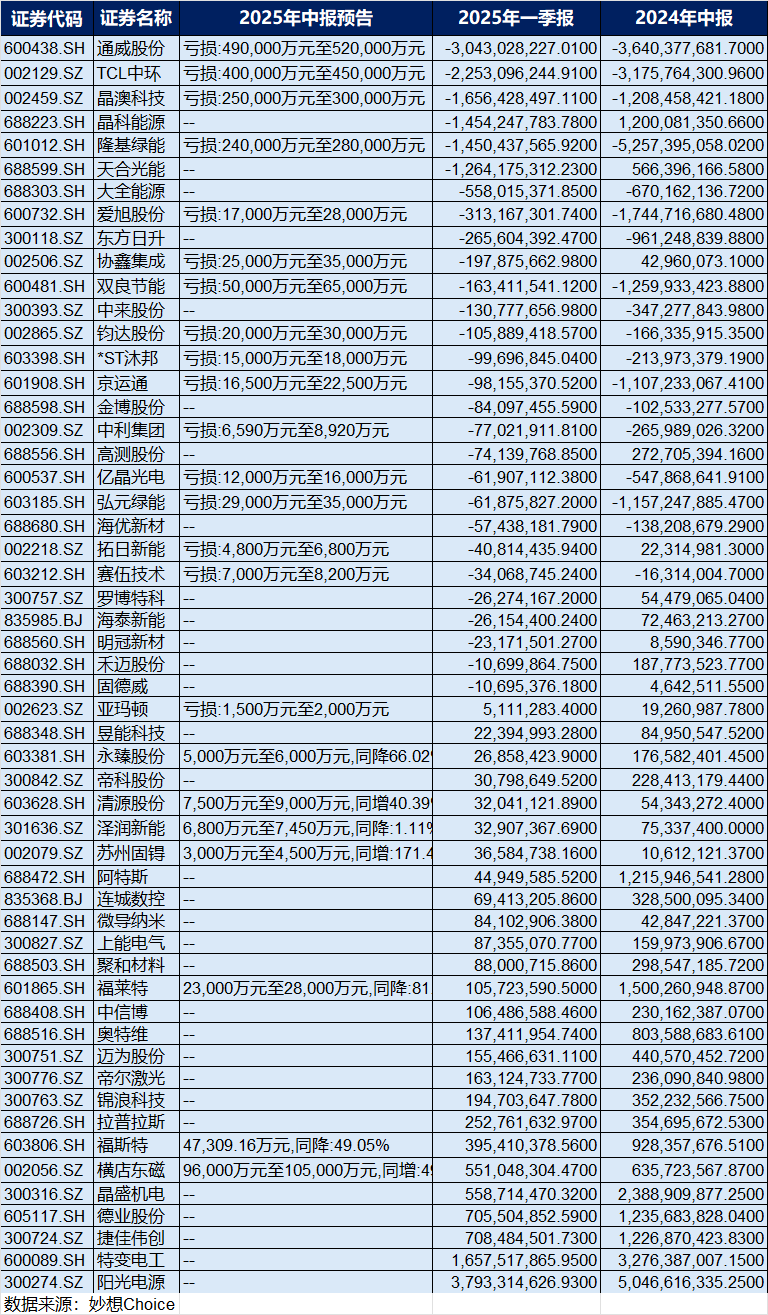
Core Viewpoint - The performance of photovoltaic material companies in the first half of 2025 is deteriorating, with significant losses reported across the sector, indicating that the industry is struggling to recover on its own [1][6][11]. Financial Performance Summary - A total of 24 photovoltaic companies have released their mid-year performance forecasts, with 13 out of 14 major material companies reporting losses [6][11]. - Notable losses include: - Tongwei Co., Ltd.: Expected loss of 4.9 billion to 5.2 billion CNY [1] - TCL Zhonghuan: Expected loss of 4 billion to 4.5 billion CNY [1] - JA Solar: Loss doubled compared to the previous year, with no improvement from the first quarter [9] - Longi Green Energy: Significant reduction in losses year-on-year, but no improvement from the first quarter [9] - Aiko Solar: Achieved profitability in the second quarter, attributed to innovative product offerings and market segmentation [9][10]. Industry Challenges - The photovoltaic industry is facing severe challenges, with increasing competition and financial pressures leading to widespread losses [11][12]. - The industry is characterized by high leverage, particularly among leading companies, making recovery difficult [11]. - The government is urged to implement measures to reduce excess capacity and enforce strict standards to prevent further deterioration of the industry [12][13]. Recommendations for Recovery - Suggestions include reducing polysilicon production capacity by half and halting expansions across all photovoltaic capacities [12][13]. - Establishing a unified standard system for product quality, energy consumption, and carbon emissions is essential to avoid quality issues in the future [13].


减亏超24亿!隆基绿能,“赌”对了
DT新材料· 2025-07-14 15:56
Core Viewpoint - The photovoltaic industry is experiencing widespread losses among major companies, although some, like Longi Green Energy and Aiko Technology, are significantly reducing their losses due to the penetration of BC batteries into the market [1]. Group 1: Longi Green Energy - Longi Green Energy expects a net loss of 2.4 billion to 2.8 billion yuan for the first half of 2025, a reduction of 2.443 billion to 2.843 billion yuan year-on-year [2]. - The company is still facing losses due to the main products' market prices falling below cost, but improved internal management and the introduction of HPBC 2.0 components have led to increased orders and shipments, resulting in a significant reduction in losses [2]. Group 2: Tongwei Co., Ltd. - Tongwei Co., Ltd. anticipates a net loss of approximately 4.9 billion to 5.2 billion yuan for the first half of 2025, compared to a net loss of 3.129 billion yuan in the same period last year [3]. - Despite the growth in photovoltaic installation scale, the company is facing losses due to an imbalance in supply and demand leading to depressed product prices [3]. Group 3: JA Solar Technology - JA Solar Technology expects a net loss of 2.5 billion to 3 billion yuan, compared to a loss of 874.6 million yuan in the same period last year [4]. - The company is experiencing intensified competition and price pressure across the photovoltaic supply chain, exacerbated by international trade protection policies, leading to a decline in sales prices and profitability [4]. Group 4: Junda Co., Ltd. - Junda Co., Ltd. projects a net loss of 200 million to 300 million yuan, compared to a loss of 166.34 million yuan in the same period last year [7]. - The company has significantly increased its overseas sales proportion from 23.85% in 2024 to 51.90% in the first half of 2025 by expanding into new markets [7]. - Junda successfully listed on the Hong Kong Stock Exchange, raising a net amount of 1.29 billion HKD [7]. Group 5: Aiko Technology - Aiko Technology expects a net loss of 170 million to 280 million yuan for the first half of 2025, with a projected net loss of 410 million to 520 million yuan after excluding non-recurring gains and losses [9]. - The company has optimized its product structure and significantly increased its overseas sales proportion, leading to improved overall gross margins and operational efficiency [9].

“铜”猬甲披挂上阵,爱旭ABC组件太能打了
Sou Hu Cai Jing· 2025-07-14 12:17
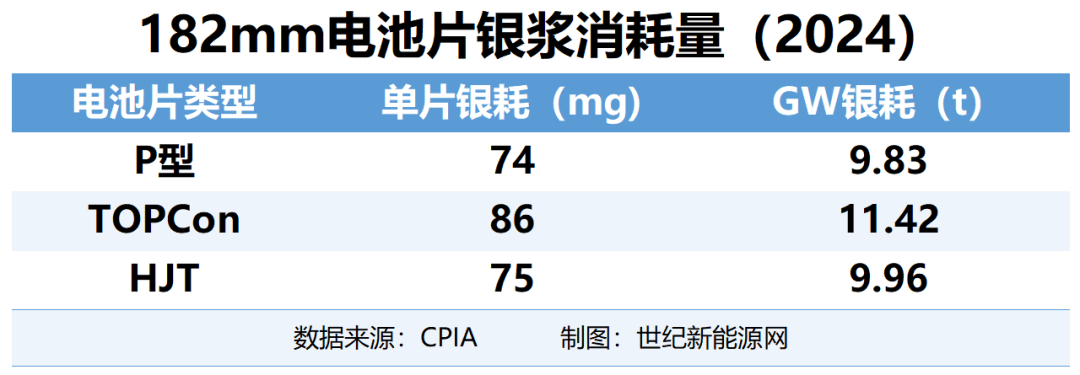
Core Viewpoint - Aiko's performance in the photovoltaic industry is highlighted by its ability to achieve profitability in Q2 2025, marking it as the first silicon photovoltaic company to report a single profitable quarter amidst a challenging market environment [1][2]. Group 1: Company Performance - Aiko expects a net profit of -170 million to -280 million CNY for H1 2025, but achieved a profit of 20 million to 130 million CNY in Q2 2025, indicating a successful turnaround [1]. - The company's strategy focuses on technological innovation to enhance product competitiveness, particularly through its copper interconnection technology [1][2]. Group 2: Industry Challenges - The photovoltaic industry faces a paradox of being a green energy sector while being heavily reliant on silver, which has limited availability and increasing prices [2][5]. - China's photovoltaic industry has a significant silver consumption gap, with demand expected to rise sharply, leading to potential supply crises [5][6]. Group 3: Technological Breakthroughs - Aiko has pioneered the mass production of silver-free ABC cells, overcoming significant technical challenges associated with using copper instead of silver [7][10]. - The company has developed advanced techniques to ensure the stability and reliability of copper interconnections under extreme environmental conditions, which is crucial for long-term performance [12][13]. Group 4: Market Implications - The increasing reliance on copper interconnection technology positions Aiko as a leader in the industry, providing a sustainable alternative to silver and addressing supply chain vulnerabilities [6][9]. - Aiko's copper interconnection technology has demonstrated superior performance in terms of resilience to damage and efficiency in energy generation compared to traditional silver-based technologies [20][22].
“反内卷”刷屏!券商一周“176篇研报+79场路演”,投资机遇来了?
天天基金网· 2025-07-14 05:10
Core Viewpoint - The "anti-involution" research trend is gaining momentum in the A-share market, with expectations that it may become the main theme for the next market phase, benefiting various sectors such as lithium batteries, photovoltaics, coal, steel, chemicals, energy, and construction materials [2][3][4]. Group 1: Research and Analysis - In the past week, a total of 176 research reports on the "anti-involution" theme were published by institutions, covering multiple industries including strategy, macroeconomics, steel, fossil energy, electrical equipment, building materials, non-ferrous metals, chemicals, and aquaculture [2]. - The "anti-involution" theme has become a focal point in analyst roadshows, with 79 related events held in the past week, indicating a strong institutional interest [2]. - Analysts believe that the current round of "anti-involution" has a higher standing, broader coverage, and stronger synergy, with potential implications for the market's next phase [3]. Group 2: Policy and Market Implications - The Central Financial Committee's recent meeting emphasized the need to promote a unified national market and address issues of low-price competition, which has led to increased attention on "anti-involution" in the capital market [3]. - The "anti-involution" policy is expected to unfold in three stages: policy expectations, price increases, and demand expansion, with a focus on sectors that may experience a turnaround [4]. Group 3: Beneficiary Industries - Key sectors expected to benefit from the "anti-involution" policies include: - Midstream and downstream manufacturing such as lithium batteries, photovoltaics, wind power, passenger vehicles, paper, and medical devices - Service and consumer sectors like food processing, express delivery, and small appliances - Resource materials including steel, cement/glass, consumer building materials, chemical fibers/agricultural chemicals, and energy metals - Real estate-related sectors such as kitchen appliances and home furnishings [5][6]. - The steel industry is highlighted for its potential bottom reversal, with supply-side reforms and improved profitability expected [8]. Group 4: Sector-Specific Insights - The photovoltaic industry is entering a high-quality development phase, with significant stock price increases observed in related sectors [9]. - Analysts suggest that the photovoltaic sector's recovery will depend on effective supply-side reforms and the establishment of a long-term mechanism for eliminating outdated capacity [9]. - Recent downgrades in specific photovoltaic stocks indicate a cautious outlook despite the overall positive sentiment in the sector [10].
GE将建造18MW海风样机,BC领先企业二季度扭亏
Ping An Securities· 2025-07-14 03:26
Investment Rating - The report maintains an "Outperform" rating for the industry [1] Core Insights - The wind power index increased by 2.83%, outperforming the CSI 300 index by 2.01 percentage points during the week of July 7 to July 11, 2025 [4][11] - The overall price-to-earnings ratio (PE TTM) for the Wind power index is 20.29 times [11] - GE is set to construct an 18MW offshore wind turbine prototype in Norway, indicating a significant step in offshore wind technology testing [5][10] - Domestic wind turbine manufacturers have surpassed their overseas counterparts in terms of single-unit capacity, with several companies already producing or installing 16-18MW offshore wind turbines [5][10] - Aiko Solar reported a turnaround in Q2 2025, achieving a net profit of 0.2-1.3 billion yuan, indicating improved operational conditions [5] - Shandong's new energy storage system set a record with a total capacity of 8.25 million kilowatts, highlighting the growing importance of energy storage in the power system [6] Summary by Sections Wind Power - GE Vernova's subsidiary will build an 18MW offshore wind turbine in Norway, part of its offshore wind technology testing plan [5][10] - The report notes that overseas companies face challenges in developing larger turbines due to long development cycles and financial conditions [5][10] - Domestic manufacturers are rapidly advancing in turbine capacity, creating a technological advantage for exports [5][10] Solar Power - Aiko Solar's Q2 2025 results show a significant improvement, with a net profit turnaround attributed to optimized product structure and increased overseas sales [5] Energy Storage & Hydrogen - Shandong's energy storage system achieved a record discharge capacity, emphasizing the critical role of energy storage in balancing power supply and demand [6] - The report anticipates a new market-driven business model for energy storage following the removal of mandatory storage policies [6] Investment Recommendations - In wind power, the report suggests focusing on domestic demand growth and investment opportunities in offshore wind turbine exports [6] - For solar power, it recommends monitoring structural opportunities within the BC industry [6] - In energy storage, it highlights potential in overseas markets and recommends companies with strong global competitiveness [6] - In hydrogen, it advises attention to companies involved in green hydrogen project investments [6]




“反内卷”刷屏!券商一周“176篇研报+79场路演”,投资机遇来了?
券商中国· 2025-07-13 13:22
Core Viewpoint - The "anti-involution" research trend in the A-share market is gaining momentum due to policy support and rapid responses from various industries [1][5]. Group 1: Research and Market Response - In the past week, financial institutions published 176 research reports on the "anti-involution" theme, covering various sectors including steel, energy, and chemicals [2]. - There were 79 roadshows related to "anti-involution" in the past week, indicating its prominence in analyst discussions [3]. - Analysts believe this round of "anti-involution" has a higher standing, broader coverage, and stronger synergy, potentially becoming the main market theme in the next phase [4][6]. Group 2: Policy Implications - The Central Financial Committee emphasized the need to promote a unified national market and regulate low-price competition, which has led to increased attention on "anti-involution" in the capital market [5]. - Analysts expect further policy deployments related to "anti-involution," with potential measures including industry self-discipline and price monitoring [5]. Group 3: Beneficial Sectors - Key sectors expected to benefit from the "anti-involution" policies include lithium batteries, photovoltaics, coal, steel, chemicals, and construction materials [8]. - The manufacturing sector, particularly in lithium, photovoltaics, and automotive, along with service industries like food processing and logistics, are highlighted as potential beneficiaries [8]. - The steel industry is noted for its potential bottom reversal, with supply-side reforms and improved profitability expected [11][12]. Group 4: Industry-Specific Insights - The photovoltaic sector has seen significant stock performance, with a 5.5% increase in the photovoltaic index over a week, driven by price recovery and regulatory support [13]. - Analysts suggest that the focus on supply-side reforms in the photovoltaic industry will be crucial for long-term competitiveness and market stability [13][14].

大能源行业2025年第28周周报:储能招投标延续高增,光伏“反内卷”或助板块反弹-20250713
Hua Yuan Zheng Quan· 2025-07-13 12:46
Investment Rating - The investment rating for the industry is "Positive" (maintained) [3] Core Views - The photovoltaic manufacturing industry is currently facing challenges due to unclear downstream demand expectations and excess upstream capacity. However, the implementation of Document No. 136 is expected to clarify demand expectations, leading to improvements in both supply and demand dynamics within the industry [4][20] - The energy storage sector is experiencing a significant increase in project bidding, with June 2025 seeing a record high of 62.8 GWh in public bidding capacity, a 228% increase compared to June 2024 [5][9] - The photovoltaic sector is anticipated to rebound due to the "anti-involution" plan aimed at reducing excess capacity and promoting sustainable development within the industry [17][18] Summary by Sections Energy Storage - The energy storage industry is in a transitional phase, with ongoing government support expected to maintain resilient demand for storage projects. Key companies to watch include Haibo Shichuang and Sungrow Power [14][17] - The regions with high renewable energy penetration, such as Inner Mongolia, Ningxia, Xinjiang, and Hebei, are showing positive attitudes towards supporting energy storage projects [14][15] Photovoltaics - The photovoltaic sector is experiencing rapid capacity growth, outpacing demand, leading to significant losses for companies. The "anti-involution" plan aims to address this by facilitating the exit of outdated capacity and stabilizing prices [17][18] - The price of polysilicon has seen a dramatic decline, dropping from 65 RMB/kg at the beginning of 2024 to 35 RMB/kg by July 2025, but there are signs of recovery [18][19] - Companies to focus on include Tongwei Co., GCL-Poly Energy, and Xinte Energy in the polysilicon segment, and new technology firms like BQ Materials and Aiko Solar in the photovoltaic technology space [4][20]


电力设备与新能源行业周观察:光伏产业链价格全线上调,英国Mona1.5GW海风获开发许可




HUAXI Securities· 2025-07-13 09:31
Investment Rating - Industry rating: Recommended [5] Core Insights - The humanoid robot industry is expected to accelerate towards mass production due to breakthroughs in AI technology and increasing domestic and international enterprise layouts, with strong demand for domestic replacement of core components [12][15] - The domestic new energy vehicle (NEV) market is experiencing rapid growth, with production and sales in June exceeding 25% year-on-year, driven by technological advancements in vehicle performance [16][18] - The photovoltaic industry chain has seen a significant price increase across the board, with policies promoting orderly competition and a solidified industry foundation [24][29] - The approval of the UK's 1.5GW Mona offshore wind project marks a significant advancement in the European offshore wind sector, with expectations for further auctions and orders in the second half of the year [25][27] Humanoid Robots - The humanoid robot sector is witnessing increased participation from major tech companies, with a focus on the T-chain and domestic supply chain developments, indicating a robust market opportunity [12][15] - Key components such as dexterous hands and lightweight materials are expected to see significant advancements, enhancing the efficiency and application of humanoid robots [13][15] New Energy Vehicles - The NEV sector is in a growth phase, with new models enhancing performance and cost-effectiveness, supported by advancements in solid-state batteries and other technologies [16][18] - The demand for lithium battery materials is expected to expand due to the recovery of the consumer electronics market and the growth of energy storage applications [20][22] Photovoltaic Industry - The photovoltaic industry is experiencing a price surge due to supply chain adjustments and policy support, with specific beneficiaries identified in the silicon material and battery sectors [24][29] - The market is expected to stabilize as inventory levels decrease and production capacity is adjusted, with a focus on high-efficiency products and new technologies [30][32] Offshore Wind Power - The approval of the Mona offshore wind project is anticipated to stimulate further developments in the offshore wind sector across Europe, with domestic companies poised to benefit from upcoming orders [25][27] - The demand for offshore wind components is expected to rise, driven by both domestic and international projects, creating opportunities for companies involved in the supply chain [43][45]
爱旭股份2025年上半年预亏1.7-2.8亿元 技术孤岛上的生存裂缝
Xin Lang Zheng Quan· 2025-07-11 09:11
Core Viewpoint - The company Aisuo is facing severe operational challenges due to its reliance on the ABC technology route, which has led to significant financial losses and a deteriorating market position amid intense competition in the photovoltaic industry [1][2]. Group 1: Technological Challenges - Aisuo has bet its future on the ABC technology, aiming for product differentiation to survive the industry's downturn, but this has resulted in a paradox where production costs exceed market prices, leading to deeper losses despite premium pricing [2]. - The company has neglected the mainstream TOPCon technology, causing its traditional products to lose competitiveness rapidly, especially as the industry evolves at an accelerated pace [2]. - Aisuo's strategy of focusing solely on ABC technology has limited its flexibility and innovation capacity, resulting in reduced R&D investment and a weakening technological moat [2]. Group 2: Financial Struggles - Aisuo is experiencing a financial crisis characterized by a high debt-to-asset ratio, with short-term debts significantly exceeding cash reserves, leading to a liquidity crunch [3]. - The company's cash flow is severely constrained, with ongoing negative cash flow cycles exacerbated by declining sales and increasing R&D costs [3]. - Aisuo's repeated failed attempts to raise capital through equity offerings have eroded investor confidence, trapping the company in a cycle where technological advancements require funding, which in turn requires proof of profitability [3].