
GDPD(600795)

Search documents
电力中长期交易新规发布,广东等地2026年长协电价陆续出炉
GOLDEN SUN SECURITIES· 2025-12-28 12:36
Investment Rating - The industry is rated as "Maintain Buy" [3] Core Insights - The new long-term electricity trading regulations, revised for the first time in five years, aim to promote market pricing and the entry of new entities. The National Development and Reform Commission and the National Energy Administration have issued the "Basic Rules for Long-term Electricity Market," with local implementation details required by March 1, 2026. Long-term trading volume accounted for 95.9% of total market trading volume in the first three quarters of 2025, indicating the importance of this regulation in adapting to the full market entry of renewable energy and establishing a unified national electricity market [2][14] - The new regulations are expected to enhance revenue certainty for thermal and renewable energy companies. They allow for flexible pricing mechanisms linked to monthly coal price indices and spot market averages, reducing the impact of coal price fluctuations on thermal power profits. Green electricity trading is now integrated as a primary trading category, with clear pricing structures established [2][14] - The regulations expand the scope of trading participants to include new entities like virtual power plants and independent storage, defining their rights and obligations. They also eliminate the previously mandated time-of-use pricing for direct market participants, allowing for a more market-driven pricing mechanism [2][15] Summary by Sections Industry Overview - The electricity market is undergoing significant regulatory changes aimed at enhancing market efficiency and stability. The new rules are designed to accommodate the increasing integration of renewable energy sources and to create a more flexible and responsive pricing environment [2][14] Market Performance - The Shanghai Composite Index closed at 3963.68 points, up 1.88%, while the CSI 300 Index closed at 4657.24 points, up 1.95%. The CITIC Power and Utilities Index closed at 3115.63 points, up 0.67%, underperforming the CSI 300 Index by 1.28 percentage points [62][63] Key Trading Data - In Jiangsu, the average price for centralized bidding in January 2026 was 324.71 yuan per megawatt-hour, down 19.9% year-on-year and 17% below the coal power benchmark price of 391 yuan per megawatt-hour. The total transaction volume was 60.92 billion kilowatt-hours, a decrease of 7.1% from January of the previous year [7][15][16] - In Guangdong, the average transaction price for 2026 was 372.14 cents per kilowatt-hour, reflecting a 5% decrease from the previous year and a 17.8% drop from the coal benchmark price of 453 cents per kilowatt-hour. The total transaction volume increased by 5.4% to 3594.37 billion kilowatt-hours [11][15]




公用事业行业周报(2025.12.22-2025.12.26):用电增速维持高位,长协电价或存压力-20251228
Orient Securities· 2025-12-28 05:41
Investment Rating - The report maintains a "Positive" investment rating for the utility sector [4] Core Views - Electricity consumption growth remains high, but there are signs of pressure on long-term contract electricity prices due to falling coal prices and high inventory levels [7] - The utility sector is viewed as a defensive asset, with low-priced utility assets worth attention [7] - The report suggests that the electricity market will gradually allow for better pricing of electricity attributes to support the complex new power system [7] Summary by Sections Electricity Consumption - In November 2025, total electricity consumption increased by 6.2% year-on-year, a recovery from October's 4.2 percentage point decline, with a cumulative growth of 1.0% for January to November 2025 [10] - The growth rates for different sectors in November 2025 were: primary industry +7.9%, secondary industry +4.4%, tertiary industry +10.3%, and residential consumption +9.8% [10] - The report anticipates that December 2025 will see electricity consumption growth maintain around 5-6% due to ongoing growth in sectors like charging services and information technology [10] Electricity Prices - From December 19 to December 26, 2025, the average clearing price in Guangdong's electricity market was 308 RMB/MWh, up by 3.9% year-on-year [21] - In contrast, Shanxi's average market price dropped to 179 RMB/MWh, down 54.9% year-on-year [21] Coal Prices - Port coal prices continue to decline, with the Qinhuangdao Q5500 coal price at 672 RMB/ton, down 4.4% week-on-week [24] - The report notes a divergence in pit coal prices, with Shanxi's Q5500 coal price stable at 550 RMB/ton, while Inner Mongolia's price fell by 1.7% [24] Hydrology - The Three Gorges Reservoir's water level was 171 meters, with a year-on-year increase of 3.1 meters, while inflow rates decreased by 13.7% year-on-year [31] Market Performance - The utility sector index rose by 0.8% but underperformed compared to the Shanghai and Shenzhen 300 index, which increased by 1.9% [40] - Among sub-sectors, gas showed the highest weekly increase at +2.6%, while hydropower decreased by 0.8% [42] Investment Recommendations - The report recommends focusing on utility stocks, particularly in thermal power, hydropower, and nuclear power, citing improved business models and growth potential [7]




2025年中国配电房巡检机器人行业政策、产业链、市场规模、重点企业及趋势研判:智能配电网建设加速推进,带动配电房巡检机器人行业需求快速增长[图]
Chan Ye Xin Xi Wang· 2025-12-28 01:01
Industry Overview - The distribution room inspection robot is designed to replace or assist human operators in inspecting equipment within indoor distribution rooms, which are critical for supplying electricity to buildings [2] - These robots can perform functions such as infrared temperature measurement, meter reading, switch status recognition, and abnormal alarm, while also providing real-time data upload and analysis [2] - The industry is experiencing rapid growth, with the market size reaching 421 million yuan in 2024, reflecting a year-on-year increase of 15.33% [8] Market Demand and Growth - The traditional manual inspection methods face challenges such as inefficiency, high safety risks, and the potential for missed inspections, creating a strong demand for automated solutions [8] - The integration of advanced technologies like artificial intelligence and the Internet of Things is expected to further enhance the capabilities of distribution room inspection robots [8] Policy Support - The Chinese government has issued several policies to promote the development of the distribution room inspection robot industry, focusing on high-quality development and the advancement of new production capabilities [4] - Specific measures have been introduced to support the research and manufacturing of special robots for various applications, including electricity [4] Industry Chain - The upstream of the industry chain includes raw materials and components such as steel, aluminum alloys, and various sensors [4] - The midstream involves the production and manufacturing of distribution room inspection robots, while the downstream encompasses application fields like power systems and data centers [4] Key Companies - Major listed companies in the industry include Yijiahe (亿嘉和), Keda Intelligent (科大智能), and Shenhao Technology (申昊科技), which leverage their technological advantages and capital strength to lead in large-scale deployments [8][9] - Innovative companies like Shenzhen Langchixin and Beijing Fuxing Intelligent focus on specific technologies to establish core advantages in niche markets [8] Future Trends - The future of distribution room inspection robots will see advancements in multi-dimensional perception and data fusion, enabling more comprehensive monitoring and predictive maintenance capabilities [12] - Autonomous decision-making and collaborative operation among multiple robots will become standard, enhancing operational efficiency and emergency response [13] - The integration of digital twin technology will create a closed-loop lifecycle maintenance system, allowing for real-time updates and predictive maintenance planning [14]





11月电力数据:火电出力由增转降,用电增速同比+6.2%
CHINA DRAGON SECURITIES· 2025-12-26 13:41
Investment Rating - The industry investment rating is "Recommended" (maintained) [2] Core Viewpoints - In November, electricity consumption increased by 6.2% year-on-year, with total electricity consumption reaching 835.6 billion kilowatt-hours [6] - The report highlights a shift in electricity generation, with thermal power output declining while hydropower and renewable energy sources like nuclear, solar, and wind power showed growth [6] - The report suggests that the demand for electricity across various industries has remained stable, with significant growth in sectors such as high-tech and equipment manufacturing [6] Summary by Relevant Sections Electricity Generation Data - In November, the industrial electricity generation was 779.2 billion kilowatt-hours, a year-on-year increase of 2.7%. The average daily generation was 25.97 billion kilowatt-hours [6] - For the first eleven months, the total industrial electricity generation was 8,856.7 billion kilowatt-hours, up 2.4% year-on-year [6] - Breakdown of generation types in November: - Thermal power decreased by 4.2% year-on-year - Hydropower increased by 17.1% - Nuclear power grew by 4.7% - Wind power increased by 22.0% - Solar power surged by 23.4% [6] Electricity Consumption Data - Total electricity consumption for the first eleven months was 94,602 billion kilowatt-hours, reflecting a year-on-year growth of 5.2% [6] - Breakdown of consumption by sector in November: - Primary industry: 11.3 billion kilowatt-hours, up 7.9% - Secondary industry: 5,654 billion kilowatt-hours, up 4.4% - Tertiary industry: 1,532 billion kilowatt-hours, up 10.3% - Urban and rural residential consumption: 105.7 billion kilowatt-hours, up 9.8% [6] Investment Recommendations - The report recommends focusing on companies in the thermal and renewable energy sectors, including Huaneng International, Huadian International, Guodian Power, and Datang Power, as well as hydropower companies like Huaneng Hydropower and State Power Investment Corporation [6]
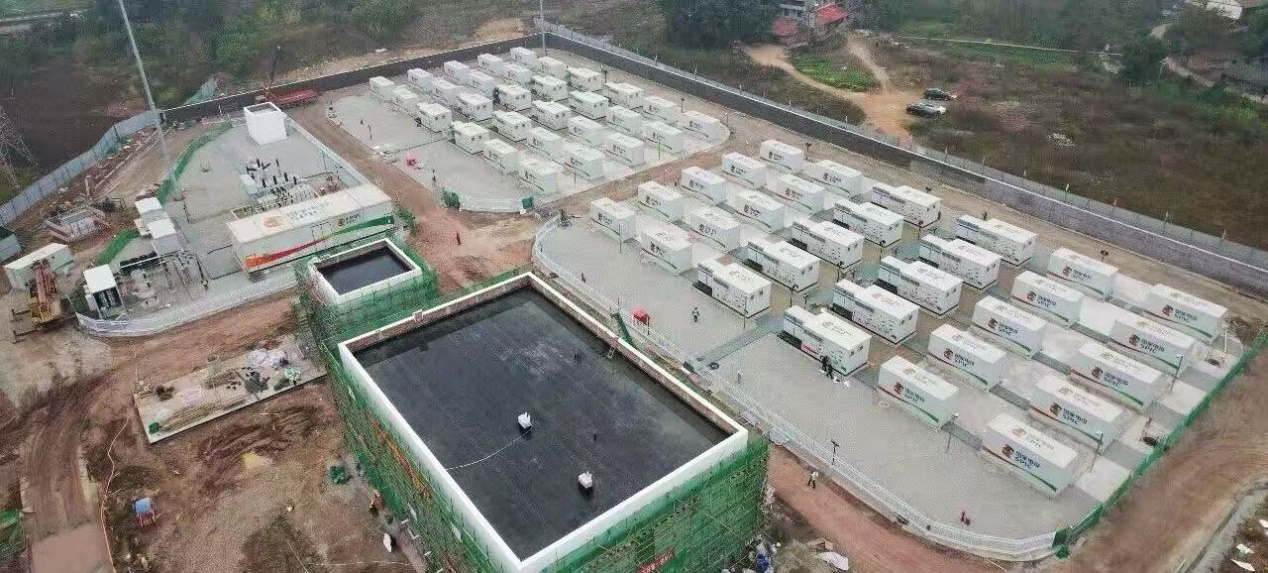
四川内江首个电网侧独立储能电站投运 助力川渝能源结构优化升级
Yang Shi Wang· 2025-12-26 08:36
Core Insights - The first batch of new energy storage demonstration projects in Sichuan Province has successfully launched the 100MW/200MWh vanadium-lithium energy storage station in Neijiang Economic Development Zone, marking it as the first independent energy storage station on the grid side in Neijiang [1] - This project, invested and constructed by State Power Investment Corporation, is a key component of the "Chuan-Yu Energy Integration Emergency Peak Regulation Base" [1] Group 1 - The energy storage project utilizes a large-capacity storage system with advantages such as high safety, long cycle life, high efficiency, and economic viability, making it well-suited for peak regulation and emergency response needs on the grid side [1] - The equipment has undergone multiple rigorous tests to ensure stable operation under complex working conditions, providing solid infrastructure support for optimizing the energy structure and ensuring power supply in the Chuan-Yu region [1] Group 2 - To ensure high standards for project implementation, the Trina Storage project team optimized the energy storage system configuration based on regional grid characteristics and climate conditions [3] - A dedicated service team was established to respond to logistics supply, installation, and debugging needs throughout the project lifecycle, promoting seamless project construction with a "customized and full-service" approach [3] - Once operational, the project is expected to achieve an annual discharge of 36.5 million kWh, equivalent to the annual electricity supply for 20,000 urban households, significantly enhancing the peak regulation capacity of the Sichuan power grid and the level of clean energy consumption [3]
国家电投集团发布全球首套超高温热泵储能技术
Xin Lang Cai Jing· 2025-12-26 06:42
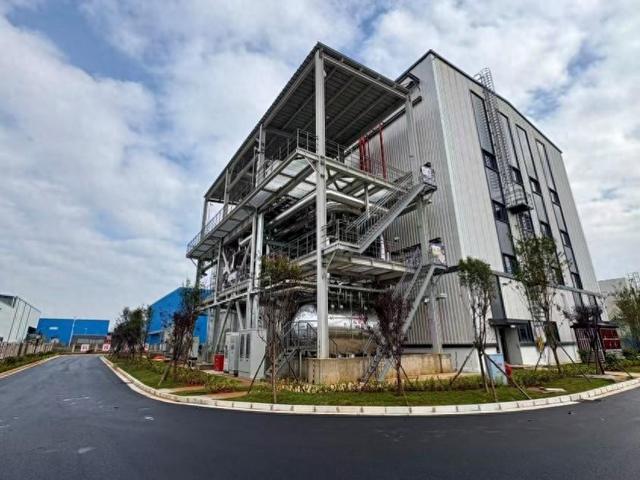
Core Insights - The State Power Investment Corporation has officially launched the world's first ultra-high temperature heat pump energy storage technology, named "Shunuo" [1] - Driven by the dual carbon goals, long-duration energy storage has transitioned from an optional choice to a necessity for energy transformation, necessitating innovation and application in long-duration energy storage technologies [1] Group 1 - The "Shunuo" ultra-high temperature heat pump energy storage technology has significant advantages over traditional storage technologies, including high deployment flexibility, not reliant on specific geographical conditions, allowing for rapid deployment in various settings [2] - The technology boasts a stable cycle efficiency of over 65% for large-scale electricity conversion, with no degradation in efficiency under different loads [2] - The energy storage parameters are superior, with heat storage temperatures exceeding 560°C and low temperatures reaching -60°C, achieving an energy density of 80-120 kWh/m³, which is more than ten times the capacity of conventional compressed air storage in the same space [2] Group 2 - The "Shunuo" system has been successfully tested through seven complete charge and discharge cycles, with all core parameters meeting or exceeding design values, demonstrating global leadership in technical indicators [1][2] - The technology is applicable in a wide range of scenarios, enabling high-quality combined heat, electricity, and cold supply, and can be integrated with large-scale renewable energy bases, coal, nuclear power, and high-energy-consuming industries, thereby enhancing the proportion of green electricity and meeting operational flexibility and energy-saving requirements [2]
国家电投集团发布全球首套超高温热泵储能技术-储诺
Xin Hua Cai Jing· 2025-12-26 04:59
Core Viewpoint - The State Power Investment Corporation has officially launched the world's first ultra-high temperature heat pump energy storage technology, named "Shunuo," which is essential for energy transition under the dual carbon goals [1][2]. Group 1: Technology Overview - The "Shunuo" technology represents a significant advancement in long-duration energy storage, transitioning from an optional technology to a necessity for energy transformation [1]. - The technology has achieved a complete independent intellectual property system and has successfully built a pilot system with a capacity of 1MW/4MWh [1]. - The pilot system has undergone third-party performance testing, demonstrating stability and core parameters that meet or exceed design values, establishing global leadership in technical indicators [1]. Group 2: Advantages of "Shunuo" Technology - Compared to traditional energy storage technologies, "Shunuo" offers high flexibility in deployment, not reliant on specific geographical conditions, allowing for rapid installation in various environments [2]. - The technology boasts a stable round-trip efficiency of over 65% and maintains efficiency across different loads without degradation [2]. - It features significant energy storage parameters, with heat storage capabilities exceeding 560°C and a storage density of 80-120 kWh/m³, which is more than ten times that of conventional compressed air storage [2]. - The technology supports a wide range of applications, enabling high-quality combined heat, electricity supply, and integration with renewable energy sources, coal, nuclear power, and high-energy-consuming industries [2]. Group 3: Development Timeline - The research and development of the ultra-high temperature heat pump energy storage technology began in 2018, with a focus on establishing a comprehensive system [2]. - In 2023, a joint project was initiated with Yunnan International Power Investment Co., Ltd. to develop the world's first megawatt-level heat pump energy storage pilot project, expected to be fully operational by September 2025 [2].
火电A股上市公司ESG群像:低碳转型表现分化,5家纳入强信披
2 1 Shi Ji Jing Ji Bao Dao· 2025-12-26 04:09
Core Viewpoint - The coal power industry in China is undergoing a historic transformation from being a primary energy source to a key support for system regulation, with a focus on achieving higher levels of energy security and advancing green and low-carbon transitions [1] Group 1: Policy and Regulatory Environment - The national energy work conference has set a clear policy blueprint for the transformation of coal power, emphasizing the need for higher energy security and a solid push towards green and low-carbon transitions [1] - By 2026, five coal power listed companies will face their first ESG (Environmental, Social, and Governance) assessment, requiring them to enhance ESG governance and reporting in accordance with the guidelines [1] Group 2: Low-Carbon Transition Performance - A report by the Natural Resources Defense Council evaluated the low-carbon transition performance of 33 coal power listed companies, revealing a significant disparity in transition progress, with non-fossil energy development lagging behind the national average [2] - The profitability of coal power companies has rebounded due to falling coal prices and supportive policies, but reliance on short-term coal price declines for profit is unsustainable [3] Group 3: Challenges in Transition - Coal power companies face multiple pressures, including supply responsibilities, operational efficiency, and low-carbon transition, necessitating a shift from a single revenue model to a diversified structure that includes capacity and auxiliary services [3] - The transition is complicated by policy and funding challenges, market competition from renewable energy, and the need for management restructuring to accommodate carbon emission controls [5][6] Group 4: ESG Integration and Financial Implications - Integrating ESG into management is essential for coal power companies, as it is critical for achieving national carbon reduction goals and enhancing corporate value [7] - The global ESG investment fund size has reached $3.7 trillion, indicating that capital markets view ESG performance as a vital dimension for assessing long-term corporate value [8] Group 5: Future Trends and Strategies - The traditional power industry is moving from passive to proactive transformation, with five core development trends expected over the next five years, including the need for diversified revenue models and enhanced collaboration between coal and renewable energy [4] - The government has recognized the economic value of coal power in providing flexible and baseline power, and policies are being developed to support the transition and investment returns for coal power [9]

国家电投集团发布全球首套超高温热泵储能技术
中关村储能产业技术联盟· 2025-12-26 02:41
Core Viewpoint - The article highlights the launch of the world's first ultra-high temperature heat pump energy storage technology, "Shu Nuo," by the State Power Investment Corporation, emphasizing its significance in the context of China's dual carbon goals and the urgent need for long-duration energy storage solutions [2][3]. Group 1: Technology Overview - The "Shu Nuo" technology represents a breakthrough in long-duration energy storage, transitioning from an optional to a necessary component in energy transformation [3]. - The technology has achieved a system configuration, core equipment, and control technology with complete independent intellectual property rights, establishing a heat pump energy storage technology system [3][7]. - The pilot system has a capacity of 1 MW and can store 4 MWh of energy, with performance tests confirming that all core parameters meet or exceed design specifications [4][7]. Group 2: Advantages of "Shu Nuo" - Compared to traditional energy storage technologies, "Shu Nuo" offers significant advantages, including high flexibility in deployment, with no reliance on specific geographical conditions [5]. - The system maintains a cycle efficiency of over 65%, with stable efficiency across different loads, and can store heat at temperatures above 560°C and as low as -60°C [5]. - The energy density of the system can reach 80-120 kWh/m³, significantly surpassing conventional compressed air energy storage, allowing for over ten times the energy capacity in the same space [5]. Group 3: Application Scenarios - The technology is applicable in various scenarios, including high-quality combined heat and power generation, coupling with large-scale renewable energy bases, coal, nuclear power, and high-energy-consuming industries [5][11]. - It addresses issues related to the consumption of large-capacity renewable energy, reduces curtailment of wind and solar power, and enhances the flexibility of traditional power sources [11]. - The heat pump energy storage technology aligns with China's current energy development trends and is expected to play a crucial role in the construction of a new power system and ensuring stable power system operations [11]. Group 4: Future Development - The State Power Investment Corporation plans to continue investing in research and development in the heat pump energy storage field, promoting the integration of source, grid, load, and storage [11]. - The successful pilot project marks a significant step towards the industrialization of long-duration heat pump energy storage technology [7].
国家电投宣布:规模化长时储能领域取得重要技术突破
Zhong Guo Dian Li Bao· 2025-12-26 00:49
Core Viewpoint - The State Power Investment Corporation has achieved a significant technological breakthrough in long-duration energy storage with the development of the world's first ultra-high temperature heat pump energy storage technology, named "Shunuo" [1] Group 1: Technological Advancements - The "Shunuo" technology has met or exceeded design specifications in core parameters as tested by a third-party organization [1] - The technology addresses key system challenges including system configuration, core equipment, and system control, establishing a fully independent intellectual property system for heat pump energy storage [1] - The construction of the world's first pilot system for ultra-high temperature heat pump energy storage has been completed [1] Group 2: Advantages Over Traditional Technologies - The "Shunuo" technology offers significant advantages over traditional energy storage methods, including high flexibility in deployment without reliance on specific geographical conditions, allowing for rapid installation in various settings [1] - The technology maintains a stable cycle efficiency of over 65% for large-scale electricity conversion, with no degradation in efficiency under different loads [1] - The energy storage parameters are notably superior, with heat storage temperatures exceeding 560°C and low temperatures reaching -60°C, achieving a storage density of 80-120 kWh/m³, which is over ten times the capacity of conventional compressed air storage in the same space [1] Group 3: Application Scenarios - The technology supports a wide range of applications, enabling high-quality combined heat, electricity, and cold supply, and can be integrated with large renewable energy bases, coal, nuclear power, and high-energy-consuming industries [1] - It enhances the proportion of green electricity consumption and meets the demands for operational flexibility and energy conservation [1]