
Bank Of Jiangsu(600919)

Search documents
偏离“创新”主线,交银创新领航混合被指风格漂移,近一年跑输基准超7%
Xin Lang Ji Jin· 2025-08-26 10:26
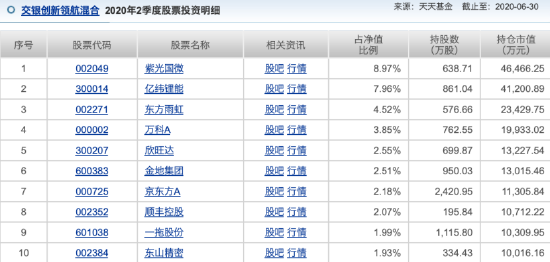
Core Viewpoint - The article discusses the phenomenon of "style drift" in public funds, highlighting the significant deviation of the Jiayin Innovation Leading Mixed Fund from its original investment strategy, raising concerns among investors and regulators [1][7]. Fund Performance and Strategy - The Jiayin Innovation Leading Mixed Fund, managed by Guo Fei for 5.5 years, has shifted its investment focus from technology growth stocks to low-valuation, high-dividend assets such as banks and power companies, which contradicts its "innovation" branding [1][6]. - As of Q2 2025, the fund's top holdings include Jiangsu Bank and Industrial and Commercial Bank, reflecting a clear low-risk, high-dividend characteristic [2]. - The fund's performance has been relatively mediocre, with a return of 10.48% since 2025, significantly lower than the average return of 27.11% for equity mixed funds and 13.58% for the CSI 300 index [3][4]. Historical Performance Data - The fund's annual returns from 2021 to 2025 show fluctuations, with a notable decline in 2022 (-20.12%) and a recovery in 2024 (13.26%) [4]. - Over its 5.5-year history, the fund has achieved a total return of 50.09% and an annualized return of 7.66%, which, while outperforming its benchmark, does not demonstrate a clear "innovation" advantage [4][6]. Investment Logic and Market Implications - Guo Fei's investment logic emphasizes defensive positioning and dividend yield, contrasting sharply with the fund's original growth-oriented theme [6]. - The fund's significant shift in strategy poses a mismatch risk for investors who initially subscribed based on the "innovation" theme, indicating potential challenges in maintaining investor trust and adherence to investment discipline [6][7].



城商行板块8月26日跌1.04%,贵阳银行领跌,主力资金净流出1.91亿元
Zheng Xing Xing Ye Ri Bao· 2025-08-26 08:36
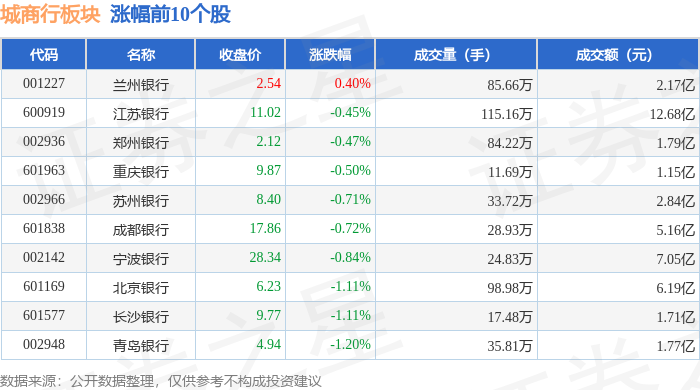
Market Overview - On August 26, the city commercial bank sector declined by 1.04%, with Guiyang Bank leading the drop [1] - The Shanghai Composite Index closed at 3868.38, down 0.39%, while the Shenzhen Component Index closed at 12473.17, up 0.26% [1] Individual Stock Performance - Guiyang Bank closed at 6.32, down 2.17%, with a trading volume of 746,000 shares and a transaction value of 472 million [2] - Jiangsu Bank closed at 11.02, down 0.45%, with a trading volume of 1.15 million shares and a transaction value of 1.27 billion [1] - Other notable declines include Ningbo Bank at 28.34 (-0.84%) and Beijing Bank at 6.23 (-1.11%) [1][2] Capital Flow Analysis - The city commercial bank sector experienced a net outflow of 191 million from main funds, while speculative funds saw a net inflow of 331 million [2] - Retail investors had a net outflow of 140 million [2] Detailed Capital Flow for Selected Banks - Jiangsu Bank had a main fund net inflow of 44.99 million, while retail investors saw a net outflow of 50.90 million [3] - Chongqing Bank experienced a main fund net inflow of 25.15 million, with a significant retail outflow of 22.28 million [3] - Guiyang Bank had a main fund net inflow of 5.25 million but a retail outflow of 31.19 million [3]


江苏银行半年报出炉 再交亮眼答卷
Sou Hu Cai Jing· 2025-08-26 08:22
Core Viewpoint - Jiangsu Bank has demonstrated strong performance in the first half of 2025, achieving significant growth in revenue and net profit despite industry challenges, reflecting its commitment to high-quality development and effective risk management [1][2]. Financial Performance - The bank reported a revenue of 44.864 billion yuan, a year-on-year increase of 7.78%, and a net profit attributable to shareholders of 20.238 billion yuan, up 8.05% year-on-year [1][2]. - As of June 30, 2025, total assets reached 4.79 trillion yuan, growing 21.16% from the previous year, with total deposits at 2.54 trillion yuan (up 20.22%) and total loans at 2.43 trillion yuan (up 15.98%) [2]. - The annualized ROE was 15.64% and ROA was 0.96%, indicating strong operational quality [1][2]. Market Position - Jiangsu Bank improved its ranking to 56th in the 2025 Global Bank 1000 list by The Banker, rising 10 places from the previous year, and ranked 162nd in the Fortune China 500, maintaining its position as the top city commercial bank in China [3]. Loan Growth and Economic Support - The bank's loan balance reached 2.43 trillion yuan, with a 15.98% increase year-on-year, supporting the economic development of Jiangsu province [4]. - Corporate loans amounted to 1.625 trillion yuan, growing 22.20%, while personal loans reached 695.5 billion yuan, with an increase of 20.7 billion yuan [4]. Innovation and Green Finance - Jiangsu Bank is actively involved in promoting technological and industrial innovation, participating in initiatives like the "Su Ke Loan" for technology transfer [5]. - The bank's green financing scale exceeded 720 billion yuan, a 32.1% increase year-on-year, with green assets accounting for over 16.4% of total assets [5]. Risk Management - The non-performing loan (NPL) ratio improved to 0.84%, the lowest since its listing, with a decrease in the proportion of loans under scrutiny to 1.24% [8][9]. - The bank has upgraded its risk management system, enhancing its ability to manage risks effectively [9]. Stock Performance and Market Recognition - Jiangsu Bank's stock price increased by 20.97% year-to-date, outperforming the banking sector, and was included in the FTSE China A50 Index [10]. - Institutional investors have shown strong interest, with 414 funds holding shares in Jiangsu Bank, ranking it among the top four banks in terms of fund holdings [10]. Management Confidence - The bank's management demonstrated confidence in future growth by completing a voluntary share buyback plan, exceeding the initial target [11].
银行首席合规官,密集亮相!
券商中国· 2025-08-26 07:37
Core Viewpoint - The appointment of Chief Compliance Officers (CCOs) in listed banks is increasing, following the implementation of the Compliance Management Measures by the Financial Regulatory Bureau, which mandates the establishment of CCO positions at the headquarters of financial institutions starting from March this year [1][10]. Group 1: Appointments and Recruitment - Recently, Zijin Bank and Jiangsu Bank announced the appointment of their respective CCOs, with Jiangsu Bank appointing Yuan Jun, who is also the bank's president [3]. - Zijin Bank appointed Que Zhenghe as both the president and CCO, pending approval from financial regulatory authorities [4]. - Several banks, including Jiangxi Bank, are publicly recruiting for the CCO position, with specific requirements for candidates [5][6]. Group 2: Compliance Management Measures - The Compliance Management Measures, effective from March 2025, represent the first unified regulatory framework for compliance management across various financial sectors in China [9][10]. - The measures stipulate that financial institutions must establish CCO roles at their headquarters and may also appoint compliance officers at provincial or primary branch levels [10]. - The measures allow for the bank president or other senior management to concurrently hold the CCO position, exempting them from the qualification requirements [10]. Group 3: Historical Context and Trends - The role of CCO is not entirely new, as several banks have had CCOs since 2014, with various institutions already having their CCO qualifications approved [8][9]. - The trend indicates that many banks are promoting internal candidates or having existing executives take on the CCO role, while smaller banks are actively seeking to fill these positions with younger candidates [5][6].

将“红色引擎”转化为“发展引擎” 江苏银行深圳分行 以澎湃动能助力深圳“双区”建设
Shen Zhen Shang Bao· 2025-08-26 07:25
Core Viewpoint - The rapid development of Shenzhen over 45 years has been significantly supported by financial services, with Jiangsu Bank's Shenzhen branch playing a crucial role in this transformation through its integration of party-building and business operations [1][2]. Group 1: Party-Business Integration - Jiangsu Bank's Shenzhen branch emphasizes the integration of party-building with business operations, aiming to transform the "red engine" into a "development engine" to support Shenzhen's "dual-zone" construction [2]. - The bank has established a "Party Alliance" with over 30 organizations, covering more than 500 enterprises and nearly 2,000 party members, enhancing its service capabilities [2][3]. - As of June, the "Party Alliance" has facilitated the establishment of multiple credit accounts and personal finance clients, with financing needs exceeding 200 million yuan for enterprises in the Tianan Tianan Park [2]. Group 2: Financial Support for the Real Economy - Jiangsu Bank has actively supported Shenzhen's real economy by providing financial services to major projects, private enterprises, and listed companies, becoming a key player in the region [4]. - The bank has tailored financial products like "Su Xudai" and "Tengfei Loan" to address the financing challenges faced by small and medium-sized enterprises, including offering low-cost financing to companies reducing carbon emissions [4][5]. - The bank has also developed a dedicated service plan for innovative enterprises, launching initiatives like "Technology Finance 22 Articles" to support technology-driven companies [5]. Group 3: Major Project Financing - Jiangsu Bank has provided significant loans for major projects, including 1.05 billion yuan for the Zhuhai Port project and 500 million yuan for the Dongguan International Manufacturing Center [6]. - The bank has also approved loans for various other significant projects, including 1 billion yuan for the Huizhou Ring Island Highway project and 1.6 billion yuan for the Huafa Ice and Snow City project [6]. Group 4: Consumer Protection and Employee Care - The bank has integrated consumer rights protection and employee care into its corporate culture, conducting over 30 financial safety events in the first half of the year [7]. - Initiatives such as the "Silver Age" program have been launched to educate elderly clients on financial management, while employee engagement activities have also been implemented to enhance workplace satisfaction [7][8]. - The bank's employee satisfaction survey achieved a historic high in the first half of the year, reflecting its commitment to employee welfare [8].
江苏银行(600919):公司半年报点评:P/E(倍)P/B(倍)
Ping An Securities· 2025-08-26 06:43
公 司 报 告 江苏银行(600919.SH) 营收亮眼,扩表积极 强烈推荐(维持) 股价:11.15 元 主要数据 | 行业 | 银行 | | --- | --- | | 公司网址 | www.jsbchina.cn | | 大股东/持股 | 江苏省国际信托有限责任公司/6.98% | | 实际控制人 | | | 总股本(百万股) | 18,351 | | 流通 A 股(百万股) | 18,351 | | 流通 B/H 股(百万股) | | | 总市值(亿元) | 2,046 | | 流通 A 股市值(亿元) | 2,046 | | 每股净资产(元) | 13.59 | | 资产负债率(%) | 92.9 | 行情走势图 银行 2025 年 8 月 26 日 事项: 江苏银行 2025 年半年报,公司上半年实现营业收入 449 亿元,同比增长 7.8%, 实现归母净利润 202 亿元,同比增长 8.0%。截至 2025 年半年末,公司总资产 规模同比增长 27.0%,其中贷款规模同比增长 18.3%。 平安观点: | | 2023A | 2024A | 2025E | 2026E | 2027E | | - ...
不懂投资理财?这里有一个免费练手的机会,还能抽取苏超门票!
Sou Hu Cai Jing· 2025-08-26 05:58
Core Viewpoint - The article highlights the increasing difficulty for ordinary families to achieve high returns through bank interest due to continuous interest rate cuts by financial institutions, while also emphasizing the opportunities presented by the recent rise in the Shanghai Composite Index and the launch of a simulated investment competition by Jiangsu Bank to enhance investment knowledge among the public [1][5]. Group 1: Simulated Investment Competition - Jiangsu Bank has initiated a "simulated investment competition" to provide a zero-cost platform for ordinary investors to practice and improve their investment skills [3][5]. - The competition will run from August 25 to November 30, 2025, allowing participants to use 500,000 virtual funds for simulated investments in various financial products [3][5]. - Multiple awards are set to motivate participants, including prizes for top performers and random draws for tickets to the "Soochow Super League" matches [4][5]. Group 2: Retail Banking Strength - Jiangsu Bank has positioned itself as a leading city commercial bank by focusing on customer service and addressing client pain points, which has helped clients achieve asset preservation and growth [7][9]. - The bank's retail assets under management (AUM) exceeded 1.59 trillion yuan, with retail deposits growing by 15.25% year-on-year, reflecting its strong market presence [9][10]. - The bank emphasizes a comprehensive product offering and employs a professional research team to evaluate investment products based on risk control and client preferences [7][9]. Group 3: Financial Education and Community Engagement - Jiangsu Bank actively conducts financial knowledge seminars and investment strategy sharing sessions to enhance clients' investment decision-making capabilities [11]. - The bank has developed an "8+1" scenario framework to address various customer needs, integrating financial services with community engagement [12][14]. - By promoting financial literacy and providing a wide range of financial products, Jiangsu Bank aims to empower clients to make informed investment choices [10][11].

东兴证券晨报-20250826
Dongxing Securities· 2025-08-26 03:18
Economic News - Shanghai real estate policy adjustments include reducing housing purchase restrictions and optimizing housing credit policies, effective from August 26, 2025 [1] - The central government aims to establish a national carbon trading market by 2030, covering major industrial sectors and enhancing voluntary emission reduction mechanisms [1] - The National Development and Reform Commission is gathering opinions from enterprises on the 14th Five-Year Plan, focusing on expanding domestic demand and stabilizing employment [1] - The People's Bank of China is promoting financial support for high-quality forestry development, including innovations in forest rights mortgage loans [1] - The People's Bank of China conducted a 7-day reverse repurchase operation of 288.4 billion yuan at an interest rate of 1.40% [1] - U.S. President Trump plans to deploy troops to cities like Chicago to combat crime, which has sparked public discontent [4] Company Insights - Nvidia has launched the Jetson AGX Thor developer kit for robotics applications, priced at $3,499, available globally [10] - Huida Technology's president is under investigation for insider trading, but the company asserts that it will not affect its operations [10] - Elon Musk's xAI has filed a lawsuit against Apple and OpenAI, alleging collusion to maintain dominance in the AI sector [10] - Yangfan New Materials is under investigation, but the company's control remains unchanged and operations continue normally [10] - Tencent has unveiled a global game creation AI solution, VISVISE, aimed at streamlining game art development processes [10] Industry Research - The report analyzes the white liquor industry's historical cycles, identifying four key periods since 2000, with a focus on the 2013-2015 downturn [9][10] - It notes that white liquor stock prices typically bottom out two quarters before fundamental improvements are confirmed [10] - Current indicators suggest a positive trend in demand for white liquor, particularly with the upcoming Mid-Autumn Festival and National Day [10] - The report recommends focusing on leading companies like Kweichow Moutai and Wuliangye, as the white liquor sector is expected to rebound [10] Banking Sector Analysis - Jiangsu Bank reported a 7.8% year-on-year increase in revenue for the first half of 2025, with net profit rising by 8.0% [12][13] - The bank's asset quality remains strong, with a non-performing loan ratio of 0.84%, down 2 basis points from the previous quarter [14][15] - The bank's net interest margin is 1.78%, reflecting a slight decline, while total assets and loans grew by 27.0% and 18.3%, respectively [14][15] - The report projects net profit growth rates of 10.9%, 11.5%, and 11.7% for 2025-2027, maintaining a "strongly recommended" rating for the bank [16]



江苏银行深圳分行:精作“五篇大文章”,谱写特区金融新实践
Nan Fang Du Shi Bao· 2025-08-26 02:19
Core Viewpoint - The article highlights the role of Jiangsu Bank's Shenzhen branch in supporting Shenzhen's economic development as it celebrates its 45th anniversary, focusing on five key areas: technology finance, green finance, inclusive finance, pension finance, and digital finance [2][6]. Group 1: Inclusive and Digital Finance - Jiangsu Bank's Shenzhen branch integrates inclusive finance with digital finance to enhance the local economy, providing efficient and intelligent solutions for small and micro enterprises [2]. - The bank's "e融支付" service has benefited over 3,200 merchants with differentiated fee rate discounts, particularly aiding businesses that employ older women and essential service providers, saving them hundreds of thousands of yuan [3]. Group 2: Technology Innovation and High-Quality Development - The bank combines technology finance with cross-border finance to empower Shenzhen's market participants, offering a comprehensive product system that supports companies at various growth stages [3][4]. - Innovative financing models like "equity-linked loans" are being explored to meet the funding needs of early-stage hard technology enterprises, allowing banks to share in the future growth of these companies [4]. Group 3: Green and Pension Finance - Jiangsu Bank actively promotes green finance through initiatives like the "降碳贷" program, which offers favorable loan pricing to companies that reduce carbon emissions by 40% [5]. - In the pension finance sector, the bank provides services aimed at enhancing the quality of life for the elderly, including community health activities and digital literacy programs, benefiting over 7,200 senior clients with its "融享幸福" debit card [6]. Group 4: Cross-Border Financing - In the first half of the year, the Shenzhen branch approved a 2 billion yuan cross-border comprehensive credit line for China General Nuclear Power Corporation to support its overseas operations, contributing to the internationalization of the renminbi and regional energy connectivity [5]. Group 5: Future Commitment - Jiangsu Bank's Shenzhen branch aims to continue its systematic approach in delivering high-quality financial services, contributing to Shenzhen's ongoing development and prosperity as it enters a new chapter [6].

江苏银行(600919)营收增速上行 资产规模大幅扩张
Xin Lang Cai Jing· 2025-08-26 00:33
Core Viewpoint - Jiangsu Bank reported a revenue growth of 7.8% in the first half of 2025, with a net profit growth of 8.0, indicating stable financial performance amidst expanding asset scale and improving capital adequacy [1][2]. Revenue Growth - The bank's net interest income increased significantly by 19.1%, driven by rapid asset scale expansion, while non-interest income saw a decline of 14.6%, although the drop was less severe due to stabilization in the bond market in Q2 [2]. - The bank's total assets grew by 21% compared to the beginning of the year, positioning it as the largest city commercial bank in terms of asset size [2]. Loan and Deposit Performance - Loans increased by 16.0% compared to the beginning of the year, with a notable 23.3% growth in corporate loans, particularly in infrastructure and manufacturing sectors [2]. - Deposits surged by 20.2%, with a rise in the proportion of demand deposits to 29.3%, primarily driven by corporate settlement deposits [2]. Cost and Profitability - The net interest margin was reported at 1.78%, a decrease of 8 basis points from the previous year, influenced by declining asset yields [3]. - The bank's credit impairment charges rose significantly, but a substantial reduction in the effective tax rate by 10.5 percentage points supported stable net profit growth [2][3]. Asset Quality and Risk Management - The non-performing loan (NPL) ratio improved to 0.84%, down 5 basis points from the beginning of the year, with a provision coverage ratio of 331% [4]. - The net NPL generation rate decreased to 1.10%, reflecting improved risk management and a reduction in retail loan delinquency rates [4]. Investment Outlook - The bank is characterized as a dividend growth bank, with a projected dividend yield of 5.0% for 2025, making it an attractive investment option following a price correction [4]. - Current valuations stand at a price-to-book (PB) ratio of 0.80x and a price-to-earnings (PE) ratio of 6.4x, maintaining a "buy" rating [4].