Bank Of Jiangsu(600919)

Search documents
苏超已成为名片!赣超也要来了→
第一财经· 2025-07-05 12:35
Core Viewpoint - The article highlights the rapid growth and commercial success of the Suzhou Super League (苏超), emphasizing its increasing popularity, sponsorship expansion, and positive impact on local economies and related industries [3][4][5][6]. Sponsorship Growth - The number of sponsors for the Suzhou Super League has significantly increased, from 6 initial sponsors to a total of 27, including major companies like JD.com, Yili, and Xiaomi [3][4]. - The categories of sponsorship have expanded, with official strategic partners increasing from 1 to 8, official sponsors from 1 to 4, and official suppliers from 2 to 7 [3]. Economic Impact - The Suzhou Super League has stimulated local consumption, with online leisure spending in Jiangsu province increasing by approximately 40% year-on-year since the league's inception [4]. - Hotel bookings in host cities have surged, with five-star hotel reservations increasing by over 59% and ticket sales for attractions rising by over 255% [5]. - Consumer interest in sports-related products has also grown, with sales of football gear and apparel increasing by over 60% in June [5]. Brand Influence and Local Development - The league has enhanced the brand influence of local cities, becoming a tool for attracting investment and talent [6][7]. - The presence of corporate representatives from high-tech sectors at matches indicates a dual interest in sports and investment opportunities [7]. Future Prospects - The success of the Suzhou Super League is prompting other regions, such as Jiangxi, to consider launching similar leagues, indicating a potential trend in local sports development [10]. - The article suggests that the league's popularity reflects a broader demand for diverse sports events and highlights the potential for growth in China's sports and cultural tourism industries [8][9].






江苏“金融强省”有多强?13家银行跻身全球1000强榜单,头部两家“好着呢”
Sou Hu Cai Jing· 2025-07-04 13:55
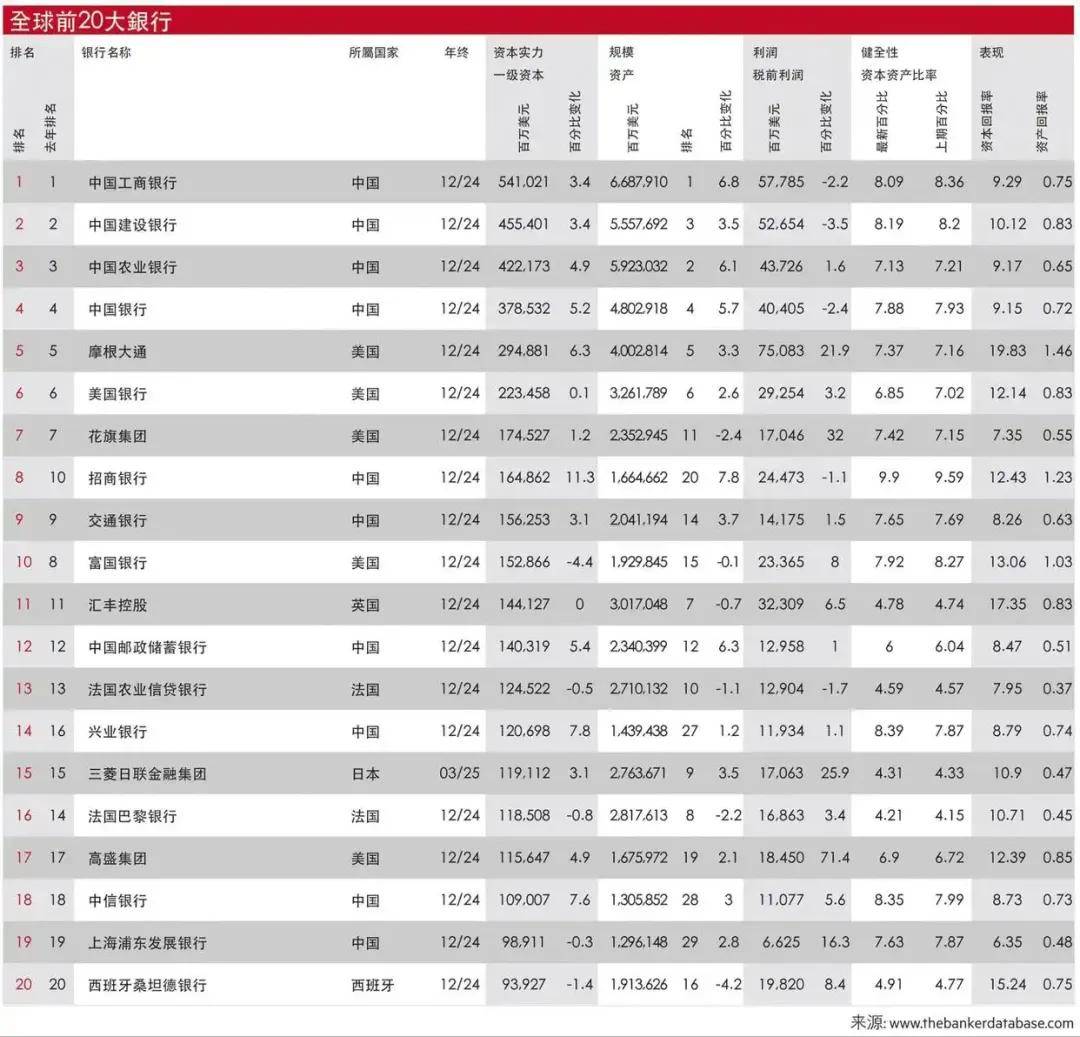
Core Insights - The 2025 World Bank 1000 ranking, published by The Banker, highlights the capital strength and profitability growth of banks, serving as a key indicator of global competitiveness in the banking sector [1] Group 1: Overall Performance - Chinese banks continue to dominate the top ranks, with six positions in the top ten, including the top four spots held by Industrial and Commercial Bank of China, China Construction Bank, Agricultural Bank of China, and Bank of China [3][4] - The ranking reflects a consistent trend, as these four banks have maintained their positions for eight consecutive years, reinforcing their leading status [3][4] Group 2: Jiangsu Province Banks - Jiangsu Province has 13 banks listed in the ranking, showcasing a strong performance with a characteristic of "leading quantity and improving quality" [1][5] - Jiangsu Bank ranks 56th, improving by 10 places from the previous year, with total assets exceeding 4 trillion yuan and a year-on-year revenue growth of 6.21% [5][6] - Nanjing Bank ranks 86th, having improved by 5 places, with total assets surpassing 2.7 trillion yuan and revenue and net profit growth of 6.53% and 7.06%, respectively [6][7] Group 3: Agricultural Commercial Banks - Jiangsu Province has the highest number of agricultural commercial banks on the list, with 9 out of 35 nationwide, and most of them have improved their rankings [8] - Specific improvements include Zhangjiagang Rural Commercial Bank rising 28 places to rank 502nd and Jiangyin Rural Commercial Bank climbing 26 places to 506th [8]

多家上市银行股价创新高 银行板块估值修复有望加速
Zheng Quan Ri Bao Wang· 2025-07-04 12:59
Core Viewpoint - The A-share banking sector has shown strong performance, with all 42 stocks in the sector rising, driven by low interest rates and a preference for high dividend yields among long-term investors [1][2]. Group 1: Market Performance - As of July 4, 2023, the A-share banking sector has accumulated a rise of over 17% this year, with stocks like Industrial and Commercial Bank of China and Shanghai Pudong Development Bank reaching new highs [1]. - Shanghai Pudong Development Bank leads the sector with a year-to-date increase of over 40%, followed by banks like Qingdao Bank and Industrial Bank, each with gains exceeding 30% [2]. Group 2: Investment Appeal - The average dividend yield of the A-share banking sector is close to 4%, making it attractive compared to the current 10-year government bond yield of approximately 1.65% and a one-year deposit rate below 1% [2]. - Institutional investors, including insurance funds, are increasingly favoring bank stocks due to their stable returns and the ongoing reform in the public fund industry, which is expected to enhance demand for bank shares [2][3]. Group 3: Valuation Recovery - Recent increases in shareholdings by major shareholders and executives signal positive future prospects for banks, suggesting that the valuation recovery of the banking sector may accelerate [4]. - Several banks, including Suzhou Bank and Qingdao Bank, have announced plans for significant share buybacks, reflecting confidence in their long-term investment value [4]. Group 4: Funding Dynamics - The recent regulatory changes aimed at promoting the high-quality development of public funds are expected to bring short-term incremental capital to the banking sector [5]. - The demand for stable return equity assets from institutional investors, particularly insurance funds, continues to support the potential for increased allocation to bank stocks [5].

浦发等9只银行股再创新高 年内板块涨幅达到17.7%
2 1 Shi Ji Jing Ji Bao Dao· 2025-07-04 10:36
Core Viewpoint - The banking sector has shown strong performance, with multiple banks reaching historical highs and a total market capitalization of 15.7 trillion yuan, driven by favorable macroeconomic conditions and investor sentiment [1][2][4]. Group 1: Market Performance - On July 4, nine banks, including Industrial and Commercial Bank of China and Shanghai Pudong Development Bank, reached historical highs, contributing to a 1.86% increase in the China Securities Banking Index, which has risen 17.7% year-to-date [1][2]. - All 42 stocks in the banking sector closed in the green, with 37 stocks increasing by over 10%, and 17 stocks rising by more than 20% [2]. - Shanghai Pudong Development Bank led the gains with a year-to-date increase of 41.69%, making it the only stock in the sector to exceed a 40% rise [2]. Group 2: Factors Driving Performance - Analysts attribute the strong performance to a combination of low interest rates, high dividend yields, and improved asset quality, which have made bank stocks attractive to long-term investors [4][5]. - The banking sector's price-to-book (PB) ratio stands at 0.68, indicating potential for valuation recovery after being undervalued for an extended period [3][4]. - The recent changes in public fund management and performance evaluation are expected to lead to increased bank stock holdings by active funds, further supporting the sector's growth [5]. Group 3: Dividend Announcements - Several banks have announced significant dividend payouts, with China CITIC Bank declaring a cash dividend of 0.1722 yuan per share, and China Merchants Bank announcing a cash dividend of 2.000 yuan per share, totaling approximately 504.40 billion yuan [6][7]. - As of now, around 30 banks have finalized their 2024 profit distribution plans, with total cash dividends reaching 427.38 billion yuan, indicating a trend of increasing dividend payouts across the sector [7]. Group 4: Future Outlook - Analysts predict that the decline in net profit and revenue for listed banks is expected to stabilize, with a projected year-on-year revenue decrease of 0.9% and a net profit decrease of 0.5% [8]. - The current market conditions are viewed as the beginning of a long-term bullish trend for bank stocks, driven by low interest rates and the revaluation of RMB assets [8].



押中苏超,江苏银行把800万花成8个亿
36氪· 2025-07-03 13:32
Core Viewpoint - The article highlights the remarkable success of Jiangsu Bank as the title sponsor of the Suzhou Super League (Su Super), showcasing its financial strength and marketing effectiveness through a relatively low sponsorship cost that yielded significant visibility and engagement [3][5][28]. Group 1: Sponsorship Impact - Jiangsu Bank's sponsorship of the Su Super has led to a surge in its stock price, reaching historical highs, and demonstrating the effectiveness of its marketing strategy with a sponsorship fee of only 8 million yuan, which is significantly lower than the over 100 million yuan typically required for sponsorship in higher-tier leagues [5][11][12]. - The Su Super has gained immense popularity, with discussions on Douyin (TikTok) reaching nearly 7 billion views, and attendance at matches surpassing that of some professional leagues, indicating a strong grassroots engagement [4][8]. - The number of sponsors for the league has increased dramatically from 6 to 28, reflecting the growing interest and marketability of the event, with Jiangsu Bank being a key player in this transformation [10][11]. Group 2: Financial Performance - Jiangsu Bank has shown robust financial growth, with a net profit of 31.843 billion yuan in 2024, marking a year-on-year increase of 10.76%, positioning it among the top performers in the banking sector [25]. - The bank's retail loan balance reached 674.8 billion yuan in 2024, with personal consumption loans accounting for 32.29 billion yuan, indicating a strong focus on retail banking and consumer finance [20][21]. - The bank's asset management scale exceeded 1.42 trillion yuan, leading among city commercial banks, and its monthly active users on the app surpassed 7 million, showcasing its digital engagement [20][21]. Group 3: Competitive Landscape - Jiangsu is home to 9 of the 42 A-share listed banks in China, making it a competitive banking hub, with Jiangsu Bank being the largest among them due to its extensive customer base and historical significance [25][26]. - The bank's market position is bolstered by its strategic focus on retail banking, which aligns with the high-income demographic in Jiangsu, allowing it to diversify its income sources and reduce reliance on traditional corporate banking [22][24]. - The competitive environment in Jiangsu's banking sector is intense, with several banks vying for market share, yet Jiangsu Bank maintains a leading position in terms of profitability and asset size [25][27].

江苏银行(600919) - 江苏银行2024年年度权益分派实施公告
2025-07-02 10:00
证券代码:600919 证券简称:江苏银行 公告编号:2025-029 优先股代码:360026 优先股简称:苏银优 1 江苏银行股份有限公司2024年年度 权益分派实施公告 本公司董事会及全体董事保证本公告内容不存在任何虚假记载、误 导性陈述或者重大遗漏,并对其内容的真实性、准确性和完整性承担 法律责任。 重要内容提示: 每股分配比例 A 股每股现金红利0.2144元(含税) 相关日期 | 股份类别 | 股权登记日 | 最后交易日 | 除权(息)日 | 现金红利发放日 | | --- | --- | --- | --- | --- | | A股 | 2025/7/9 | - | 2025/7/10 | 2025/7/10 | 差异化分红送转: 否 一、 通过分配方案的股东大会届次和日期 2025 年 5 月 23 日,江苏银行股份有限公司(以下简称"公司") 2024年年度股东大会审议通过了《关于江苏银行股份有限公司 2024 年 度利润分配方案的议案》。 二、 分配方案 无限售条件流通股的红利委托中国结算上海分公司通过其资金清 算系统向股权登记日上海证券交易所收市后登记在册并在上海证券交 易所各会员办理了 ...
再进10位!江苏银行位列“全球银行1000强”第56位
Zhong Jin Zai Xian· 2025-07-02 09:26
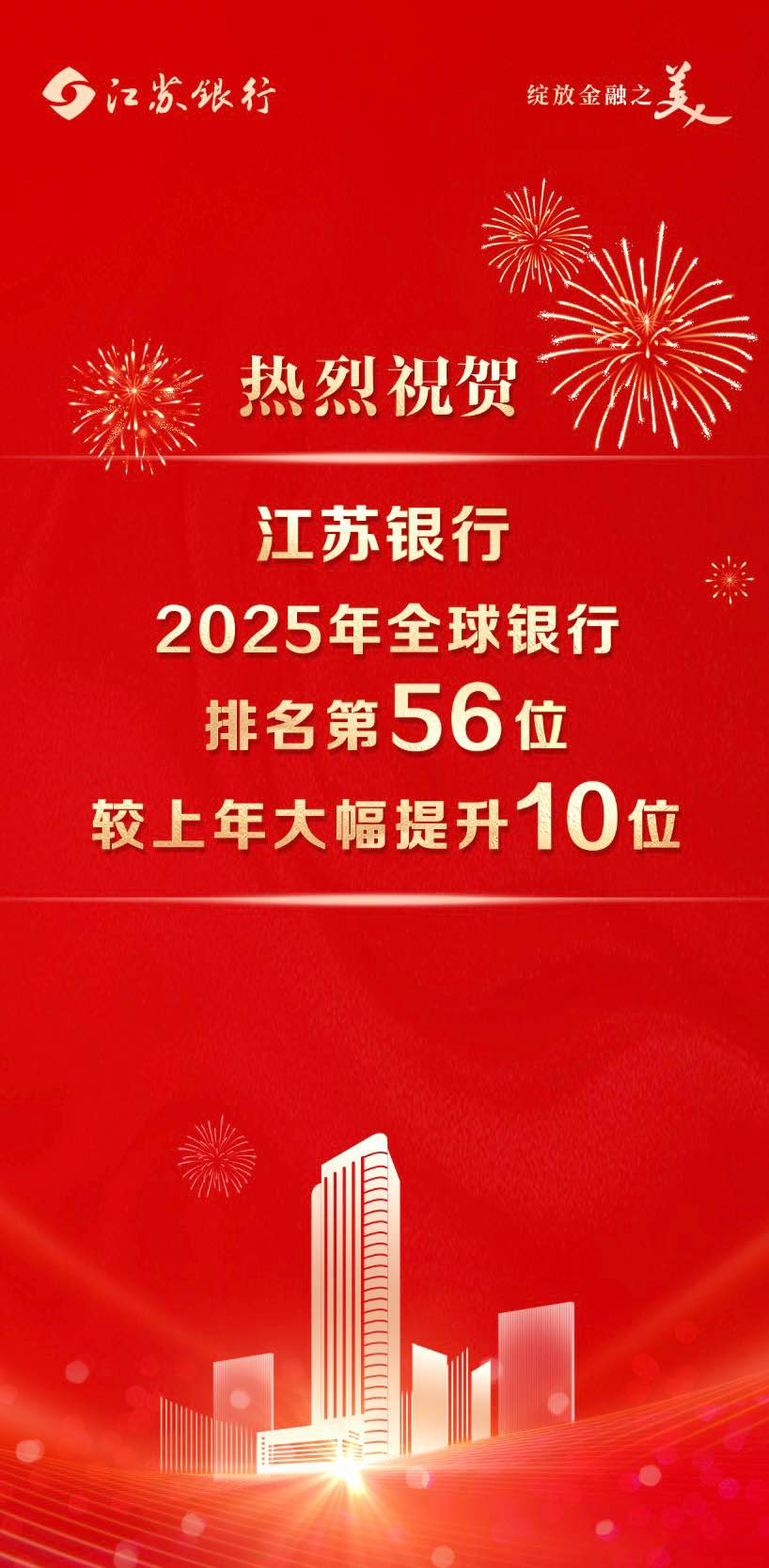
Group 1 - The core viewpoint of the article highlights Jiangsu Bank's significant improvement in the global banking rankings, moving up to 56th place in the 2025 Top 1000 World Banks list, an increase of 10 positions from the previous year [1][6] - Jiangsu Bank has been consistently ranked among the top 100 banks globally for several years, indicating a strong development trend and enhanced market competitiveness [6] - The ranking is based on key indicators such as Tier 1 capital, making it a reliable measure of global banking strength and a window into industry trends [6] Group 2 - Jiangsu Bank has been included in the FTSE China A50 Index, which reflects the market's recognition and confidence in the bank, highlighting its core competitiveness and asset quality [6] - The bank's total assets exceeded 4 trillion yuan by the end of Q1 2025, with a year-on-year revenue growth of 11.72% and a net profit growth of 10.02%, achieving a "double-double" growth [7] - The annualized ROE and ROA improved to 15.38% and 1.05%, respectively, while the non-performing loan ratio decreased to 0.86%, marking the best level since its listing [7]
中证银行ETF(512730)红盘上扬,银行理财吸引力持续上升
Xin Lang Cai Jing· 2025-07-02 06:18
Group 1 - The China Banking Index (399986) has seen a strong increase of 1.14%, with notable gains from Shanghai Bank (601229) up 3.08%, Ningbo Bank (002142) up 2.44%, and Zijin Bank (601860) up 2.31% [1] - As of June 30, 2023, the total scale of the bank wealth management market reached 31.22 trillion yuan, an increase of 5.22% since the beginning of the year [1] - The decline in deposit interest rates and the regulatory halt on manual interest supplementation are expected to enhance the attractiveness of wealth management products, leading to increased capital inflow into the bank wealth management market [1] Group 2 - The China Banking ETF (512730) has risen by 0.90%, with the latest price reported at 1.79 yuan [1] - The top ten weighted stocks in the China Banking Index as of June 30, 2023, include China Merchants Bank (600036), Industrial Bank (601166), and ICBC (601398), collectively accounting for 65.64% of the index [2] - Short-term deposit rate cuts may create pressure on banks' liabilities, but in the medium to long term, the cost of bank liabilities is expected to decrease, particularly with the repricing of long-term deposits in the third quarter [1]


苏超得票率不足3%,卡塔尔世界杯中签率5%,看苏超比世界杯还难?
3 6 Ke· 2025-07-02 02:24
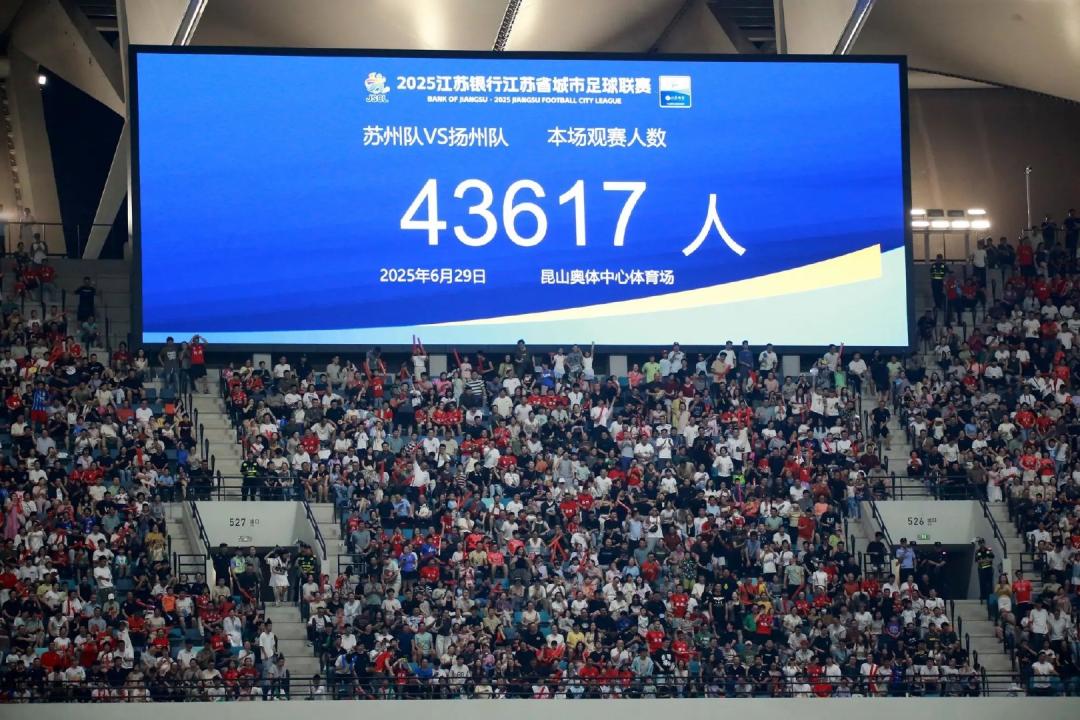
Core Viewpoint - The Suzhou Super League (苏超) is experiencing a remarkable surge in popularity, with attendance figures rivaling those of major leagues like the World Cup, indicating a significant growth in grassroots football in Jiangsu province [1][3][25] Attendance and Popularity - The match between Suzhou and Yangzhou on June 29 attracted 43,617 spectators, setting a new attendance record for the Suzhou Super League [1][3] - The average attendance for the 2025 season of the Chinese Super League (中超) is 24,449, with only three cities exceeding 40,000 attendees [1] - The Suzhou Super League's average attendance increased from over 7,000 in the first round to 25,802 by the fourth round [3] Ticket Demand and Scarcity - The demand for tickets has skyrocketed, with 1.44 million people attempting to secure tickets for the Suzhou vs. Yangzhou match [3][5] - The probability of successfully obtaining tickets for matches is estimated to be less than 3% [6][7] - Various online platforms and local apps are being utilized for ticket sales, but the overwhelming demand has led to significant challenges in securing tickets [7][13] Sponsorship and Commercial Opportunities - The sponsorship of the Suzhou Super League has proven to be highly valuable, with Jiangsu Bank's app downloads increasing by 40% and the proportion of young customers rising from 29% to 41% [21][22] - The league's tickets have become a form of currency for sponsors, with reports of customers needing to invest substantial amounts in financial products to obtain tickets [14][21] Secondary Market and Price Inflation - The scarcity of tickets has led to a thriving secondary market, with prices for tickets being marked up significantly, sometimes reaching 400 yuan for originally priced tickets below 20 yuan [15][16][18] - The phenomenon of ticket scalping has emerged, with reports of individuals being scammed while attempting to purchase tickets from unauthorized sellers [18][20] Future Prospects - The Suzhou Super League is positioned as a potential long-term sports IP, with the need for stricter ticketing controls to manage the growing demand and prevent scalping [20][25] - The league's success could lead to further commercial opportunities and partnerships, similar to those seen in larger international events like the World Cup [21][24]
15家深圳银行“含绿量”大比拼,哪家领跑
2 1 Shi Ji Jing Ji Bao Dao· 2025-07-02 01:50
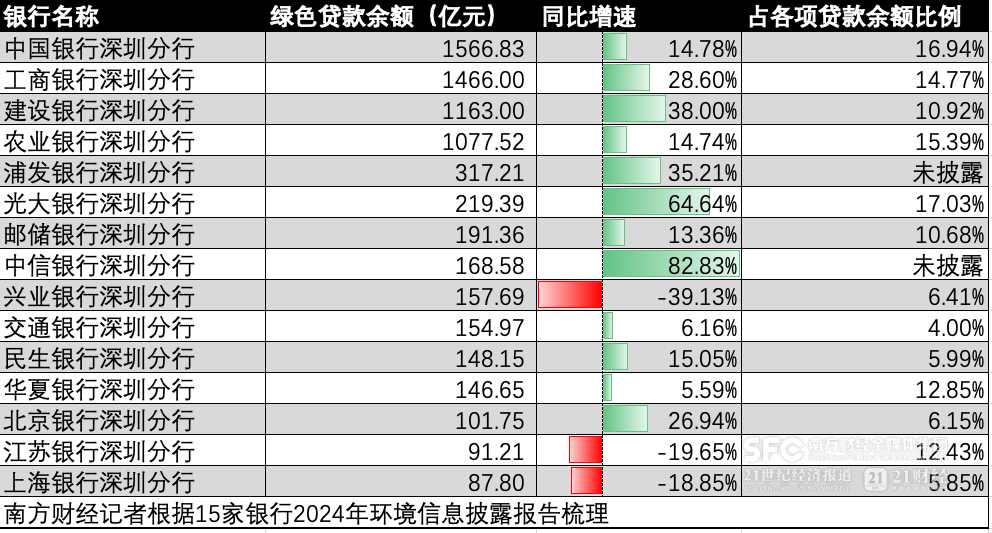
Core Insights - Shenzhen's banking sector has seen a continuous increase in "green" financing, with 29 banks disclosing their environmental information reports for 2024, including state-owned, joint-stock, and city commercial banks [1][3] - As of the first quarter of 2025, the balance of green loans in Shenzhen reached 1.27 trillion yuan, ranking among the top in the country [2] - The four major state-owned banks in Shenzhen have all surpassed 100 billion yuan in green loan balances, primarily directed towards clean energy, energy conservation, and green infrastructure upgrades [1][5] Green Loan Performance - The balance of green loans for the four major state-owned banks in Shenzhen is as follows: - Bank of China: 156.68 billion yuan, with a year-on-year growth of 14.78% [8] - Industrial and Commercial Bank: 146.6 billion yuan, with a growth of 28.6% [8] - China Construction Bank: 116.3 billion yuan, with a growth of 38% [8] - Agricultural Bank: 107.75 billion yuan, with a growth of 14.74% [8] - Joint-stock banks like Shanghai Pudong Development Bank and China Everbright Bank also reported significant growth in green loans, with year-on-year increases of 82.83% and 64.64%, respectively [5][8] Governance and Structure - Many banks have established green finance committees at the branch level, with governance structures often led by senior management from relevant departments [9] - The governance model typically follows a "top-down" approach, with specific departments managing green finance initiatives [9] Green Branches and Recognition - Over 20 "green branches" have been recognized in Shenzhen, with several branches achieving notable green loan balances [10] - The establishment of specialized green financial institutions has been a focus, with various banks creating dedicated branches to serve green financing needs [10] Innovations in Green Finance - Shenzhen has pioneered digital carbon accounts and "carbon reduction loans," along with the issuance of the first green financial bonds for rural revitalization in the country [11] - A comprehensive action plan for green finance was released, outlining 19 specific measures to support Shenzhen's goal of achieving carbon peak in a mega-city context [11]