
Longi(601012)

Search documents
银价上涨推高成本 隆基绿能率先上调组件价格
Zheng Quan Ri Bao Zhi Sheng· 2025-12-19 16:16
"与硅料价格不同,银价涨价是产业链外的变量冲击,对此,电池片必然会因成本支撑加强而调涨。"上 海有色网光伏电池片分析师蒋辰怡在接受《证券日报》记者采访时表示,对于此类不可控因素导致的价 格调整,下游的接受度也会稍高一些。 据了解,目前已有一些头部企业跟进上调组件价格。 本报记者 殷高峰 银价持续上涨导致光伏电池、组件成本上升,日前有消息称,光伏龙头隆基绿能科技股份有限公司(以 下简称"隆基绿能")已经率先上调组件价格。 12月19日,隆基绿能相关负责人回复《证券日报》记者提问时表示:"消息属实,目前每瓦上调了2分钱 到4分钱。"对于此次价格上调,该负责人称,主要是基于近期银价的持续上涨,同时,也是隆基绿能对 反"内卷式"竞争的又一次响应。 今年以来,白银价格呈现历史性上涨行情,伦敦现货银价年初约30.1美元/盎司,12月17日,白银现货 价格突破66美元/盎司,价格涨幅约120%。 "一块组件里面就要用到7克到8克的白银,银价的持续上涨使光伏组件的成本大幅上升。"隆基绿能上述 负责人进一步表示,同时,硅料、光伏玻璃、胶膜、铝边框等材料价格较年初也有比较大的上涨。 "目前硅片、电池片、组件等环节以及垂直一体化企 ...

银价上涨带动光伏组件涨价,业内预计明年价格继续上涨
经济观察报· 2025-12-19 12:43
Core Viewpoint - The rising silver prices have made silver paste the largest cost component in photovoltaic (PV) modules, surpassing silicon materials and glass [1][6]. Group 1: Cost Structure of Photovoltaic Modules - As of December 2025, silver paste is projected to account for 17% of the total cost of PV modules, while silicon materials and glass will account for 14% and 13%, respectively [1][6]. - The recent surge in silver prices has prompted leading PV manufacturers to increase module prices, with Longi Green Energy raising prices by 0.04 CNY/W for N-type modules and 0.02 CNY/W for BC modules [2][3]. Group 2: Market Dynamics and Price Adjustments - The price adjustments come during a year-end sales push, where manufacturers initially aimed to increase sales volume by lowering prices, but the unexpected rise in silver prices forced an earlier price hike [3][4]. - The current market price for PV modules is approximately 0.75 CNY/W following these adjustments [3]. Group 3: Industry Responses to Silver Price Increases - Manufacturers are attempting to mitigate the impact of rising silver prices by optimizing the silver content in silver paste and exploring alternative materials, although significant reductions in silver usage are limited due to quality assurance [6]. - The development of silver-coated copper technology is ongoing but not yet ready for large-scale application [6]. Group 4: Future Outlook and Recommendations - Analysts suggest that companies should enhance supply chain management to reduce the impact of raw material price fluctuations and consider entering the component recycling business to lower costs [7]. - Predictions indicate that PV module prices may continue to rise, potentially reaching between 0.88 CNY/W and 0.99 CNY/W next year, driven by the need for profitability across the supply chain [7].




银价上涨带动光伏组件涨价,业内预计明年价格继续上涨
Jing Ji Guan Cha Wang· 2025-12-19 12:15
Core Viewpoint - Major photovoltaic component manufacturers have started to raise prices due to a sudden increase in silver prices, with price hikes ranging from 0.02 to 0.05 yuan/W for various types of components [1][2]. Price Adjustments - As of December 17, 2023, leading manufacturers like Longi Green Energy and JinkoSolar have announced price increases for their photovoltaic components, with the adjusted prices approximately at 0.75 yuan/W [1][2]. - The price adjustments were accelerated due to unexpected silver price hikes, which were initially planned for January 2024 [2]. Silver Price Impact - The global silver price has seen a significant increase this year, rising from around 220 yuan/ounce at the beginning of the year to over 450 yuan/ounce, with the most notable increase occurring in the fourth quarter [4]. - Silver paste has become the largest cost component in photovoltaic modules, surpassing silicon materials, with silver paste accounting for 17% of total costs, while silicon materials account for 14% and photovoltaic glass for 13% [4]. Industry Responses - Manufacturers are attempting to mitigate the impact of rising silver prices by optimizing the silver content in silver paste and exploring alternative materials, although these alternatives are still in the development phase [5]. - Analysts suggest that companies should enhance supply chain management and consider component recycling to reduce raw material costs and create a closed-loop supply chain [5]. Future Price Expectations - Analysts predict that if effective price control measures are implemented, photovoltaic component prices could continue to rise, potentially reaching between 0.88 yuan/W and 0.99 yuan/W in 2024 [5]. - A low operating rate may be necessary for profitability across the industry, which could lead to increased fixed costs and further elevate component prices due to rising commodity prices [5].
破“内卷”、立标准、向未来,光伏行业领袖共话行业生态重塑之道
中国能源报· 2025-12-19 08:42
Core Viewpoint - The keyword "breaking the cycle" has become the strongest theme for the 2025 photovoltaic industry annual conference, emphasizing the need for high-quality development and the rejection of vicious competition in the industry [1][3]. Group 1: Industry Transformation - The photovoltaic industry is urged to move away from "involution" and focus on high-quality development, requiring collaboration among industry authorities, local governments, associations, media, and financial institutions [3]. - The essence of addressing "involution" is to promote competition based on technology and quality rather than price wars, as highlighted by industry leaders [3][4]. - There is a consensus that companies must rely on independent innovation and original technology to enhance product standards and quality, while the market should raise entry barriers to support advanced products [4][7]. Group 2: Global Supply Chain Resilience - The global trade environment is becoming increasingly complex, posing new challenges for Chinese photovoltaic companies as they seek to expand internationally [6]. - Companies are encouraged to shift from simple product output to creating value, building a more resilient global supply chain [6]. - Key agreements among industry leaders include raising export standards for photovoltaic products, integrating advanced technology and ESG performance into financial assessments, and establishing stricter quality standards with international recognition [7]. Group 3: Future Growth and Market Dynamics - The photovoltaic industry is transitioning from a phase of rapid installation to one focused on high-quality consumption and market-driven growth [9]. - The role of photovoltaic energy is becoming more prominent in the new power system, necessitating solutions for intermittency and demand-side response through "photovoltaic + energy storage" models [9]. - Despite current challenges, industry leaders maintain an optimistic outlook for the future, anticipating breakthroughs in quality and sustainability supported by policy and market forces [10].



隆基绿能涨2.09%,成交额6.88亿元,主力资金净流入690.75万元
Xin Lang Cai Jing· 2025-12-19 02:15
Core Viewpoint - Longi Green Energy's stock price has shown fluctuations, with a year-to-date increase of 15.02% but a recent decline in the last five and twenty trading days [1] Group 1: Stock Performance - On December 19, Longi Green Energy's stock rose by 2.09%, reaching 18.07 CNY per share, with a trading volume of 688 million CNY and a turnover rate of 0.51% [1] - The company's market capitalization stands at 136.936 billion CNY [1] - Year-to-date, the stock has increased by 15.02%, while it has decreased by 0.66% in the last five trading days and 4.09% in the last twenty trading days [1] Group 2: Financial Performance - For the period from January to September 2025, Longi Green Energy reported a revenue of 50.915 billion CNY, a year-on-year decrease of 13.10% [2] - The company experienced a net profit loss of 3.403 billion CNY, which represents a year-on-year increase of 47.68% in losses [2] Group 3: Shareholder Information - As of November 20, the number of shareholders for Longi Green Energy reached 828,800, an increase of 17.76% from the previous period [2] - The average number of tradable shares per shareholder is 9,143, a decrease of 15.08% from the previous period [2] - The company has distributed a total of 9.271 billion CNY in dividends since its A-share listing, with 4.32 billion CNY distributed over the last three years [3] Group 4: Institutional Holdings - As of September 30, 2025, Hong Kong Central Clearing Limited is the fourth-largest circulating shareholder, holding 336 million shares, a decrease of 89.778 million shares from the previous period [3] - Huaxia SSE 50 ETF is the sixth-largest circulating shareholder with 116 million shares, down by 3.1504 million shares [3] - Huatai-PineBridge CSI 300 ETF is the eighth-largest circulating shareholder with 103 million shares, a decrease of 4.648 million shares [3]
聚焦"反内卷" ,光伏行业热议,工业和信息化部发声
Shang Hai Zheng Quan Bao· 2025-12-19 02:15
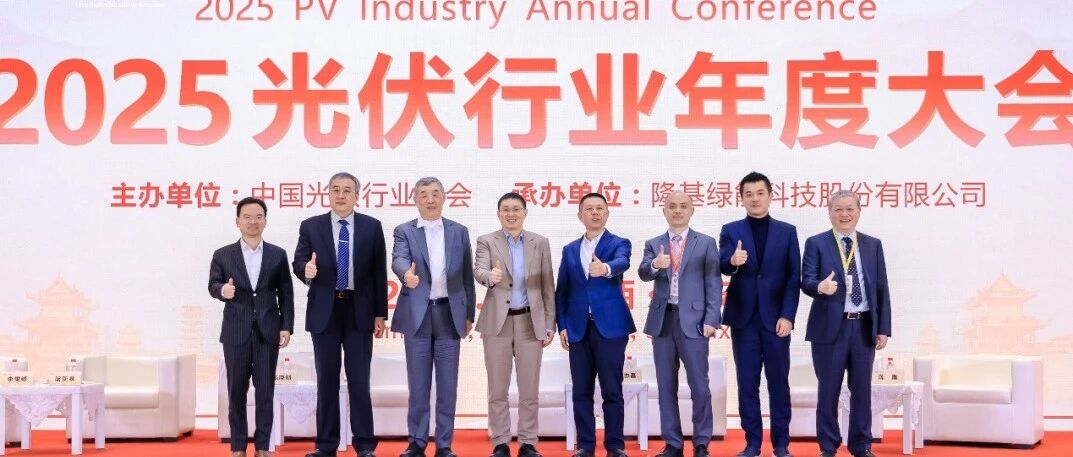
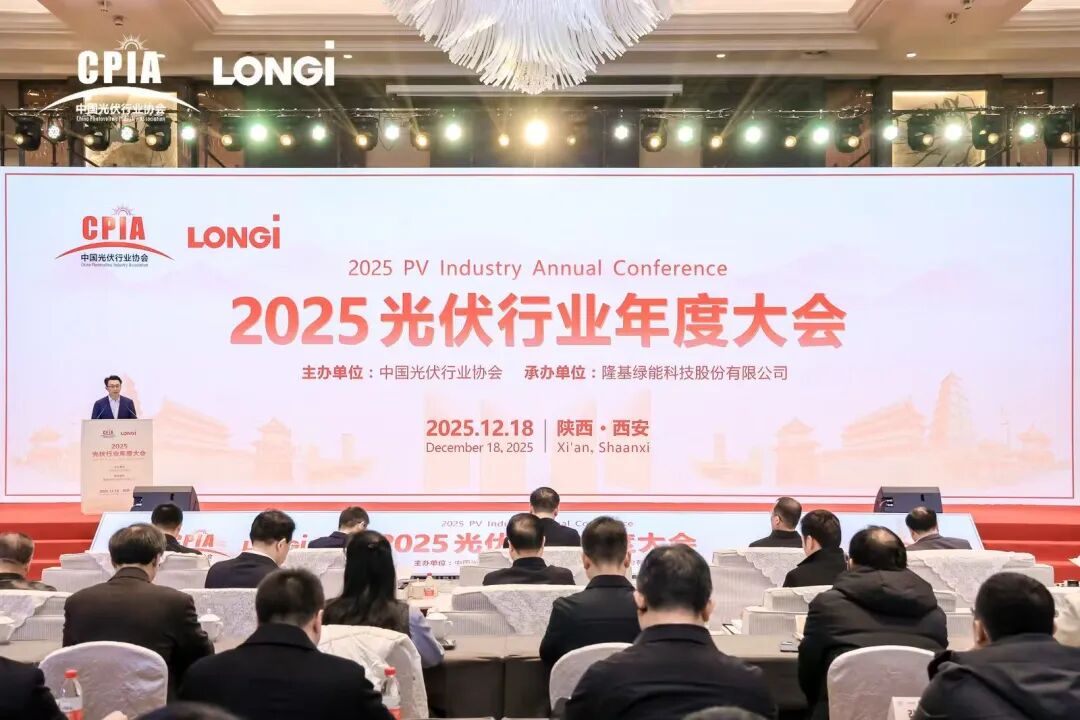
12月18日,由中国光伏行业协会主办、隆基绿能科技股份有限公司承办的"2025光伏行业年度大会"在陕 西西安举行。工业和信息化部、行业协会、龙头企业代表参加大会,围绕行业高质量发展献计献策。 工业和信息化部电子信息司司长杨旭东表示,2026年,光伏行业治理进入攻坚期,将进一步加强产能调 控,强化光伏制造项目管理,以市场化、法治化的手段推动落后产能有序退出,加快实现产能的动态平 衡。 2026年,工业和信息化部电子信息司将会同各有关部门重点做好多项工作,包括健全价格监测机制,重 点关注价格异常企业,加强产品质量监督和抽查,对于存在质量不达标、功率虚标、侵犯知识产权等行 为的企业,加强监测与跟踪处置。 曹仁贤认为,面对新的形势,行业要同舟共济,协同发力,积极应对。首先要以行业自律与供应链协 同,重塑健康产业生态。企业要聚焦产品质量提升,推动落后低效产能有序退出。协会将强化标准体系 建设与自律职能,引导企业从价格竞争转向价值竞争,把发展重心从追求份额转移到技术、品质、服务 的提升上来,共同维护行业的整体利益与长远价值。 企业层面积极响应"反内卷"号召。隆基绿能创始人、首席技术官李振国呼吁全行业强化自律、抵制非理 性 ...
光伏业2025:“反内卷”,创价值,见曙光
Shang Hai Zheng Quan Bao· 2025-12-18 18:24
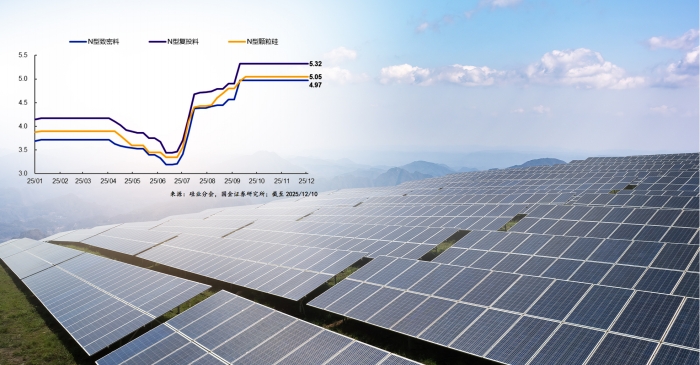
Group 1: Industry Trends - The core consensus among solar companies is a shift from cost competition to value creation, indicating a transition towards high-quality development in the solar industry [1][5][8] - The "136 Document" is a pivotal policy that promotes market-driven pricing for renewable energy, marking a shift from fixed pricing to market-oriented evaluations [2][3] - The solar industry is expected to mature and stabilize by 2026, focusing on value creation and technological innovation as key drivers [9][10] Group 2: Market Dynamics - The market is witnessing a gradual recovery in prices since July, with key components like polysilicon and solar cells showing price increases, indicating a potential turning point for profitability [4][7] - The integration of energy storage with solar power is emerging as a new growth avenue, with companies like Canadian Solar and JinkoSolar positioning themselves to capitalize on this trend [6][10] - The industry is experiencing a phase of capacity clearing, with smaller players exiting the market, leading to a more competitive landscape focused on value rather than scale [8][9] Group 3: Future Outlook - The 2026 energy market is anticipated to be crucial for the solar industry, with a focus on self-regulation and adherence to market mechanisms to ensure sustainable growth [9][10] - Companies are expected to enhance their technological capabilities to improve efficiency and power output, which will be essential for navigating the upcoming market challenges [10]
聚焦“反内卷” ,光伏行业热议,工业和信息化部发声
Shang Hai Zheng Quan Bao· 2025-12-18 15:51
中国光伏行业协会理事长曹仁贤表示,过去以规模扩张为主的发展模式难以为继,由大到强,从速度到质量的深刻变革,是全行业必须跨越的历史性命 题。 曹仁贤认为,面对新的形势,行业要同舟共济,协同发力,积极应对。首先要以行业自律与供应链协同,重塑健康产业生态。企业要聚焦产品质量提升, 推动落后低效产能有序退出。协会将强化标准体系建设与自律职能,引导企业从价格竞争转向价值竞争,把发展重心从追求份额转移到技术、品质、服务 的提升上来,共同维护行业的整体利益与长远价值。 12月18日,由中国光伏行业协会主办、隆基绿能科技股份有限公司承办的"2025光伏行业年度大会"在陕西西安举行。工业和信息化部、行业协会、龙头企 业代表参加大会,围绕行业高质量发展献计献策。 工业和信息化部电子信息司司长杨旭东表示,2026年,光伏行业治理进入攻坚期,将进一步加强产能调控,强化光伏制造项目管理,以市场化、法治化的 手段推动落后产能有序退出,加快实现产能的动态平衡。 2026年,工业和信息化部电子信息司将会同各有关部门重点做好多项工作,包括健全价格监测机制,重点关注价格异常企业,加强产品质量监督和抽查, 对于存在质量不达标、功率虚标、侵犯知识产 ...
中国光伏出口大增,欧美政策“筑墙”
3 6 Ke· 2025-12-18 10:00
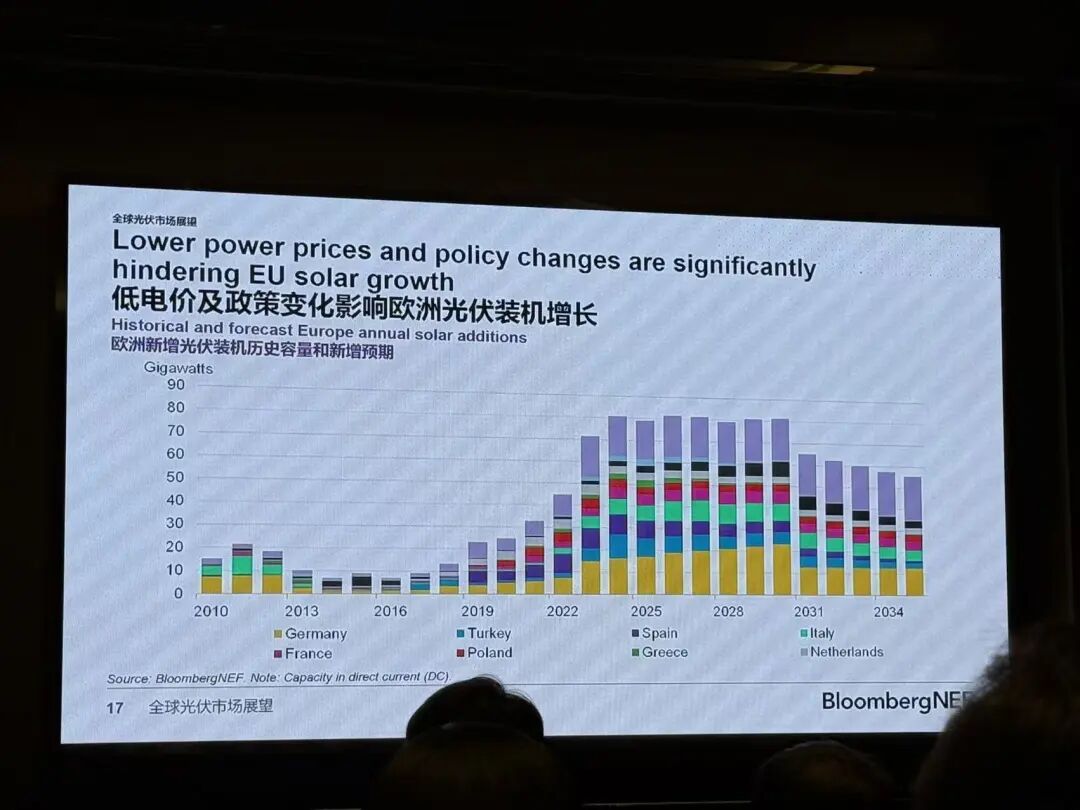
Core Insights - The overseas market is becoming a key focus for Chinese photovoltaic companies, with a shift towards emerging markets like South America, Africa, and Southeast Asia due to challenges in traditional developed markets [1] - The global investment in photovoltaic energy exceeds $500 billion annually, with nearly 600 GW of new installations expected in 2024, where China continues to lead in manufacturing and large-scale project deployment [1] - A new trend is emerging where Chinese photovoltaic companies are exploring a "technology licensing + localized production" model, potentially transforming them from "product manufacturers" to "technology exporters" [1] Group 1: Market Trends - The European photovoltaic market is expected to peak before 2030, driven by rapid policy changes and the EU's Net-Zero Industry Act, which aims for at least 40% of annual deployment needs to be met by local manufacturing [2] - The Indian government is promoting local manufacturing through the ALMM framework, which restricts participation in government-supported solar projects to approved manufacturers [3] - Emerging markets like Africa and South America are rapidly expanding, with Africa holding 40% of the world's solar energy resources, presenting significant opportunities for Chinese photovoltaic companies [4][5] Group 2: Export Opportunities - By 2025, China's photovoltaic exports to Africa are expected to surge, with projections of 2 GW of silicon wafers, 2.5 GW of batteries, and 15 GW of components, marking a significant growth highlight [5] - The European market, as the second-largest photovoltaic market after China, is projected to have a cumulative installation target of 600 GW by 2030, indicating clear growth potential [3] - The shift towards emerging markets is driven by the need to navigate high barriers in developed markets while capitalizing on the rapid growth and resource availability in regions like Africa and Southeast Asia [4][8] Group 3: Strategic Approaches - Chinese photovoltaic companies are adopting various strategies for overseas market entry, including capacity cooperation, localized manufacturing, direct exports, and transshipment trade [8] - The trend is shifting from "Made in China, sold globally" to "Globally manufactured, locally supplied," with capacity cooperation and localized manufacturing becoming the future focus [8]


隆基绿能钟宝申:光伏自律要与标准引领、扶优扶强和技术创新结合
2 1 Shi Ji Jing Ji Bao Dao· 2025-12-18 09:02
Core Viewpoint - The solar industry is encouraged to adopt self-discipline to combat "involution" competition, with a focus on standard setting, supporting strong players, and promoting technological innovation [1] Group 1: Self-Discipline in the Industry - The majority of companies are believed to support self-discipline within the industry [1] - Self-discipline is seen as a crucial step towards achieving a consensus and a reasonable balance among industry players [1] Group 2: Standard Setting - There is a need to raise market entry standards to prevent the sale and production of low-quality and inefficient products [1] Group 3: Supporting Strong Players - The industry may advance through mergers, restructuring, or tiered governance to support stronger companies [1] Group 4: Optimism for Future Changes - The chairman expresses a positive outlook on the industry's transition by 2026, indicating that changes will occur regardless of current challenges [1]