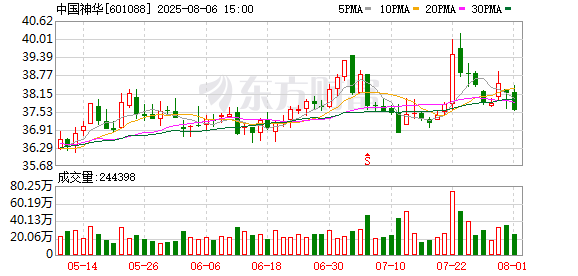
CSEC,China Shenhua(601088)

Search documents
6500亿巨无霸并购诞生!A股重组五大新趋势→
21世纪经济报道· 2025-08-06 15:50
Core Viewpoint - The article discusses the resurgence of mergers and acquisitions (M&A) among state-owned enterprises (SOEs) in China, highlighting China Shenhua's significant plan to acquire 13 energy companies, which is a response to new regulations encouraging industry consolidation and integration [1][3]. Group 1: M&A Trends - Trend 1: Full Industry Chain Integration is creating record levels of consolidation, with China Shenhua's acquisition plan expected to exceed 650 billion yuan in total assets [3][4]. - Trend 2: Cross-industry mergers are accelerating, supported by new policies since the release of the "M&A Six Guidelines" in September 2024, with over 30 cross-industry M&A announcements made [6][7]. - Trend 3: Protection of minority shareholders is becoming a critical baseline, with new regulations allowing the acquisition of quality but unprofitable assets, provided that measures are in place to protect minority interests [9][10]. Group 2: Regulatory Changes - Trend 4: Policy relaxation allows loss-making companies to engage in acquisitions, with strict requirements for both parties involved in such transactions [12][13]. - Trend 5: Regulatory tolerance is at an all-time high, with more flexible payment methods and autonomous arrangements for performance commitments in M&A transactions [16][17].



煤炭反内卷加码,详解供需影响
2025-08-06 14:45
Summary of Key Points from the Conference Call Industry Overview - The coal industry is experiencing increased regulatory scrutiny from the National Energy Administration aimed at stabilizing coal prices to support electricity prices and the overall economic environment [1][2][10] - The coal production in China is expected to see fluctuations due to regulatory measures and market dynamics, with a projected total annual output of 4.8 billion tons for 2025, reflecting a slight increase year-on-year [1][7] Core Insights and Arguments - The National Energy Administration's intervention in the coal industry is a response to low coal prices and excessive production, indicating a shift towards stricter regulations to ensure price recovery [2][10] - The average long-term electricity price has been reduced by 0.02 yuan, while coal prices have dropped significantly by approximately 250 yuan, which could lead to further reductions in electricity prices in 2026 if the trend continues [2] - The coal production in Xinjiang and Inner Mongolia is expected to decline in the latter half of 2025 due to the cancellation of freight subsidies and stricter regulatory oversight [1][5][6] - A specific case of Shanxi Coking Coal reducing working days from 320 to 276 days is noted, but this is not expected to become a widespread industry trend [3][4] Production and Demand Dynamics - National coal production reached a historical high of 440 million tons in late 2024 and early 2025, but has since seen a decline due to falling prices and regulatory measures [4][10] - The coal demand fluctuations are attributed to changes in electricity consumption patterns, with a notable increase in residential and tertiary sector electricity usage [11] - The impact of renewable energy development on thermal power demand is significant, with a negative growth rate observed in thermal power demand in early 2025 due to increased renewable installations [12][13] Future Outlook - The coal industry is expected to stabilize in the second half of 2025, with a projected monthly production decrease of about 20 million tons compared to June 2025, leading to a total of 240 million tons for the second half of the year [7][8] - The exit of the production guarantee policy is anticipated to have limited actual impact on coal production, as most unlicensed production capacity has already been phased out [8][9] - The market sentiment is shifting, with a recognition of the cyclical nature of the coal industry and potential for recovery as supply stabilizes and demand increases [10][13] Investment Opportunities - China Shenhua's recent acquisition plan reflects positive market sentiment towards state-owned enterprise reforms and is expected to enhance profitability as the industry recovers [2][16] - Recommended coal companies include Jinko, Shaanxi Coal, China Coal, Shenhua, and Yanzhou Coal, with specific recommendations for coking coal companies like Pingmei, Huaiyin, Lu'an, and Shanxi Coking Coal [17]
华源晨会-20250806
Hua Yuan Zheng Quan· 2025-08-06 13:39
Real Estate - The real estate sector has seen a decline of 3.4% this week, with the Shanghai Composite Index down by 0.9% and the Shenzhen Component down by 1.6% [2][7] - In terms of new housing, 42 key cities recorded a total transaction of 205 million square meters this week, a 19.9% increase compared to the previous week [8] - The central government emphasized the importance of high-quality urban renewal and has implemented tax refund policies for residents purchasing new homes, amounting to 11.1 billion yuan [9] North Exchange - The North Exchange has become a key platform for observing industrial upgrades and capital flows, with a focus on mergers and acquisitions [13][14] - The introduction of new merger regulations in 2025 is expected to enhance the activity of mergers and acquisitions, particularly in the technology and manufacturing sectors [14][15] - Significant external acquisitions have been noted, with a total of 38.6 billion yuan in disclosed equity sales in Q2 2025, indicating a surge in activity [15] Food and Beverage - The company reported a revenue of 3.24 billion yuan for H1 2025, representing a year-on-year increase of 21.6%, and a net profit of 183 million yuan, up 113% [17][20] - The expansion of franchise stores has been a key driver, with the number of franchise outlets reaching 10,386, an increase of approximately 8% [19] - The company plans to distribute a mid-term dividend of 0.0716 yuan per share, totaling around 190 million yuan, marking a record high in shareholder returns [20] Public Utilities and Environmental Protection - The company announced plans to acquire assets from the National Energy Group, which includes coal, power, and chemical assets, to resolve industry competition issues [21][22] - This acquisition is expected to enhance the company's integrated operational capabilities and optimize resource allocation across the coal industry [22][23] - The company reported strong resilience in its performance for H1 2025, with a projected dividend yield of 5.4% based on current stock prices [25][26] New Consumption - The company is a leading domestic brand in the oral care industry, with a strong market presence and a focus on innovative product development [28][29] - The company has established a multi-channel marketing strategy, including e-commerce, to enhance its market reach and consumer engagement [29][30] - Future revenue growth is anticipated, with projected revenues of 1.86 billion yuan in 2025, reflecting a year-on-year growth of 19.3% [31]
央企能源航母诞生!A股并购重组五大新趋势爆发
2 1 Shi Ji Jing Ji Bao Dao· 2025-08-06 13:31
Core Viewpoint - The article highlights a significant merger and acquisition (M&A) activity in China's state-owned enterprises, particularly focusing on China Shenhua's acquisition of 13 energy companies under the State Energy Group, aiming to create a comprehensive energy conglomerate by 2025. This reflects the active M&A landscape in the A-share market driven by supportive policies. Group 1: M&A Trends - Trend 1: Accelerated integration of the entire industry chain, exemplified by China Shenhua's acquisition aimed at establishing a "coal-rail-port-user" integrated operation system, supported by regulatory encouragement for leading enterprises to consolidate their industry chains [1]. - Trend 2: Cross-industry mergers are receiving regulatory approval, particularly in the technology sector, with over 30 cases announced post-policy changes, emphasizing the need for alignment with industrial upgrade logic and integration capabilities [2]. - Trend 3: Acquisitions of high-quality, unprofitable assets are supported, particularly in sectors like semiconductors, with a focus on protecting minority shareholders and ensuring the sustainability of listed companies [3]. Group 2: Regulatory Environment - Trend 4: Loss-making companies are permitted to acquire both profitable and unprofitable firms, as demonstrated by the acquisition of ChipLink by ChipLink Yuzhou [4]. - Trend 5: The regulatory environment has become more accommodating, allowing flexible payment methods such as installment payments and encouraging combinations of shares, convertible bonds, and cash [6]. - Additional regulatory changes include non-mandatory performance commitments for third-party asset purchases and more efficient review processes, including simplified procedures and a "green channel" for tech companies [8][7].
6500亿巨无霸并购诞生!A股重组五大新趋势引爆市场
2 1 Shi Ji Jing Ji Bao Dao· 2025-08-06 13:30
Core Viewpoint - The recent wave of mergers and acquisitions among state-owned enterprises (SOEs) in China, exemplified by China Shenhua's plan to acquire 13 energy companies, reflects a strategic response to new regulations encouraging industry consolidation and integration [1][4]. Group 1: Mergers and Acquisitions Trends - China Shenhua's acquisition plan involves a total asset scale exceeding 650 billion yuan, aiming to create an integrated operational system across the energy supply chain [4]. - The acquisition includes companies across coal mining, coal power, coal chemical, and logistics, enhancing resource capacity and operational efficiency [4]. - The new regulatory environment supports industry consolidation, with policies encouraging leading listed companies to integrate within their core business sectors [5]. Group 2: Cross-Industry Mergers - Since the introduction of the "merger six guidelines" in September 2024, there has been a notable increase in cross-industry mergers, particularly in technology sectors like semiconductors and high-end manufacturing [7][8]. - Successful cross-industry mergers are characterized by the acquirer's operational compliance, logical alignment with traditional industry upgrades, and strong business synergies post-acquisition [9]. Group 3: Support for Loss-Making Companies - Loss-making companies can acquire other firms, provided they meet strict criteria, including the necessity for strong business synergies and robust capital strength [14]. - Recent examples include semiconductor companies engaging in acquisitions despite both parties being in a loss position, indicating a shift in regulatory acceptance of such transactions [12][14]. Group 4: Regulatory Flexibility - The regulatory environment has become more accommodating, allowing for flexible payment methods and autonomous arrangements regarding performance commitments in mergers [17]. - New policies support diverse valuation methods for determining transaction prices and encourage long-term capital participation in mergers [18].
中证煤炭指数上涨2.24%,前十大权重包含美锦能源等
Jin Rong Jie· 2025-08-06 10:10
从中证煤炭指数持仓样本的行业来看,能源占比100.00%。 数据统计显示,中证煤炭指数近一个月上涨6.07%,近三个月上涨8.85%,年至今下跌7.58%。 资料显示,指数样本每半年调整一次,样本调整实施时间分别为每年6月和12月的第二个星期五的下一 交易日。权重因子随样本定期调整而调整,调整时间与指数样本定期调整实施时间相同。在下一个定期 调整日前,权重因子一般固定不变。特殊情况下将对指数进行临时调整。当样本退市时,将其从指数样 本中剔除。样本公司发生收购、合并、分拆等情形的处理,参照计算与维护细则处理。 从指数持仓来看,中证煤炭指数十大权重分别为:陕西煤业(9.8%)、中国神华(8.74%)、兖矿能源 (8.01%)、中煤能源(7.66%)、山西焦煤(7.07%)、潞安环能(5.75%)、美锦能源(4.81%)、淮 北矿业(4.67%)、华阳股份(4.51%)、平煤股份(4.22%)。 金融界8月6日消息,上证指数低开高走,中证煤炭指数 (中证煤炭,399998)上涨2.24%,报2042.16点, 成交额103.82亿元。 从中证煤炭指数持仓的市场板块来看,上海证券交易所占比83.88%、深圳证券交易所 ...





中证香港300资源指数报2861.49点,前十大权重包含中煤能源等
Jin Rong Jie· 2025-08-06 08:36
Core Viewpoint - The China Hong Kong 300 Resource Index has shown significant growth, with a 5.70% increase over the past month, 21.06% over the past three months, and 17.37% year-to-date [1]. Group 1: Index Performance - The China Hong Kong 300 Resource Index is currently at 2861.49 points [1]. - The index reflects the overall performance of listed companies in various sectors such as banking, transportation, resources, infrastructure, logistics, and leisure [1]. Group 2: Index Holdings - The top ten weighted companies in the index are: China National Offshore Oil (27.99%), PetroChina (13.08%), Zijin Mining (11.11%), China Shenhua (10.1%), Sinopec (8.64%), China Hongqiao (5.0%), China Coal Energy (3.47%), Luoyang Molybdenum (3.12%), Zhaojin Mining (3.06%), and Yanzhou Coal Mining (2.55%) [1]. - The index is fully comprised of companies listed on the Hong Kong Stock Exchange, with a 100% market share [1]. Group 3: Sector Composition - The sector composition of the index includes: Oil and Gas (50.07%), Coal (16.61%), Precious Metals (16.13%), Industrial Metals (15.73%), Rare Metals (0.89%), and Other Non-ferrous Metals and Alloys (0.56%) [2]. - The index samples are adjusted biannually, with adjustments occurring on the next trading day after the second Friday of June and December [2].



研报掘金丨华源证券:维持中国神华“买入”评级,发布收购预案解决同业竞争
Ge Long Hui A P P· 2025-08-06 07:59
Core Viewpoint - China Shenhua's acquisition plan aims to resolve industry competition, positioning the coal leader for stable long-term growth [1] Company Summary - The acquisition includes stakes in several subsidiaries of the State Energy Group, such as Guoyuan Power, coal-to-oil chemical companies, and various energy and mining companies, with total assets expected to be in the hundreds of billions [1] - The company's performance in the first half of the year shows strong resilience, and the dividend yield remains attractive [1] - Coal prices are stabilizing, and the initial phase of supply-demand rebalancing enhances the certainty and appeal of dividends from leading companies [1] Industry Summary - The valuation sensitivity of non-perpetual assets is high concerning duration length, indicating that the company has a robust ability to withstand overall demand fluctuations in the coal industry compared to the industry average [1] - The financial statements and fundamental aspects of the company reflect a strong resistance to demand volatility in the coal sector [1] - The company maintains a "buy" rating, suggesting confidence in its future performance and stability within the industry [1]
中证香港100能源指数报2537.04点,前十大权重包含中国神华等
Jin Rong Jie· 2025-08-06 07:44
Core Viewpoint - The China Securities Hong Kong 100 Energy Index (H100 Energy) has shown positive performance, with a 5.40% increase over the past month, a 14.71% increase over the past three months, and a year-to-date increase of 2.89% [1]. Group 1: Index Performance - The H100 Energy Index reported a value of 2537.04 points [1]. - The index has experienced a monthly increase of 5.40% [1]. - Over the last three months, the index has risen by 14.71% [1]. - Year-to-date, the index has increased by 2.89% [1]. Group 2: Index Composition - The H100 Energy Index is composed entirely of securities listed on the Hong Kong Stock Exchange, with a 100.00% allocation [2]. - The sector breakdown of the index includes 46.80% in fuel refining, 36.32% in integrated oil and gas companies, and 16.88% in coal [2]. Group 3: Index Adjustment Mechanism - The index samples are adjusted biannually, with adjustments occurring on the next trading day after the second Friday of June and December [2]. - Weight factors are generally fixed until the next scheduled adjustment, with special circumstances allowing for temporary adjustments [2]. - Adjustments to the index occur in response to changes in the parent index, special events affecting sample companies, or if a sample company is delisted [2].
华源证券给予中国神华买入评级,发布收购预案解决同业竞争 煤炭龙头行稳致远
Mei Ri Jing Ji Xin Wen· 2025-08-06 07:33
Group 1 - The core viewpoint of the report is that Huayuan Securities has given China Shenhua (601088.SH, latest price: 37.56 yuan) a buy rating due to several positive factors [2] - The company has initiated asset injection again to fulfill its commitment to avoid competition after acquiring Hangjin Energy in early February 2025 [2] - The company's performance in the first half of the year shows strong resilience, and the dividend yield remains relatively attractive [2] - Coal prices are stabilizing, and the supply-demand rebalancing is in its early stages, making the dividends from leading companies more certain and appealing [2]