INDUSTRIAL BANK(601166)

Search documents
沪深300商业银行指数报7780.10点,前十大权重包含招商银行等
Jin Rong Jie· 2025-07-21 08:46
Group 1 - The Shanghai Composite Index opened high and the CSI 300 Commercial Banks Index reported 7780.10 points, with a 3.00% increase over the past month, 11.10% over the past three months, and a 15.30% increase year-to-date [1] - The CSI 300 Index is categorized into 11 primary industries, 35 secondary industries, over 90 tertiary industries, and more than 200 quaternary industries, providing a comprehensive analysis tool for investors [1] - The top ten weights in the CSI 300 Commercial Banks Index are: China Merchants Bank (16.86%), Industrial Bank (12.27%), Industrial and Commercial Bank of China (8.23%), Bank of Communications (6.49%), Agricultural Bank of China (6.0%), Jiangsu Bank (5.23%), Shanghai Pudong Development Bank (4.78%), Minsheng Bank (4.08%), Ping An Bank (3.73%), and Shanghai Bank (3.32%) [1] Group 2 - The CSI 300 Commercial Banks Index consists of 76.30% comprehensive banks and 23.70% regional banks [2] - The index sample is adjusted biannually, with adjustments occurring on the next trading day after the second Friday of June and December [2] - Weight factors are generally fixed until the next scheduled adjustment, with temporary adjustments made in response to changes in the CSI 300 Index samples or significant events affecting sample companies [2]




天弘鑫意39个月定开债: 天弘鑫意39个月定期开放债券型证券投资基金2025年第2季度报告
Zheng Quan Zhi Xing· 2025-07-21 06:20
Core Viewpoint - The report provides an overview of the Tianhong Xinyi 39-Month Regular Open Bond Fund, highlighting its investment strategy, performance metrics, and compliance with regulations [1][2][3]. Fund Overview - Fund Name: Tianhong Xinyi 39-Month Regular Open Bond Fund [3] - Fund Manager: Tianhong Fund Management Co., Ltd. [6] - Fund Trustee: Industrial Bank Co., Ltd. [6] - Total Fund Shares at Reporting Period End: 7,987,245,412.16 shares [3] - Investment Strategy: The fund adopts a strict buy-and-hold strategy, aiming for stable asset appreciation while controlling net value volatility [3]. Performance Metrics - Net Value Growth Rate for the past three months: 0.76% [8] - Net Value Growth Rate for the past six months: 1.41% [8] - Net Value Growth Rate for the past year: 2.91% [8] - Net Value Growth Rate since fund contract inception: 16.38% [8] Investment Composition - Total Value of Bonds Held: 15,015,091,759.87 RMB, accounting for 97.23% of total fund assets [12] - Value of Policy Financial Bonds: 6,821,641,371.69 RMB, representing 80.76% of net asset value [12] Compliance and Fair Trading - The fund operates in accordance with national laws and regulations, ensuring no violations of fund contract commitments [9] - Fair trading procedures are effectively implemented, with no reported incidents of unfair trading or profit transfer [10]
二十年银行股复盘:由基本面预期和成长思维转向策略和交易思维
Orient Securities· 2025-07-21 01:44
Core Insights - The report indicates a shift in the banking sector's focus from fundamental expectations and growth thinking to strategy and trading thinking, highlighting the evolving landscape of investment approaches in the industry [2][29]. Group 1: Regulatory Actions - Three significant regulatory actions have guided the banking industry from "wild growth" to orderly expansion: 1. In 2011, the tightening of city commercial banks' cross-regional expansion and the central bank's credit scale control ended the disorderly expansion of the banking sector [16][20]. 2. The introduction of the MPA assessment in 2016 served as a core regulatory framework, preventing small and medium-sized banks from circumventing regulations and promoting stability [21][23]. 3. The implementation of asset management regulations in 2018 significantly constrained the expansion of non-standard assets in banks, addressing risks associated with shadow banking [24][28]. Group 2: Valuation Framework - A new understanding of the valuation framework for banks is presented, emphasizing the "PB-ROE" model, where banks with higher ROE typically correspond to higher PB ratios. The introduction of dividend yield and payout ratio into this framework suggests that banks with an ROE above 11.7% could justify a PB valuation above 1 [32][33]. - The report notes a shift in the driving logic behind bank stock price increases from growth logic to dividend strategies, indicating a transition in market focus from numerator-driven factors (like ROE) to denominator-driven factors (like dividend yield) [32][33]. Group 3: Historical Performance Review - A comprehensive review of bank stocks from 2008 to 2022 reveals that the banking sector has outperformed the CSI 300 index, achieving nine rounds of excess returns lasting over three months. The core driving factors shifted from growth to dividends over this period [8][29]. - Specific periods of excess returns are highlighted, such as: 1. From November 2008 to July 2009, the sector achieved an absolute return of 139.8% and an excess return of 15.3% [19]. 2. In 2011, despite negative absolute returns, the sector still managed an excess return of 17.6% [19]. 3. The period from October 2014 to December 2014 saw an absolute return of 60% and an excess return of 14.9% [19]. Group 4: Investment Recommendations - The report suggests two main investment themes: 1. Anticipating a reduction in insurance preset interest rates in Q3 2025, it recommends focusing on high-dividend banks such as China Construction Bank, Industrial and Commercial Bank of China, and Chongqing Rural Commercial Bank [3]. 2. The strong performance of small and medium-sized banks since the beginning of the year is expected to continue, with recommendations for banks like Industrial Bank, CITIC Bank, and Nanjing Bank based on valuation, dividends, and fundamentals [3].



券商中报业绩强劲,大行AIC扩容
HTSC· 2025-07-20 11:47
Investment Rating - The report maintains an "Overweight" rating for both the banking and securities sectors [10]. Core Views - Investment opportunities are prioritized in the order of banking > securities > insurance, driven by strong performance in the banking sector and robust earnings forecasts from securities firms [2][13]. - The central bank's data indicates a significant increase in social financing and deposits, with corporate short-term loans showing strong growth [3][15]. - Major securities firms are expected to report impressive earnings, with large firms seeing a net profit growth of 50% to 80% year-on-year, while smaller firms may achieve growth rates of 50% to 120% [2][32]. Summary by Sections Banking Sector - The central bank's report on social financing shows a year-on-year increase, primarily due to government bond issuance and a surge in corporate short-term loans [3][15]. - Hangzhou Bank reported a revenue increase of 3.89% year-on-year for the first half of 2025, with net profit rising by 16.67% [17]. - Postal Savings Bank has established a financial asset investment company, marking the completion of the AIC strategy by the six major banks [18][19]. - Recommended investment themes include high-quality regional banks, actively underweighted stocks, and large banks with strong dividend advantages [3][14]. Securities Sector - The report highlights a strong performance in the securities sector, with major firms expected to report significant profit growth [2][32]. - The trading environment remains robust, with financing balances nearing 1.9 trillion yuan, indicating active leverage in the market [2][32]. - Key firms recommended for investment include Galaxy Securities, Guotai Junan, CITIC Securities, and Zhongjin Company [4][32]. Insurance Sector - The insurance sector is experiencing a gradual increase in valuations, although profit margins are tightening [3][37]. - Investors are advised to focus on high-quality leading companies within the insurance sector [4][37].



再现“地板价”!350亿债券承销费低至700元,银河证券、兴业银行等6家主承销商被查
Sou Hu Cai Jing· 2025-07-19 09:03
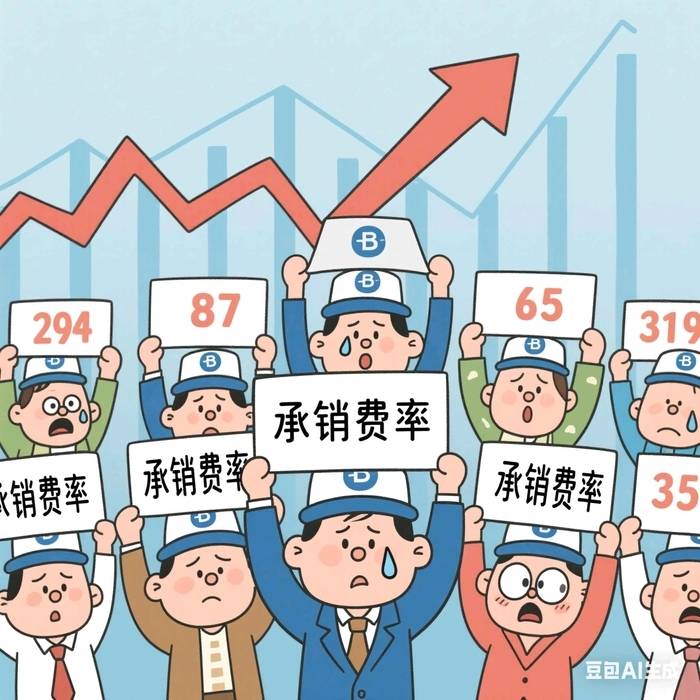
Core Viewpoint - The bond underwriting market in China is experiencing severe price competition, with underwriters willing to accept extremely low fees to secure business, leading to regulatory investigations into several institutions for abnormal pricing practices [1][6][10]. Group 1: Underwriting Fee Trends - The underwriting fees for the 2025-2026 secondary capital bond project by Guangfa Bank were reported as exceptionally low, with fees as low as 700 yuan and an average of around 10,000 yuan per institution, significantly below market averages [3][4][6]. - The total underwriting service fee for the six selected institutions was only 63,448 yuan, raising concerns about the sustainability of such low pricing [3][4]. Group 2: Regulatory Response - The China Interbank Market Dealers Association has initiated self-regulatory investigations into six institutions for their unusually low bids, citing potential violations of self-regulatory rules [6][10]. - Previous instances of low underwriting fees by Guangfa Bank have also drawn market scrutiny, indicating a pattern of aggressive pricing strategies that may undermine market integrity [6][10]. Group 3: Market Dynamics - The intense competition among underwriting firms is driven by a desire to increase market share and rankings, leading to a cycle of low pricing that may not cover operational costs [7][9]. - The top six banks dominate the bond underwriting market, holding a combined market share of 53.7%, which pressures smaller firms to engage in price competition to secure business [9]. Group 4: Industry Concerns - There are significant concerns that continued low pricing in the underwriting market could lead to inadequate due diligence and increased risks of bond defaults, potentially harming the overall market [10]. - Experts suggest that a shift in focus from low pricing to value creation is necessary to restore a healthy competitive environment in the bond underwriting sector [10].



中信保诚红利精选A:2025年第二季度利润32.91万元 净值增长率1.57%
Sou Hu Cai Jing· 2025-07-18 08:38
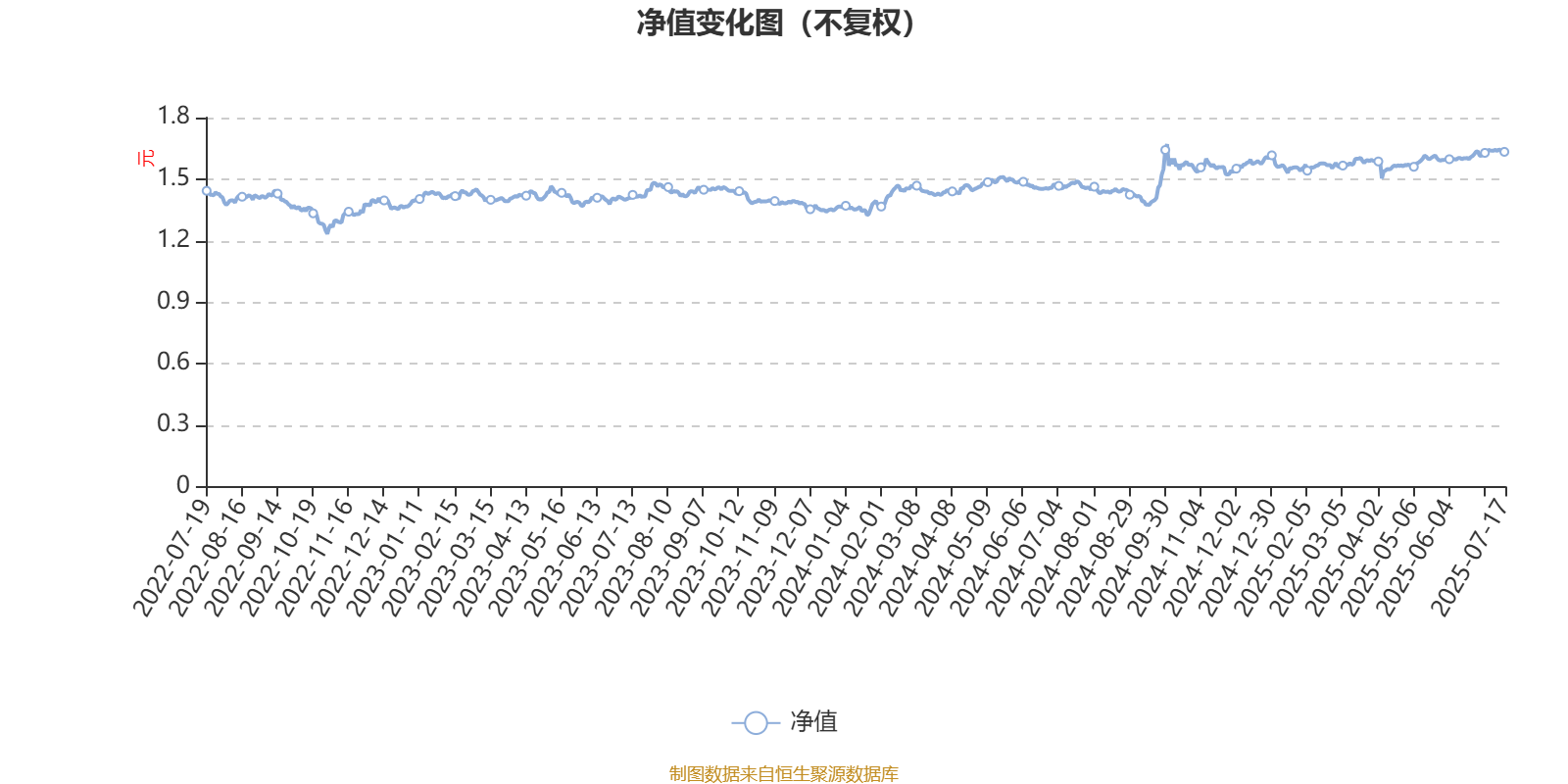
Core Viewpoint - The AI Fund, CITIC Prudential Dividend Select A (008091), reported a profit of 329,100 yuan for Q2 2025, with a weighted average profit per fund share of 0.0235 yuan. The fund's net value growth rate was 1.57%, and its total scale reached 22.47 million yuan by the end of Q2 2025 [3][16]. Fund Performance - As of July 17, the fund's unit net value was 1.633 yuan. Over the past year, the fund achieved a cumulative net value growth rate of 10.38%, ranking it highest among its peers, while CITIC Prudential New Blue Chip had the lowest at -0.2% [3]. - The fund's net value growth rates over different periods are as follows: 4.51% over the last three months (ranked 543/615), 4.91% over the last six months (ranked 480/615), and 14.74% over the last three years (ranked 29/324) [4]. Investment Strategy - In Q2 2025, the fund adjusted its holdings towards high-dividend stocks, slightly increasing the concentration of its portfolio. The external environment has become more complex, with increasing trade barriers, but the overall economic operation in China remains stable and improving [3]. Risk and Return Metrics - The fund's Sharpe ratio over the past three years is 0.4308, ranking 17/319 among comparable funds. The maximum drawdown over the same period was 14.64%, with the largest single-quarter drawdown occurring in Q1 2022 at 14.53% [10][12]. Portfolio Composition - The average stock position of the fund over the past three years was 88.66%, compared to the industry average of 83.13%. The fund reached a peak stock position of 92.3% in mid-2021 and a low of 70.57% in Q1 2020 [15]. - As of Q2 2025, the top ten holdings of the fund included Midea Group, Yangtze Power, Bank of Communications, Hangzhou Bank, Industrial and Commercial Bank of China, Jiangsu Bank, China Merchants Bank, Gree Electric Appliances, Daqin Railway, and Industrial Bank [19].

银华混改红利灵活配置混合发起式A:2025年第二季度利润156.49万元 净值增长率5.01%
Sou Hu Cai Jing· 2025-07-18 08:29
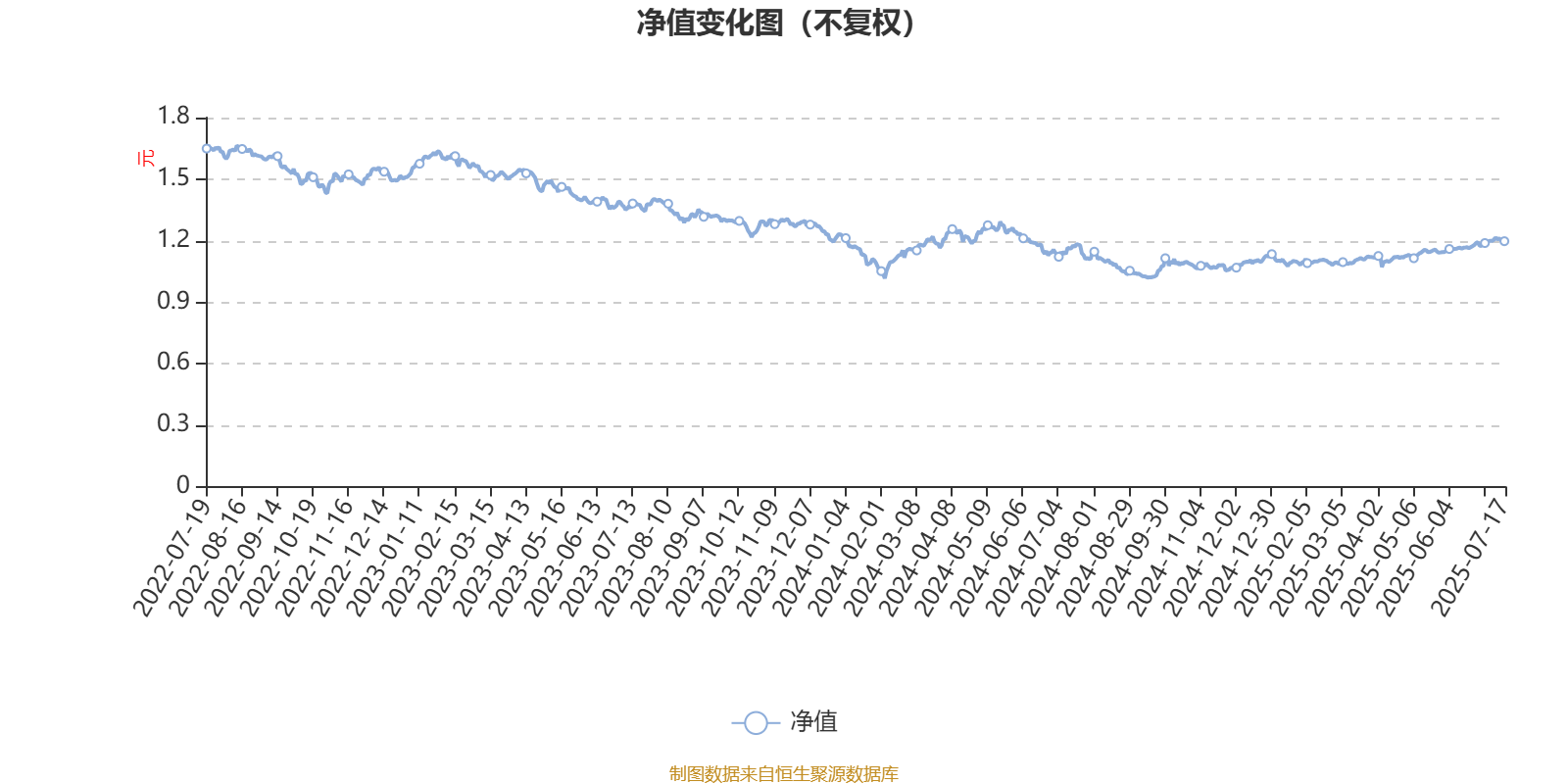
Core Viewpoint - The AI Fund Yin Hua Mixed Reform Dividend Flexible Allocation Mixed Initiation A (005519) reported a profit of 1.5649 million yuan in Q2 2025, with a net value growth rate of 5.01% for the period [3]. Fund Performance - As of the end of Q2 2025, the fund's scale was 32.6497 million yuan [14]. - The fund's unit net value as of July 17 was 1.197 yuan [3]. - The fund's performance over different time frames includes: - 3-month net value growth rate: 6.99%, ranking 582 out of 880 comparable funds [3]. - 6-month net value growth rate: 8.91%, ranking 380 out of 880 comparable funds [3]. - 1-year net value growth rate: 2.26%, ranking 790 out of 880 comparable funds [3]. - 3-year net value growth rate: -26.93%, ranking 726 out of 870 comparable funds [3]. Risk Metrics - The fund's Sharpe ratio over the past three years was -0.5078, ranking 824 out of 874 comparable funds [7]. - The maximum drawdown over the past three years was 38.97%, ranking 360 out of 864 comparable funds [10]. - The highest quarterly maximum drawdown occurred in Q1 2024, at 17.45% [10]. Investment Strategy - The fund adheres to a low-volatility dividend stock selection strategy, which has outperformed its benchmark in the first half of the year [3]. - The average stock position over the past three years was 83.36%, compared to the industry average of 80.33% [13]. - The fund reached its highest stock position of 93.73% at the end of H1 2023, while the lowest was 24.17% at the end of H1 2019 [13]. Top Holdings - As of the end of Q2 2025, the fund's top ten holdings included major banks and financial institutions such as Industrial and Commercial Bank of China, China Merchants Bank, and Ping An Insurance [17].

青山绿林变“银行” 普惠金融泽山海 福建走好中国特色金融发展之路调研行(上篇)
Jin Rong Shi Bao· 2025-07-18 06:25
Core Viewpoint - The development of "living timber loans" and innovative financial products has transformed forest resources into valuable assets, enhancing the economic viability of rural areas and promoting ecological sustainability [1][3][4]. Group 1: Historical Context and Development - In the late 1970s, the village of Houyang faced severe poverty, leading to deforestation as villagers sought livelihoods [2]. - Huang Zhenfang, a local resident, took a loan of 80,000 yuan to cultivate 50 acres of barren land, initiating a successful reforestation project [2]. - The concept of "living timber loans" was introduced by Xi Jinping, allowing farmers to use young trees as collateral for loans, thus opening new financial pathways for forestry [1][3]. Group 2: Financial Innovations and Impact - The establishment of a market for living timber in 1989 marked a significant shift in forestry management, allowing for the monetization of forest resources [2][3]. - Financial products such as "forest tickets" and "carbon credit loans" have emerged, injecting vitality into the forestry sector and facilitating sustainable development [4][6]. - By 2024, Huang Zhenfang's family forest achieved an annual income exceeding 1.2 million yuan, a significant increase from less than 30,000 yuan in 1989, demonstrating the financial benefits of these innovations [6]. Group 3: Broader Economic Implications - The integration of green finance into the local economy has led to the development of a "forest economy" that combines forestry with tourism and agriculture [7]. - The People's Bank of China has emphasized the importance of high-quality financial services to support economic development, with a focus on rural areas [7]. - As of mid-2023, the total social financing scale reached 430.22 trillion yuan, reflecting a growing trend in financial support for the real economy [7]. Group 4: Future Directions - The ongoing reforms in financial services aim to enhance the accessibility and effectiveness of financial products for rural communities, ensuring that financial resources are aligned with local development needs [10][11]. - The success of the living timber loan model is being replicated in other regions, indicating a potential for widespread adoption of similar financial innovations across the country [15][16].
平安惠信3个月定开债A,平安惠信3个月定开债C: 平安惠信3个月定期开放债券型证券投资基金2025年第2季度报告
Zheng Quan Zhi Xing· 2025-07-18 06:20
Group 1 - The fund is named "Ping An Hui Xin 3-Month Open-End Bond Fund" and operates on a contract-based, periodic open-end model, with a closed period of three months [1][2] - The fund aims for long-term and sustainable value appreciation while striving to exceed the performance benchmark [1][2] - As of the end of the reporting period, the total fund shares amounted to 19,684,981.64 [1] Group 2 - The fund employs a comprehensive investment strategy that includes macroeconomic cycle analysis, industry outlook predictions, and issuer research, focusing on fixed-income investment opportunities [2] - The benchmark for performance comparison is the China Bond Index [2] - The fund's risk-return characteristics indicate that it is expected to yield higher returns and risks than money market funds but lower than mixed or equity funds [2] Group 3 - The fund's net asset value (NAV) growth rate for the past three months was 1.33%, while the benchmark yield was 1.95% [9] - The fund's NAV for the A share class was 1.0161 yuan, and for the C share class, it was 1.0233 yuan at the end of the reporting period [9] - The fund maintained a moderate leverage and duration strategy, primarily focusing on credit bonds to ensure stable operations and net value growth [9] Group 4 - The fund's investment portfolio consisted of 61.26% in bonds, totaling 16,049,442.19 yuan [11] - There were no holdings in stocks or asset-backed securities during the reporting period [11][16] - The fund did not engage in any abnormal trading activities and complied with all relevant regulations [8]
平安双盈添益债券型证券投资基金2025年第2季度报告
Zheng Quan Zhi Xing· 2025-07-18 06:20
Core Viewpoint - The report provides an overview of the performance and management of the Ping An Shuangying Tianyi Bond Fund for the second quarter of 2025, highlighting its investment strategies, financial indicators, and market conditions affecting the fund's performance [1][2][4]. Fund Product Overview - Fund Name: Ping An Shuangying Tianyi Bond Fund - Fund Code: 016447 - Fund Type: Contractual open-end fund - Effective Date: December 5, 2022 - Total Fund Shares at Period End: 356,310,759.64 shares - Investment Objective: Long-term stable appreciation of fund assets while strictly controlling risks and maintaining good liquidity [2][3]. Financial Indicators and Fund Performance - Fund A Net Asset Value (NAV) at Period End: 1.1000 CNY, with a net value growth rate of 0.79% against a benchmark return of 1.82% for the same period [6]. - Fund C NAV at Period End: 1.0887 CNY, with a net value growth rate of 0.69% against a benchmark return of 1.82% [6]. - Fund E NAV at Period End: 1.0971 CNY, with a net value growth rate of 0.72% [6]. Management Report - Fund Manager: Chen Haoyu, with 9 years of experience in the securities industry, has been managing the fund since January 2025 [4]. - The fund management strictly adheres to relevant laws and regulations, ensuring compliance and protecting the interests of fund shareholders [4][5]. Market Conditions - The economic environment in the first half of 2025 was stable, with macro policies remaining accommodative, including fiscal and monetary easing [4]. - The bond market experienced a downward trend in yields, with various types of bonds showing significant declines in yields during the second quarter [5]. - The equity and convertible bond markets saw volatility in April, but recovery was noted as risk appetite improved following joint statements on tariffs [5]. Investment Portfolio Report - The fund's total assets are primarily allocated to bonds, with 86.44% of the total assets invested in this category [7]. - The fund did not hold any domestic stocks or asset-backed securities at the end of the reporting period [7][8].