
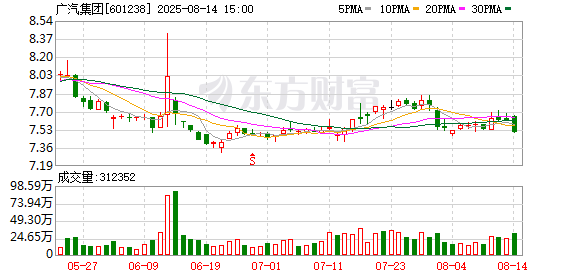
GAC GROUP(601238)

Search documents
广州超级独角兽 增资6个亿联手华为造车
2 1 Shi Ji Jing Ji Bao Dao· 2025-08-14 22:33
Core Viewpoint - GAC Group announced that GAC Aion plans to invest 600 million yuan in Huawang Automotive, indicating a strategic move towards high-end market positioning [1] Company Summary - GAC Aion is taking steps to enhance its market presence by increasing its stake in Huawang Automotive through a significant capital injection of 600 million yuan [1] Industry Summary - The investment reflects a broader trend in the automotive industry where companies are focusing on high-end product offerings to capture more market share and improve profitability [1]


把握用户需求 直击核心痛点 广汽集团启动IPD及数字化变革二期项目
Zhong Guo Chan Ye Jing Ji Xin Xi Wang· 2025-08-14 22:10
Core Viewpoint - GAC Group has officially launched the second phase of its Integrated Product Development (IPD) and digital transformation project, marking a new stage in addressing user needs and core pain points in the automotive industry [1] Group 1: User Demand and Product Development - User demand is evolving rapidly towards personalization and diversification, driving changes in product development and marketing logic within the automotive industry [1] - The traditional serial model of vehicle product development often leads to information transmission gaps and process bottlenecks, resulting in lost product demand and misaligned marketing [1] - The IPD approach promotes a parallel co-creation model, involving cross-organizational teams from the outset to ensure unified understanding of user needs and cohesive product development [1] Group 2: User Demand Management - Accurate definition of user demand is critical for product success, with user demand management elevated to a central role in GAC Group's IPD process [2] - GAC Group employs a "three-year planning and five-year outlook" strategy for product planning, aligning product and technology planning to create a systematic and forward-looking technical reserve path [2] - The IPD emphasizes managing product development as an investment, prioritizing investment opportunities and evaluating products from a commercial perspective to ensure return on investment [2] Group 3: Organizational Mechanism and Implementation - The transformation of IPD involves not only a change in philosophy but also the establishment of new organizational mechanisms, including cross-departmental teams for product and demand management [3] - GAC Group has introduced new assessment metrics to drive high-quality execution across processes, aiming to eliminate bottlenecks and gaps in the IPD core processes by the end of the year [3]
招募经销商 广汽想借华望挽颓势
Bei Jing Shang Bao· 2025-08-14 16:38
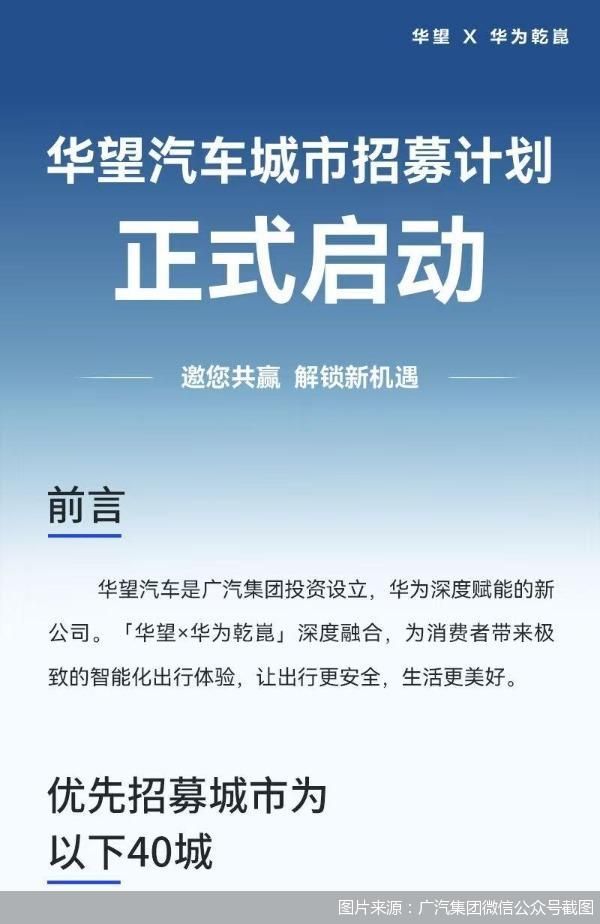
Group 1 - GAC Group officially launched the Huawang Automotive city recruitment plan, targeting major cities across five regions in China [1] - The recruitment emphasizes a "few dealers, many stores" strategy, utilizing a "1+N" channel model for user engagement [1] - GAC Group announced a capital increase of 600 million yuan for Huawang Automotive, resulting in a 71.43% direct ownership stake [1] Group 2 - Huawang Automotive is a new company established by GAC Group with support from Huawei, aimed at creating a high-end smart electric vehicle brand [2] - The first model from Huawang Automotive is expected to be launched next year, targeting the 300,000 yuan high-end market segment [2] - GAC Group and Huawei have a history of collaboration, including a strategic partnership for developing smart automotive solutions [2][3] Group 3 - GAC Group's Aion brand has seen a decline in sales, with a 13.97% year-on-year drop in the first half of 2023, indicating market challenges [3] - Aion's sales in June 2023 were reported at 19,900 units, down 22.6% year-on-year, reflecting increased competition in the market [3] - GAC Group's high-end brand, Haobo, has also struggled to penetrate the high-end market effectively [3] Group 4 - Huawei has expanded its influence in the automotive sector, with its "Huawei Smart" branding gaining recognition through partnerships with various car manufacturers [4] - GAC Group aims to leverage Huawei's technology to enhance product intelligence and marketing efforts in the competitive automotive landscape [4] - The collaboration between GAC and Huawei is seen as a crucial step in GAC's strategy to penetrate the high-end smart electric vehicle market [4]
招募经销商、增资6亿元,广汽想借华望挽颓势
Bei Jing Shang Bao· 2025-08-14 12:57
Core Viewpoint - GAC Group has officially launched the Huawang Automotive urban recruitment plan, aiming to establish a new high-end intelligent electric vehicle brand in collaboration with Huawei, amidst challenges in the current market environment [3][4][6]. Group 1: Company Strategy - Huawang Automotive will adopt a "few dealers, many stores" approach, utilizing a "1+N" channel model that includes a user center and multiple experience centers for diversified user engagement [4]. - GAC Group has agreed to increase its investment in Huawang Automotive by 600 million yuan, resulting in a direct ownership of 71.43% in the company [4]. Group 2: Market Context - GAC Aion, a key player in GAC Group's transformation, achieved over 480,000 annual sales but faced a decline in sales in the first half of 2023, with a 13.97% year-on-year drop to 108,700 units [6]. - The high-end brand Haobo has also struggled, with July sales for its models being significantly low, indicating challenges in penetrating the high-end market [6]. Group 3: Collaboration with Huawei - GAC Group's partnership with Huawei is not new; previous collaborations included the development of the AH8 model, which has since shifted to independent development due to resource allocation issues [5]. - The collaboration with Huawei is seen as a strategic move to enhance product intelligence and leverage Huawei's market presence to improve GAC's competitive position in the high-end intelligent electric vehicle sector [7].
固态电池专题(一):全固态电池:锂电池的下一代解决方案
Minsheng Securities· 2025-08-14 09:51
Investment Rating - The report suggests a positive outlook on solid-state batteries as the next-generation solution for lithium batteries, indicating significant investment opportunities in this sector [5]. Core Insights - Solid-state batteries offer substantial advantages over traditional lithium-ion batteries, including higher energy density and improved safety due to the use of solid electrolytes [5][6]. - The report identifies sulfide solid electrolytes as the future mainstream route for solid-state batteries, highlighting their high ionic conductivity despite challenges in chemical and air stability [24][41]. - Key challenges for solid-state batteries include interfacial wetting issues, which can lead to lithium dendrite growth and reduced cycle life [50][57]. - The industry is supported by favorable policies, with significant investments expected in solid-state battery research and development, particularly in the consumer and automotive sectors [82]. Summary by Sections 1. Advantages of Solid-State Batteries - Solid-state batteries can achieve energy densities exceeding 500 Wh/kg by utilizing high-silicon or lithium metal anodes, significantly surpassing traditional lithium-ion batteries [5][17]. - The solid electrolyte's mechanical strength helps suppress lithium dendrite growth, enhancing safety by preventing short circuits [23][41]. 2. Types of Solid Electrolytes - Solid electrolytes are categorized into four main types: polymer, oxide, sulfide, and halide, with sulfides showing the highest ionic conductivity [26][41]. - Sulfide electrolytes are currently the focus of major companies like Toyota and CATL, indicating a strong industry trend towards this technology [42][47]. 3. Core Issues: Interfacial Wetting - The report discusses the critical issue of solid-solid interfacial wetting, which affects lithium ion transport and can lead to dendrite formation and reduced battery life [50][57]. - Both chemical/electrochemical and physical interface problems contribute to these challenges, necessitating advancements in material compatibility and processing techniques [51][55]. 4. Changes in Key Components - The report emphasizes the importance of dry electrode processes and the use of isostatic pressing to enhance the performance and manufacturability of solid-state batteries [63][71]. - Current collectors made from nickel-iron alloys are highlighted as a promising alternative to traditional copper collectors, addressing corrosion issues associated with sulfide electrolytes [78][81]. 5. Industry Development and Policy Support - The report outlines a clear industrialization timeline for solid-state batteries, with significant government support expected to accelerate development in the consumer and automotive markets [82].




乘用车板块8月14日跌0.65%,海马汽车领跌,主力资金净流出6.53亿元
Zheng Xing Xing Ye Ri Bao· 2025-08-14 08:27
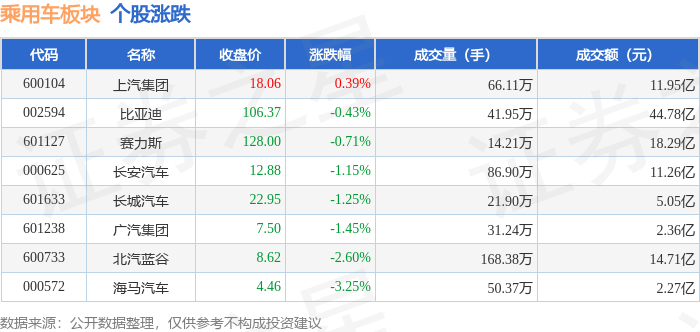
证券之星消息,8月14日乘用车板块较上一交易日下跌0.65%,海马汽车领跌。当日上证指数报收于 3666.44,下跌0.46%。深证成指报收于11451.43,下跌0.87%。乘用车板块个股涨跌见下表: | 代码 | 名称 | 收盘价 | 涨跌幅 | 成交量(手) | 成交额(元) | | --- | --- | --- | --- | --- | --- | | 600104 | 上汽集团 | 18.06 | 0.39% | 66.11万 | 11.95 Z | | 002594 | 比亚迪 | 106.37 | -0.43% | 41.95万 | 44.78 Z | | 601127 | 赛力斯 | 128.00 | -0.71% | 14.21万 | 18.29 Z | | 000625 | 长安汽车 | 12.88 | -1.15% | 86.90万 | 11.26亿 | | 601633 | 长城汽车 | 22.95 | -1.25% | 21.90万 | 5.05亿 | | 601238 | 广汽集团 | 7.50 | -1.45% | 31.24万 | 2.36亿 | | 600733 | 北汽 ...






冯兴亚拜访任正非后,华望汽车接连大动作!埃安入股有何深意
Nan Fang Du Shi Bao· 2025-08-14 05:39
Core Viewpoint - The collaboration between GAC Group and Huawei through the Huawang Automotive project is accelerating, with recent developments including a city recruitment plan and a significant capital increase from GAC Aion to Huawang Automotive [1][5][9]. Group 1: Huawang Automotive's City Recruitment Plan - Huawang Automotive has officially launched a city recruitment plan covering 40 cities across five major regions, including key cities like Guangzhou, Shenzhen, Beijing, and Shanghai [1][3]. - Each city aims to recruit 1-2 partners, with further batches to follow after the initial recruitment is completed [1]. Group 2: Sales Channel Innovation - Huawang Automotive has introduced an innovative sales channel model called "1+N" agency system, focusing on user-centered core automotive city business circles and decentralized experience centers in high-traffic areas [3][4]. - The recruitment criteria for partners are stringent, targeting top 100 national and regional dealers with experience in luxury brands or new energy operations, and requiring specific qualifications to ensure after-sales capabilities [3]. Group 3: Capital Increase from GAC Aion - GAC Aion has agreed to increase its investment in Huawang Automotive by 600 million RMB, resulting in GAC Group holding 100% of Huawang's equity [5][8]. - This capital increase is aimed at enhancing the synergy of GAC's self-owned brands and improving resource utilization efficiency [8]. Group 4: Strategic Implications of the Investment - The investment signals a strong endorsement of the collaboration between Huawei and GAC, positioning Huawang as a key player in GAC's strategy for high-end smart electric vehicles [9][10]. - GAC Aion's role in this investment reflects an optimization of internal resources and a strategic focus on high-end intelligent exploration, with potential for future valuation benefits if the Huawang project succeeds [10].
广汽集团将于8月19日发布“星源增程”技术 昊铂HL增程版同步上市
Feng Huang Wang· 2025-08-14 05:22
作为广汽集团在增程领域的最新成果,"星源增程"技术聚焦增程车亏电状态下的核心痛点,针对性解决 油耗偏高、动力不足、噪声振动明显等问题。其核心配置包括广汽自研的高效增程器,动力性能上搭 载"曲轴直连油冷发电机",静音效果方面,则通过降低发动机转速波动、优化电机电磁力,配合定位停 缸等先进技术实现无感启停,大幅提升驾乘静谧性。 值得注意的是,广汽在增程技术领域已有着深厚积累。早在2010年,广汽便率先开展相关研究,成功研 发并量产广汽传祺GA5 REV增程式纯电动轿车。 凤凰网科技讯 8月14日,广汽集团(601238)宣布,将于8月19日举办广汽星源增程技术发布会。发布 会当日,搭载"星源增程"技术的首款量产车型——昊铂HL增程版也将正式上市。 此外,广汽还自研了AI能量控制平台,通过全域能量管理、智能补电调节、智能能量回收、瞬时最优 分配四大策略,对车辆的能源进行精细化管理,进一步优化增程系统效能。 ...
广汽埃安向华望汽车增资6亿元,持股28.57%
Xin Lang Cai Jing· 2025-08-14 01:34
Group 1 - GAC Group's board approved an investment of 600 million yuan in Huawang Automotive, increasing its direct ownership to 71.43% and indirect ownership through GAC Aion to 28.57% [1] - Huawang Automotive's city recruitment plan has been launched, prioritizing 40 cities including Beijing, Shanghai, and Shenzhen, with a "1+N" channel model for network layout [3] - Huawang Automotive is a collaboration between GAC and Huawei, aiming to create a new high-end smart electric vehicle brand, with the first model expected to launch in 2026 targeting the 300,000 yuan market [3] Group 2 - The investment in Huawang Automotive is seen as a continuation of GAC Aion's partnership with Huawei, which began with the AH8 project for a mid-to-large smart electric SUV, initially planned for production by the end of 2023 [4] - In March 2023, GAC announced a shift from joint development with Huawei on the AH8 project to independent development, with Huawei remaining a key supplier [6] - GAC's management emphasized that the change in project development strategy does not indicate a deterioration in the partnership with Huawei, which remains a strategic ally [6]
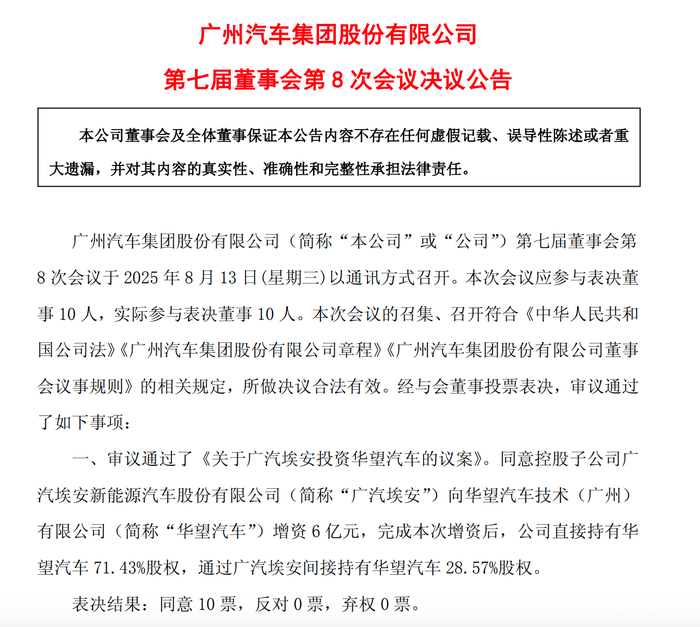
汽车早餐 | 财政部:“双贴息”政策期限一年;广汽同意埃安增资华望汽车6亿元;7月东风日产销量同比增19.4%
Zhong Guo Qi Che Bao Wang· 2025-08-14 01:00
Domestic News - The Ministry of Finance announced a one-year "dual interest subsidy" policy for personal consumption loans, with a subsidy rate of 1%, which is approximately one-third of the current commercial bank personal consumption loan interest rates [2] - The policy targets loans used for consumption, including daily expenses under 50,000 yuan and major purchases like home appliances and vehicles [2] - The Ministry will evaluate the policy's effectiveness after one year and consider extending the policy or expanding its scope [2] Industry News - The State Administration for Market Regulation and the Ministry of Industry and Information Technology are seeking opinions on a draft notice to strengthen the recall and supervision of intelligent connected vehicles, aiming to prevent misleading advertising and ensure consumer safety [3] - Taicang Port exported 435,700 vehicles from January to July, marking a 58.78% year-on-year increase and setting a record for the same period [4] - South Korea's car imports rose by 23% in July, with Tesla achieving a record monthly sales figure of 7,357 vehicles [5] Corporate News - Volkswagen has resolved over 95% of the initial 800 demands from the United Auto Workers (UAW) in ongoing contract negotiations, with some key economic issues still under discussion [6] - Ford plans to invest $5 billion in the U.S., with $2 billion allocated for upgrading its Louisville plant to produce affordable electric vehicles using CATL battery technology [7] - Porsche has revised its 2025 adjusted net profit forecast to between 1.6 billion and 3.6 billion euros, down from a previous estimate of 2.4 billion to 4.4 billion euros due to market dynamics [8] - GAC Group approved a 600 million yuan capital increase for GAC Aion to enhance its stake in Huawang Automotive [9] - Dongfeng Nissan reported July sales of 52,665 vehicles, a 19.4% year-on-year increase, with the Nissan brand alone seeing a 27.5% rise [10] - XPeng's X9 model became the best-selling pure electric MPV in Thailand for July, with total sales of 199 units [11] - Pony.ai reported a 75.9% year-on-year increase in Q2 revenue, reaching 154 million yuan, driven by significant growth in its Robotaxi business [12] - CATL announced a cash dividend of 10.07 yuan per 10 shares for the mid-year period, with a total payout of 4.411 billion yuan [13]
