
NCI(601336)

Search documents
虚列银保业务佣金!太平洋人寿、新华保险广东分支被罚
Nan Fang Du Shi Bao· 2026-02-15 06:07
Core Viewpoint - The Guangdong Financial Regulatory Bureau has issued administrative penalties targeting violations in the bancassurance channel of the life insurance industry, highlighting a firm stance on regulating this sector and cracking down on fee-related violations [2][3]. Group 1: Penalties Imposed - China Pacific Life Insurance Co., Ltd. (Pacific Life) and New China Life Insurance Co., Ltd. (New China Life) have been fined for violations related to bancassurance business commissions [2][3]. - Pacific Life's Guangzhou branch was fined 280,000 yuan for "falsely listing bancassurance business commissions and bearing marketing expenses for partner banks," with two responsible individuals receiving warnings and fines totaling 50,000 yuan [2]. - New China Life's Dongguan and Foshan branches were fined 250,000 yuan and 160,000 yuan respectively for "falsely listing bancassurance specialist commissions," with two responsible individuals also receiving warnings and fines totaling 30,000 yuan [3]. Group 2: Importance of Bancassurance Channel - The bancassurance channel is a core sales avenue for the life insurance industry, leveraging bank network advantages and customer resources [3]. - Bancassurance specialists play a crucial role in connecting insurance companies with banks, handling channel coordination, product promotion, and after-sales service, making their compliance essential for the healthy development of this channel [4]. Group 3: Regulatory Framework and Compliance Issues - Since August 2023, the National Financial Regulatory Administration has issued several notices to standardize bancassurance product management, establishing a regulatory framework for "reporting and operation unity" [4]. - "Reporting and operation unity" requires insurance companies to ensure that the pricing assumptions used in product approval submissions align with actual business practices, prohibiting any form of hidden fee arbitrage [4]. - Following the implementation of this policy, the average commission rate in the bancassurance channel has decreased by approximately 30% [4]. Group 4: Violations and Market Impact - Despite regulatory efforts, the rationality and authenticity of bancassurance specialists' compensation remain difficult to ascertain, allowing some insurance branches to engage in violations [5]. - Violations such as "falsely listing bancassurance specialist commissions and bearing marketing expenses for partner banks" are seen as tactics to pay additional fees and compete for bank channel resources, representing typical "small account" violations in the bancassurance channel [5]. - Such practices can distort financial data, obscure the true operational status of insurance companies, disrupt fair market competition, and potentially harm consumer rights [6].





新华保险2026年战略部署与监管合规动态
Jing Ji Guan Cha Wang· 2026-02-14 10:49
Core Viewpoint - The company aims to establish itself as a leading financial services group in China by focusing on the synergy of "insurance + investment + services" through professional, systematic, and market-oriented reforms [1] Regulatory Situation - In January 2026, the company received nine fines totaling over 1.8 million yuan due to violations related to "providing benefits outside of contracts," indicating a decline in business quality and increased risks of executive misconduct, which may have lasting impacts on governance and reputation [2] Financial Status - On February 6, 2026, Fitch confirmed the company's financial strength rating at "A" with a stable outlook, marking the tenth consecutive year of this rating, reflecting strong operational performance and robust solvency (with a comprehensive solvency adequacy ratio of 234% as of Q3 2025). However, there are concerns regarding risks associated with increased equity investments [3] - From February 6 to 12, 2026, the company's A-share price fell from 80.15 yuan to 78.40 yuan, a decline of 2.49%, while the H-share dropped from 60.45 HKD to 59.40 HKD, a decrease of 3.26%. The insurance sector underperformed compared to the broader market, with a neutral outlook from institutional target prices [3] Company Structure and Governance - On January 21, 2026, the company announced the discontinuation of its supervisory board and the abolition of related rules, representing a change in governance structure that may affect internal oversight mechanisms [4]
2025年四季度保险公司资金运用点评:债券仍是压舱石,权益配置显著提升
GUOTAI HAITONG SECURITIES· 2026-02-14 06:44
Investment Rating - The report maintains an "Overweight" rating for the insurance industry, driven by the growth in premium income and stable asset management [5][3]. Core Insights - The growth in premium income is expected to lead to a steady increase in the balance of insurance funds, with a projected year-end balance of CNY 38.5 trillion for 2025, reflecting a 15.7% increase from the beginning of the year [5][3]. - The report highlights a significant increase in equity allocation, with total equity and fund assets reaching CNY 5.70 trillion, up CNY 1.60 trillion from the start of the year, accounting for 15.4% of total assets [5][3]. - The bond allocation remains robust, constituting 50.4% of the total assets, indicating that bonds continue to serve as a stabilizing force for insurance companies [5][3]. Summary by Sections Premium Growth and Fund Allocation - The insurance industry is projected to see a premium growth of 7.1% year-on-year in 2025, with life insurance premiums increasing by 8.3% and property insurance premiums by 3.9% [5][3]. - By the end of Q4 2025, the allocation of stocks reached CNY 3.73 trillion, an increase of CNY 1.31 trillion from the beginning of the year, while fund assets totaled CNY 1.97 trillion, reflecting a slight decrease in the last quarter [5][3]. Asset Management Strategy - The report anticipates that the stable long-term interest rates, which are expected to range between 1.79% and 1.90%, along with a mild recovery in the equity market, will positively impact the profitability of insurance companies [5][3]. - The report recommends specific stocks, including China Ping An, China Pacific Insurance, New China Life, and China Life, as favorable investment opportunities within the sector [5][3].

新华保险:深度研究治理革新+权益弹性+负债质变,三层驱动重塑成长逻辑-20260214
东方财富· 2026-02-13 10:20
Investment Rating - The report maintains a "Buy" rating for the company, reflecting optimism about its future performance and growth potential [2][15]. Core Insights - The company is expected to benefit from governance reforms, asset flexibility, and a transformation in liabilities, which together reshape its growth logic. The projected net profit for 2025E-2027E is estimated at 39.244 billion, 42.360 billion, and 44.130 billion yuan, representing year-on-year growth of 49.6%, 7.9%, and 4.2% respectively [2][15]. - The company has demonstrated strong short-term performance, capitalizing on the recovery of the capital market and effective business transformation, leading to significant increases in revenue and net profit [14][15]. Summary by Sections 1. Mechanism-Asset-Business Three-Layer Linkage - The company leverages a three-layer logic of governance reform, asset enhancement, and liability transformation to create a synergistic effect that enhances its value [14][20]. - Governance reforms are seen as the foundational engine driving comprehensive transformation, with a focus on professionalization and marketization across all business lines [20][21]. 2. Industry Environment - The insurance industry is transitioning into a phase characterized by "stock game + value priority," with a focus on value creation rather than mere scale expansion [32][34]. - The overall performance of the insurance industry remains stable, with significant growth in premium income and improved solvency ratios, indicating enhanced risk resilience [32][34]. 3. Company Overview - The company has undergone significant historical evolution, transitioning from scale expansion to high-quality development, with a clear strategic focus on governance and value creation [52][53]. - The company has established a robust capital and governance foundation through its A+H share listing, enabling it to navigate industry challenges effectively [52][53].
新华保险(601336):深度研究:治理革新+权益弹性+负债质变,三层驱动重塑成长逻辑
East Money Securities· 2026-02-13 09:52
Investment Rating - The report maintains a "Buy" rating for the company, reflecting optimism about its future performance and potential for profit growth [2][15]. Core Insights - The company is expected to benefit from governance reforms, asset flexibility, and a transformation in liabilities, which together reshape its growth logic. The projected net profit for 2025E-2027E is estimated at 39.244 billion, 42.360 billion, and 44.130 billion yuan, representing year-on-year growth of 49.6%, 7.9%, and 4.2% respectively [2][15]. - The report highlights a synergistic effect from governance innovation, high equity allocation, and liability transformation, which is anticipated to enhance the company's value and operational efficiency [14][20]. Summary by Sections 1. Mechanism-Asset-Business Three-Layer Linkage - The company has established a three-layer logic of governance innovation, asset capability enhancement, and liability business transformation, creating a unique growth momentum and performance elasticity [20]. - Governance reforms are seen as the foundational engine driving comprehensive transformation, with a focus on professionalization and marketization across all business lines [20][14]. 2. Industry Environment - The insurance industry is transitioning into a phase characterized by "stock game + value priority," with a focus on governance advantages, investment capabilities, and transformation speed as key competitive factors [32]. - The overall performance of the insurance industry remains stable, with premium income reaching 3.74 trillion yuan in the first half of 2025, a year-on-year increase of 5.04% [32]. 3. Company Overview - The company has undergone significant historical evolution, transitioning from rapid expansion to a focus on high-quality development, with governance modernization as a core strategy [52]. - The company has successfully optimized its business structure, shifting from low-value insurance products to a focus on health insurance and individual premium products, resulting in a substantial increase in internal value [52].
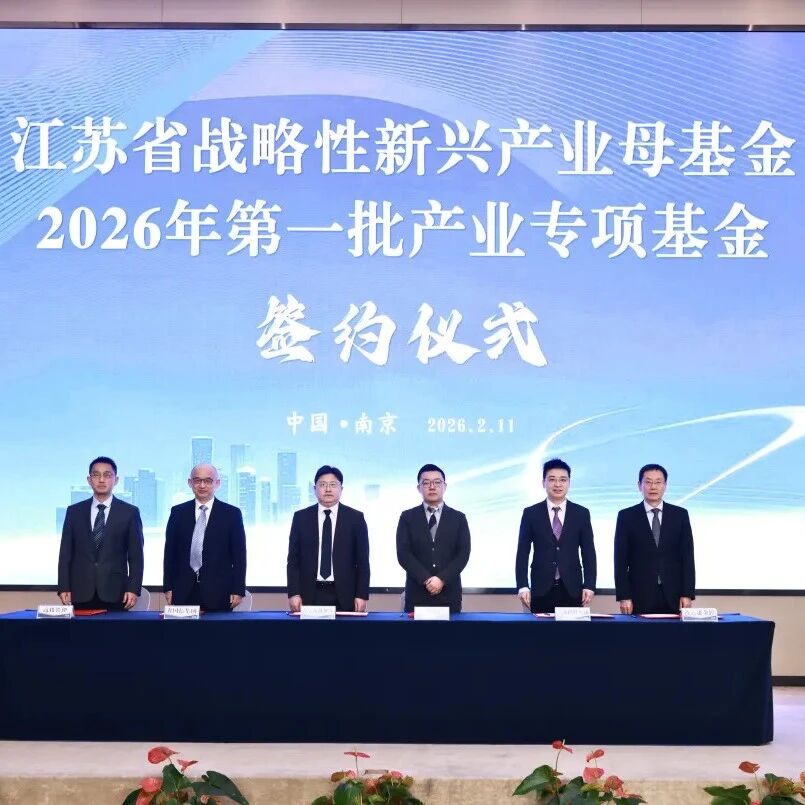
691亿,江苏超级母基金签约了
母基金研究中心· 2026-02-13 09:36
Summary of Key Points Core Viewpoint The article discusses the recent developments in China's mother fund industry, highlighting the total management scale of 1161.5 billion yuan, with investments spanning various sectors such as artificial intelligence, new production capacity, and integrated circuits. The article provides insights into fund management recruitment, fund establishment, and LP contributions across different provinces. Fund Management Recruitment - Hebei Province is seeking GP for its Science and Technology Investment Guidance Fund to support strategic and future industries [7] - Sichuan Province is recruiting GP for the Cultural Tourism New Quality Productivity Industry Fund [15] - Chongqing is looking for GP for the Rongchang Mother Fund [17] - Gansu Province is inviting GP for the Jiuquan Science and Technology and Industry Development Fund [20] - Other provinces such as Guangdong, Yunnan, Jiangsu, and Hubei are also actively recruiting GPs for various funds [5][6][43] Fund Establishment - The Jiangsu Super Mother Fund has signed agreements totaling 691 billion yuan, focusing on strategic emerging industries [33][36] - The Yunnan Advanced Manufacturing Equity Investment Mother Fund aims to enhance industrial competitiveness and promote high-quality development [28] - The Shanghai Integrated Circuit Industry Investment Fund has increased its capital to 60.3 billion yuan, marking a significant growth of approximately 1038% [55] LP Contributions - Watson Bio has initiated the establishment of the Yunnan Chuangwo Biological Industry Investment Fund with a target size of 1 billion yuan, contributing 450 million yuan [44] - Jinzhitech plans to invest 240 million yuan to establish an industrial fund in collaboration with local partners [46] - The establishment of the Hohhot Zhongjin Qixin Equity Investment Fund has been announced, with a total investment of 10 billion yuan [51] Other Developments - The establishment of the Ezhou Intelligent Development Equity Investment Fund with a total scale of 30 billion yuan aims to support the AI industry [43] - The Jiangsu Province has successfully registered two industry mother funds with a total scale of 6.5 billion yuan, focusing on smart manufacturing and industrial development [41]



内险股集体走低 中国人寿跌超4% 四季度资本市场波动阶段性影响投资表现
Zhi Tong Cai Jing· 2026-02-13 06:56
Core Viewpoint - The insurance stocks in China have collectively declined, with significant drops observed in major companies, indicating potential pressure on profits due to market fluctuations and changes in capital allocation strategies [1] Group 1: Stock Performance - China Life (601628) fell by 4.14% to HKD 32.92 [1] - China Pacific Insurance (601601) decreased by 2.41% to HKD 37.26 [1] - New China Life (601336) dropped by 2.1% to HKD 58.15 [1] - China Ping An (601319) saw a decline of 3.52% to HKD 6.56 [1] Group 2: Profit Forecasts - Shenwan Hongyuan's report predicts a 22.7% year-on-year growth in net profit for A-share listed insurance companies in 2025, reaching CNY 426.4 billion [1] - The growth rate is expected to decrease by 10.9 percentage points compared to the third quarter of 2025 [1] Group 3: Market Dynamics - The narrative of "deposit migration" continues to evolve, with rumors about the scale of maturing deposits rising from CNY 10 trillion to CNY 70 trillion [1] - Bank of America reports that 70%-80% of maturing deposits are likely to remain within the banking system, with approximately CNY 1 trillion expected to flow into "non-deposit assets" [1] - If CNY 500 billion of this amount flows into insurance, it could lead to noticeable elasticity in life insurance sales [1]


保险资金运用数据点评:2025年显著增配核心权益,债券增配节奏放缓
Soochow Securities· 2026-02-13 03:49
Investment Rating - The industry investment rating is maintained as "Increase" [1] Core Insights - The insurance industry is experiencing significant growth in asset allocation towards core equities, with a slowdown in bond allocation pace [5] - By the end of 2025, the total investment balance of the insurance industry reached 38.5 trillion yuan, marking a 15.7% increase from the beginning of the year, the highest growth rate since 2021 [9] - The allocation of "stocks + funds" increased by 1.6 trillion yuan in 2025, with a total balance of 5.7 trillion yuan by year-end [5] - The proportion of "stocks + funds" in total investment reached 15.4% by the end of 2025, an increase of 2.6 percentage points from the beginning of the year [5] - The demand in the market remains strong, and the optimization of liability costs is expected to alleviate pressure from interest rate spreads [5] Summary by Sections Investment Allocation - By the end of 2025, the investment scale of life insurance companies was 34.7 trillion yuan, accounting for 90.1% of the industry [5] - The allocation of bank deposits decreased to 7.6%, while the bond allocation increased to 51.1% [5] - The allocation of stocks and funds reached a high level, with stocks accounting for 10.1% and funds for 5.3% of total investments [5] Market Outlook - The recent decline in the yield of ten-year government bonds to approximately 1.81% is expected to ease the pressure on the investment income of insurance companies [5] - The insurance sector's valuation remains at historical lows, with estimated PEV ranging from 0.64 to 0.86 and PB from 1.15 to 2.24 [5]
新华保险:公司积极响应保险资金入市的号召,持续优化资产配置结构
Zheng Quan Ri Bao Zhi Sheng· 2026-02-12 13:14
Core Viewpoint - The company emphasizes its commitment to leveraging the advantages of insurance funds as "long-term capital, patient capital, and strategic capital" to optimize asset allocation and enhance long-term returns in response to low interest rate challenges [1] Group 1 - The company actively responds to the call for insurance funds to enter the market [1] - The company is focused on continuously optimizing its asset allocation structure [1] - The company aims to increase its allocation to high-quality base assets that can withstand low interest rate challenges [1]
新华保险:秉持长期投资与价值投资理念
Zheng Quan Ri Bao Wang· 2026-02-12 13:14
Group 1 - The core viewpoint of the article is that Xinhua Insurance (601336) emphasizes a long-term and value investment philosophy while steadily and orderly managing its asset allocation [1] Group 2 - The company engages with investors through interactive platforms to address inquiries and provide insights into its investment strategies [1]