
NCI(601336)

Search documents
新年开市保险板块涨超6%,2026年估值将进一步提升
Di Yi Cai Jing· 2026-01-05 10:59
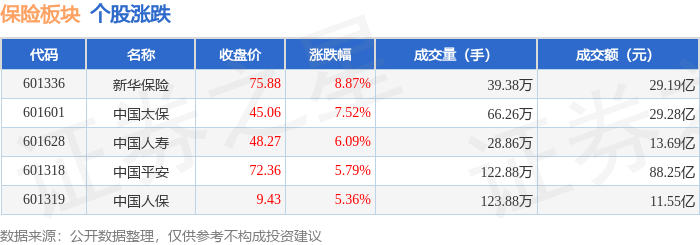
五家A股保险上市公司在1月5日均收获超过5%的涨幅。其中,新华保险(601336.SH;01336.HK)、中 国太保(601601.SH;02601.HK)全天涨幅分别为8.87%及7.52%,收盘价分别为75.88元/股及45.06元/ 股,均再次打破去年12月创下的股价历史新高。另外,中国平安(601318.SH;02318.HK)当日以72.36 元/股收盘,亦再创2021年3月以来的最高价。 【#新年开市保险板块涨超6%#,2026年估值将进一步提升】1月5日,A股开启了2026年的新征程。 Choice数据显示,首个交易日,保险板块(申万二级行业分类)延续去年的抢眼表现,持续走高,最终 以6.17%的涨幅位居A股申万二级行业分类所有板块首位。 ...



12连阳,沪指创33年最长连阳纪录!机构资金和各路游资纷纷出手,A股春季躁动行情渐入高潮,高盛高呼高配中国股票
Jin Rong Jie· 2026-01-05 10:47
整体看,A股交投气氛十分活跃,机构资金和各路游资纷纷出手,各有斩获。 数据显示,多家机构席位出现在了蓝色光标、盐湖股份、海格通信、西测测试的龙虎榜中,此外A股实 力游资章建平也出现在蓝色光标龙虎榜中,单日买入了6482.08万元,卖出了2.59亿元。 12连阳,沪指创33年最长连阳纪录,A股春季躁动行情渐入高潮! 1月5日,A股迎来2026年首个交易日,三大指数全天高开高走,截至收盘,沪指涨1.38%,报4023.42 点,深成指涨2.24%,报13828.63点,创业板指涨2.85%,报3294.55点,科创50指数涨4.4%,报1403.41 点。与此同时,资金纷纷疯狂涌入A股,今日沪深两市合计成交额25463.47亿元,较上一个交易日放量 5011亿。 值得注意的是,沪指在2025年末已经走出11连阳的强势走势。在今日A股实现开门红之后,沪指从2025 年12月17日至2026年1月5日的12个交易日中,成功实现12连阳,创下A股1993年以来最长连阳纪录。最 近33年间A股最长连阳纪录为11天,分别在2006年以及2017-2018年出现过。A股最长连阳纪录为99天, 但彼时A股才处于起步阶段,市场体 ...


新年开市,保险股涨超6%再居首,2026年估值将进一步提升
Di Yi Cai Jing· 2026-01-05 10:25
Core Viewpoint - The insurance sector in A-shares has shown strong performance at the beginning of 2026, with a notable increase in stock prices driven by favorable policies and improved asset-liability management [1][3]. Group 1: Market Performance - On January 5, 2026, the insurance sector recorded a 6.17% increase, leading all A-share sectors [1]. - Five A-share insurance companies saw stock price increases of over 5%, with New China Life Insurance and China Pacific Insurance rising by 8.87% and 7.52%, respectively [1]. - China Ping An also reached its highest price since March 2021, closing at 72.36 yuan per share [1]. Group 2: Policy and Market Drivers - The stock price increase is attributed to a series of supportive policies in 2025, which have enhanced the asset-liability dynamics within the insurance sector [3]. - In December 2025, regulatory changes optimized risk factors for long-term stock holdings by insurance companies, signaling a positive outlook for further market entry [3]. - The insurance industry is currently in the "New Year" period, which is crucial for life insurance liabilities, with over 20% of annual premium income typically generated in January [3]. Group 3: Valuation Insights - Analysts indicate that the P/EV (Price to Embedded Value) ratios for major A-share insurance companies remain low, ranging from 0.68 to 0.99 as of December 31 [4]. - There is an expectation for the valuation of insurance stocks to gradually recover towards 1.0 P/EV in 2026 [4].

盘点2025 | 万亿健康险转型深水区:政策破局、生态重构
Xin Lang Cai Jing· 2026-01-05 10:10
Core Insights - The establishment of the Ping An Health Management Company marks a significant step in the transformation of the health insurance sector, reflecting a shift towards a "managed care" model and the reconstruction of a new ecosystem in health insurance [1][16] - As of November 2025, the cumulative premium for commercial health insurance reached 943.9 billion yuan, with a year-on-year growth of 2.3%, indicating a stable market but falling short of the 2 trillion yuan target set for 2025 [1][16] - The Chinese commercial health insurance market is at a crossroads, focusing on high-quality development driven by regulatory guidance and innovation in health management and product offerings [1][16] Market Structure - The commercial health insurance market is maintaining stability amid slowing growth, with a shift in focus from scale expansion to quality improvement [3][18] - In the first 11 months of 2025, life insurance companies accounted for 76.8% of health insurance premiums, totaling 725.2 billion yuan, but their growth rate has stagnated, while property insurance companies saw a 10.2% increase in premiums [3][18] - The market's stability is evidenced by a monthly premium of 49.6 billion yuan in November 2025, with life insurance companies contributing 40.2 billion yuan and property insurance companies 9.4 billion yuan [3][18] Policy Support - Regulatory measures have been pivotal in driving the transformation of the health insurance industry, with multiple initiatives launched to enhance product standards and payment reforms [4][19] - The "Guiding Opinions on Promoting the High-Quality Development of Health Insurance" issued on September 30, 2025, outlines a vision for the role of health insurance in the national health security system by 2030 [4][19] - The policy emphasizes the integration of health insurance with health management, aiming to create a new health service guarantee system that combines prevention, management, and protection [4][19] Product Innovation - The health insurance sector is entering a phase of deep product innovation, with a focus on dual attributes of "protection + returns" in dividend insurance products [7][22] - Personal account-based long-term medical insurance is highlighted as a key area supported by policy, addressing the industry's challenges with traditional short-term medical insurance [7][22] - The mid-to-high-end medical insurance market is expanding, with major players enhancing their offerings to include comprehensive solutions beyond mere reimbursement [8][23] Ecosystem Reconstruction - The competition in the health insurance industry is shifting towards building an ecosystem, with a consensus on the "insurance + health management" model [10][26] - Major insurance companies are establishing health management firms to create a comprehensive health service system, moving from post-claim reimbursement to full-cycle health management [10][26] - The establishment of health management companies by leading insurers is seen as a localized innovation of the mature "managed care" model from developed markets, aiming to enhance service quality and sustainability [12][27] Technological Empowerment - The application of new technologies such as AI, big data, and blockchain is deepening in the health insurance sector, enhancing efficiency across product design, underwriting, and customer service [13][28] - Ping An has integrated AI into its health strategy, creating a comprehensive service system that covers various health service scenarios [13][28] - The focus on digitalization and the development of personalized health management platforms are expected to improve user experience and support dynamic pricing and risk control [13][28]

重回4000!超级赛道攻势延续
格隆汇APP· 2026-01-05 10:08
Core Viewpoint - The article emphasizes that 2026 will be a pivotal year for China's commercial aerospace sector, transitioning from "quantitative change" to "qualitative change" due to policy support, technological breakthroughs, and capital market momentum [42][43]. Group 1: Market Performance and Trends - On the first trading day of 2026, A-shares experienced a strong opening, with the Shanghai Composite Index rising over 1% and the ChiNext Index increasing by more than 2% [2]. - The satellite industry ETF (159218) saw a significant increase of 3.78%, with a net inflow of 211 million shares, marking a new single-day high [5][18]. - The insurance sector also showed strong performance, with major companies reaching historical highs and total premium income in the insurance industry growing by 7.6% year-on-year [15][17]. Group 2: Commercial Aerospace Developments - The commercial aerospace sector is transitioning from "experimental exploration" to "industrial mass production," becoming a core engine for national competition and economic transformation [3][6]. - In 2025, the satellite internet sector entered a phase of accelerated networking and industrialization, with multiple commercial rocket launches planned [20][24]. - The number of satellite launches in 2026 is expected to increase significantly, with private commercial rocket companies playing a crucial role in meeting high-frequency launch demands [21][26]. Group 3: Investment Opportunities - The commercial aerospace sector is projected to have a compound annual growth rate of 17%, with the global brain-computer interface market expected to reach approximately $12.4 billion by 2034 [14]. - The article suggests that the satellite industry ETF (159218) is a stable and efficient investment tool, covering the entire satellite industry chain and focusing on companies with high revenue from satellite-related businesses [36][40]. - The anticipated breakthroughs in rocket manufacturing and the reduction of launch costs are expected to significantly boost downstream demand for commercial aerospace services [30][31]. Group 4: Challenges and Considerations - The commercial aerospace industry faces challenges such as high volatility and technical uncertainties, making direct investment in individual stocks risky for ordinary investors [34]. - The complexity of the industry supply chain, from materials to satellite applications, complicates the timing of investments [35].



全线大涨!亚太股市爆发
证券时报· 2026-01-05 09:48
值得注意的是,今日A股市场近20股成交额超过100亿元,其中中国卫星、三花智控分别成交194.5亿元、192.1亿元,分别位居成交额第一 和第二位,且两股盘中均创出新高。 今日(1月5日),亚太主要股指全线大涨,日经225指数收盘上涨2.97%报51832.8点,韩国综合指数上涨3.43%报4457.52点,续创历 史新高。 A股市场迎来"开门红",主要股指放量大涨,沪指12连阳,涨超1%重返4000点上方;科创50指数大涨超4%。 具体来看,两市股指高开高走,创业板指涨近3%,科创50指数大涨超4%。截至收盘,沪指涨1.38%报4023.42点,深证成指涨2.24%,创 业板指涨2.85%,科创50指数涨4.4%,沪深北三市合计成交25674亿元。 保险板块强势 全A近4200股飘红,保险板块强势,新华保险大涨近9%,中国太保涨超7%,双双创出新高;人脑工程概念爆发,倍益康、三博脑科、翔宇 医疗、伟思医疗等逾10股涨停;创新药概念强势,乐普医疗、冠昊生物等涨停,百济神州涨超10%;存储芯片概念活跃,恒烁股份、普冉 股份等涨停;AI应用概念崛起,当虹科技、蓝色光标等涨停。此外,锋龙股份连续7日涨停,雷科防务、 ...

保险股集体飙升,新华保险再创历史新高
Huan Qiu Lao Hu Cai Jing· 2026-01-05 09:33
具体来看,去年12月初,国家金融监管总局发布通知,下调保险公司投资相关股票的风险因子,鼓励险 资"长钱长投"。中泰证券测算,若险资将释放资本全部增配权益资产,2026年或撬动5500亿元至6000亿 元长期资金进入市场。 此外,相关部门还陆续出台了扩大保险资金长期投资试点、推动健康保险高质量发展、《保险公司资产 负债管理办法(征求意见稿)》等政策。据了解,该《意见稿》优化了指标计算口径,将利好引导保险 公司长期稳健经营。 对于保险板块的后续走势,市场普遍持乐观态度。中金公司在展望中表示,2026年寿险行业有望再次进 入黄金发展期,保险股投资逻辑将从"存量业务重估修复"转向"成长能力估值溢价"。 有多位分析师指出,2026年,针对保险公司强化资产负债管理的政策支持力度有望持续加大。叠加居民 对保险产品热情延续以及资本市场表现可期,保险行业的负债端、资产端将持续改善,预计保险板块估 值仍有较大向上空间。 回顾2025年,保险股行情不断升温。同花顺数据显示,2025全年保险板块累计上涨约19.23%,跑赢银 行和券商板块。其中,新华保险表现尤为亮眼,年内多次刷新历史高点,全年涨幅高达46.03%,领涨 保险板块。 ...
保险板块1月5日涨6.24%,新华保险领涨,主力资金净流入15.19亿元
Zheng Xing Xing Ye Ri Bao· 2026-01-05 09:09
从资金流向上来看,当日保险板块主力资金净流入15.19亿元,游资资金净流出3.75亿元,散户资金净流 出11.44亿元。保险板块个股资金流向见下表: 证券之星消息,1月5日保险板块较上一交易日上涨6.24%,新华保险领涨。当日上证指数报收于 4023.42,上涨1.38%。深证成指报收于13828.63,上涨2.24%。保险板块个股涨跌见下表: | 代码 | 名称 | 收盘价 | 涨跌幅 | 成交量(手) | 成交额(元) | | | --- | --- | --- | --- | --- | --- | --- | | 601336 | 新华保险 | 75.88 | 8.87% | 39.38万 | | 29.19 Z | | 601601 | 中国太保 | 45.06 | 7.52% | 66.26万 | | 29.28 乙 | | 601628 | 中国人寿 | 48.27 | 6.09% | 28.86万 | | 13.69亿 | | 601318 | 中国平安 | 72.36 | 5.79% | 122.88万 | | 88.25 Z | | 601319 | 中国人保 | 9.43 | 5.36% ...

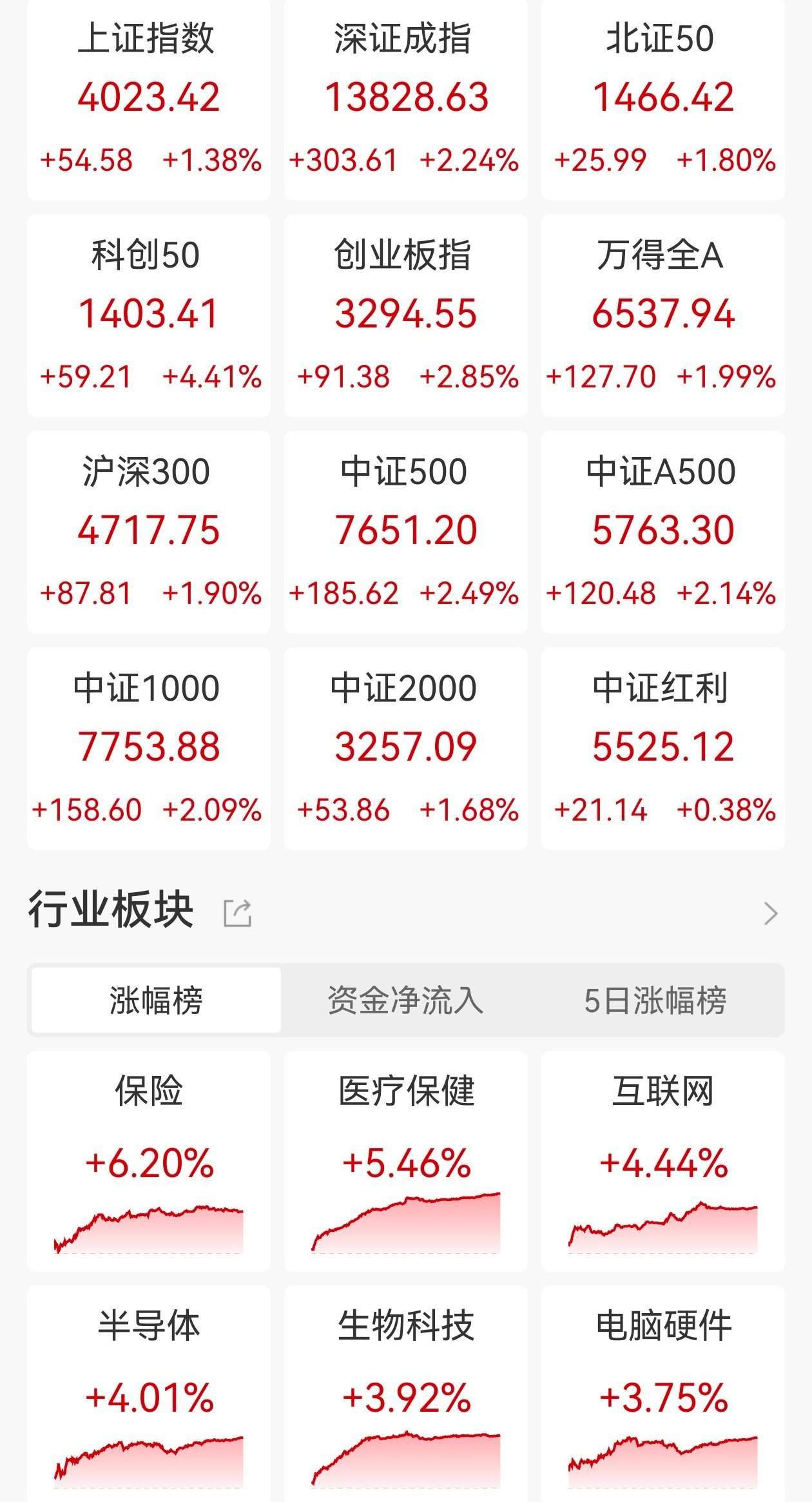
A股收评:三大指数集体大涨,沪指12连阳重回4000点,深证成指、创指涨超2%北证50涨1.8%,脑机接口涨停潮!近4200股上涨,成交2.57万亿放量5015亿
Ge Long Hui· 2026-01-05 08:48
盘面上,马斯克计划2026年大规模量产脑机接口设备,脑机接口板块掀涨停潮,道氏技术(300409)、三 博脑科及乐普医疗(300003)等20余股涨停;保险股大涨,新华保险(601336)涨超8%;医疗器械板块走 高,赛诺医疗等多股涨停;AI芯片、存储芯片板块拉升,普冉股份、恒烁股份涨停;重组蛋白、快手 概念、CRO、游戏及Sora概念等涨幅居前。另外,海南、免税板块逆市下跌,海汽集团(603069)、海南 发展领跌;旅游酒店板块走低,凯撒旅业跌近7%;铁路公路、电机及航空机场等板块跌幅居前。(格隆 汇) 格隆汇1月5日|A股2026年首个交易日开门红,三大指数均大幅上涨,沪指12连阳重回4000点,深证成 指;截至收盘,沪指涨1.38%报4023点,深证成指涨2.24%,创业板指涨2.85%。全市场成交额2.57万亿 元,较前一交易日增量5015亿元,近4200股上涨。 | 上证指数 深证成指 | 北证50 | | --- | --- | | 4023.42 13828.63 1466.42 | | | +54.58 +1.38% +303.61 +2.24% +25.99 +1.80% | | | 科创5 ...


保险25年显著跑赢大盘,险资举牌仅十年新高:保险行业周报(20251229-20251231)-20260105
Huachuang Securities· 2026-01-05 08:44
Investment Rating - The industry investment rating is "Recommended," indicating an expected increase in the industry index by more than 5% over the next 3-6 months compared to the benchmark index [19]. Core Insights - The insurance sector has significantly outperformed the market over the past 25 years, with insurance capital's stake acquisitions reaching a ten-year high [1]. - In 2025, there were a total of 31 stake acquisitions by insurance capital, marking a resurgence in activity, second only to 2015, and surpassing the 28 acquisitions in 2020 [3]. - The preference for H-shares among insurance capital is evident, with 26 out of 31 acquisitions targeting H-shares, likely due to favorable dividend yields [3]. - The main sectors attracting insurance capital include banking (7 acquisitions) and public utilities (6 acquisitions), reflecting a preference for dividend-yielding assets [3]. - The report anticipates that the trend of stake acquisitions will continue into 2026, driven by two main motivations: seeking stable dividend cash flows and targeting mature, monopolistic enterprises with solid ROE [3]. Summary by Sections Weekly Updates - China Pacific Insurance appointed Liu Long as the Chief Investment Officer [2]. - Great Wall Life successfully issued its first perpetual bond with a scale of 1 billion yuan and a rating of AAA [2]. - Great Wall Life increased its holdings in New Tian Green Energy and Datang New Energy, raising its shareholding percentages to 11.04% and 17.39%, respectively [2]. Stake Acquisition Overview - In 2025, insurance capital's stake acquisitions totaled 31 times, with a minimum of 38 times when accounting for repeated acquisitions [3]. - The report highlights a shift in acquisition activity towards larger insurance companies, with Ping An leading with 7 acquisitions, followed by Great Wall Life (5) and others [3]. Investment Recommendations - The insurance sector saw a general increase in December, driven by expectations of rising long-term interest rates and favorable sales performance [3]. - Despite anticipated pressure from high investment baselines, the report suggests that the sector's valuation may continue to recover due to stabilizing interest rates and declining liability costs [3]. - Companies recommended for investment include China Ping An and China Pacific Insurance, which are expected to manage liability costs effectively [3]. Valuation Metrics - The report provides PEV valuations for major life insurance companies, with China Life at 0.87x, Ping An at 0.82x, and China Pacific at 0.68x for A-shares [4]. - For H-shares, Ping An is valued at 0.75x, while China Life is at 0.51x [4]. - The report recommends a ranking of investment opportunities: China Ping An, China Pacific Insurance, China Life H, and China Property Insurance [4].