NCI(601336)

Search documents
A股开门红!沪指重回4000点
Sou Hu Cai Jing· 2026-01-05 07:45
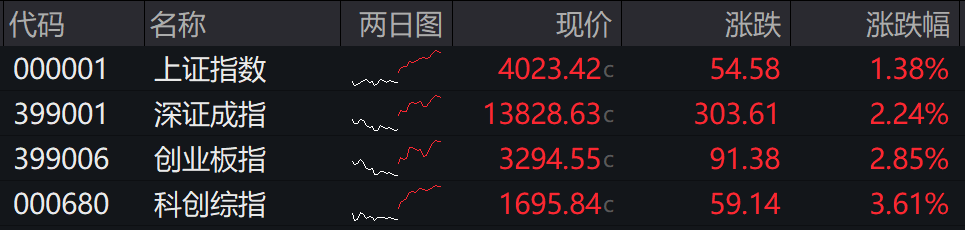
保险板块走强,新华保险、中国太保均涨超7%,股价齐创历史新高。 | 代码 名称 | 涨幅� 现价 | | --- | --- | | 601336 新华保险 | +8.87% 75.88 | | 601601 中国太保 | +7.52% 45.06 | | 601628 中国人寿 | +6.09% 48.27 | | 601318 中国平安 | +5.79% 72.36 | | 601319 中国人保 | +5.36% 9.43 | 沪深两市成交额高达2.55万亿,较上一个交易日放量5011亿。市场近4200股上涨,其中127只个股涨停。 | | | 第口财经 ---- 两市近5日成交额 (单位:亿元) 25462 21601 21393 21423 20451 12月30日 12月26日 12月29日 12月31日 1月5日 1月5日,A股主要指数集体高开后震荡走强,沪指时隔34个交易日重回4000点。截至收盘,沪指涨1.38%,深成指涨2.24%,创业板指涨 2.85%。科创综指涨3.61%。 | 代码 | 名称 | 两日图 | 现价 | 涨跌 | 涨跌幅 | | --- | --- | --- | -- ...






A股,开门红!
第一财经· 2026-01-05 07:37
2026.01. 05 本文字数:743,阅读时长大约2分钟 作者 | 一财阿驴 1月5日,A股主要指数集体高开后震荡走强,沪指时隔34个交易日重回4000点。截至收盘,沪指涨 1.38%,深成指涨2.24%,创业板指涨2.85%。科创综指涨3.61%。 | 代码 | 名称 | 两日图 | 现价 | 涨跌 | 涨跌幅 | | --- | --- | --- | --- | --- | --- | | 000001 | 上证指数 | ww | 4023.42c | 54.58 | 1.38% | | 399001 | 深证成指 | S rum | 13828.63c | 303.61 | 2.24% | | 399006 | 创业板指 | 5 | 3294.55c | 91.38 | 2.85% | | 000680 | 科创综指 | Umm | 1695.84c | 59.14 | 3.61% | 盘面上,脑机接口、AI应用、商业航天、存储器、创新药概念股掀涨停潮,保险股表现抢眼。海南自 贸区等题材出现调整。 机构观点 金元证券: 今年大盘有望继续延续慢牛走势。 具体来看, 脑机接口概念掀涨停潮,三博脑科、美 ...

保险股走强,新华保险、中国太保创历史新高
Ge Long Hui· 2026-01-05 05:55
Core Viewpoint - The strong performance of insurance stocks in the A-share market has led to a similar trend in the Hong Kong market, with notable increases in stock prices for major insurance companies [1] Group 1: Stock Performance - China Taiping and New China Life Insurance both rose over 5%, while China Pacific Insurance increased by over 3%, and China Ping An and China Property & Casualty Insurance both saw nearly 3% gains [1] - New China Life Insurance and China Pacific Insurance reached historical highs, while China Ping An achieved a nearly 5-year high [1] Group 2: Industry Trends - The report from China International Capital Corporation (CICC) highlights five key trends in the life insurance industry for 2026: 1. Continued rapid growth of new business, embracing "deposit migration" and a "new era of health insurance" [1] 2. Further decline in the rigid costs of new business, enhancing the persuasive power of new business value [1] 3. Diversification of new business product structures, with superior companies showing more significant optimization in business structure and differentiation in new business quality compared to peers [1] 4. An upward migration of customer tiers in the industry, with opportunities for upgrading and optimizing operational models and talent [1] 5. A competitive landscape concentrating on companies with strong life insurance operational capabilities [1]
港股保险股午后冲高,阳光保险、中国太平、新华保险涨超6%
Mei Ri Jing Ji Xin Wen· 2026-01-05 05:36
Group 1 - Hong Kong insurance stocks experienced a significant afternoon rally, with Sunshine Insurance, China Pacific Insurance, and New China Life Insurance rising over 6% [1] - China Ping An and China Taiping both saw increases of over 5%, while China Life Insurance rose more than 3% [1]


新华保险、中国太保创新高,保险证券ETF(515630)涨超2.7%
Xin Lang Cai Jing· 2026-01-05 05:36
Core Viewpoint - The insurance sector is experiencing a strong upward trend, with significant increases in stock prices and premium income, indicating robust market performance and potential growth opportunities for investors [1][2]. Group 1: Market Performance - The CSI 800 Securities Insurance Index rose by 2.77%, with key stocks such as New China Life Insurance increasing by 7.73%, China Pacific Insurance by 6.92%, and Ping An Insurance by 5.98% [1]. - The insurance sector ETF also saw a rise of 2.76%, closing at 1.49 yuan [1]. - The total premium income for the insurance industry reached 57,629 billion yuan, marking a year-on-year growth of 7.6% for the first eleven months of 2025 [1]. Group 2: Product Trends - Traditional, dividend, and universal insurance rates have decreased to 2.0%, 1.75%, and 1.0% respectively, with the spread between dividend and traditional insurance rates narrowing from 50 basis points to 25 basis points [2]. - Dividend insurance is expected to become a dominant product in the market due to its floating return potential and the high growth in total investment income for listed insurance companies [2]. - The January sales of new policies are anticipated to show strong growth, benefiting from a lower base and the increased number of working days compared to the previous year [2]. Group 3: Index Composition - As of December 31, 2025, the top ten weighted stocks in the CSI 800 Securities Insurance Index accounted for 64.71% of the index, including major players like Ping An Insurance, China Pacific Insurance, and New China Life Insurance [3].
刚刚,A股罕见一幕!
天天基金网· 2026-01-05 05:24
Core Viewpoint - The A-share market experienced a strong start in 2026, with the Shanghai Composite Index surpassing 4000 points and a notable increase in various sectors, particularly insurance, pharmaceuticals, and technology [2][6]. Group 1: Insurance Sector - The insurance sector saw significant gains, with major companies like New China Life and China Pacific Insurance reaching historical highs [4]. - Since Q3 2025, the insurance sector has been a stabilizing force in the market, benefiting from favorable policies such as the guidance on health insurance development and adjustments to risk factors for insurance companies [6]. - Looking ahead to 2026, the insurance sector is expected to maintain a competitive edge due to attractive returns on dividend insurance products and improvements in distribution channels, which may lead to positive growth in new business value (NBV) [7]. Group 2: Pharmaceutical Sector - The pharmaceutical sector experienced a broad rally, with significant increases in stocks of leading companies such as BeiGene and WuXi AppTec [9]. - In 2025, the number of approved innovative drugs reached 76, a 58.3% increase from 48 in 2024, marking a historical high [11]. - The outlook for 2026 is optimistic, with expectations that the innovative drug sector will dominate the pharmaceutical industry, supported by the integration of medical insurance and commercial insurance, which will enhance payment capabilities [13][14].

利好来袭,涨停潮
Zhong Guo Ji Jin Bao· 2026-01-05 05:09
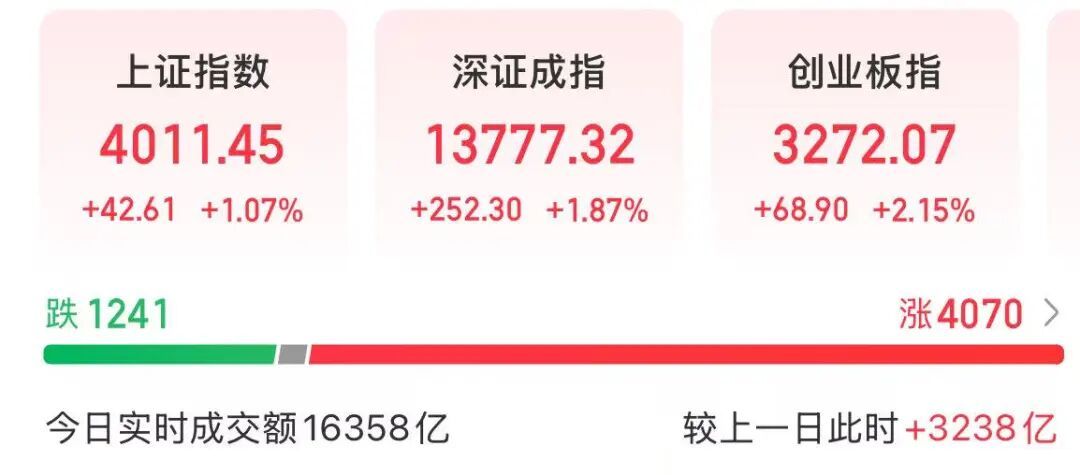
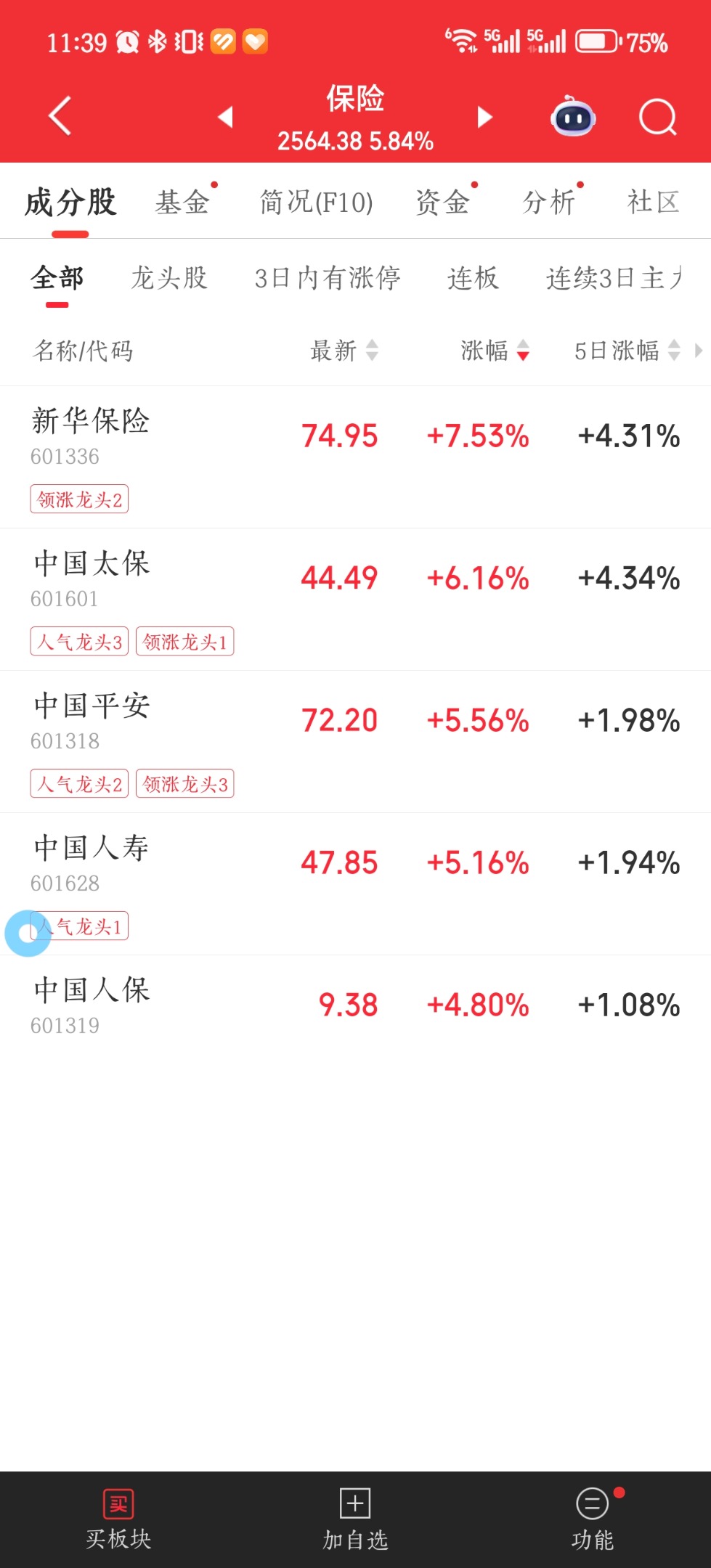
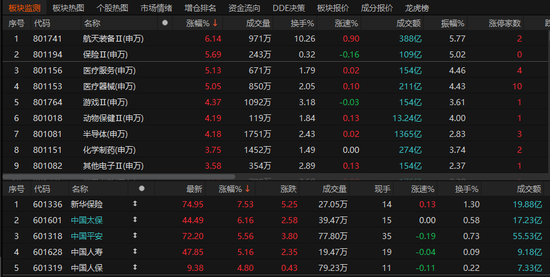
Market Overview - The A-share market saw a strong opening on January 5, with the Shanghai Composite Index returning to 4000 points, closing at 4011.45, up 1.07% [1] - The Shenzhen Component Index rose by 1.87%, and the ChiNext Index increased by 2.15% [1] Trading Volume - The total trading volume in the Shanghai and Shenzhen markets reached 1.64 trillion yuan, an increase of 323.8 billion yuan compared to the previous trading day [3] Stock Performance - A total of 4064 stocks rose, with 99 stocks hitting the daily limit, while 1236 stocks declined [3] - The sectors that performed well included insurance, medical devices, semiconductors, and gaming, with brain-computer interface concept stocks experiencing significant gains [3] Sector Highlights Brain-Computer Interface - Brain-computer interface stocks surged, with several companies hitting the daily limit [6] - Notable performers included Xiangyu Medical, Guanhao Biological, Meihua Medical, Aipeng Medical, and Lepu Medical, all recording a 20% increase [6][7] - Elon Musk's Neuralink announced plans for large-scale production of brain-computer interface devices by December 31, 2026, which is expected to revolutionize the field by reducing invasiveness [9] Semiconductor Sector - The semiconductor sector also showed strength, with multiple stocks reaching their daily limit [10] - Key performers included Dongwei Semiconductor and *ST Tianlong, both achieving a 20% increase [11] - TSMC announced it received U.S. government approval to import chip manufacturing equipment to its Nanjing facility in 2026, which is a positive development for the sector [12] Insurance Sector - The insurance sector experienced a rally, with significant gains from major companies [13] - Xinhua Insurance rose by 7.53%, China Pacific Insurance by 6.16%, and China Life Insurance by over 5% [13][14] - The insurance industry reported a total premium income of 57.629 billion yuan for the first 11 months of 2025, a year-on-year increase of 7.6% [14]





开门红,突破4000点!这个板块异动!
Zheng Quan Ri Bao· 2026-01-05 04:41
Core Viewpoint - The insurance sector has shown strong performance, with significant stock price increases, particularly for New China Life Insurance, which reached a historical high, indicating a robust market outlook for 2025 and beyond [2][3]. Group 1: Stock Performance - The insurance sector rose by 5.84%, with New China Life Insurance (601336) leading with a 7.53% increase, marking a historical high [2]. - Other major players such as China Ping An (601318), China Pacific Insurance (601601), China Life Insurance (601628), and China Reinsurance (601319) also saw increases exceeding 4% [2]. - Year-to-date performance for 2025 shows New China Life Insurance up by 40.24%, China Ping An by 29.91%, China Pacific Insurance by 22.98%, China Reinsurance by 17.45%, and China Life Insurance by 8.54% [3]. Group 2: Premium Income and Market Dynamics - In the first 11 months of the year, the insurance industry achieved a total premium income of 57,629 billion yuan, reflecting a year-on-year growth of 7.6% [3]. - Life insurance companies contributed 41,472 billion yuan with a growth of 9.1%, while property insurance companies reported 16,157 billion yuan, growing by 3.9% [3]. Group 3: Investment and Regulatory Environment - Analysts highlight that regulatory support is encouraging insurance companies to increase equity allocations, with various financial authorities guiding insurance capital into the market [3]. - The demand for equity assets is rising due to low interest rates and asset scarcity, leading to increased pressure on insurance companies to enhance their equity investment capabilities [3]. - It is projected that approximately 600 billion yuan of new insurance funds will enter the market by 2026 [3]. Group 4: Future Outlook - Analysts expect the insurance sector to maintain strong performance due to improving conditions on both the asset and liability sides, with a focus on optimizing liability costs and enhancing investment returns [4]. - The market demand remains robust, and adjustments in interest rates and product offerings are anticipated to alleviate pressure on profit margins [4]. - Current valuations of insurance stocks are considered low, suggesting significant upside potential as the market continues to recover [4].
2026年A股开门红,谁能成为最热赛道?
Xin Lang Cai Jing· 2026-01-05 04:32
2026年A股开市了!首个交易日,三大指数早盘集体上涨,上证指数盘中重回4000点。盘面热点快速轮 动,脑机接口板块掀起涨停潮,倍益康"30cm"涨停,三博脑科等超20只个股涨停。保险板块表现活 跃,中国太保、新华保险盘中双双创历史新高。商业航天板块延续强势,金风科技等近20只个股封板。 此外,创新药、有色金属、游戏等板块盘中均表现积极。 您觉得哪个板块能成为2026年首周A股最热赛道? 人脑工程板块掀涨停潮 创新药概念飙升 截至今日午间休市,沪指涨1.07%,深证成指涨1.87%,创业板指涨2.15%,沪深北三市半日成交16489 亿元,较上个交易日同期放量3240亿元。全市场超4000只个股上涨。人脑工程板块掀涨停潮,博拓生 物、熵基科技、三博脑科等10余只个股"20cm"涨停。 消息面上,埃隆·马斯克2025年12月31日在社交媒体上表示,其脑机接口公司"神经连接"(Neuralink) 将于2026年开始对脑机接口设备进行"大规模生产",并转向"更加精简和几乎完全自动化的外科手术流 程"。(详见马斯克发声!301293,开盘"20cm"涨停) 开源证券最新研报表示,上述行业事件印证了脑机接口技术预计将 ...
今天,A股罕见一幕
Zhong Guo Zheng Quan Bao· 2026-01-05 04:29
2026年A股首个交易日,市场一片热闹景象。 一方面,上证指数再度站上4000点,日线迎来罕见的12连阳。另一方面,权重股搭台,个股普涨,热点全面开花。 权重股方面,保险板块大涨;此外,贵州茅台、宁德时代、中芯国际等龙头股均上涨。板块方面,脑机接口、医药、半导体、消费电子等板块大涨。 截至上午收盘,上证指数上涨1.07%,报4011.45点;深证成指上涨1.87%,创业板指上涨2.15%。 保险板块大涨 今天上午,保险板块大涨,五大险企集体上涨,新华保险、中国太保盘中股价均创历史新高。 从资产端来看,光大证券表示,随着投资资产规模持续稳健增长以及股票仓位维持在较高水平,权益市场上行将进一步提振险企投资收益表现,同时高股 息策略亦能有效支撑险企净投资收益安全垫,共同推动盈利释放。后续,随着经济预期逐步修复以及资本市场稳中向好,保险股贝塔行情有望持续演绎。 医药股上涨 今天上午,医药股全线走强,医疗服务、医疗器械、CRO等板块大涨,百济神州、药明康德、恒瑞医药等龙头股大涨。 博拓生物 | 小十十八四 | 14.95 | 1.55% | 156316 | | --- | --- | --- | --- | | ■ ...