
ICBC(601398)

Search documents
尚荣医疗(002551)披露为全资子公司向工商银行申请授信提供担保公告,3月23日股价下跌7.37%
Sou Hu Cai Jing· 2026-03-23 15:01
Group 1 - The core point of the article is that Shangrong Medical (002551) has reported a decline in stock price and has announced a guarantee for a credit facility for its wholly-owned subsidiary [1] - As of March 23, 2026, the stock closed at 3.27 yuan, down 7.37% from the previous trading day, with a total market value of 2.765 billion yuan [1] - The company held a board meeting on March 23, 2026, to approve a guarantee for its subsidiary Shenzhen Shangrong Medical Engineering Co., Ltd. to apply for a credit facility of 72 million yuan from Industrial and Commercial Bank of China [1] Group 2 - The guarantee is for a credit facility that includes bank acceptance bills, letters of credit, non-financing guarantees, and trade financing [1] - This guarantee is a continuation of the original credit limit and does not require approval from the shareholders' meeting [1] - The guaranteed party is a wholly-owned subsidiary of the company and is not a dishonest executor [1]


大额买入与资金流向跟踪20260316-20260320
GUOTAI HAITONG SECURITIES· 2026-03-23 14:20
- The report constructs indicators using transaction details data to track large purchases and net active purchases[1][7] - The large order transaction amount ratio depicts the buying behavior of large funds[7] - The net active purchase amount ratio depicts investors' active buying behavior[7] - The large order transaction amount ratio is calculated by restoring transaction data to buy and sell order data and filtering large orders based on transaction volume, then calculating the ratio of large order transaction amount to the total transaction amount of the day[7] - The net active purchase amount ratio is calculated by identifying each transaction as active buy or active sell based on transaction data, subtracting the transaction amounts of the two, and calculating the ratio of net active purchase amount to the total transaction amount of the day[7] Model Backtest Results - Large order transaction amount ratio for individual stocks (20260316-20260320): Shaoneng Co., Ltd. 86.7%, Angang Steel Co., Ltd. 85.7%, Zhongli Group 85.5%, Huadian Liaohe Energy 85.5%, Wentou Holdings 85.3%, Xining Special Steel 84.9%, Jiangyan Group 84.8%, China High-Speed Railway 84.7%, Guangshen Railway 84.6%, Shaanxi International Trust 84.6%[9] - Net active purchase amount ratio for individual stocks (20260316-20260320): Yunnan Baiyao 15.5%, Supor 14.9%, ZJ Bio-Tech-U 14.5%, Industrial and Commercial Bank of China 13.9%, Fulin Precision 13.6%, China World Trade Center 13.3%, Anbotong 13.0%, Zhongwang Fabric 13.0%, Shandong Expressway 12.2%, Youngor 12.2%[10] - Large order transaction amount ratio for broad-based indices (20260316-20260320): SSE Composite Index 72.3%, SSE 50 Index 71.3%, CSI 300 Index 73.4%, CSI 500 Index 71.3%, ChiNext Index 72.4%[12] - Net active purchase amount ratio for broad-based indices (20260316-20260320): SSE Composite Index -4.6%, SSE 50 Index -4.3%, CSI 300 Index -2.3%, CSI 500 Index -3.9%, ChiNext Index 0.7%[12] - Large order transaction amount ratio for CITIC first-level industries (20260316-20260320): Petroleum and Petrochemical 76.4%, Coal 77.5%, Nonferrous Metals 73.7%, Electric Power and Public Utilities 77.5%, Steel 78.3%, Basic Chemicals 74.1%, Construction 76.9%, Building Materials 75.1%, Light Manufacturing 74.4%, Machinery 72.6%, Electric Power Equipment and New Energy 74.8%, National Defense and Military Industry 69.5%, Automotive 72.5%, Commercial Retail 74.6%, Consumer Services 74.7%, Home Appliances 75.0%, Textiles and Apparel 75.8%, Medicine 71.1%, Food and Beverage 68.7%, Agriculture, Forestry, Animal Husbandry, and Fishery 75.1%, Banking 80.0%, Non-Banking Finance 74.2%, Real Estate 77.3%, Transportation 78.3%, Electronics 69.5%, Communications 73.4%, Computers 70.5%, Media 73.3%, Comprehensive 76.1%, Comprehensive Finance 73.3%[13] - Net active purchase amount ratio for CITIC first-level industries (20260316-20260320): Petroleum and Petrochemical -3.4%, Coal 0.5%, Nonferrous Metals -4.8%, Electric Power and Public Utilities -1.0%, Steel -10.2%, Basic Chemicals -5.4%, Construction -10.0%, Building Materials -5.5%, Light Manufacturing -5.4%, Machinery -4.1%, Electric Power Equipment and New Energy -0.1%, National Defense and Military Industry -9.0%, Automotive -3.6%, Commercial Retail -12.4%, Consumer Services -4.4%, Home Appliances -5.9%, Textiles and Apparel -8.2%, Medicine -6.1%, Food and Beverage -5.1%, Agriculture, Forestry, Animal Husbandry, and Fishery -6.9%, Banking -2.2%, Non-Banking Finance -11.9%, Real Estate -8.4%, Transportation -2.3%, Electronics -2.3%, Communications 1.2%, Computers -10.9%, Media -11.4%, Comprehensive -14.2%, Comprehensive Finance -20.8%[13] - Large order transaction amount ratio for ETFs (20260316-20260320): Huatai-PineBridge CSI A500 ETF 93.6%, Huatai-PineBridge MSCI China A50 Interconnection ETF 93.5%, Guotai CSI A500 ETF 93.4%, Haifutong SSE Urban Investment Bond ETF 92.0%, Huaxia CSI A500 ETF 91.5%, Tianhong CSI Computer Theme ETF 91.2%, Guotai CSI All Index Building Materials ETF 90.4%, Southern CSI All Index Dividend Quality ETF 89.6%, Penghua CSI Oil and Natural Gas ETF 89.1%, Harvest CSI Rare Earth Industry ETF 89.1%[15] - Net active purchase amount ratio for ETFs (20260316-20260320): Tianhong CSI Industrial Nonferrous Metals Theme ETF 18.3%, Harvest CSI Green Power ETF 14.0%, Huaxia CSI Subdivided Nonferrous Metals Industry ETF 13.9%, Invesco Great Wall CSI Dividend Low Volatility 100 ETF 13.2%, Huaxia CSI Semiconductor Materials and Equipment Theme ETF 12.2%, Haifutong SSE Urban Investment Bond ETF 12.0%, Huatai-PineBridge CSI Energy ETF 11.1%, E Fund Shenzhen 100 ETF 11.0%, Southern ChiNext Artificial Intelligence ETF 10.1%, Huatai-PineBridge Dividend Low Volatility ETF 9.4%[16]




工商银行董事长廖林:助力企业在不确定不稳定国际环境中抵御风险
Xin Lang Cai Jing· 2026-03-23 13:20
Core Viewpoint - The chairman of Industrial and Commercial Bank of China (ICBC), Liao Lin, emphasized the bank's commitment to implementing the national "14th Five-Year Plan" and enhancing global integration to support China's high-level opening-up [1] Group 1: Strategic Initiatives - ICBC aims to create comprehensive financial solutions centered around customer needs, promoting the integration of capital, trade, and information chains [1] - The bank will leverage platforms such as the BRICS Business Council, China-Europe Business Alliance, and the "Belt and Road" interbank cooperation mechanism to help domestic and international enterprises create new markets [1] Group 2: Risk Management and Stability - ICBC is focused on strengthening its comprehensive risk management system to build a solid safety net [1] - The bank plans to empower clients through its intelligent risk control platform, assisting enterprises in navigating uncertainties in the international environment and maintaining the stability and security of global supply chains [1]
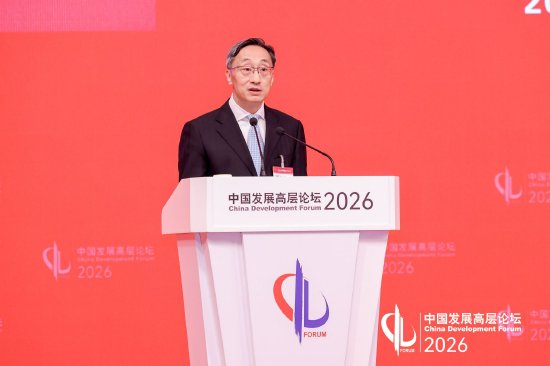
中国工商银行行长刘珺:AI时代需培育π型人才,以应对智能体带来的知识融合挑战
Xin Lang Cai Jing· 2026-03-23 10:10
Core Viewpoint - The need for a credible international cooperation system, termed "Globalization 2.0," to address global challenges such as climate change and AI governance, thereby reducing risk premiums and achieving mutual benefits among parties [3][7]. Group 1: Strategic Transformations for Financial Institutions - Financial institutions must fundamentally transform in three strategic dimensions: 1. Repricing non-economic and non-market risks, moving beyond traditional risk models that focus on credit, market, and liquidity risks to incorporate complex and dynamic variables using big data and technologies like AI and remote sensing [3][7]. 2. Cultivating π-type talents in the digital age, emphasizing the importance of deep vertical knowledge and interdisciplinary expertise to navigate the challenges posed by AI and knowledge integration [3][7]. 3. Transitioning to a multidimensional, systematic, and intelligent agency-based financial service model, integrating lifecycle support and industry chain services to create a comprehensive financial service framework for the real economy [4][9]. Group 2: Commitment to Risk Management and Digital Transformation - ICBC is dedicated to enhancing its comprehensive risk management system to ensure stable operations across cycles while advancing its digital and intelligent transformation to build a world-class financial institution [5][9].

工商银行今日大宗交易平价成交240万股,成交额1740万元
Xin Lang Cai Jing· 2026-03-23 09:33
Core Viewpoint - On March 23, the Industrial and Commercial Bank of China (ICBC) executed a block trade involving 2.4 million shares, with a total transaction value of 17.4 million yuan, representing 0.47% of the total trading volume for the day, at a price of 7.25 yuan per share, which was consistent with the market closing price [1]. Group 1 - The block trade involved 2.4 million shares of ICBC [1] - The total transaction amount was 17.4 million yuan [1] - The transaction price was 7.25 yuan, unchanged from the market closing price [1]

银行板块跌势扩大 农业银行等多股跌超5%
Xin Lang Cai Jing· 2026-03-23 06:33
Group 1 - The banking sector is experiencing a significant decline, with multiple stocks, including Agricultural Bank of China, Zhangjiagang Bank, and Xiamen Bank, dropping over 5% [1] - Other banks such as Industrial and Commercial Bank of China, Bank of Communications, and Postal Savings Bank of China have also seen declines exceeding 3% [1]


银行业周报:金融领域制度持续完善,关注业绩披露窗口期
Zhong Guo Yin He Zheng Quan· 2026-03-23 00:24
Investment Rating - The report maintains a "Recommended" rating for the banking sector, highlighting its dividend value and low valuation as attractive for long-term investors [5][10]. Core Insights - The banking sector outperformed the market, with a 0.36% increase compared to a 2.19% decline in the CSI 300 index. Notably, state-owned banks rose by 2.23%, while joint-stock banks saw a slight decline [5][14]. - The introduction of the "Interim Measures for the Regulatory Rating of Wealth Management Companies" is expected to accelerate the transformation of wealth management companies, emphasizing asset management and risk control capabilities as core competitive advantages [5][7][8]. - The draft of the "Financial Law" aims to enhance the legal framework in the financial sector, focusing on improving financial services, strengthening regulation, and ensuring financial stability [5][9]. - The first batch of 2025 annual reports from listed banks indicates a mixed performance, with some banks showing revenue growth while others faced declines. Overall, credit growth remains stable, and profitability is expected to improve due to narrowing interest margins and a decrease in non-performing loan ratios [5][10][11]. Summary by Sections Latest Research Insights - The report emphasizes the importance of the newly released regulatory measures for wealth management companies, which will enhance governance and risk management practices [7][8]. - The draft financial law is positioned to provide a comprehensive legal framework for the financial sector, promoting high-quality development and risk management [9]. Weekly Market Performance - The banking sector's performance was positive, with several banks, including CITIC Bank and Xiamen Bank, showing significant gains. The overall market sentiment remains cautious due to broader market declines [5][14]. Valuation and Company Performance - As of March 20, 2026, the banking sector's price-to-book (PB) ratio stands at 0.67, indicating a 35.83% discount compared to the overall A-share market. The sector's dividend yield is 4.5%, the highest among all industries [31][36].





中国银行洞察_2026 手册_资金流动与政策基本面China Banks Insight_ Handbook 2026_ Fundamentals over flows & policies
2026-03-22 14:35
Summary of China Banks Insight Equities Conference Call Industry Overview - The focus is on the Chinese banking sector, particularly the performance and outlook of major banks in 2026 and beyond. [2][11] Core Insights 1. Fundamentals - China banks are expected to enter a phase of fundamental improvement, with positive net interest income (NII) and fee income anticipated in 2026 due to stabilized net interest margins (NIM) and growth in wealth management. [2][5] - An estimated RMB66 trillion of deposits will be repriced lower, leading to a decline in funding costs by approximately 12 basis points. [2][38] - The quality of pre-provision operating profit (PPOP) is expected to improve, supporting potential expansions in price-to-earnings (PE) or price-to-PPOP multiples. [16][22] 2. Flows - Significant Southbound inflows were observed in 2024-25, with expectations of mild inflows in 2026. [3][61] - Insurers and pension funds have increased their equity allocations, positively impacting banks with high dividend yields. [3][5] - Southbound holdings are seen as stabilizers for the market, despite near-term volatility. [3][67] 3. Policies - Capital injections are anticipated for major banks like ICBC and ABC, with a confirmed injection of RMB300 billion. [4][54] - The People's Bank of China (PBoC) is expected to maintain policies that defend banks' NIMs, with mild rate cuts anticipated in 2026. [4][28] - De-regulation efforts are ongoing, allowing banks to expand into insurance and asset management sectors. [4][54] Investment Thesis - The market's focus is expected to shift towards earnings quality in 2026, as Southbound inflows slow. High dividend yields will remain attractive for risk-averse investors. [5][8] - Preferred stocks include ICBC-H and CCB-H for their solid balance sheets and higher dividend yields, while CMB-A is favored for its potential in wealth management. [5][8] Valuation Changes - Target prices and ratings have been adjusted for several banks, with ICBC-H and CCB-H maintaining a "Buy" rating, while ABC-A has been downgraded to "Reduce." [9][10] Additional Insights - The banking sector's performance has been resilient, with H-shares outperforming benchmarks despite earnings downgrades. [11][61] - The shift in investment from large banks to mid/smaller banks has been noted, indicating a changing market dynamic. [11][61] - The demand for wealth management products is expected to rise as deposit interest rates decline, leading to increased activity in mutual funds and bancassurance. [44][45] Conclusion - The Chinese banking sector is poised for a period of fundamental improvement, supported by favorable flows and policy adjustments. Investors are encouraged to focus on earnings quality and dividend yields as key drivers for investment decisions in 2026. [5][8][11]


银行资负跟踪20260322:通胀预期下广谱资产流动性收敛,关注负反馈
GF SECURITIES· 2026-03-22 14:06
Investment Rating - The industry investment rating is "Buy" [2] Core Insights - The report highlights that under inflation expectations, broad asset liquidity may contract, and attention should be paid to negative feedback effects [1][14] - The central bank's operations have resulted in a net injection of 215.8 billion CNY, with liquidity in the interbank market remaining ample and funding rates slightly declining [14] - The report emphasizes the potential for liquidity-driven valuation expansion to slow down in the second quarter due to rising inflation expectations and external geopolitical conflicts affecting oil prices [14][16] Summary by Sections 1. Inflation Expectations and Asset Liquidity - The interbank liquidity is currently abundant, with funding rates showing a slight decline. As of March 20, R001 and R007 rates were 1.40% and 1.48%, respectively [14] - The central bank conducted 242.3 billion CNY in 7-day reverse repos, with a maturity of 1,765 billion CNY, and a net injection of 215.8 billion CNY was achieved [14] - The report anticipates that liquidity may face contraction in Q2, influenced by inflation recovery expectations and external factors [14] 2. Central Bank Dynamics and Market Rates - The central bank's operations are characterized by small adjustments, maintaining a stable liquidity environment [15] - The report notes that government bond yields have shown mixed movements, with 1Y and 3Y yields decreasing by 2.0bp and 2.5bp, while longer-term yields have increased [16] - The report suggests that the market should prepare for potential upward pressure on long-term interest rates as economic recovery and inflation expectations evolve [16] 3. Bank Financing Tracking - The report indicates that the issuance of interbank certificates of deposit (NCD) has seen a weighted average issuance rate of 1.53%, down by 2bp from the previous period [19] - The total outstanding amount of interbank certificates of deposit is 18.17 trillion CNY, with a negative net financing of 4.042 billion CNY this period [19] - The report highlights that there were no new issuances of commercial bank bonds during this period, with a total outstanding amount of 3.35 trillion CNY [20]

沃什“掌舵”美联储前瞻——美联储政策何去何从-中国工商银行
Sou Hu Cai Jing· 2026-03-22 13:30
Group 1 - Kevin Warsh's policy stance is influenced by his experience during the 2008 financial crisis, advocating for strict inflation control, market discipline, financial stability, and central bank independence while opposing the normalization of quantitative easing (QE) [1][12][17] - Warsh supports a combination of "interest rate cuts + moderate balance sheet reduction" to stabilize growth through price easing while managing risks through structural contraction [1][19] - Following Warsh's nomination, the market saw a brief strengthening of the dollar, a significant pullback in precious metals, a steepening of the U.S. Treasury yield curve, and volatility in the stock market, particularly in the tech sector [2][7] Group 2 - The U.S. economy remains resilient, but the labor market is weakening, leading to expectations of two interest rate cuts totaling 50 basis points by June 2026 [1][19][20] - Warsh's cautious approach to QE is expected to help restore the credibility of the dollar and slow down the de-dollarization process, while the yield curve is likely to continue steepening [2][7] - The overall market is anticipated to experience increased volatility and sector differentiation, with a preference for stable value stocks amid expectations of regulatory easing in the financial sector [2][7][19]
