
CPIC(601601)

Search documents
湖州监管分局同意太平洋产险湖州市南浔支公司变更营业场所
Jin Tou Wang· 2026-01-29 08:37
二、中国太平洋财产保险股份有限公司应按照有关规定及时办理变更及许可证换领事宜。 2026年1月21日,国家金融监督管理总局湖州监管分局发布批复称,《关于变更中国太平洋财产保险股 份有限公司湖州市南浔支公司营业场所的请示》(浙太保产〔2025〕123号)收悉。经审核,现批复如 下: 一、同意中国太平洋财产保险股份有限公司湖州市南浔支公司的营业场所变更为:浙江省湖州市南浔区 南浔镇南林中路666号6幢(A-2#)楼15层1501。 ...


午后爆发,“涨停潮”!三大原因
Zhong Guo Zheng Quan Bao· 2026-01-29 08:27
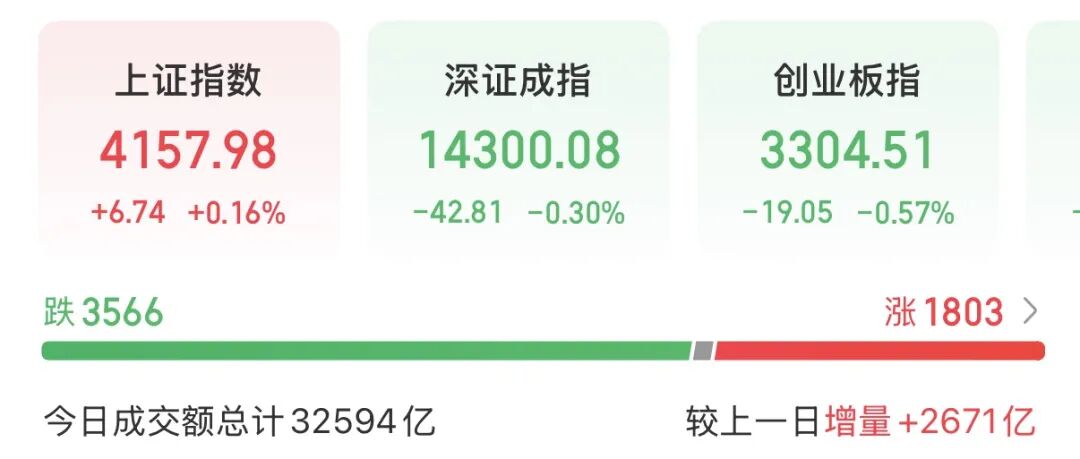
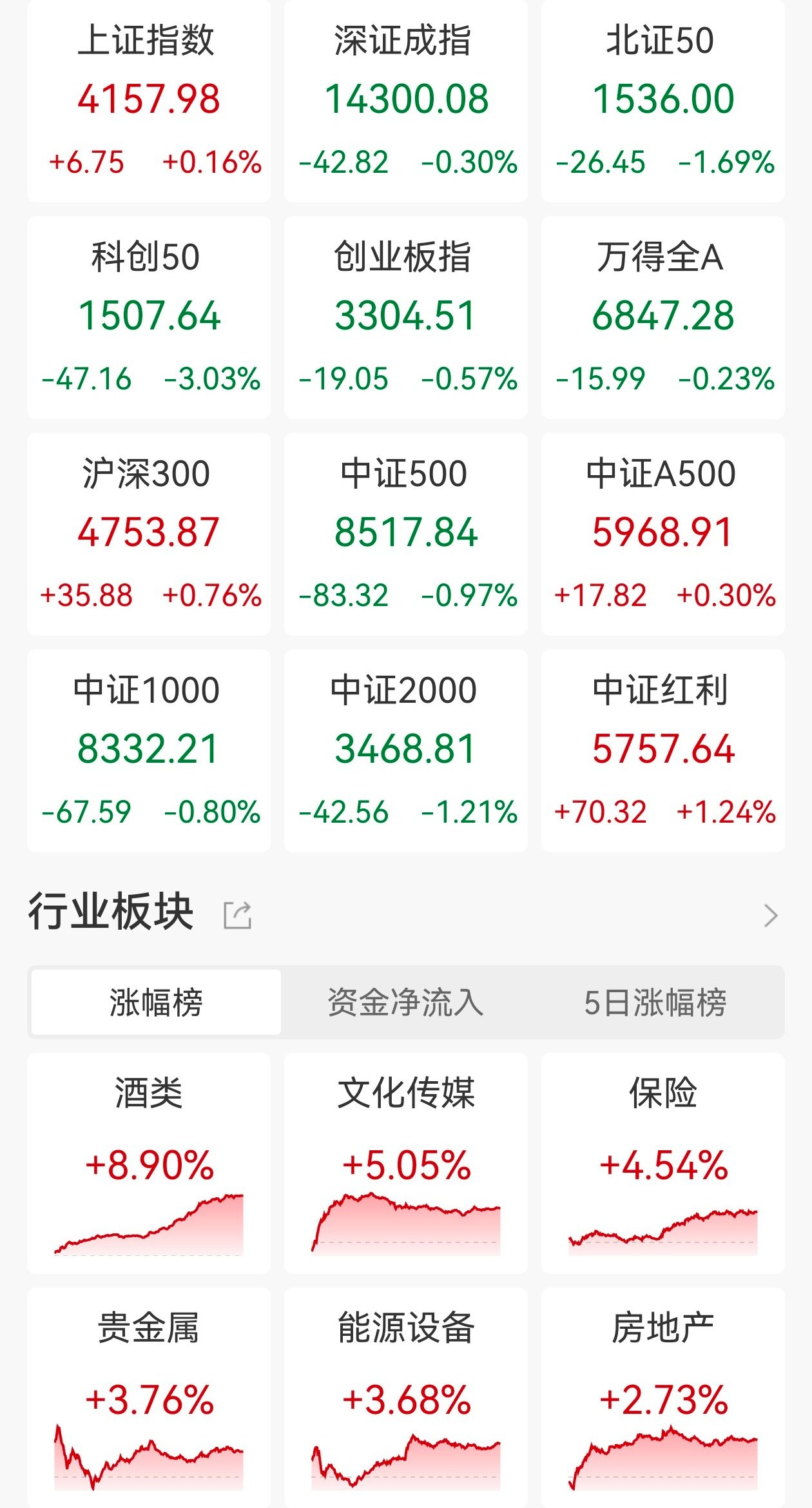
二是最近飞天茅台市场批发价格逐步回暖。1月29日,第三方平台数据显示,53度、500ml飞天茅台酒批发价格继续上涨。其中,2025年飞天茅台原箱较 上一日上涨20元/瓶,至1620元/瓶。此外,2026年飞天茅台原箱亦较上一日上涨20元/瓶,至1610元/瓶。 三是"涨价"是最近市场的潜在主线,主要集中在大宗商品、半导体产业链上游等领域,涨价趋势向下游传导,以白酒板块为代表的大消费有望受益,成为 市场新的交易预期。 今天,A股市场横盘震荡,三大指数走势分化,消费股表现活跃,资源股延续强势。 午后,白酒股爆发,分析人士表示,白酒板块大涨,主要有三个原因:一是近期热点板块各自的交易逻辑已经充分演绎,与此同时,商业航天、存储芯片 等板块处于相对高位,市场有"高低切"的内在需求。白酒股处于周期底部,成为最贴合当前市场要求的板块。 截至收盘,上证指数涨0.16%,深证成指跌0.3%,创业板指跌0.57%。 板块方面,白酒、油气开采及服务、贵金属、文化传媒、AI应用等板块涨幅居前,光刻机、半导体、元件、储存芯片等板块调整。 个股方面,白银有色(601212)走出"8连板",四川黄金(001337)、豫光金铅(600531 ...





长江养老李敬:加快供给侧产品创新,助力企业年金扩面提质
券商中国· 2026-01-29 07:20
Core Viewpoint - The article emphasizes the importance of corporate annuities as a key component of China's pension insurance system, which plays a significant role in enhancing employees' retirement income and improving the multi-tiered pension insurance framework [1][4]. Summary by Sections Corporate Annuity Development - The recent joint release of the "Opinions on Further Improving Corporate Annuity Work" by the Ministry of Human Resources and Social Security and the Ministry of Finance proposes systematic measures to expand coverage, simplify establishment procedures, and create flexible payment mechanisms [2][5]. - As of the end of Q3 2025, corporate annuities cover 175,000 enterprises and over 33 million employees, with accumulated funds exceeding 4 trillion yuan, highlighting their critical role in building a multi-tiered pension security system [4]. Challenges and Solutions - The main challenges in expanding corporate annuities are summarized as "not knowing," "unwillingness," and "not knowing how to do it," which the new "Opinions" aim to address [5][6]. - The "Opinions" encourage various organizations, including social groups and non-profit entities, to establish corporate annuities, breaking the misconception that only enterprises can set them up [6]. Innovations in Product Supply - Longjiang Pension, a subsidiary of China Pacific Insurance, manages over 1.5 trillion yuan in various pension funds and is actively involved in exploring corporate annuity development [7]. - The company has participated in innovative projects like the talent annuity plan in the Lingang New Area and the corporate annuity automatic enrollment mechanism in Xiong'an New Area, which serve as models for national expansion [7][8]. Recommendations for Future Development - To further promote corporate annuity development, it is suggested to accelerate the establishment of a national corporate annuity information platform and database, enhancing data connectivity and service convenience for employees [9][10]. - Additionally, it is recommended to consider policy support for early withdrawals from corporate annuities under specific circumstances, such as severe illness, to increase employees' willingness to contribute [10].

A股收评:成交额3.26万亿元!三大指数涨跌不一,白酒股爆发贵州茅台涨近9%
Ge Long Hui A P P· 2026-01-29 07:09
Market Performance - The A-share market showed mixed results with the Shanghai Composite Index rising by 0.16% to close at 4157 points, while the Shenzhen Component Index fell by 0.3% and the ChiNext Index decreased by 0.57% [1] - The total market turnover reached 3.26 trillion yuan, an increase of 267.1 billion yuan compared to the previous trading day, with over 3500 stocks declining [1] Sector Highlights - The liquor sector experienced a surge, with Kweichow Moutai's price rising nearly 9%, and over twenty stocks including Wuliangye and Luzhou Laojiao hitting the daily limit [1] - The precious metals sector continued to rise, with spot gold approaching 5600 USD, leading to multiple stocks like Sichuan Gold and Zhaojin Gold hitting the daily limit [1] - AI application stocks collectively surged, with a significant increase in related stocks [1] - The cultural media sector also saw gains, with stocks like Zhejiang Wenlian hitting the daily limit [1] - Insurance stocks were active, with China Pacific Insurance leading the gains [1] - Real estate, oil and gas services, and banking sectors showed notable increases [1] Declines in Specific Sectors - The high-bandwidth memory and SMIC concepts faced declines, with Jingce Electronics dropping nearly 9% [1] - The electronic chemicals sector experienced widespread declines, with Anji Technology falling over 8% [1] - The electronic components and PCB sectors also saw declines, with Yidong Electronics dropping over 11% [1] - Other sectors such as power grid equipment, superconducting concepts, and optical communication modules faced significant downturns [1]




内险股震荡走高 保险开门红销售火热 居民挪储或带动NBV强劲增长
Zhi Tong Cai Jing· 2026-01-29 06:22
Group 1 - Domestic insurance stocks experienced a rally, with notable increases in share prices for major companies such as Xinhua Insurance (up 3.48% to HKD 65.4), China Pacific Insurance (up 3.48% to HKD 39.9), China Ping An (up 3.03% to HKD 73.1), and China Life (up 1.02% to HKD 35.54) [1] - The expiration of over CNY 50 trillion in high-interest fixed deposits since 2026 has sparked discussions about capital flows, with East China Securities indicating that the competition for dividend insurance is improving due to the migration of deposits and the boost from the equity market [1] - The "New Year" sales for insurance in 2026 are expected to be robust, with leading insurance companies showing impressive growth in new premium income, supported by sustained demand for stable financial management from residents and the realization of capacity in the bank-insurance channel [1] Group 2 - Huachuang Securities anticipates that listed insurance companies will see a significant increase in performance in 2025, primarily driven by investment performance [2] - In the medium term, the first half of 2026 is expected to have relatively low baseline pressure, with an active equity market and a flourishing liability side likely to drive performance beyond expectations [2] - Long-term trends indicate a stabilization in long-term interest rates, significantly reducing pressure from interest margin losses, with potential for PEV valuations to recover towards 1x, and the migration of residents' savings may lead to strong growth in NBV, potentially elevating the PEV valuations of some leading insurance companies above 1x [2]
中国太保20260128
2026-01-29 02:43
Summary of China Pacific Insurance Conference Call Company Overview - **Company**: China Pacific Insurance (中国太保) - **Focus**: Steady operations and long-termism in both liability and investment sides, maintaining stability in key indicators throughout Q4 2025 [2][3] Key Points Industry and Market Position - **Investment Strategy**: The company emphasizes long-term asset allocation, increasing long-term interest rate bond allocation to over 40% from 10% in 2017 [2][5] - **Tax Policy Impact**: The new insurance contract tax treatment announced by the Ministry of Finance is not expected to significantly affect future effective tax rates, which are projected to remain within normal ranges for 2025 [2][4] Financial Performance - **Investment Performance**: Investment performance in 2025 will rely on accumulated asset allocation over the years, with a focus on fixed income and equity strategies [2][5][6] - **Growth Projections**: The agent channel is expected to see high single-digit growth in premium payments, while the bancassurance channel is projected to grow by 20% to 30% [2][10] Product Strategy - **Product Sales**: The company has successfully launched various products, including investment-linked insurance and dividend-type savings products, which have shown strong demand [12][13] - **Sales Strategy**: Emphasis on segmented customer management, targeting high-net-worth and mid-to-high-end clients with tailored products [9][13] Future Outlook - **2026 Strategy**: The company plans to continue its "integrated closing and opening" strategy, focusing on segmented customer management and maintaining a steady growth pace without excessive expansion [9][16] - **Long-term Trends**: The demand for savings-type insurance is expected to increase due to demographic factors such as delayed retirement and aging population [11][17] Risk Management - **Duration Management**: As of Q3 2025, the overall asset duration is over 12 years, with a duration gap of 2 to 3 years. The company will implement refined management strategies based on account types [24] Regulatory Changes - **New Standards Impact**: The implementation of new standards in 2026 will introduce regulatory measures affecting tax policies and solvency management, aligning with the company's focus on sustainable and long-term capabilities [22][23] Dividend Policy - **Dividend Strategy**: The company will continue its medium to long-term dividend policy based on surplus profit growth and current investment returns, with specific figures to be confirmed in the annual report [21] Conclusion - **Overall Strategy**: China Pacific Insurance maintains a focus on steady operations and long-term growth, with a commitment to enhancing service capabilities and optimizing product offerings to meet evolving market demands [2][19]
ETF大宗榜 | 矿业ETF(561330):获大宗交易折价卖出1.42亿元,居全市场第一-20260128
Sou Hu Cai Jing· 2026-01-29 01:30
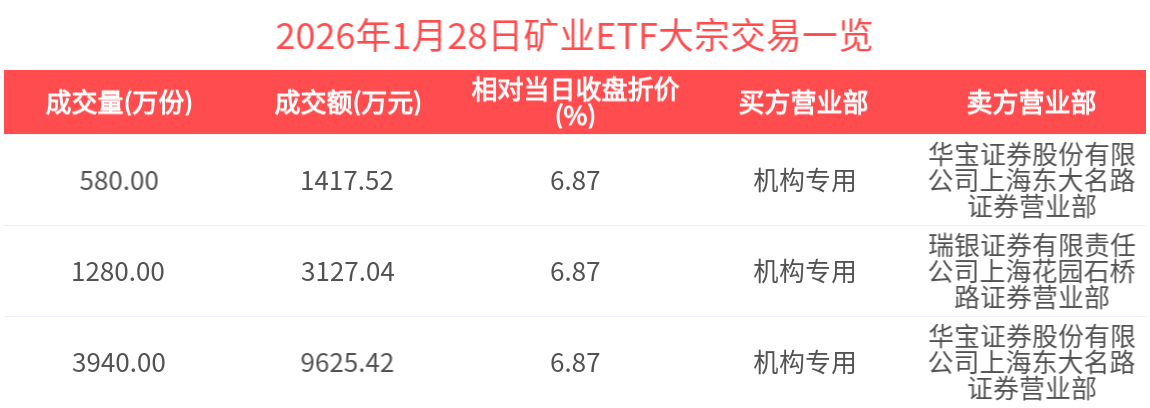
| 成交量(万份) | 成交额(万元) | 相对当日收盘折价 (%) | 买方营业部 | 卖方营业部 | | --- | --- | --- | --- | --- | | 580.00 | 1417.52 | 6.87 | 机构专用 | 华宝证券股份有 公司上海东大名 证券营业部 | | 1280.00 | 3127.04 | 6.87 | 机构专用 | 瑞银证券有限责 公司上海花园7 路证券营业培 | | 3940.00 | 9625.42 | 6.87 | 机构专用 | 华宝证券股份有公司 公司上海东大2 | (数据来源:Wind) 以上内容与数据,与有连云立场无关,不构成投资建议。据此操作,风险自担。 2026年1月28日,矿业ETF(561330.SH)收涨7.38%,发生3笔折价大宗交易,成交价均为2.44元,较当日收盘价折价6.87%。成交额分别为1417.52万元, 3127.04万元,9625.42万元,总成交额为1.42亿元,居全市场第一。(数据来源:Wind) 矿业ETF(561330.SH),场外联接(A:018167;C:018168)。 ...
中国太平洋保险(集团)副总裁 马欣:服务是健康保险的增长飞轮
Xin Lang Cai Jing· 2026-01-28 06:40
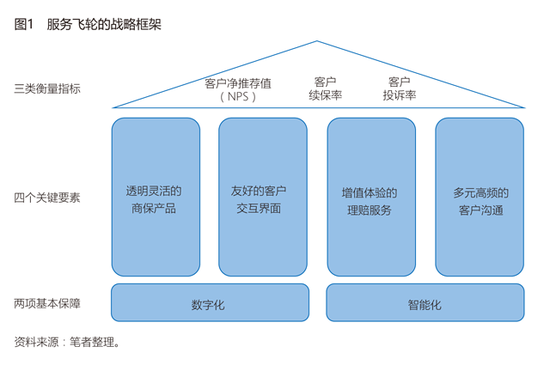
Core Viewpoint - The development of health insurance in China is transitioning from merely existing to improving quality, with a focus on enhancing service as a key driver for sustainable growth in the industry [1][20][21]. Group 1: Importance of Service in Health Insurance - Service is identified as a crucial element for driving customer engagement and sustainable operations in health insurance [2][21]. - The industry must balance three core relationships: alignment of healthcare supply with customer needs, collaboration between customer growth and diverse channel strategies, and interaction between medical inflation and risk reduction [2][21]. - The "service flywheel" concept illustrates how effective service can create a self-reinforcing cycle that enhances customer loyalty and attracts new clients [3][25]. Group 2: Service Flywheel Mechanism - The service flywheel effect describes how initial investments in customer service can lead to exponential growth in value through enhanced customer experience and retention [3][25]. - The flywheel's acceleration is driven by the "service multiplier" effect, where each health service provided generates greater value than the initial investment [3][25]. - A successful service flywheel can stabilize customer bases and mitigate the risks associated with long-term health insurance operations [4][25]. Group 3: Transition from Risk Pricing to Value Pricing - The shift from risk pricing to value pricing in health insurance is essential to address challenges such as medical inflation and changing customer expectations [16][36]. - Value pricing integrates health services into product design, allowing for a more comprehensive approach to customer needs and risk management [16][36]. - The industry is encouraged to expand coverage through innovative service combinations that address out-of-pocket expenses and provide dynamic protection throughout the customer lifecycle [18][37]. Group 4: Challenges and Solutions in Health Management - The integration of health management with insurance faces challenges such as low adherence to health management practices and difficulties in measuring effectiveness [34][35]. - Establishing a scientific mechanism for validating the impact of health services on risk reduction is crucial for aligning service investments with core business metrics [35]. - The use of artificial intelligence and data analytics can enhance personalized health management, improving adherence and breaking the linear cost growth pattern [35][36]. Group 5: Future Directions for Health Insurance - The health insurance sector must evolve from a reactive compensation model to a proactive health management partner, enhancing its role in the healthcare ecosystem [19][38]. - Companies are encouraged to deepen their engagement in health services to strengthen competitive advantages and avoid detrimental market practices [19][38]. - The establishment of a robust service framework is seen as a complex but necessary step for achieving high-quality development in commercial health insurance [19][38].
德阳监管分局同意太平洋产险罗江支公司变更营业场所
Jin Tou Wang· 2026-01-28 03:39
Group 1 - The National Financial Supervision Administration of Deyang approved the request for the change of business location for China Pacific Property Insurance Co., Ltd. Luojiang Branch [1] - The new business location is specified as No. 318, East Side of Wan'an North Road, Luojiang District, Deyang City, Sichuan Province [1] - China Pacific Property Insurance Co., Ltd. is required to handle the change and license renewal in accordance with relevant regulations [1]
从“靠运气”到“有底气” “保险+”持续为乡村振兴注入新动能
Sou Hu Cai Jing· 2026-01-28 03:30
Core Viewpoint - China Pacific Insurance (CPIC) is focusing on modernizing agriculture and rural areas by integrating "insurance+" into a broader financial service ecosystem, providing strong support for high-quality agricultural development and rural revitalization [1] Group 1: Agricultural Insurance Innovations - CPIC has launched the first "fattening pig futures income insurance" in Fujian, which protects farmers' income against market price fluctuations and production volume uncertainties [2] - This innovative insurance product combines futures prices with actual output, ensuring income stability for farmers, marking a shift from traditional price-focused insurance to a more comprehensive income protection model [2][3] - The income insurance model is expected to be applicable to other agricultural products with significant price volatility and long production cycles, such as eggs, corn, and apples, thereby enhancing the agricultural insurance system [3] Group 2: Support for Specific Agricultural Products - CPIC has introduced 11 specialized insurance products for the fruit industry in Guangdong, providing 2.5 billion yuan in risk coverage for lychee and other local fruits, covering over 830,000 acres [4] - The company has developed various insurance products for the entire growth cycle of lychee, including weather index insurance and ancient tree rescue insurance, enhancing risk management for farmers [4][5] - The integration of technology in agriculture, such as AI for disease diagnosis and satellite remote sensing for disaster assessment, has significantly improved the efficiency and productivity of lychee farming [5] Group 3: Overall Impact and Future Directions - By 2025, CPIC aims to offer nearly 5,000 agricultural insurance products, providing 1.3 trillion yuan in risk coverage to over 5.73 million farming households [5] - The company is committed to exploring the "insurance+" model to support high-quality agricultural development and rural revitalization, focusing on refined management and diversified collaboration in agricultural insurance [5]