GWMOTOR(601633)

Search documents
有人上门安装龙虾几天赚26万!马化腾:没想到能火成这样;伊朗客户失联了!价值6000万的500台中国车被困海上;路虎揽胜回应魏建军致歉
雷峰网· 2026-03-09 00:35
Group 1 - The AI open-source agent OpenClaw, nicknamed "Little Lobster," has gained immense popularity, leading to a surge in installation services, with some individuals reportedly earning 260,000 yuan in just a few days [4][5] - Tencent has launched a free installation service for OpenClaw, attracting a large number of participants, indicating strong market interest [4] - There are security risks associated with OpenClaw, as improper configurations can lead to network attacks and information leaks, prompting warnings from the Ministry of Industry and Information Technology [5] Group 2 - A shipment of 500 Chinese cars worth approximately 60 million yuan is stranded at sea due to geopolitical tensions, with the trade merchant unable to contact the Iranian client [8][9] - The ongoing Middle Eastern conflicts have severely impacted international shipping logistics, with vessel traffic in the Strait of Hormuz dropping significantly [9][10] Group 3 - The AI short drama "Huo Qubing" has garnered over 500 million views, but the director clarified that the production costs and team size were misrepresented in media reports [10][11] - The production team consisted of nearly 20 members, and the reported cost of 3,000 yuan only covered computational expenses, excluding labor [11] Group 4 - Xiaomi's former executive Wang Teng expressed concerns about potential layoffs in the smartphone industry due to rising memory prices, predicting significant impacts on major brands [13][14] - The smartphone industry is facing its largest price adjustment in five years, driven by increased costs of storage chips, which could affect future production plans [13][14] Group 5 - Lei Jun, founder of Xiaomi, emphasized that while advancements in intelligent driving technology have been rapid, current systems are still at Level 2, requiring driver engagement [15][16] - The importance of driver responsibility in the context of Level 2 autonomous driving systems was highlighted, with academic support for maintaining driver attention [15][16] Group 6 - Wei Jianjun, chairman of Great Wall Motors, publicly apologized for plagiarism allegations regarding the design of a new vehicle, acknowledging the issue and committing to prevent future occurrences [18][19] - The controversy arose after comparisons were made between promotional materials for Great Wall's new model and those of the Land Rover [18][19] Group 7 - Qi Junyuan, former product head at ByteDance's Doubao PC, has launched a new venture focused on developing GUI Agent smartphones, aiming to create next-generation smart devices [21][22] - The startup has secured investment from various institutions and is positioned to leverage large model technology for its products [21][22] Group 8 - Liu Xuan, head of R&D at Lifeng, has left the company to potentially pursue entrepreneurship in the smart ring sector, following a significant career at Apple [24][25] - Liu's experience includes leading key product designs at Apple, indicating a strong background for her new venture [24][25] Group 9 - The CEO of Gao Xin Retail has been replaced following an extended absence, with the new CEO having a strong background in private equity and investment [26][27] - The company has faced financial challenges, reporting a significant drop in revenue and a net loss in its latest financial results [26][27] Group 10 - ByteDance and Tencent have both announced significant recruitment plans for 2026, aiming to hire over 17,000 AI talents, reflecting the industry's focus on technology and AI development [32][33] - The recruitment initiatives are part of a broader trend among major tech companies to strengthen their capabilities in AI and related fields [32][33] Group 11 - BYD's management has addressed the ongoing debate between fast charging and battery swapping technologies, emphasizing that both approaches aim to enhance user convenience [34][35] - The company has introduced a new generation of blade batteries capable of rapid charging, setting a new standard in the industry [34][35] Group 12 - The CEO of Intel is facing a lawsuit from shareholders over the company's stock sale to the U.S. government, which allegedly violated trust laws [41] - The lawsuit claims that the shares were sold at a significant discount, raising concerns about corporate governance and accountability [41] Group 13 - Apple is expected to release a new MacBook Pro model with a touchscreen and OLED display by the end of the year, marking a significant upgrade in its product line [42][43] - This new model will feature advanced hardware and is part of Apple's strategy to enhance its competitive position in the market [42][43] Group 14 - Samsung is seeking strategic partnerships with AI companies to integrate multiple AI models into its smartphones, aiming to compete more effectively with Apple [48][49] - The company has announced plans to incorporate AI capabilities into its upcoming Galaxy S26 series, reflecting a shift towards a more integrated AI ecosystem [48][49]





8点1氪:哈梅内伊次子当选伊朗最高领袖;最高补贴200万,深圳一区支持免费“养龙虾”;寿司郎回应消费者吃出金枪鱼寄生虫卵
36氪· 2026-03-09 00:11
Group 1 - The new Supreme Leader of Iran is Mojtaba Khamenei, the son of the late Supreme Leader Ali Khamenei, as confirmed by the Assembly of Experts [3][5] - The Assembly of Experts is the highest authority responsible for electing, supervising, and dismissing the Supreme Leader in Iran [5] Group 2 - International oil prices have surpassed $100 per barrel for the first time since 2022, with U.S. crude futures rising by 14.7% and Brent crude by 12.63% [7] - Following the outbreak of conflict in Iran on February 28, the average price of regular gasoline in the U.S. increased to $3.45 per gallon, a rise of approximately 16% from the previous week [7] Group 3 - OpenAI's annual revenue has exceeded $25 billion, marking a 17% increase from the end of last year [17] - Anthropic's annual revenue has recently surpassed $19 billion, doubling from the previous year and growing by 36% in the last two weeks [17]


乘用车需求有望边际改善,关注燃气发电链、优质整车及汽零
Orient Securities· 2026-03-08 07:13
Investment Rating - The report maintains a neutral investment rating for the automotive and parts industry [5] Core Insights - Passenger car demand is expected to marginally improve, with a focus on quality complete vehicles and auto parts companies [2][11] - The government emphasizes expanding domestic demand and promoting consumption, with specific measures to support the automotive sector, including a special bond of 250 billion yuan for consumer upgrades and a 100 billion yuan fund to stimulate demand [8][11] - The North American power shortage continues to validate the need for gas-fired power generation, with a growing demand for gas turbine and generator companies [12] - Recent financing trends indicate market confidence in the robotics industry, with the upcoming release of Tesla's Optimus V3 expected to catalyze growth in the robotics supply chain [13] Summary by Sections Investment Suggestions and Targets - Strong alpha auto parts companies are expected to withstand industry risks and achieve revenue and profit growth. Key sectors to watch include gas power generation, humanoid robotics, liquid cooling, and advanced driving technology [3][13] - Recommended stocks in the gas power generation sector include Silver Wheel Co., Ltd. and Weichai Power; in the liquid cooling sector, recommended stocks include Invec, Silver Wheel Co., Ltd., Top Group, and others; in the robotics sector, recommended stocks include New Spring Co., Ltd., Top Group, and others; in the advanced driving sector, recommended stocks include Jingwei Hirain Technologies and others; for complete vehicles, recommended stocks include BYD, SAIC Motor, and others [3][13] Sales Tracking - In February, brands such as Hongmeng Zhixing, Leap Motor, and NIO showed significant year-on-year sales growth, with Hongmeng Zhixing delivering 28,200 vehicles, a 31.1% increase year-on-year [14][40] - The overall passenger car market was weak in January-February due to policy transitions, but demand is expected to gradually release starting in March as subsidy details are announced [11][12] Market Trends - The automotive sector overall is under pressure, with the automotive index down 2.6%, underperforming the broader market [24] - Key companies showed mixed performance, with BYD up 4.81% while others like Silver Wheel Co., Ltd. saw an increase of 11.41% [25]



长城汽车海报抄袭风波:魏建军道歉后,路虎揽胜回应
Hang Zhou Ri Bao· 2026-03-07 10:38
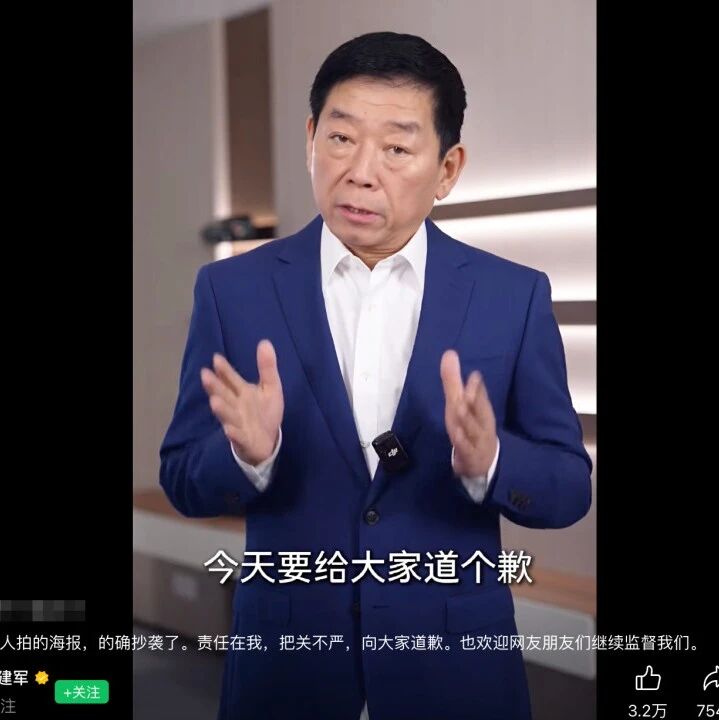
Core Viewpoint - The incident involving Great Wall Motors' chairman Wei Jianjun's apology for plagiarism in a promotional poster for the new V9X vehicle has sparked significant public interest and discussion, highlighting the importance of originality in branding and marketing within the automotive industry [2][4]. Group 1: Incident Overview - On March 5, Great Wall Motors announced Wei Jianjun as the spokesperson for the new V9X vehicle [4]. - Following the announcement, it was pointed out by industry creators that the promotional poster closely resembled a design they created for the Range Rover Sport a year prior, leading to accusations of plagiarism [4]. - Wei Jianjun publicly acknowledged the plagiarism on March 6, apologizing to the Range Rover brand, the original designer, and the public, and accepted full legal and financial responsibility for the incident [2][3]. Group 2: Company Response and Future Actions - In his statement, Wei Jianjun emphasized that the primary responsibility for the incident lies with him due to inadequate oversight as the spokesperson [2]. - Great Wall Motors plans to reflect deeply on this incident and improve its internal management and review processes to prevent future occurrences of plagiarism [2]. - The company reiterated its commitment to originality and welcomed public scrutiny to ensure adherence to these values [2].
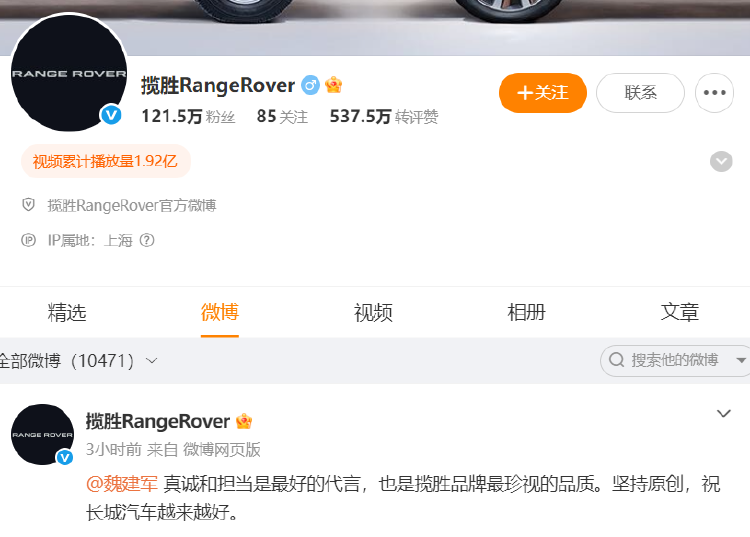
长城汽车董事长魏建军为魏牌V9X海报抄袭致歉,承担全部责任
Bei Ke Cai Jing· 2026-03-07 04:40
Core Viewpoint - The chairman of Great Wall Motors, Wei Jianjun, publicly apologized for the alleged plagiarism of the promotional poster for the Wei brand V9X, acknowledging the incident and accepting full legal and financial responsibility [1] Group 1: Incident Overview - On March 5, the Wei brand announced Wei Jianjun as the spokesperson for the V9X model and released a promotional poster that was later criticized for being highly similar to past promotional materials of the Land Rover Range Rover Sport, indicating potential creative plagiarism [1] - Wei Jianjun confirmed the plagiarism after internal verification and admitted that the core responsibility lies with him for not adequately overseeing the approval process as the spokesperson [1] Group 2: Response and Future Actions - In the apology video, Wei Jianjun stated that Great Wall Motors will reflect deeply on the management process flaws and will comprehensively optimize the content creation and review mechanisms to prevent future plagiarism [1] - The company reiterated its commitment to original design and compliant creation, accepting ongoing public and industry supervision [1] - As of the report's publication, the Wei brand has removed the controversial promotional materials [1] Group 3: Industry Impact - Automotive analyst Ling Ran commented that Wei Jianjun's acknowledgment of the mistake and willingness to take responsibility reflects a commendable attitude, emphasizing the need for the team to address the issue to avoid damaging the brand's reputation [1]
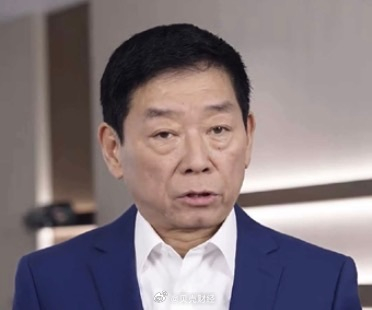
路虎揽胜回应魏建军道歉:真诚和担当是最好的代言,祝长城汽车越来越好
Jin Rong Jie· 2026-03-07 04:38
Group 1 - The chairman of Great Wall Motors, Wei Jianjun, publicly apologized for the alleged plagiarism of the promotional poster for the new flagship model V9X, acknowledging that the poster indeed copied from a Land Rover advertisement and that the company will bear all legal and financial responsibilities [1][2] - Wei Jianjun emphasized that the main responsibility lies with him as the spokesperson for not adequately reviewing the promotional material, and he expressed regret to the Land Rover brand, the original creator of the poster, and the public [2] - Great Wall Motors plans to reflect deeply on this incident and improve its internal management and review processes to prevent future occurrences of plagiarism, reaffirming its commitment to originality and accepting public supervision [2] Group 2 - Land Rover responded to the incident by stating that sincerity and accountability are the best endorsements, which are also the most valued qualities of the Land Rover brand, wishing Great Wall Motors continued success [1]
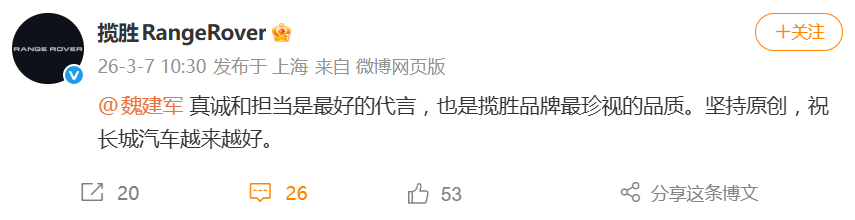
路虎揽胜回应魏建军道歉:祝福长城汽车
Jin Rong Jie· 2026-03-07 03:37
Group 1 - The chairman of Great Wall Motors, Wei Jianjun, apologized for the alleged plagiarism of the V9X poster design from Land Rover and committed to taking full legal and financial responsibility [1] - Land Rover's official Weibo account responded by emphasizing the importance of originality and wishing Great Wall Motors continued success [1]
长城汽车董事长魏建军道歉:的确抄袭了,向大家道歉
Ju Chao Zi Xun· 2026-03-07 03:08
Group 1 - The chairman of Great Wall Motors, Wei Jianjun, publicly apologized for the plagiarism incident regarding the Wei brand V9X spokesperson poster, acknowledging the responsibility for insufficient oversight and welcoming public supervision [2] - Wei brand CEO Zhao Yongpo also issued an apology, admitting that the poster released on March 5 bore a high resemblance to a design from the Land Rover brand, describing it as a serious oversight without any excuses [4] - In recent years, it has been rare for executives in the automotive industry to apologize for their mistakes, with many opting for legal actions instead [5] Group 2 - The Wei brand V9X is the first model built on Great Wall Motors' new "Guiyuan S" platform, which is the world's first native AI all-powertrain automotive platform, designed to meet diverse user needs through standardized hardware interfaces and AI integration [5] - The V9X has dimensions of 5299mm in length, 2025mm in width, and 1825mm in height, with a wheelbase of 3150mm, featuring a "2+2+2" six-seat layout suitable for both family travel and high-end business scenarios [5] - The V9X is expected to officially launch in the second quarter of 2026, directly competing with high-end models such as the AITO M9 and Li Auto L9 [5]
伊朗发射导弹,夜袭“林肯”号航母,“福特”号被调往红海;国际油价站上90美元!美油涨超12%,布油涨9%;长城汽车董事长致歉丨每经早参
Mei Ri Jing Ji Xin Wen· 2026-03-07 00:02
Group 1: Oil Market - International oil prices have surged significantly, with U.S. crude oil rising over 14% to a peak of $92.61 per barrel, closing at $91.27 per barrel, while Brent crude oil increased by 8.76% to $92.89 per barrel [5][11] - The rise in oil prices is attributed to geopolitical tensions, particularly the military actions involving Iran and the U.S. [5][11] Group 2: Economic Policies and Forecasts - The National Development and Reform Commission (NDRC) expects this year's GDP increment to exceed 6 trillion yuan, providing strong support for employment stability, improving people's livelihoods, and mitigating risks [3] - The People's Bank of China plans to flexibly and efficiently utilize various monetary policy tools, including reserve requirement ratio (RRR) cuts and interest rate reductions, to promote stable economic growth and reasonable price recovery [3] Group 3: Corporate Developments - ZTE Corporation announced a projected revenue of 133.9 billion yuan for 2025, with a net profit of 5.6 billion yuan, reflecting a year-on-year decline of 33.32% [14] - SoftBank is reportedly seeking up to $40 billion in loans primarily for investment in OpenAI, marking a significant strategic move in the AI sector [15] - Google plans to reduce its app store commission from 30% to 20% for standard in-app purchases and to 10% for subscription services, which may alter the competitive landscape in the mobile app ecosystem [16] Group 4: Regulatory Changes - The China Securities Regulatory Commission (CSRC) has issued new regulations on short-term trading to facilitate long-term capital market participation, effective from April 7, 2026 [9] - The Ministry of Finance has allocated 100 billion yuan to promote domestic demand through a package of six policies, with a focus on supporting private investment and consumer spending [4] Group 5: Market Reactions - U.S. stock markets saw declines, with the Nasdaq dropping 1.59%, the S&P 500 down 1.33%, and the Dow Jones falling 0.95%, influenced by broader market trends and specific corporate performances [2][5] - Chinese concept stocks mostly rose, with the Nasdaq Golden Dragon China Index increasing by 0.69%, driven by gains in companies like JD.com and Xpeng Motors [2][5]


魏建军,紧急道歉!
证券时报· 2026-03-06 15:49
Core Viewpoint - The article discusses the recent apology from Wei Jianjun, the chairman of Great Wall Motors, regarding a plagiarism issue related to a promotional poster for the new V9X model, emphasizing the company's commitment to originality and accountability [3][5]. Group 1: Company Overview - Great Wall Motors, established its premium brand "Wei" in November 2016, named after its founder Wei Jianjun [6]. - The company reported a revenue of 222.79 billion yuan for 2025, a year-on-year increase of 10.19%, while net profit decreased by 21.71% to 9.912 billion yuan [6]. Group 2: Sales Performance - In 2025, Great Wall Motors sold 1.3237 million new vehicles, marking a 7.33% year-on-year increase, with 403,700 of those being new energy vehicles, reflecting a 25.44% growth [6]. - The brand "Wei" achieved sales of 102,000 units in 2025, a significant increase of 86.29% [6]. - For January to February 2026, the company reported cumulative sales of 162,900 vehicles, a 2.58% increase year-on-year, including 30,800 new energy vehicles sold [7].