
BANK OF CHINA(601988)

Search documents
10月6家银行收到超千万罚单,有行长任职资格罕见被否
21世纪经济报道· 2025-11-05 11:29
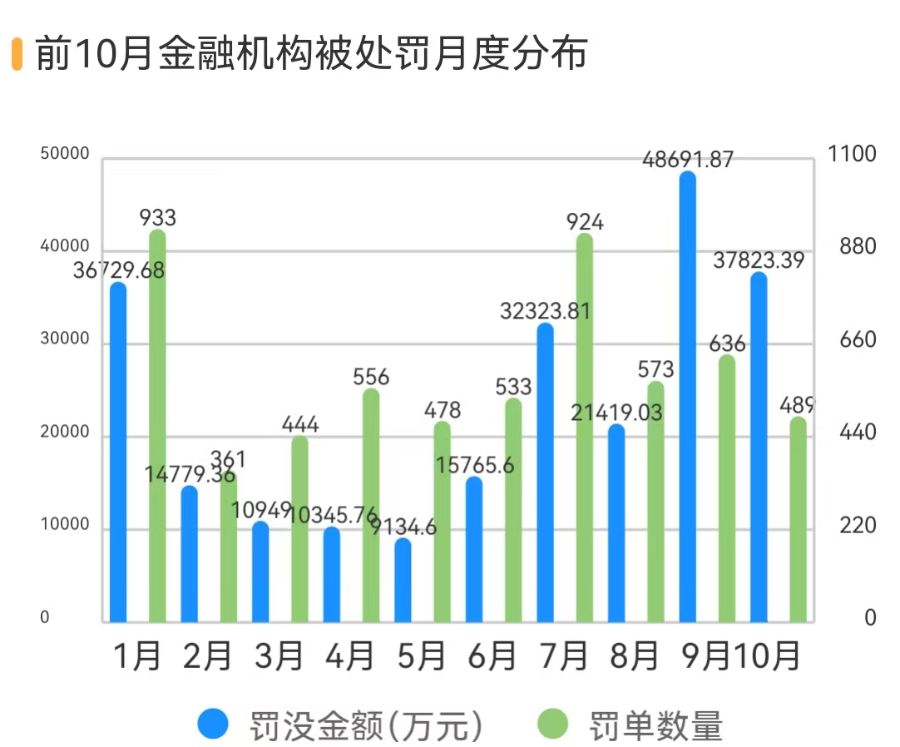
Core Viewpoint - In October, financial institutions received 489 fines, a year-on-year decrease of 2.59%, but the total penalty amount reached 378 million yuan, a significant increase of 223.08% compared to the previous year [2]. Group 1: Penalty Overview - The number of fines in October decreased significantly compared to the first three months of the year, but the total penalty amount remains high, with October being the second highest this year after September [4]. - Regulatory bodies such as the National Financial Supervision Administration, the People's Bank of China, the China Securities Regulatory Commission, and the State Administration of Foreign Exchange all issued fewer fines in October [7]. - Banks received a total of 310 fines, a month-on-month decrease of 24.39%, while insurance companies received 108 fines, down 16.92%, and securities firms received 16 fines, down 42.86% [9]. Group 2: Major Fines - In October, six fines exceeded 10 million yuan, with the largest fine against a bank for issues related to corporate governance, loans, interbank transactions, bills, asset quality, and non-performing asset management [12]. - The largest fine was against the Bank of China, amounting to 97.9 million yuan, for various management failures [13]. - Other significant fines included China Minsheng Bank (28.62 million yuan), Agricultural Bank of China (27.2 million yuan), and Ping An Bank (18.8 million yuan) for similar management issues [14]. Group 3: Compliance Cases - Five Mining Securities was criticized for publishing incorrect coupon rates and issuance results during a bond issuance process, failing to comply with relevant regulations [15][16]. - Tianjin Investment Futures was ordered to rectify its operations due to ineffective risk isolation between its brokerage and proprietary trading businesses, leading to significant losses [17]. - A rare case occurred where the qualification of a bank president was denied due to non-compliance with regulatory requirements, highlighting increased scrutiny on corporate governance in small and medium-sized banks [18]. Group 4: Compliance Characteristics - There was a more than double increase in fines for illegal loan issuance, with 19 fines issued in October, reflecting a year-on-year increase of 111.11% [21]. - Fines related to internal control management also increased, with 32 fines issued in October, a month-on-month increase of 52.38% [23]. Group 5: Penalty Rankings - China Agricultural Development Bank had the highest penalty amount in the third quarter and continued to lead in October [27]. - Zhongcheng Trust received the largest penalty among non-bank institutions in October, with a fine of 6.6 million yuan for various violations [29].

透视银行三季报:超30家净息差收窄 债市波动拖累非利息收入
Bei Ke Cai Jing· 2025-11-05 11:12
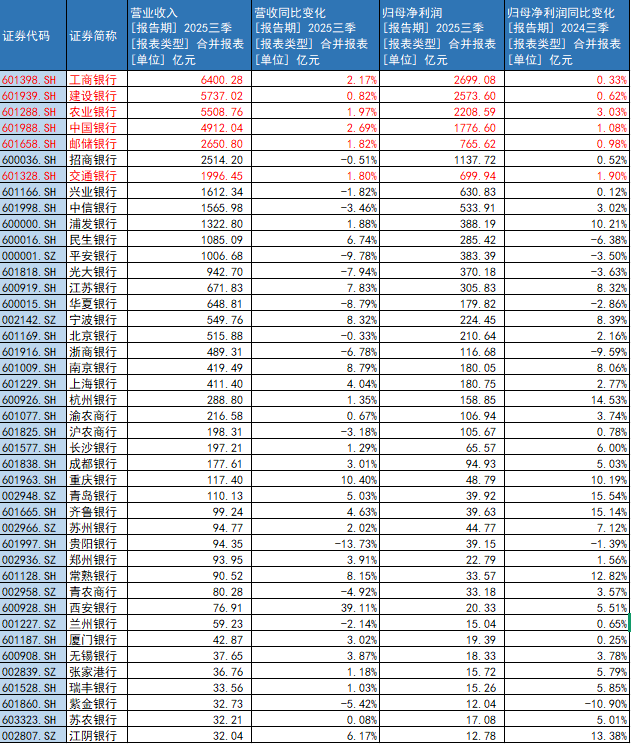
Core Insights - The overall performance of A-share listed banks in the first three quarters of the year is positive, with over 80% achieving year-on-year growth in net profit attributable to shareholders [2][3] - The growth in net profit is primarily driven by stable net interest income and improved asset quality, despite a decline in non-interest income due to bond market fluctuations [2][3] - The six major banks collectively reported over 1 trillion yuan in net profit, marking a significant milestone [3][4] Financial Performance - Among the 42 listed banks, 35 reported year-on-year growth in net profit, while only 7 experienced a decline [3][4] - The top four state-owned banks (Industrial and Commercial Bank of China, China Construction Bank, Agricultural Bank of China, and Bank of China) all achieved growth in both revenue and net profit [4][5] - Industrial and Commercial Bank of China led in revenue with 640.03 billion yuan, a 2.17% increase year-on-year, and a net profit growth of 0.33% [4][6] Non-Interest Income and Market Impact - Many banks faced a decline in non-interest income due to volatility in the bond market, with several banks reporting significant losses in fair value changes [9][10] - For instance, China Merchants Bank reported a fair value loss of 8.83 billion yuan, transitioning from profit to loss [10][12] - The decline in non-interest income is attributed to reduced earnings from bond and fund investments [10][13] Interest Income Trends - Some banks, particularly city commercial banks, saw substantial growth in interest income, with Xi'an Bank's interest income increasing over 60% [7][8] - Conversely, banks like Guiyang Bank and Capital Bank reported declines in interest income of 12.29% and 17.34%, respectively [8][9] Net Interest Margin - The overall net interest margin for listed banks has narrowed compared to the end of the previous year, although some banks have seen a recovery from the second quarter [16][20] - As of the end of the third quarter, Xi'an Bank's net interest margin was 1.79%, reflecting a 0.43% increase from the end of the previous year [16][17] - The stability of net interest margins in the fourth quarter will depend on the banks' ability to optimize their liability structures and find high-quality investment opportunities [20]






数字人民币“暖”民生 山东中行“四进”服务零距离
Sou Hu Cai Jing· 2025-11-05 10:15
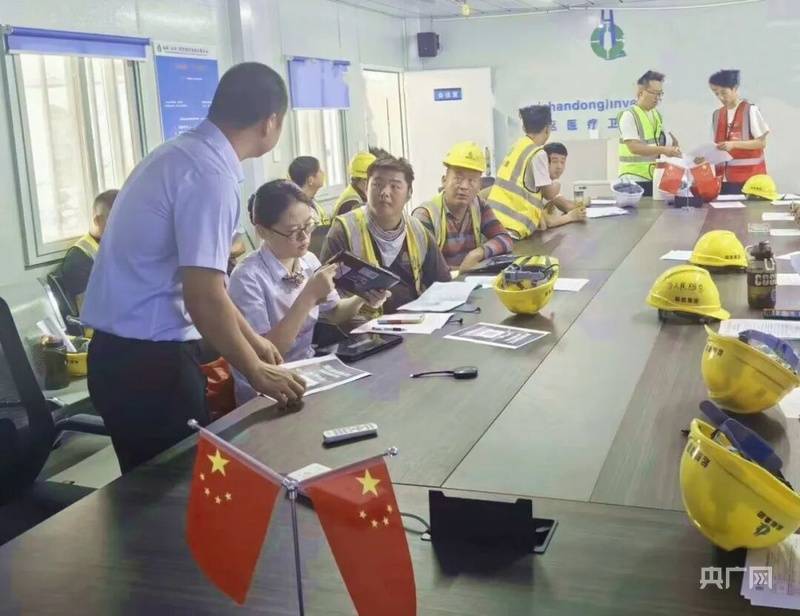
Core Viewpoint - Digital RMB is gradually changing payment habits in Shandong Province, with the Bank of China focusing on scenario-based services to promote digital financial knowledge among the public [1] Group 1: Promotion in Enterprises - The Bank of China in Jinan is providing customized services for construction companies, focusing on wage distribution for migrant workers and offering face-to-face explanations of digital RMB usage and anti-fraud techniques [2] - A "full-process follow-up" service model is introduced for large enterprises, helping employees quickly master the use of digital wallets through on-site demonstrations [2] Group 2: Promotion in Schools - The Bank of China in Jinan conducted a "Payment First Lesson" for new students at Shandong University, explaining the concept and safety of digital RMB in an engaging manner [3] - A campaign combining campus card services and anti-fraud education is also underway, aiming to enhance students' awareness of financial safety and protect personal information [3] Group 3: Promotion in Commercial Areas and Communities - The Bank of China Laiwu branch is promoting digital RMB in the core shopping area of Lai Steel Department Store through various promotional materials and direct engagement with citizens [5] - In community settings, the Jinan Licheng branch is conducting "Smart Assistance for the Elderly" lectures, helping older adults learn digital payment methods and internet safety [5] Group 4: Future Plans - The Bank of China plans to continue deepening the application of digital RMB with more diverse products and improved service experiences to support the high-quality development of the local digital economy [7]

五家银行跻身绿色信贷“万亿俱乐部”,绿色债券存量规模近2万亿
2 1 Shi Ji Jing Ji Bao Dao· 2025-11-05 09:41
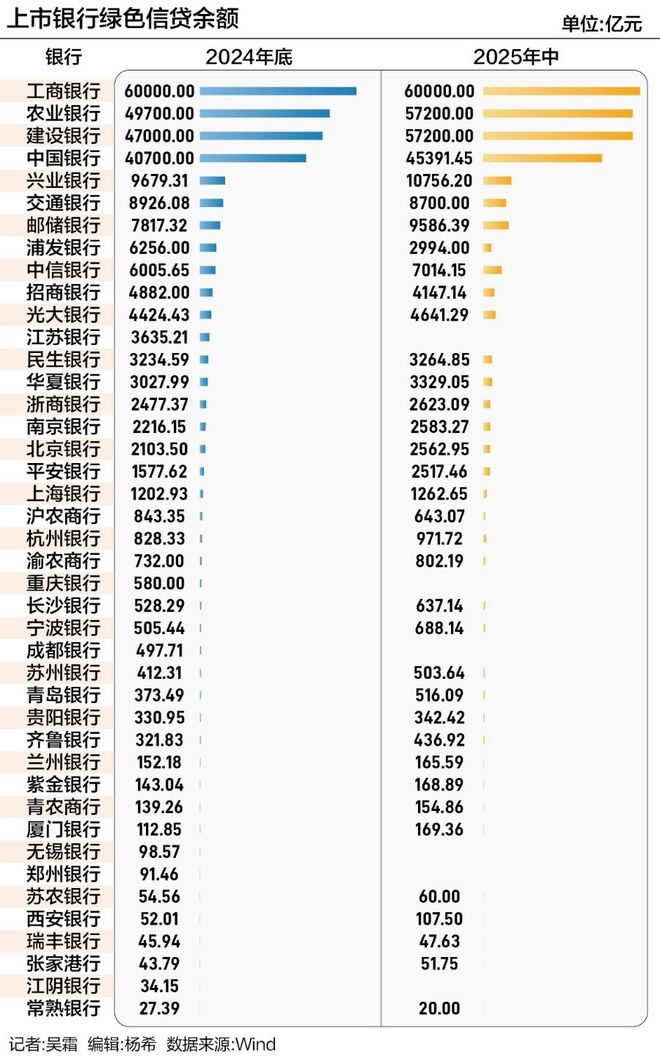
Core Insights - Green finance has transitioned from an optional strategy to a mandatory focus for banks, becoming a new engine for strategic transformation and a blue ocean market in the context of a shift towards a green low-carbon economy [1][2] - The balance of green financing at Industrial Bank has reached nearly 2.5 trillion yuan, with green loans exceeding 1 trillion yuan and a non-performing loan rate of only 0.57% [1] - The People's Bank of China and other departments have issued a unified policy framework for green finance, effective from October 1, 2025, to standardize the support scope for green loans and bonds [2] Green Credit Landscape - By the end of 2024, the total balance of green credit among 42 A-share listed banks exceeded 27 trillion yuan, with a year-on-year growth of approximately 20% [3] - State-owned banks are the main contributors to green credit, with the six major state-owned banks holding over 21 trillion yuan, accounting for 77.6% of the total [3] - The growth pattern shows large banks maintaining scale, joint-stock banks demonstrating strong vitality, and regional banks achieving rapid growth [3] Green Loan Balances - As of the end of 2024, only four listed banks had green loan balances exceeding 1 trillion yuan: Industrial Bank, Agricultural Bank, Construction Bank, and Bank of China [5] - Industrial Bank's green loan balance rose to 1.08 trillion yuan in the first half of the year, joining the "trillion club" [5] - Among joint-stock banks, Industrial Bank, CITIC Bank, and Pudong Development Bank lead in green credit scale, collectively accounting for nearly 40% of the total [5] Growth Rates and Sector Focus - The average growth rate of green credit for A-share listed banks in 2024 was 20.6%, a slowdown from approximately 28% in 2023, yet leading institutions maintained strong growth [5] - The focus of green credit is heavily concentrated in clean energy, green transportation, energy conservation, and green buildings, with key regions being the Yangtze River Delta, Guangdong-Hong Kong-Macau Greater Bay Area, and Chengdu-Chongqing economic circle [6] Financial Product Innovation - A-share listed banks are deepening innovation in green financial products, creating a multi-dimensional product system that includes loans, bonds, asset securitization, insurance, and carbon finance [7] - Green loans remain the core vehicle for green finance, with a total balance exceeding 27 trillion yuan by the end of 2024, reflecting a year-on-year growth of about 20% [7] - Innovative tools such as sustainability-linked loans and carbon emission rights pledge financing are gaining traction [7] Bond and Investment Developments - The issuance of green bonds has expanded, with the cumulative issuance of labeled green bonds in 2024 surpassing 4 trillion yuan [8] - Banks are actively participating in green wealth management and fund products, enhancing investor engagement through innovative offerings [8] - Carbon finance tools are transitioning from pilot programs to broader applications, with banks launching carbon emission rights pledge financing products [8] Future Directions - The banking sector is expected to continue innovating green financial products to support sustainable economic development more effectively [9] - This evolution will extend beyond traditional green loans to include financing models linked to carbon emissions and environmental rights [10]


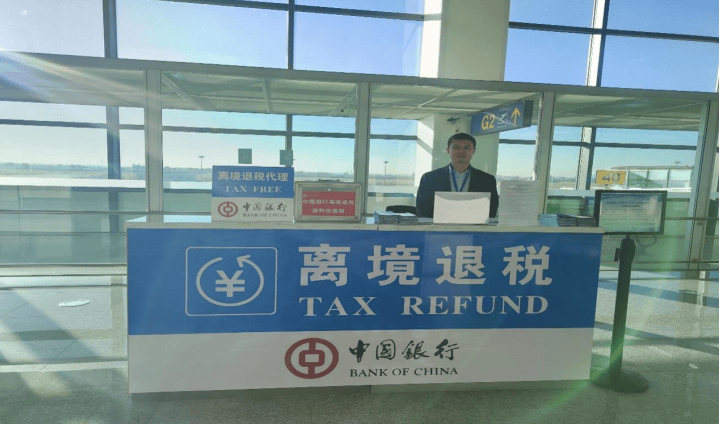
中国银行内蒙古区分行成功开办境外旅客购物离境退税业务
Sou Hu Cai Jing· 2025-11-05 09:38
Core Points - The Bank of China Inner Mongolia Branch has successfully launched a tax refund service for overseas travelers, becoming the only agency in the region to do so [1][3] - This initiative is supported by local government departments and aims to enhance the convenience of inbound consumption and optimize the business environment in Inner Mongolia [3] - The service has established connections with multiple airports and land ports, ensuring a smooth implementation of the tax refund process [1][3] Summary by Sections Implementation of Tax Refund Service - The Bank of China Inner Mongolia Branch is the sole agency for overseas travelers' shopping tax refunds in the region [1] - The bank has coordinated with the local commerce department, tax bureau, and central bank to facilitate this service [1] Operational Readiness - Five tax refund points have been set up at key locations, including Hohhot Baita International Airport and ports in Manzhouli and Erenhot [1] - The bank has prepared service points, streamlined business processes, and trained personnel to ensure effective service delivery [1] Future Prospects - The initiative is expected to attract more foreign tourists and invigorate market activity in Inner Mongolia [3] - The Bank of China Inner Mongolia Branch plans to continue enhancing its cross-border service capabilities and customer satisfaction [3] - The goal is to leverage financial services to support the region's development as an international cultural and tourism consumption hub [3]
10月6家银行收到超千万罚单 行长任职资格罕见被否
2 1 Shi Ji Jing Ji Bao Dao· 2025-11-05 09:25
Core Insights - In October, financial institutions received 489 fines, a year-on-year decrease of 2.59%, but the total penalty amount reached 378 million yuan, a significant increase of 223.08% compared to the previous year [1][3] Summary by Categories Penalty Overview - The number of fines issued in October decreased compared to the first three months of the year, but the total penalty amount remains substantial, with October being the second highest for penalties this year, following September [1][3] Institution-Specific Penalties - Banks received 310 fines, a month-on-month decrease of 24.39% - Insurance companies received 108 fines, a month-on-month decrease of 16.92% - Securities firms received 16 fines, a month-on-month decrease of 42.86% - Futures and private equity fines also decreased, while insurance asset management companies remained stable compared to the previous month [5] Major Fines - Six fines in October exceeded 10 million yuan, with the largest fines against banks for issues related to corporate governance, loans, interbank transactions, and asset quality management [8][9] Compliance Cases - Five major compliance cases were highlighted, including: 1. Wenkang Securities faced criticism for issuing incorrect bond rates and results due to improper management of the issuance process [10] 2. Jintou Futures was ordered to rectify its operations after significant losses due to ineffective risk management [11] 3. A rare case of a bank president's qualification being denied due to non-compliance with regulatory requirements [13] Compliance Trends - There was a notable increase in penalties for improper loan issuance, with 19 fines issued, reflecting a year-on-year increase of 111.11% [14] - Penalties related to internal control management also rose, with 32 fines issued, a month-on-month increase of 52.38% [15] Penalty Rankings - China Agricultural Development Bank had the highest penalty amount in October, continuing its trend from the third quarter [18] - Zhongcheng Trust received the largest penalty among non-bank institutions, totaling 6.6 million yuan for various compliance violations [21]

贝莱德:在中国银行的持股比例升至6.26%
Ge Long Hui· 2025-11-05 09:16
Core Insights - BlackRock's stake in China Bank's H-shares increased from 5.99% to 6.26% as of October 30 [1] Company Summary - BlackRock's ownership in China Bank reflects a growing confidence in the bank's performance and potential [1]

金融“活水”润中原 绿色转型绘新篇
Huan Qiu Wang· 2025-11-05 08:19
Core Insights - China Bank's Henan branch is actively promoting green finance to support the region's high-quality development by enhancing financial services for circular economy and environmental protection industries [1][2] Group 1: Green Finance Initiatives - The bank has increased support for industries focused on circular economy and energy conservation, providing efficient financial services to empower green transformation in Central China [1] - A notable case involves an environmental technology company in Zhoukou that has established a complete industrial chain for waste paper recycling, achieving an annual CO2 reduction of approximately 80,000 tons, equivalent to planting 4.5 million trees [1] Group 2: Innovative Financing Solutions - To address funding bottlenecks in patent conversion and capacity upgrades, the bank utilized an intellectual property pledge financing model, completing a 200 million yuan credit issuance in just 10 working days [1] - The bank's efforts in assisting companies to apply for interest subsidy policies have effectively reduced financing costs, setting a record for single credit issuance through intellectual property pledge in the region [1] Group 3: Successful Case Studies - In Qinyang, an environmental company focused on recycling used batteries has implemented an intelligent production line, processing 200,000 tons of waste lead-acid batteries annually, significantly alleviating battery pollution [2] - With the bank's support, the company expects a production capacity increase of over 30% following the introduction of intelligent dismantling equipment, demonstrating the impact of timely financial assistance [2] - The bank's rapid response in providing a 10 million yuan loan within 5 working days showcases its commitment to facilitating green projects [2] Group 4: Future Directions - The bank plans to continue optimizing its green finance service system, providing more precise financial support to aid the comprehensive green transformation of economic and social development [2]
中国银行行长张辉:商业银行要把握机遇完善离岸人民币金融产品体系
Xin Lang Cai Jing· 2025-11-05 06:23
Core Viewpoint - The international trade landscape is undergoing restructuring, and the deepening economic and trade relations between China and various countries highlight the timely promotion of the international use of the Renminbi [1] Group 1: Financial Infrastructure and Products - Commercial banks are encouraged to seize opportunities for interconnected financial infrastructure and enhance the offshore Renminbi financial product system to meet the trade investment and risk hedging needs of overseas entities holding Renminbi [1] - China Bank aims to maintain its leading global position in cross-border Renminbi traditional settlement and clearing services [1] Group 2: Expansion of Renminbi Usage - The bank plans to actively expand the use of Renminbi in pricing and settlement within sectors such as energy, bulk commodities, and cross-border e-commerce [1] - There is a commitment to deeply participate in the promotion of cross-border payment systems to effectively support the liberalization and facilitation of trade and investment [1]
数据有点异常!房地产一些风险要注意了
Sou Hu Cai Jing· 2025-11-05 05:08
Economic Outlook - The economic growth momentum has weakened since Q3 2025, with GDP growth expected to decline to approximately 4.8% in Q3 and 4.5% in Q4, although the annual growth target of around 5% is still achievable due to strong performance in the first half of the year [1][7] - The report indicates that the main reasons for the weakening domestic demand include the reduction in the effectiveness of the trade-in subsidy policy and a significant decline in restaurant consumption, which aligns with previous analyses [3][5] Consumer Spending - From January to August, the total retail sales of consumer goods grew by 4.6% year-on-year, a decrease of 0.4 percentage points compared to the first half of the year [5] - The decline in retail sales growth is primarily attributed to the diminishing impact of the trade-in subsidy policy, with sales growth for home appliances and communication equipment dropping significantly [5] - Service consumption has outperformed goods consumption, contributing positively to overall consumption growth, with service retail sales increasing by 5.1% compared to 4.8% for goods [5][3] Real Estate Market - The real estate market has accelerated its downturn since Q3, with pressures on both supply and demand sides becoming more pronounced [6] - Demand has decreased due to a continuous decline in residents' willingness to purchase homes, while supply is increasing with a residential inventory of 400 million square meters, reflecting a year-on-year increase of 5.4% [6][8] Housing Supply Issues - The average housing supply interruption rate across the country has risen to 3.7%, up from 1.6% in 2022, with some third and fourth-tier cities exceeding 5% [8] - This represents a 130% increase in mortgage interruption rates over three years, highlighting significant challenges in the housing market [8] Future Economic Predictions - The report provides forecasts for various economic indicators for Q3 and Q4 of 2025, suggesting a cautious outlook for the macroeconomic environment if no new stimulus policies are introduced [10][7]
