
Eastroc Beverage(605499)

Search documents
东鹏饮料(605499) - 东鹏饮料(集团)股份有限公司关于召开2025年第二次临时股东会的通知
2025-12-29 11:00
证券代码:605499 证券简称:东鹏饮料 公告编号:2025-079 东鹏饮料(集团)股份有限公司 关于召开2025年第二次临时股东会的通知 一、 召开会议的基本情况 (一) 股东会类型和届次 2025年第二次临时股东会 召开的日期时间:2026 年 1 月 16 日 14 点 30 分 召开地点:公司二楼 VIP 会议室(地址:深圳市南山区桃源街道珠光北路 88 号明亮科技园 3 栋东鹏饮料) 股东会召开日期:2026年1月16日 本次股东会采用的网络投票系统:上海证券交易所股东会网络投票系统 (二) 股东会召集人:董事会 (三) 投票方式:本次股东会所采用的表决方式是现场投票和网络投票相结合 的方式 (四) 现场会议召开的日期、时间和地点 (五) 网络投票的系统、起止日期和投票时间。 网络投票系统:上海证券交易所股东会网络投票系统 网络投票起止时间:自2026 年 1 月 16 日 至2026 年 1 月 16 日 本公司董事会及全体董事保证本公告内容不存在任何虚假记载、误导性陈述 或者重大遗漏,并对其内容的真实性、准确性和完整性承担法律责任。 重要内容提示: 1、 各议案已披露的时间和披露媒体 上述议 ...

东鹏饮料(605499) - 东鹏饮料(集团)股份有限公司第三届董事会第十八次会议决议公告
2025-12-29 11:00
证券代码:605499 证券简称:东鹏饮料 公告编号:2025-071 东鹏饮料(集团)股份有限公司 第三届董事会第十八次决议公告 本公司董事会及全体董事保证本公告内容不存在任何虚假记载、误导性陈 述或者重大遗漏,并对其内容的真实性、准确性和完整性承担法律责任。 一、董事会会议召开情况 东鹏饮料(集团)股份有限公司(以下简称"公司")第三届董事会第十八次 会议于 2025 年 12 月 29 日(星期一)在公司二楼 VIP 会议室以现场结合通讯的 方式召开。会议通知已于 2025 年 12 月 24 日通过邮件的方式送达各位董事。本 次会议应出席董事 10 人,实际出席董事 10 人。 会议由董事长林木勤主持,高管列席。会议召开符合有关法律、法规、规章 和《公司章程》的规定。 二、董事会会议审议情况 (一)逐项审议通过《关于制定及修改公司内部治理制度的议案》 公司根据《中华人民共和国公司法》《中华人民共和国证券法》《上海证券交 易所股票上市规则》等相关法律、行政法规、部门规章、规范性文件、证券交易 所规则的规定,通过对照自查,同时结合自身实际情况,对公司部分治理制度进 行了系统性的梳理修订并新增制定部分公司制 ...
东鹏饮料:12月29日召开董事会会议
Mei Ri Jing Ji Xin Wen· 2025-12-29 10:57
Group 1 - The core viewpoint of the article is that Dongpeng Beverage has announced the convening of its 18th meeting of the third board of directors on December 29, 2025, to discuss the appointment of a board secretary and other documents [1] - For the year 2024, Dongpeng Beverage's revenue composition is reported to be 99.89% from the beverage industry and 0.11% from other businesses [1] - As of the time of reporting, Dongpeng Beverage has a market capitalization of 139.4 billion yuan [1]
中国经济样本观察·企业样本篇丨“小饮品”何以释放大能量——东鹏饮料转型记
Xin Hua Wang· 2025-12-29 03:14
Core Viewpoint - Dongpeng Beverage has transformed from a near-bankrupt company to a market leader in the functional beverage sector, achieving over 10 billion yuan in annual sales through continuous innovation and market segmentation [1][2]. Group 1: Market Position and Growth - The functional beverage market in China has surpassed 100 billion yuan, with Dongpeng's flagship product, Dongpeng Special Drink, leading the market [2]. - Dongpeng Beverage reported revenue of 16.844 billion yuan and a net profit of 3.761 billion yuan for the first three quarters of 2025, marking year-on-year growth of 34.13% and 38.91% respectively [4]. Group 2: Product Development and Innovation - Dongpeng Special Drink was launched in 1997 after extensive research on ingredient ratios, focusing on high-quality and cost-effective domestic functional beverages [2]. - The introduction of a PET bottle with a dust-proof cap in 2009 significantly increased market share by enhancing consumer trust and convenience [3]. - The company has developed a new sugar-free version of Dongpeng Special Drink, incorporating L-α-glycerylphosphorylcholine to cater to health-conscious consumers [9][10]. Group 3: Competitive Strategy - Dongpeng Beverage has adopted a digital marketing strategy by implementing a coding system for each bottle, allowing for better tracking of sales and inventory [6][7]. - The company emphasizes consumer feedback in product development, leading to the successful launch of the 500ml "Big Gold Bottle," which has become a best-seller [8]. Group 4: Future Expansion Plans - Dongpeng Beverage aims to increase its international presence, with plans to expand into over 20 countries and regions by 2026, marking 2025 as its "outbound year" [12]. - The company aspires to elevate its brand to a global level, similar to Coca-Cola, by increasing its overseas revenue share [12].
中国经济样本观察·企业样本篇|“小饮品”何以释放大能量——东鹏饮料转型记
Xin Hua She· 2025-12-29 03:09
Core Insights - Dongpeng Beverage has transformed from a near-bankrupt company to a market leader in the functional beverage sector, achieving over 10 billion yuan in annual sales [1] - The functional beverage market in China has surpassed 100 billion yuan, with Dongpeng's flagship product, Dongpeng Special Drink, leading the market [1] Company Development - Dongpeng Beverage was founded in 1988 by Lin Muqin, who recognized the potential of the beverage industry in Shenzhen [1] - The company faced bankruptcy in 2003 but chose to invest in its brand and production capabilities, leading to a successful turnaround [1] - Dongpeng's revenue for the first three quarters of 2025 reached 16.844 billion yuan, with a net profit of 3.761 billion yuan, marking a year-on-year growth of 34.13% and 38.91% respectively [1] Product Innovation - Dongpeng Special Drink was launched in 1997, featuring a unique blend of taurine, B vitamins, and other ingredients that enhance energy and reduce fatigue [1] - The introduction of a PET bottle with a dust-proof cap in 2009 significantly increased market share by improving hygiene and convenience [1] - The company has developed a new sugar-free version of Dongpeng Special Drink, which includes L-α-glycerylphosphorylcholine to help alleviate brain fatigue, catering to the growing health-conscious consumer base [2] Market Strategy - Dongpeng Beverage employs a digital marketing strategy that includes product coding for better tracking and consumer engagement [1] - The company is expanding its product line to include electrolyte drinks and tea-based beverages, aiming to diversify its offerings and reach more consumers [1][2] - Dongpeng is targeting international markets, with plans to increase its overseas revenue, having already exported products to over 20 countries [2]
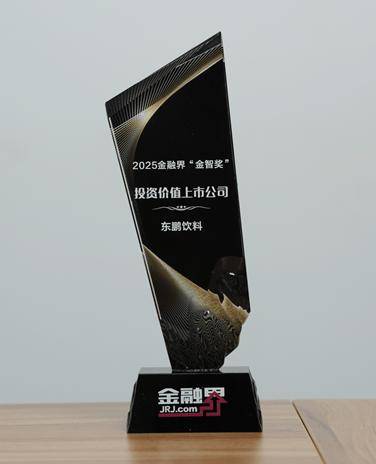
东鹏饮料斩获金融界“金智奖”投资价值上市公司 高增长、高盈利、高回报的标杆典范
Sou Hu Cai Jing· 2025-12-26 10:46
Core Viewpoint - The "Qihang·2025 Financial Summit" highlighted the recognition of Dongpeng Beverage as an "Investment Value Listed Company," emphasizing its strong market performance and growth potential in the functional beverage industry [1][3]. Group 1: Award and Evaluation - The "Jinzhi Award" aims to set benchmarks for high-quality development, guiding listed companies to focus on core businesses, continuous innovation, and social responsibility [3]. - The evaluation covered over 8,000 companies across A-shares, Hong Kong stocks, and Chinese concept stocks, with nearly 200 companies awarded based on a quantitative analysis model [3]. Group 2: Company Performance - Dongpeng Beverage achieved a revenue growth of 34.13% and a net profit growth of 38.91% year-on-year in the first three quarters of 2025, with strong performance across all major regions, particularly in North China [4]. - The company has established 13 production bases with an annual designed capacity exceeding 4.8 million tons, and its sales network covers all 33 provincial-level administrative regions in China [4]. Group 3: Financial Metrics and Returns - Dongpeng Beverage's stock price increased by 25.24% in the first three quarters of 2025, reflecting positive market expectations [4]. - The company's weighted ROE has steadily increased over three years, reaching 43.35% in the latest period, while the ROA improved from 12.5% to 16.13% [4]. - Since its listing, Dongpeng Beverage has conducted seven dividend distributions, totaling 6.6 billion yuan, with a significant cash dividend payout in 2025 [5][6]. Group 4: Market Recognition - Dongpeng Beverage has received high recognition from professional institutions, with Haitong International projecting a target price of 333 yuan based on a 30x PE ratio for 2026, reflecting confidence in the company's growth prospects [6].

食品饮料行业双周报(2025、12、12-2025、12、25):欧盟乳制品反补贴落地,把握结构性机会-20251226
Dongguan Securities· 2025-12-26 09:37
Investment Rating - The report maintains an "Overweight" rating for the food and beverage industry, indicating an expectation that the industry index will outperform the market index by more than 10% over the next six months [55]. Core Insights - The report highlights the structural opportunities arising from the EU's anti-subsidy measures on dairy products, which are expected to benefit domestic alternatives such as cheese and cream [50]. - The white liquor sector is experiencing a weak recovery in consumption, with expectations of continued pressure on sales in the fourth quarter and first quarter of the following year, but a potential rebound in the second quarter due to low base effects [50][51]. - The report emphasizes the importance of monitoring inventory levels ahead of the Spring Festival and the operational goals set by various liquor companies for the upcoming year [51]. - The report suggests focusing on high-end liquor brands like Kweichow Moutai (600519) and other regional brands such as Shanxi Fenjiu (600809) and Guojiao Liquor (000596) [51]. - The report notes that approximately 87% of stocks in the food and beverage sector recorded positive returns during the review period, with notable performers including Anji Food (+27.96%) and Huanlejia (+20.94%) [15]. Summary by Sections Market Review - From December 12 to December 25, 2025, the SW food and beverage industry index rose by 1.33%, underperforming the CSI 300 index by approximately 0.66 percentage points [11]. - Most sub-sectors outperformed the CSI 300 index, with the baking sector showing the highest increase of 7.63% [13]. Industry Data Tracking - **Liquor Sector**: The price of Feitian Moutai increased to 1575 RMB/bottle, while Guojiao 1573 decreased to 840 RMB/bottle [21]. - **Condiments Sector**: Prices for soybean meal and white sugar decreased, with soybean prices at 4288.90 RMB/ton [24]. - **Beer Sector**: Aluminum prices increased while glass and corrugated paper prices decreased; barley prices remained stable at 2200.00 RMB/ton [29]. - **Dairy Sector**: Fresh milk prices rose slightly to 3.03 RMB/kg [37]. - **Meat Sector**: The average wholesale price of pork decreased to 17.44 RMB/kg, with a year-on-year decline of 22.04% [39]. Important News - The report discusses the preliminary ruling on anti-subsidy measures for EU dairy imports, which is expected to positively impact domestic dairy producers [44][45]. - It also notes a decline in the production of white liquor and beer in November, with white liquor production down 11.3% year-on-year [43]. Company Announcements - Kweichow Moutai plans to distribute cash dividends amounting to at least 75% of its net profit for the years 2024-2026, alongside a share buyback plan [52]. - Haitian Flavoring plans to maintain a cash dividend payout ratio of no less than 80% of its net profit for the next three years [48].



东鹏饮料(605499):首次覆盖报告:能量饮料龙头迈向综合平台型公司
Shanghai Aijian Securities· 2025-12-26 08:58
Investment Rating - The report assigns a "Buy" rating for Dongpeng Beverage (605499.SH) as a first-time coverage [2]. Core Views - Dongpeng Beverage is transitioning from a leading energy drink company to a comprehensive platform company, with strong growth prospects. The projected revenues for 2025, 2026, and 2027 are estimated at 210.2 billion, 260.8 billion, and 314.8 billion yuan, respectively, representing year-on-year growth of 32.7%, 24.1%, and 20.7%. The net profits attributable to the parent company are expected to be 45.2 billion, 58.1 billion, and 70.9 billion yuan, with growth rates of 35.8%, 28.5%, and 22.0% respectively, corresponding to PE ratios of 31.3X, 24.4X, and 20.0X [5][6]. Summary by Sections Market Data - As of December 25, 2025, the closing price is 272.11 yuan, with a one-year high of 336.50 yuan and a low of 208.8 yuan. The price-to-book ratio is 16.1, and the dividend yield is 1.84%. The circulating A-share market value is 141,501 million yuan [2]. Financial Data and Profit Forecast - The total revenue for 2023 is 11,263 million yuan, with a year-on-year growth rate of 32.4%. The net profit for the same year is projected at 2,040 million yuan, reflecting a growth of 41.6%. The expected revenues for 2025, 2026, and 2027 are 21,020 million, 26,080 million, and 31,481 million yuan, with corresponding net profits of 4,518 million, 5,807 million, and 7,088 million yuan [7][24]. Industry and Company Analysis - The energy drink market in China is expected to grow steadily, with a market size of approximately 1,114 billion yuan in 2024 and a compound annual growth rate of about 7.7% from 2019 to 2024. Dongpeng Beverage has maintained the top sales position in the energy drink market for four consecutive years from 2021 to 2024, increasing its market share from 15.0% to 26.3% during this period [5][6]. Growth Drivers - The company is benefiting from the competitive landscape improvement due to the Red Bull trademark dispute, which has allowed for a more favorable market environment. The revenue from energy drinks is projected to be 159.6 billion, 183.6 billion, and 209.3 billion yuan for 2025, 2026, and 2027, with growth rates of 20.0%, 15.0%, and 14.0% respectively [5][8]. Product Diversification - Dongpeng Beverage is expanding its product matrix beyond energy drinks to include electrolyte drinks and other beverages, with significant growth in the electrolyte drink segment, which has seen a revenue increase of 134.7% year-on-year [5][6]. The revenue from other beverages is also expected to grow significantly, indicating a successful diversification strategy [5][8]. Market Positioning - The company has successfully transitioned from a regional brand to a national brand, with over 70% of its revenue coming from non-Guangdong markets. The number of distributors has reached 3,271, indicating deep coverage in major regions across the country [5][6]. Catalysts for Stock Price - Key catalysts for stock price growth include the successful launch of new products like "Buli" and the ongoing Red Bull trademark dispute, which is reshaping the industry landscape. The company is also expanding its production capacity to support nationwide distribution [8]
研报掘金丨东吴证券:维持东鹏饮料“买入”评级,坚定平台化战略,多品类稳步加力
Ge Long Hui A P P· 2025-12-26 06:09
Group 1 - The core viewpoint of the article emphasizes Dongpeng Beverage's commitment to a platform strategy and its steady expansion across multiple product categories [1] - Dongpeng plans to fully implement its "1+6" multi-category strategy by 2026, aiming to establish itself as a leading beverage group in China [1] - The "1" in the strategy refers to Dongpeng Special Drink, while the "6" includes various beverages such as electrolyte drink "Bushi La," large-pack drink "Guo Zhi Cha," coconut drink "Hai Dao Ye," ready-to-drink milk tea "Gang Shi Nai Cha," sugar-free tea drink "Shang Cha," and coffee drink "Da Ka" [1] Group 2 - The company is leveraging its latecomer advantage and deep insights into the beverage market to position itself in promising segments [1] - Dongpeng is optimistic about its platform potential in the medium to long term, with diversification and accelerated overseas expansion towards becoming a beverage giant [1] - Current forecasts for net profit attributable to the parent company for 2025-2027 are 4.601 billion, 5.847 billion, and 7.051 billion yuan, with corresponding PE ratios of 31, 24, and 20 times [1]

东鹏饮料(605499):坚定平台化战略 多品类稳步加力
Xin Lang Cai Jing· 2025-12-26 00:38
Core Viewpoint - Dongpeng is committed to becoming a leading beverage group in China by implementing a "1+6" multi-category strategy by 2026, focusing on platformization and expanding its product offerings [1] Group 1: Multi-Category Strategy - The "1" in the "1+6" strategy represents Dongpeng's core energy drink, while the "6" includes electrolyte drinks, large-pack beverages, coconut drinks, ready-to-drink milk tea, sugar-free tea drinks, and coffee beverages [1] - Dongpeng is leveraging its latecomer advantage and deep market insights to enter promising segments, with significant growth potential in the energy drink market, which is still in its early to mid-stage in China [1] - The company is successfully creating new growth curves by entering new promising segments and implementing targeted marketing strategies [1] Group 2: New Product Launches - The tea beverage and milk tea segments are expected to become new growth points for Dongpeng by 2026, with plans to launch new product sizes and flavors [2] - The company aims to drive growth in the sugar tea segment with a new 500ml specification for its "Guo Zhi Cha" product and a new 500ml "Bei Hao Cha" for the sugar-free tea segment [2] - The ready-to-drink milk tea will be fully promoted next year, targeting stable demand in various settings such as schools and factories [2] Group 3: Sales and Distribution Strategy - Dongpeng plans to increase its investment in freezers to enhance sales efficiency, with significant effects expected as the number of terminal outlets increases [2] - The company’s mature digital system and deep distribution capabilities are expected to maintain stable expense ratios despite intense competition in the beverage market [2] Group 4: Financial Projections - Dongpeng's net profit forecasts for 2025, 2026, and 2027 are projected to be 4.601 billion, 5.847 billion, and 7.051 billion yuan, respectively, with corresponding P/E ratios of 31, 24, and 20 [3] - The company maintains a "buy" rating based on its long-term platform potential and diversification strategy [3]