
Eastroc Beverage(605499)

Search documents
华源证券:重视ROA企稳的消费板块 寻找价或量仍景气的细分赛道
智通财经网· 2025-12-24 13:01
Core Viewpoint - Different consumer sectors exhibit both differences and commonalities in recovery rhythms, with ROA being a leading indicator for operational recovery in consumer enterprises [1][2] Group 1: Recovery Rhythm Analysis - The recovery rhythm of various consumer sectors is influenced by industry supply and demand, as well as supply chain structures, with a focus on stock market competition as a mainstream phenomenon [2] - The stages of enterprise and channel adjustments are outlined, starting from oversupply to a new balance in supply and demand, with ROA serving as a key indicator throughout these stages [2] - Current recovery sequences indicate that soft drinks and snacks are leading, followed by food supply chains, condiments, dairy products, beer, and finally, liquor [2][3] Group 2: Investment Strategy - Emphasis on sectors where ROA stabilizes, indicating potential valuation recovery opportunities, with a preference for sectors that still show price or volume growth [3] - Price logic suggests that rising CPI may drive valuation recovery in traditional industries with high penetration rates, such as liquor, beer, and dairy products, which are likely to attract incremental capital [3][4] - Recommended companies in the liquor sector include Kweichow Moutai, Luzhou Laojiao, and Shanxi Fenjiu, while in dairy, focus on Yili and Mengniu [3] Group 3: Volume Logic - In the context of cost-effective consumption, companies with high supply chain efficiency are expected to gain volume, with specific recommendations for companies in the food supply chain and soft drinks [4] - Industries with low penetration rates may withstand economic cycles, with recommendations for low-alcohol beverages and functional foods that can enhance brand premium through specialization [4] - Companies benefiting from overseas market expansion include Angel Yeast and Bailong Chuangyuan [4]




扩内需:食品饮料行业投资机会
2025-12-24 12:57
Summary of Key Points from the Conference Call Industry Overview - The food and beverage industry is experiencing systemic opportunities driven by policies aimed at expanding domestic demand and increasing residents' income levels, which are expected to enhance consumption capabilities [1][2] - The liquor industry is undergoing a deep adjustment, with expectations of entering an EPS killing phase by 2025, while high-end liquor brands like Moutai and Lao Jiao are recommended for investment [1][4] - The dairy industry has completed supply-demand adjustments, with anticipated increases in demand for milk powder and liquid milk due to fertility and income policies, highlighting companies like Yili and New Dairy as potential recovery opportunities [1][5] - The snack food sector is benefiting from the "lipstick effect," new channels, and health trends, with recommendations for companies such as Salted Fish, Wei Long, Wan Chen Food, and Qiaqia Food [1][6] - The beverage sector is seeing a clear trend towards health, with non-traditional channels gaining market share, making high-growth companies like Dongpeng Beverage noteworthy [1][7] Key Insights and Arguments - The central economic work conference in 2026 will prioritize expanding domestic demand, which is expected to lead to a series of policies stimulating consumption, positively impacting the food and beverage industry [2] - The food and beverage sector has faced significant changes in volume, price, and channel structure over the past six years, with varying performances across sub-sectors [3] - The liquor sector is expected to see marginal improvements in 2026, driven by policies aimed at boosting business and government consumption [4] - The dairy sector is projected to enter a recovery phase, with increased demand anticipated due to supportive policies [5] - The snack food market is expected to gradually recover, supported by rising incomes and new retail channels [6] Additional Important Content - Cost fluctuations are a significant factor affecting the performance of consumer goods companies, with some agricultural product costs declining, providing investment opportunities [9] - The planting area for sunflower seeds is expected to recover, leading to a projected 10% decrease in the cost of sunflower seeds, which will positively impact Qiaqia Food's gross margin [10][11] - The konjac market is facing supply-demand imbalances, with high prices expected to ease in 2026, alleviating cost pressures for companies like Wei Long and Salted Fish [12] - The sugar molasses market is currently at low prices, providing strong support for Angel Yeast's profitability [13] - Innovative companies are leveraging product and channel innovations to drive growth, with notable examples including Nongfu Spring and Uni-President [14] - Efficient supply chain management is crucial for companies, with Dongpeng Beverage demonstrating strong performance in this area [15] Future Outlook - Dongpeng Beverage is expected to achieve double-digit growth in 2026 through strategic measures and product innovations [16] - Wan Chen is enhancing store quality and accelerating store openings, which is expected to improve profitability in the snack food sector [17][18] - Hai Tian Flavoring has implemented efficiency improvements under new management, resulting in revenue and profit growth exceeding industry averages [19] - The restaurant industry is expected to see a mild recovery, with companies like Yihai International and Tianhe Flavoring showing potential for improvement [20][21] - In the liquor sector, companies like Yanghe and Budweiser are expected to benefit from product and channel improvements, leading to potential breakthroughs in performance [22][23][25] - Gan Yuan Food is focusing on expanding e-commerce and high-end membership stores, with a stable development outlook [26][27] - Overall, companies in the food and beverage sector are expected to experience gradual recovery and growth, making them worthy of investor attention [28]





食品饮料2026年投资策略报告:曙光渐显,在分化中前行-20251224
Hua Yuan Zheng Quan· 2025-12-24 12:13
Group 1: Core Insights - The report emphasizes the recovery stage of consumer spending, highlighting that different sectors exhibit both commonalities and differences in their recovery rhythms, driven by supply-demand dynamics and industry structure [4][5] - ROA (Return on Assets) is identified as a leading indicator for the operational recovery of consumer companies, with a focus on analyzing various sub-sectors [4][13] Group 2: Sector Performance - The current recovery sequence indicates that soft drinks and snacks are leading, followed by the catering supply chain, condiments, dairy products, beer, and finally, liquor [5][25] - The report draws parallels with Japan's 1990s consumption differentiation, noting that sectors addressing consumer pain points and with low penetration rates are likely to succeed [5][6] Group 3: Investment Strategy - The report suggests focusing on sectors where ROA is stabilizing, indicating potential valuation recovery opportunities, particularly in traditional sectors like liquor, beer, and dairy [6][8] - It recommends identifying sub-sectors with either price or volume growth, with a preference for price-driven strategies [6][8] Group 4: Detailed Sector Analysis - The frozen food sector is showing signs of marginal improvement, with leading companies enhancing operational efficiency through product innovation and channel reforms [27][28] - The snack sector is experiencing high demand, driven by new channel developments, although competition is intensifying [33][35] - The beer industry is under pressure, with a focus on high-end products, but overall growth is slowing due to external economic factors [39][41] - The dairy sector is nearing the end of its adjustment phase, with expectations of improved performance as raw milk prices rise [41][42] - The liquor sector is currently in a phase of inventory reduction, with performance risks gradually clearing as channels stabilize [43][48]


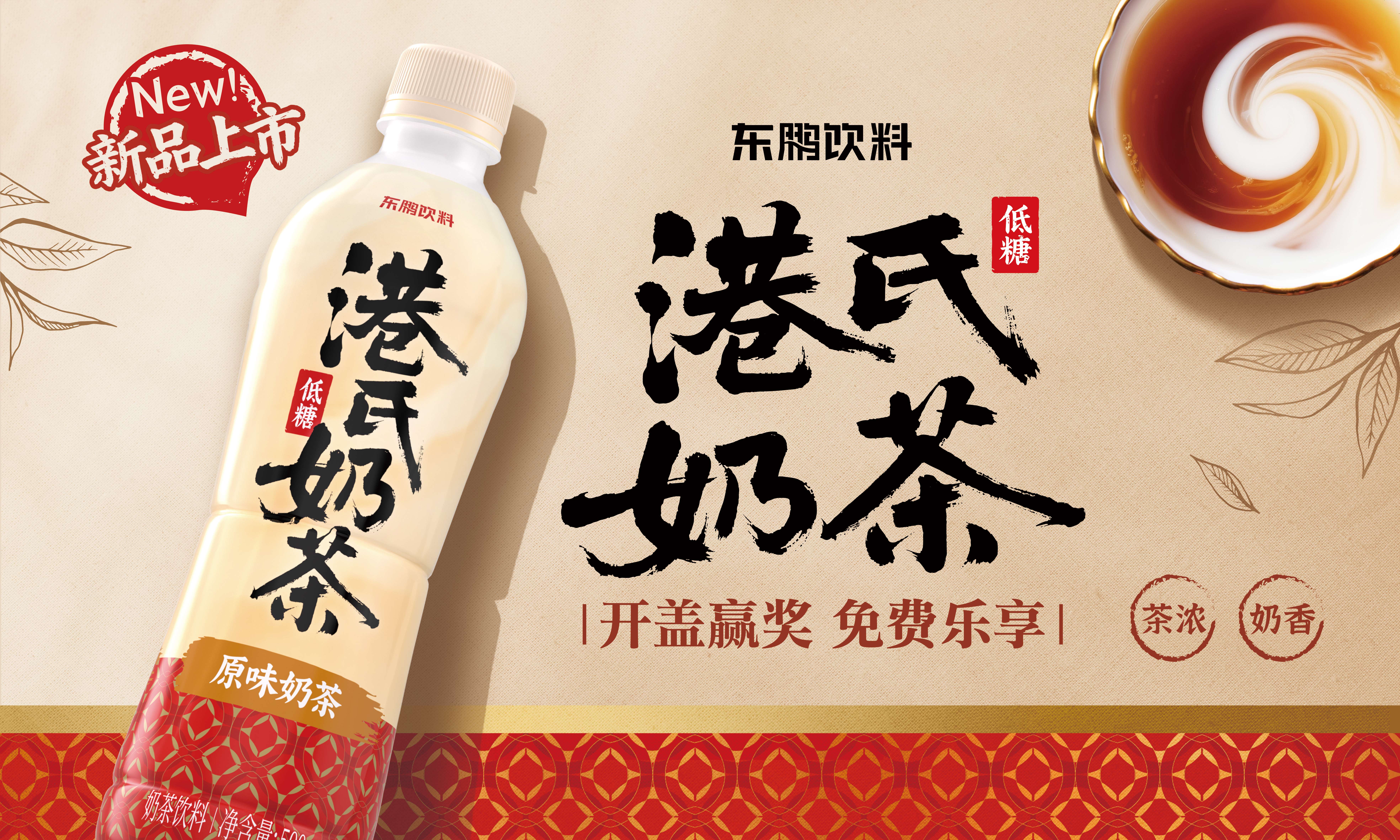
精准卡位下沉市场软饮新风向,港氏奶茶助力东鹏扩展多元化版图
Di Yi Cai Jing· 2025-12-23 09:15
Core Viewpoint - Dongpeng Beverage is expanding its "1+6" strategy by entering the low-sugar milk tea market with the launch of "Gangshi Milk Tea," targeting the down-market segment while leveraging its expertise in functional beverages [1][14]. Group 1: Market Context - The soft drink market is experiencing intense competition, with a noticeable recovery in demand compared to other fast-moving consumer goods [1]. - Dongpeng Beverage has successfully captured trends towards diversification, health, and functionality in beverages, achieving impressive sales in functional and sports drinks [1][11]. Group 2: Product Development - "Gangshi Milk Tea" is set to launch in the second half of 2025, aiming to combine traditional flavors with a low-sugar profile to appeal to health-conscious consumers [1][8]. - The product design incorporates elements from Lingnan architecture, reflecting local culture and enhancing brand recognition among consumers in the Guangdong and Southeast Asia regions [3][8]. Group 3: Market Strategy - The pricing strategy for "Gangshi Milk Tea" is set between 3-4 RMB, filling the gap between traditional low-sugar products and higher-end health drinks, thus appealing to a broader consumer base [12][13]. - Dongpeng's channel development strategy focuses on strengthening its presence in Guangdong while expanding nationally, with significant growth in emerging markets like North China [9][11]. Group 4: Competitive Landscape - The ready-to-drink milk tea market is characterized by a polarized supply structure, with a lack of products that meet consumers' complex demands for health, affordability, and flavor [12]. - Dongpeng aims to differentiate "Gangshi Milk Tea" by emphasizing its unique heritage flavor and health-oriented formulation, setting it apart from typical milk tea offerings [13][14]. Group 5: Broader Implications - The introduction of "Gangshi Milk Tea" is expected to reshape consumer perceptions of Dongpeng as primarily a functional beverage brand, expanding its market identity [14][16]. - The product is anticipated to enhance Dongpeng's presence in high-frequency consumption scenarios, such as dining and social settings, thereby increasing brand visibility and engagement [16][17].

欧盟乳品反补贴落地,国产替代有望加速!消费ETF(159928)回调再获近5亿份净申购,昨日吸金近2亿元!
Sou Hu Cai Jing· 2025-12-23 07:06
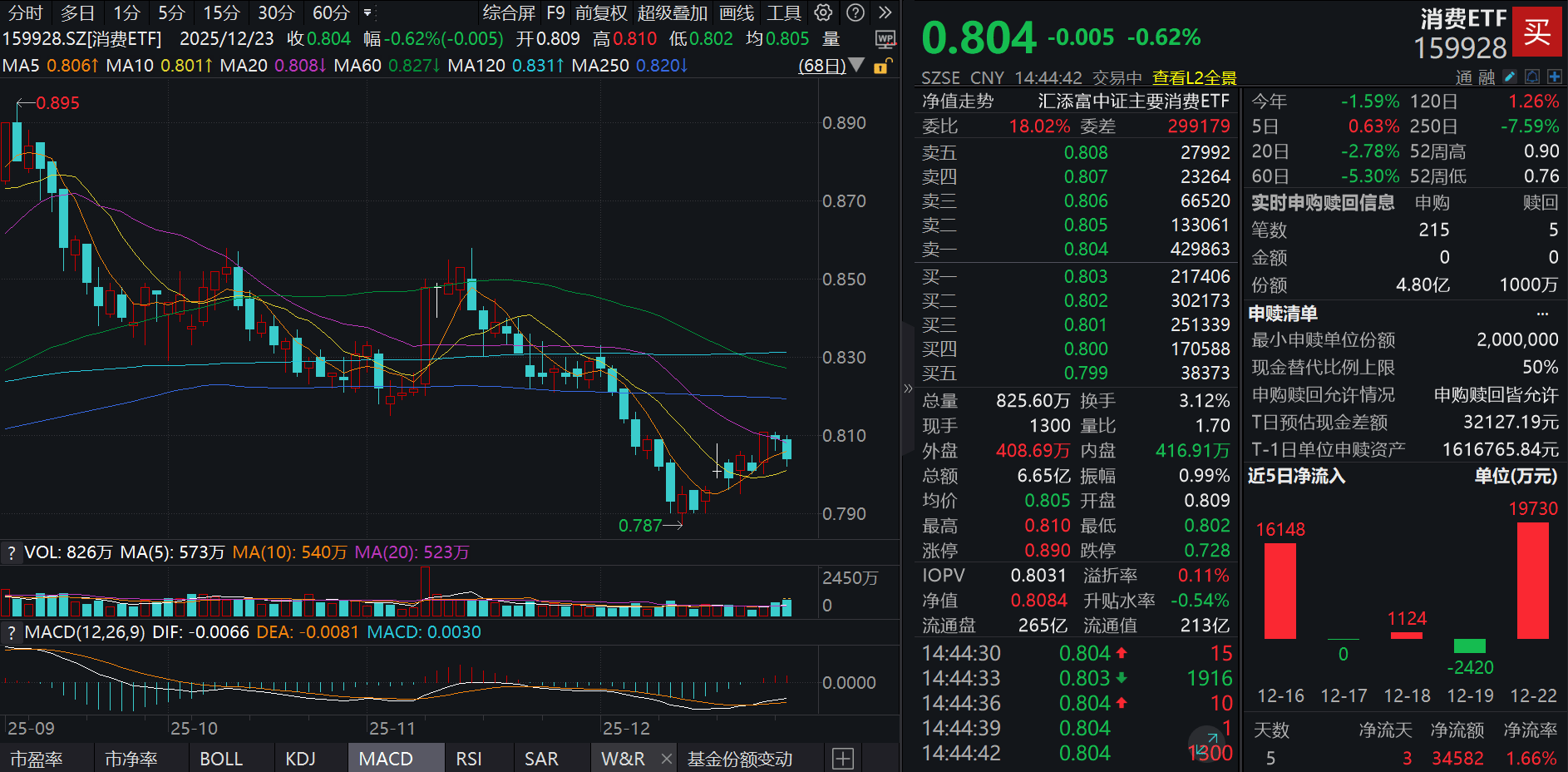
Group 1: Market Performance - A-shares experienced fluctuations and a decline, with the Consumer ETF (159928) dropping by 0.74% and a trading volume exceeding 650 million yuan [1] - The Consumer ETF (159928) has seen a net subscription of over 470 million units during the day, accumulating over 600 million yuan in the last 20 days [1] - As of December 22, the latest scale of the Consumer ETF (159928) exceeded 21.3 billion yuan, leading its peers [1] Group 2: EU Dairy Products Subsidy - The EU has announced a preliminary ruling on dairy products, determining that subsidies exist with a countervailing duty rate ranging from 21.9% to 42.7% [3][7] - Starting December 23, temporary countervailing measures will be implemented on imported dairy products from the EU [3] - The additional countervailing duty is expected to increase import prices, potentially accelerating domestic substitution in the dairy sector [8] Group 3: Domestic Dairy Industry Impact - The countervailing duties are projected to shift the deep processing of dairy products to domestic enterprises, as domestic milk prices are currently lower than international prices [8] - The deep processing sector is anticipated to enhance demand for raw milk, improving the supply-demand balance in the upstream raw milk industry [8] - Domestic dairy companies are actively focusing on deep processing, which is expected to drive demand growth and stabilize the industry [8] Group 4: Consumer Sector Insights - The Consumer ETF (159928) is characterized by its resilience across economic cycles, with the top ten constituent stocks accounting for over 68.55% of its weight [13] - The ETF includes major players such as Yili (10.37%), Kweichow Moutai (9.94%), and Wuliangye (9.50%) [14] - The current valuation of the Consumer ETF (159928) is attractive, with a TTM P/E ratio of 19.4, placing it in the lower 3.13% of the past decade [5] Group 5: Future Consumption Trends - The service consumption sector is expected to grow significantly as China's GDP per capita exceeds $10,000, indicating a shift in consumer spending patterns [11] - Emerging consumer groups, particularly the Z generation and affluent elderly, are likely to drive demand for service-oriented consumption [12] - Investment opportunities in the service sector are anticipated, particularly in areas such as event economy and AI applications [12]



这些消费股获机构密集调研且融资资金大幅加仓(名单)
Zheng Quan Shi Bao Wang· 2025-12-23 01:20
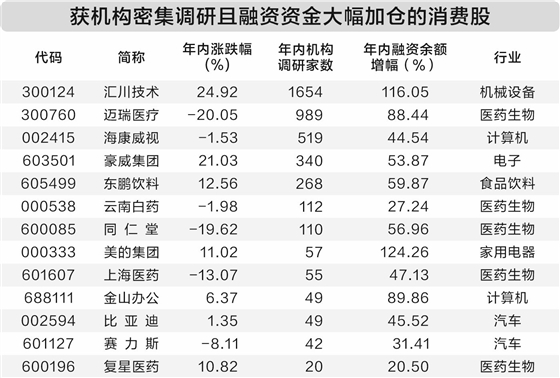
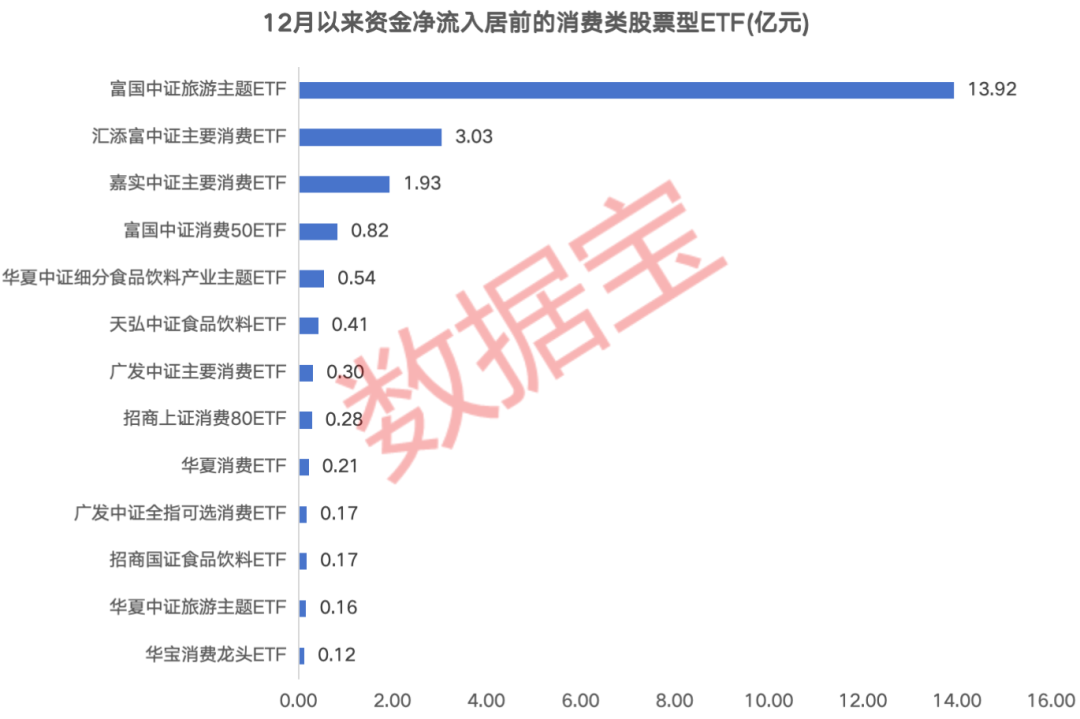
Group 1 - The consumer sector shows signs of stabilization and rebound, with the Wind Consumer Index rising by 1.33% last Friday and continuing to increase by 0.13% on Monday [1] - The retail and dairy sectors have seen significant increases, with the Wind Retail Index up 7.44% and the Wind Dairy Index up 5.35% since December [2] - Over 20 ETFs related to consumption themes have seen a net inflow of over 2.2 billion yuan since December, with the Fortune CSI Tourism Theme ETF receiving nearly 1.4 billion yuan [2] Group 2 - The long-term growth resilience of China's consumer market is evident, with retail sales expected to rise from 39.1 trillion yuan in 2020 to 48.3 trillion yuan in 2024, averaging a growth rate of 5.5% [3] - The Wind Consumer Index has underperformed this year, with a year-to-date increase of only 5.34%, significantly lower than other popular indices [3] - The average price-to-earnings ratio of the Wind Consumer Index is 23.31, well below the 10-year average of 28.56 [3] Group 3 - Institutions predict that the total net profit of the Wind Consumer Index constituents will reach nearly 460 billion yuan in 2025, an increase of 8.63% from the previous year, with growth rates expected to exceed 14% in 2026 and 2027 [4] - The Wind Consumer Index and the Wind Domestic Demand Upgrade Index consist of 87 stocks across 12 industries, including pharmaceuticals, automotive, electronics, and food and beverage [4] - The average year-to-date increase for the 87 constituent stocks is over 29%, driven primarily by high-performing electronics and pharmaceuticals stocks [4] Group 4 - As of December 19, the total financing balance for the 87 constituent stocks is close to 320 billion yuan, an increase of over 45% from the end of last year, with more than 70% of the stocks seeing increased financing [4] - Thirteen stocks with a financing balance increase of at least 20%, over 20 institutional surveys, and a year-to-date increase of less than 25% are primarily in the pharmaceuticals, food and beverage, and home appliance sectors [4] Group 5 - Huichuan Technology, Mindray Medical, and Hikvision have received the highest number of institutional surveys this year, with Huichuan Technology's stock price increasing nearly 25% [5] - Mindray Medical has been surveyed by nearly 1,000 institutions, while Hikvision has received over 500 surveys [5] - Dongpeng Beverage has been surveyed by nearly 270 institutions, with a stock price increase of around 12% [5]





国泰海通晨报-20251222
国泰海通· 2025-12-22 05:12
Macro Research - Commodity performance shows copper and gold are strong, while developed markets outperform emerging markets [1][2] - The US job market remains weak but stable, with inflation growth below expectations, leading the Federal Reserve to potentially pause interest rate cuts [1][3] - The Bank of Japan raised rates by 25 basis points as expected, with future gradual increases anticipated [1][4] - The European Central Bank's rate cut cycle may be nearing its end [1][4] Food and Beverage Research - Dongpeng Beverage is enhancing management efficiency, allowing the company to save significant profits to return to channels and consumers, aligning with the trend of consumers valuing high cost-performance in the beverage industry [1][5] - The company is expected to exceed market expectations in product category expansion, particularly in energy drinks, sports drinks, and coffee [5][6] Nuclear Power Equipment Research - The controllable nuclear fusion sector is seeing significant acceleration in bidding, with major contracts awarded for components like magnets and power supplies [1][8] - Trump Media Technology announced a merger with TAE Technologies, aiming to build large fusion power plants to meet energy demands driven by AI [9][10] - The US Department of Energy is investing $87 million to accelerate AI applications in fusion energy research [9][10]
企稳反弹,有望迎双位数增长!机构扎堆调研的大消费+内需升级潜力股出炉,融资客重点埋伏
Zheng Quan Shi Bao· 2025-12-21 23:40
Group 1 - The core viewpoint of the articles highlights the recovery and growth potential of the consumer sector, driven by policy support and increasing consumer demand during the traditional consumption peak season [1][5][6] - The consumer sector index showed signs of stabilization and rebound, with a 1.33% increase on December 19, outperforming the Shanghai Composite Index [2] - The consumer market is expected to see double-digit growth over the next two years, with retail sales projected to rise from 39.1 trillion yuan in 2020 to 48.3 trillion yuan by 2024, reflecting an average annual growth rate of 5.5% [5][6] Group 2 - The consumer sector is currently experiencing a valuation adjustment, with the consumer index's latest price-to-earnings ratio at 23.29, significantly below the 10-year average of 28.56 [6] - Institutional predictions indicate that the net profit growth for the consumer sector index constituents is expected to exceed 14% in 2026 and 2027, with a projected total net profit of nearly 460 billion yuan for 2025 [6] - A total of 87 stocks in the consumer sector have seen an average increase of over 28% this year, with significant contributions from the electronics and biopharmaceutical sectors [8] Group 3 - Notable stocks such as 汇川技术 (Inovance Technology) and 迈瑞医疗 (Mindray) have received substantial institutional attention, with the former seeing a 22.91% increase in stock price and over 1,600 institutional surveys this year [9][11] - The financing balance for the consumer sector stocks has increased by over 45% compared to the end of last year, with more than 70% of the stocks receiving additional financing [8][11] - Companies like 东鹏饮料 (Eastroc Beverage) are expanding their product lines and exploring overseas markets, indicating a strategic focus on growth and market penetration [10]
食品饮料行业周度更新:从中国快消品数据报告,看食品饮料消费结构-20251222
Changjiang Securities· 2025-12-21 23:30
Investment Rating - The industry investment rating is "Positive" and is maintained [9] Core Insights - In the first three quarters of 2025, the Chinese fast-moving consumer goods (FMCG) market exhibited distinct characteristics of "price reduction, volume increase, structural differentiation, and channel reshaping." The overall market average price decreased by 2.4% year-on-year, but the decline has narrowed, indicating price stabilization. Third to fifth-tier cities have become the main drivers of sales recovery, while competition in first and second-tier cities has intensified. Notably, packaged food sales led with a growth rate of 3.4%, although the momentum is slowing due to price sensitivity. Beverages are the only category to experience a decline, significantly impacted by price wars and competition from freshly brewed tea drinks [2][4][27]. Summary by Sections Market Overview - The FMCG market in China is characterized by a "price reduction, volume increase" trend, with a 2.4% year-on-year decline in average prices, which is stabilizing. Sales growth in lower-tier cities contributed approximately 80% to market growth, with a year-on-year increase of 4-6% [17][21][27]. Category Performance - Packaged food sales grew by 3.4% year-on-year, driven by stable demand for core and snack food categories. However, growth momentum is slowing, with quarterly growth rates of 4.6%, 4.2%, and 2.9%. In contrast, the beverage category saw a 1.1% decline in sales, despite a 3.6% increase in volume, primarily due to a 4.6% drop in average prices [21][25][27]. Channel Dynamics - The channel landscape is evolving, with traditional offline channels continuing to shrink. Emerging formats such as warehouse membership stores and snack collection stores are experiencing rapid growth, with increases of approximately 40%, 51%, and 92% respectively. E-commerce channels also showed resilience with a growth rate of about 7% [22][27]. Subsector Performance - The food and beverage sector has seen a mixed performance, with the overall index down 3.66% since the beginning of the year, lagging behind the CSI 300 index. However, subsectors like snack foods, food composites, and soft drinks have shown relative strength in recent weeks [29][35]. Industry Trends - The liquor industry is undergoing strategic adjustments, with major companies like Kweichow Moutai and Wuliangye implementing market reforms. Fast food and coffee brands are leveraging price adjustments and co-branding initiatives to attract consumers. The soft drink sector is focusing on product innovation and brand exposure, while the dairy sector is investing in capacity expansion and governance changes [35][36][37].


食品饮料周报(25年第47周):把握成本红利与效率提升主线,关注创新与困境反转机会-20251221
Guoxin Securities· 2025-12-21 08:22
Investment Rating - The report maintains an "Outperform the Market" rating for the food and beverage sector [4][5][69]. Core Views - The food and beverage sector is expected to benefit from cost advantages and efficiency improvements, with a focus on innovation and opportunities for turnaround [3][5]. - The report highlights a positive outlook for 2026, emphasizing four main investment themes: cost benefits, efficiency improvements, innovation-driven growth, and turnaround opportunities in the liquor segment [3][5]. Summary by Relevant Sections Market Performance - The food and beverage sector (A-shares and H-shares) rose by 1.97% this week, with A-shares outperforming the CSI 300 by approximately 2.29 percentage points [1]. - The top five gainers in the food and beverage sector this week were: Huanlejia (44.42%), Zhuangyuan Ranch (35.96%), Huangshi Group (21.16%), Junyao Health (17.02%), and Sunshine Dairy (14.72%) [1]. Subsector Insights - **Liquor**: Demand remains weak, with premium liquor companies focusing on supply-side optimization. Recommended stocks include Luzhou Laojiao, Shanxi Fenjiu, and Kweichow Moutai [2][10]. - **Beverages**: The beverage sector shows continued prosperity, with leading companies outperforming. Recommended stocks include Nongfu Spring and Dongpeng Beverage [2][14]. - **Food**: The snack segment is highlighted for its strong growth potential, particularly in konjac snacks, with key recommendations being Weidong and Yanjinpuzi [2][11]. Key Company Earnings Forecasts - Kweichow Moutai: EPS forecast for 2025E is 72.12, with a PE ratio of 19.6 [4]. - Shanxi Fenjiu: EPS forecast for 2025E is 9.73, with a PE ratio of 18.4 [4]. - Dongpeng Beverage: EPS forecast for 2025E is 8.85, with a PE ratio of 30.8 [4]. - Wuliangye: EPS forecast for 2025E is 6.61, with a PE ratio of 16.7 [4]. - Babi Food: EPS forecast for 2025E is 1.14, with a PE ratio of 25.6 [4]. - Weidong: EPS forecast for 2025E is 0.61, with a PE ratio of 18.4 [4]. Investment Recommendations - The recommended investment portfolio includes Babi Food, Dongpeng Beverage, Weidong, and Shanxi Fenjiu, which have shown an average increase of 3.55%, outperforming the food and beverage sector by 1.54 percentage points [15].
