Hygon Information Technology (688041)

Search documents
计算机行业周报:巨头持续大模型竞争-20251116
Tai Ping Yang Zheng Quan· 2025-11-16 14:42
Investment Rating - The overall industry rating is positive, expecting returns to exceed the CSI 300 index by more than 5% in the next six months [33] Core Insights - The computer industry index fell by 3.03% during the week of November 10-16, 2025, ranking 29th among 31 first-level industries, but has risen 18.24% year-to-date, outperforming the CSI 300 index by 0.62 percentage points [3][27] - OpenAI launched the GPT-5.1 series flagship model, focusing on enhancing user experience and conversation engagement, with two models: GPT-5.1 Instant for daily interactions and GPT-5.1 Thinking for advanced reasoning [4][11] - Alibaba and Tencent are actively developing AI intelligent agents, with Alibaba's "Qianwen" project aiming to compete directly with ChatGPT, and Tencent planning to introduce an AI agent within WeChat to assist users [15][17] - Kimi K2 Thinking, a new generation of open-source thinking agent, has achieved significant advancements in reasoning and tool usage capabilities, outperforming other models in various benchmarks [20][23] Summary by Sections Industry Key Events Review - OpenAI released GPT-5.1, optimizing user experience with enhanced models for different interaction types [11] - Alibaba initiated the "Qianwen" project to create a personal AI assistant, leveraging its leading position in the open-source model market [15] - Tencent is exploring AI capabilities within WeChat, aiming to enhance user task completion through AI [17] Market Review - The computer industry index decreased by 3.03% for the week, but has increased by 18.24% since the beginning of the year, outperforming the CSI 300 index [27] - The top five gainers in the computer industry for the week included Haixia Innovation (+33.1%) and Yingfang Software (+19.3%), while the top five losers included Fangzhi Technology (-19.91%) and Chunzong Technology (-17.43%) [29][31] Investment Recommendations - The report recommends focusing on companies like Kingsoft Office, Feng Assistant, and Yonyou Network, as well as those involved in AI applications and computing power demands, such as Haiguang Information and Lenovo Group [5][31]



11月14日科创板主力资金净流出65.90亿元
Sou Hu Cai Jing· 2025-11-14 09:24
Market Overview - The main funds in the Shanghai and Shenzhen markets experienced a net outflow of 81.32 billion yuan, with the Sci-Tech Innovation Board seeing a net outflow of 6.59 billion yuan [1] - A total of 214 stocks saw net inflows, while 378 stocks experienced net outflows [1] Sci-Tech Innovation Board Performance - On the Sci-Tech Innovation Board, 192 stocks rose, with one stock, Jindike, hitting the daily limit, while 394 stocks declined [1] - The top three stocks with the highest net inflows were Huafeng Technology (net inflow of 408 million yuan), followed by Aters and Dongxin Co., with net inflows of 130 million yuan and 109 million yuan, respectively [1] Continuous Fund Flow Analysis - There are 43 stocks that have seen continuous net inflows for more than three trading days, with Bidet Pharmaceutical leading at 11 consecutive days of inflow [2] - Conversely, 145 stocks have experienced continuous net outflows, with Zhixiang Jintai leading at 14 consecutive days of outflow [2] Top Fund Inflows - The top stocks by net inflow include: - Huafeng Technology: 40.78 million yuan, with a flow rate of 14.48% and a price increase of 6.46% [2] - Aters: 13.01 million yuan, with a flow rate of 3.14% and a price decrease of 1.07% [2] - Dongxin Co.: 10.87 million yuan, with a flow rate of 5.06% and a price increase of 0.13% [2] Notable Outflows - The stocks with the highest net outflows included: - SMIC: 1.26 billion yuan, with a price drop of 4.00% [1] - Lankai Technology: 425 million yuan outflow [1] - Haiguang Information: 380 million yuan outflow [1]



中国银河证券:电子行业分化显著 AI与科技自立双主线清晰
智通财经网· 2025-11-14 05:42
Core Viewpoint - The electronic industry is experiencing significant structural differentiation, with strong performance in semiconductors, computing power, and leading consumer electronics, while other sectors are seeing a slowdown in overall growth. However, the industry trend remains positive, with a recovery in capacity utilization [1]. Semiconductor Industry - The overall profitability of the semiconductor industry has significantly improved, with the chip design sector maintaining a high level of prosperity. The storage segment has become a highlight, driven by AI computing demand for high-end products like HBM and DDR5. The SoC segment faces short-term pressures but has long-term demand prospects due to AI terminal applications. The analog chip sector is seeing new opportunities in low-power technology and domestic substitution in automotive and industrial fields. Power semiconductors are under short-term pressure but are expected to benefit from new demand in server power supplies. Wafer manufacturing is recovering from the bottom, driven by AI, and the semiconductor equipment sector is experiencing strong growth due to the dual drivers of global semiconductor demand recovery and deepening domestic substitution [1]. PCB and Passive Components - AI is driving an upsurge in PCB demand, with leading companies actively expanding production. The demand for high-layer and HDI products is exceeding supply due to downstream AI server needs. By 2026, global leading CSP capital expenditures are expected to increase by 40%, supporting high prosperity in the PCB industry. Passive component companies are also actively positioning themselves around AI, becoming a new growth point for the sector [2]. Optoelectronics Sector - The optoelectronics sector is recovering due to a resurgence in smartphone demand, with optical innovation presenting ongoing growth opportunities for related companies. The LED sector is experiencing a recovery, with structural opportunities emerging in high-end niche markets. In the LCD segment, global total shipments and area are expected to see slight year-on-year growth by 2025. However, mainstream application demand is generally declining, leading to increased inventory levels, and the industry is seeking a stable transition through reduced shipments. The smartphone OLED market is recovering, but overall supply still exceeds demand [3]. Consumer Electronics - The consumer electronics components sector is showing steady growth driven by the recovery of the global smartphone market and the accelerated implementation of AI technology. Leading companies in the industry are achieving stable growth due to their strong technological capabilities, quality customer resources, and excellent supply chain management [4]. Investment Recommendations - Companies to focus on include Cambrian, Haiguang Information, SMIC, Northern Huachuang, Tuojing Technology, Changdian Technology, Shenghong Technology, Hude Electronics, Shengyi Technology, Shengyi Electronics, Hengxuan Technology, Rockchip, Lexin Technology, Crystal Optoelectronics, Yian Technology, Luxshare Precision, GoerTek, Aisen Technology, Demingli, Jiangbolong, Purun Technology, and Zhaoyi Innovation [5].


集成电路ETF(159546)开盘跌1.81%,重仓股中芯国际跌0.08%,寒武纪跌2.52%
Xin Lang Cai Jing· 2025-11-14 05:04
Core Viewpoint - The integrated circuit ETF (159546) opened with a decline of 1.81%, indicating a bearish trend in the sector [1] Group 1: ETF Performance - The integrated circuit ETF (159546) opened at 1.795 yuan [1] - Since its establishment on October 11, 2023, the fund has achieved a return of 82.90% [1] - The fund's performance over the past month has decreased by 6.56% [1] Group 2: Major Holdings Performance - Major holdings in the ETF include: - SMIC (中芯国际) opened down 0.08% [1] - Cambricon (寒武纪) fell by 2.52% [1] - Haiguang Information (海光信息) decreased by 2.13% [1] - Lattice Technology (澜起科技) dropped by 2.97% [1] - GigaDevice (兆易创新) declined by 5.05% [1] - Haowei Group (豪威集团) fell by 1.18% [1] - Chipone (芯原股份) decreased by 2.10% [1] - JCET (长电科技) dropped by 1.15% [1] - Unisoc (紫光国微) fell by 1.81% [1] - Tongfu Microelectronics (通富微电) decreased by 2.47% [1]

半导体ETF南方(159325)开盘跌1.62%,重仓股中芯国际跌0.08%,寒武纪跌2.52%
Xin Lang Cai Jing· 2025-11-14 02:11
Core Viewpoint - The semiconductor ETF from Southern (159325) opened with a decline of 1.62%, indicating a bearish trend in the semiconductor sector [1] Group 1: ETF Performance - The Southern Semiconductor ETF (159325) opened at 1.456 yuan, reflecting a decrease of 1.62% [1] - Since its establishment on October 31, 2024, the fund has achieved a return of 47.93%, while its return over the past month has been -6.60% [1] Group 2: Major Holdings Performance - Key holdings in the ETF include: - SMIC: down 0.08% - Cambricon: down 2.52% - Haiguang Information: down 2.13% - Northern Huachuang: down 1.13% - Lanke Technology: down 2.97% - Zhaoyi Innovation: down 5.05% - Zhongwei Company: down 2.48% - OmniVision: down 1.18% - Changdian Technology: down 1.15% - Unisoc: down 1.81% [1]

创新基因加速转化为增长动能 科创板公司前三季度整体业绩重拾升势
Shang Hai Zheng Quan Bao· 2025-11-13 17:55
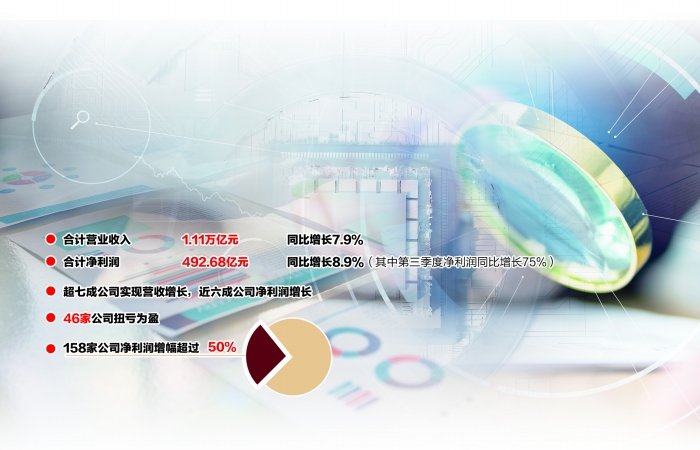
Core Insights - The overall performance of companies listed on the Sci-Tech Innovation Board (STAR Market) has shown a strong rebound in the first three quarters, with a significant year-on-year net profit growth of 75% in Q3 [2] - The focus on "hard technology" has led to increased R&D investments, particularly in key industries such as integrated circuits, artificial intelligence, and biomedicine, contributing to the foundation for high-level technological self-reliance [2] Performance Overview - In the first three quarters, STAR Market companies achieved a total revenue of 1.11 trillion yuan, a year-on-year increase of 7.9%, and a net profit of 49.268 billion yuan, up 8.9% [2] - Excluding four leading photovoltaic companies, overall revenue and net profit growth rates were 14.6% and 30.6%, respectively, indicating an amplified growth momentum [2] - Over 70% of companies reported revenue growth, and nearly 60% saw net profit increases, with 158 companies experiencing net profit growth exceeding 50% [2] Industry Highlights - The STAR Market's top enterprises and growth-oriented companies complement each other well, with the Sci-Tech 50 Index companies accounting for 46% of revenue and 50% of net profit [3] - The Sci-Tech 100 Index companies demonstrated high growth elasticity, with revenue and net profit increasing by 12% and 134%, respectively, becoming the "vanguard" of performance growth [3] R&D Investment - Total R&D investment by STAR Market companies reached 119.745 billion yuan, 2.4 times the net profit, with a median R&D intensity of 12.4%, leading A-share sectors [4] - The biomedicine sector saw revenue growth of 11% and net profit growth of 48%, driven by the rapid commercialization of innovative drugs [4] - Nine first-class new drugs were approved for market entry during the reporting period, with significant international business development transactions totaling over 13 billion USD [4] Growth of Emerging Companies - 35 unprofitable companies in the Sci-Tech Growth Layer reported a revenue increase of 39% and a significant reduction in net losses by 65% [5] - These companies are focusing on R&D with a median R&D intensity of 44.3%, indicating a promising development trend [5] Competitive Advantages in Key Industries - The integrated circuit industry, crucial for technological self-reliance, saw 121 related companies achieve a revenue growth of 25% and a net profit growth of 67% [6] - Major players like SMIC and Huahong Semiconductor maintained high capacity utilization rates, with record sales revenue [6] - The AI industry has emerged as a new growth pillar, with significant revenue increases across the supply chain, particularly in computing and data transmission sectors [7] Renewable Energy Sector - In the photovoltaic sector, 17 related companies significantly reduced their net losses by 28% [7] - The lithium battery industry experienced a revenue growth of 7% and a net profit of 1.02 billion yuan, marking a return to profitability [7]


单季净利润同比增长75% 科创板公司三季度业绩重拾升势
Zheng Quan Shi Bao Wang· 2025-11-13 13:33
Core Insights - The overall performance of the Sci-Tech Innovation Board (STAR Market) has shown a significant recovery, with a 75% year-on-year increase in net profit for the third quarter, indicating strong resilience and growth quality among "hard tech" companies [1][3]. Financial Performance - In the first three quarters of 2025, STAR Market companies achieved operating revenue of 1,105.01 billion yuan, a year-on-year increase of 7.9%, and net profit of 49.27 billion yuan, up 8.9% [2]. - Excluding four leading photovoltaic companies, the overall revenue and net profit growth rates for the STAR Market were 14.6% and 30.6%, respectively, indicating an amplified growth momentum [2]. Growth Characteristics - Over 70% of companies on the STAR Market reported revenue growth, and nearly 60% saw net profit increases, with 158 companies experiencing net profit growth exceeding 50% [3]. - The STAR 50 Index companies accounted for 46% of the board's revenue and 50% of net profit, while the STAR 100 Index companies demonstrated high growth elasticity, with revenue and net profit increasing by 12% and 134%, respectively [3]. R&D Investment - The total R&D investment of STAR Market companies reached 119.75 billion yuan, which is 2.4 times the net profit, with a median R&D intensity of 12.4%, leading A-shares in R&D efforts [3]. Sector Performance - The integrated circuit industry saw a 25% year-on-year revenue increase and a 67% net profit increase among 121 related companies, with major players like SMIC and Hua Hong maintaining high capacity utilization [5]. - The artificial intelligence (AI) sector emerged as a new growth pillar, with significant revenue increases in various segments, including a nearly 24-fold increase for Cambrian and a 55% increase for Haiguang Information [6]. - The biopharmaceutical sector reported an 11% revenue increase and a 48% net profit increase, driven by the approval of new drugs and accelerated commercialization [7]. Policy Impact - The ongoing "1+6" reform and the establishment of the Sci-Tech Growth Layer have provided targeted support for unprofitable tech companies, with 35 companies in this layer reporting a 39% revenue increase and a significant reduction in net losses [3].

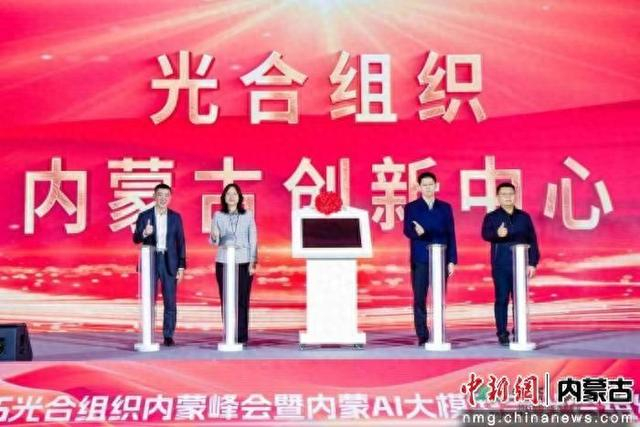
2025光合组织内蒙古峰会举行 国产算力生态再下一城
Zhong Guo Xin Wen Wang· 2025-11-13 03:43
Core Insights - The "2025 Photonic Organization Inner Mongolia Summit" was held in Hohhot, focusing on the development of AI and computing power in Inner Mongolia [1][3] - The summit emphasized the importance of building a domestic computing power ecosystem to support high-quality development in the AI industry [3][4] Group 1: Event Overview - The summit featured key leaders from the Inner Mongolia government and the Photonic Organization, highlighting the collaboration between public and private sectors [1][5] - The event included the unveiling of the "Inner Mongolia Innovation Center" and the "Inner Mongolia AI Large Model Ecological Innovation Center," aimed at promoting localized AI applications [3][4] Group 2: Industry Developments - The Photonic Organization has gathered over 6,000 ecosystem partners since its inception, focusing on collaborative innovation in domestic computing technology [3] - The establishment of the "Zhilian Inner Mongolia·Haiguang AI Ecological Innovation Alliance" aims to enhance the cohesion and sustainability of the domestic computing ecosystem [4] Group 3: Strategic Initiatives - The Inner Mongolia government is leveraging the "East Data West Computing" strategy to enhance its computing power, algorithms, and data capabilities [3] - Haiguang Information is accelerating its strategic layout in Inner Mongolia, integrating AI and computing infrastructure to support the digital transformation of the region [4]
存储大厂酝酿NAND价格上调,芯片ETF天弘(159310)近5日资金净流入率0.80%居深市同标的第一
2 1 Shi Ji Jing Ji Bao Dao· 2025-11-13 03:16
Group 1 - The storage chip sector is experiencing significant activity, with companies like Baiwei Storage and Jiangbolong reaching historical highs in stock prices [1] - The Tianhong Chip ETF (159310) tracking the chip industry index has rebounded nearly 1.5%, with several component stocks showing strong gains [1] - The Tianhong Chip ETF has seen a notable inflow of funds, accumulating over 10 million yuan in net inflows over the past week, ranking first among similar stocks in the Shenzhen market [1] Group 2 - Major storage leaders, including Samsung and SK Hynix, are planning to increase NAND prices and reduce supply, with Samsung considering a price hike of 20% to 30% [2] - The current storage price increase cycle is expected to be stronger and more sustained than previous cycles, indicating a need for attention in the storage sector [2] Group 3 - The storage shortage and price increase trend is anticipated to continue throughout 2026, with expectations of profit elasticity exceeding forecasts [3] - A new domestic platform for 12-inch silicon photonic chip production has been launched, marking a significant breakthrough in the silicon photonics field [3] - The core value of silicon photonics technology lies in chip design and wafer manufacturing, shifting the industry paradigm from "packaging-led" to "design-led" [3]


234只科创板股融资余额环比增加
Zheng Quan Shi Bao Wang· 2025-11-13 01:54
Core Insights - The total margin financing balance on the STAR Market decreased by 0.87 billion yuan to 258.26 billion yuan as of November 12, marking a continuous decline for four trading days [1][2] - The highest margin financing balance is held by Cambrian, with a balance of 14.645 billion yuan, followed by SMIC and Haiguang Information with balances of 13.756 billion yuan and 8.060 billion yuan respectively [1][2] - In terms of margin trading, 234 stocks saw an increase in financing balance, while 352 stocks experienced a decrease [1][2] Margin Financing Summary - The total margin financing balance is 258.26 billion yuan, down by 0.87 billion yuan from the previous trading day [1] - The highest margin financing stocks include: - Cambrian: 14.645 billion yuan - SMIC: 13.756 billion yuan - Haiguang Information: 8.060 billion yuan [1] - Notable increases in financing balance: - Magv Technology: +41.85% - Jindike: +34.50% - Yuanjie Technology: +20.74% [1][2] - Significant decreases in financing balance: - Wanrun New Energy: -25.13% - Elon Technology: -17.69% - XGIMI Technology: -15.33% [1][2] Margin Short Selling Summary - The total margin short selling balance is 0.899 billion yuan, down by 19.8591 million yuan from the previous trading day [1][2] - The highest margin short selling stocks include: - Haiguang Information: 0.039 billion yuan - Cambrian: 0.031 billion yuan - SMIC: 0.028 billion yuan [2] - Notable increases in short selling balance: - Foxit Software: +177.52% - Yirui Technology: +149.76% - Weimaisi: +76.58% [2] - Significant decreases in short selling balance: - Chengdu Xian Dao: -74.75% - Zhenhua Wind Power: -58.62% - Liyuanheng: -58.37% [2]