
Roborock(688169)

Search documents
福昕软件涨停!AI应用狂飙,难敌算力硬件下挫!科创人工智能ETF随市跌近2%!机构:国产AI应用或迎拐点
Xin Lang Ji Jin· 2025-10-31 11:52
Core Insights - The technology growth sector is experiencing a downturn, with the domestic AI industry-focused ETF (589520) showing a decline of 1.93% on October 31, 2025, despite a strong buying interest indicated by continuous premium pricing [1][3] - The ETF's top-performing stocks are primarily in software development, with notable gains from companies like Foxit Software (20% increase) and Hehe Information (14.14% increase), while hardware-related stocks like Stone Technology and Cambrian fell significantly [3][4] - A new five-year plan emphasizes the implementation of "AI+" initiatives, aiming for substantial progress in data-driven urban economic development by the end of 2027 [4] Stock Performance - The top ten stocks in the ETF include Foxit Software, Hehe Information, and Xianghuan Technology, all showing significant gains, while several others in the computing hardware sector faced declines [4][5] - As of October 31, 2025, all 30 constituent stocks of the ETF reported their Q3 earnings, with 20 companies profitable and 22 showing year-on-year net profit growth, led by Cambrian's impressive 321% increase [5][6] Market Outlook - Analysts predict a turning point for domestic AI applications, driven by external environmental changes and domestic policy support, suggesting a significant increase in demand for AI applications [6][7] - The ETF has outperformed other indices since its low point on April 8, 2025, with a cumulative increase of 60.36%, surpassing the broader technology indices [7][8] Policy and Industry Trends - The government is focusing on AI as a key technology for achieving self-sufficiency and security in the context of technological friction, with the ETF strategically positioned in the domestic AI supply chain [7] - The report from QuestMobile indicates that the number of active mobile AI application users in China has surpassed 729 million as of September 2025, highlighting the growing adoption of AI technologies [5]



石头科技跌12.04% 国投证券今刚维持买入就跌
Zhong Guo Jing Ji Wang· 2025-10-31 07:49
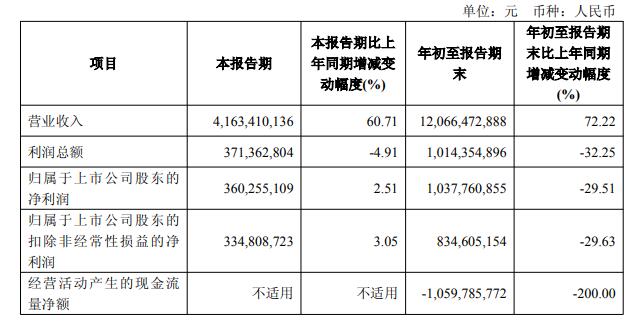
中国经济网北京10月31日讯 石头科技(688169.SH)今日收报163.40元,跌幅12.04%。 国投证券股份有限公司研究员余昆、陈伟浩今日发布研报《石头科技(688169)季报点评:收入延续 快速增长业绩恢复增长》称,石头坚持以消费者需求为导向,为消费者提供全场景的家居清洁解决方 案。公司持续迭代技术,推出行业领先的创新产品,有望为未来收入增长提供动力。预计石头科技 2025~2027年的EPS分别为7.20/9.79/12.48元,维持买入-A的投资评级,12个月目标价为235.00元,对应 2026年24倍市盈率。 (责任编辑:华青剑) ...
石头科技发财报跌12.04% 今年前三季度净利降29.51%
Zhong Guo Jing Ji Wang· 2025-10-31 07:16
(责任编辑:华青剑) | 项目 | 本报告期 | 本报告期比上 年同期增减变 | 年初至报告期 | 年初至报告期 末比上年同期 | | --- | --- | --- | --- | --- | | | | 动幅度(%) | 末 | 增减变动幅度 | | | | | | (%) | | 营业收入 | 4.163.410.136 | 60.71 | 12,066,472,888 | 72.22 | | 利润总额 | 371.362.804 | -4.91 | 1.014.354.896 | -32.25 | | 归属于上市公司股东的 | 360,255,109 | 2.51 | 1,037,760,855 | -29.51 | | 净利润 | | | | | | 归属于上市公司股东的 扣除非经常性损益的净 | 334.808.723 | 3.05 | 834.605.154 | -29.63 | | 利润 | | | | | | 经营活动产生的现金流 | 不适用 | 不适用 | -1.059.785.772 | -200.00 | | 量净额 | | | | | 中国经济网北京10月31日讯 石头科技(6881 ...
中国银河证券:理性看家电国补退坡 清洁电器零售市场依然有望保持增长
Zhi Tong Cai Jing· 2025-10-31 07:01
Core Insights - The retail monitoring by AVC indicates a general decline in major appliances since September, with a significant drop in retail for cleaning appliances in October, although there is still substantial growth compared to the same period in 2023 [1][2] - The industry has anticipated these trends, as evidenced by production data showing a cautious attitude with air conditioning production down by -11.5%, -8.4%, and -9.9% for October, November, and December respectively compared to the previous year [1][2] - The demand for appliance upgrades is expected to be the main driver, with short-term impacts from subsidy exhaustion; however, the penetration rate of cleaning appliances continues to rise, suggesting growth potential in the retail market through 2026 [1][2] Market Trends - The consumer electronics market is highly competitive, with Xiaomi upgrading its air conditioning warranty to 10 years, which has helped maintain its retail market share despite negative publicity from its automotive ventures [3] - The smart lawn mower market is gaining attention, with multiple companies entering, leading to intense competition; major players in the vacuum market have also launched similar products [3] - DJI is aggressively pricing its action cameras and drones, likely in response to competition from other brands entering the drone market [3] Company Performance - Ugreen Technology has benefited from a surge in demand for power banks following safety incidents, reporting a revenue of 2.51 billion yuan in Q3 2025, a year-on-year increase of 60.4% [4] Export Market Dynamics - The export market is seeing a shift in production capacity, with a recovery in heat pump exports; the U.S. has announced additional tariffs on Chinese imports, prompting companies to accelerate global production strategies [5] - Data indicates a 22.5% year-on-year increase in heat pump exports from January to August 2025, driven by low comparative bases and upcoming heating seasons in Europe [5] Investment Recommendations - The current market is active, with traditional appliance leaders lacking growth potential; technology-related companies are performing better [6] - Recommended stocks include Stone Technology, Ecovacs, and Ugreen Technology for their growth prospects, alongside undervalued companies like Midea Group and Haier Smart Home that have successfully digitized their offline channels [6]


石头科技(688169):全球化扩张及品类拓展驱动营收高增
HTSC· 2025-10-31 06:49
Investment Rating - The report maintains a "Buy" rating for the company [7][5]. Core Insights - The company achieved a revenue of 4.163 billion RMB in Q3 2025, representing a year-over-year increase of 60.71% but a quarter-over-quarter decrease of 6.96%. The net profit attributable to the parent company was 360 million RMB, up 2.51% year-over-year but down 12.14% quarter-over-quarter [1][2]. - For the first three quarters of 2025, the company reported a total revenue of 12.066 billion RMB, a 72.22% increase year-over-year, while the net profit attributable to the parent company was 1.038 billion RMB, down 29.51% year-over-year [1][2]. - The company is accelerating its global expansion and enhancing its brand presence overseas, which is expected to lead to a recovery in net profit margins in the future [1][2]. Revenue Growth - In Q3 2025, the company's revenue growth was driven by the domestic vacuum cleaner market and ongoing brand development in overseas markets, leading to significant increases in product sales [2]. - The online GMV for the company's vacuum cleaner business in China increased by 70% year-over-year, while the washing machine business saw a staggering 1228% increase [2]. Profitability Metrics - The gross margin for Q3 2025 was 42.15%, down 11.80 percentage points year-over-year, primarily due to increased domestic price subsidies. The selling expense ratio decreased to 24.39%, down 1.79 percentage points year-over-year [3]. - The company's R&D expense ratio was maintained at a high level of 8.23% in Q3 2025, reflecting its commitment to innovation [3]. Inventory Management - As of the end of Q3 2025, the company's inventory reached 3.716 billion RMB, an increase of nearly 2 billion RMB year-over-year, primarily due to increased stocking in the U.S. to mitigate tariff risks and growth in European self-operated channels [4]. Profit Forecast and Valuation - The report adjusts the company's net profit forecasts for 2025-2027 to 1.682 billion RMB, 2.385 billion RMB, and 2.801 billion RMB, respectively, reflecting a downward adjustment of 15.19%, 0.94%, and 1.85% [5]. - The target price for the company is set at 230.25 RMB, based on a 25x PE ratio for 2026, indicating potential for profit growth in the coming year [5].
科创50指数跌超3%,石头科技跌超12%领跌成分股
Mei Ri Jing Ji Xin Wen· 2025-10-31 06:49
Group 1 - The core point of the article highlights a significant decline in the ChiNext 50 Index, which fell over 3% on October 31 [2] - Stone Technology, a key component of the index, experienced a sharp drop of over 12%, leading the decline among constituent stocks [2]
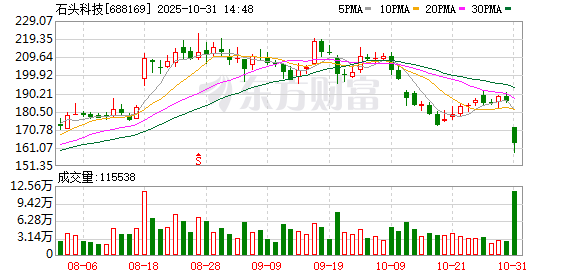
科创50指数跌超3%,石头科技跌超12%领跌成分股。
Xin Lang Cai Jing· 2025-10-31 06:48
Core Viewpoint - The Sci-Tech Innovation 50 Index has declined by over 3%, with Stone Technology leading the drop among constituent stocks, falling by more than 12% [1] Group 1 - The Sci-Tech Innovation 50 Index experienced a significant decline, indicating a bearish trend in the sector [1] - Stone Technology's stock performance is notably poor, contributing to the overall decline of the index [1]
石头科技Q3:短期投入落地,Q4盈利弹性将验证
Ge Long Hui· 2025-10-31 06:39
Core Viewpoint - Stone Technology's Q3 2025 financial report shows a revenue increase of 60.71% year-on-year, with net profit attributable to shareholders rising by 2.51%, indicating a shift from the previous trend of "increased revenue without increased profit" seen in the first half of the year [1] Group 1: Short-term Investments for Long-term Gains - Stone is actively transforming its channels in the European market starting in 2024, increasing self-operated sales and regaining operational control on platforms like Amazon, which will enhance cash flow and pricing control [2] - The company has achieved a 16% global market share, ranking first in industry shipments, which necessitates stronger channel management to build user trust and brand reputation [2] - Stone's strategy mirrors successful retail brands that have integrated supply chains and built ecosystems, emphasizing the importance of upfront investments for long-term competitive advantages [3] Group 2: Market Penetration and Brand Recognition - In a context where competitors are cutting costs, Stone's increased short-term expenditures have allowed for accelerated market penetration and enhanced brand recognition across key markets [4] - The company has established a strong presence in North America, Northern Europe, and other regions, with over 20% market share in several Asia-Pacific countries, laying the groundwork for future revenue growth [4] Group 3: R&D Investments and Product Development - In Q3, Stone's R&D investment reached 343 million yuan, a 38.64% increase year-on-year, with total R&D spending for the first three quarters at 1.028 billion yuan, up 60.56% [5] - The company continues to maintain a strong R&D focus, ensuring that the technological gap between its products and those of second- and third-tier brands remains significant, thus preserving product pricing power [6] Group 4: Future Outlook and Profitability - As of Q3 2025, Stone's cash collection ratio stands at 112.3%, with inventory turnover and accounts receivable turnover rates of 2.61 and 13.83 times, respectively, indicating strong inventory management and cash flow capabilities [7] - The upcoming Q4 is expected to validate a turning point for the company, with significant revenue recognition anticipated due to seasonal sales events like "Double Eleven" and "Black Friday" [8] - Analysts predict that as the profit margin base stabilizes and new products replace older models, net profit margins will improve, supported by better cost efficiency and scale effects [8] Group 5: Valuation Perspective - The current valuation debate surrounding Stone reflects a misunderstanding between "single product cycle stock" and "ecological growth stock," with the market needing to recognize the time lag between expenditure and profit realization [9] - The company's strategic investments in channels, markets, and a comprehensive smart cleaning ecosystem are expected to prove their long-term value, leading to a potential recovery in valuation [9]
石头科技(688169.SH)Q3:短期投入落地,Q4盈利弹性将验证
Ge Long Hui· 2025-10-31 06:34
Core Viewpoint - The recent Q3 financial report from Stone Technology shows a 60.71% year-on-year revenue growth and a 2.51% increase in net profit attributable to shareholders, indicating a shift from the previous "increased revenue without increased profit" scenario in the first half of the year. Although the profit level for the first three quarters remains lower than the previous year, the Q3 performance alleviates concerns about the company's ability to regain growth [1]. Group 1: Short-term Investments for Long-term Gains - Stone is actively transforming its channels in the European market starting in 2024, increasing self-operated stores and reclaiming operational rights on major e-commerce platforms, which will enhance cash flow and pricing control, ultimately benefiting long-term profitability [3][4]. - The company is increasing short-term expenses to accelerate market penetration, establishing a strong brand presence in key markets such as North America, Northern Europe, and Australia, while also achieving over 20% market share in several Asia-Pacific regions [5]. - R&D investment in Q3 reached 343 million yuan, a 38.64% increase year-on-year, with total R&D spending for the first three quarters at 1.028 billion yuan, up 60.56%, ensuring a technological edge over competitors [6][7]. Group 2: Q4 Expectations and Profit Recovery - The cash collection ratio at the end of Q3 was 112.3%, with inventory turnover and accounts receivable turnover rates at 2.61 and 13.83 times, respectively, indicating superior inventory management and supply chain integration compared to competitors [9]. - Q4 is anticipated to be a critical quarter for revenue recognition, with significant sales events like "Double Eleven" and "Black Friday" expected to drive performance, supported by strong pre-sale results [8][10]. - The current valuation debate around Stone reflects a misunderstanding of its transition from a "single product cycle stock" to an "ecosystem growth stock," with expectations for profit recovery and valuation improvement as the market recognizes the company's strategic investments [11].
石头科技(688169):收入延续快速增长,业绩恢复增长
Guotou Securities· 2025-10-31 03:03
Investment Rating - The investment rating for the company is maintained at "Buy-A" with a 12-month target price of 235.00 CNY, corresponding to a 24x price-to-earnings ratio for 2026 [3][6]. Core Views - The company has shown rapid revenue growth, achieving 12.07 billion CNY in revenue for the first three quarters of 2025, representing a year-over-year increase of 72.2%. The net profit attributable to shareholders was 1.04 billion CNY, down 29.5% year-over-year [1]. - The third quarter of 2025 saw a revenue of 4.16 billion CNY, up 60.7% year-over-year, with a net profit of 360 million CNY, reflecting a 2.5% increase year-over-year. The strategic adjustments made by the company are beginning to yield results, and profitability is expected to stabilize with the scale effects from revenue growth [1][3]. - The company continues to innovate and expand its product offerings, including the launch of the P20 active water sweeping and mopping robot, which enhances its product matrix [1]. Revenue and Profitability - The company experienced a significant increase in online sales for its sweeping and washing machines, with year-over-year growth of 70% and 1251%, respectively, indicating strong domestic revenue growth [1]. - The gross margin decreased by 11.8 percentage points year-over-year in Q3, primarily due to self-subsidy strategies in response to domestic subsidy limits and the rapid growth of lower-margin washing machine business [2]. - The net profit margin decreased by 4.9 percentage points year-over-year, but the decline in net profit margin was less than that of gross margin due to improved expense control [2]. Financial Forecast - The company is projected to achieve revenues of 191.4 billion CNY in 2025, with net profits expected to be 18.6 billion CNY. The earnings per share (EPS) for 2025 is estimated at 7.20 CNY, with projections of 9.79 CNY and 12.48 CNY for 2026 and 2027, respectively [5][13]. - The company’s revenue growth rate is expected to be 60.2% in 2025, followed by 26.4% in 2026 and 19.8% in 2027 [13].