
VANKE(000002)

Search documents
万科企业午后涨超6% 11亿债券展期议案获通过 市场关注后续展期方案谈判
Zhi Tong Cai Jing· 2026-01-21 06:34
Group 1 - Vanke Enterprises (02202) saw its stock price increase by over 6%, currently trading at 3.63 HKD with a transaction volume of 252 million HKD [1] - The company successfully obtained approval for a one-year extension of the "21 Vanke 02" bond, which has a balance of 1.1 billion HKD, marking the first successful outcome in its ongoing negotiations for multiple bond extensions [1] - Analysts indicate that the approval of the "21 Vanke 02" extension provides a template for the remaining two bonds, "22 Vanke MTN004" and "22 Vanke MTN005," potentially increasing the likelihood of their extension agreements being approved [1]

港股异动 | 万科企业(02202)午后涨超6% 11亿债券展期议案获通过 市场关注后续展期方案谈判
智通财经网· 2026-01-21 06:34
Core Viewpoint - Vanke Enterprises (02202) has successfully extended the maturity of its "21 Vanke 02" bond by one year, providing crucial liquidity relief amid ongoing financial challenges [1] Group 1: Stock Performance - Vanke's stock rose over 6% in the afternoon, with a current increase of 4.31%, trading at HKD 3.63, and a transaction volume of HKD 252 million [1] Group 2: Bond Extension - The successful extension of the "21 Vanke 02" bond, with a balance of HKD 1.1 billion, marks the first successful outcome in a series of negotiations for bond extensions [1] - This extension serves as a template for the ongoing negotiations regarding two other bonds, "22 Vanke MTN004" and "22 Vanke MTN005," potentially increasing the likelihood of their successful extensions [1]
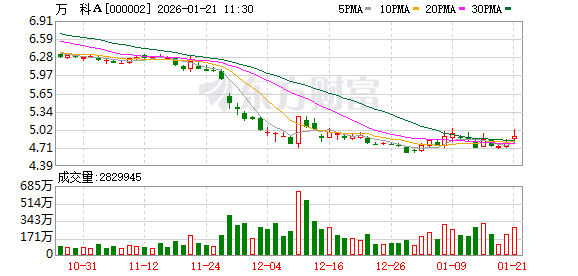
万科A涨超5%,万科企业涨超3%
Mei Ri Jing Ji Xin Wen· 2026-01-21 06:30
(文章来源:每日经济新闻) 每经AI快讯,1月21日,万科A涨超5%,万科企业涨超3%。 ...
万科得以喘口气,11亿债券展期议案获通过
Feng Huang Wang· 2026-01-21 05:16
Core Viewpoint - Vanke's bond extension plan for "21 Vanke 02" with a balance of 1.1 billion yuan has been approved, marking a significant step in alleviating its liquidity crisis and providing essential breathing space [1] Group 1: Bond Extension Details - The extension plan includes measures such as small principal repayments, a 40% buyback of principal, and enhanced credit support to address diverse investor demands [1] - The proposal received 92.11% approval during the first bondholder meeting, focusing on the repayment arrangements and credit enhancement measures [1] - The issuer will implement small repayments of up to 100,000 yuan for bondholders who have applied for buyback on January 30, 2026, ensuring liquidity for small holders [1] Group 2: Repayment Structure - 40% of the buyback principal will be repaid on January 30, 2026, while the remaining 60% will be extended for one year, with a repayment date set for January 22, 2027 [1] - Interest for the non-redeemed portion will be paid on January 22, 2026, while interest for the redeemed portion will be paid within two trading days after the proposal's approval, maintaining a coupon rate of 3.98% during the extension [2] Group 3: Credit Enhancement and Market Reaction - The extension plan significantly enhances the repayment assurance of the bonds, which was a key factor in gaining creditor support [3] - Immediate repayment of 40% of the buyback principal and fixed payments for small holders were crucial in providing short-term cash flow to creditors [3] - The provision of specific asset pledges for credit enhancement has improved creditor confidence, addressing previous market concerns about Vanke's lack of robust guarantees [3] Group 4: Future Implications - The successful approval of the "21 Vanke 02" extension serves as a model for negotiating the extensions of "22 Vanke MTN004" and "22 Vanke MTN005," which have balances of 2 billion yuan and 3.7 billion yuan respectively, totaling 5.7 billion yuan [3] - The future success of Vanke's bond extension plans will depend on its ability to provide concrete and executable asset pledges and cash arrangements [4] - Key factors such as asset ownership, pledge priority, cash collection, and debt repayment priority will be critical in determining the outcome of future negotiations [4]
万科 明日付息
Shang Hai Zheng Quan Bao· 2026-01-21 04:45
Core Viewpoint - Vanke has successfully passed a significant resolution during the bondholders' meeting for "21 Vanke 02," particularly the proposal to increase fixed payment arrangements, which has positively impacted its stock price [2][4][11]. Group 1: Bondholder Meeting Resolutions - The bondholders' meeting on January 21 resulted in the approval of five proposals, with "Proposal One" and "Proposal Four" receiving high votes. Proposal One involves waiving procedural requirements, while Proposal Four focuses on adjusting the repayment arrangements to include fixed payments [4][5]. - Proposal Four specifically includes a fixed payment arrangement for bondholders who agree to the proposals, allowing for a payment of up to 100,000 RMB for those who registered for the buyback [6][8]. - The meeting also addressed the repayment of the buyback portion of the bonds, with 40% of the principal due on January 30, 2026, and the remaining 60% extended for one year, payable on January 22, 2027 [7]. Group 2: Interest Payment Announcement - Vanke announced that the "21 Vanke 02" bonds will pay interest on January 22, 2026, with a coupon rate of 3.98%. The interest payment for every 10 bonds of 1,000 RMB will be 39.80 RMB, with net amounts varying for different types of bondholders [11][12]. - The record date for interest payment is set for January 21, 2026, ensuring that all registered bondholders by this date will receive the interest [12][13]. Group 3: Additional Context - The bondholders' meeting for "22 Vanke MTN004" and "22 Vanke MTN005" was held concurrently, with similar proposals being discussed, indicating a broader context of financial restructuring within Vanke's bond offerings [9].

首付4成后,万科终获一份债务展期方案通过
第一财经· 2026-01-21 04:09
Core Viewpoint - Vanke has successfully passed a proposal for the extension of one of its bonds, indicating a potential stabilization in its financial situation amidst ongoing debt challenges [3][5]. Summary by Sections Bond Proposal Details - The proposal for the "21 Vanke 02" bond includes four key terms: 1. Fixed payment arrangement for bondholders who agree to the proposal, with a maximum payment of 100,000 yuan per account on January 30, 2026, for those who participate in the meeting [3][4]. 2. 40% of the principal will be paid on January 30, 2026, while the remaining 60% will be extended for one year until January 22, 2027 [4]. 3. Interest payments on the repurchased portion will be made alongside the principal, with specific interest periods outlined [4]. 4. Vanke will provide collateral from its subsidiaries as a guarantee for the unpaid principal and interest [4]. Financial Context - The total balance of the "21 Vanke 02" bond is 1.1 billion yuan, with a maturity date set for January 22, 2028 [5]. - The effective repurchase application quantity for this bond reached 10,321,010 units, with a repurchase price of 100 yuan per unit [5]. Market Implications - The approval of the "21 Vanke 02" extension proposal may serve as a reference for two other bonds currently in negotiation for extension, potentially helping Vanke avoid substantial default [5]. - Vanke faces a total debt of approximately 6.5 billion yuan maturing in the second quarter, indicating ongoing financial pressures [5].
请对“最惨商业教父”保持尊重
3 6 Ke· 2026-01-21 04:04
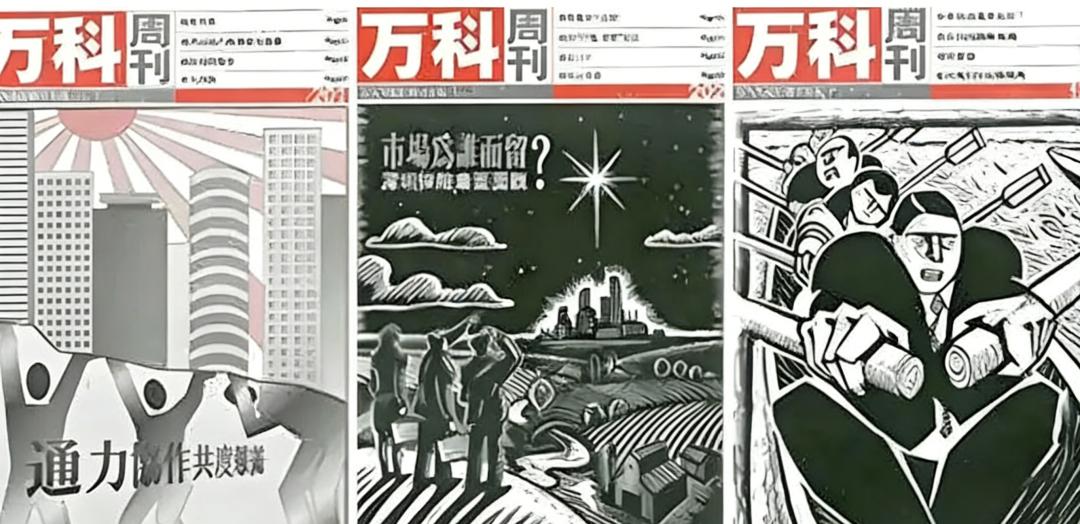
Core Viewpoint - Wang Shi, a prominent figure in Chinese business, is facing public scrutiny and ridicule after retirement, despite his significant contributions to the real estate industry and corporate governance in China [2][3]. Group 1: Wang Shi's Contributions - Wang Shi founded Vanke 40 years ago, navigating through China's economic chaos and the reform of the real estate market, emphasizing a higher commercial culture rather than personal profit [2][4]. - He was the first to advocate for a focus on core business and introduced the "middle-class good housing" strategy, which positioned Vanke as an industry leader [2][4]. - Wang Shi initiated the "Vanke Weekly," discussing economics, market rules, and corporate ethics, aiming to elevate the standards of Chinese business culture [6][8]. Group 2: Corporate Governance and Philosophy - In 1988, Wang Shi made a pivotal decision to relinquish his 40% stake and control over Vanke, establishing a professional management system and transforming it into a "no-boss" company [9][10]. - His principles included avoiding bribery and not engaging in land speculation, which became internal guidelines for Vanke [8][9]. - Wang Shi's vision for Vanke was to create a sustainable business model that prioritized ethical practices over aggressive profit-seeking [19]. Group 3: Challenges and Downfall - After his retirement in 2016, Vanke faced significant challenges, including a governance crisis known as the "Vanke Battle," which highlighted vulnerabilities in its structure [10][15]. - The company, under new leadership, shifted away from Wang Shi's principles, leading to aggressive land acquisitions and substantial financial losses, with a reported loss of nearly 50 billion in 2024 [15][17]. - Wang Shi's attempts to reconnect with Vanke's decision-makers post-retirement indicate his ongoing concern for the company's cultural legacy, which he feels is at risk [17][18]. Group 4: Post-Retirement Ventures - After retirement, Wang Shi founded Deep Stone Group, focusing on green community projects and sports initiatives, although these ventures have faced challenges in attracting business support [11][12]. - He has also engaged in various endorsements and entrepreneurial activities, reflecting his desire to remain relevant in the business landscape [12][14]. - Despite receiving a retirement salary of 10 million annually, Wang Shi chose to forgo this payment in 2024, highlighting his commitment to Vanke's situation [14].
首付4成后,万科终获一份债务展期方案通过
Di Yi Cai Jing· 2026-01-21 03:17
Core Viewpoint - Vanke has successfully passed a bondholder meeting resolution for the "21 Vanke 02" bond, allowing for adjustments in repayment terms and providing credit enhancement measures to avoid substantial default [1][2][3] Group 1: Bondholder Meeting Resolutions - The resolution includes four key provisions: 1. Fixed repayment arrangement for bondholders who agree to the proposals, with a maximum repayment of 100,000 yuan on January 30, 2026, for those who participate in the meeting [1] 2. Principal repayment arrangement where 40% of the principal will be repaid on January 30, 2026, while the remaining 60% will be extended for one year until January 22, 2027 [1] 3. Interest payment arrangement for the repurchased portion, with interest on 40% of the principal payable on January 30, 2026, and the remaining 60% interest payable on the extended principal [1] 4. Credit enhancement measures involving pledging receivables from two project companies to secure unpaid principal and interest [2] Group 2: Market Implications - The successful resolution for "21 Vanke 02" may serve as a reference for two other bonds currently in negotiation for extension, potentially allowing Vanke to avoid substantial default [3] - Vanke faces ongoing challenges, with approximately 6.5 billion yuan of debt maturing in the second quarter [3] - Internal sources suggest that the current repayment terms may indicate an impending overall restructuring plan due to limited resources available to the company [3]
A股房地产股多数上涨,城投控股等多股涨停
Ge Long Hui A P P· 2026-01-21 02:53
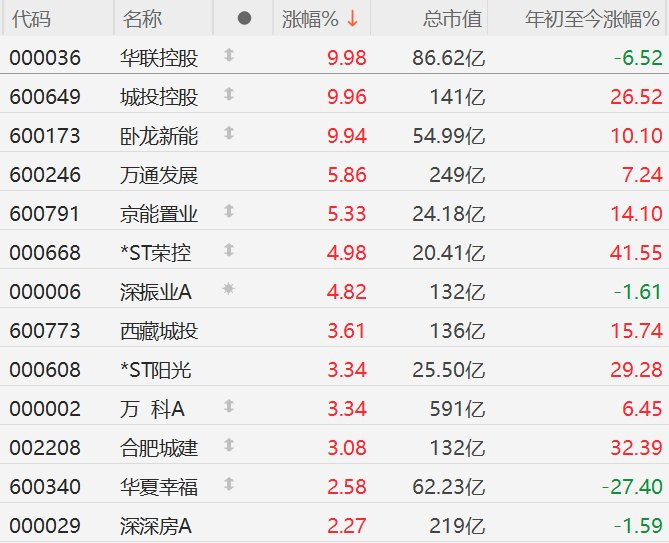
Core Viewpoint - The A-share market has seen a majority of real estate stocks rise, with notable gains from companies such as Hualian Holdings, Chengdu Investment Holdings, and Wolong New Energy, indicating a positive trend in the sector [1] Group 1: Stock Performance - Hualian Holdings experienced a significant increase of 9.98% with a total market capitalization of 86.62 billion [2] - Chengdu Investment Holdings rose by 9.96%, reaching a market value of 141 billion [2] - Wolong New Energy saw a gain of 9.94%, with a market cap of 54.99 billion [2] - Wantong Development increased by 5.86%, with a market capitalization of 249 billion [2] - Jingneng Real Estate rose by 5.33%, with a total market value of 24.18 billion [2] - Deep Zhenye A increased by 4.82%, with a market cap of 132 billion [2] - Xizang Investment Holdings rose by 3.61%, with a market capitalization of 136 billion [2] - Vanke A saw an increase of 3.34%, with a total market value of 591 billion [2] - Hefei Urban Construction rose by 3.08%, with a market cap of 132 billion [2] - Huaxia Happiness increased by 2.58%, with a market capitalization of 62.23 billion [2] - Deep Shenzhen Real Estate A rose by 2.27%, with a total market value of 219 billion [2]


宝城期货资讯早班车-20260121
Bao Cheng Qi Huo· 2026-01-21 02:20
1. Report Industry Investment Rating No relevant content provided. 2. Core Viewpoints of the Report - The GDP growth in Q4 2025 was 4.5%, and the full - year growth target of 5% was achieved, meeting market expectations. The market will discuss the economic growth expectations for 2026 and the Two Sessions' target settings. For the bond market, the central bank's attitude is the key factor in 2026, and a total interest - rate cut is expected in Q2 [27]. - The central bank's resumption of bond - buying may be a long - term consideration, and the continuity of bond - buying is high. In 2026, the imbalance between supply and demand in the bond market needs attention, with the core being demand. The bond market still needs to consider the impacts of "imbalance between supply and demand, expectations of rising prices, and re - balancing of asset allocation due to capital diversion" [28]. 3. Summary by Directory 3.1 Macro Data Quick View - In December 2025, GDP at constant prices had a quarterly - on - quarterly growth of 4.5%, lower than the previous quarter's 4.8% and the same period last year's 5.4% [1]. - The manufacturing PMI in December 2025 was 50.1%, up from 49.8% in the previous month and the same as the same period last year [1]. - The non - manufacturing PMI for business activities in December 2025 was 50.2%, up from 50.0% in the previous month but lower than 52.2% in the same period last year [1]. - The monthly value of social financing scale in December 2025 was 2207.5 billion yuan, down from 3529.9 billion yuan in the previous month and 2853.7 billion yuan in the same period last year [1]. - Various monetary indicators such as M0, M1, M2, and new RMB loans also showed different trends in December 2025 compared with the previous month and the same period last year [1]. - CPI in December 2025 had a year - on - year growth of 0.8%, up from - 0.3% in the previous month and 0.1% in the same period last year; PPI was - 1.9%, up from - 2.3% in the previous month and the same period last year [1]. - The cumulative year - on - year growth of fixed - asset investment completion in December 2025 was - 3.8%, down from - 0.5% in the previous month and 3.2% in the same period last year [1]. - The cumulative year - on - year growth of total retail sales of consumer goods in December 2025 was 3.7%, down from 4.5% in the previous month but up from 3.5% in the same period last year [1]. - The year - on - year growth of export and import amounts in December 2025 was 6.60% and 5.70% respectively, down from 8.20% and 7.40% in the previous month and 10.67% and 0.84% in the same period last year [1]. 3.2 Commodity Investment Reference 3.2.1 Comprehensive - The National Development and Reform Commission is planning major high - tech projects for the 15th Five - Year Plan period, formulating an implementation plan for the strategy of expanding domestic demand from 2026 - 2030, and considering setting up a national - level merger and acquisition fund. It will also promote the expansion and quality improvement of the service industry [2]. - The LPR in January 2026 remained unchanged for the 8th consecutive month, with the 1 - year LPR at 3.0% and the 5 - year - plus LPR at 3.5% [2]. - Shanghai introduced 18 measures to enhance the influence of non - ferrous metal commodities and global pricing, including supporting settlement through the Commodity Clearing Link and opening up futures and options varieties [3]. - The Shanghai Futures Exchange adjusted the trading margin ratios and price limit ranges for copper, aluminum, gold, and silver futures contracts [3]. - The Shanghai International Energy Exchange Center adjusted the trading margin ratios and price limit ranges for international copper futures contracts [4]. - On January 20, 37 domestic commodity varieties had positive basis, and 32 had negative basis, with significant differences in basis among different varieties [4]. 3.2.2 Metals - On the morning of January 21, New York gold futures exceeded $4780 per ounce, and domestic gold jewelry prices also increased, with some brands' pure gold prices exceeding 1450 yuan per gram [5]. - "Investment copper bars" have become popular recently, with a 1000 - gram copper bar costing 180 - 288 yuan in Shenzhen Shuibei Market [5]. - The Polish central bank approved a plan to buy up to 150 tons of gold, increasing its gold reserves to 700 tons [5]. - On January 19, the inventories of lead, tin, zinc, and copper in the London Metal Exchange reached new highs, while the inventories of cobalt and aluminum reached new lows [6]. - As of January 20, the holdings of the world's largest gold ETF, SPDR Gold Trust, decreased by 0.37%, or 4.01 tons, to 1081.66 tons [6]. 3.2.3 Coal, Coke, Steel, and Minerals - During the 14th Five - Year Plan period, Shanxi produced 65 billion tons of coal, with an output of over 13 billion tons in 2025, an increase of 19 billion tons compared with the 13th Five - Year Plan [8]. - The first shipment of nearly 200,000 tons of Simandou iron ore arrived in China on January 17, enhancing global iron ore supply [8]. 3.2.4 Energy and Chemicals - Domestic gasoline and diesel prices increased by 85 yuan per ton from January 20, 24:00, due to rising international oil prices [9]. - The US government obtained 50 million barrels of oil from Venezuela and sold part of it on the open market [9]. - Venezuela officially launched the export of liquefied petroleum gas [9]. 3.2.5 Agricultural Products - Brazil's corn and soybean exports in January 2026 are expected to be 3.45 million tons and 3.79 million tons respectively, higher than the previous week's forecasts, while soybean meal exports are expected to be 1.82 million tons, the same as the previous week [10]. - As of January 15, the EU's soft wheat exports in the 2025/26 season were 11.8 million tons, slightly lower than the same period last year [10]. - The US export inspection volumes of soybeans, wheat, and corn were 1,336,684 tons, 392,611 tons, and 1,483,622 tons respectively [11]. 3.3 Financial News Compilation 3.3.1 Open Market - On January 20, the central bank conducted 324 billion yuan of 7 - day reverse repurchase operations, with a net withdrawal of 34.6 billion yuan due to 358.6 billion yuan of reverse repurchase maturities [12]. 3.3.2 Key News - A package of policies to promote domestic demand through fiscal - financial coordination was introduced, including a 500 - billion - yuan special guarantee plan for private investment and loan interest - subsidy policies for small and medium - sized enterprises [13]. - The National Development and Reform Commission stated that in 2026, macro - policies will focus on strengthening the domestic cycle, expanding domestic demand, and promoting high - tech projects [13]. - The Ministry of Finance said that in 2026, the fiscal deficit, debt scale, and expenditure will remain at necessary levels, and ultra - long - term special treasury bonds will continue to be issued [14]. - The Ministry of Natural Resources and the Ministry of Housing and Urban - Rural Development introduced measures to support urban renewal [15]. - The preferential tax policies for community - based family services such as elderly care, childcare, and housekeeping were extended from January 1, 2026, to December 31, 2027 [16]. - The latest LPR remained unchanged for the 8th consecutive month since May 2025, and experts believe that the stable macro - economy is the main reason [17]. - Beijing's 2026 construction land supply plan was announced, with specific land allocations for commercial and affordable housing and a focus on urban renewal [18]. - Guangzhou is promoting legislation for the renewal of state - owned land housing, with a planned fixed - asset investment of 120 billion yuan for urban village renovation in 2026 [18]. - The Greenland crisis and fiscal pressure concerns led to a global bond market sell - off, with significant fluctuations in Japanese and US bond yields [18]. - The Japanese Finance Minister tried to calm the bond market, emphasizing the responsibility and sustainability of fiscal policies [18]. - All Japanese central bank observers predict that the benchmark interest rate will remain unchanged on Friday, and the government may intervene in the foreign exchange market if the yen depreciates [19]. - There were several bond - related events, including payment due dates and corporate management changes [19]. 3.3.3 Bond Market Summary - China's bond market showed positive trends, with falling yields on spot bonds and rising prices of bond futures. The money market was generally stable, but the DR001 rate increased due to the tax period [20]. - The exchange - traded bond market had different performances among different bond types, with some bonds rising and some falling [21]. - The CSI Convertible Bond Index and the Wind Convertible Bond Equal - Weighted Index both declined, with significant differences in individual bond performances [22]. - Most money market interest rates and Shibor short - term rates increased [22]. - Bank - to - bank repurchase fixed - rate and silver - bank repurchase fixed - rate also showed upward trends [23]. - The winning bid yields and multiples of financial bonds issued by the Agricultural Development Bank and the National Development and Reform Commission were announced [23][24]. - European and US bond yields generally increased [24][25]. 3.3.4 Foreign Exchange Market - The on - shore RMB against the US dollar rose 33 basis points to 6.9603 at 16:30, and the central parity rate rose 45 basis points to 7.0006 [26]. - At the New York close, the US dollar index fell 0.50% to 98.55, and most non - US currencies rose [26]. 3.3.5 Research Report Highlights - CITIC Securities believes that the central bank's attitude is crucial for the 2026 bond market, and a total interest - rate cut is expected in Q2 [27]. - Shenwan Hongyuan Fixed - Income believes that the central bank's bond - buying is likely to be continuous, and in 2026, attention should be paid to the imbalance between supply and demand in the bond market, with the interest rate level expected to be lower in the first half and higher in the second half [28]. 3.4 Stock Market Key News - On Tuesday, the A - share market adjusted, with a style shift from high - valuation growth sectors to value sectors. The Shanghai Composite Index fell 0.01%, and the trading volume increased [30]. - The Hong Kong stock market continued to adjust, with technology stocks leading the decline and real - estate stocks rising. Southbound funds had a net purchase of nearly HK$3.7 billion [31]. - As of January 20, over 500 A - share companies had disclosed 2025 performance forecasts, with about 200 expecting growth and over 100 expecting a net profit increase of over 100%. However, some sectors such as photovoltaic, liquor, and pig farming faced performance pressure [31]. 3.5 Today's Reminders - On January 21, 230 bonds will be listed, 122 bonds will be issued, 82 bonds will be settled, and 207 bonds will pay principal and interest [29].

