
VANKE(000002)

Search documents
债务展期高票通过,万科终于能缓口气了
Guan Cha Zhe Wang· 2026-01-21 12:05
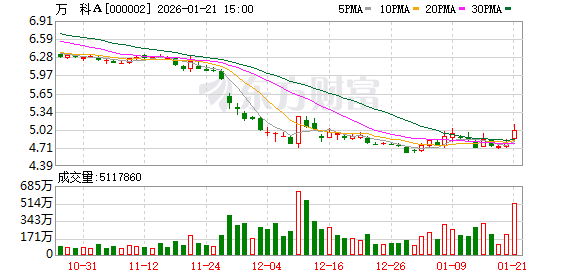
Core Viewpoint - Vanke's stock prices for both A and H shares rose significantly due to market approval of its debt resolution plan, particularly the successful passing of the bondholder meeting resolutions for "21 Vanke 02" [1] Group 1: Stock Performance - On January 21, Vanke A shares closed at 5.01 CNY per share, up 4.59%, while Vanke Enterprises closed at 3.68 HKD per share, up 5.75% [1] Group 2: Debt Resolution Plan - The bondholder meeting on January 21 resulted in the approval of several key resolutions, particularly the fourth resolution which adjusted the repayment arrangements for the "21 Vanke 02" bond, increasing fixed repayment arrangements and providing credit enhancement measures [1][5] - This marked the first successful debt extension plan since Vanke initiated its debt extension process, breaking the previous deadlock in domestic debt extensions [2] Group 3: Bondholder Meeting Details - The fourth resolution received overwhelming support, with 9,507,000 votes in favor, representing 92.11% of the total voting rights, and 95.65% of the participating bondholders [7] - The resolution included a fixed repayment arrangement for up to 100,000 CNY for each participating account, with a 40% repayment of the principal due on January 30, 2026, and the remaining 60% extended for one year [6][8] Group 4: Market Reaction and Implications - The approval of the debt extension plan reflects a balanced approach between cash repayment ratios and credit enhancement measures, which has increased creditor confidence and reduced default expectations [3][4] - The plan's design, which includes both cash repayments and collateral from receivables, demonstrates Vanke's commitment to addressing creditor concerns and may positively influence future debt extension negotiations [8]



先兑4成!万科闯过一关,更大考验逼近
Xin Lang Cai Jing· 2026-01-21 10:48
Core Viewpoint - Vanke's recent debt extension negotiations have made significant progress, allowing the company to temporarily avoid substantial default, but it still faces deep-rooted challenges in liquidity and financial stability [4][10][22]. Debt Extension Agreement - The bondholders' meeting approved a proposal for the "21 Vanke 02" bond, which includes a fixed payment arrangement of up to 100,000 yuan per account by January 30, 2026, and a 40% principal repayment on the remaining amount by the same date [5][17]. - The remaining 60% of the principal will be extended for one year until January 22, 2027, allowing creditors to receive some immediate funds, addressing their liquidity needs [7][19]. - Interest payments will be made in installments alongside the principal repayments, and Vanke will provide collateral through receivables from its project companies [18]. Financial Implications - The 40% upfront payment requires approximately 440 million yuan in cash, which is a significant strain on Vanke's already tight cash flow [9][19]. - Vanke has 6.5 billion yuan in debt maturing in the second quarter of this year, and if similar terms are applied, it would need to pay around 2.6 billion yuan in principal alone, not including interest and project costs [9][19]. - The company's cash reserves, reported at about 80 billion yuan at the end of the third quarter, are largely under regulatory constraints, which could lead to rapid depletion if sales do not meet expectations [9][19]. Market Reaction and Future Outlook - Following the announcement, several of Vanke's bonds saw price increases, indicating a temporary boost in market confidence [4][10]. - However, industry experts caution that this debt extension is merely a stopgap measure, and Vanke must achieve substantial improvements in sales, asset management, and financing to alleviate ongoing liquidity pressures [10][22]. - Vanke's future financial health will depend on achieving an average monthly subscription amount of over 20 billion yuan in the first half of 2026, alongside securing support from major shareholders and favorable policies [11][22]. Legal and Operational Challenges - Vanke's debt disputes have escalated to judicial enforcement, with a recent execution order for approximately 1.09 billion yuan [13][22]. - The company is also facing multiple equity freezes totaling over 2 billion yuan, indicating significant operational and financial distress [13][22]. - As of the latest updates, Vanke has not released further announcements regarding its overall debt restructuring plan, leaving the market to closely monitor its subsequent repayment arrangements and operational strategy adjustments [23].
万科债获展期 A股H股双涨
Jing Ji Guan Cha Bao· 2026-01-21 09:52
Core Viewpoint - Vanke's bond extension proposal has been approved, leading to a significant increase in both A-shares and H-shares of the company [1] Group 1 - On January 21, Vanke's stock prices showed notable movements, with A-shares rising over 5% and H-shares increasing by more than 3% [1] - The company successfully obtained approval for the extension of its 1.1 billion yuan bond, "21 Vanke 02," which grants the company an additional year [1]
“21万科02”债券持有人会议高票通过两项议案 另三项议案未获通过
Sou Hu Cai Jing· 2026-01-21 09:41
会议审议了五项议案,其中议案一关于豁免会议召开相关程序要求,以92.36%的同意票通过;议案二 关于调整"21万科02"回售部分债券本息兑付安排,未获通过;议案三关于同意为"21万科02"回售部分债 券增加宽限期,同样未获通过;议案四关于调整"21万科02"回售部分债券本息兑付安排、增加固定兑付 安排、提供增信措施,以92.11%的同意票通过;议案五关于同意为"21万科02"回售部分债券增加宽限 期、增加固定兑付安排、调整本息兑付安排,未获通过。 会议出席及表决情况显示,存续债券的有表决权的债券持有人所持债券张数为10321010张,参加会议的 债券持有人所持有的有表决权的债券张数为9939000张,占比96.30%。 免责声明:本文内容与数据由观点根据公开信息整理,不构成投资建议,使用前请核实。 观点网讯:1月21日,万科企业股份有限公司发布公告,涉及2021年面向合格投资者公开发行住房租赁 专项公司债券(第一期)(品种二)2026年第一次债券持有人会议决议。此次会议由中信证券股份有限 公司召集,于2026年1月19日至20日通过通讯表决形式进行,债权登记日为2026年1月16日。 ...

万科债券展期迎利好 “21万科02”回售方案获通过
Xin Jing Bao· 2026-01-21 09:10
Core Viewpoint - Vanke's bond "21 Vanke 02" has successfully passed key resolutions in a recent bondholder meeting, enhancing creditor confidence and potentially impacting other bonds under negotiation [2][6]. Group 1: Bondholder Meeting Outcomes - The bondholder meeting for "21 Vanke 02" was held from January 19 to 20, 2026, with resolutions one and four passing successfully, while resolutions two, three, and five did not [2]. - Resolution one, which waived certain procedural requirements for the meeting, received a 92.36% approval rate [2]. - Resolution four, which adjusted the repayment arrangements and provided credit enhancement measures, was approved with a 92.11% vote [2]. Group 2: Bond Details and Repayment Arrangements - The "21 Vanke 02" bond has a total balance of 1.1 billion yuan, a coupon rate of 3.98%, and a maturity date of January 22, 2028 [4]. - Key terms of resolution four include a fixed repayment of up to 100,000 yuan on January 30, 2026, with 40% of the remaining principal due on the same date and the remaining 60% extended for one year [4][5]. - Interest on the repaid portion will be paid alongside the principal, with specific arrangements for the interest periods outlined [5]. Group 3: Impact on Other Bonds - The successful approval of the "21 Vanke 02" buyback plan has bolstered confidence in two other bonds, "22 Vanke MTN004" and "22 Vanke MTN005," which are currently in negotiations for extension [6][7]. - These two bonds are seeking to extend their grace periods to 90 trading days and have proposed similar terms for principal repayment and credit enhancement [7]. - Following the news, several of Vanke's domestic bonds experienced significant price increases, with some temporarily suspended due to surging prices [7].
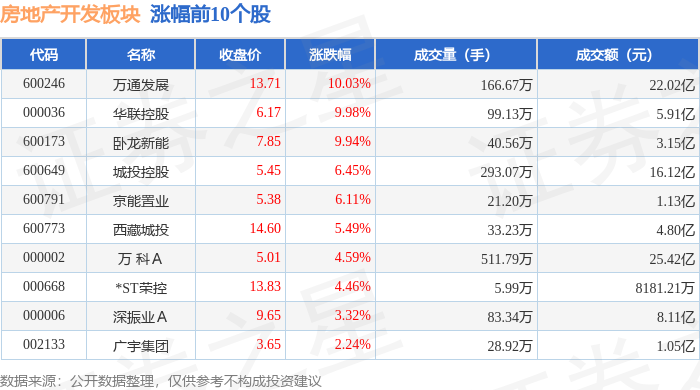
房地产开发板块1月21日涨0.4%,万通发展领涨,主力资金净流入9.31亿元
Zheng Xing Xing Ye Ri Bao· 2026-01-21 08:54
| 代码 | 名称 | 收盘价 | 涨跌幅 | 成交量(手) | 成交额(元) | | --- | --- | --- | --- | --- | --- | | 600266 | 城建发展 | 6.09 | -8.01% | 260.64万 | 16.32亿 | | 600658 | 电子城 | 5.46 | -3.70% | 30.05万 | 1.66亿 | | 000514 | 渝开发 | 5.23 | -2.43% | 43.87万 | 2.30亿 | | 600675 | 中华企业 | 2.97 | -2.30% | 156.83万 | 4.66亿 | | 600748 | 上实发展 | 5.94 | -1.98% | 19.95万 | 1.19亿 | | 002244 | 滨江重团 | 10.79 | -1.82% | 41.25万 | 4.47亿 | | 001979 | 招商蛇口 | 9.76 | -1.71% | 72.92万 | 7.15亿 | | 600064 | 南京尚科 | 8.85 | -1.45% | 27.37万 | 2.43 Z | | 600716 | 凤凰股份 | 4.2 ...

速递!港股万科企业午后涨超6%
Mei Ri Jing Ji Xin Wen· 2026-01-21 07:16
(资料图片仅供参 考) 每经AI快讯,万科企业(02202.HK)午后一度涨超6%,截至发稿涨4.31%,报3.63港元,成交额2.52亿港 元。 ...

“21万科02”债券持有人会议高票通过两项议案
3 6 Ke· 2026-01-21 06:58
Core Viewpoint - Vanke Enterprise Co., Ltd. announced the results of the first bondholders' meeting for its 2021 public issuance of housing rental special corporate bonds, indicating significant decisions regarding bond repayment arrangements and the participation of bondholders [1] Group 1: Meeting Decisions - The meeting, convened by CITIC Securities Co., Ltd., took place from January 19 to 20, 2026, via remote voting, with a record date of January 16, 2026 [1] - Five proposals were reviewed during the meeting, with the first proposal to waive procedural requirements for convening the meeting passing with 92.36% approval [1] - The second and third proposals, which involved adjustments to the repayment arrangements for the "21 Vanke 02" bonds and the addition of a grace period, were not approved [1] - The fourth proposal, which included adjustments to the repayment arrangements, the addition of fixed payment arrangements, and the provision of credit enhancement measures, passed with 92.11% approval [1] - The fifth proposal, similar to the second and third, was also not approved [1] Group 2: Participation and Voting - The total number of bonds with voting rights held by bondholders was 10,321,010, with 9,939,000 bonds represented at the meeting, accounting for 96.30% of the voting rights [1]
港股万科企业午后涨超6%
Mei Ri Jing Ji Xin Wen· 2026-01-21 06:43
每经AI快讯,万科企业(02202.HK)午后一度涨超6%,截至发稿涨4.31%,报3.63港元,成交额2.52亿港 元。 ...
万科A股价涨5.85%,银华基金旗下1只基金重仓,持有1358.93万股浮盈赚取380.5万元
Xin Lang Cai Jing· 2026-01-21 06:42
Group 1 - Vanke A shares increased by 5.85%, reaching 5.07 CNY per share, with a trading volume of 2.045 billion CNY and a turnover rate of 4.25%, resulting in a total market capitalization of 60.489 billion CNY [1] - Vanke Enterprise Co., Ltd. is located in Shenzhen, Guangdong Province, and was established on May 30, 1984, with its listing date on January 29, 1991. The company primarily engages in real estate development and property services [1] - The revenue composition of Vanke includes 80.17% from real estate development and related asset management, 16.23% from property services, and 3.61% from other supplementary activities [1] Group 2 - Silver Hua Fund has one fund heavily invested in Vanke A, with the Real Estate ETF (159768) holding 13.5893 million shares, unchanged from the previous period, accounting for 12.32% of the fund's net value, making it the third-largest holding [2] - The Real Estate ETF (159768) was established on January 27, 2022, with a current size of 348 million CNY. Year-to-date returns are 3.67%, ranking 3314 out of 5542 in its category, while the one-year return is 3.75%, ranking 4135 out of 4243. Since inception, the fund has incurred a loss of 42.71% [2] Group 3 - The fund manager of the Real Estate ETF (159768) is Zhang Yichi, who has been in the position for 4 years and 243 days. The total asset size of the fund is 36.436 billion CNY, with the best return during his tenure being 77.17% and the worst return being -35.59% [3]