ZTE(000063)

Search documents
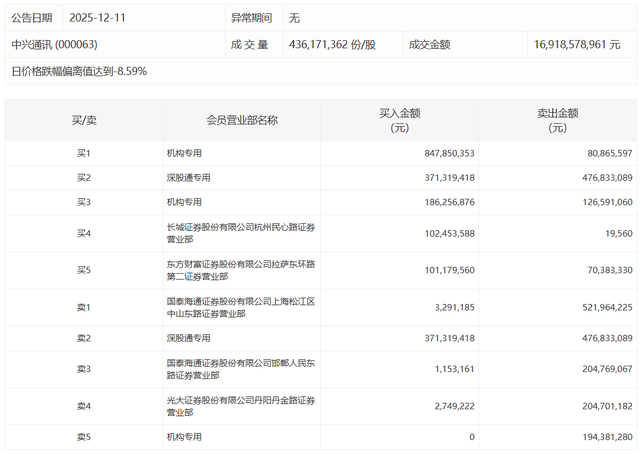
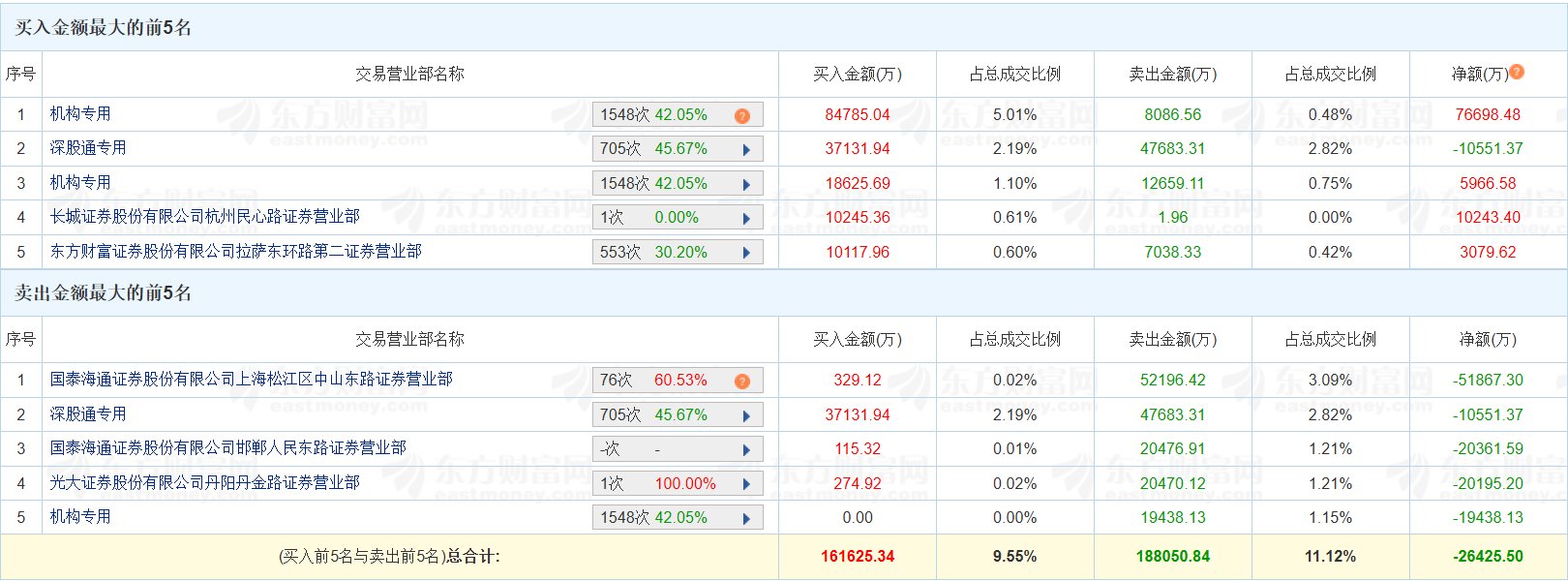
中兴通讯跌停 机构净买入6.32亿元
Zhong Guo Jing Ji Wang· 2025-12-11 09:26
龙虎榜数据显示,中兴通讯买入金额最大的前五名中,有2家机构专用席位;卖出金额最大的前五名中,有1家机构专用席位。经统计,中兴通讯的机 构席位今日净买入金额为63226.93万元。 (责任编辑:徐自立) 中国经济网北京12月11日讯 中兴通讯(000063.SZ)今日跌停,收报37.82元,跌幅10.00%。 | 序号 代码 名称 | 相关 收盘价 | 张肤幅 买方� 卖方� 机构买入 机构变出 | | 机构图入 | 市场总 | 机构净买额占 | 换手率 | 應 | | | --- | --- | --- | --- | --- | --- | --- | --- | --- | --- | | | | 机构数 | 教 机构教 总额(日) | | 成交额(万) | 鳥成交额比 | | 市值(亿) | | | 000063 中兴通讯 明细 股吧 37.82 -10.00% | | | 103410.72 40183.79 | 63226.93 | 1691857.90 | 3.74% | 10.83% | 1523.15 | 日跌幅偏离値 | | 买入金额最大的前5名 | | | | | | | | | --- ...



通信设备板块12月11日跌3.63%,中兴通讯领跌,主力资金净流出125.14亿元
Zheng Xing Xing Ye Ri Bao· 2025-12-11 09:17
证券之星消息,12月11日通信设备板块较上一交易日下跌3.63%,中兴通讯领跌。当日上证指数报收于 3873.32,下跌0.7%。深证成指报收于13147.39,下跌1.27%。通信设备板块个股涨跌见下表: 从资金流向上来看,当日通信设备板块主力资金净流出125.14亿元,游资资金净流入47.32亿元,散户资 金净流入77.82亿元。通信设备板块个股资金流向见下表: 以上内容为证券之星据公开信息整理,由AI算法生成(网信算备310104345710301240019号),不构成投资建议。 ...

豆包手机十日谈:戳破互联网围墙花园,动了谁的流量蛋糕?
Tai Mei Ti A P P· 2025-12-11 08:57
Core Viewpoint - The launch of Doubao AI phone by ByteDance and ZTE has generated significant market interest, showcasing the potential for AI integration in smartphones, but it faces resistance from major applications due to threats to their traditional business models [1][3][17]. Group 1: Product Launch and Market Response - Doubao AI phone was launched on December 1, selling out on its first day, indicating strong market demand and consumer anticipation for its AI features [1]. - The second-hand market for the phone shows high resale prices, ranging from 3,499 yuan to 12,900 yuan, reflecting its perceived value and scarcity [1]. - ZTE's stock initially surged but faced declines in the following days, indicating mixed investor sentiment regarding the partnership with Doubao [2]. Group 2: Industry Dynamics and Competition - Major application developers, including WeChat and Alibaba, have begun restricting access to the Doubao AI phone, highlighting the competitive pushback from established players [3][5]. - The traditional business models of leading apps rely on user engagement through ads, which the Doubao AI phone disrupts by enabling direct actions without app navigation [4][5]. - Other smartphone manufacturers like Huawei, Xiaomi, and OPPO are also developing their AI capabilities, indicating a competitive landscape that could intensify [6]. Group 3: User Interaction and Market Challenges - The Doubao AI phone aims to shift user interaction from traditional manual operations to voice commands, but user habits may pose a barrier to widespread adoption [8]. - Concerns over privacy and the potential for AI to manipulate purchasing decisions could affect user trust and market acceptance [9]. Group 4: Market Potential and Future Outlook - The Chinese smartphone market has a vast user base, with over 1.116 billion mobile internet users projected by mid-2025, presenting significant growth opportunities for the Doubao AI phone [14]. - Doubao's strong user base in the AIGC app market, with over 50 million monthly active users, provides a solid foundation for the phone's promotion [15]. - The need for differentiation and innovation in AI technology will be crucial for the Doubao AI phone to succeed against established competitors [16].
中兴通讯今日跌停 三机构合计净买入6.32亿元
Di Yi Cai Jing· 2025-12-11 08:57
| 买卖 | 会员营业部名称 | 买入金额 (元) | 卖出金额 (元) | | --- | --- | --- | --- | | 买1 | 机构专用 | 847,850,353 | 80,865,597 | | 买2 | 深股通专用 | 371,319,418 | 476,833,089 | | 33 | 机构专用 | 186,256,876 | 126,591,060 | | 3,4 | 长城正群股份有限公司杭州民心路证券 营业部 | 102,453,588 | 19,560 | | દરે | 东方财富证券股份有限公司拉萨东环路 第二证券营业部 | 101,179,560 | 70,383,330 | | 英1 | 国泰海通证券股份有限公司上海松江区 中山东路证券营业部 | 3,291,185 | 521,964,225 | | 卖2 | 深股通专用 | 371,319,418 | 476,833,089 | | 愛3 | 国泰海通证券股份有限公司邯郸人民东 路正券营业部 | 1,153,161 | 204,769,067 | | 24 | 光大证券股份有限公司丹阳丹金路证券 國际新 | 2,749, ...
龙虎榜丨中兴通讯跌停,三机构净买入6.32亿元,中山东路净卖出5.19亿元
Ge Long Hui A P P· 2025-12-11 08:57
| 买入金额最大的前5名 | | | | | | | --- | --- | --- | --- | --- | --- | | 序号 | 交易营业部名称 | | | 买入金额(万) | 占总成交比例 | | 1 | 机构专用 | 1548次 42.05% | 2 | 84785.04 | 5.01% | | 2 | 深股通专用 | 705次 45.67% | ▶ | 37131.94 | 2.19% | | 3 | 机构专用 | 1548次 42.05% | A | 18625.69 | 1.10% | | 4 | 长城证券股份有限公司杭州民心路证券营业部 | 1次 0.00% | | 10245.36 | 0.61% | | 5 | 东方财富证券股份有限公司拉萨东环路第二证券营业部 | 553次 30.20% | ▶ | 10117.96 | 0.60% | | | 卖出金额最大的前5名 | | | | | | 序号 | 交易营业部名称 | | | 买入金额(万) | 占总成交比例 | | 1 | 国泰海通证券股份有限公司上海松江区中山东路证券营业部 | 76次 60.53% | 2 | 329.12 | ...
港股速报 | 高开低走 港股反弹告吹 中兴通讯H股跌超13%
Sou Hu Cai Jing· 2025-12-11 08:51
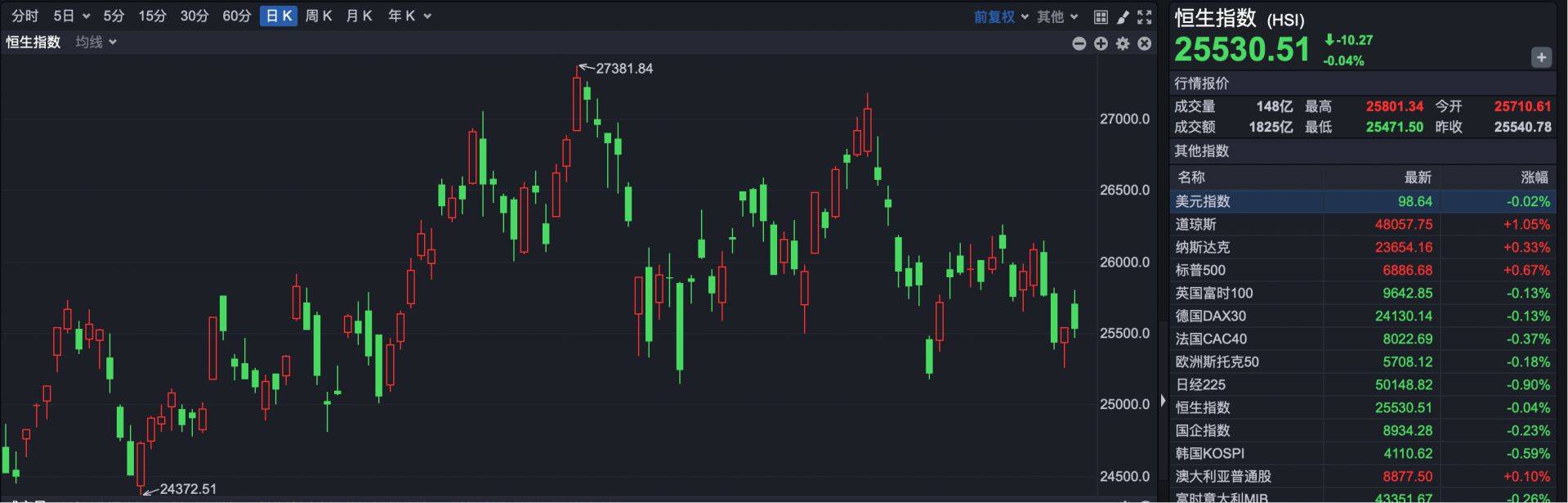
Market Overview - The Hong Kong stock market opened higher due to the Federal Reserve's interest rate cut but ultimately closed lower, with the Hang Seng Index finishing at 25,530.51 points, down 10.27 points or 0.04% [1] - The Hang Seng Tech Index closed at 5,534.59 points, down 46.51 points or 0.83% [3] - The total trading volume for the day was 1,825 million Hong Kong dollars, indicating a decrease in trading activity [1] Company Focus - ZTE Corporation (HK00763) experienced a significant drop, with its stock price falling over 13% by the end of the trading day, and its A-shares (SZ000063) also hit the daily limit down [4] - ZTE announced it is in communication with the U.S. Department of Justice regarding compliance investigations related to the U.S. Foreign Corrupt Practices Act, asserting its commitment to compliance and normal business operations [6] Sector Performance - Hong Kong banking stocks showed overall strength, with HSBC Holdings (HK00005) rising over 3% to reach a historical high of 115.3 Hong Kong dollars, ultimately closing up 2.06%. Other banks like Standard Chartered, Bank of East Asia, Bank of China Hong Kong, and Hang Seng Bank also saw gains [6] Capital Flows - Southbound capital recorded a net inflow of over 700 million Hong Kong dollars into Hong Kong stocks by the end of the trading day [8] Market Outlook - According to CMB International, the Hong Kong stock market is expected to transition from valuation-driven to earnings growth-driven, with a projected earnings growth rate of 6% to 10% for the Hang Seng Index, suggesting an upward potential of 10% to 15% for the index next year [10] - The outlook for the Hong Kong market is supported by favorable internal policies and external monetary easing from major economies, with expectations for significant revenue and profit growth in 2026 following a bottoming out in 2025 [10]

港股收盘 | 恒指收跌0.04% 汇丰控股创新高 中兴通讯重挫13%
Zhi Tong Cai Jing· 2025-12-11 08:47
Group 1: Federal Reserve and Market Reaction - The Federal Reserve lowered interest rates by 25 basis points but maintained its forecast of only one rate cut in 2026 according to the dot plot [1] - Hong Kong stocks opened high but closed lower, with the Hang Seng Index down 0.04% to 25,530.51 points and a total turnover of HKD 182.48 billion [1] - The market is sensitive to external risks, with potential rebounds expected around mid-December and early January [1] Group 2: Blue-Chip Stocks Performance - HSBC Holdings reached a new high, closing up 2.06% at HKD 114, contributing 43.23 points to the Hang Seng Index [2] - Other blue-chip stocks like Hansoh Pharmaceutical and Henderson Land also saw gains, while Alibaba Health and Sands China faced declines [2] Group 3: Sector Performance - Large tech stocks generally declined, with Alibaba down 1.7% and Tencent down 0.25% [3] - The wind power sector remained strong, with Goldwind Technology and Dongfang Electric seeing significant gains [3] - Lithium battery stocks were active, with companies like CATL and Ganfeng Lithium showing positive performance amid rising production costs [4] Group 4: Chip Sector Developments - The U.S. government allowed NVIDIA to export its H200 AI chips to China, which may boost domestic AI development and increase demand for local chips [5] Group 5: Real Estate Sector Trends - Domestic property stocks generally fell, with notable declines in companies like Agile Group and Sunac China [6] - Discussions around mortgage interest subsidy policies have increased, which could stimulate potential homebuyer demand if implemented [6] Group 6: Notable Stock Movements - ZTE Corporation faced a significant drop of 13.08% following compliance investigation news [7] - Red Star Macalline's stock fell 14.39% due to unusual trading activity, despite the company stating that its operations remain normal [8] - Lens Technology experienced fluctuations, closing up 2.05% after announcing a potential acquisition [9] - Asia Financial Holdings surged 80.87% after announcing a voluntary cash offer for shares at a premium [10]
中兴通讯今日跌停 3机构合计净买入6.32亿元
Xin Lang Cai Jing· 2025-12-11 08:45
中兴通讯今日跌停,龙虎榜数据显示,上榜营业部席位全天成交34.97亿元,占当日总成交金额比例为 20.67%。其中,买入金额为16.16亿元,卖出金额为18.81亿元,合计净卖出2.64亿元。具体来看,机构 买入10.34亿元,卖出4.02亿元,合计净买入6.32亿元。此外,国泰海通证券上海松江区中山东路证券营 业部、深股通专用分别卖出5.22亿元、4.77亿元;深股通专用、长城证券杭州民心路证券营业部分别买 入3.71亿元、1.02亿元。 ...
港股收盘(12.11) | 恒指收跌0.04% 汇丰控股(00005)创新高 中兴通讯(00763)重挫13%
智通财经网· 2025-12-11 08:44
Group 1: Federal Reserve and Market Impact - The Federal Reserve lowered interest rates by 25 basis points but maintained a forecast of only one rate cut in 2026 according to the "dot plot" [1] - Hong Kong stocks opened high but closed lower, with the Hang Seng Index down 0.04% to 25,530.51 points and a total turnover of HKD 182.48 billion [1] - Guangfa Securities noted that Hong Kong stocks are more sensitive to external risks, particularly with an unclear future rate cut path from the Federal Reserve and upcoming unlocks of restricted shares in December [1] Group 2: Blue-Chip Stocks Performance - HSBC Holdings reached a new high, closing up 2.06% at HKD 114, contributing 43.23 points to the Hang Seng Index [2] - Other blue-chip stocks like Hansoh Pharmaceutical and Henderson Land also saw gains, while Alibaba Health and Sands China faced declines [2] Group 3: Sector Performance - Large tech stocks generally declined, with Alibaba down 1.7% and Tencent down 0.25% [3] - The wind power sector remained strong, with Goldwind Technology and Dongfang Electric seeing significant gains [3] - Lithium battery stocks were active, with companies like CATL and Ganfeng Lithium showing positive performance amid rising production costs [4] Group 4: Chip Sector Developments - The chip sector continued to decline, with Huahong Semiconductor down 4.8% and SMIC down 2.26% [4] - The U.S. government allowed NVIDIA to export its H200 AI chips to China, which may boost domestic AI development and increase demand for local chips [5] Group 5: Real Estate Sector Trends - Domestic property stocks generally fell, with Agile Group down 7.58% and Sunac China down 2.22% [6] - Discussions around mortgage interest subsidy policies have increased, which could stimulate potential homebuyer demand if implemented [6] Group 6: Notable Stock Movements - ZTE Corporation faced a significant drop of 13.08% following compliance investigation news [7] - Red Star Macalline's stock fell 14.39% due to unusual trading activity, despite the company stating that its operations remain normal [8] - Lens Technology saw a slight increase of 2.05% after announcing a potential acquisition [9] - Asia Fortune's stock surged 80.87% after announcing a voluntary cash offer for shares [10]
港股半导体板块大跌
第一财经· 2025-12-11 08:36
| 代码 | 名称 | 现价 涨跌 涨跌幅 | | --- | --- | --- | | HSI | 恒生指数 | 25530.51 -10.27 -0.04% | | HSTECH 恒生科技 | | 5534.59 -46.51 -0.83% | | HSBIO | 恒生生物科技 | 15049.99 -43.04 -0.29% | | HSCEI | 恒生中国企业指数 | 8934.28 - 20.41 - -0.23% | | HSCI | 恒生综合指数 | 3902.14 - - 11.02 - - 0.28% | 12月11日,香港恒生指数收跌0.04%,恒生科技指数跌0.83%。 中兴通讯跌超13%。中兴通讯今日公告,公司已知悉近期新闻媒体针对本公司涉及美国《反海外腐败法》合规性调查的报道。公司正与美国司法部就有 关事项进行沟通,并将通过法律等手段坚决维护自身权益。公司反对一切形式的腐败行为,对任何可能相关的个人持零容忍态度。公司目前生产经营一切 正常。 编辑丨瑜见 半导体板块大跌,天域半导体跌6%,华虹半导体跌近5%,中芯国际、上海复旦跌超2%。 | 代码 | 名称 | 现价 | 涨跌幅 ▲ ...