ZTE(000063)

Search documents
港股收盘|恒指跌0.04% 半导体股走弱
Xin Lang Cai Jing· 2025-12-11 10:23
来源:第一财经 恒指报收25530.51点,跌0.04%,恒生科技指数报收5534.59点,跌0.83%。半导体股走弱,华虹半导体 跌近5%,中芯国际跌超2%。中兴通讯跌超13%。(AI生成) ...

中兴通讯大跌
Zhong Guo Ji Jin Bao· 2025-12-11 10:22
Group 1 - ZTE Corporation's stock price dropped by 13.08% to HKD 27.50 per share due to a "black swan" event related to compliance investigations by the U.S. Department of Justice [3] - The company is in communication with the U.S. DOJ regarding compliance with the Foreign Corrupt Practices Act and is committed to maintaining its rights through legal means [3] - ZTE emphasizes its commitment to strengthening its compliance system and has a zero-tolerance policy towards corruption [3] Group 2 - Huayuan Securities has given ZTE a "buy" rating, projecting revenues of RMB 138.48 billion, RMB 156.64 billion, and RMB 174.41 billion for 2025 to 2027, with corresponding net profits of RMB 83.80 billion, RMB 89.37 billion, and RMB 103.79 billion [3] - The projected price-to-earnings ratios for ZTE are 17.57, 16.45, and 14.17 for the years 2025 to 2027 [3] - ZTE's core growth is expected to come from its computing business benefiting from the AI wave, with differentiated product advantages in its terminal business [4] Group 3 - The Hong Kong Stock Exchange appointed Graeme Farrell as the Group Chief Risk Officer, effective January 12, 2026, succeeding Richard Wise [5] - Farrell will oversee the risk management department, including credit and quantitative analysis, technology risk management, and enterprise risk management [6] - The CEO of the Hong Kong Stock Exchange highlighted Farrell's extensive international experience in risk management as a significant asset for enhancing market vitality and liquidity [6]

中兴通讯大跌
中国基金报· 2025-12-11 10:15
Core Viewpoint - ZTE Corporation's stock plummeted over 13% due to a "black swan" event related to compliance investigations by the U.S. Department of Justice regarding the Foreign Corrupt Practices Act [9][10][12]. Market Overview - On December 11, the Hong Kong stock market experienced a slight decline, with the Hang Seng Index down 0.04% to 25,530.51 points, and the Hang Seng Technology Index falling 0.83% to 5,534.59 points. The market turnover was HKD 182.48 billion, a decrease from HKD 193.39 billion the previous trading day [2][3]. Stock Performance - Among the Hang Seng Index constituents, 37 stocks rose while 50 fell. Notable gainers included HSBC Holdings (+2.06%), Hansoh Pharmaceutical (+1.98%), and Henderson Land (+1.74%) [4]. - Conversely, significant decliners included Alibaba Health (-3.95%), Lenovo Group (-2.67%), and Sands China Ltd. (-2.31%) [6]. ZTE Corporation Specifics - ZTE's stock opened lower and fell as much as 13.72%, closing at HKD 27.50 per share, down 13.08% for the day [10]. - The company announced it is in communication with the U.S. Department of Justice regarding compliance investigations and is committed to protecting its rights through legal means [12]. - ZTE's recent performance has drawn attention from analysts, with Huayuan Securities previously issuing a "buy" rating, projecting revenues of RMB 138.48 billion, RMB 156.64 billion, and RMB 174.41 billion for 2025 to 2027, with corresponding net profits of RMB 83.80 billion, RMB 89.37 billion, and RMB 103.79 billion [14]. Risk Factors - Analysts have highlighted several risks for ZTE, including geopolitical tensions, potential underperformance in AI technology commercialization, currency fluctuations, declining profit margins, and cash flow pressures [15].


龙虎榜 | 机构6.3亿“抄底”跌停股,游资砸5亿出逃!T王押注消费股
Ge Long Hui A P P· 2025-12-11 09:46
Market Overview - On December 11, all three major indices declined, with total market turnover reaching 1.89 trillion yuan, an increase of 93.6 billion yuan compared to the previous trading day, and over 4,300 stocks fell [1] - Market hotspots focused on controllable nuclear fusion and wind power equipment sectors, while real estate and duty-free concepts weakened [1] High-Performing Stocks - Fujian local stockholder Baigroup achieved a five-day consecutive rise, while Annie Co. recorded five rises in six days, and commercial aerospace concept stock Zai Sheng Technology saw four consecutive rises [3] - Notable stocks with significant gains included: - Annie Co. (+10.03%, 13.60 yuan, six days five boards) [4] - Dongbai Group (+10.03%, 14.92 yuan, five consecutive boards) [4] - Zai Sheng Technology (+10.06%, 7.66 yuan, four consecutive boards) [4] - Goldwind Technology (+9.97%, 16.98 yuan, first board) [4] Trading Dynamics - The top three net buying stocks on the Dragon and Tiger list were Snowman Group, Goldwind Technology, and Tongguang Cable, with net purchases of 325 million yuan, 234 million yuan, and 173 million yuan respectively [5] - The top three net selling stocks were ZTE Corporation, Teifa Information, and Shunhao Shares, with net sales of 264 million yuan, 191 million yuan, and 174 million yuan respectively [7] Sector Highlights - Snowman Group, involved in commercial aerospace and controllable nuclear fusion, saw a trading increase of 9.99% with a turnover of 2.457 billion yuan and a trading range of 9.70% [9] - Zhengbang Technology, focusing on pig farming, experienced a trading increase of 9.87% with a turnover of 2.16 billion yuan and a trading range of 10.58% [14] Institutional Activity - Institutional net buying was significant for ZTE Corporation, with a net purchase of 632 million yuan, while net selling was observed for Teifa Information at 175 million yuan [8][9] - The net buying activity for Goldwind Technology reached 686 million yuan, indicating strong institutional interest [21]


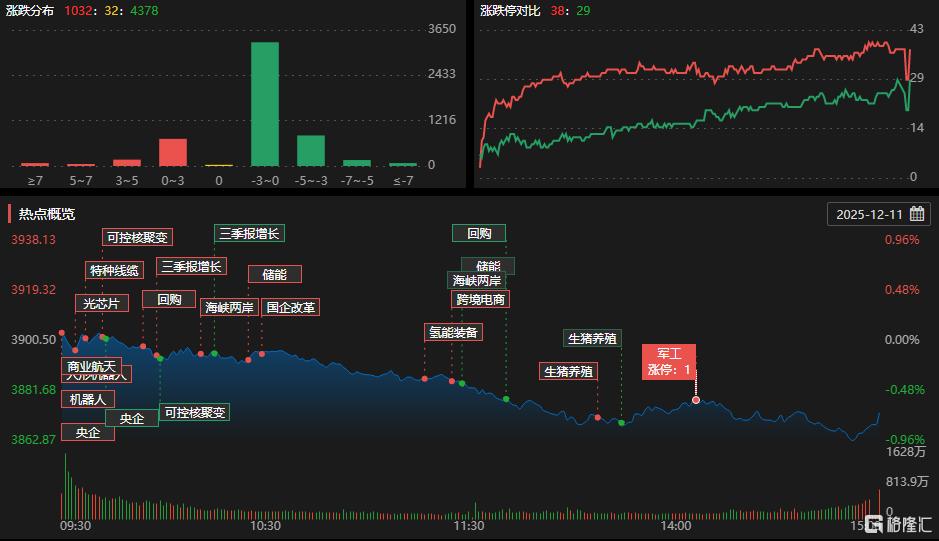
中兴通讯A股跌停,回应涉美合规调查:正与美国司法部沟通
Nan Fang Du Shi Bao· 2025-12-11 09:43
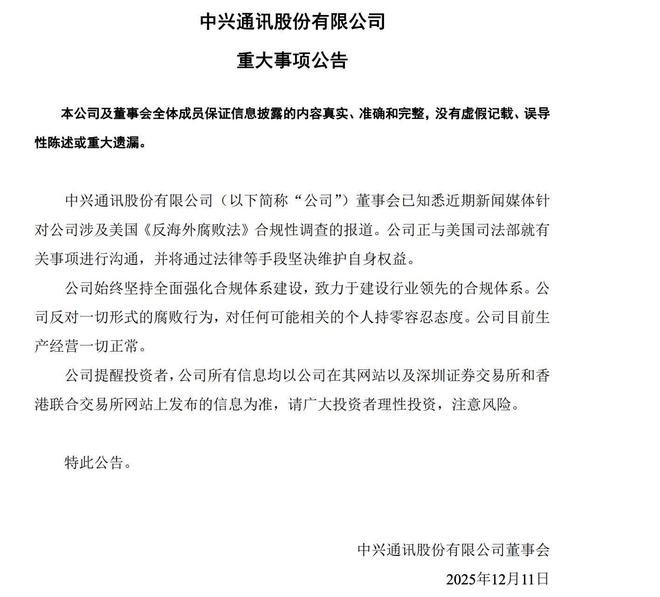
12月11日,受市场传闻影响,中兴通讯午后股价出现剧烈波动,截至午后收盘,A股跌停,港股也跌超 12%。针对市场流传的关于"公司涉及美国《反海外腐败法》合规性调查"的报道,中兴通讯于当日午间 发布重大事项公告进行回应。 中兴通讯公告称,公司董事会已知悉近期新闻媒体针对公司涉及美国《反海外腐败法》合规性调查的报 道。对此,中兴通讯声明,公司正与美国司法部就有关事项进行沟通,并将通过法律等手段坚决维护自 身权益。 关于目前的经营状况,中兴通讯在公告中表示,公司目前生产经营一切正常。针对合规问题,中兴通讯 称始终坚持全面强化合规体系建设,致力于建设行业领先的合规体系;公司反对一切形式的腐败行为, 对任何可能相关的个人持零容忍态度。 采写:南都·湾财社记者 严兆鑫 据市场消息,12月11日早间,一则有关"中兴通讯可能因涉嫌海外行贿向美国支付超过10亿美元和解 金"的消息在市场发酵。随后,中兴通讯A、H股双双大跌,其在港上市的认购证一度暴跌超25%。 值得注意的是,在本次暴跌前,已有部分外资机构减持中兴通讯。港交所数据显示,贝莱德 (BlackRock)及摩根大通(JPMorgan)近期均对中兴通讯H股进行了减持操作。 ...
当AI手机开始“越权”:豆包的颠覆体验,动了谁的奶酪?
3 6 Ke· 2025-12-11 09:38
Core Insights - The article emphasizes the transformation of user experience in the smartphone industry, particularly with the introduction of AI-driven functionalities that enhance interaction and efficiency [1][10][18] Industry Trends - The report from the First New Voice Think Tank highlights a shift towards vertical and general AI agents, indicating a potential concentration of traffic entry points towards a few general agents [1] - The global penetration rate of AI smartphones is projected to reach 32% by 2025, indicating a significant growth trajectory for AI integration in mobile devices [15] Company Developments - The launch of the Doubao AI phone by ByteDance and ZTE has generated significant consumer interest, leading to a scarcity of the product and even price premiums in the second-hand market [1] - Despite initial success, the Doubao AI phone faced challenges with various applications from Alibaba and Tencent blocking access due to security concerns, highlighting a conflict between AI functionality and platform control [10][11] Technological Innovations - The Doubao AI phone introduces a new era of "one-click management," allowing users to execute complex tasks across multiple applications seamlessly, which marks a departure from traditional AI assistants [2][6] - The phone's ability to handle cross-application operations and its simplified interaction model represent significant advancements in user experience [3][5] User Experience Enhancements - The Doubao AI phone features a memory function that allows for highly personalized interactions, enabling users to store and retrieve information effortlessly [7][8] - The integration of memory with execution capabilities allows the AI to plan and execute tasks based on user history and preferences, enhancing the overall user experience [9][12] Competitive Landscape - The primary competition for the Doubao AI phone is not other smartphone manufacturers like Apple, but rather the established internet companies that control app ecosystems [10][11] - The article suggests that the future of smartphones will depend on the ability to integrate AI capabilities that enhance user experience while navigating the challenges posed by existing platform monopolies [13][18]

中兴通讯跌停,机构龙虎榜净买入6.32亿元
Zheng Quan Shi Bao Wang· 2025-12-11 09:29
| 买/ | 会员营业部名称 | 买入金额(万 | 卖出金额(万 | | --- | --- | --- | --- | | 卖 | | 元) | 元) | | 买一 | 机构专用 | 84785.04 | 8086.56 | | 买二 | 深股通专用 | 37131.94 | 47683.31 | | 买三 | 机构专用 | 18625.69 | 12659.11 | | 买四 | 长城证券股份有限公司杭州民心路证券营业部 | 10245.36 | 1.96 | | 买五 | 东方财富证券股份有限公司拉萨东环路第二证券营业部 | 10117.96 | 7038.33 | | 卖一 | 国泰海通证券股份有限公司上海松江区中山东路证券营 | 329.12 | 52196.42 | | | 业部 | | | | 卖二 | 深股通专用 | 37131.94 | 47683.31 | | 卖三 | 国泰海通证券股份有限公司邯郸人民东路证券营业部 | 115.32 | 20476.91 | | 卖四 | 光大证券股份有限公司丹阳丹金路证券营业部 | 274.92 | 20470.12 | | --- | --- | - ...
数字经济板块12月11日跌2.29%,中兴通讯领跌,主力资金净流出124.08亿元
Sou Hu Cai Jing· 2025-12-11 09:28
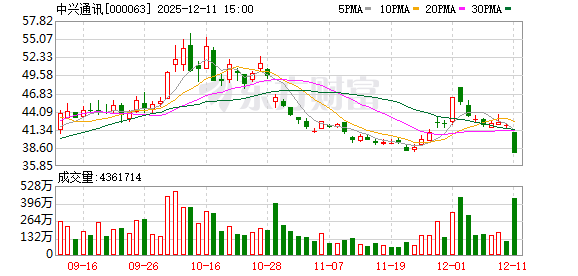
证券之星消息,12月11日数字经济板块较上一交易日下跌2.29%,中兴通讯领跌。当日上证指数报收于 3873.32,下跌0.7%。深证成指报收于13147.39,下跌1.27%。数字经济板块个股涨跌见下表: | 代码 | 名称 | 收盘价 | 涨跌幅 | 成交量(手) | 成交额(元) | | --- | --- | --- | --- | --- | --- | | 301117 | 佳家科技 | 55.21 | 7.00% | 26.79万 | 14.62亿 | | 300520 | 科大国创 | 37.54 | 5.57% | 61.44万 | 22.90亿 | | 002713 | *ST东易 | 10.65 | 4.00% | 55.67万 | 5.92亿 | | 603135 | 中車科技 | 9.78 | 3.16% | 16.36万 | 1.63亿 | | 000803 | 山高环能 | 6.90 | 3.14% | 24.70万 | 1.68 Z | | 300659 | 中乎信息 | 18.77 | 3.13% | 28.33万 | 5.27亿 | | 301066 | 万事利 | 17. ...

东兴证券晨报-20251211
Dongxing Securities· 2025-12-11 09:28
Economic News - The Federal Reserve announced a 25 basis point reduction in the federal funds rate target range to 3.5%-3.75%, marking the third rate cut since 2025 [1] - Vietnam's National Assembly amended the mineral law to prohibit the export of rare earth ores starting January 1, 2026, emphasizing strict control over exploration and processing [1] - The Ministry of Human Resources and Social Security held a seminar in collaboration with the International Labour Organization [1] - The Ministry of Industry and Information Technology emphasized the importance of pilot innovation in manufacturing as a key link connecting innovation, technology, and industry [1] - The Ministry of Commerce plans to enhance policy support for the retail industry's innovation and transformation during the 15th Five-Year Plan period [1] - The Ministry of Commerce will work with local governments to implement policies to stabilize foreign trade and promote market diversification [1] - The China Textile Import and Export Chamber reported that yarn and fabric exports reached $69.18 billion from January to October 2025, a 2.1% year-on-year increase [1] - The Ministry of Finance plans to issue special government bonds due in 2025, with a total face value of CNY 400 billion for the first phase and CNY 350 billion for the second phase [1] - The National Internet Information Office is conducting a special campaign to rectify online chaos in the automotive industry [1] - The Ministry of Education reported an increase in the number of students returning from studying abroad, with 495,000 expected to return in 2024, a 19.1% increase from 2023 [1] Company News - Pop Mart announced changes in its board of directors, with new appointments effective December 10, 2025 [4] - Kweichow Moutai announced a cash dividend of CNY 23.957 per share, totaling CNY 30 billion, with the ex-dividend date on December 19 [4] - Nanjing Highway plans to invest up to CNY 9.033 billion in the construction of the Nanyang Yangtze River Bridge southern connection project [4] - ZTE Corporation is in communication with the U.S. Department of Justice regarding compliance investigations related to the Foreign Corrupt Practices Act [4] - Oracle reported Q2 FY2026 revenue of $16.1 billion, a 14% year-on-year increase, with cloud revenue of $8 billion, a 34% increase, but below market expectations [4] Transportation Industry - The transportation sector has shown signs of recovery, with the strong cycle sectors benefiting from anti-involution policies [5] - The focus for 2026 will remain on sectors benefiting from anti-involution and high certainty stocks, with a long-term impact expected from these policies [6] - The express delivery industry has seen a recovery in profitability, with rising prices and a reduction in low-price competition [7] - The airline sector has improved performance due to lower oil prices and better management of ticket pricing, with a cautious approach to aircraft procurement expected to continue [8] - The highway sector has experienced significant stock price adjustments, with a focus on high dividend yield and low debt ratio companies expected to gain more attention [9]




通信行业今日净流出资金113.40亿元,中兴通讯等16股净流出资金超亿元
Zheng Quan Shi Bao Wang· 2025-12-11 09:26
Market Overview - The Shanghai Composite Index fell by 0.70% on December 11, with only one industry, banking, showing an increase of 0.17% [1] - The communication industry experienced a significant decline of 3.14%, ranking second in terms of the largest drop [1] Capital Flow - The net outflow of capital from the two markets reached 744.67 billion yuan, with only the banking sector seeing a net inflow of 67.49 million yuan [1] - The electronic industry led the capital outflow, with a total of 13.586 billion yuan, followed by the communication industry with an outflow of 11.34 billion yuan [1] Communication Industry Performance - The communication sector had 124 stocks, with 19 rising and 102 falling; three stocks hit the daily limit up while two hit the limit down [2] - Among the stocks with net inflows, Yongding Co. topped the list with a net inflow of 1.04 billion yuan, followed by Putian Technology and Mengwang Technology with inflows of 493 million yuan and 270 million yuan, respectively [2] - The stocks with the largest net outflows included ZTE Corporation, with an outflow of 3.987 billion yuan, followed by Zhongji Xuchuang and Tianfu Communication with outflows of 2.534 billion yuan and 1.963 billion yuan, respectively [2][3] Notable Stocks in Communication Sector - Stocks with significant inflows included: - Yongding Co. (+9.98%, 11.27% turnover, 1.040 billion yuan) - Putian Technology (+10.00%, 11.60% turnover, 493 million yuan) - Mengwang Technology (+10.02%, 8.46% turnover, 270 million yuan) [2] - Stocks with significant outflows included: - ZTE Corporation (-10.00%, 10.83% turnover, -3.986 billion yuan) - Zhongji Xuchuang (-4.74%, 3.29% turnover, -2.533 billion yuan) - Tianfu Communication (-6.66%, 7.13% turnover, -1.963 billion yuan) [3]