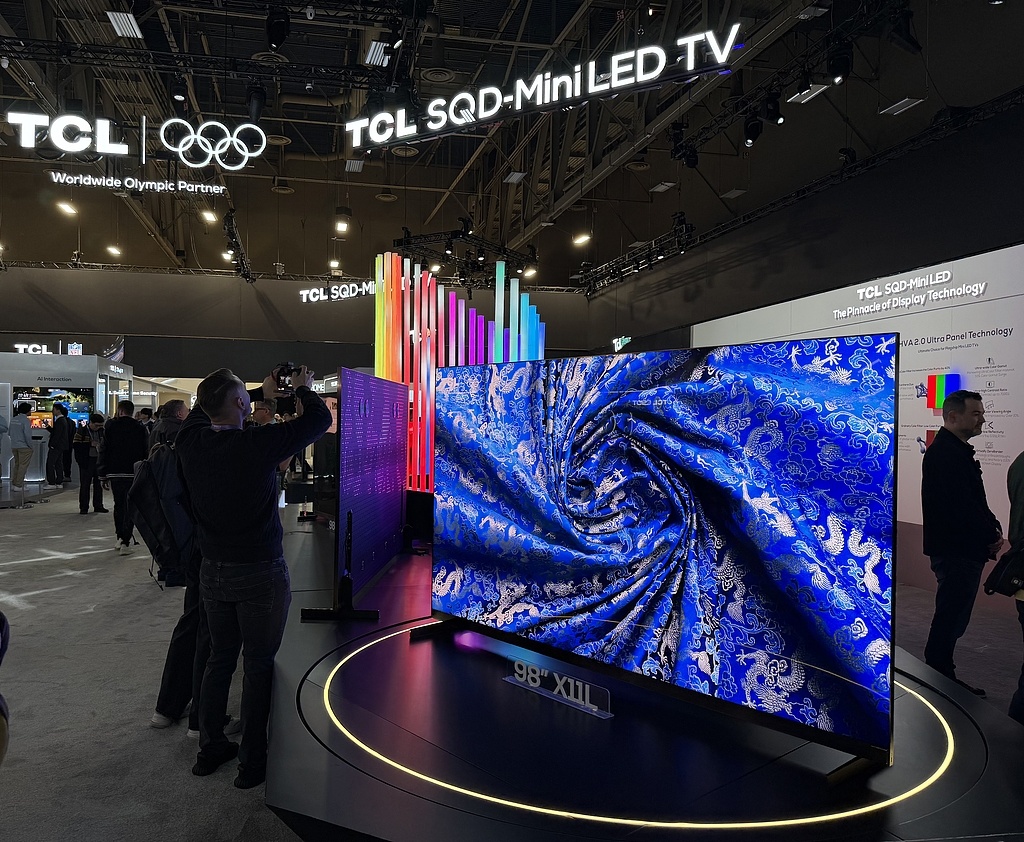
TCL TECH.(000100)

Search documents
光学光电子板块1月26日跌1.64%,苏大维格领跌,主力资金净流出31.03亿元
Zheng Xing Xing Ye Ri Bao· 2026-01-26 09:37
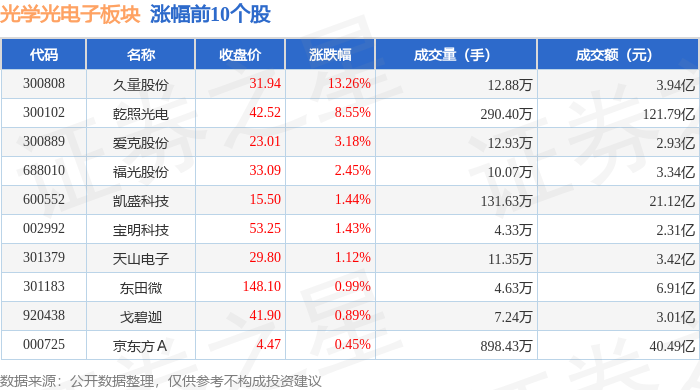
Market Overview - The optical and optoelectronic sector experienced a decline of 1.64% on January 26, with Su Dawei leading the drop [1] - The Shanghai Composite Index closed at 4132.61, down 0.09%, while the Shenzhen Component Index closed at 14316.64, down 0.85% [1] Stock Performance - Jiuliang Co. (300808) saw a significant increase of 13.26%, closing at 31.94 [1] - Qianzhao Optoelectronics (300102) rose by 8.55%, closing at 42.52 [1] - Other notable gainers included Yanke Co. (300889) with a 3.18% increase and Fuguang Co. (688010) with a 2.45% increase [1] Decliners - Shida Weige (300331) led the decliners with a drop of 11.16%, closing at 47.76 [2] - Woge Optoelectronics (603773) fell by 9.99%, closing at 38.30 [2] - Other significant declines included Yongxin Optics (603297) down 7.75% and Hanbo High-tech (301321) down 7.28% [2] Capital Flow - The optical and optoelectronic sector saw a net outflow of 3.103 billion yuan from institutional investors, while retail investors had a net inflow of 2.271 billion yuan [2] - The sector experienced a net inflow of 0.832 billion yuan from speculative funds [2] Individual Stock Capital Flow - Tengjing Technology (688195) had a net inflow of 1.48 billion yuan from institutional investors, while it faced a net outflow of 1.40 billion yuan from speculative funds [3] - BOE Technology Group (000725) reported a net inflow of 88.13 million yuan from institutional investors [3] - TCL Technology (000100) also saw a net inflow of 71.98 million yuan from institutional investors [3]




全指现金流ETF鹏华(512130)涨近2%,有色石油领涨市场
Xin Lang Cai Jing· 2026-01-26 05:29
Group 1 - The core viewpoint of the articles highlights the strong performance of the non-ferrous metals and oil sectors, driven by rising commodity prices and geopolitical tensions [1] - Spot gold has reached a historical high of $5080.60 per ounce, with a 2% increase, while spot silver briefly surpassed $108 per ounce, showing a daily increase of over 4.6% [1] - The cash flow index's focus on "strong cyclical resources" like non-ferrous metals and chemicals reflects its structural advantages and precise value in the market [1] Group 2 - The CSI All-Share Free Cash Flow Index (932365) has risen by 0.81%, with significant gains in constituent stocks such as silver non-ferrous (up 10.03%), Nanshan Aluminum (up 7.08%), and China National Offshore Oil Corporation (up 5.86%) [1] - The CSI All-Share Free Cash Flow ETF (512130) has increased by 1.84%, marking its sixth consecutive rise, with the latest price at 1.33 yuan [1] - As of December 31, 2025, the top ten weighted stocks in the CSI All-Share Free Cash Flow Index include China National Offshore Oil Corporation, SAIC Motor, and Gree Electric Appliances, collectively accounting for 53.78% of the index [2]



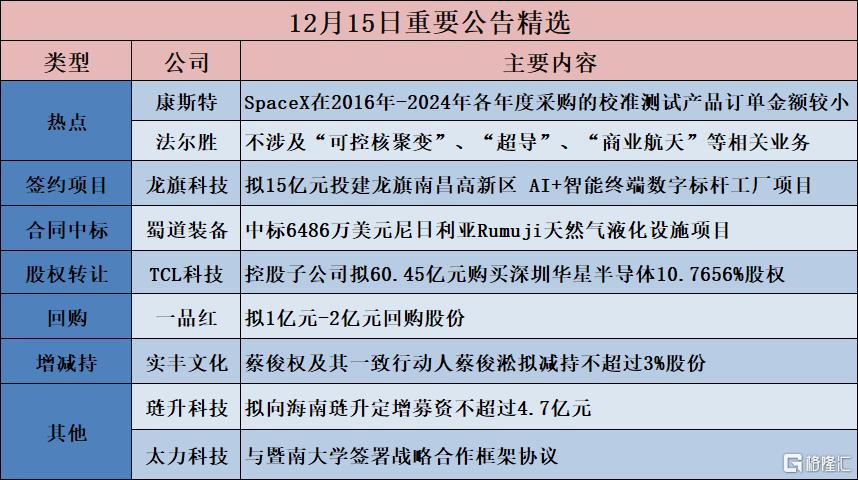
格隆汇公告精选︱龙旗科技:拟15亿元投建龙旗南昌高新区 AI+智能终端数字标杆工厂项目;龙洲股份:不涉及商业航天相关业务
Ge Long Hui· 2026-01-23 17:25
Key Points - SpaceX's procurement orders for calibration testing products from 康斯特 from 2016 to 2024 are relatively small [1] - 法尔胜 does not engage in businesses related to "controlled nuclear fusion," "superconductors," or "commercial aerospace" [1] - 龙旗科技 plans to invest 1.5 billion yuan to build an AI + smart terminal digital benchmark factory project in Nanchang High-tech Zone [1] - 蜀道装备 has won a contract worth 6,486,000 USD for the Rumuji natural gas liquefaction facility project in Nigeria [1] - TCL科技's subsidiary intends to acquire a 10.7656% stake in Shenzhen Huaxing Semiconductor for 6.045 billion yuan [1] - 一品红 plans to repurchase shares worth between 100 million to 200 million yuan [2] - 实丰文化's shareholders plan to reduce their holdings by no more than 3% [2] - 随升科技 intends to raise no more than 470 million yuan through a private placement [1][2] - 太力科技 has signed a strategic cooperation framework agreement with Jinan University [1][2]




【首席观察】越声理财:沪指延续震荡态势 面板涨价值得关注
2 1 Shi Ji Jing Ji Bao Dao· 2026-01-23 11:29
Group 1 - The market continues to show a volatile upward trend, with significant trading volume and a notable number of stocks rising, particularly in sectors like aerospace equipment, photovoltaic equipment, and military electronics [2] - TV panel prices have started to increase, with a reported rise of $1 for 32-65 inch panels in January, and further increases expected in February, indicating a potential trend of price acceleration [2][3] - The supply-demand dynamics suggest that the current price increase in TV panels may be sustainable, driven by reduced production rates and increased demand ahead of major sporting events in 2026 [3] Group 2 - TCL Technology has reported strong financial performance, with revenues exceeding 100 billion yuan and net profits over 8 billion yuan, indicating high-quality growth and potential for market share expansion through partnerships [3] - The overall supply-demand structure is favorable for panel manufacturers to increase prices, as capital expenditure peaks have passed and depreciation pressures are expected to decrease, allowing for profit release [3] - Market sentiment remains cautiously optimistic, with recommendations to focus on sectors showing improvement, such as semiconductors, wind power, and high-growth companies in annual performance forecasts [4]

突发!又一日企巨头爆雷
商业洞察· 2026-01-23 09:35
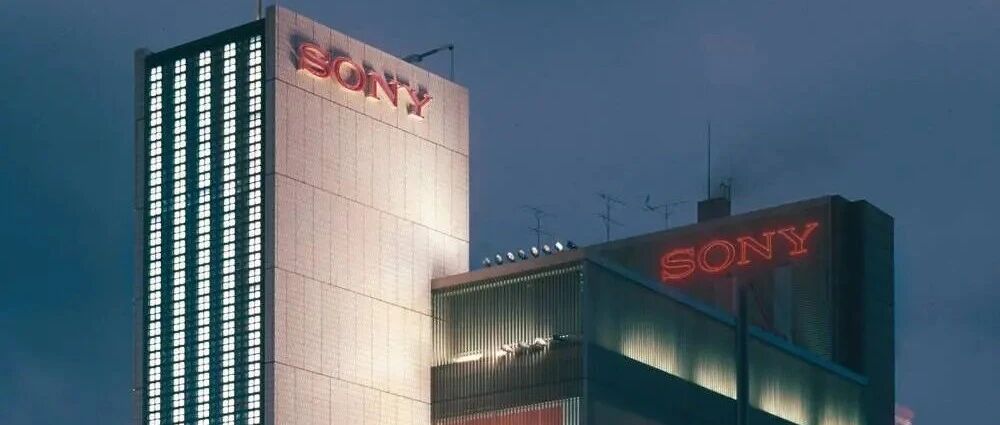
Core Viewpoint - Sony's decision to divest its television business to TCL marks the end of an era for Japanese brands in the global TV market, highlighting the rise of Chinese brands and the challenges faced by traditional players [12][14][26]. Group 1: Sony's Business Restructuring - Sony announced a major restructuring on October 20, 2023, to divest its television business, transferring it to a joint venture with TCL, where TCL will hold a 51% stake [12][14]. - This move signifies the end of Japanese dominance in global TV hardware manufacturing, as Sony relinquishes control over a once-proud segment of its business [14][26]. - The joint venture will continue to use the Sony and BRAVIA brands, ensuring brand recognition and customer loyalty while allowing Sony to focus on higher-margin areas like gaming and content [15][18]. Group 2: Market Dynamics and Competition - Chinese brands have captured over 50% of the Japanese TV market, with TCL holding a 13.8% global market share, positioning it as the second-largest TV brand worldwide [7][26][40]. - By 2024, foreign brands, including Sony, will collectively hold less than 5% of the Chinese market, indicating a significant decline in their competitive position [27]. - The partnership between TCL and Sony is seen as a strategic move to enhance TCL's brand prestige and global influence while allowing Sony to reduce operational pressures in a highly competitive market [17][18][44]. Group 3: Challenges Faced by Sony - Sony's television division has seen its global market share drop to 1.9%, reflecting a broader trend of declining Japanese brands in the consumer electronics space [26][34]. - Issues such as poor software adaptation, service delays, and customer dissatisfaction have contributed to a loss of trust among consumers, leading to a significant decline in brand loyalty [30][33]. - The overall decline of Japanese TV brands is evident, with significant drops in OLED TV shipments and a general retreat from the high-end market [34][35]. Group 4: TCL's Growth and Future Prospects - TCL has experienced substantial growth, with a 14.8% increase in global TV shipments in 2024, and is projected to surpass 30 million units in 2025 [40][41]. - The acquisition of Sony's TV business is expected to enhance TCL's capabilities in high-end markets, leveraging Sony's technology and brand reputation [44]. - The competitive landscape in the TV industry is shifting, with TCL's partnership with Sony potentially creating a formidable entity that could reshape market dynamics [45].

MicroLED概念涨3.79%,主力资金净流入33股
Zheng Quan Shi Bao Wang· 2026-01-23 09:29
Group 1 - The MicroLED concept sector increased by 3.79%, ranking 10th among concept sectors, with 47 stocks rising, including Qianzhao Optoelectronics and Maiwei Co., both hitting a 20% limit up [1] - Notable gainers in the MicroLED sector include Woge Optoelectronics, Di'er Laser, and Jingzhida, which rose by 10.01%, 12.46%, and 10.96% respectively [1] - The sector saw a net inflow of 3.086 billion yuan from main funds, with 33 stocks receiving net inflows, and 7 stocks exceeding 100 million yuan in net inflow, led by Qianzhao Optoelectronics with 1.257 billion yuan [2][3] Group 2 - The top stocks by net inflow ratio include Woge Optoelectronics, Qianzhao Optoelectronics, and Aoto Electronics, with net inflow ratios of 22.05%, 18.20%, and 14.87% respectively [3] - The trading volume and turnover rates for key stocks in the MicroLED sector show significant activity, with Qianzhao Optoelectronics having a turnover rate of 20.59% and a trading volume of approximately 1.257 billion yuan [3][4] - Other notable stocks in the sector include Sanan Optoelectronics and TCL Technology, with net inflows of 426.89 million yuan and 344.06 million yuan respectively [2][3]


索尼退场,日本电视全军覆没
芯世相· 2026-01-23 08:41
Core Viewpoint - Sony's decision to form a joint venture with TCL for its home entertainment business marks a significant shift in the global television market, indicating Japan's exit from the competitive landscape of television manufacturing [4][9]. Group 1: Sony's Strategic Move - Sony will transfer its television business and the BRAVIA brand to a joint venture with TCL, with TCL holding a 51% stake, effectively rebranding Sony's television operations [4]. - The move reflects Sony's lack of display panel production capabilities, which limits its profit margins in the television sector, relying instead on LG and TCL for panel supply [4][9]. - Sony's television market presence has been minimal, often categorized under "others" in market share rankings, and its television segment has historically underperformed compared to its other business units like CIS chips and gaming [4][9]. Group 2: Implications for the Japanese Market - The partnership signifies the end of Japan's independent television brands, as major players like Sharp, Toshiba, and Panasonic have either exited or significantly downsized their television operations [9][10]. - The historical context shows that since 2010, Japanese electronics companies have been selling off their consumer electronics divisions, with Sony's television business being the latest casualty [11][16]. - The decline of Japanese brands in the television market is attributed to their loss of panel production capabilities, which has led to a diminished ability to control pricing and market presence [20][26]. Group 3: The Rise of Chinese and Korean Competitors - TCL's acquisition of Sony's television business is positioned to enhance its competitive stance against Samsung, leveraging Sony's brand equity alongside its own manufacturing capabilities [9]. - The shift in market dynamics has seen Chinese and Korean companies dominate the display panel production, with significant investments leading to a loss of market share for Japanese firms [22][25]. - The transition from Japanese dominance in the television market to a landscape where Chinese and Korean manufacturers hold the majority of panel production capabilities illustrates a broader trend of technological and market leadership shifting eastward [20][29].

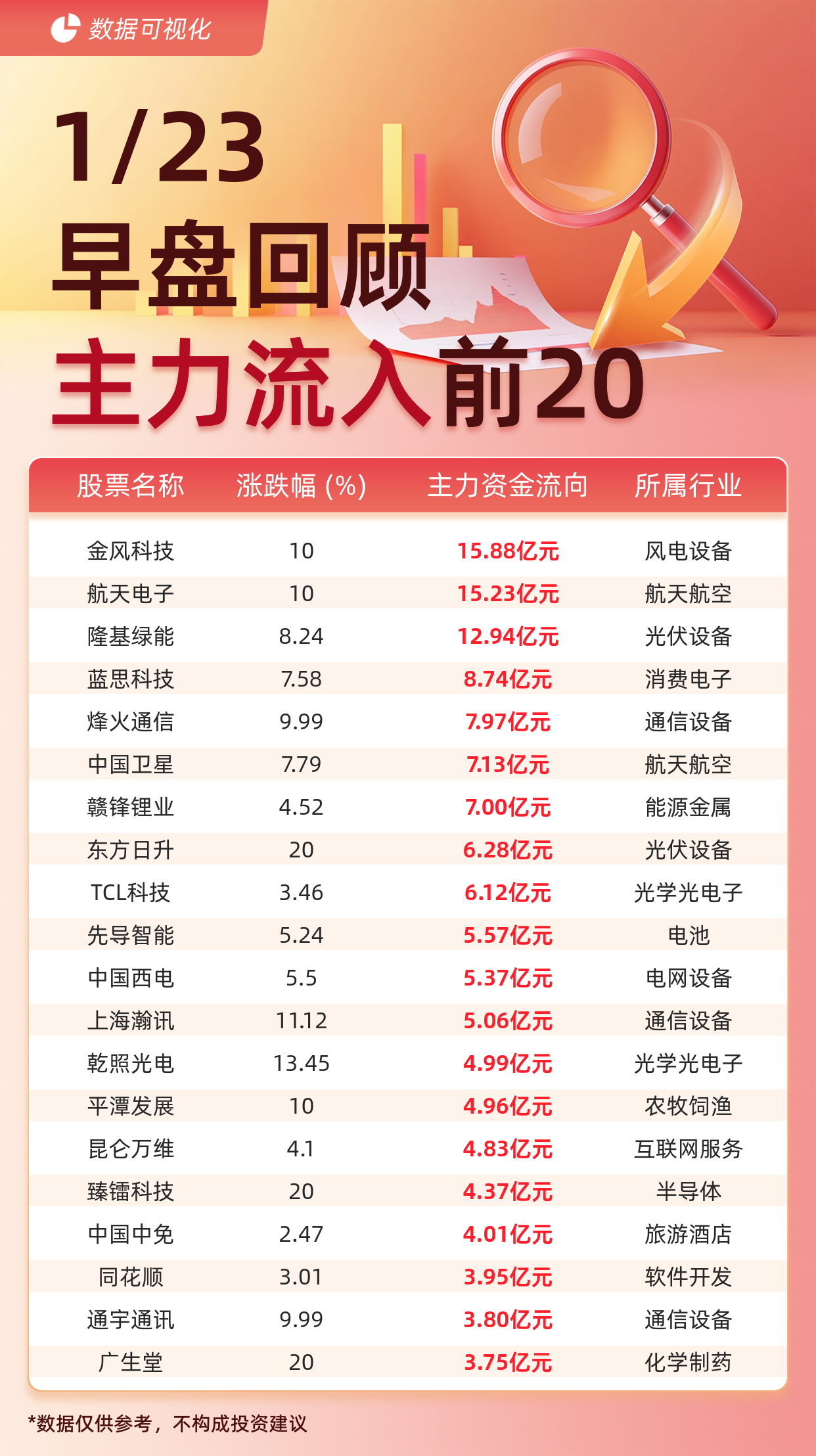
主力资金流入前20:金风科技流入15.88亿元、航天电子流入15.23亿元
Jin Rong Jie· 2026-01-23 04:27
Group 1 - The top 20 stocks with significant capital inflow include Jin Feng Technology (1.588 billion), Aerospace Electronics (1.523 billion), and Longi Green Energy (1.294 billion) [1] - Jin Feng Technology and Aerospace Electronics both experienced a price increase of 10% [2] - Longi Green Energy saw an 8.24% increase in stock price, while Dongfang Risen had the highest increase at 20% [2][3] Group 2 - The sectors represented among the top inflow stocks include wind power equipment, aerospace, photovoltaic equipment, and communication equipment [2][3] - Notable capital inflows also occurred in companies like TCL Technology (0.612 billion) and Ganfeng Lithium (0.700 billion), indicating strong investor interest in energy and technology sectors [1][2] - The data reflects a diverse range of industries, highlighting potential investment opportunities across various sectors [1][3]





索尼退场,日本电视全军覆没
3 6 Ke· 2026-01-23 00:36
Core Viewpoint - Sony has announced a joint venture with TCL to manage its home entertainment business, with TCL holding a 51% stake, effectively transferring Sony's television operations and the BRAVIA brand to TCL, marking a significant shift in the consumer electronics market [1][5]. Group 1: Sony's Strategic Shift - Sony lacks display panel production capabilities, which are crucial for maximizing profits in the television market, relying on LG and TCL for panel supply and Mediatek for picture quality chips [1]. - Sony's television market presence is minimal, consistently ranking in the "others" category, and its television segment is less profitable compared to its other businesses like CIS chips, gaming, and music [1][5]. - The move signifies Sony's exit from the competitive global television market, following a trend where Japanese brands have been selling off their consumer electronics divisions [5][7]. Group 2: TCL's Positioning - For TCL, acquiring Sony's brand equity is a strategic asset that, combined with its own panel production capabilities, positions it to challenge Samsung's dominance in the global market [5]. - TCL is currently the only domestic television brand in China with display panel production capabilities, which is essential for maintaining competitive pricing and product quality [18][27]. Group 3: Decline of Japanese Brands - The exit of Sony marks the end of Japan's independent television brands, with other major players like Sharp, Toshiba, and Panasonic also having exited or significantly downsized their television operations [5][15]. - The decline of Japanese television brands is attributed to their loss of panel production capabilities, which has resulted in a lack of pricing power in the market [16][23]. - The financial crisis of 2008 and subsequent strategic missteps led to a shift in focus for Japanese companies from consumer electronics to higher-margin components, further diminishing their presence in the television market [7][12][13].



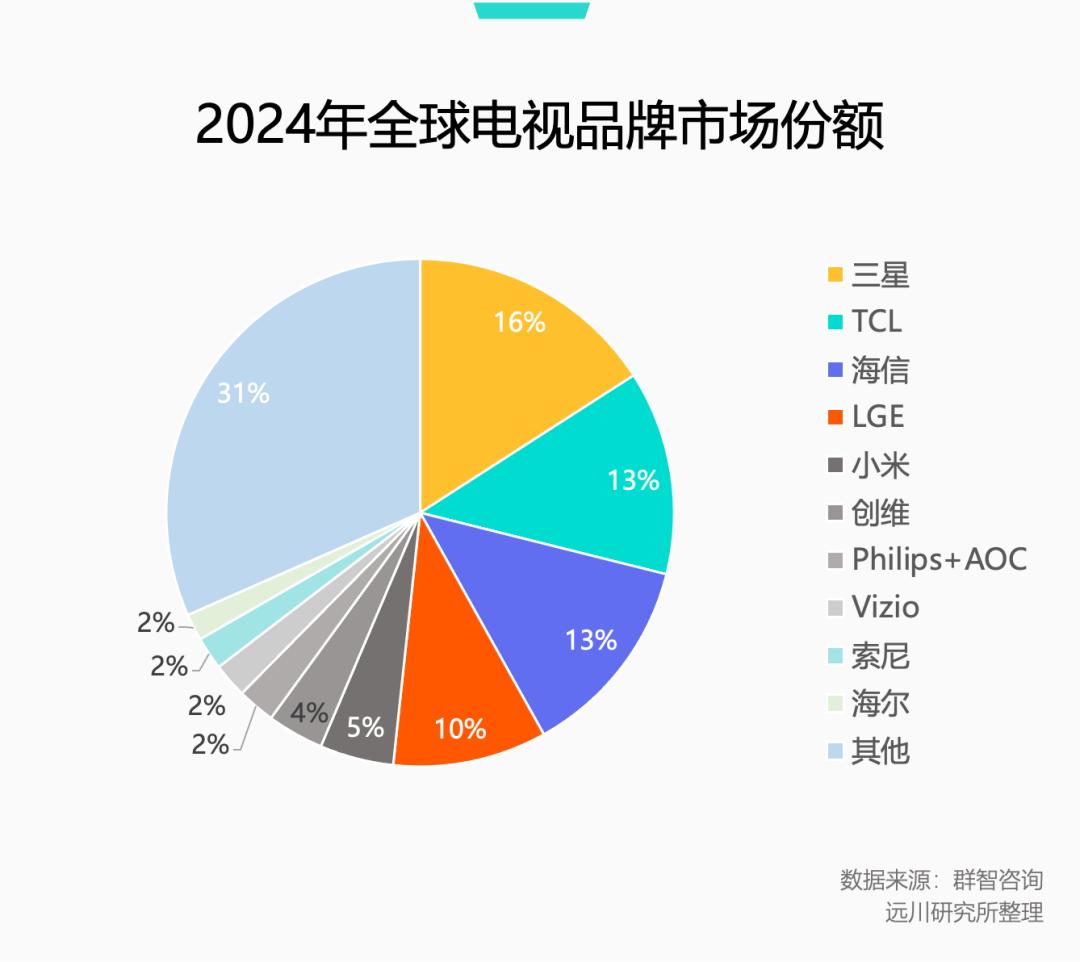
财经观察:日韩品牌为何纷纷牵手中国电视厂商
Huan Qiu Shi Bao· 2026-01-22 22:35
Core Viewpoint - Sony's decision to spin off its television business and form a joint venture with China's TCL reflects a significant structural reorganization in the global television industry, driven by increasing competition and changing consumer demands for larger, higher-resolution screens [1][2][7]. Group 1: Industry Dynamics - The global television market is not declining; instead, it is growing in the large-screen and high-end segments, with a shift in competition rules from technology differentiation to manufacturing scale and cost structure [4][8]. - Japanese brands are losing their competitive edge in the television industry, with companies like Toshiba and Sharp either selling their TV businesses or significantly downsizing their operations [2][6]. - The joint venture between Sony and TCL is seen as a rational choice, allowing both companies to leverage their strengths—Sony's expertise in high-value products and TCL's efficiency and scale [4][7]. Group 2: Market Positioning - Chinese television brands are rapidly gaining market share, with TCL's global TV shipments reaching 20.8 million units in the first three quarters of 2025, marking a 4.1% year-on-year increase [10]. - By 2024, Chinese brands are expected to surpass Korean brands in global TV shipments, with TCL, Hisense, and Xiaomi collectively holding a market share of 31.8% compared to 28.5% for Samsung and LG [8]. - The shift in the global television supply chain is evident, with Chinese manufacturers dominating the LCD panel market, while Japanese and Korean companies are retreating from this segment [11]. Group 3: Competitive Landscape - The decline of Japanese brands is attributed to multiple factors, including slow progress in supply chain advancements and inadequate localization strategies [5][6]. - Despite the rise of Chinese brands, Samsung still maintains a significant lead in brand reputation and high-end market segments, indicating that the competition is ongoing and evolving [12].